When the Australia Cup first arrived
August 2014
I was at this match.
It was the inaugural year of what was then the FFA Cup, now known as the Australia Cup. At the time, we were still working out what it meant. A national knockout competition. A genuine round of 32. A brief sense that Tasmania was no longer quite so far from the centre.
As Joe Gorman wrote in his piece for The Guardian at the time, “I’m here for the football… it’s at these local games where you find the most wonderful of football anoraks.”
That line has stayed with me, because it describes the people who carried nights like this long before anyone else was paying attention.
We were there because we had won the Lakoseljac Cup. That alone felt significant. It placed us into the round of 32 of a brand-new national competition, one that continues today and is now embedded in the Australian football calendar.
I remember being terribly nervous, mostly about the game itself. The occasion, the stage, the sense that this night mattered more than most. Mark being in goal added another layer to it, of course, but it wasn’t the source of the nerves. It was everything wrapped around the match that made it feel heavy.
Our regular goalkeeper, Kane Pierce, had been sent off the week before for bad language. We fought like mad to see if we could get him cleared. We argued the case. We appealed. But to no avail. Rules were rules, and Kane was out.
He was devastated. But we had no choice. The reserve goalkeeper stepped in and did a wonderful job, as people so often have to do in Tasmanian football.
One of the most memorable parts of that first Australia Cup experience had very little to do with what happened on the pitch.
The administrative and organisational workload was on another level. As a volunteer-run amateur club, we were suddenly required to operate at something approaching a professional standard. The volume of paperwork was daunting. Compliance, documentation, deadlines, processes we had never encountered before at that level.
Frances, our club secretary, carried the bulk of that work. She spent hours and hours making sure every box was ticked and every i dotted.
As Frances said to me at the time, “The workload was enormous and completely new for us, but we weren’t doing it in isolation. Mal was terrific to deal with, and John was very supportive. That made a big difference when you’re trying to meet standards you’ve never been held to before.”
In hindsight, it was formative. We built a strong working relationship with Mal Impiombato, who was our direct FFA contact throughout the process, and were well supported by the FFT CEO at the time, John Boulos. That first experience quietly set us up for our next two Australia Cup appearances and later for the yet-to-be-commenced Australian Championship, which brought similar levels of compliance and administrative load.
Those hours don’t make the highlights reel, but they are part of the story.
We couldn’t play at home either. We don’t have lights at our ground. We didn’t then, and we still don’t. The Australia Cup is played mid-week to fit within the national football calendar, so the match had to be moved. We played at KGV Park, a ground we knew well from league football, but one that felt different under lights, with that added sense of occasion.
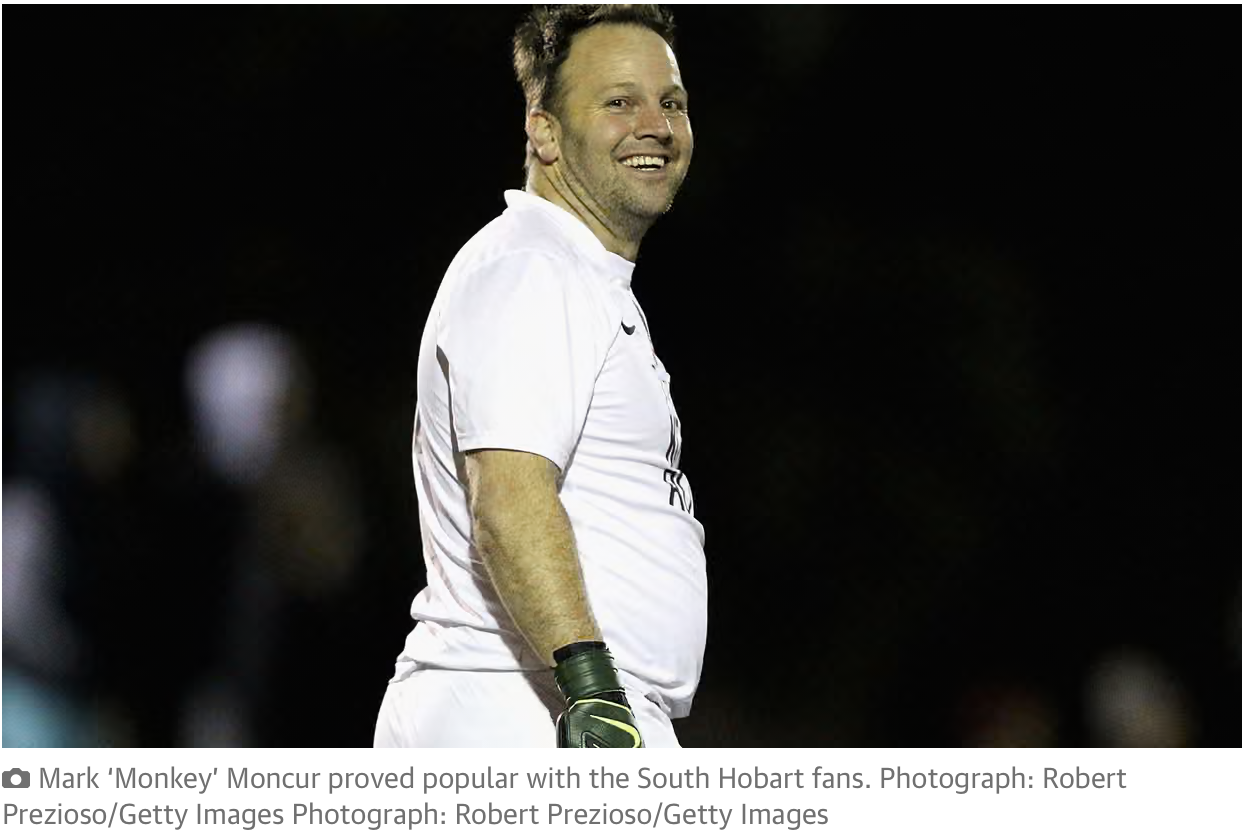
Mark Moncur went in goal that night. He is now a board member and life member of the club, but on that evening he was simply someone stepping up when needed. He wore Kane’s white goalkeeper kit, which was very much not what he would have chosen himself. That detail has stayed with me. You wear what is available. You do what needs to be done.
There was also a familiar dread. The curse of penalties seemed to hang over us in the Australia Cup, even if it hadn’t yet fully announced itself that night. It would surface again in later years, most memorably against Sydney United 58. Once penalties enter your club’s story, they never really leave it. God, I hate penalties.
What strikes me now is this. What Kane was sent off for in 2014 would not even be a bookable offence in 2026. The rules of the game have changed. The interpretations have changed. The moment, though, remains fixed in time.
Later in his article, Gorman wrote that “cold weather, hot food and passionate support make for a memorable evening.”
That line captures it perfectly. Even in defeat, those nights mattered. They still do.
You can read the full article here:
https://www.theguardian.com/football/blog/2014/aug/06/ffa-cup-shines-its-light-on-tasmanias-proud-football-tradition
Reading it now, years later, I feel the nerves again. I also feel how quickly the light moves on. The competition endures. The pride endures. The questions about infrastructure, compliance, and what follows the moment have endured too.