“Who Are You?” Women, Authority and Junior Football
The Adults Who Shift the Tone of Kids’ Football
A Simple Request
Yesterday morning at junior football I asked a parent to step back from behind the goals.
That was it.
An ordinary Saturday morning. An ordinary U12 game at Lower Queenborough.
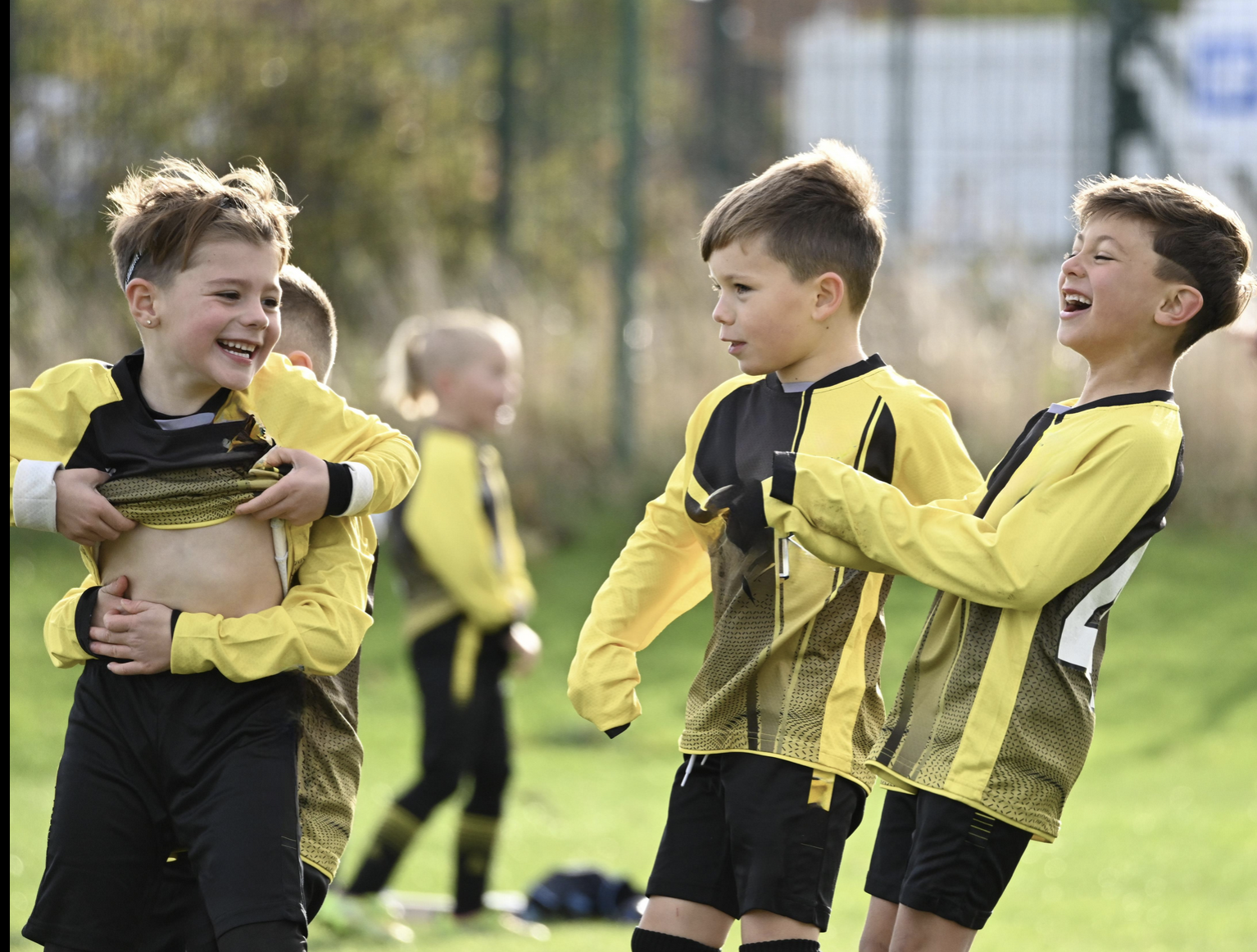
Kids playing football.
I was at Lower Queenborough because several South Hobart junior teams were playing there and I was watching and photographing games across the morning.
The parent was standing immediately beside the goal, heavily involved in what was happening on the field and at times almost leaning on the goal frame itself. So I walked over politely and asked if he could step back.
That should have been the end of it.
Instead, he challenged me immediately.
“Who are you?”
I answered honestly.
“I’m the President of CRJFA.”
Then came the response.
“Well if you’re the president you should know the distance rule.”
Over and over.
“What’s the distance?”
“What’s the rule?”
“If you’re the president you should know.”
Then came the tone. The body language. The physical presence. I’m 5 foot 9 and this was a very tall man standing over me in public at a children’s football match.
And for a moment, I felt myself second-guessing the interaction.
Because he was right about one thing.
I did not know the exact distance.
Afterwards I Looked Up The Rule
Driving home afterwards I realised something important.
The distance was never the point.
Later I looked up the actual guideline. It says spectators should not position themselves behind the goal or too close to the field of play and that adults should help create a safe, enjoyable and positive environment for children.
There is no precise distance written into the rule.
Which fascinated me afterwards because during the interaction I found myself immediately doubting myself.
“What’s the distance?”
“You should know the rule.”
Over and over.
And for a moment it worked.
I walked away thinking perhaps I had handled the situation badly because I could not instantly produce a technical answer.
But reading the guideline later, I realised my original request had simply reflected the spirit of what junior football is trying to achieve:
space for children to play without adults hovering over them.
Looking back now, I do not think he was genuinely seeking clarification. The technicality had become a way to challenge the legitimacy of the request itself.
“If you don’t know the exact rule then why should I listen to you?”
But grassroots football is not held together by volunteers carrying every rulebook measurement in their heads.
It survives because people are willing to step in politely when needed and because most adults understand the difference between a technicality and basic respect.
Female Football Week
This week is Female Football Week and I found myself thinking afterwards that perhaps this is also part of that conversation.
Not the glossy social media version of women in football.
Not the polished slogans.
The real version.
The lived version.
The version where a woman in football leadership asks an adult man to step back from behind a goal at children’s football and suddenly finds herself publicly challenged, repeatedly questioned and instinctively trying to stay calm while being physically towered over.
At one point I asked his name and he immediately replied:
“What’s your name?”
So I told him.
Then came the response:
“Oh, you’re Ken Morton’s wife.”
And I found that interesting afterwards.
Because in that moment I was no longer Victoria Morton. Not President of CRJFA. Not simply myself.
I became relationally identifiable through a man.
Again, I do not think this was some consciously terrible act. Football culture is layered and complicated.
But moments like that do quietly reveal how women in football leadership are still often socially understood.
I do not think men are bad and women are good. Football is far more complicated than that.
But I do think women in football leadership become very skilled at absorbing behaviour calmly.
We almost have to.
There are moments where you realise authority is not always received equally. Some people still react differently when leadership comes from a woman, particularly in environments where physical presence, confidence and public confrontation can become forms of power in themselves.
I also wondered afterwards whether the interaction would have unfolded differently if I had been a man.
I suspect many women in football already know the answer to that question.
The Jacket
I also found myself wondering afterwards whether the jacket mattered.
At CRJFA we have debated for years whether executives and volunteers should wear branded jackets. Visibility. Identification. A sense that we are part of CRJFA rather than just random adults standing around grounds.
Yesterday I happened to be wearing my South Hobart jacket because I had come from football and was watching junior games.
Then came the line:
“Oh, you’re from South Hobart.”
And suddenly the interaction shifted from a polite request about children’s football into something tribal.
Not CRJFA.
Not children.
Not sideline behaviour.
Club identity.
Maybe a CRJFA jacket would have changed the dynamic.
Maybe it would not have.
Grassroots football can be funny like that. We constantly talk about “community” while often reading each other first through club colours.
“We Won Anyway”
What fascinated me afterwards was how quickly the atmosphere changed.
One polite request and suddenly everything became tense, territorial and adversarial.
Then came the throwaway line as he walked off:
“Oh well, we won anyway.”
And there it was.
An adult framing a U12 football match through the lens of winning.
Not children.
Not behaviour.
Not atmosphere.
Winning.
That line stayed with me far more than the confrontation itself.
Because junior football reveals adults in ways we probably do not like to admit.
Children can be happily playing football and then suddenly an adult injects ego into the environment. Or tribalism. Or aggression. Or sarcasm. Or the need to dominate space.
And the emotional temperature changes instantly.
Adults shift the tone of kids’ football far more than children do.
What Happens When Adults Arrive
Sometimes I honestly think if adults simply dropped children at football and disappeared for an hour, the kids would probably sort most of it out themselves.
They would argue occasionally.
Then probably get over it five minutes later.
Kick the ball around.
Laugh.
Forget the score.
Meanwhile adults stand behind goals yelling instructions, coaching over the top of coaches, arguing with referees, carrying club politics onto sidelines and turning junior sport into something heavier than it was ever meant to be.
The irony is I’m an adult in football too.
I care deeply. I advocate. I write blogs about football governance and culture. I get emotional about the game. So I’m not pretending I stand outside any of this.
But mornings like this do make me wonder when adults stopped simply letting children play.
Volunteers Holding Grassroots Football Together
At CRJFA I am a volunteer too.
Not a security guard.
Not a paid official.
Just another person trying to help grassroots football function properly for children.
That is the irony of volunteer sport.
People are expected to step in, help, lead and manage situations. But the moment they exercise even mild authority they can suddenly become targets for resentment.
Again, the exact distance behind the goals was never really the point.
The point was that a simple request at a children’s football match escalated into a public challenge because an adult man decided it should.
That matters.
The Tone Children Grow Up In
Children absorb all of this.
They watch how adults speak to referees. To volunteers. To coaches. To opposition supporters. To women in leadership. To each other.
And then we wonder where sideline culture comes from.
Most kids actually regulate themselves pretty well.
Sometimes it is the adults who struggle most.