Feminism 101 and the Uneasy Politics of Female Football Week
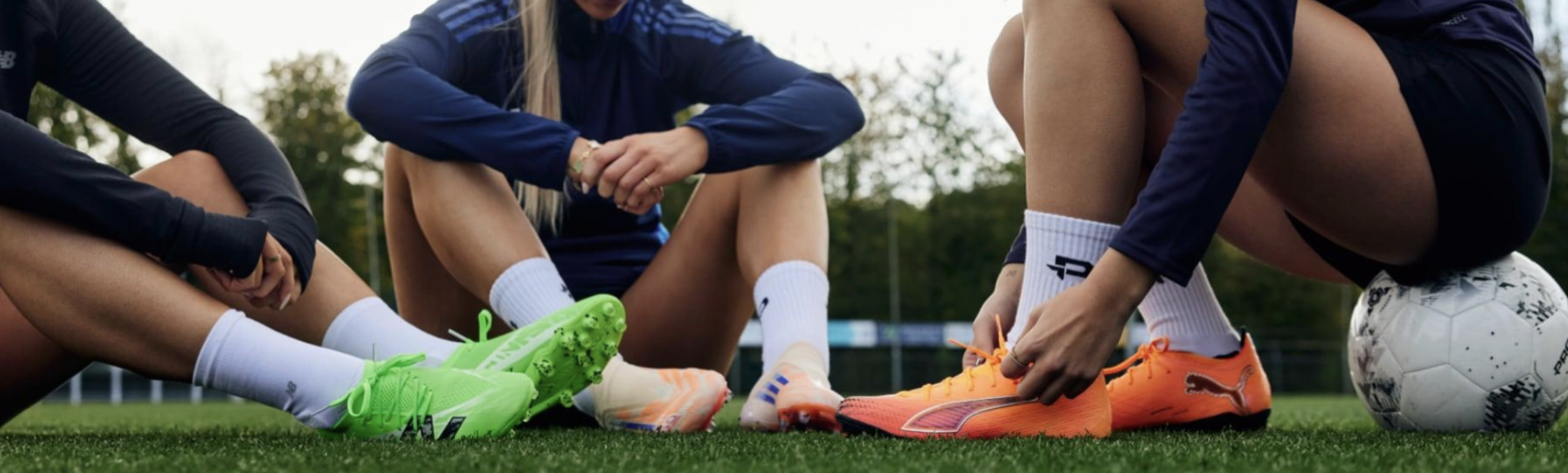
I’m a feminist.
That word alone now seems to make people either tense up or nod approvingly before the conversation has even started.
Which is probably part of the problem.
Because feminism has become one of those words everyone reacts to, but fewer people stop to define properly.
So let’s start there.
Feminism 101
At its simplest, feminism is the belief that women should have the same rights, opportunities, freedoms and respect as men.
That’s it.
Not female superiority.
Not anti-men.
Not the belief that women are always right.
Not the belief that men and women are identical.
Just equality.
Historically, feminism mattered because women were excluded from huge parts of public life:
voting
leadership
property ownership
education
financial independence
politics
sport
Women had to fight to even enter many of the rooms where decisions were made.
Football was one of those rooms.
The English FA actually banned women’s football from affiliated grounds for fifty years, from 1921 until 1971, claiming the game was “quite unsuitable for females.”
Think about that for a moment.
An entire generation of women effectively locked out of the sport, not because they couldn’t play, but because men in authority decided they shouldn’t.
And honestly, some days football still carries traces of that history.
Which brings me to Female Football Week
Every year I feel slightly uneasy about it.
Not angry.
Not anti-women’s football.
Not dismissive of the importance of visibility.
Uneasy.
Because I’m not convinced football always understands the difference between celebrating women and structurally supporting them.
The year it started to feel like a chore
I should probably admit something uncomfortable here.
When I was President of South Hobart FC, Female Football Week often felt less like a celebration and more like an obligation.
Not because we didn’t care about girls and women in football. Quite the opposite.
We cared deeply.
But every year the conversation became:
“What are we doing for Female Football Week?”
Not:
“What are we doing for women’s football all year?”
There’s a difference.
And underneath it all sat a quiet panic:
If we don’t do something, people will think we don’t care.
So we organised things.
Photos.
Posts.
Events.
Visibility pieces.
And some of them were genuinely worthwhile.
But if I’m brutally honest, there were years where it felt performative. Not maliciously performative. Just… expected.
Another awareness week to execute properly.
Football loves the optics
Football absolutely loves the optics of Female Football Week.
Suddenly every club social media page fills with:
smiling girls teams
player profile graphics
“meet our female footballers”
carefully worded statements about inclusion
obligatory posts reminding everyone the club “supports women’s football”
Look at us.
We care.
We have women’s teams.
And again, some of that visibility genuinely matters. Young girls seeing themselves represented matters enormously.
But sometimes it all feels slightly rehearsed.
Because the same clubs posting glossy graphics can still be:
giving women worse training times
struggling to retain female coaches
underrepresenting women in decision-making
treating women’s football as secondary when resources tighten
That’s the uncomfortable gap.
Football is becoming very good at looking supportive of women.
It is less consistently good at structurally supporting them.
And after enough years in administration, you start noticing how much energy goes into appearing progressive compared to quietly building systems that actually are.
Meanwhile the real work keeps happening
Meanwhile the real work continues quietly every week — retaining teenage girls, balancing field space, managing changerooms, finding coaches, trying to grow women’s programs sustainably.
That work never fits neatly into a campaign graphic.
The easiest thing in the world is posting:
“Happy Female Football Week!”
The harder thing is asking:
Why are the girls still training later?
Why are women still underrepresented in decision-making?
Why do women’s teams still often feel secondary when resources get tight?
That’s not a branding conversation anymore.
That’s a power conversation.
Here’s the irony nobody says out loud
Women’s football often has a healthier culture than the men’s game.
Not always. But often.
More communal.
More welcoming.
Less ego-driven.
Less obsessed with status.
More connected to participation and relationships.
Because women’s football had to build community before it had power.
Men’s football sometimes assumes importance automatically.
Women’s football often had to earn belonging first.
That changes the culture.
But do we still need Female Football Week?
Probably yes.
And also maybe no.
That’s the honest answer.
Because inequality absolutely still exists:
media coverage
sponsorship
facilities
investment
respect
leadership visibility
All still unequal.
But girls are not some niche participation group anymore.
They are everywhere.
The Matildas changed the landscape permanently.
Girls football is exploding.
Women coach, referee, volunteer, manage and lead across every level of the game.
So sometimes the language around Female Football Week feels oddly outdated.
As though girls are still being invited into football instead of acknowledging they are already central to it.
Maybe feminism in football now looks different
Maybe modern feminism in football is less about “letting girls play.”
That battle was largely won.
Maybe now it’s about power.
Who gets heard.
Who gets resources.
Who gets prime facilities.
Who makes decisions.
Who is visible.
Who is taken seriously without having to prove themselves twice.
Because football is still very comfortable celebrating women.
It is slightly less comfortable sharing power with them.
Where I land
I don’t hate Female Football Week.
But I am wary of football mistaking awareness for progress.
The real goal should be a game where women and girls are so embedded, respected and normalised that a themed week eventually feels unnecessary.
Not because women disappeared.
But because equality stopped being treated like a special event.
That would actually mean something.