Who Really Owns a Football Club?
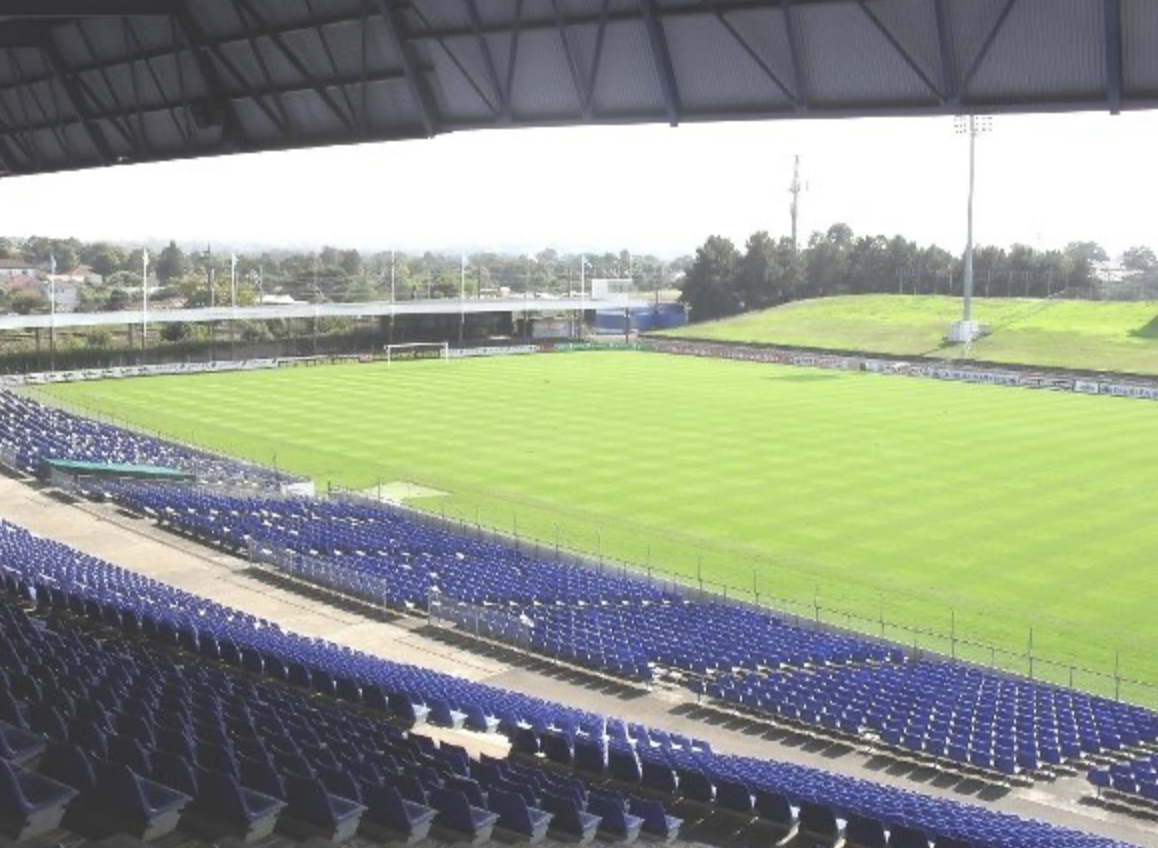
Belmore - Home of Sydney Olympic
There is a lot happening at Sydney Olympic right now.
If you’ve been watching from the outside, it might look messy. Social media posts, open letters, meetings, counter-meetings. Words like governance, transparency, control and sustainability being thrown around.
But underneath all of that is something much more important.
This is not just a Sydney Olympic story.
This is a football story.
And it is happening all over Australia.
The Sydney Olympic story, explained simply
Sydney Olympic is one of the most historic clubs in the country.
Built by community. Sustained by members. Carried through generations.
But in recent years, like many clubs, it has faced financial pressure and instability. That led to new funding coming into the club, new structures being introduced and a shift in how decisions are made.
At the centre of that period was a key figure who provided significant financial support, held leadership roles and helped stabilise the club.
Then, late last year, he stepped away.
And not quietly.
He moved into an attempted takeover of an A-League club, the Central Coast Mariners.
That matters, because it left a vacuum.
And in football, vacuums rarely stay empty for long.
The shift that is causing friction
The current board has been clear about its focus.
Stability. Governance. Sustainability. Youth development.
On paper, it all makes sense.
Clubs cannot survive without financial discipline. Governance matters. Development pathways matter.
But here is where the tension begins.
A shift toward youth is not just a football decision.
It is also a financial one.
Younger squads are cheaper. More controllable. More sustainable on a balance sheet.
That is the part that is rarely said out loud.
Because for members and supporters, it can feel like something else entirely.
It can feel like ambition being lowered. Identity being reshaped. A senior club becoming something closer to an academy.
In recent seasons, that shift has coincided with questions from members about the direction of the senior program and the role it now plays within the club.
And once that feeling takes hold, everything else starts to be questioned.
A layer beneath the surface
There is also another layer to this that has added to the unease.
Sydney Olympic’s involvement in the new Australian Championship has been described publicly as sitting within a separate structure, rather than entirely within the traditional member-based club.
For some, that may be a practical decision.
For others, it raises a more fundamental question.
If different parts of a club sit in different structures, with different levels of control, then what exactly is the club?
And who ultimately decides its direction?
You do not need to know every detail to understand why that matters.
Because once those questions are being asked, governance is no longer theoretical.
It becomes personal.
When governance becomes the story
At Sydney Olympic, governance is no longer happening quietly in the background.
It is front and centre.
Members are asking questions about:
who controls the club
how decisions are being made
what financial arrangements exist
whether the constitution has shifted power away from them
Meetings have been held. A steering committee has formed. There are calls for an Extraordinary General Meeting.
The board, for its part, is defending its position.
It says it is stabilising the club. Building for the future. Bringing professionalism to a complex environment.
And here is the uncomfortable truth.
Both sides believe they are protecting the club.
Only one of them will define what it becomes.
The meeting that matters
All of this is now heading toward one moment.
Sydney Olympic’s Annual General Meeting on 21 April.
That is where members will have their say.
Where questions will be asked directly.
Where governance, control and direction will no longer sit in statements or social media, but in a room.
These moments are rarely comfortable.
They are often messy.
But they are also where clubs show what they really are.
And this one will be watched closely.
The fault line
This is where it becomes bigger than Sydney Olympic.
Because the real question is not about one board or one group of members.
It is this:
Who does a football club belong to?
Is it:
the members who built it
the community that supports it
or the people who fund and stabilise it when things go wrong
In modern football, those answers do not always align.
And when they don’t, governance becomes the battleground.
The new reality for clubs
Across Australia, clubs are being pushed into a new space.
More compliance. More reporting. More financial scrutiny.
Higher expectations. Higher costs.
At the same time:
volunteer bases are shrinking
funding is harder to secure
and the gap between amateur structures and professional expectations is widening
So clubs adapt.
They tighten governance. Reduce board sizes. Bring in business thinking. Focus on sustainability.
All of which sounds sensible.
Until you ask a simple question.
Sustainable for who?
The moment everything changes
There is always a moment in these situations.
It is not a vote. Not a meeting. Not a press release.
It is a feeling.
It is the moment when members stop feeling like the club is theirs.
At Sydney Olympic, that moment appears to have arrived.
You can see it in the language:
“the club belongs to its members”
“this is not a dictatorship”
“call an EGM”
That is not noise.
That is a community pushing back.
What happens next
There are only a few ways this can go.
An EGM may be called. Directors may be challenged. Structures may be tested.
Or the current model may hold, and the club continues on its current path.
But regardless of outcome, something has already changed.
Governance is no longer invisible.
It is in the headlights.
And once it is visible, it is very hard to hide again.
Why this matters for all of us
It would be easy to dismiss this as a Sydney issue.
It isn’t.
This is what happens when:
community clubs face financial reality
private funding enters the system
governance structures evolve faster than culture
Sydney Olympic is just the example we can see.
There will be others.
There already are.
A final thought
Football clubs are not just organisations.
They are memory. Identity. Belonging.
You can stabilise a balance sheet.
You can restructure governance.
You can build a pathway.
But if people stop feeling like the club is theirs, something important has been lost.
And once that happens, it is very hard to get back.