“You’re Fucking Hopeless”: The Quiet Crisis of Referee Abuse
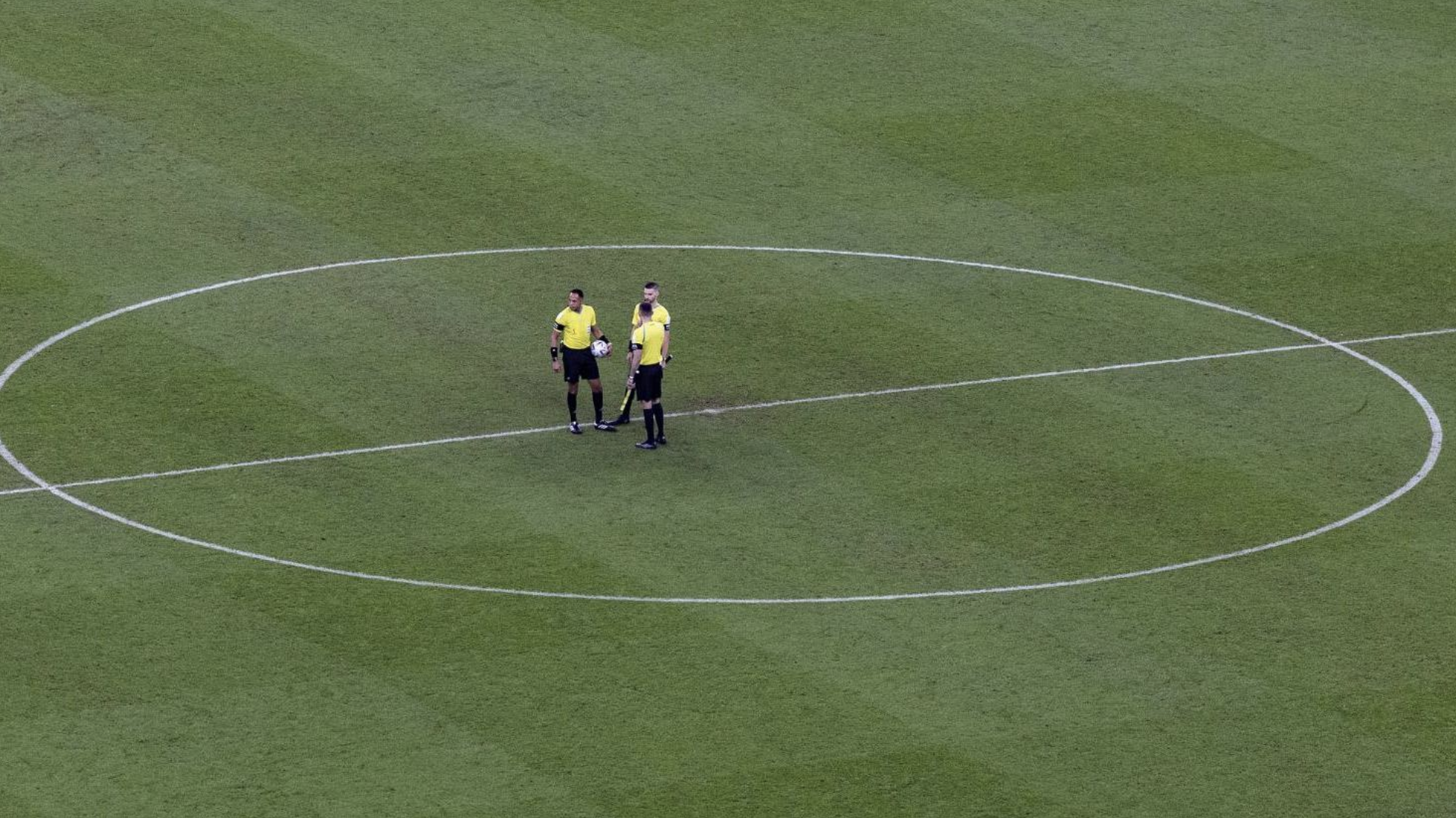
Shame on us
I interviewed a referee this week.
Anonymous by request.
Quite a few referees contacted me after my recent interview with Brenton Kopra to thank me for telling part of their story through Brenton’s experience.
What I discovered this time was not anger.
It was disappointment.
Exhaustion.
Shame.
Shame on us.
Because somewhere along the way football has normalised behaviour that should never have become normal.
There is a referee somewhere in Tasmania tonight wondering whether it is worth doing another game this weekend.
Not because of the weather.
Not because of the running.
Not because of the laws of the game.
Because of us.
This referee asked to remain anonymous. Not because they are weak. Not because they are dramatic. But because speaking publicly about referee abuse can itself bring another wave of judgement, whispers and criticism.
The person with the whistle
They started refereeing because they loved football and wanted to stay connected to the game. They were also tired of seeing high-level football being played with one or two officials while “clubbies” filled the gaps.
This is not somebody who hates football.
Quite the opposite.
This is somebody who loves the game enough to keep turning up despite everything that comes with the whistle.
What they found instead was a culture they say has changed significantly for the worse.
“No, I had no idea referees copped the amount of abuse that they do,” they said.
“I used to play the game, and it was always really frowned upon to disrespect the referee. I do remember it happening, don’t get me wrong, it’s always been there, but nothing like the level it is now.”
That part struck me.
Not that abuse exists. Most of us already know that.
It was the suggestion that football has slowly become comfortable with it.
Almost casual about it.
As though screaming abuse at referees is now woven into the fabric of the matchday experience.
Somewhere along the way football started confusing passion with permission.
“You’re shit mate”
And the abuse itself is relentless in its sameness.
“You’re shit mate.”
“You’re fucking hopeless.”
“Are you ever going to get a fucking decision right?”
One comment still lingers with this referee:
“He’s so fucking useless but FT doesn’t give a shit, just pat him on the back, give him a heap of cash for doing a shit job and seeya next week.”
Another accusation that stayed with them was being accused of cheating and bias.
Imagine hearing that week after week.
Imagine volunteering your weekend to a sport you love only to become the public target for adult frustration.
Imagine your son hearing it.
Your daughter.
Your partner.
Your father.
And then ask yourself why people stop refereeing.
Alone in the middle
One whistle.
Twenty-two players.
Two benches.
Hundreds of opinions.
And often one referee standing in the middle alone under cold winter skies.
That loneliness sits underneath this whole conversation.
Players have teammates.
Coaches have staff and benches beside them.
Parents have their sideline tribe.
The referee has nobody.
And if I am honest, football sidelines can change people. I have seen good people say things during matches that they would never say anywhere else.
Football people often like to think referee abuse is something that happens at “other clubs”.
I am not sure that is true.
The adults in the room
Perhaps the most confronting part of this interview was not the swearing.
Football has always had emotion.
It was who this referee says is often delivering the abuse.
“Coaches are easily the worst. At all levels, from U8s to NPL, coaches are easily the worst.”
The very people entrusted with teaching children about discipline, resilience and respect are too often modelling emotional loss of control instead.
“They are supposed to be the ones setting the example, but most of them are a disgrace.”
“I have witnessed grown men abusing 12-year-old referees, it is completely unacceptable.”
Twelve.
Children with whistles.
And what are young players learning when adults scream at officials over throw-ins and free kicks in junior football?
What chance does a 12-year-old referee have when the adult leader loses control first?
The referee also made another observation that lingered with me.
“People just forget their manners in general. All normal human etiquette goes out the window on the sideline of a football match apparently.”
Most of us would be horrified if somebody spoke to our child’s teacher, or a supermarket worker, the way some referees are spoken to on a Saturday morning.
The emotional burden
The referee told me they have left grounds angry and upset after games.
One recent incident involved abuse from what they described as one of the highest-regarded coaches in the state after a decision during a game.
The referee later went home and reviewed the footage.
They were right.
The coach was wrong.
But by then the damage was already done.
“It’s pretty ordinary that our highest level of coach can still think that it’s ok to abuse referees,” they said.
“The example this sets flows on to all the players and spectators, it infects everyone.”
Young players see it.
Parents absorb it.
Other coaches normalise it.
And eventually abuse becomes culture.
The referee said they discuss abuse “all the time” among themselves.
This is not occasional.
It is routine enough to become regular conversation.
Exhaustion sits underneath that too.
Physical safety
The referee said they had not personally felt physically unsafe at a game.
“But I know others have.”
The referee also pointed out another difficult reality.
“When I’m refereeing and they are on the team sheet it’s easy, give them a sanction,” they said.
“It’s a bit harder when it’s a parent and as a referee we don’t really have the power to stop it.”
The referee shortage is not a mystery
Football people often talk about referee shortages as though they appeared out of nowhere.
They did not.
This referee said they think about quitting “all the time.”
“The proof is in the numbers,” they said.
“Young referees are not staying, and who can blame them. No one deserves a serve.”
Then came the line that stayed with me most.
I asked whether they would encourage their own child to referee.
“I probably wouldn’t let my child referee.”
That is not anger.
That is resignation.
A person who loves football enough to referee it does not believe the environment is healthy enough for their own child to do the same.
The impossible job
The referee also pointed out something worth remembering.
Every player, coach, substitute, parent and spectator watches football through emotion and bias. Referees are expected to do the opposite.
“We must be completely impartial and just look at the facts with no emotion,” they said.
“No one else has the ability to do that and we must do it 100s of times each and every game, in a split second with no slow-mo replay.”
No replay.
No freeze frame.
Just instinct, positioning, concentration and courage.
And they must do it while being yelled at from every direction.
“Sorry about before”
Perhaps the most revealing part of all is the contradiction.
“At most games, everyone is kind, courteous, friendly and professional towards the referees before the first whistle is blown,” they said.
“As soon as the game starts and someone starts losing, the abuse starts.”
Then comes the ritual apology afterwards.
“Sorry about before, I get a bit passionate.”
As though ninety minutes of abuse can simply be wiped away with a handshake after full time.
Most people actually know the behaviour is wrong.
Otherwise they would not apologise for it afterwards.
“In a lot of ways, we are our own worst enemies”
The referee was also honest about the fact football’s officiating problems cannot simply be blamed on everyone else.
“In a lot of ways, we are our own worst enemies,” they said.
“Some referees ignore abuse, which just makes it worse for the next person.”
Because this was not an interview looking for sympathy without accountability.
The referee spoke about the need for more senior mentors, educators and experienced officials to help younger referees navigate the game and the pressure that comes with it.
They spoke about the need for more assessors, more fourth officials and stronger sanctions for clubs that allow abuse to continue unchecked.
And then there is the financial reality.
“Did you know we have to buy all our own kit?” they asked.
“Which is about $1000. Many referees wouldn’t make that much in a year.”
“Pay us more,” they repeated.
Not like a demand.
More like exhaustion.
“The amount of money we earn barely pays for the fuel to get to the game these days.”
The cost
The greatest cost is not financial.
It is emotional.
It is the accumulation of being called useless week after week by people who would never tolerate that behaviour in their own workplace or directed at their own family.
Football in Tasmania cannot keep talking about growth, pathways and standards while treating referees as disposable.
And somewhere in Tasmania tonight, another referee is deciding whether to come back next weekend.