All Red All Equal?A Test of Power and Responsibility
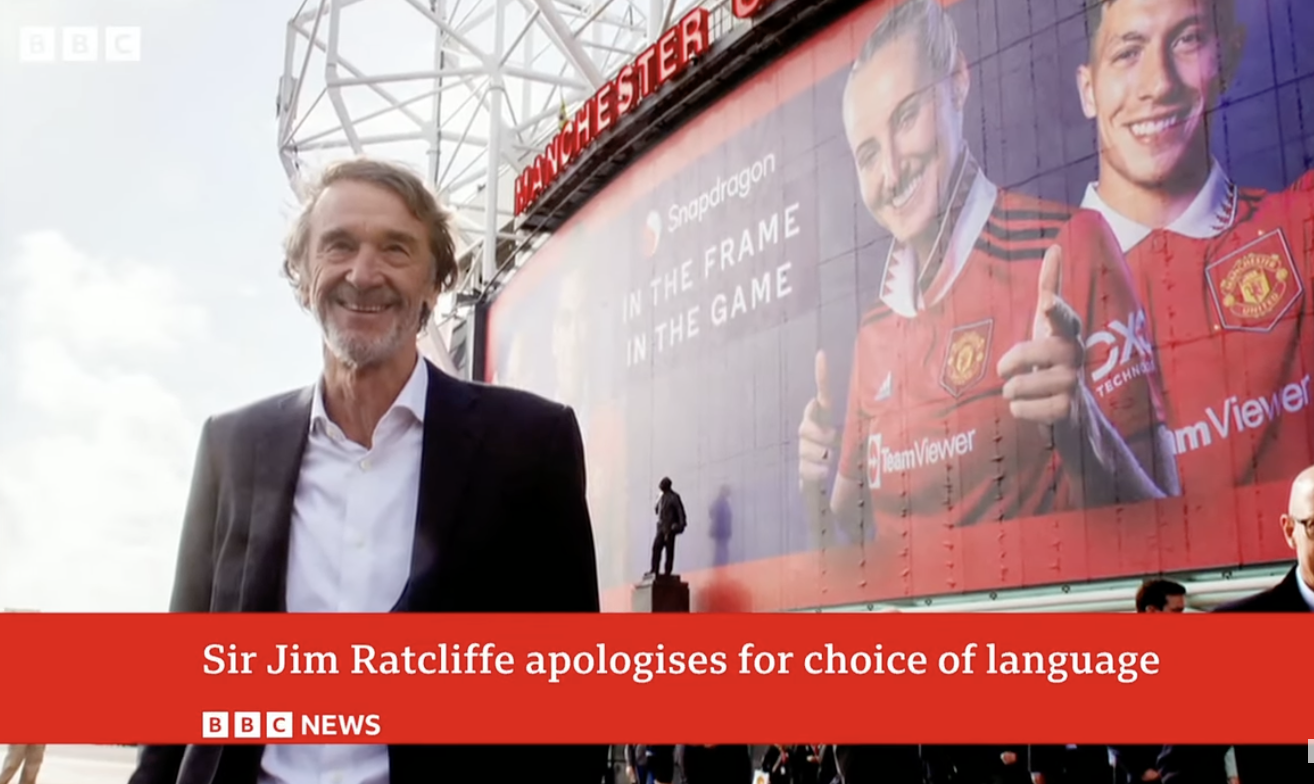
This week, at the European Industry Summit in Antwerp, Sir Jim Ratcliffe said the UK had been “colonised by immigrants” during a discussion about economic policy and migration.
The backlash was immediate.
Political leaders criticised the language. Anti-racism groups condemned it. Supporter organisations expressed concern.
Ratcliffe is not a distant investor. Through INEOS he is the minority shareholder who now controls football operations at Manchester United.
Manchester United, one of the most global and multicultural clubs in world football, issued a public statement reaffirming its commitment to inclusion and equality.
That is when it stopped being a political comment and became a football story.
What Was Actually Said
Ratcliffe made the comments in a formal policy forum, not at a football press conference.
That context matters.
It shows this was not an off-hand remark. It was deliberate language used to frame a point about national direction and economic pressure.
He later apologised for his “choice of language”, clarifying that he was speaking about managed migration and economic growth.
He did not withdraw the underlying argument.
That distinction matters.
Why It Landed So Hard
“Colonised” is not neutral.
It carries historical weight. It implies invasion, takeover, displacement. It has long been used in rhetoric that frames immigration as threat rather than contribution.
When you use that word, you activate more than statistics.
Manchester United shirts are worn in Lagos, Mumbai, Melbourne. Its squads and supporters span continents. The club markets itself, proudly, as global and diverse. “All Red All Equal” is not just a slogan. It is a statement of identity.
So when a part-owner with operational control uses language widely associated with exclusion, it collides directly with that identity.
Intent becomes secondary.
Impact becomes immediate.
The Club Response
Manchester United responded by reaffirming its inclusive values and pointing to its equality work.
That is what modern institutions do.
They separate the badge from the individual. The campaign from the comment.
It is a necessary move.
It is also an impossible one.
Owners are not anonymous commentators. They are power within the structure.
When they speak, the club absorbs it.
Supporters do not experience the owner and the club as separate entities. They experience them as intertwined.
And that is the tension.
Political Debate and Responsibility
Business leaders are entitled to enter political debate.
That is not the issue.
The issue is how language lands when you also hold symbolic power in a global sporting institution.
Apologising for “choice of language” is not the same as apologising for the premise.
It suggests the problem was phrasing rather than framing.
But language is framing.
If you choose a loaded word, you choose the consequences that travel with it.
That is not censorship. It is responsibility.
Who Gets to Speak Freely
Watching this unfold, I found myself thinking about something much closer to home.
When I was President of South Hobart, there were times I wanted to speak more bluntly than I did.
There were debates where I had strong personal views.
There were moments where I wanted to call things out more directly.
But holding that role meant understanding that my words were never just mine.
They carried volunteers.
They carried sponsors.
They carried players and families.
If I spoke freely in a way that satisfied me personally, I could have created consequences for people who did not choose that fight.
That is the quiet discipline of leadership in community sport.
Not because you are timid.
Because you are responsible.
Power and Stewardship
There is a difference between power and stewardship.
A billionaire owner can enter a national political debate and then clarify his wording.
A community club leader weighs every sentence because the collateral damage lands locally.
One position allows distance from consequence.
The other requires proximity to it.
“All Red All Equal” is a powerful phrase.
But if a club says those words, they are not marketing.
They are a promise.
And promises are tested when power speaks.
This story is not really about whether someone is allowed to hold a political view.
It is about what happens when power speaks in a way that unsettles belonging.
It is about who absorbs the shock.
And it is about the reality that in football, as in life, the people with the loudest platforms are rarely the ones who carry the quietest consequences.