Thirty-eight minutes of Australian football governance. I've got it down to about ten.
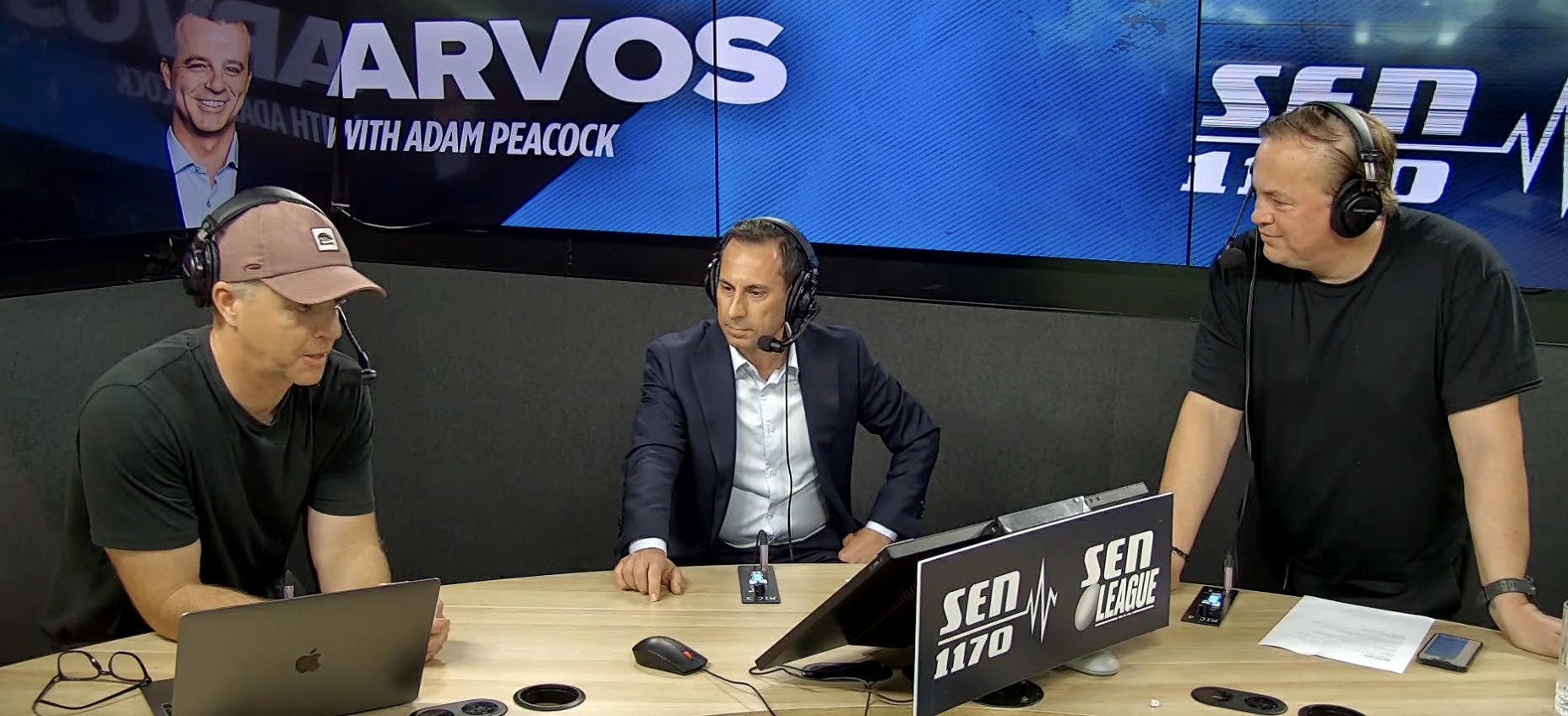
On Tuesday 10 November, Adam Peacock and Mark Bosnich (Bozza) interviewed Football Australia Chairman Anter Isaac on SEN.
Good on Isaac for fronting up.
We spend a fair bit of time complaining that the people running football don't tell us what's going on. So when the Chairman sits down for a wide-ranging interview, he deserves some credit.
Transparency is a wonderful thing. We could do with a bit more of it.
It was a friendly chat. But it wasn't a complete love-in. Bozza in particular pushed on money and governance.
There were still a few moments when I wanted to jump in.
Yes, but what does that actually mean?
And when is it going to happen?
Hang on. You haven't quite answered the question.
To be fair to Adam and Bozza, it was a radio interview, not a parliamentary inquiry.
I don't have that problem.
So I've broken the interview into sections. What Isaac was asked. What he said, in his own words where it matters. And what his answers actually tell us.
Everything is under its own heading, so jump to whatever takes your fancy. Unless you're a football nerd like me, in which case you might enjoy the lot.
And because I live in Tasmania, I'll look at what it might mean for our own clubs and volunteers.
Right. On with the governance.
Try to contain your excitement.
1. The Players' Union: What's the Argument About?
Professional Footballers Australia (PFA) is the players' union. It represents our professional footballers, including the Socceroos and Matildas.
Right now the PFA and Football Australia are arguing about money.
Specifically, how much sponsorship revenue national team players should get under their Collective Bargaining Agreement (CBA).
The PFA has taken it to the National Dispute Resolution Chamber. Think of it as football's own court.
Bozza put the union's case. He'd spoken to PFA chief Beau Busch. The PFA says the agreement gives players between 18 and 20 per cent of the relevant sponsorship money, and FA hasn't paid it.
That's the PFA's claim. It hasn't been tested yet.
What did Isaac say?
"All players will be paid in full, there's no risk to any entitlements."
Good to hear.
He said the current and previous agreements had created confusion and "a lack of clarity." Hence the dispute.
Then he described the union's job. The PFA, he said, has a mandate "to extract wealth for the elite players."
Extract wealth.
I doubt that's how the PFA would put it.
Isaac said FA's job is different. It has to invest in every level of the game, from kids putting on shin pads for the first time to the Socceroos and Matildas.
He also told us our national team players are among the five best paid in the world.
Based on FA's own research, anyway.
So did he answer the question?
Not really.
The dispute is about what the current agreement says FA has to pay.
If the players are owed the money, they should get it. If FA reads the agreement differently, presumably it has a reason.
We didn't hear it.
Instead we heard about building a better agreement when the current one expires in October 2027.
And telling the players that FA has lots of other mouths to feed doesn't change what their existing contract says.
Asked whether this would end up in court, Isaac was firm.
"We don't want lawyers getting richer."
On that we can all agree.
My question: What exactly is FA disputing, and when will it be settled?
2. Tony Popovic: Staying or Going?
The Asian Cup has been postponed to 2028. Popovic's contract was due to run until the end of it.
So does it simply roll over?
"There's no automatic rollover," Isaac said.
FA and Popovic have been talking for some time. Isaac said Popovic loves the job and FA loves having him.
Nothing has been agreed. No deadline was mentioned.
Isaac did keep the door open, though. If Carlo Ancelotti decided to retire to Cairns and wanted a chat, FA would happily listen.
Don't book the removalists just yet, Carlo.
3. Football Australia and the A-Leagues: Who Runs What?
Bozza described the A-Leagues as one of the parts of the game that is "burning."
Isaac wasn't having that.
He said the Australian Professional Leagues (APL), which runs the A-Leagues, had gone from big losses to breaking even. And last year it made a modest profit.
He then explained that FA wears two hats.
The first is regulator. FA approves the competition rules and the match calendar. It works with the APL on integrity. And it provides the referees.
The second is shareholder. FA owns under 20 per cent of the APL. It also holds what Isaac called "the good of the game share." That comes with a seat on the APL board and a vote.
So the APL runs the competitions. FA still sets some of the rules and shares in any profits.
The relationship, he said, is the best it's been since the two separated.
This was one of his clearer answers.
He made another point I liked.
"People don't follow leagues. They'll follow clubs."
He thinks everyone puts too much pressure on the APL and not enough on the clubs themselves. Fair call.
But readers might remember my earlier blog, Why on Earth Would You Want an A-League Team?
In that piece I looked at Silver Lake's $140 million investment, the APL's spending and losses, and what it all meant for Tasmania.
Including KeepUp.
Remember KeepUp?
Somewhere between $35 and $40 million spent on a digital platform that has since disappeared.
I could have saved them a few dollars.
So a modest profit is good news.
But there's a big difference between a modest profit this year and a sustainable organisation for the next decade. Especially with Silver Lake's investment still in the picture.
And if Tasmania ever gets another crack at the A-League, it will probably come one of two ways.
A white knight with deep pockets.
Or a Government brave enough to tell taxpayers that after the AFL and the JackJumpers, it's football's turn.
Either way, I'd like someone to explain that difference before the cheques are written.
4. Football Australia's Finances: A Rather Candid Admission
This was the part that surprised me.
Isaac described FA as "a 65-year-old organisation that has no assets on the balance sheet."
I'd want to see the accounts before taking that literally. But you get the point.
He said football has had real highs over the years. But instead of building something, the money from the good times went into plugging holes.
Sound familiar?
Then he said FA's business model is not sustainable.
That's quite something for a Chairman to say on the radio.
He also explained some of the recent losses. FA, he said, had chosen to deal with old problems now and put them through the books. If the board were chasing votes, he said, they wouldn't be posting record losses.
I wrote about those losses in The $37 Million Game: Inside Today's Football Australia AGM.
So what's the fix?
He gave us one reform. Getting every club, from grassroots to the A-League, "pointed in the same direction." He mentioned FA's Club Changer program, with more than 1,000 grassroots clubs involved.
He also predicted that within a day or two of speaking this candidly, someone would be slinging mud at FA.
I'm not slinging mud, Anter. Just asking.
What is the new business model? How much does FA need to save or earn? And when will we see results?
And the APL money?
Bozza asked whether FA had written off money the APL owed it.
"Nothing has been written off," Isaac said.
Instead FA had recorded what accountants call a loss allowance.
In plain English, it means you're not sure you'll get all your money back, so your accounts say so.
Say your neighbour owes you $10,000 and has stopped answering the door. Your accountant might tell you to allow for the risk. You haven't told him to forget it. You've just stopped counting on it.
Isaac said that since the two organisations settled their differences earlier this year, every commitment on both sides has been honoured.
Good.
But how big was the allowance? And what did it do to FA's bottom line?
Accountants don't put loss allowances in the books for something to do on a quiet Tuesday.
5. Football Queensland: Who Protects the Clubs?
This was the section I was most keen to hear.
I wrote about the Queensland dispute last week in What on Earth Is Going On in the Sunshine State?
More than 140 clubs are at odds with Football Queensland (FQ). It started with fees. Now it's about the 2027 affiliation agreement and how much say clubs really have.
Bozza read from the clubs' letter to FA. The clubs say they've been harassed, bullied and intimidated. They feared being disaffiliated if nothing was resolved by Friday.
That's today, as I write. FQ's deadline for the affiliation agreement is 13 November.
FQ President Paula Robinson has made her own claims of bullying aimed at people in football administration.
So both sides say they've been bullied.
Neither claim has been tested.
What did Isaac say?
He'd spoken to FQ's chair and CEO several times, along with some zones and clubs. He wanted to understand both sides.
Then this.
"The truth is always somewhere in the middle."
Really?
Sometimes the truth is in the middle. Sometimes one side is right and the other is wrong.
That's why we look at the evidence instead of splitting the difference.
He did say something more useful. FA has a responsibility it "cannot delegate" to make sure national regulations and principles aren't compromised.
So what would FA actually do?
He started to answer.
Then he said, "I think I'll leave it there."
And he did.
Asked for a quick yes or no on whether it would be sorted, he said, "I'm always optimistic and yes."
Optimism is lovely. It isn't a plan.
Why should Tasmania care?
Football Tasmania is a state federation too. Our clubs live with its decisions on fees, registrations and competitions.
Most disagreements get sorted the normal way.
But when they don't, where do clubs go?
Who steps in when the dispute is with the very federation that runs their football?
I'd have loved one more question.
Anter, if this isn't resolved, what happens next?
He left it there.
6. The Australian Championship: Pathway or Waiting Room?
The Australian Championship is in its second season. It's for ambitious NPL clubs wanting a taste of national football.
Isaac was upbeat.
He pointed to South Melbourne winning the Australia Cup. Their players had more than 50 games a year in their legs, and Isaac believed that experience helped.
He admitted making the competition pay will take time. Expecting a quick return, he said, "doesn't happen anywhere other than maybe a Ponzi scheme."
Fair enough.
At one point the phrase "NPL Champions League" came up.
That matters. A Champions League-style tournament pulls clubs out of their own leagues for a separate competition. A true second division is a full home-and-away season.
They're not the same thing.
Then Bozza cut to the chase. What's stopping promotion and relegation?
Isaac said the APL wants to expand the A-League first. He'd personally prefer around 16 teams before promotion and relegation comes in.
Could an NPL club be admitted to the A-League in his lifetime?
"We'd be hopeful."
Bozza then pointed out there's no legal barrier. It comes down to the A-League clubs.
Isaac agreed. "It's up to the clubs."
And there's the rub.
Clubs that paid good money for A-League licences aren't likely to vote for a system that could see them relegated.
So is the Australian Championship a genuine pathway?
Or a waiting room where NPL clubs show off and hope somebody invites them in?
No date. No pathway. No promise.
For Tasmania this matters. South Hobart has shown a Tasmanian club can hold its own against interstate opposition.
But a national tournament and a full national season are very different costs. Flights alone would make any treasurer weep.
Clubs deserve to know what they're planning for.
7. And Finally, the Grassroots
The line I liked best came early, in the middle of his answer about paying the players.
The most important part of Australian football, Isaac said, isn't FA, the national teams, the A-Leagues or the state federations.
It's the 2,500 clubs across Australia and the volunteers who keep them going.
I couldn't agree more.
Every weekend those clubs organise the coaches, referees, grounds, registrations and canteens. Plus all the little jobs nobody notices until somebody forgets to do them.
But if the clubs matter most, how much say do they actually have?
When decisions are made about fees, competitions and pathways, where are the clubs in the room?
And when they disagree, who listens?
Ask the clubs in Queensland.
I don't expect Isaac to fix Australian football in one radio interview.
But he fronted up, explained his thinking and gave us plenty to chew on.
I hope he does it again.
Because if football wants people to understand the decisions made on their behalf, someone has to explain them.
Preferably before the decision has been made.
And in language that doesn't need a degree in accounting, law or football politics.
There you go.
Thirty-eight minutes of governance. Ten minutes and a cup of tea.
You're welcome.