Silly O'Clock
They used to say Australia came to a standstill for the Melbourne Cup.
On Friday afternoon, it wasn't a horse race that stopped the nation.
It was the Socceroos.
Pubs filled before lunchtime.
People booked annual leave.
Others balanced work laptops beside pints.
City squares overflowed.
Primary school halls and classrooms across Tasmania were transformed into mini fan zones, with children dressed in green and gold to cheer on Australia. Teachers embraced the occasion, recognising this was one of those rare moments that transcended the classroom. Some even turned it into lessons about geography, culture and national identity.
And somehow, after ninety tense minutes, a nil-all draw felt like a victory.
As I watched it all unfold, I wasn't surprised.
I smiled.
Because I'd seen it all before.
Where It All Began
Long before I met Ken, I was that football mum.
The one waking the kids at silly o'clock because the Socceroos were playing.
Blankets on the couch.
Hot chocolate in hand.
School uniforms waiting by the door.
Looking back, perhaps I wasn't winning any Parent of the Year awards.
School could wait.
The Socceroos couldn't.
But before all those early morning alarms came one unforgettable night.
16 November 2005. Homebush.
I was there with my boys.
More than 82,000 Australians packed into Telstra Stadium believing this just might finally be our night after 32 years away from the World Cup.
Marco Bresciano gave Australia the lead.
Mark Schwarzer saved two penalties.
Then came the moment every Australian football supporter can still picture.
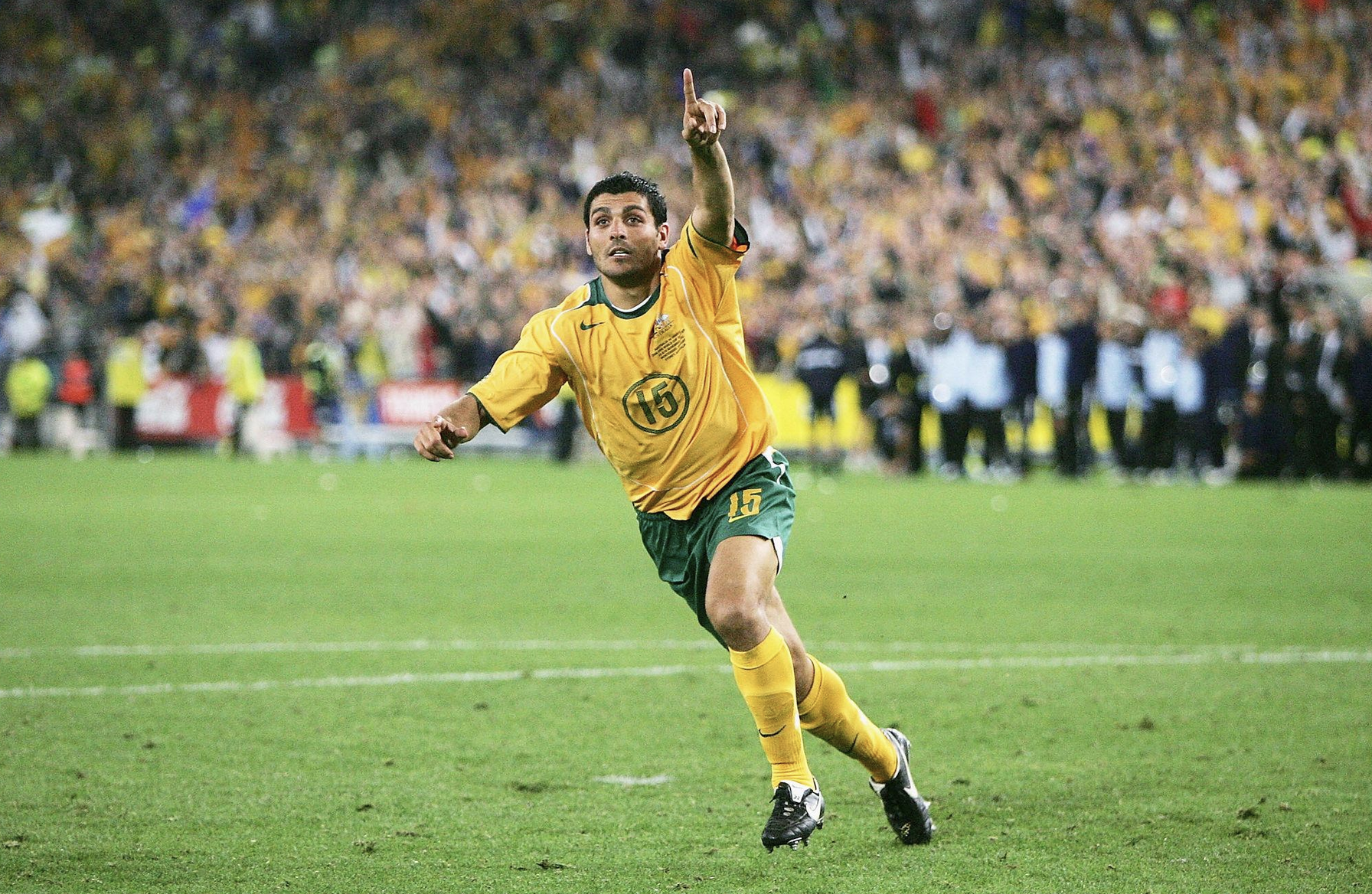
John Aloisi stepped forward.
The net bulged.
The shirt came off.
And an entire nation erupted.
We weren't just going back to the World Cup.
Australian football had changed forever.
From then on, life seemed to be measured in World Cups.
Germany in 2006 gave us Tim Cahill's unforgettable double against Japan, John Aloisi's stunning volley and Harry Kewell's injury-time equaliser against Croatia that sent Australia into the Round of 16.
South Africa in 2010.
Brazil in 2014.
Russia in 2018.
Qatar in 2022.
Now North America in 2026.
Every tournament brought another excuse to wake the family at ridiculous hours.
Another excuse to tell the kids, "Just this once."
Looking back now, I don't regret a single one of those early mornings.
The boys are grown now.
The hot chocolate has become coffee.
Ken sits beside me instead.
The kick-off times are still ridiculous.
The excitement hasn't changed one bit.
I Found My Tribe
When you've spent decades involved in football, you sometimes forget that not everyone lives and breathes the game the way you do.
Then the World Cup arrives.
Suddenly, people are taking long lunches to watch Australia.
Pubs are overflowing.
Workplaces wheel televisions into meeting rooms.
Friends who haven't mentioned football for four years suddenly become experts on goal difference and knockout permutations.
And you realise something.
You've found your tribe.
Not just people who watch football.
People who understand why ninety minutes can matter.
People who know why a draw can feel like a win.
People who are prepared to rearrange their day because Australia is playing.
For one afternoon, the football community wasn't a small group scattered around grounds every weekend.
It was everywhere.
The School Halls
One of my favourite images from Friday wasn't from a packed pub.
It was from schools.
Across Tasmania, primary schools embraced the occasion.
School halls became live sites.
Classrooms filled with children dressed in green and gold.
For one morning, football wasn't a distraction from learning.
It was the lesson.
It was about community.
Belonging.
National pride.
And sharing an experience together.
Years from now, many of those children probably won't remember what they learnt in maths that Friday.
But they'll remember watching Australia qualify for the knockout stages with their classmates.
Just as I remember waking my own children at ridiculous hours to watch the Socceroos all those years ago.
We Should Know Better Than To Forget
Of course, this feeling doesn't belong only to the men's game.
Those of us in football certainly should know better.
The Matildas showed us exactly what a nation falling in love with football looks like.
Packed stadiums.
Big screens.
Children wearing jerseys.
Families gathering together.
People who had never watched a full football match suddenly living every kick.
In two years' time, when the Women's World Cup comes around again, I have no doubt Australia will do it all over again.
The same colours.
The same excitement.
The same sense of belonging.
Because this isn't really about the men's game or the women's game.
It's about football.
It's Always Been There
For years we've heard the same old line.
"Australia isn't really a football country."
Friday reminded us that it absolutely is.
The World Cup doesn't create football fans.
It reveals them.
The Guardian captured the scenes perfectly.
Packed pubs.
Overflowing live sites.
People taking long lunches.
Workplaces pausing.
Families gathering.
Thousands of Australians putting everything else on hold to watch the Socceroos.
Here in Hobart, something special happened too.
After ABC Radio Hobart's Ryk Goddard asked why Tasmania didn't have a proper public viewing opportunity, the community responded.
The Odeon opened its doors before dawn.
The Hanging Garden welcomed more than a thousand supporters.
Sometimes football simply needs someone prepared to ask,
"Why not?"
Maybe that's the lesson.
Australia has never needed convincing to love football.
Every four years, the World Cup simply reminds us.
Until Next Time
In another few weeks, life will return to normal.
The pubs will empty.
The school halls will return to assemblies.
The giant screens will come down.
Those of us who live our lives around football will head back to community grounds, junior matches, NPL fixtures, WSL matches and cold winter mornings.
We'll still be there.
We always are.
Because football isn't something we discover every four years.
It's something we live every week.
And in two years' time, when the Matildas step onto the biggest stage once again, I have no doubt Australia will answer the call all over again.
Because football has never really left us.
For one glorious Friday afternoon, the whole country simply remembered.
My tribe became the whole country.