If the Pathway Worked, FIFA Wouldn’t Need to Intervene
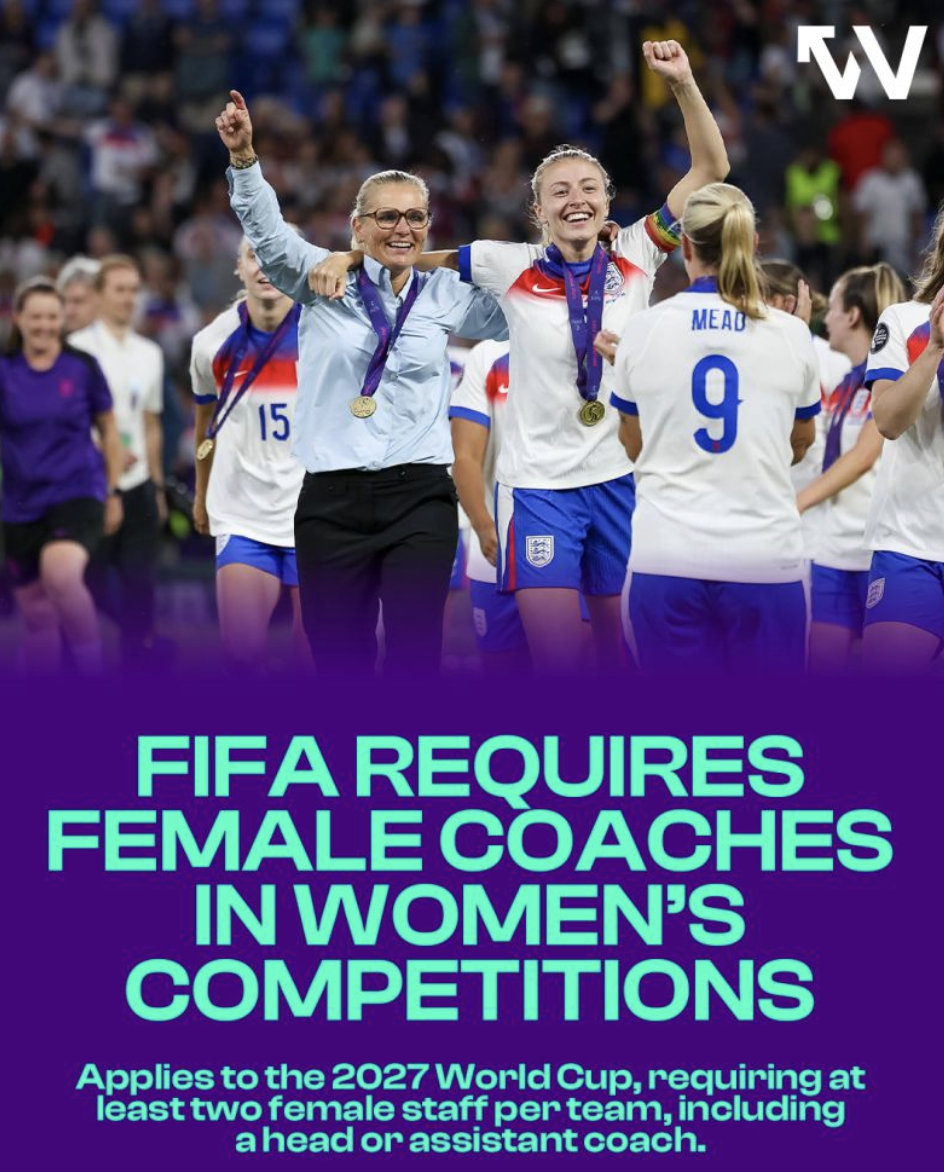
Mandated Change: When Football Stops Waiting
There was a moment today that didn’t come with a goal, a crowd, or a trophy.
But it might matter more than all three.
FIFA has ruled that every team in its women’s competitions must now have:
at least one female head coach or assistant coach
at least two female staff members on the bench
and at least one female member of medical staff
Not encouraged.
Not recommended.
Required.
And that one word tells you everything.
What FIFA Has Actually Done
This is not a soft policy.
It is structural.
It applies across all FIFA women’s competitions, youth and senior, national teams and clubs.
It begins immediately with youth tournaments and rolls into the 2027 Women’s World Cup.
This is not a campaign.
It is not a development program.
It is a rule.
FIFA has effectively said the system is not moving fast enough, so we are going to move it.
The Quiet Admission Behind It
The headline will say progress.
But underneath, this is something else.
It is an admission.
At the 2023 Women’s World Cup, only 12 of 32 head coaches were women.
Globally, only around five percent of coaches are women.
In a sport that belongs to women.
That is not just a pipeline issue.
That is a system issue.
If the Pathway Worked, This Wouldn’t Exist
Football has spent years talking about pathways.
Development.
Opportunities.
Visibility.
And yet here we are.
At the point where the global governing body has stepped in and said we will legislate the outcome.
Because the system hasn’t delivered it.
Coaching pathways do not fail by accident.
They reflect who holds power, who makes decisions, and who is seen as ready.
Who Coaches the Women’s Game
This is the uncomfortable part.
Women’s football has grown rapidly.
But the coaching hasn’t kept pace.
The game expanded, and men stepped into the space faster than women were supported to.
That is not a criticism of individuals.
It is how systems behave when they are not deliberately designed otherwise.
Acknowledging What Has Been Built
It is also important to say this clearly.
Men have played a significant role in building women’s football.
As coaches, volunteers, and leaders, they have helped grow the game, often at times when there were few pathways or structures in place.
That contribution matters.
But contribution and control are not the same thing.
The question now is not how the game was built.
It is who it is being built for next.
The Gap Nobody Talks About
You can mandate positions overnight.
You cannot create experienced coaches overnight.
That gap did not appear suddenly.
It has been building for years.
Mandating roles creates demand overnight.
The supply of experienced coaches takes years to build.
From Encouraged to Enforced
This is the real shift.
For years, diversity in coaching was encouraged.
Programs were introduced.
Pathways were discussed.
Progress was measured slowly.
Now it is being enforced.
That is not evolution.
That is intervention.
This is not just about coaching.
It is about who is visible, and who has authority, in the technical area of the game.
The Risk Football Will Try to Ignore
This is where it gets uncomfortable.
Football is very good at creating roles to meet requirements.
It is less good at shifting who holds authority within them.
The risk is not that this rule fails.
The risk is that it is complied with.
Assistant roles filled.
Boxes ticked.
Structures unchanged.
The real test will not be how many women are on the team sheet, but where they sit within it.
And This Is Not Just a FIFA Story
This will not stay at the top of the game.
It will ripple.
Into national federations.
Into licensing systems.
Into club expectations.
Into community football.
Because once something is mandated globally, it becomes the reference point everywhere.
The question is not whether this applies to us.
It is how far away we are from needing the same intervention.
What We See at Ground Level
At community level, we see it every week.
Women organising teams.
Running programs.
Holding clubs together.
But far fewer progressing into formal coaching roles.
That is not a reflection of capability.
It is a reflection of structure.
Football did not run out of women capable of coaching.
It ran out of ways to ignore them.
The Governance Layer Nobody Talks About
This is also a governing body responding to pressure.
Women’s football is growing.
Commercial interest is increasing.
Scrutiny around equity is rising.
This is not just reform.
It is response.
The detail that will matter most is not the rule itself, but how it is enforced.
Because in football, rules without enforcement quickly become recommendations.
The Question Football Now Has to Answer
FIFA has forced the door open.
But what happens next is the real test.
Do we build real pathways?
Do we invest in coaching development?
Do we create environments where women are not just present, but leading?
Or do we fill roles, meet requirements, and call it progress?
Because This Is the Truth
When a governing body mandates representation, it is not a sign that things are working.
It is a sign they are not.
Because if the system worked, FIFA would not need to intervene.
And if we do not change it, they will not be the last to.