In Football Nothing Has Happened Yet
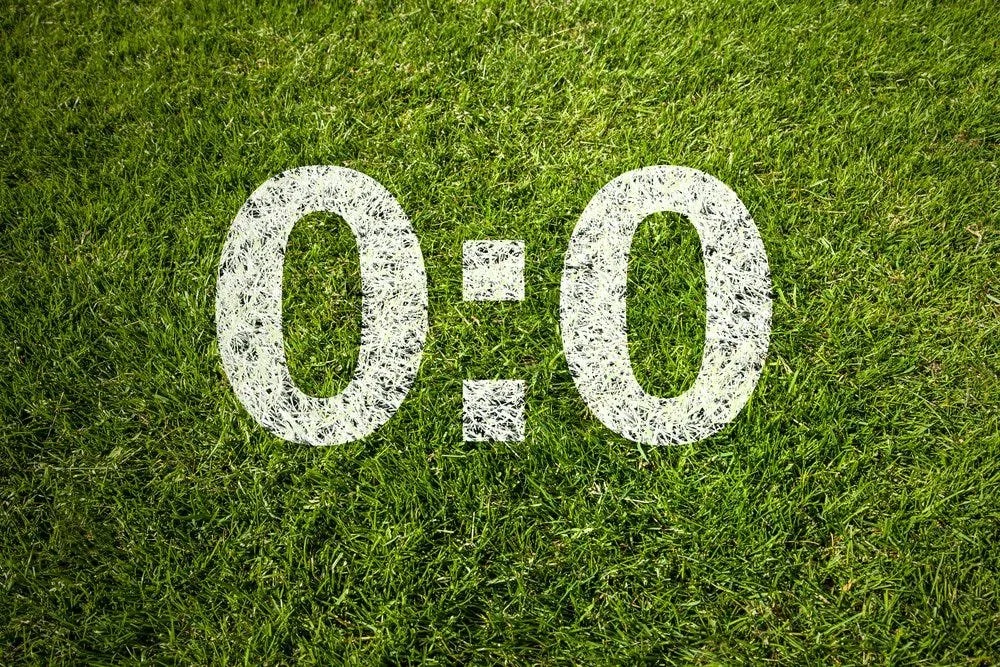
Ken and I were watching football early one morning, coffee in hand, when the conversation drifted, as it often does, into goals.
When are they scored?
More in the first half or the second?
It is one of those simple questions that opens something bigger. Because almost immediately the familiar criticism surfaced, the one football always seems to carry.
“There aren’t enough goals.”
It is a comment most football people have heard countless times, usually from those more used to sports where the scoreboard is constantly ticking over.
Early mornings and plenty to watch
Perhaps it helps that we are watching a lot of football at the moment.
Early morning kick-offs suit us. The house is quiet. The day has not yet started. We can sit and watch properly.
Premier League.
AFCON.
The EFL Championship.
There have been plenty of goals, plenty of drama, and plenty of different game states to observe. And yet, even with all of that, it is not the number of goals that holds the attention. It is when they come and what they change.
The comparison problem
In Australia, football lives alongside sports like AFL, where a goal is worth six points and scores can climb quickly and dramatically.
There is movement on the scoreboard almost all the time.
Momentum is visible.
Reward feels constant.
Football does not work that way.
A typical match might finish 1–0, 1–1, or sometimes 0–0, and to some eyes that feels underwhelming. But that reaction often comes from measuring football against the wrong standard.
Football is not a high-scoring sport by design. It never has been.
Why low scores create tension, not boredom
In football, goals are rare. That is precisely why they matter.
A single goal can change everything.
A single mistake can decide a match.
A single moment can undo ninety minutes of discipline.
In a 0–0 game, nothing feels settled. Every attack carries possibility. Every defensive error feels dangerous. The longer the score stays level, the greater the tension becomes.
A 1–1 match can feel even tighter. Both teams know that one more goal may be decisive. Risk and restraint exist side by side, and every decision is weighed.
This is not emptiness.
It is suspense.
When goals are actually scored
When Ken and I went back to our original question, the answer was clear.
Across most leagues and competitions, more goals are scored in the second half than the first.
Just under half come before the break.
Just over half come after.
The final fifteen minutes of a match are consistently the most goal-heavy period of all.
This matters, because it explains why football often feels as though it is building rather than exploding early.
A quiet first half does not mean a dull match.
It often means the tension is still forming.
First half control, second half consequence
The first half in football is often cautious. Teams are organised, legs are fresh, mistakes are fewer. It is not unusual for a match to reach half-time scoreless. But this is not a failure of entertainment. It is the laying of foundations.
Most goals come later, when the game loosens and decisions become harder to execute perfectly.
Why the second half opens up
There are sensible reasons for this.
Fatigue begins to show.
Concentration slips.
Defensive structure becomes harder to maintain.
Game state matters too. Once a team is behind, they must take risks. Lines stretch. Spaces appear. Substitutions introduce fresh legs and new problems to solve.
Football rewards patience and punishes small errors. The longer the game goes, the harder perfection becomes.
Discipline still matters
How often have we seen it. A side that sits deep, absorbs pressure, defends for almost ninety minutes, and still finds a way to win.
Not by accident.
By discipline.
By holding shape when legs are heavy.
By saying no to the tempting pass forward.
By trusting teammates to do their job.
Those matches are often dismissed as negative or unattractive, but they are anything but. They are studies in concentration and restraint. They remind us that football is not just about attacking flair, but about collective resolve. Sometimes the most impressive thing a team does is refuse to break.
Where goals actually come from
Most goals are not scored from distance. They are not spectacular. They are not clean.
They come from inside the box.
From close range.
From cut-backs.
From second balls.
From moments when structure finally gives way.
Long-range goals live in the memory, but they are the exception. Football is designed around probability, not beauty. The closer you are to goal, the harder it is to defend perfectly.
This is why teams that sit deep can survive for so long. They are not just defending space. They are defending the most dangerous areas of the pitch. They are limiting probability.
When that discipline holds, the game remains tight. When it cracks, it often cracks suddenly.
Where VAR fits into all of this
This is where modern football complicates the conversation.
The introduction of VAR has led many to feel that football now has even fewer goals, particularly because of marginal offside decisions. Lines drawn so tightly that a shoulder, a knee, or yes, the nose of an attacker appears to cancel out the moment entirely.
Statistically, VAR has not reduced the total number of goals. In some competitions, goals have even increased slightly, largely because more penalties are awarded.
But numbers are not really what people are reacting to.
What VAR changed was how goals are experienced.
A goal used to be instinctive.
Now it is provisional.
The pause.
The wait.
The freeze-frame.
The lines.
When goals are already rare, taking one away, even correctly, feels enormous. Football is a low-scoring game built on flow and emotion. It was never designed to be judged frame by frame.
For a time, VAR chased absolute precision, and in doing so offended football’s sense of fairness. Most competitions have since softened that approach, quietly acknowledging that being technically right is not always the same as being true to the game.
Understanding football on its own terms
Football is often criticised for not offering constant reward, but that criticism misunderstands its nature.
The drama is not in accumulation.
It is in consequence.
Goals arrive less often, but when they do, they carry weight. They reshape the match, the crowd, and sometimes the season.
Perhaps that is why so many of us find ourselves leaning forward in the final stages of a game, even when the score is low. Especially when the score is low.
Because in football, nothing has happened yet.