James Sherman: Coming Home With New Eyes
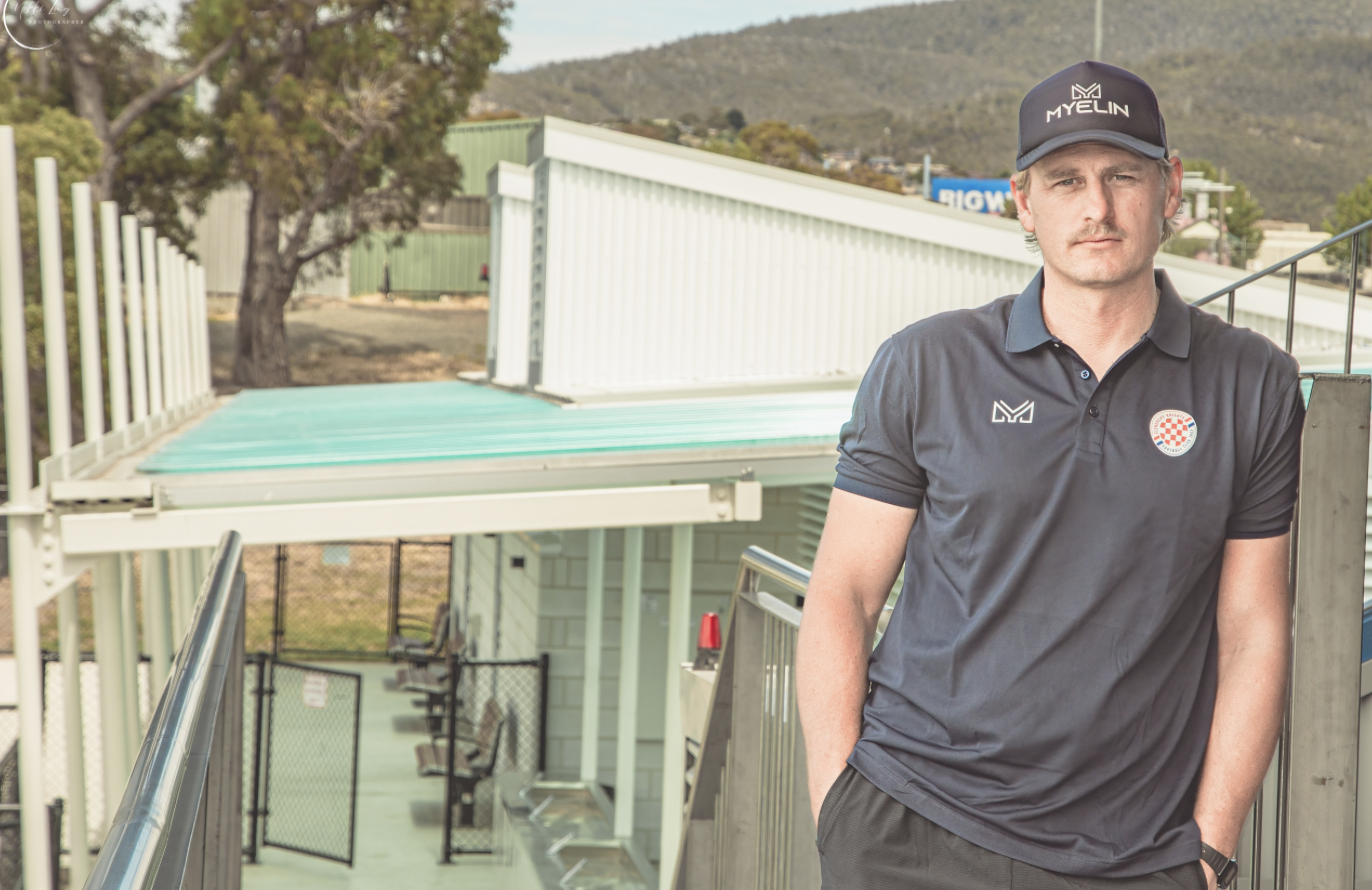
James Sherman - Another terrific photo by Nikki Long
Season 2026, Glenorchy Knights FC
James Sherman is one of those coaches who makes you feel optimistic about football.
Not because he talks loudly, or sells himself well, but because he is thoughtful, grounded, and serious about the work. James loves football, and you can tell quickly that the game still excites him, not just for what happens on a Saturday, but for what can be built over years.
James coached Glenorchy Knights from 2019 to 2024, then stepped away to work in Singapore in a player development role. Now he returns for the 2026 season as NPL Head Coach and in a broader technical leadership position across the club.
As part of my own written record of Tasmanian football, it felt important to capture James’s thinking in his own time, because coaches like this shape far more than just one team.
What follows is James Sherman’s reflection on football, coaching, Singapore, and what Tasmania needs to do if it wants to genuinely improve.
A football beginning
James’s earliest football memory is simple.
Kicking the ball with his mum in the backyard at home.
He says most sports were interesting as a child, but football just clicked, and it was easily accessible. There was always a ball nearby, always a game to be found. Once the love of it landed, it never really left.
When playing ends and coaching begins
Like many players, James expected to play for as long as he could.
But football has a way of forcing decisions on you. In pre-season 2016, he began having serious Achilles issues. It became apparent things weren’t going to improve much, and that got him thinking about what happens after playing.
That same year, he completed his C Licence.
Things progressed from there.
The people who shape you
When James talks about influence, he does not begin with elite programs or famous coaches.
He starts with family.
His mum and brother shaped him more than anyone. He also speaks with deep appreciation about the Armstrong family, who took him in as a sixteen-year-old straight out of Tasmania.
He was fortunate to have what he describes as stellar teammates, men who might be considered old school today, but who valued standards, care, and looking after each other.
That experience carries into the way he leads.
There are things that just matter, he says, and people caring about the small things makes a difference.
Small things add up.
Flexibility is not weakness
James is open about early coaching mistakes.
In 2019, Glenorchy Knights went through the middle of the season with six losses in a row. He reflects that they were trying too hard to match teams that were stronger.
In the final round of fixtures, they made a change.
They played deeper, stayed organised, and played on the counter.
They finished fifth.
The lesson stayed with him.
Flexibility isn’t weakness.
That is as much a leadership philosophy as a tactical one.
Building Glenorchy Knights beyond the first team
James’s years at Glenorchy were not only about the NPL side.
At the end of 2018, the club set up the Academy. He credits Dale Itchins with growing it strongly, and later James returned to the Academy Director role himself.
At the time he stepped in, the club had one state representative player across all youth teams.
Now, he says, that is drastically different. Glenorchy Knights consistently have female and male players in representative squads.
He highlights one example with pride.
Ebony Pitt, an Academy graduate and current WSL player, selected in a Junior Matildas training camp after a recent National ID tournament.
That is real development, not just talk.
Every year is a big year
James is clear that 2024 was a big year, but he also says every year is a big year, with or without silverware.
It is always demanding, and he says he would not change a thing.
The fun, for him, is in the small details. Keeping people engaged, fresh, always looking for a bit more.
How can we be better.
After six years as NPL coach and two years before that as an assistant, he needed a reset, not from football, but from the intensity of first team management.
Singapore and the value of procedure
James chose Singapore because he needed something new.
Staying in Tasmania would not have allowed him to do that. The chance to work abroad and experience new environments was refreshing, and working specifically in player development gave him time to improve his coaching.
He describes Singapore as an amazing country.
Education is paramount. Military service has a significant influence on society. Procedure is valued and prioritised, often.
He found the players and parents extremely open to development and supportive. He believes Singapore has real potential for rapid football improvement, given its geographical location, dense population, and strong resources.
We are guessing
In Singapore, James worked in a development environment and was struck by the importance of collaboration across all levels of football.
Discovering and monitoring players, communicating with clubs and coaches consistently, and using clear evaluation metrics, while also being willing to question those metrics.
He worked alongside talented colleagues and saw huge progress made in a short time with players aged between eight and eleven.
That reinforced something important.
We are guessing.
Every estimate or evaluation can never be claimed as a guarantee. That is simply the truth.
Success leaves clues
James does not say Singapore transformed him as a coach.
He says it reinforced what he already believed.
If things can be done simply, then that is good.
He enjoys being part of teams that are great on and off the pitch, and he enjoys creating challenging and dynamic environments that lead to good things.
Success leaves clues.
That phrase says a lot about his approach. Watch, learn, observe, build.
Returning to Glenorchy Knights in 2026
James does not describe this as a return.
He describes it as a new job.
That, he says, is good for him, good for the players, and good for the club.
He sees the challenge and believes the opportunity is there to improve quickly.
His role will support not only the NPL side, but also WSL, Under 21, Championship, and Under 18 coaches across men’s and women’s football.
For him, there is more to football than the outcome of a Saturday or Sunday afternoon.
How can staff challenge, stretch, and support players at every opportunity.
How can coaches deliver great sessions.
How do people learn best.
What do we need to do to deliver well across the board.
A playing model and coaching framework
The club’s aim is to create a clear playing model and coaching framework that everyone can see and work towards.
James’s role is to facilitate that, then work with senior staff to implement it.
A major focus is pedagogy.
Not just running sessions, but thinking critically about how sessions are designed, how players learn, and how coaches improve every year.
His day to day will involve team analysis, session review, and sharing content with coaches.
He also says the retention and recruitment of senior coaches this year is the best the club has had.
It is an exciting time.
Transparency, consistency, clarity
James’s non-negotiables as a coach are simple.
Transparency. Consistency. Clarity.
Stick at it, and good things will happen.
Guidelines, not rules
When asked about leadership, he says something that stands out.
Don’t make rules. Use guidelines instead.
Stick to process. Focus on what is within your control. Prioritise what is beneficial for the group.
Remain positive.
And play to win.
Coach education is the gap Tasmania cannot ignore
If Tasmania could change one thing to produce better players and coaches, James goes straight to coach education.
He means conferences and presentations, not just licence courses.
Bringing in presenters, and having local coaches share knowledge.
He believes Tasmania is miles off providing that for the people trusted with developing the game.
There are very good coaches locally, he says, and that knowledge should be tapped into for the benefit of all.
There is no excuse not to close the gap with other states. Tasmania should be able to box above its weight in professionalism and innovation in player development.
So why hasn’t it changed.
Because knowledge sharing hasn’t been consistent. It can’t be a token event to tick a box.
It needs to be purposeful and interesting.
Build it, and the progress will be obvious.
Final reflections
There is a freshness to James Sherman.
Not because he is new, but because he genuinely enjoys football, believes in learning, and cares about building environments that help players and coaches improve.
He talks about football as work worth doing.
In Tasmanian football, that matters.