Why the Matildas Feel Safe - And Men’s Football Still Doesn’t
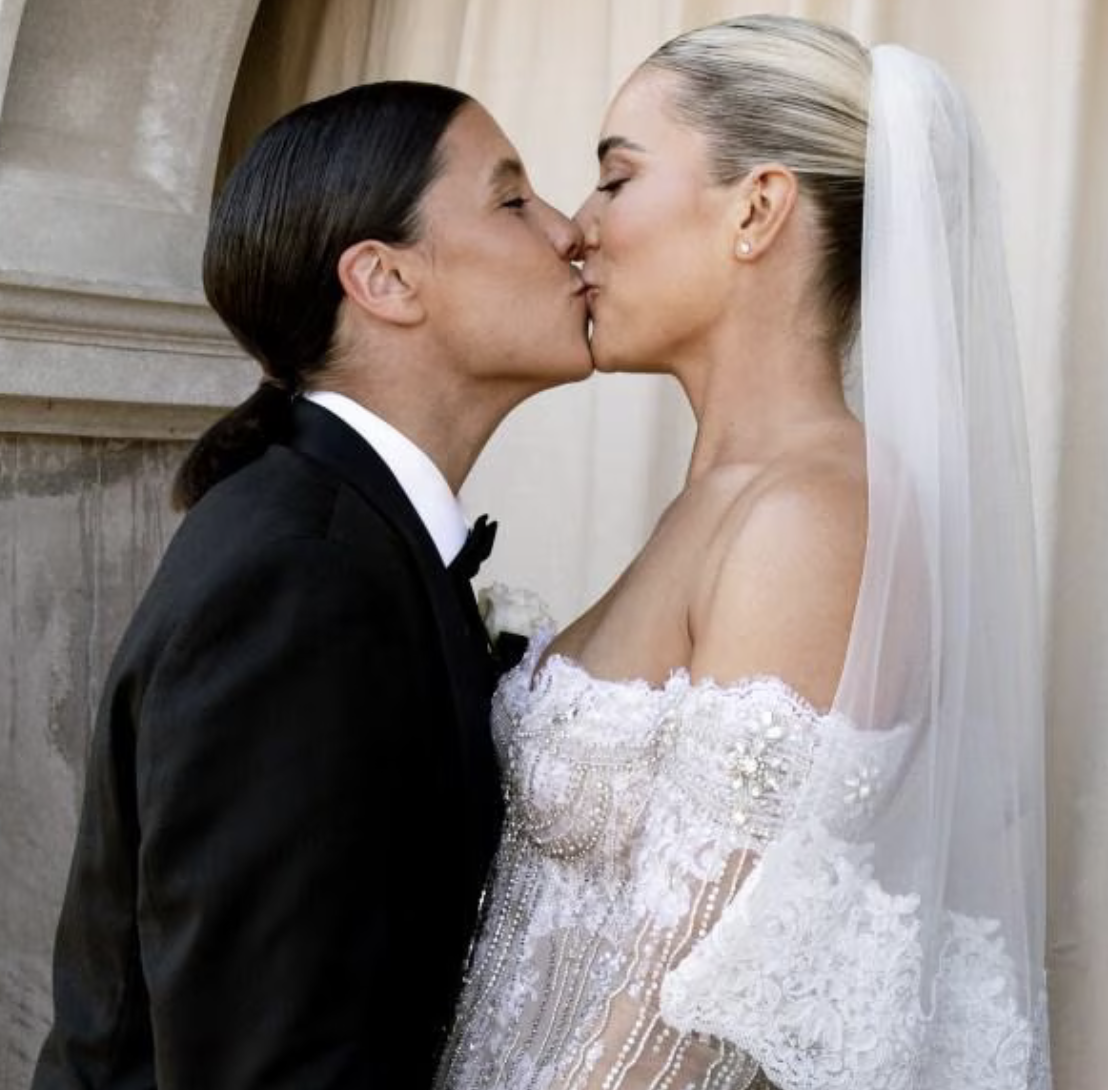
Photo Vogue Australia
Why Sam Kerr Is Celebrated and a Socceroo Would Still Be a Shock
We all saw the joy around Sam Kerr’s wedding.
Celebration. Pride. Love. Visibility.
She is openly gay. It was not framed as bravery. It was simply life.
Sam Kerr’s wedding showed what acceptance can look like in football. It also quietly showed us where the men’s game has not yet arrived.
Now ask yourself this.
If a current Socceroo, in his prime, came out tomorrow, would the reaction feel the same?
We know the answer.
That difference is not really about sexuality.
It is about gender, power, masculinity, and the culture men’s football still carries.
The history men’s football still carries
Ken often talks about earlier decades in football. The 60s and 70s. He says there were players “everyone knew” about. Nothing was said openly. Just whispers, sniggering, coded comments behind hands.
That silence was not acceptance. It was containment.
Then in 1990, Justin Fashanu came out in England. The first male professional footballer to do so publicly. The reaction was brutal. Media frenzy. Isolation. Stigma. His story ended in tragedy.
That moment mattered.
Men’s football absorbed a lesson, not about inclusion, but about risk. The message that travelled through the game was simple, this is dangerous.
Women’s players have faced their own battles for respect, funding and legitimacy. But the cultural fight around sexuality unfolded differently in their game. Women’s football did not carry that same public trauma point. That difference still echoes.
Cultures remember, even when they don’t speak about it.
Where I sit in this story
Andy Brennan has been part of our football life since he was four years old. My son’s best mate. In and out of our home. One of “our boys”.
He is also a very good footballer. He came through South Hobart, earned a move to South Melbourne and later played in the A-League with Newcastle Jets. He has lived inside elite men’s football environments.
When he told me he was gay and that he was going to come out publicly, my first instinct was not judgement. It was fear.
Fear of crowds. Fear of headlines. Fear of what football environments can be like and what they would do to him.
That protective, mother reaction says as much about men’s football culture as any analysis does.
Andy went on to be more resilient than I imagined. Happier. More confident. More himself. But my first response was shaped by the history this game carries.
Women’s football grew differently
Women playing football were already stepping outside traditional gender expectations. The sport developed fighting for recognition, not protecting a long-established identity.
LGBTQ+ visibility became part of the culture early. Not as a campaign, but because players existed and did not hide.
So now:
Matildas share partners on social media
Sponsorship campaigns include same-sex relationships
Fans celebrate it as normal
The Matildas have been allowed to be whole people in public. Male players are still expected to be only footballers.
That visibility does not destabilise the identity of women’s football. It fits the story the game tells about itself.
The commercial contradiction
Women’s football is marketed around authenticity, diversity, community and relatability.
Men’s football has long been marketed around power, toughness, tradition and the “alpha” image.
LGBTQ+ visibility sits comfortably in the brand story of the Matildas.
It disrupts the traditional brand story of men’s football as it has been packaged for decades.
So you see visibility in the women’s game.
And near invisibility in the men’s.
Not because gay male players do not exist. But because openness is still treated as commercial and cultural risk.
Why men’s football reacts differently
Homophobia in men’s football is rarely just about sexuality. It is about policing masculinity.
Being gay has wrongly been treated as being “less of a man.” That idea lingers in dressing rooms, terraces and commentary culture.
A gay female player does not threaten a straight man’s identity.
A gay male player challenges the narrow definition of masculinity that sport has carried.
That discomfort sits underneath a lot of reactions, even when no one says it aloud.
The role model burden in men’s football
In the men’s game, coming out rarely stays a private act.
A player does not just remain a winger, a defender, a teammate.
He becomes “the gay footballer,” a spokesperson, a symbol, a headline.
His identity becomes part of his public job, whether he wants it to or not.
That is exhausting.
Women’s football has reached a point where sexuality is increasingly just part of who someone is, not the defining narrative. In men’s football, the story still attaches itself to the person.
That added pressure, media attention and expectation to represent a whole community is another reason some players stay silent.
Silence in men’s football has often been less about shame and more about survival.
Crowd culture matters but not in the way people think
Go to a Matildas game and you will see just as many men as women. Dads. Brothers. Young boys. Older men. Hardcore football fans.
Men who support the Matildas. Men who take their daughters. Men who cheer openly for gay players without hesitation.
So the issue is not that men cannot accept gay athletes.
It is that men’s professional football has historically built a performance culture in its terraces where aggression, banter and intimidation are part of the ritual. That culture developed over decades in men’s leagues.
Women’s football crowds grew in a different way. Not softer, but less tied to proving masculinity through confrontation. That difference shapes what behaviour feels normal in the stands.
It is culture of environment, not gender of spectators.
Progress, but slow
Things are changing. Younger players grew up in a different world. Many dressing rooms today are more open than they were even ten years ago.
Clubs talk more about inclusion. Teammates often privately support each other more than people realise.
But football is tradition-heavy. Culture change often arrives with a generation, not a policy.
So progress exists. But for the individual player considering coming out, “things are better now” still does not feel like certainty. It still feels like stepping into the unknown.
That gap between progress on paper and safety in practice is where hesitation lives.
Why this matters
Somewhere there is a young girl watching the Matildas and seeing herself reflected.
Somewhere there is a young boy in football who still feels he must hide.
The difference is not talent.
It is culture.
And culture can change.
Before we hear personal stories, we need to understand the environment those stories sit inside.