Stop Telling Football to be Grateful, Part 4: When the Number Hit $3 Billion
If you haven’t read Part 3, where I break down the funding gap in detail, you can read Stop Telling Football to be Grateful, Part 3: OMG the Money!
This one is different.
This one is about a moment.
The moment the number changed
I listened to a chilling interview on SEN this week.
It was chilling because of one word.
Three.
Three what, you might ask.
Three billion.
And in that moment, the scale of this stopped being abstract.
What was actually said (a quick 101)
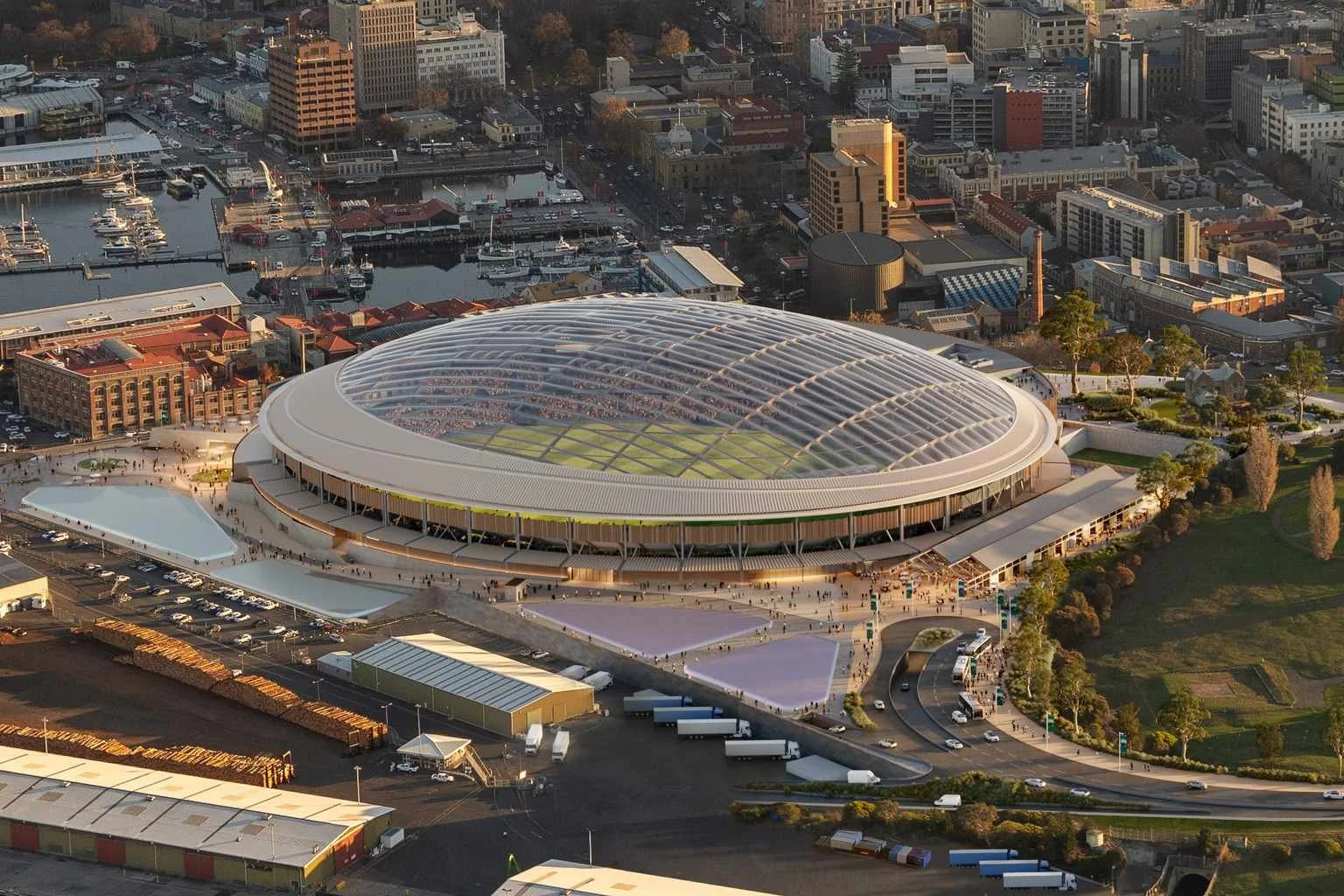
For those who didn’t hear it, Sydney Swans chairman Andrew Pridham was speaking about the proposed Hobart stadium in this SEN interview.
His position was clear.
Tasmania needs a stadium.
A proper one.
Not a compromise.
If the state wants an AFL team and the long-term future that comes with it.
And I understand that argument.
I actually agree with part of it.
Tasmania should have a team.
Why the number is moving
There is another reason that number matters.
It’s not just a throwaway line.
Construction costs are rising globally, and major projects are exposed to forces well beyond Tasmania.
Even this week, ABC radio was discussing how tensions around the Strait of Hormuz are pushing up fuel and shipping costs.
At the same time, Australia’s Prime Minister is in Singapore talking about securing fuel supply.
That’s the scale we are dealing with.
These are not distant issues.
They flow directly into construction.
Fuel drives transport.
Shipping affects materials.
Energy prices impact manufacturing.
And many building materials themselves are tied to global supply chains.
Steel.
Concrete.
Plastics and PVC products used across modern construction.
When those costs rise, projects don’t stay where they start.
They move.
And they almost always move upwards.
So when someone inside the industry says “three billion”, it’s not just a dramatic number.
It reflects the reality that these projects are vulnerable to global shocks.
War.
Supply chain disruption.
Energy price spikes.
And that makes the question even more important.
Not just what it costs today…
But what it ends up costing tomorrow.
This isn’t theoretical
And this isn’t theoretical.
It’s already happening.
This week, ABC reporting showed construction projects in Australia increasing by more than $100,000 in a matter of weeks as fuel and material costs surged.
PVC products, pipelines and essential infrastructure materials are up 30 to 40 per cent.
Asphalt has jumped by around 50 per cent.
Fuel costs have effectively doubled in their impact across construction.
These are not small movements.
These are structural shifts.
And they are happening before a project like this has even begun.
Projects don’t stay where they start.
And right now, they are moving fast.
This isn’t just Tasmania
This isn’t unique to Tasmania.
Around the world, major infrastructure projects are blowing out.
Costs don’t stay where they start.
They rise with energy prices, supply chain pressure, labour shortages and global instability.
That is the environment this stadium would be built in.
And Australia is not immune to it.
Major projects across the country have faced delays, cost increases and budget revisions.
That is now the norm, not the exception.
Which makes early estimates just that, estimates.
And in Tasmania, the margin for error is smaller.
We don’t have the scale of larger states to absorb major cost overruns.
Which means when projects grow, the consequences are felt more sharply.
And more widely.
But then came the question
Because once you hear “three billion”, the conversation shifts.
It’s no longer just:
Should we build a stadium?
It becomes:
At what cost?
Because if that level of investment is required to secure a team, what does it mean for everything else?
Are we building something for Tasmania…
Or are we trampling on the rest of us to get there?
What does that mean for the rest of us?
Governments do not operate in infinite budgets.
Every major commitment shapes what comes next.
If Tasmania commits to a multi-billion dollar stadium, with ongoing operating and lifecycle costs, that doesn’t sit in isolation.
It sits alongside every other demand.
Health.
Education.
Infrastructure.
And sport.
All sport.
Whose money is this?
And it’s worth saying this again, because it gets lost in the language of “government funding”.
This is not some separate pool of money.
It is not mysterious money that belongs to someone else.
It is our money.
Taxpayer money.
The money of the parents driving kids to training.
The volunteers running canteens.
The workers, the small businesses, the communities that keep sport alive.
So when we talk about billions being committed to one project, we are not talking about “government spending” in the abstract.
We are talking about a choice.
A choice about where our money goes.
And who it serves.
And right now, that choice is telling a very clear story.
This isn’t just about football
This is not just a football issue.
This is about every participation sport in Tasmania.
Football.
Netball.
Basketball.
Athletics.
School sport.
Community recreation.
So the question becomes unavoidable:
Will there be anything left for the rest of us?
Or will grassroots sport be asked, once again, to wait… apply… fundraise… and be grateful?
The “multi-purpose” argument
We are already hearing it.
That this will be a multi-purpose stadium.
That cricket will use it.
That it will host events.
And maybe it will.
But even if cricket goes in there, even if concerts fill the calendar, it doesn’t change the fundamental issue.
Participation sport does not happen in stadiums.
It happens on local grounds.
On school ovals.
On shared community spaces with lights that barely work and changerooms that still don’t meet the needs of women and girls.
A multi-purpose stadium is still a centralised, elite piece of infrastructure.
It does not solve the everyday reality of community sport.
It doesn’t give a junior team somewhere to train.
It doesn’t ease ground shortages.
It doesn’t reduce waiting lists.
It doesn’t change the lived experience of the thousands of Tasmanians who play sport every week.
While we debate what fits inside the stadium…
the rest of sport is still outside, waiting.
The part I can’t ignore
I fear for my code of sport.
And I fear for every other community sport in Tasmania.
Because if $3 billion is poured into a stadium that most people will never set foot in, we are making a very clear decision about what matters, and what doesn’t.
This is no longer just about what we build.
It’s about what we risk.
Tasmania should have an AFL team.
But building a cathedral to one sport risks leaving the rest of us outside.
Stop telling football to be grateful.