The Golden Arches, Gratitude and Clarity
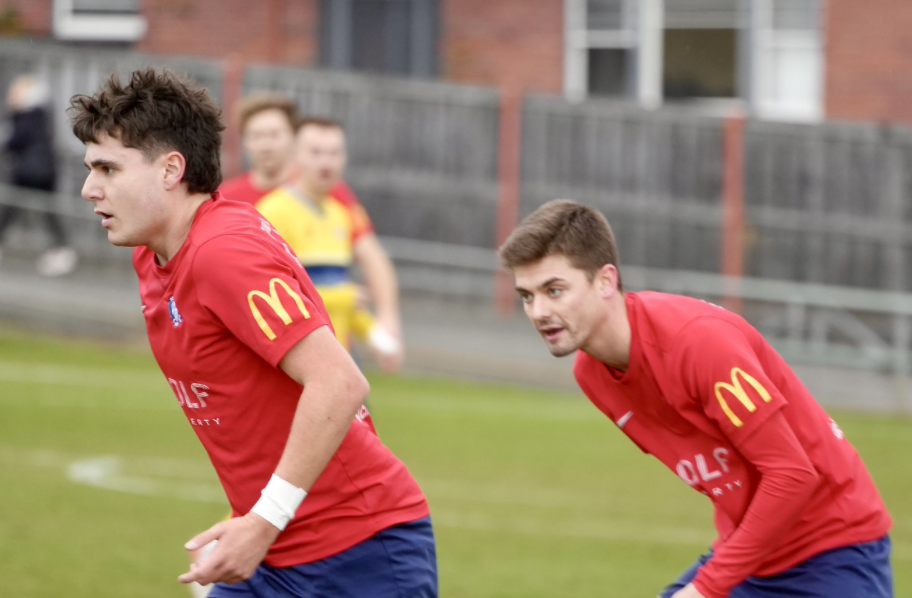
Sponsors, signage, and trust in Tasmanian football
Tasmanian football needs sponsors.
There is no argument about that.
McDonald’s choosing to invest in Tasmanian football is a positive signal for the game and we are grateful for it. Sponsors keep competitions running and show confidence in the sport.
But gratitude and clarity should go together.
Too often in Tasmanian football, clarity is missing.
Naming Rights Sponsorship 101
When a company becomes the naming rights sponsor of a league, the competition carries their name.
In return, the sponsor pays money to the league organiser and receives branding, signage at grounds, media exposure and association with the competition.
That money normally goes to the league body, not automatically to clubs.
Clubs do not expect confidential contract details. They simply want to understand how sponsorship supports football on the ground.
Understanding that structure helps explain why clubs ask questions.
What sponsorship looks like from a club fence
When a league sponsor arrives, clubs are asked to act.
Hang signs on fences.
Wear logos.
Post on social media.
Give up prime sponsor space.
Those big signs on fences are real value. Every metre matters to small local businesses who support clubs year after year.
So clubs quite reasonably ask a simple question.
What does this sponsorship actually do for football?
Not in theory. In practice.
A small story from South Hobart Oval - D’Arcy Street
At South Hobart Oval, volunteers put up a large league sponsor sign. Heavily cable tied to the fence. Permission sought and approved by Council.
Within twenty-four hours it disappeared.
Council cameras showed nothing. It happened in the dark.
For a few days the theories about where it had gone became a running joke. Someone suggested it had become a twenty-metre McDonald’s water slide in someone’s back garden. That theory won.
The humour faded when the club was asked to pay for a replacement sign. Eight hundred dollars, from memory.
No explanation. No discussion. Just an invoice.
Resentment 101.
Not because the sponsor was at fault. Because communication was missing.
Questions that never quite get answered
In Presidents meetings over the years, the simple question has been asked.
How much does the McDonald’s sponsorship provide financially?
Not to pry into confidential detail. Just to understand the scale of support coming into Tasmanian football.
The question was never really answered.
Deflection was the choice de rigueur.
Move to another agenda item. Talk about how grateful we should be. Change the subject.
And in that moment, trust slips a little.
Because members of a federation should be able to understand how sponsorship of their competitions works.
Transparency does not weaken relationships.
It strengthens them.
What clubs mean by “helping football”
When clubs ask how sponsorship money helps football, they do not mean funding more central programs run without clubs.
That is where resentment begins.
Clubs are the members of the federation. They run teams, line fields, recruit volunteers and find local sponsors.
Support that helps them run teams, pay referees, fund coaching courses, or reduce travel costs in a big state feels like partnership.
Funding programs that clubs are not involved in, or quietly competing against, feels like distance.
Clubs do not expect everything.
But they do expect to be part of the solution.
Sponsors deserve clarity too
Most sponsors genuinely want to help football.
Clear reporting would help them as much as clubs.
A simple annual summary could explain what sponsorship funded, referee support, livestream production, junior development, fee reductions, or facilities.
Then clubs could say proudly what the sponsor achieved.
Transparency protects sponsors as much as clubs.
Tasmanian football is small
People talk.
When decisions are not explained, rumours fill the gap.
Not because anyone is dishonest.
Because no one has taken the time to communicate clearly.
Community football runs on trust.
Trust grows from clarity.
A simple request
When leagues sign sponsorship agreements, share the basics.
What is the value of the deal?
What does it fund?
How does it help clubs and the players of the state?
What reporting will members see?
Not confidential details.
Just clarity.
Because big signs on fences are easy.
Building trust takes conversation.
Gratitude and clarity
McDonald’s investing in Tasmanian football is a good thing.
Sponsors keeping leagues alive is a good thing.
But gratitude does not mean silence.
It means partnership.
And partnership works best when everyone understands how the game is supported.
That is all clubs are asking.
Clarity.
Continue Reading
If this piece resonated, you might also like these reflections on Tasmanian football life.
• Who Football Chooses to Honour
Thank you for reading and for caring about football in Tasmania.