The Suitcase
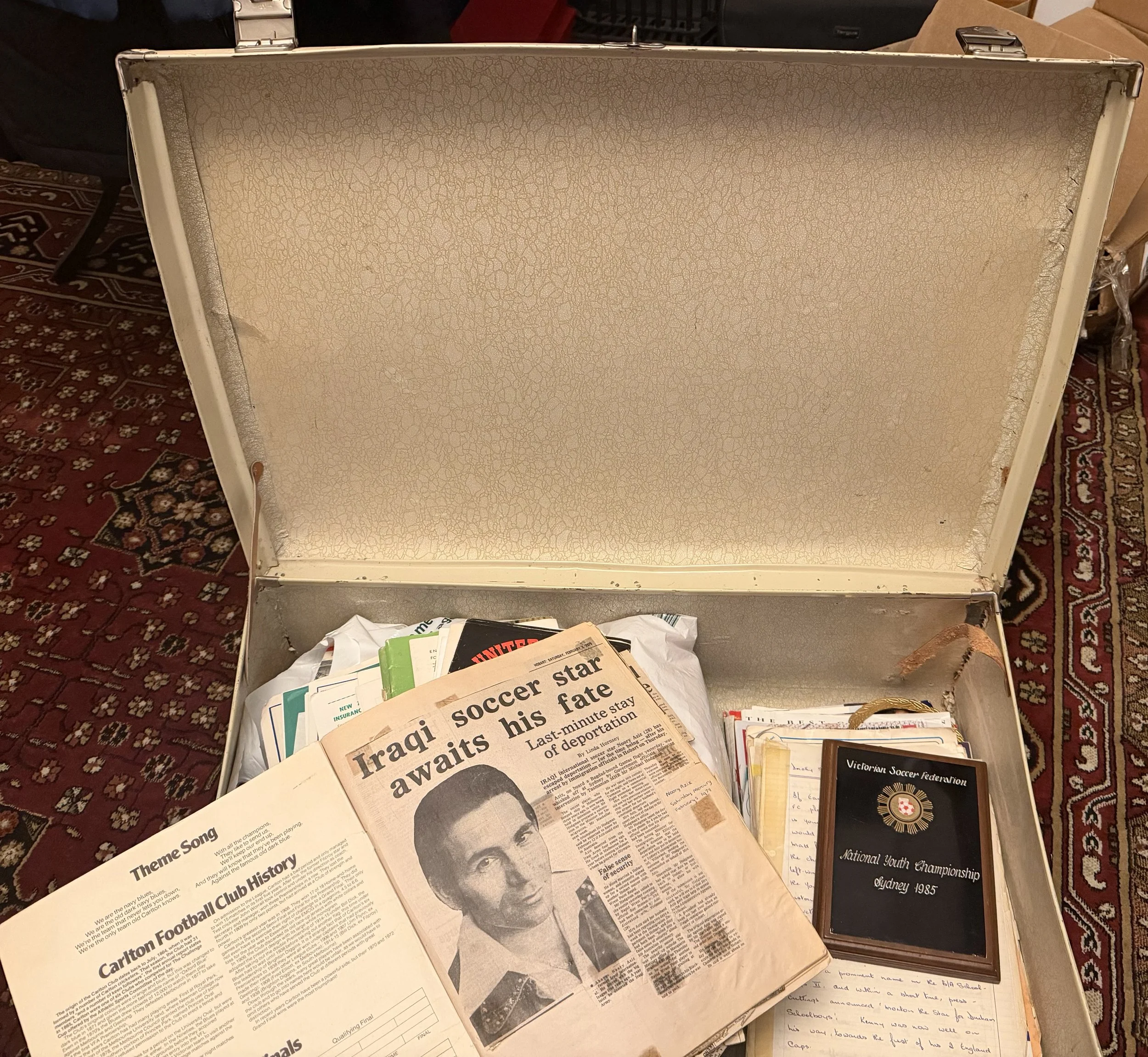
A couple of weeks ago, Nick handed us a suitcase.
Not metaphorically. An actual suitcase.
Inside it were old clippings, scrapbooks, loose pages, carefully cut articles, some yellowed and fragile, others still holding their shape. Thousands of them.
Ken’s life, in pieces.
From Copley to Hobart, and then out into the world.
We have barely scratched the surface, but one thing is already clear.
This is gold.
Not in a nostalgic way. Not in a “how things used to be” way.
In a way that makes you realise how much has been lived, recorded, and then quietly put away.
Trying not to lose anything
I don’t want to lose a single one of them.
That has become slightly obsessive, if I’m honest.
So I’ve started archiving them, slowly, carefully, with the help of my personal assistant, ChatGPT.
Even writing that still feels slightly ridiculous to me.
I learnt to type on a manual typewriter. Moved on to IBM golf ball machines. Used carbon paper. Tippex. If you made a mistake, you felt it.
Now I can take a photo of a 40-year-old newspaper clipping and start building a record of it in seconds.
It is, genuinely, mind blowing.
What you find when you slow down
Most of what’s in the suitcase is football.
Matches. Tours. Teams. Familiar names.
But every now and then, something stops you.
Not because it’s bigger.
Because it’s different.
This one stood apart
I came across a series of clippings.
Not one article. Not one moment.
A sequence.
Headlines that didn’t read like sport.
“Iraqi soccer star awaits his fate.”
“Noory’s scared to death.”
“Plea for Aziz to stay.”
And suddenly, this wasn’t just football anymore.
This was something else.
A life, playing out in public.
And I knew straight away.
This was worth writing about.
A name in headlines
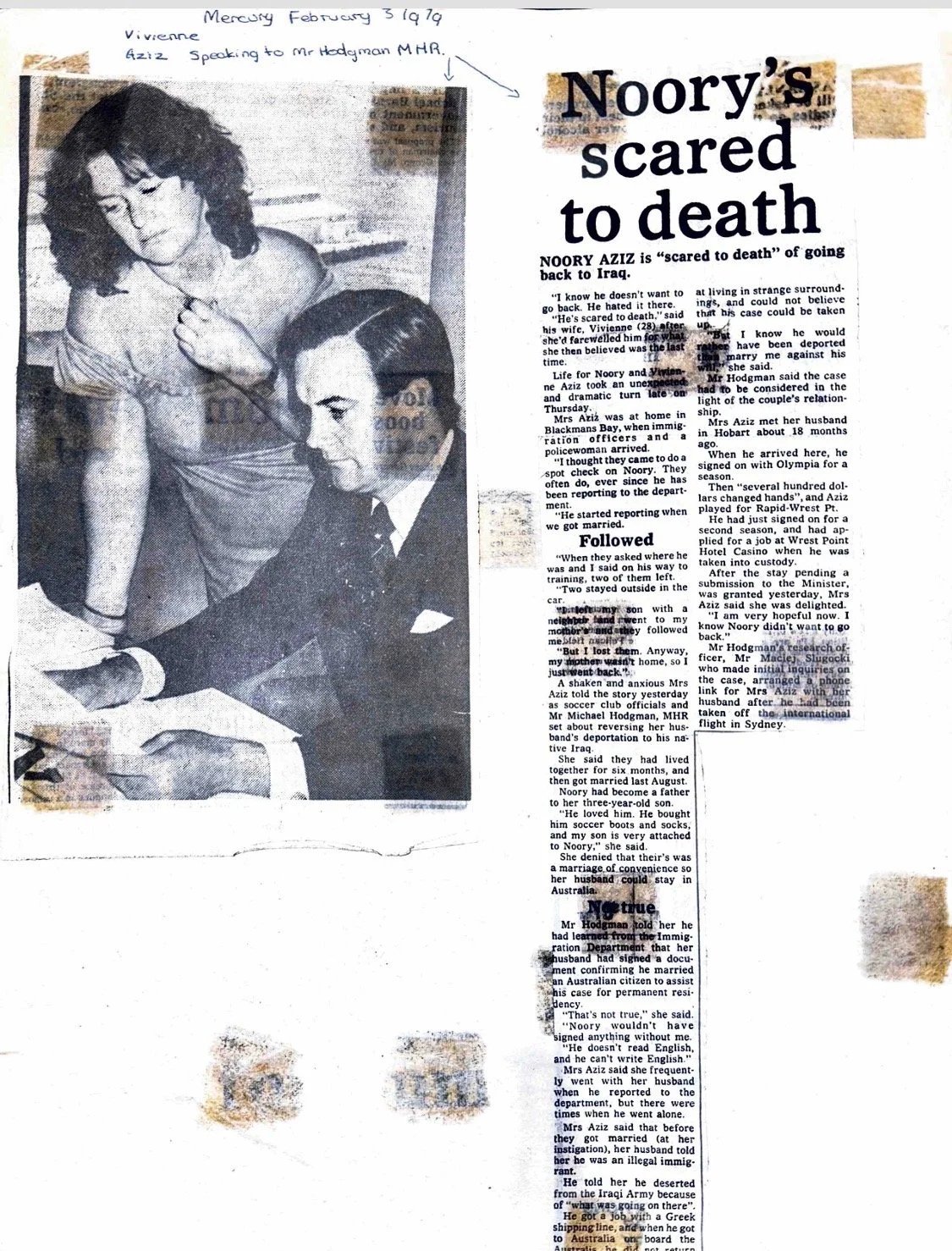
Noory Aziz
Not tucked into a match report.
Not listed in a team sheet.
A headline.
Repeated.
Urgent.
And when you follow the detail across the clippings, a clearer picture forms.
An Iraqi international footballer.
Living in Hobart by the late 1970s.
Playing for clubs including Olympia and Rapid.
Working. Settling. Building a life.
A man between places
But he had not simply moved countries.
By all accounts, he had left Iraq in circumstances that placed him at real risk if he was forced to return, including what appears to have been a form of defection, likely tied to military obligations of the time.
That changes how you read the rest of it.
Because this was never just about paperwork.
It was about what might be waiting for him on the other side.
And then, abruptly, everything shifts.
He is detained by immigration authorities.
Taken from Hobart to Sydney.
Held in Villawood.
A deportation order, already in existence, is acted upon.
He is placed on a flight to Baghdad.
And then, at the last moment, something intervenes.
He is removed from that flight.
One of the clippings captures it in a single line.
His luggage arrived in Baghdad.
He did not.
The public fight
From there, the story spills into the open.
Headlines. Interviews. Appeals.
His wife speaks publicly, describing fear, defending their relationship, explaining their life.
A young family, suddenly exposed.
Politicians become involved, including Tasmanian MP Michael Hodgman.
Submissions are made.
Arguments put forward.
At the time, Australia’s immigration framework still used the language of “prohibited immigrants”, and decisions could be both rigid and difficult to challenge.
And yet, something shifts.
Not cleanly. Not definitively.
But enough.
Football made him visible
It is impossible to read these clippings and not see the role football played.
Without it, he is just another name moving through a system.
With it, he is known.
A player. A teammate. Someone people recognise.
Clubs know him.
People speak up.
The story reaches beyond Tasmania.
There is no organised campaign.
No strategy.
Just connection.
And sometimes, that is enough to slow things down.
The language of the time
There is something else in these pages that matters.
The language.
Direct. At times blunt. Occasionally uncomfortable now.
Nothing filtered.
This was the late 1970s, moving into the 1980s.
Migration was spoken about differently.
Belonging was not assumed, it was argued.
People were described in ways we would not use now.
And yet, within that, there is also honesty.
A rawness.
People saying what they thought.
A wife speaking up.
A community, in its own way, trying to say, this person matters.
The moment that could have gone the other way
What gives these clippings their weight is not just what happened.
It is what almost did.
The plane could have left.
The decision could have held.
The deportation could have gone through.
And the story would have ended there.
Quietly.
Without record.
Without this suitcase.
It felt familiar
Reading these clippings, there was a sense of recognition.
Not because the details were the same.
They weren’t.
But because the feeling was.
That moment where a footballer is suddenly caught inside something much bigger than the game.
I felt it again years later, when Hakeem al-Araibi, connected to Pascoe Vale FC, was detained in Thailand.
Different era. Different circumstances.
But the same tension.
I still have a photo with him. A letter of thanks.
A small reminder that when football acts as a community, it can matter.
And reading these clippings, it is clear that instinct was there then too.
And then… silence
After the headlines, the story fades.
There is no neat ending.
No confirmed final outcome sitting neatly in the archive.
What the clippings suggest is that he returned to Hobart.
That life resumed, at least for a time.
And then, like so many stories of that era, he disappears from the record.
What stays
The football matters.
It always does.
But it is not what stays with you here.
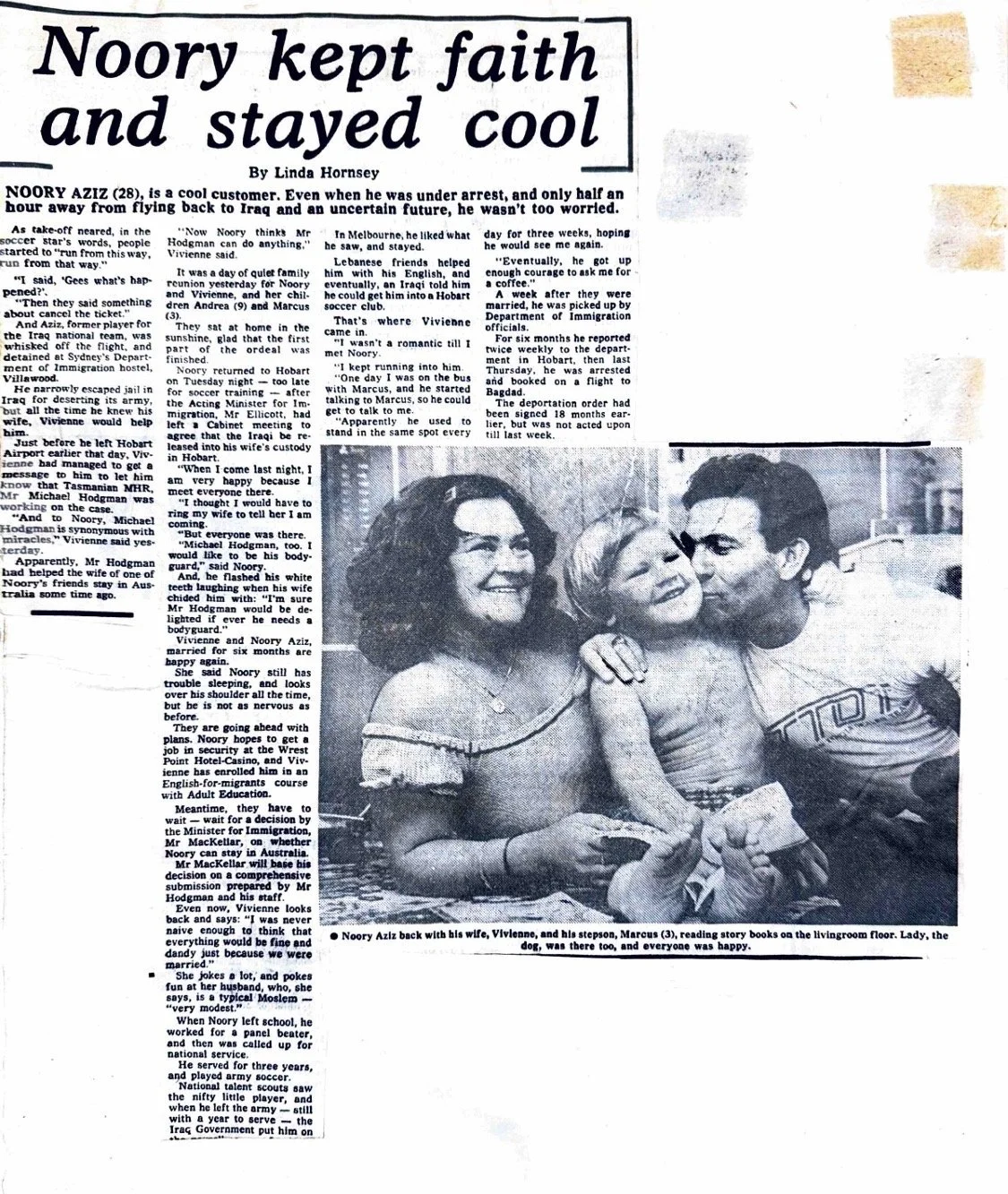
What stays is the image of a man sitting on a living room floor with his family.
What stays is the line, “scared to death.”
What stays is the understanding that this was never just a football story.
It was a migration story.
A political story.
A human story.
That football happened to hold.
Holding onto it
There are thousands more clippings in that suitcase.
This is just one story.
But it changes how you look at the rest.
Because it reminds you that football has always been more than the game.
It is where people arrive.
Where they are seen.
And sometimes, without anyone quite realising it at the time, where their lives are shaped.
This is one of those stories.
And it deserves to be kept.