When Ambition Meets Readiness in Tasmanian Football
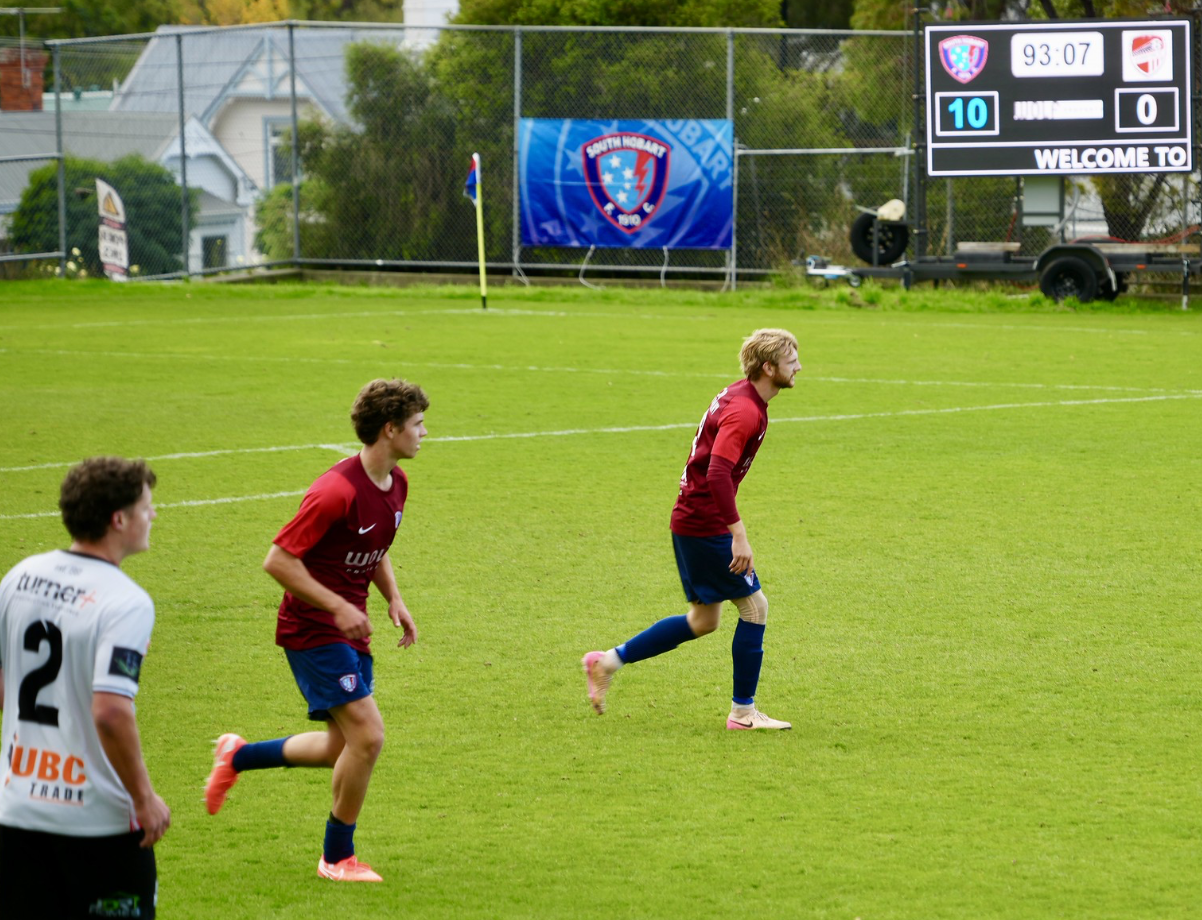
I read with interest the comments on Tassie Football Central following Ulverstone’s loss to South Hobart in the Lakoseljac Cup.
A 10–0 scoreline will always get attention. It should. It is confronting and it tells you something.
But what caught my eye wasn’t the result.
It was the conversation that followed.
Because within that thread sat something much bigger than one game. It revealed competing ideas about what we think football in Tasmania is, and what we expect it to be.
And I’m not sure those ideas are aligned.
Two views of the same moment
Some saw the result as part of the journey.
A necessary step. A hard lesson. The kind of experience clubs have to go through if they want to rise to a higher level.
We’ve seen that before. Clubs take their hits, build, recruit, grow and over time become competitive.
Others saw something very different.
They saw a widening gap. A system stretching itself too thin. Players being asked to compete at a level they are not yet equipped for and doing so without the structures around them to support that jump.
They asked a simple question.
How do players improve when they are repeatedly outmatched?
Watching it play out
I was at the game.
As the goals went in, I found myself saying to Ken, I feel bad for them.
It’s not a nice watch when a game gets away like that. You think about the players, the effort, the travel, what it feels like in those moments.
Ken looked at it differently.
He said, why?
From a coaching point of view, he sees something else. He sees a team executing, a team learning, a team building confidence. For the home side, it’s not just a result, it’s part of their own development.
We’ve both been around the game long enough to recognise both sides of that.
And that’s the tension, right there.
Two completely different reactions to the same game.
Neither of them wrong.
But both sitting inside a much bigger question about what we expect these moments to mean.
The space between ambition and reality
What sits underneath all of this is not Ulverstone.
It is the space between where a club is and where it is being asked to go.
Promotion, expansion, opportunity, these are all positive words. They signal growth. They signal belief.
But exposure on its own is not development, it’s just exposure.
If a club steps up a level, what changes around them?
Do they have access to better coaching support?
Is there a clear technical framework to guide them?
Are there realistic financial expectations?
Is there a shared understanding of what “success” looks like in year one?
Or are they simply placed into a higher competition and expected to find their way?
Those are two very different things.
What this really highlights is a lack of alignment between ambition, competition structure, and the support around it.
Time, or the lack of it
One comment in the thread stayed with me.
They don’t have time.
That cuts through a lot of the theory.
If relegation exists, if financial pressure exists, if players drift when results don’t come, then time is not a luxury. It is a constraint.
We talk about long-term development, but we operate in short-term environments.
And that tension sits at the heart of this.
The cost of competing
Another thread that emerged was cost.
Not just entry fees, but the reality of competing in what is, in many ways, a semi-professional environment.
Player payments. Imports. Travel. Staffing.
Figures were mentioned. Fifty to one hundred thousand dollars.
For community clubs, that is not a small gap to bridge. That is a structural shift.
So again, the question becomes clearer.
What are we asking clubs to become?
And are we supporting them to get there?
The question no one quite asks
And sitting underneath all of this is the question no one quite asks directly.
Are clubs being promoted before they are ready?
It’s an uncomfortable question.
Because clubs want opportunity. They should.
But if that opportunity comes without the structures around it to support success, then we have to be honest about what follows.
Governance is not separate from this
These aren’t match day issues.
They are the direct result of governance decisions.
League size.
Admission criteria.
Expectations of clubs.
The balance between growth and sustainability.
Because pathways don’t build themselves. They are designed, resourced, and supported.
When those decisions are not clearly explained, or not clearly supported in practice, they don’t stay in boardrooms.
They show up here.
In results. In conversations. In frustration.
What happens if we get this wrong
If we get this balance wrong, there are consequences.
Clubs stretch beyond their means.
Players disengage.
The gap between teams widens further.
And the competition itself risks losing credibility.
And once that gap opens, it’s very hard to close.
This isn’t about blame
And I want to be clear about that.
There are good people across clubs and within Football Tasmania trying to grow the game. There are different views, and many of them are valid.
Clubs do need opportunity.
Players do need exposure to higher levels.
Competitions do need to evolve.
But if we are going to expand, promote, and push clubs forward, we also need to be honest about what sits between those steps.
Because right now, it feels like two things are moving at different speeds.
Ambition is moving quickly.
Structure is trying to keep up, and clubs are sitting in between.
What are we trying to build?
That is the question that sits with me after reading all of it, and watching it play out.
Not whether one result was too big. Not whether one club is ready or not.
But what we are actually trying to build across the whole system.
Is the NPL a development league?
Is it a semi-professional competition?
Is it a stepping stone?
Or is it trying to be all three?
Because if it is all three, then we need to be very clear about how clubs move through it.
And how they are supported when they do.
Cup football exposes things quickly. That’s part of its value. It brings different levels together and, in doing so, shows us exactly where the gaps are.
A conversation we need to have
What I saw in that thread wasn’t negativity.
It was people who care.
People with experience. People asking questions. People trying to make sense of where the game is heading.
That’s not something to shut down.
That’s something to listen to.
Because somewhere in between those views is probably a better version of the system than the one we currently have.
And it is a conversation we need to have.