When I Said “Women Aren’t Loud Enough”
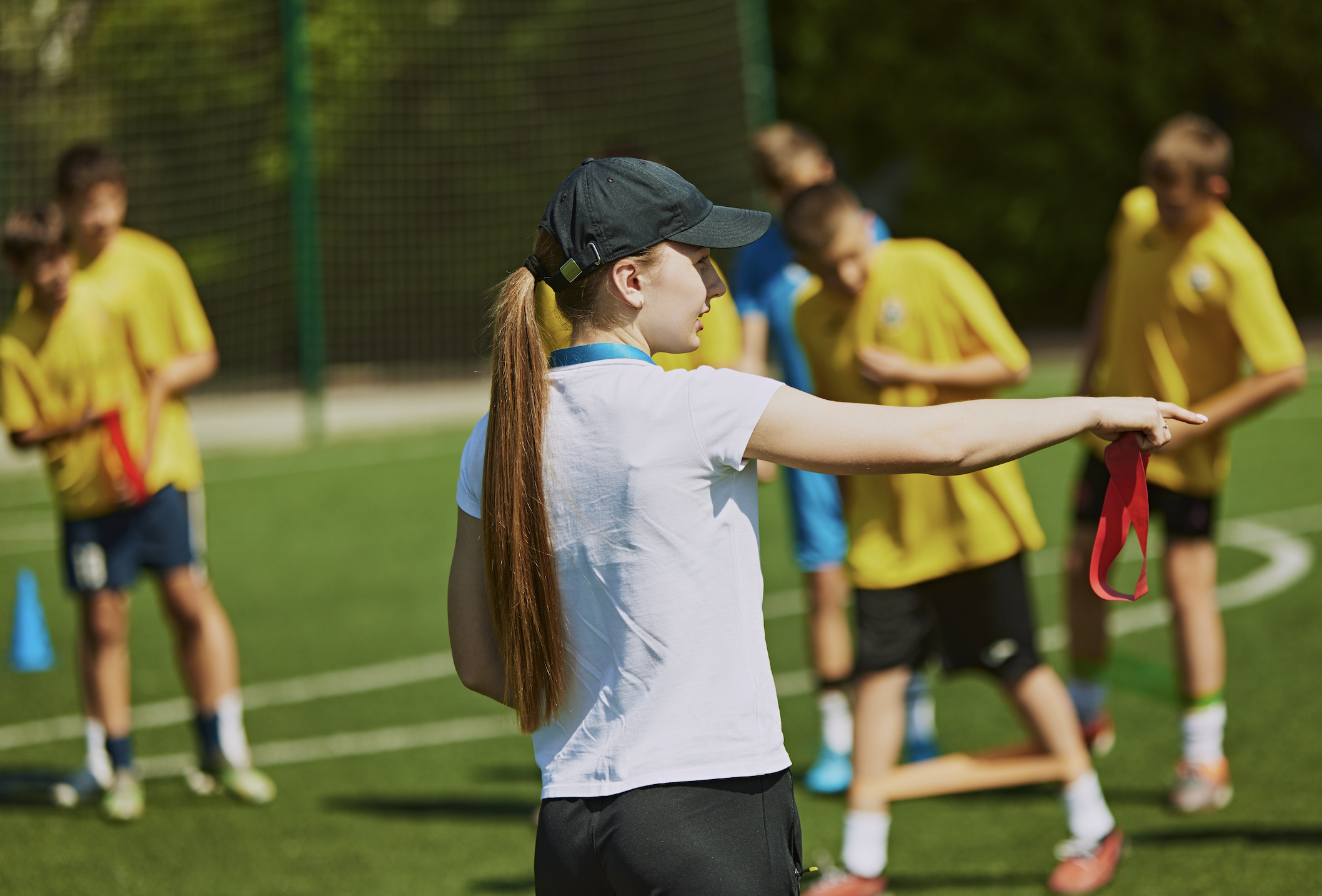
At yesterday’s club strategic planning meeting we were discussing a familiar issue.
Why don’t more women coach?
I made a comment that came out easily. Almost casually.
Women often aren’t loud or commanding enough to control a group of boisterous 11-year-olds. In junior football you have to dominate the space.
Heads nodded. It sounded practical. Experience-based. Sensible.
Then Mark Moncur, who is heavily involved in gymnastics and sits on our board, said something that stopped me.
Most of his coaches are women.
They manage large groups of energetic kids.
They cope very well.
And just like that, my confident explanation didn’t feel so solid.
Because if women can do it there, why not here?
So I’ve been sitting with what I said.
Was I describing reality?
Or was I describing football culture?
It’s uncomfortable to realise I may have repeated the same assumptions that have limited women in the game for years.
Was I wrong?
The honest answer is uncomfortable.
I wasn’t completely wrong about the environment. Junior football, especially boys in that 8 to 12 age, can be loud, chaotic, physical and full of boundary testing. You do need presence. You do need authority.
But I may have been wrong about who is capable of that.
And more importantly, I may have described the style of authority football is used to, not the only kind that works.
1. The environment women are stepping into
Coaching this age group is not just teaching skills.
It is behaviour management.
Noise management.
Parent management.
Open parks. Parents three metres away. Every instruction audible. Every decision visible.
And football is still culturally coded as male territory.
So for many women, stepping in is not just taking a role. It is stepping into a space where authority is more likely to be questioned.
A man raising his voice is often seen as strong.
A woman raising her voice can be judged very differently.
That double standard is tiring before the whistle even blows.
2. Authority is socially taught, not naturally owned
When we say junior coaching requires someone to be loud and commanding, we are really talking about comfort with visible authority.
Boys are more often encouraged to be loud, to take up space, to lead physically and verbally.
Girls are more often corrected for the same behaviour, told not to be bossy, pushed toward harmony.
So by adulthood, when someone stands in front of a group of energetic boys, they are not just coaching.
They are pushing against years of social conditioning about how much space they are “allowed” to take up.
That is not about ability. It is about confidence under social pressure.
3. Many women don’t see themselves in the role
In sports like gymnastics, netball or dance, most coaches women saw growing up were women. The authority figure looked like them.
In football, most coaches they saw were men.
So women don’t just think, Can I do this?
They think, Do I belong here?
Belonging is powerful. Without it, people hesitate.
4. Fear of judgement hits harder in football
A new male coach can be rough around the edges and it is seen as part of learning.
A new female coach often feels like she represents all female coaches.
Mistakes feel public. Visible. Attributed to gender, not experience.
Add dads on the sideline, boys testing boundaries and existing male coaches nearby and it can feel like a performance, not a learning space.
That emotional load adds up.
5. The pathway into coaching is different
Many male coaches come through a simple pathway.
I played, so I will coach.
Women’s playing pathways have historically been shorter, less competitive and less resourced.
So many women feel they did not play at a high enough level to coach, even though junior coaching is largely about communication, organisation, care and structure.
Skills many women already have, but do not recognise as coaching credentials.
6. It’s not that women can’t handle boys
It’s that the system doesn’t support them doing it
Women who do coach juniors successfully often have
A co-coach
A club that backs them publicly
Clear behaviour standards
Visible authority from leadership
When that backing is not obvious, they feel exposed.
And exposed people leave.
7. Why gymnastics looks different
Gymnastics is not quiet or passive. Kids run, fall and push limits.
But the authority style often looks different. Structured. Precise. Expectation-driven. Consistent rather than loud.
The coach doesn’t “dominate the space”. The structure does.
Football, on the other hand, has a louder behavioural environment, more public criticism culture and a higher tolerance for chaos.
So women are not avoiding coaching children.
They may be avoiding environments where authority is contested, support feels thin and mistakes feel amplified.
The shift in my thinking
Maybe the issue isn’t volume.
Maybe it is
Do we introduce female coaches with visible authority?
Do we shut down sideline interference?
Do we set behaviour standards that back them?
Do we pair them, support them, protect their space?
Or do we hand them cones, wish them luck and then judge whether they were “strong enough”?
That’s a system issue.
So was I wrong?
I was right that junior football is a demanding environment.
But I was wrong to imply the limitation sits with women.
The limitation may sit with how football defines authority and how little we have adapted that definition.
Maybe the question isn’t whether women are ready for football coaching.
Maybe it’s whether football is ready to make room for different kinds of authority.
That’s a humbling thing to admit.
But maybe that is exactly where change starts.