
If football is financially stronger, why doesn’t football feel better?

After looking at where Football Tasmania money comes from in Part One, and where it is spent in Part Two, I keep coming back to one thought.
If Football Tasmania has genuinely turned its finances around, has the football experience improved too?
Do clubs feel more supported?
Do volunteers feel less stretched?
Do associations feel heard?
Does football actually feel better week to week?
Because that is ultimately how football people judge football.
Not through balance sheets.
Through lived experience.
And perhaps the biggest issue sitting underneath all of this is that many football people are not even sure how they are supposed to communicate those feelings constructively anymore.
What should football actually feel like?
Ordinary football people do not experience football through spreadsheets.
They experience it through:
livestreams
referees
communication
facilities
competitions
volunteers
pathways
relationships
So when finances appear stronger, expectations naturally rise too.
Football people start asking:
should the matchday experience improve?
should communication improve?
should clubs and associations feel more supported?
should football feel more connected?
Because many people still quietly ask:
“We seem to be spending more money every year, but does football actually feel better?”
That is not a hostile question.
It is a fair one.
The invisible engine room of football
One thing these financial discussions can easily overlook is the role of associations and grassroots football volunteers.
Because associations are often the true operational engine room of participation football.
The people:
grading teams
organising fixtures
supporting clubs
dealing with wet weather
helping referees
solving problems nobody else sees
A huge amount of football in Tasmania still runs on volunteer labour.
And often exhausting volunteer labour.
Associations are increasingly expected to operate like professional organisations while still relying heavily on goodwill and unpaid people simply caring enough to keep things going.
That contradiction sits right at the heart of grassroots football.
Because despite larger budgets, stronger systems and increasing professionalism, many volunteers still feel more stretched than ever.
Are we building football for administrators or footballers?
Sometimes football feels increasingly designed around:
systems
structures
pathways
compliance
administration
While ordinary football people are often just asking for:
more football
better football
enjoyable football
visible football
connected football
Tasmania sometimes feels caught between trying to imitate much larger football states while still fundamentally operating as a community football ecosystem.
Have we overcomplicated youth development?
Before anyone says it, yes, I obviously have a financial interest in youth development through Morton’s Soccer School.
I think it is important to say that openly.
But I also think this conversation is still worth having.
Development programs are now:
talent pathways
technical systems
identification structures
and significant revenue streams
At the same time, many clubs are heavily investing in their own academies and technical development programs.
That creates a genuine structural question around where the balance sits between supporting clubs and operating alongside them.
And beyond that sits another uncomfortable question.
Have we sometimes confused football development with football complexity?
Because for all the discussion around pathways and high performance structures, many Tasmanian players still simply play less football than their mainland counterparts.
At the end of the day, players improve by:
playing
touching the ball
making decisions
competing
and loving the game
Not just talking about development.
Who feels heard?
The financial statements show a larger and more sophisticated football organisation than many people probably imagine.
But many grassroots football people still feel disconnected from governance structures.
That is why conversations keep resurfacing around:
centralisation
communication
visibility
leadership connection
and whether ordinary football people still feel genuinely heard
The ongoing discussion around FIFO leadership probably sits inside that broader issue too.
Not really as a financial question.
More a connection question.
Community sport is deeply relationship-driven.
Tasmanian football probably even more so.
People want leaders who understand local football culture, who are visible, accessible and present in the ordinary day-to-day life of the game.
And honestly, wouldn’t it be nice sometimes if football people were simply asked what they thought?
What should grassroots football actually get back?
Behind every line in the accounts are football people.
Parents paying registrations.
Volunteers running canteens.
Associations organising competitions.
Clubs fundraising constantly.
Players travelling every weekend.
Coaches giving up evenings.
Grassroots football is not a side issue in Tasmania.
It is the foundation the entire game sits on.
So if Football Tasmania is now financially stronger, the big question for football people is fairly simple:
When does that strength start feeling visible in the lived experience of the game?
And how do ordinary football people meaningfully tell Football Tasmania what they believe still needs improving?

Where does Football Tasmania spend the money?

Expenditure 101
After looking at where Football Tasmania money actually comes from, the next obvious question is:
Where does it all go?
And this is probably the part ordinary football people connect with most.
Because spending shapes experience.
It shapes:
competitions
referees
livestreams
communication
development programs
facilities
support services
the overall presentation of the game
The newly released 2025 financial statements show Football Tasmania spent just over $3.5 million during the year.
That is a substantial operation for a relatively small football state.
And financially stronger organisations naturally create higher expectations from members.
The biggest expense by far
The single largest expense was employee expenses at just over $1.19 million.
That represented roughly one-third of Football Tasmania’s total expenditure for the year.
That number will probably surprise some football people.
But modern football administration is labour intensive.
Competitions.
Registrations.
Referees.
Development programs.
Coach education.
Facilities.
Community football.
Communication.
Governance.
None of that runs itself.
Whether people always agree with how football is administered is another discussion entirely, but the accounts clearly show modern football organisations require significant staffing to operate.
And again, it is worth remembering where this money ultimately comes from.
Registrations.
Clubs.
Sponsors.
Government participation funding.
Parents paying for football.
That is why football people naturally care how the money is spent and what outcomes they actually see.
Running competitions costs money
Competition general expenses were almost $390,000.
Competition promotion added another $176,000.
These are the types of costs attached to actually running statewide football competitions.
Administration.
Scheduling.
Promotion.
Operations.
Presentation.
General competition management.
Football people often only see the 90 minutes on a Saturday.
But a lot happens behind the scenes to make competitions function.
Referees are a major cost too
Referee expenses totalled more than $262,000.
That is significant, but probably not surprising when you think about the scale of football played across Tasmania every weekend.
Junior football.
Youth football.
Senior football.
Social football.
Cups.
Futsal.
Referees touch every level of the game.
Players notice referees.
Coaches notice referees.
Parents notice referees.
Clubs certainly notice referee shortages.
The accounts show referee costs are a substantial part of running football statewide.
Marketing, media and communication
One of the more interesting figures was marketing and communication expenses.
That area increased from around $97,000 in 2024 to almost $172,000 in 2025.
Football people will naturally connect that area to things like:
livestreams
social media
graphics
communication with clubs
promotion of competitions
digital presentation of the game
And this is where finances become visible to ordinary supporters.
Most football people are not analysing accounting categories.
They are simply asking:
Can I watch the game?
Does the competition feel professional?
Is communication improving?
Does football feel connected and visible?
Those are experience questions rather than accounting questions.
Development programs are expensive too
Player development programs generated significant income, but they also carried major costs.
The accounts show player development expenses of almost $374,000.
That reflects the reality that development programs require:
coaches
facilities
staffing
administration
organisation
equipment
Modern football development is a major operational area financially.
It is also an area where modern football has become more complicated.
Federations now run increasingly large development and pathway programs, while many clubs are also heavily investing in their own technical development systems.
That can sometimes create difficult conversations around where the balance sits between supporting clubs and operating alongside them.
Some costs are simply unavoidable
Insurance alone cost more than $204,000.
Travel and meeting expenses were around $56,000.
Depreciation and amortisation, basically the accounting recognition of assets losing value over time, added another $73,000.
These are not glamorous football expenses.
But they are part of running a statewide sporting organisation.
Many of these expenses are not optional luxuries.
They are the actual costs attached to running modern football statewide.
What football people probably notice most
Ordinary football people usually do not care about accounting language.
They care about outcomes.
They notice:
the quality of competitions
referee availability
communication
facilities
visibility of the game
support for clubs
development opportunities
media presentation
That is why spending matters.
Because spending decisions eventually shape the football experience people actually live every weekend.
The bigger takeaway
The biggest takeaway from the expenditure side of the accounts is probably this:
Modern football administration is expensive.
Much more expensive than many grassroots football people probably realise.
The financial statements show Football Tasmania operating as a fairly substantial organisation with major staffing, competition, referee, development and communication costs attached to running the game across the state.
And now that the overall financial position appears stronger than it did a year ago, people will naturally start asking bigger questions.
Not necessarily angry questions.
Just football questions.
What should the priorities be?
Where should investment go?
What parts of the football experience need improving most?
What should “professional” actually look like in Tasmania?
Those are probably the conversations that come next.
Where does Football Tasmania’s money actually come from?
In 2025 Football Tasmania’s income from Futsal was $312,000.00
Income 101
First I looked at where the money actually comes from.
Then in Part Two I will look at where it is spent.
And finally, in Part Three, I want to explore the much bigger football questions sitting underneath all of it.
Most football people probably never read Football Tasmania financial statements.
Fair enough.
Most people are too busy coaching teams, washing strips, marking grounds, organising volunteers, paying registrations, running canteens and getting kids to games.
But the money matters.
Because this is not some abstract pot of money sitting in an office somewhere.
This is football money.
Some of it comes directly from registrations and clubs.
Some comes through programs, sponsors and government investment.
But in one way or another, it exists because football exists.
The newly released 2025 audited financial statements show just how large the operation has now become.
In 2025, Football Tasmania brought in just over $3.7 million in total income.
The organisation also recorded a surplus of $201,590 for the year, compared with $27,045 the year before.
In simple terms, the finances appear healthier than they were 12 months ago.
The accounts also show more than $1.15 million sitting in cash reserves and term deposits at the end of 2025.
That does not mean Football Tasmania is suddenly “rich”.
Every organisation needs reserves.
Cash reserves are basically financial safety nets. They help organisations manage unexpected costs, survive difficult periods and invest in future projects without immediately falling into financial trouble.
In simple terms, healthy reserves usually mean an organisation is more stable and less vulnerable.
Who actually hears this stuff?
Interestingly, while reading through the AGM papers, I noticed the actual President’s Report itself was not included in the documents sent to members, with members instead advised that the President would provide an overview verbally at the meeting.
That is probably fairly normal governance procedure.
But it also highlights something slightly strange about football governance generally.
Very few ordinary football people will ever actually hear that overview.
A handful of voting members.
Some proxies.
A few people online.
Meanwhile thousands of football people across Tasmania continue paying registrations, volunteering at clubs, attending development programs and helping fund the broader football system without ever really discussing how the overall financial picture works.
So where does the money actually come from?
The biggest income source
The biggest income source was listed as:
“Grants, sponsorships and commissions”
That brought in just over $1.3 million.
The accounts do not explain exactly how much of that came from government funding, sponsorship, Football Australia or other sources, but it is clearly the biggest piece of the pie.
The next biggest area was competition registration fees at almost $569,000.
This is the area most football families would recognise because it connects directly to players registering to play football.
Player development programs generated another $513,000.
In simple terms, these are the technical football programs run by Football Tasmania itself. Things like development squads, academy-style programs, clinics and advanced coaching programs.
Competition fees added another $441,000.
These are generally the fees clubs and teams pay to enter leagues and competitions.
Futsal generated more than $312,000.
For those outside football, futsal is the indoor version of football played on smaller courts with smaller teams. The accounts show it is actually a significant part of Football Tasmania’s overall operation.
Coach education also generated more than $41,000 in income during 2025, reflecting how football administration now stretches well beyond simply organising weekend competitions.
What does this actually tell us?
A few things.
First, Football Tasmania is no longer simply a small organisation collecting rego fees and organising fixtures.
The operation is much bigger than that.
The organisation itself describes its role as administering football through competitions and development programs across Tasmania.
Second, football itself has become a significant economic ecosystem in Tasmania.
Money is flowing through:
registrations
development programs
competitions
coaching courses
grants
sponsorships
futsal
And behind all of that are ordinary football people.
Parents.
Volunteers.
Players.
Coaches.
Clubs.
That is important to remember because football governance discussions can sometimes start feeling disconnected from the people actually funding and participating in the game.
When finances become real
And this is where finances become real for ordinary football people.
Most supporters are not sitting around analysing balance sheets or discussing retained earnings.
They are judging football through lived experience.
Can they watch the livestream?
Are the grounds improving?
Are referees supported?
Does communication feel professional?
Are clubs feeling connected to the wider game?
So when people see Football Tasmania now holding more than $1.15 million in reserves and cash investments, they naturally begin wondering what a financially stronger federation might be able to improve over time.
That is not criticism.
It is probably just the normal conversation that happens once an organisation appears more financially stable.
The biggest takeaway
For me, the biggest takeaway from the accounts was not outrage or scandal.
It was that Football Tasmania appears financially stronger than it did a year ago.
The directors themselves describe the organisation as focused on administering competitions, developing facilities and infrastructure and increasing participation through technical and development programs.
And once an organisation becomes financially stronger, the conversation naturally changes.
People begin asking different questions.
Not just:
“Can football survive?”
But:
“What should improve now?”
What should be invested in?
What should members expect?
What should the football experience across Tasmania actually look like?
That is probably the more interesting conversation moving forward.

The Games Nobody Could Watch

There was a cracking cup semi final at Valley Road yesterday.
Lakoseljac Cup football.
Devonport Strikers v Glenorchy Knights.
Extra time.
Red cards.
Momentum swings.
A 4–2 finish.
By all reports Valley Road was buzzing. One of those chaotic cup afternoons where momentum seemed to swing every ten minutes.
Exactly the kind of match Tasmanian football should be showing off.
Except hardly anybody could properly watch it.
Before that there was a terrific Women’s Statewide Cup semi final as well.
Devonport eventually won 2–1 but Knights pushed the undefeated Strikers all the way. By all reports it was a proper cup game. Competitive. Tense. Emotional.
Unfortunately, most people could not properly watch that either.
Instead, supporters followed the matches through scattered Facebook comments and typed score updates like it was 2007.
“1–0 Strikers.”
“1–1.”
“Knights down to 10 men.”
“Going to extra time.”
Meanwhile the official livestream had collapsed again.
At first the comments were almost funny. Phantom graphics. AI cameras apparently tracking ghosts somewhere near midfield. But underneath the humour was genuine frustration.
Because this stuff matters now.
People want to watch Tasmanian football. Parents. Grandparents. Injured players. Sponsors. Former players interstate. Kids watching their clubs.
And what they got instead was:
“Stream not working.”
Again.
I nearly didn’t write about this
Because let’s be honest, whoever was responsible for those streams at Football Tasmania yesterday was probably already having the worst day imaginable.
You can almost picture it.
“Oh God. Here we go.”
Phones buzzing. Messages arriving. Facebook comments building. Supporters complaining.
And to be fair, they would have been genuinely disappointed too. Probably mortified.
But perhaps not quite as disappointed as the parent trying to watch their child from interstate. Or the grandparent at home. Or the supporter desperately trying to follow one of the best cup ties of the year through comment sections.
That is why I ended up writing about it anyway.
Because this was not just a minor technical glitch on a quiet league afternoon. This was one of the showcase days of Tasmanian football and nobody could properly see it.
The promise of “modernisation”
Football Tasmania or Football Australia or both sold these AI camera systems as progress.
Less labour.
Less reliance on volunteers.
Automated production.
More games streamed.
Lower costs.
On paper it probably looked fantastic in a boardroom or budget spreadsheet.
One camera mounted high above the ground.
Artificial intelligence tracks the ball.
No need to pay camera operators.
No need to train volunteers.
No need for production crews.
Efficient.
But football is not an accounting exercise.
Yesterday exposed the danger of becoming obsessed with systems while forgetting the actual experience of the people consuming the game.
Because nobody watching cares whether the camera is AI-powered if it misses goals, loses the ball, freezes, points at the wrong thing or simply stops working altogether.
Technology sounds impressive right up until the moment it fails.
And when it fails during one of the biggest cup matches of the year, people notice.
Saving money vs presenting the game properly
This is the uncomfortable question sitting underneath all of this:
Was this really about improving coverage, or was it about reducing costs?
Because sometimes football administration falls in love with the idea of looking professional cheaply.
AI cameras sound modern.
They sound innovative.
They sound future-focused.
But sometimes a bloke standing on scaffolding with a proper camera and an understanding of football is simply better than an AI system trying to guess where the game is.
Especially in Tasmania.
Especially at grounds with difficult sight lines.
Especially in weather.
Especially in cup football where atmosphere and emotion matter.
Football is chaotic by nature. AI struggles with chaos.
Humans understand instinctively where tension is building.
Humans anticipate.
Humans follow emotion.
That matters in sport.
And this is where the conversation becomes more complicated.
Football Tasmania’s latest financial report actually shows a far healthier financial position than previous years. Stronger cash reserves. A significant operating surplus. More money sitting in term deposits. I will write more about the financials this week.
And to be clear, those improved finances do not belong to “Football Tasmania” in some abstract sense.
That money ultimately comes from clubs, registrations, volunteers, parents and the football community itself.
So it is perfectly reasonable for people involved in the game to ask whether Tasmanian football can now afford more reliable and professional livestream coverage for its showcase matches.
Because livestreaming is no longer some luxury extra.
For many supporters it has become part of how they experience the game.
The irony
The irony is brutal.
Tasmanian football finally has audiences that genuinely want to engage with local football online and we are making it harder for them to do so.
Ten years ago hardly anybody expected livestreams.
Now they do.
That is actually a good thing.
It means people care.
Yesterday’s comment sections were full of people desperate for updates because the game sounded incredible.
“OMG what a game. Shame we can’t watch it.”
That line says everything.
The appetite exists.
The interest exists.
The audience exists.
What people actually wanted
The funny thing is I do not think supporters were demanding Hollywood-level production yesterday.
Nobody was asking for twenty camera angles.
Nobody was asking for drones.
Nobody was demanding a Netflix documentary.
People simply wanted to watch the match.
That’s it.
A stable picture.
A score.
A camera following the game properly.
Community football is still community football. People are generally understanding when volunteers are involved and things occasionally go wrong.
But repeated technical failures eventually stop feeling unlucky and start feeling structural.
That is when frustration builds.
Football still runs on people
Oddly enough, the hero of the day ended up being the people manually updating scores online.
Supporters passing information around.
Comment sections keeping people connected.
Football people helping other football people.
There was actually something strangely charming about it.
Old-school football community stuff.
But it also highlighted something important.
Tasmanian football still runs on people more than technology.
Always has.
Volunteers.
Parents.
Supporters.
Admins.
People who care enough to keep things moving when systems fail.
Yesterday proved that again.
The cameras stopped.
The football community didn’t.

A Cascade at Mac Point

OMG, The Money. Again.
Next week’s Tasmanian State Budget will tell us a lot.
Not just about money.
About priorities.
About influence.
About whose sporting dreams matter.
Because right now Tasmania feels like a state where governments can suddenly find half a billion dollars down the back of the couch for ferries, billions for AFL infrastructure and endless money for “precincts”, “activation” and “state shaping projects”.
But grassroots sport?
Grassroots sport gets told to be patient.
And before anyone says “government money”, let’s be honest about what this actually is.
It is our money.
The taxes paid by football families.
By volunteers.
By small business owners.
By parents buying boots, paying registrations and driving kids across the state all winter.
Ordinary Tasmanians fund these projects too.
Football people fund them too.
That is what makes the contrast so jarring.
Because one world talks in billions.
The other still argues over storage sheds and drainage.
The Real Sporting Economy
Tasmanian football already exists at scale.
Thousands of kids.
Hundreds of teams.
Volunteers everywhere.
Cars lined along muddy roads every weekend.
Parents standing in the cold holding takeaway coffees while trying to remember where they left the folding chair.
It is not hypothetical.
It does not need to be invented through glossy artist impressions.
It is already here.
And yet football still somehow feels like the sport standing outside politely waiting to be invited into the room.
Prestige Versus Participation
This is not even really about AFL anymore.
Plenty of football people watch AFL too.
This is about what governments get excited by.
And governments get excited by prestige.
Big announcements.
Big infrastructure.
Big headlines.
Big “legacy projects”.
Things politicians can stand in front of wearing high-vis vests while talking about vision and transformation.
Community sport does not photograph as well.
No one cuts a ribbon beside a repaired drainage system.
No Treasurer beams with pride while announcing three extra training pitches for under-11s.
There are no glossy launch videos for volunteers dragging portable goals through mud before sunrise.
And yet that is where the actual sporting life of Tasmania happens.
The Money Will Not Stop
This is the other thing many Tasmanians probably understand instinctively.
The AFL spending will not stop at the headline number.
It never does.
Because once governments politically attach themselves to projects this large, the project becomes its own ecosystem.
There will always be another reason the spending must continue.
Transport upgrades.
Activation funding.
Events.
Staffing.
Maintenance.
Tourism campaigns.
Security.
Precinct development.
Future upgrades.
Operational support.
The original announcement is only the beginning.
And politically, no government wants a prestige project attached to its legacy to struggle or fail.
So the gravitational pull continues.
Money.
Attention.
Media coverage.
Political energy.
All flowing toward the same project while community sport keeps hearing the same line:
there is no money.
The Vicarious Dream
Sometimes it feels like the people making these decisions are far more interested in feeling important beside giant sporting projects than they are in the ordinary sporting lives of Tasmanians.
Because let’s be honest.
A corporate box at Macquarie Point Stadium is more exciting politically than standing beside Ground 14 at 8am while a volunteer tries to find line marking paint.
One world comes with catered functions, speeches and back slapping.
The other comes with wet socks and fundraising chocolates.
And somehow the second world is the one constantly being told there is no money.
What Could Half A Billion Dollars Do?
This is the uncomfortable part.
Because once governments start casually discussing another $506 million bailout, ordinary people naturally begin imagining alternatives.
What would half a billion dollars do for football in Tasmania?
Not elite football.
Football.
The actual game played by thousands of Tasmanians every weekend.
You could probably transform the entire landscape of the sport in this state several times over.
Instead clubs continue selling raffle tickets and applying for grants like Oliver Twist politely asking for another spoonful.
The Mood Is Changing
The TT-Line disaster changes the emotional backdrop to this budget.
People are getting tired.
Tired of cost overruns.
Tired of prestige politics.
Tired of being told there is no money right up until the moment government decides there is.
Because apparently Tasmania can afford almost anything eventually.
Just not the things ordinary people actually use every week.
What The Budget Will Really Reveal
Next week’s budget may contain football funding.
It may not.
But the real story will be bigger than individual line items.
The budget will reveal what kind of sport Tasmania believes matters.
Not in speeches.
In dollars.

No Ref, No Game
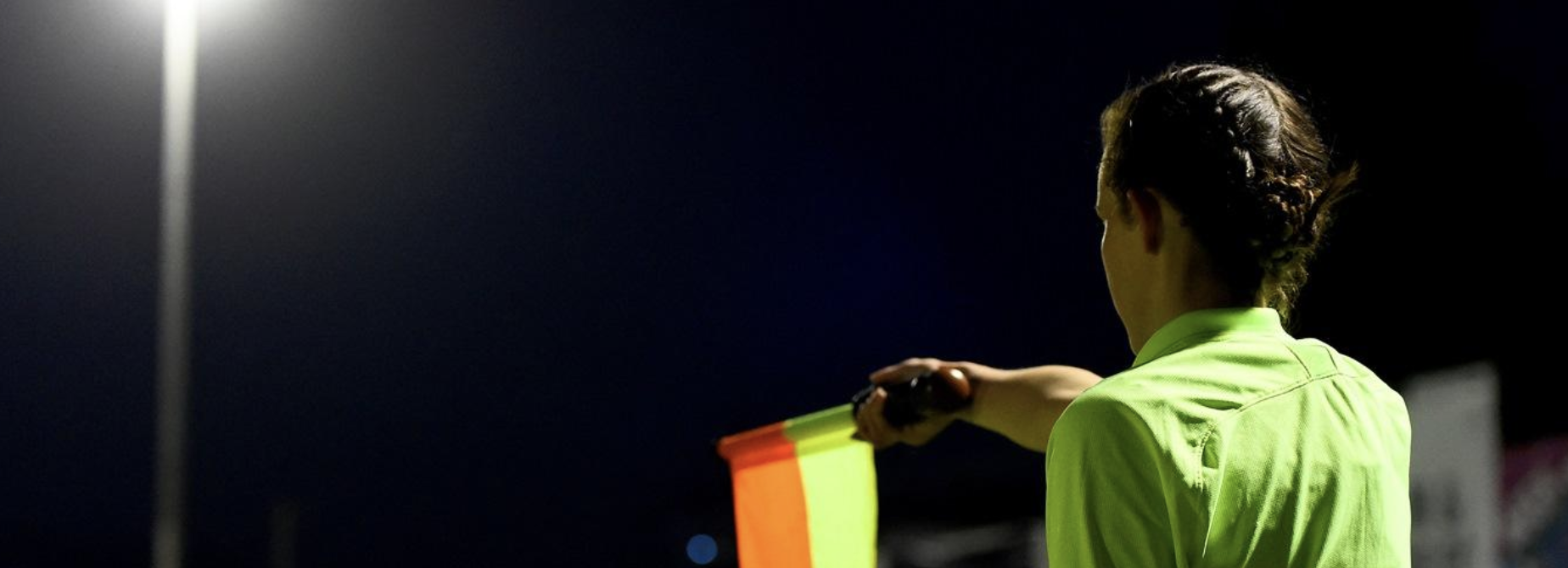
Well didn’t this hit a nerve?
Since publishing my piece on referee abuse yesterday, my inbox has quietly filled with messages.
Not from loud people.
Not from attention seekers.
From referees.
Parents.
Former referees.
Mentors.
Football people.
Many asking not to be named.
That alone tells a story.
People are not just commenting publicly. They are privately confiding. Sharing stories they have clearly carried for years. Asking me not to identify them because they fear backlash, judgement or consequences.
And honestly, that saddens me.
Because community football should not require anonymous whispers for people to feel safe telling the truth about their experiences.
“He fronted up the next day”
One message from a mother has stayed with me.
Her son was a talented young referee who loved football and had been identified as having real potential.
Then came the abuse.
At one junior match, a club official directed abusive language at him from the sideline. The young referee still had the courage to issue a red card while the abuse continued in front of players, spectators and his mother.
At another match, tensions escalated badly after a decision during the game.
The abuse continued afterwards.
People stayed with him because emotions remained heated and he was deeply upset by the experience.
And then came the line that really hit me.
“He fronted up the next day and didn’t feel he could share the experience.”
That is not resilience.
That is culture.
That is a young person learning to absorb abuse quietly because somewhere along the line football taught referees that this is simply part of the role.
The mother later wrote something else that stopped me:
“He needed the money but not the abuse.”
Eventually she could not make him go back.
And football lost another young referee.
“My main job is to keep them safe”
Another message came from a referee mentor.
“When I was a referee, it felt hugely rewarding to give something back to football,” they wrote.
“But now as a referee mentor, although it feels great to encourage young referees and guide their development, it’s a shame that I feel that my main job is just to keep them safe.”
Safe.
Not improve their positioning.
Not help with foul recognition.
Not confidence building.
Safe.
Think about what that says about where we are.
The normalisation of abuse
One of the strongest themes running through all these messages is how normalised referee abuse has become.
People know it is happening.
Clubs know it is happening.
Referees know which teams, grounds and fixtures they are likely to cop it at.
Parents know which games their children will dread officiating.
One parent wrote that when appointments came out, there were games their child was excited to referee and others they immediately dreaded.
That is heartbreaking.
Another former referee spoke about being repeatedly called a cheat by a club official during a senior match.
After the game the same people came over to shake hands.
The referee refused.
“If you can't be a civil human being during the game, don't pretend to be after it.”
And perhaps that is the uncomfortable truth sitting underneath all this.
Most people actually know the behaviour is wrong.
Otherwise they would not apologise afterwards.
Otherwise they would not privately message their support while publicly staying silent.
And I should say this too.
I am by no means perfect here.
Over the years I have probably bought into some of the language and rhetoric myself.
“Oh no, we’ve got him today.”
“He doesn’t do us any favours.”
That sort of thing.
Not screaming abuse from sidelines. But still contributing to a culture where referees become caricatures rather than people.
Maybe age changes you a little too.
Because as I have grown older, I find myself thinking more often about the fact that every referee is somebody’s son or daughter.
Somebody’s kid.
And would I want my own child treated the way some referees are treated in football?
No bloody way.
“No ref, no game”
Another parent wrote to me saying they suggested a campaign similar to those used interstate.
“No ref, no game.”
Simple.
True.
Because eventually people stop putting their hand up.
And the stories keep coming.
A referee room allegedly entered and communications equipment damaged.
Women leaving games in tears.
Young referees second guessing themselves after constant criticism.
Parents staying at grounds simply to emotionally support their refereeing child.
Former referees saying the support systems, communication and visibility around officiating have deteriorated badly.
Mentors trying to hold things together.
And threaded through all of it is the same quiet exhaustion.
Not outrage anymore.
Resignation.
“We know who the problem clubs are”
One line particularly struck me.
A parent recalled raising concerns about abuse and being told:
“We know who the problem clubs are.”
If that is true, then football does not have an awareness problem.
It has a courage problem.
And before everybody becomes defensive, this is not about pretending referees are perfect.
They are not.
Referees make mistakes.
Players make mistakes.
Coaches make mistakes.
Administrators make mistakes.
Football is emotional and imperfect.
But abuse should never become the accepted consequence of imperfection.
What are we teaching our children?
Several people contacted me about junior football specifically.
Parents abusing teenage referees.
Coaches modelling loss of emotional control.
Children hearing adults scream over throw-ins and free kicks.
And this matters because kids learn behaviour from us.
They absorb what football rewards.
If adults publicly humiliate referees every weekend, children begin seeing that behaviour as normal football culture.
And once behaviour becomes culture, it spreads.
One referee used the word “infects”.
That feels accurate.
More than just referees
What I am finding most interesting is that many people contacting me are not asking for sympathy.
They are asking to be heard.
There is a difference.
Again and again the messages carry the same emotional thread:
nobody listens
nothing changes
people quietly leave
everyone knows
few speak publicly
That should concern all of us.
Because football communities should have healthier ways to talk about difficult issues than anonymous blogs and private inboxes.
Yet right now many people clearly feel safer whispering these stories than openly attaching their names to them.
That tells its own story.
The saddest part
The saddest part in all of this is that most of the people writing to me still love football.
They are not enemies of the game.
They are football people.
People who gave years to refereeing, mentoring, coaching, supporting and volunteering.
People who wanted to contribute.
People who still care deeply.
And perhaps that is why these messages feel so heavy.
Because underneath the frustration is grief.
Grief for what the culture has become.
And somewhere in Tasmania tonight, another referee is looking at this weekend’s appointments wondering whether it is worth turning up again.
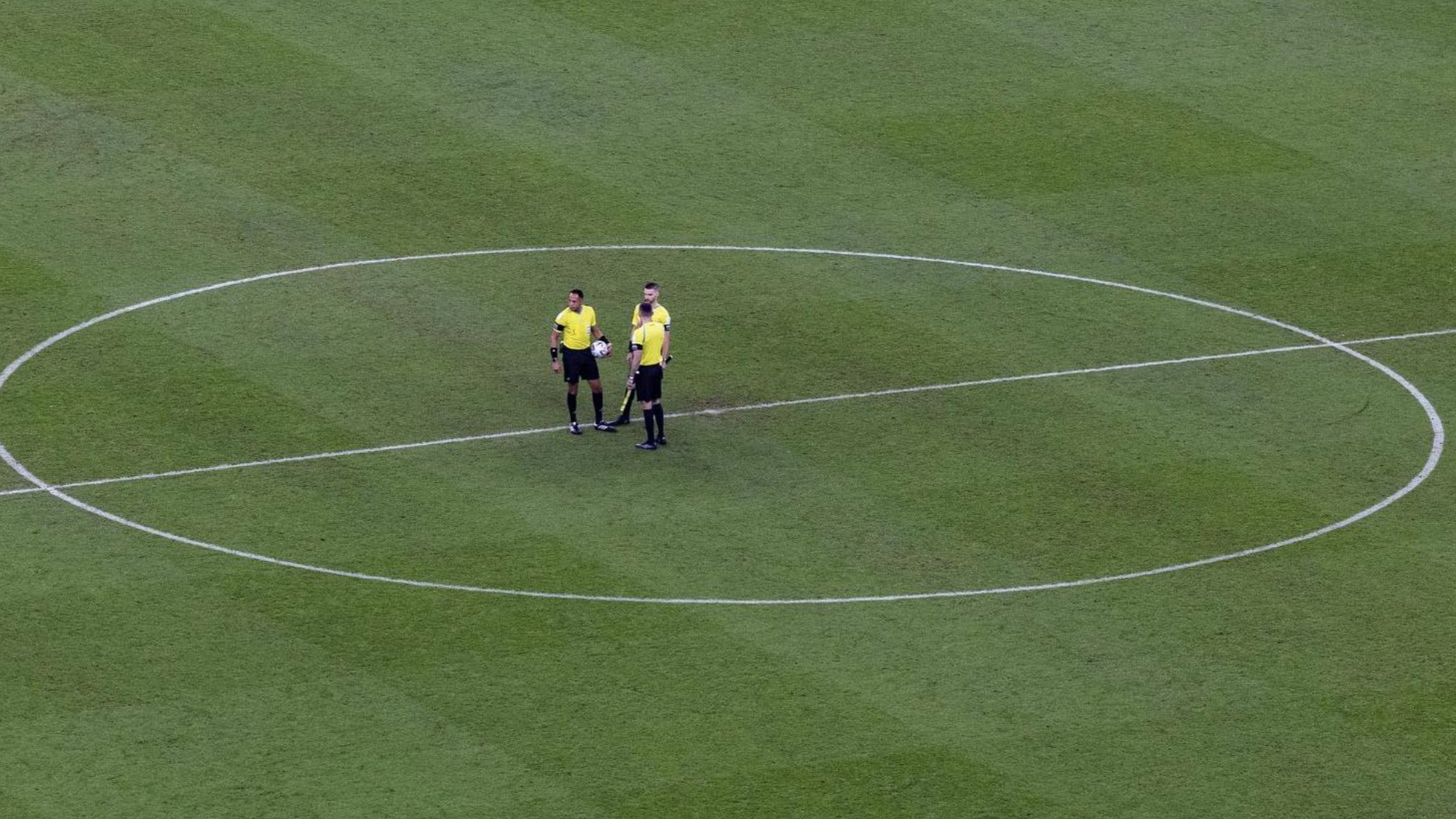
“You’re Fucking Hopeless”: The Quiet Crisis of Referee Abuse
Shame on us
I interviewed a referee this week.
Anonymous by request.
Quite a few referees contacted me after my recent interview with Brenton Kopra to thank me for telling part of their story through Brenton’s experience.
What I discovered this time was not anger.
It was disappointment.
Exhaustion.
Shame.
Shame on us.
Because somewhere along the way football has normalised behaviour that should never have become normal.
There is a referee somewhere in Tasmania tonight wondering whether it is worth doing another game this weekend.
Not because of the weather.
Not because of the running.
Not because of the laws of the game.
Because of us.
This referee asked to remain anonymous. Not because they are weak. Not because they are dramatic. But because speaking publicly about referee abuse can itself bring another wave of judgement, whispers and criticism.
The person with the whistle
They started refereeing because they loved football and wanted to stay connected to the game. They were also tired of seeing high-level football being played with one or two officials while “clubbies” filled the gaps.
This is not somebody who hates football.
Quite the opposite.
This is somebody who loves the game enough to keep turning up despite everything that comes with the whistle.
What they found instead was a culture they say has changed significantly for the worse.
“No, I had no idea referees copped the amount of abuse that they do,” they said.
“I used to play the game, and it was always really frowned upon to disrespect the referee. I do remember it happening, don’t get me wrong, it’s always been there, but nothing like the level it is now.”
That part struck me.
Not that abuse exists. Most of us already know that.
It was the suggestion that football has slowly become comfortable with it.
Almost casual about it.
As though screaming abuse at referees is now woven into the fabric of the matchday experience.
Somewhere along the way football started confusing passion with permission.
“You’re shit mate”
And the abuse itself is relentless in its sameness.
“You’re shit mate.”
“You’re fucking hopeless.”
“Are you ever going to get a fucking decision right?”
One comment still lingers with this referee:
“He’s so fucking useless but FT doesn’t give a shit, just pat him on the back, give him a heap of cash for doing a shit job and seeya next week.”
Another accusation that stayed with them was being accused of cheating and bias.
Imagine hearing that week after week.
Imagine volunteering your weekend to a sport you love only to become the public target for adult frustration.
Imagine your son hearing it.
Your daughter.
Your partner.
Your father.
And then ask yourself why people stop refereeing.
Alone in the middle
One whistle.
Twenty-two players.
Two benches.
Hundreds of opinions.
And often one referee standing in the middle alone under cold winter skies.
That loneliness sits underneath this whole conversation.
Players have teammates.
Coaches have staff and benches beside them.
Parents have their sideline tribe.
The referee has nobody.
And if I am honest, football sidelines can change people. I have seen good people say things during matches that they would never say anywhere else.
Football people often like to think referee abuse is something that happens at “other clubs”.
I am not sure that is true.
The adults in the room
Perhaps the most confronting part of this interview was not the swearing.
Football has always had emotion.
It was who this referee says is often delivering the abuse.
“Coaches are easily the worst. At all levels, from U8s to NPL, coaches are easily the worst.”
The very people entrusted with teaching children about discipline, resilience and respect are too often modelling emotional loss of control instead.
“They are supposed to be the ones setting the example, but most of them are a disgrace.”
“I have witnessed grown men abusing 12-year-old referees, it is completely unacceptable.”
Twelve.
Children with whistles.
And what are young players learning when adults scream at officials over throw-ins and free kicks in junior football?
What chance does a 12-year-old referee have when the adult leader loses control first?
The referee also made another observation that lingered with me.
“People just forget their manners in general. All normal human etiquette goes out the window on the sideline of a football match apparently.”
Most of us would be horrified if somebody spoke to our child’s teacher, or a supermarket worker, the way some referees are spoken to on a Saturday morning.
The emotional burden
The referee told me they have left grounds angry and upset after games.
One recent incident involved abuse from what they described as one of the highest-regarded coaches in the state after a decision during a game.
The referee later went home and reviewed the footage.
They were right.
The coach was wrong.
But by then the damage was already done.
“It’s pretty ordinary that our highest level of coach can still think that it’s ok to abuse referees,” they said.
“The example this sets flows on to all the players and spectators, it infects everyone.”
Young players see it.
Parents absorb it.
Other coaches normalise it.
And eventually abuse becomes culture.
The referee said they discuss abuse “all the time” among themselves.
This is not occasional.
It is routine enough to become regular conversation.
Exhaustion sits underneath that too.
Physical safety
The referee said they had not personally felt physically unsafe at a game.
“But I know others have.”
The referee also pointed out another difficult reality.
“When I’m refereeing and they are on the team sheet it’s easy, give them a sanction,” they said.
“It’s a bit harder when it’s a parent and as a referee we don’t really have the power to stop it.”
The referee shortage is not a mystery
Football people often talk about referee shortages as though they appeared out of nowhere.
They did not.
This referee said they think about quitting “all the time.”
“The proof is in the numbers,” they said.
“Young referees are not staying, and who can blame them. No one deserves a serve.”
Then came the line that stayed with me most.
I asked whether they would encourage their own child to referee.
“I probably wouldn’t let my child referee.”
That is not anger.
That is resignation.
A person who loves football enough to referee it does not believe the environment is healthy enough for their own child to do the same.
The impossible job
The referee also pointed out something worth remembering.
Every player, coach, substitute, parent and spectator watches football through emotion and bias. Referees are expected to do the opposite.
“We must be completely impartial and just look at the facts with no emotion,” they said.
“No one else has the ability to do that and we must do it 100s of times each and every game, in a split second with no slow-mo replay.”
No replay.
No freeze frame.
Just instinct, positioning, concentration and courage.
And they must do it while being yelled at from every direction.
“Sorry about before”
Perhaps the most revealing part of all is the contradiction.
“At most games, everyone is kind, courteous, friendly and professional towards the referees before the first whistle is blown,” they said.
“As soon as the game starts and someone starts losing, the abuse starts.”
Then comes the ritual apology afterwards.
“Sorry about before, I get a bit passionate.”
As though ninety minutes of abuse can simply be wiped away with a handshake after full time.
Most people actually know the behaviour is wrong.
Otherwise they would not apologise for it afterwards.
“In a lot of ways, we are our own worst enemies”
The referee was also honest about the fact football’s officiating problems cannot simply be blamed on everyone else.
“In a lot of ways, we are our own worst enemies,” they said.
“Some referees ignore abuse, which just makes it worse for the next person.”
Because this was not an interview looking for sympathy without accountability.
The referee spoke about the need for more senior mentors, educators and experienced officials to help younger referees navigate the game and the pressure that comes with it.
They spoke about the need for more assessors, more fourth officials and stronger sanctions for clubs that allow abuse to continue unchecked.
And then there is the financial reality.
“Did you know we have to buy all our own kit?” they asked.
“Which is about $1000. Many referees wouldn’t make that much in a year.”
“Pay us more,” they repeated.
Not like a demand.
More like exhaustion.
“The amount of money we earn barely pays for the fuel to get to the game these days.”
The cost
The greatest cost is not financial.
It is emotional.
It is the accumulation of being called useless week after week by people who would never tolerate that behaviour in their own workplace or directed at their own family.
Football in Tasmania cannot keep talking about growth, pathways and standards while treating referees as disposable.
And somewhere in Tasmania tonight, another referee is deciding whether to come back next weekend.
A Love Letter to My Club
Twenty years is a long time.
Long enough for something to move beyond hobby or volunteer role and become woven into your identity.
Long enough for colours to seep into your bones.
Long enough that red and blue no longer feels like a football kit, but a life.
And now, after stepping away, I find myself sitting with an emotion I did not entirely expect.
Grief.
Real grief.
Not dramatic grief.
Not loud grief.
A quieter kind.
The kind that arrives in ordinary moments.
Driving past the ground.
Hearing a result second-hand.
Reaching for your phone before remembering the problems are no longer yours to solve.
Because while football clubs are organisations on paper, that is not what they become to the people who give themselves fully to them.
They become memory.
Routine.
Family.
Responsibility.
Pressure.
Purpose.
Belonging.
For twenty years my life revolved around a football club.
Not casually.
Completely.
The worrying.
The caring.
The lobbying for something better.
The meetings.
The negotiations.
The endless messages.
The politics.
The rules.
The controversy.
The despair.
The elation.
The exhausting emotional weight of knowing people depended on you.
There is a heaviness to long-term leadership in grassroots sport that is difficult to explain to outsiders. You carry problems home with you. You replay conversations late at night. You absorb conflict. You feel responsible for things far beyond your control.
And over time the lines blur.
The club stops being something you do and starts becoming part of who you are.
There were times she consumed me completely.
Times football sat at the dinner table with us.
Times the phone never stopped.
Times I was physically present with my family but mentally somewhere else solving football problems.
Times I was tired in a way that sleep never really fixed.
But love and exhaustion often sit side by side in community sport.
That is the truth nobody really says out loud.
You cannot care deeply for twenty years without giving away pieces of yourself in the process.
And yet somehow you keep going because you love the game.
Or perhaps more accurately, because you love the people inside the game.
Thousands of people.
That is what strikes me most as I look back now.
Thousands of people well met.
Children who became adults before my eyes.
Parents who became lifelong friends.
Volunteers who quietly gave everything.
Coaches obsessed with helping players improve.
The football tragics.
The sideline debaters.
The canteen workers.
The dreamers.
People just like me who care deeply about football.
That is what the club really gave me.
Not titles.
Not positions.
People.
Wonderful people.
And in many ways she gave me my life.
She gave me a husband.
She gave me a new professional direction through football.
She gave me purpose during years when I desperately needed it.
She gave me experiences I never could have imagined as a younger woman standing on the outside of the game.
She gave me heartbreak too.
And stress.
And pressure.
And moments where the responsibility felt impossibly heavy.
But even now, after all the complexity that comes with long involvement, I cannot look back with bitterness.
Only contemplation.
And sadness.
Because what an extraordinary privilege it is to spend twenty years caring deeply about something.
To belong somewhere fully.
To stand beside pitches in winter under lights and hear footballs striking fences in the dark.
To smell wet grass, coffee and rain soaked jackets.
To walk through a ground and instinctively scan for problems before you even realise you are doing it.
Those rhythms become part of your nervous system.
That is why leaving feels so strange.
The world has not ended.
The games still happen.
The lights still come on.
People move forward.
But quietly, privately, something inside me has shifted.
I miss her more than I thought I would.
Not because she was perfect.
But because she was home for a very long time.
And I do not yet entirely know who I am without her.
Perhaps that understanding only comes later.
Right now there is mostly just silence where noise used to be.
And an ache I am still learning how to carry.

Have We Priced Ordinary Families Out of Youth Football?
Charlie White asked a question on my recent blog about youth football that made me think.
Charlie is well known in Tasmanian football circles as both a school principal and former referee, and his question was a good one.
Has football in Tasmania and Australia quietly become a middle class sport?
It is an uncomfortable question because many of us instinctively want to defend the game.
But the more I sat with it, the harder it became to dismiss.
Because families are paying more money than ever into youth football while, in some cases, feeling like they are getting less actual football in return.
Less games.
Less cup football.
Shorter seasons.
More byes.
At the same time, the expectations around youth football continue to rise.
More coaching.
More structure.
More professionalism.
More cost.
And somewhere in the middle of all that sits a difficult question.
Who can actually afford modern youth football anymore?
Football is not cheap anymore
For many families, football now involves far more than a registration fee.
There are uniforms, boots, travel, extra training, representative programs, academy football, tournaments, interstate trips and the increasing feeling that if your child is “serious”, they probably need to be doing more than one session a week with a volunteer coach.
Not every family can absorb that.
Not every family has the money, time, transport or flexibility to keep up with the growing demands of youth sport.
So yes, we should say this plainly.
Football is becoming harder for some ordinary families to afford.
And when any sport becomes harder to afford, it changes who remains in the system.
But the cost did not appear from nowhere
This is where the conversation gets more complicated.
Because the easy answer is to accuse clubs or coaches of profiteering.
The reality is far less dramatic and far more structural.
Youth football has professionalised.
Families now expect qualified coaches, structured sessions, technical development, pathways, communication systems, safeguarding standards, specialised training, better facilities and year-round opportunities.
Most of those expectations are reasonable.
Many are good.
But all of them cost money.
At Morton’s Soccer School, we charge fees for coaching and training programs.
We do not hide from that.
Our coaches are employees. We have around 50 people involved across our programs. They are not volunteers giving up an hour after work once a week. People are paying for a football service.
Families can decide whether that service is worthwhile for their child. They can question the quality. They can opt out if they are unhappy.
That is the reality of modern sport.
And we are not unique.
Clubs and development providers across Australia now offer additional skills and development programs.
Paid development has become a normal part of the football landscape.
That is not automatically a bad thing.
Good coaching takes time, experience, planning and organisation.
People deserve to be paid for professional work.
Ask almost any club executive in Australia how difficult it now is to find volunteers and you quickly begin to understand why football is professionalising.
Modern clubs are no longer just organising teams and putting jumpers out for goals.
They are managing compliance, safeguarding, registrations, communication systems, facilities, coach education, social media, sponsorship, technology and increasingly complicated football programs.
The old volunteer model is under enormous strain.
And when volunteers become harder to find, clubs inevitably rely more heavily on paid roles and professional services.
Football increasingly operates like a service families choose to invest in
This may also be part of the uncomfortable reality.
Increasingly, football operates more like a skill-based activity families voluntarily invest in.
Music lessons.
Dance.
Piano lessons.
Families make decisions about what opportunities they value and what they can afford.
That may not sit comfortably with people who still see football purely as the traditional working-class “people’s game”, but economically that is increasingly where parts of youth football have landed.
Parents are paying more, but are players getting more football?
This is where the debate becomes uncomfortable.
Because many families are investing more money, more time and more emotional energy into youth football than ever before.
Yet in some areas, particularly in Tasmania, players are arguably experiencing fewer meaningful competitive matches than previous generations.
Older coaches, referees and administrators often talk about youth cup competitions, finals days and knockout football that once existed throughout the youth structure.
Those experiences mattered.
Cup football creates something league football often cannot.
Jeopardy.
Atmosphere.
Crowds.
Memories.
And importantly, more meaningful football.
If families are paying more into the system, it is fair for them to ask what the actual football experience now looks like compared to 10 or 15 years ago.
Because development is not only about training volume.
Players also develop through meaningful matches, pressure moments and emotionally significant football experiences.
That is where Charlie’s original question becomes more than just a conversation about fees.
It becomes a conversation about value.
Clubs are carrying enormous pressure
It is also important not to pretend clubs are swimming in money.
Most football clubs are under huge financial and volunteer pressure.
Ground hire costs money.
Lights cost money.
Referees cost money.
Equipment costs money.
Administration costs money.
Insurance costs money.
Technology costs money.
Coach education costs money.
If clubs want to participate at higher levels like NPL, the expectations grow again.
Benchmarks cost money.
Licensing costs money.
Compliance costs money.
Facilities standards cost money.
Every additional requirement lands somewhere.
Usually it lands on clubs.
Then it lands on families.
Grassroots football supports a massive ecosystem
This is another part of the discussion many people do not fully see.
Most parents probably assume their registration fee mainly pays for their child’s football.
But football is a huge national ecosystem.
Football Australia oversees more than 20 national teams and representative programs across men’s, women’s, youth, futsal and para football.
Most parents probably do not fully realise how large the football ecosystem actually is.
Participation money helps support local associations, state federations, Football Australia, referee systems, safeguarding, coach education, talent identification, national championships and pathway structures.
All of that costs money.
In some sports, significant broadcast and commercial revenue subsidises participation.
In football, families themselves increasingly carry that burden.
To clubs.
To volunteers.
To families.
This is not an argument against national teams.
Australians should celebrate the Socceroos and Matildas.
But it does help explain why grassroots football often feels financially stretched despite the game’s huge participation numbers.
The Tasmanian frustration
In Tasmania, there is another layer to this discussion.
Families are often paying more while still feeling like players are not getting enough football.
That was the original point Charlie was making in relation to Under 13s.
If youth players are training multiple nights a week, participating in development programs and being asked to take football seriously, then the competition structure has to match that investment.
Short seasons, byes and limited meaningful games make the cost harder to justify.
Families can accept paying for football if they believe there is genuine opportunity and value attached to it.
But when costs rise while game volume remains comparatively low, frustration is understandable.
So, is football becoming middle class?
I do not think football has become exclusively middle class.
Not yet.
There are still ordinary working families all throughout the game.
There are still volunteers doing extraordinary work to keep football accessible.
There are still clubs trying very hard to hold the line on cost.
But I do think football is drifting towards a system where middle class families are better positioned to survive the demands of modern youth football.
They are more likely to afford extra coaching.
More likely to manage travel.
More likely to absorb rising costs.
More likely to have the flexibility to commit to increasingly intensive football schedules.
That does not mean their children do not deserve those opportunities.
Of course they do.
But we should still ask what happens to talented kids whose families cannot keep pace financially.
Sometimes they do not leave dramatically.
Sometimes they just quietly drift away.
There is no simple villain here
I do not think the answer is to attack paid coaching.
I do not think the answer is to pretend everything should be free.
And I do not think the answer is to blame clubs trying to survive in increasingly demanding environments.
But I also do not think parents are wrong to question the cost of football.
They should question it.
Because affordability is not a side issue.
It goes to the identity of the game itself.
Football is becoming more professional.
More structured.
More expensive.
And Charlie’s question sits underneath all of it.
If ordinary families slowly stop being able to afford the game, what happens to football then?

Tasmania Is Building Low-Volume Footballers
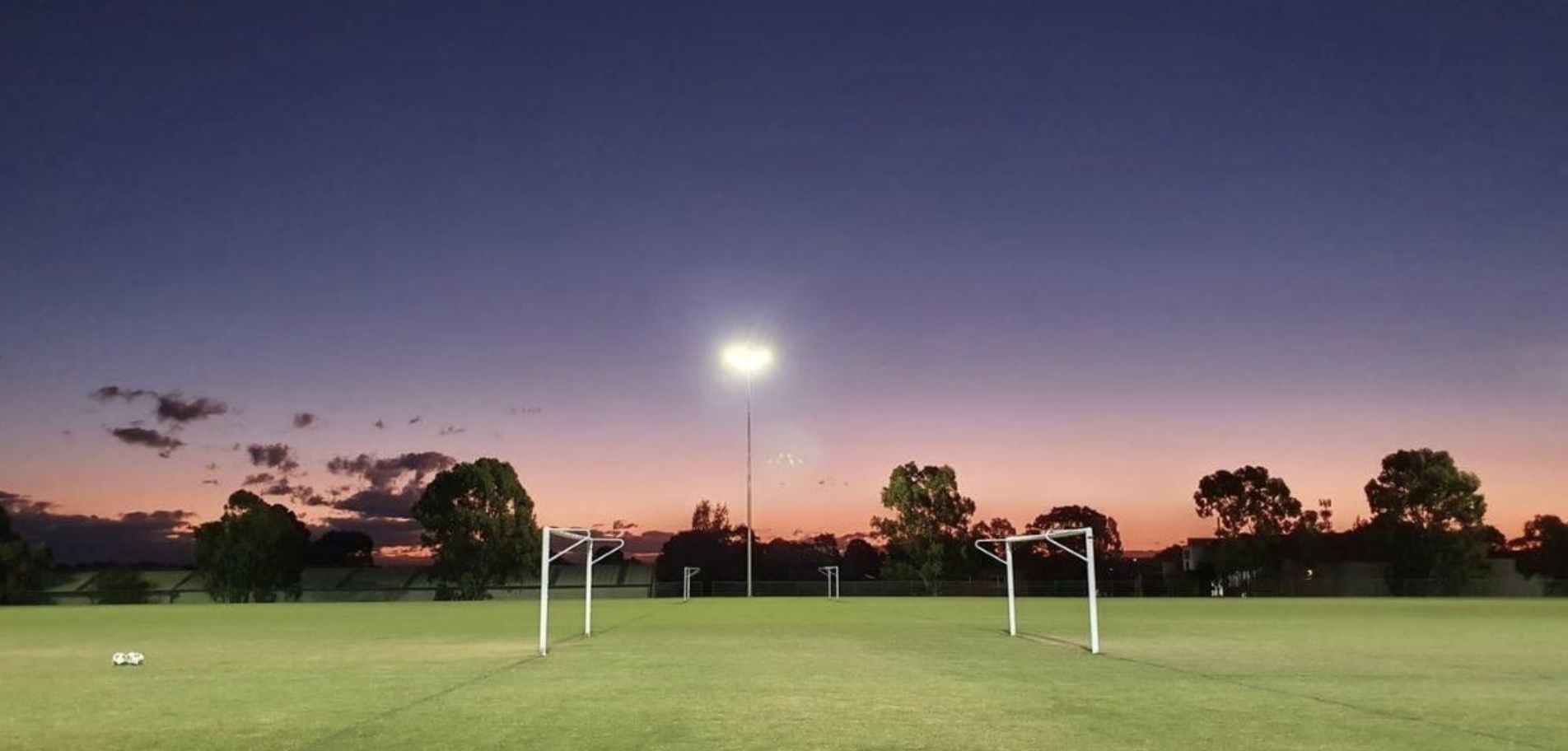
Yes, I know I have been banging on about this since I started blogging.
But football is, fundamentally, supposed to involve actually playing football matches.
And if reading about that bores you, there are probably plenty of other things on the internet to click on.
Firstly, thank you to Michael for sending through a pile of research and thoughts this week. Some of it was confronting reading, not because it was inaccurate, but because it confirmed something many football people in Tasmania already quietly know.
We simply do not play enough football.
Michael sent me screenshots from Dribl comparing youth competitions around the country.
A Victorian U13 player in VPL1 plays thirty rounds.
Football NSW U13s also play thirty rounds.
Football SA U13s play twenty-two rounds.
Tasmanian YPL U13s play eighteen rounds. With byes.
Some Tasmanian teams will end up playing roughly half the football of Victoria’s top youth competition once byes are factored in.
Half.
And perhaps the strangest part of all?
A four-year-old playing U5 football in Tasmania can receive around 15 rounds of football in a season.
Tasmanian NPL clubs play 18 league matches.
Tasmanian U13 YPL players also play 18 rounds, often fewer once byes are factored in.
Think about that for a moment.
Our introductory participation football, our senior elite competition and our youth pathway football all operate within remarkably similar match volumes.
That does not necessarily reflect a football culture built around maximum development and opportunity.
It reflects a football system constrained by limited infrastructure, limited access and limited space.
Michael has a 13-year-old son who loves football. Lives for it. Watches it constantly. Wants to train. Wants to improve. Wants to play.
And Michael’s reaction looking at the Victorian competition structure was not excitement.
It was envy.
And disappointment.
Because his son simply does not get enough football here in Tasmania.
Not enough games.
Not enough repetitions.
Not enough meaningful competition.
And the hardest part?
He wants to play more.
He can’t.
Ken has said it for years.
“We don’t play enough football.”
Not enough meaningful football.
Not enough competitive football.
Not enough football under lights.
Not enough football on quality surfaces.
Not enough football, full stop.
I think he is right.
We Are Building Low-Volume Footballers
Tasmanian football talks endlessly about pathways and high performance. We compare ourselves to Victoria and NSW as though the environments are remotely similar.
But I think we are fooling ourselves.
By the middle of winter some mainland kids have already played almost an entire Tasmanian season.
Then they keep going.
League football.
Cup football.
Representative football.
Academy football.
Tournaments.
Meanwhile in Tasmania we stop for school holidays, lose weekends to weather, juggle multi-use grounds and finish just as the season feels like it is building momentum.
And before anyone says “well Tasmania is smaller”, I am not entirely buying that explanation anymore.
Michael grew up in Wagga Wagga, a regional city with a relatively modest population compared to major Australian cities. Yet he remembers constantly seeing athletes emerge into elite pathways across multiple sports.
The issue is not simply population.
The issue is environment.
Right now we are accidentally building low-volume footballers.
Not untalented footballers.
Not lazy footballers.
Not badly coached footballers.
Low-volume footballers.
Kids who simply do not experience enough:
games
intensity
pressure
repetition
competitive environments
strong opposition
year-round football immersion
Eventually that matters.
You cannot build high-volume footballers inside a low-volume football system.
And honestly, none of this is particularly controversial inside football circles.
Most coaches and parents already know it.
We simply do not talk about it publicly very often.
Why The Cups Matter So Much
And perhaps this is why Tasmanian football families value tournaments so highly.
For many young players from U9 through to U16, tournaments like:
the Devonport Cup
the Launceston Cup
the Hobart Cup
are not just enjoyable weekends away.
They are opportunities to actually play more football.
A player attending all three tournaments might add another twelve matches across the year.
That is significant in a state where many youth players otherwise have relatively limited match volume.
Of course those games are condensed into intense weekends rather than spread consistently across a season, so they are not exactly the same developmental environment as a longer league structure.
But they matter enormously nonetheless.
Because Tasmanian football people are already trying to solve the problem themselves.
Parents travel.
Volunteers organise.
Clubs fundraise.
Kids spend entire weekends immersed in football.
The appetite for more football clearly exists.
The infrastructure and calendar simply struggle to provide enough of it consistently.
And even then, the exposure to genuinely different opposition can still be limited.
Michael pointed out that because northern and southern competitions do not always align neatly, tournaments can still involve teams repeatedly facing many of the same opponents they already encounter during the normal season.
So even our attempts to expand football opportunities can sometimes remain trapped inside the same small ecosystem.
Dominating Small Pools Helps Nobody
Another point Michael raised really struck me.
Some teams in Tasmanian youth football remain undefeated deep into the season.
That might sound impressive on paper.
But from a development perspective it should probably concern us more than excite us.
Because dominant teams in small ecosystems eventually run out of meaningful resistance.
Strong players need:
harder games
faster football
adversity
deeper competitions
unfamiliar opponents
Otherwise development plateaus.
Even our tournaments can become repetitive.
That gap matters too.
Part of the reason Tasmania plays less football is because the entire system itself is stretched.
Volunteers are stretched.
Councils are stretched.
Facilities are stretched.
So the calendar contracts to fit the infrastructure rather than the needs of the players.
For a state that supposedly values outdoor lifestyle and community sport, Tasmania often makes organised football remarkably difficult to access consistently.
When kids love football but only play fifteen meaningful league games across six months, eventually other activities start competing for their attention.
That should concern all of us.
And Then We Expect Them To Compete Nationally
This is the part I keep coming back to.
We send Tasmanian teams and players away to National Championships and interstate tournaments and ask them to compete against players who have simply experienced far more football than they have.
More matches.
More intensity.
More pressure.
More depth.
More tournaments.
More unfamiliar opposition.
More high-speed decision making.
By the time some mainland players reach 15 or 16, they may have accumulated hundreds more meaningful football matches than Tasmanian players.
Hundreds.
And yet when Tasmania struggles at national level, we often talk about mentality, pathways, coaching or talent identification.
Perhaps the simpler answer is this:
our players often arrive underexposed.
Not because they lack commitment.
Not because they lack potential.
But because the football environment around them has not been able to give them enough football often enough for long enough.
That is not a criticism of the kids.
If anything, it is a compliment.
Because when Tasmanian players do shine nationally, they are often doing so despite the limitations of the environment around them, not because the system is overflowing with opportunity.
Perhaps the answer is not more pathway documents and more development language.
Perhaps the answer is simply more football.
More games.
More surfaces.
More lights.
More tournaments.
More access.
More pressure.
More repetitions.
Because right now too many Tasmanian kids who love football are being told, indirectly but very clearly, that the system simply cannot give them enough of the game they love.

“Who Are You?” Women, Authority and Junior Football
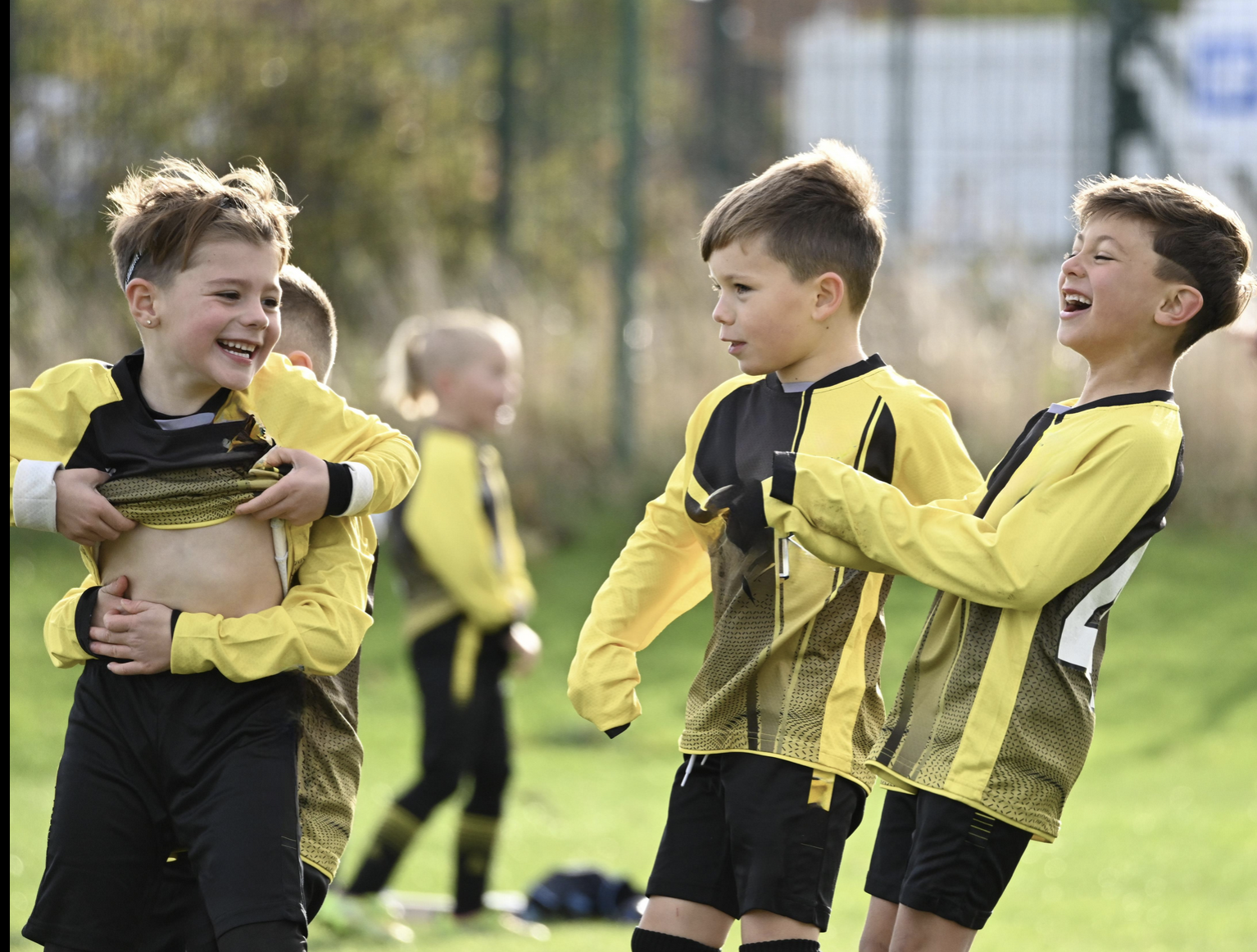
The Adults Who Shift the Tone of Kids’ Football
A Simple Request
Yesterday morning at junior football I asked a parent to step back from behind the goals.
That was it.
An ordinary Saturday morning. An ordinary U12 game at Lower Queenborough.
Kids playing football.
I was at Lower Queenborough because several South Hobart junior teams were playing there and I was watching and photographing games across the morning.
The parent was standing immediately beside the goal, heavily involved in what was happening on the field and at times almost leaning on the goal frame itself. So I walked over politely and asked if he could step back.
That should have been the end of it.
Instead, he challenged me immediately.
“Who are you?”
I answered honestly.
“I’m the President of CRJFA.”
Then came the response.
“Well if you’re the president you should know the distance rule.”
Over and over.
“What’s the distance?”
“What’s the rule?”
“If you’re the president you should know.”
Then came the tone. The body language. The physical presence. I’m 5 foot 9 and this was a very tall man standing over me in public at a children’s football match.
And for a moment, I felt myself second-guessing the interaction.
Because he was right about one thing.
I did not know the exact distance.
Afterwards I Looked Up The Rule
Driving home afterwards I realised something important.
The distance was never the point.
Later I looked up the actual guideline. It says spectators should not position themselves behind the goal or too close to the field of play and that adults should help create a safe, enjoyable and positive environment for children.
There is no precise distance written into the rule.
Which fascinated me afterwards because during the interaction I found myself immediately doubting myself.
“What’s the distance?”
“You should know the rule.”
Over and over.
And for a moment it worked.
I walked away thinking perhaps I had handled the situation badly because I could not instantly produce a technical answer.
But reading the guideline later, I realised my original request had simply reflected the spirit of what junior football is trying to achieve:
space for children to play without adults hovering over them.
Looking back now, I do not think he was genuinely seeking clarification. The technicality had become a way to challenge the legitimacy of the request itself.
“If you don’t know the exact rule then why should I listen to you?”
But grassroots football is not held together by volunteers carrying every rulebook measurement in their heads.
It survives because people are willing to step in politely when needed and because most adults understand the difference between a technicality and basic respect.
Female Football Week
This week is Female Football Week and I found myself thinking afterwards that perhaps this is also part of that conversation.
Not the glossy social media version of women in football.
Not the polished slogans.
The real version.
The lived version.
The version where a woman in football leadership asks an adult man to step back from behind a goal at children’s football and suddenly finds herself publicly challenged, repeatedly questioned and instinctively trying to stay calm while being physically towered over.
At one point I asked his name and he immediately replied:
“What’s your name?”
So I told him.
Then came the response:
“Oh, you’re Ken Morton’s wife.”
And I found that interesting afterwards.
Because in that moment I was no longer Victoria Morton. Not President of CRJFA. Not simply myself.
I became relationally identifiable through a man.
Again, I do not think this was some consciously terrible act. Football culture is layered and complicated.
But moments like that do quietly reveal how women in football leadership are still often socially understood.
I do not think men are bad and women are good. Football is far more complicated than that.
But I do think women in football leadership become very skilled at absorbing behaviour calmly.
We almost have to.
There are moments where you realise authority is not always received equally. Some people still react differently when leadership comes from a woman, particularly in environments where physical presence, confidence and public confrontation can become forms of power in themselves.
I also wondered afterwards whether the interaction would have unfolded differently if I had been a man.
I suspect many women in football already know the answer to that question.
The Jacket
I also found myself wondering afterwards whether the jacket mattered.
At CRJFA we have debated for years whether executives and volunteers should wear branded jackets. Visibility. Identification. A sense that we are part of CRJFA rather than just random adults standing around grounds.
Yesterday I happened to be wearing my South Hobart jacket because I had come from football and was watching junior games.
Then came the line:
“Oh, you’re from South Hobart.”
And suddenly the interaction shifted from a polite request about children’s football into something tribal.
Not CRJFA.
Not children.
Not sideline behaviour.
Club identity.
Maybe a CRJFA jacket would have changed the dynamic.
Maybe it would not have.
Grassroots football can be funny like that. We constantly talk about “community” while often reading each other first through club colours.
“We Won Anyway”
What fascinated me afterwards was how quickly the atmosphere changed.
One polite request and suddenly everything became tense, territorial and adversarial.
Then came the throwaway line as he walked off:
“Oh well, we won anyway.”
And there it was.
An adult framing a U12 football match through the lens of winning.
Not children.
Not behaviour.
Not atmosphere.
Winning.
That line stayed with me far more than the confrontation itself.
Because junior football reveals adults in ways we probably do not like to admit.
Children can be happily playing football and then suddenly an adult injects ego into the environment. Or tribalism. Or aggression. Or sarcasm. Or the need to dominate space.
And the emotional temperature changes instantly.
Adults shift the tone of kids’ football far more than children do.
What Happens When Adults Arrive
Sometimes I honestly think if adults simply dropped children at football and disappeared for an hour, the kids would probably sort most of it out themselves.
They would argue occasionally.
Then probably get over it five minutes later.
Kick the ball around.
Laugh.
Forget the score.
Meanwhile adults stand behind goals yelling instructions, coaching over the top of coaches, arguing with referees, carrying club politics onto sidelines and turning junior sport into something heavier than it was ever meant to be.
The irony is I’m an adult in football too.
I care deeply. I advocate. I write blogs about football governance and culture. I get emotional about the game. So I’m not pretending I stand outside any of this.
But mornings like this do make me wonder when adults stopped simply letting children play.
Volunteers Holding Grassroots Football Together
At CRJFA I am a volunteer too.
Not a security guard.
Not a paid official.
Just another person trying to help grassroots football function properly for children.
That is the irony of volunteer sport.
People are expected to step in, help, lead and manage situations. But the moment they exercise even mild authority they can suddenly become targets for resentment.
Again, the exact distance behind the goals was never really the point.
The point was that a simple request at a children’s football match escalated into a public challenge because an adult man decided it should.
That matters.
The Tone Children Grow Up In
Children absorb all of this.
They watch how adults speak to referees. To volunteers. To coaches. To opposition supporters. To women in leadership. To each other.
And then we wonder where sideline culture comes from.
Most kids actually regulate themselves pretty well.
Sometimes it is the adults who struggle most.

Feminism 101 and the Uneasy Politics of Female Football Week

I’m a feminist.
That word alone now seems to make people either tense up or nod approvingly before the conversation has even started.
Which is probably part of the problem.
Because feminism has become one of those words everyone reacts to, but fewer people stop to define properly.
So let’s start there.
Feminism 101
At its simplest, feminism is the belief that women should have the same rights, opportunities, freedoms and respect as men.
That’s it.
Not female superiority.
Not anti-men.
Not the belief that women are always right.
Not the belief that men and women are identical.
Just equality.
Historically, feminism mattered because women were excluded from huge parts of public life:
voting
leadership
property ownership
education
financial independence
politics
sport
Women had to fight to even enter many of the rooms where decisions were made.
Football was one of those rooms.
The English FA actually banned women’s football from affiliated grounds for fifty years, from 1921 until 1971, claiming the game was “quite unsuitable for females.”
Think about that for a moment.
An entire generation of women effectively locked out of the sport, not because they couldn’t play, but because men in authority decided they shouldn’t.
And honestly, some days football still carries traces of that history.
Which brings me to Female Football Week
Every year I feel slightly uneasy about it.
Not angry.
Not anti-women’s football.
Not dismissive of the importance of visibility.
Uneasy.
Because I’m not convinced football always understands the difference between celebrating women and structurally supporting them.
The year it started to feel like a chore
I should probably admit something uncomfortable here.
When I was President of South Hobart FC, Female Football Week often felt less like a celebration and more like an obligation.
Not because we didn’t care about girls and women in football. Quite the opposite.
We cared deeply.
But every year the conversation became:
“What are we doing for Female Football Week?”
Not:
“What are we doing for women’s football all year?”
There’s a difference.
And underneath it all sat a quiet panic:
If we don’t do something, people will think we don’t care.
So we organised things.
Photos.
Posts.
Events.
Visibility pieces.
And some of them were genuinely worthwhile.
But if I’m brutally honest, there were years where it felt performative. Not maliciously performative. Just… expected.
Another awareness week to execute properly.
Football loves the optics
Football absolutely loves the optics of Female Football Week.
Suddenly every club social media page fills with:
smiling girls teams
player profile graphics
“meet our female footballers”
carefully worded statements about inclusion
obligatory posts reminding everyone the club “supports women’s football”
Look at us.
We care.
We have women’s teams.
And again, some of that visibility genuinely matters. Young girls seeing themselves represented matters enormously.
But sometimes it all feels slightly rehearsed.
Because the same clubs posting glossy graphics can still be:
giving women worse training times
struggling to retain female coaches
underrepresenting women in decision-making
treating women’s football as secondary when resources tighten
That’s the uncomfortable gap.
Football is becoming very good at looking supportive of women.
It is less consistently good at structurally supporting them.
And after enough years in administration, you start noticing how much energy goes into appearing progressive compared to quietly building systems that actually are.
Meanwhile the real work keeps happening
Meanwhile the real work continues quietly every week — retaining teenage girls, balancing field space, managing changerooms, finding coaches, trying to grow women’s programs sustainably.
That work never fits neatly into a campaign graphic.
The easiest thing in the world is posting:
“Happy Female Football Week!”
The harder thing is asking:
Why are the girls still training later?
Why are women still underrepresented in decision-making?
Why do women’s teams still often feel secondary when resources get tight?
That’s not a branding conversation anymore.
That’s a power conversation.
Here’s the irony nobody says out loud
Women’s football often has a healthier culture than the men’s game.
Not always. But often.
More communal.
More welcoming.
Less ego-driven.
Less obsessed with status.
More connected to participation and relationships.
Because women’s football had to build community before it had power.
Men’s football sometimes assumes importance automatically.
Women’s football often had to earn belonging first.
That changes the culture.
But do we still need Female Football Week?
Probably yes.
And also maybe no.
That’s the honest answer.
Because inequality absolutely still exists:
media coverage
sponsorship
facilities
investment
respect
leadership visibility
All still unequal.
But girls are not some niche participation group anymore.
They are everywhere.
The Matildas changed the landscape permanently.
Girls football is exploding.
Women coach, referee, volunteer, manage and lead across every level of the game.
So sometimes the language around Female Football Week feels oddly outdated.
As though girls are still being invited into football instead of acknowledging they are already central to it.
Maybe feminism in football now looks different
Maybe modern feminism in football is less about “letting girls play.”
That battle was largely won.
Maybe now it’s about power.
Who gets heard.
Who gets resources.
Who gets prime facilities.
Who makes decisions.
Who is visible.
Who is taken seriously without having to prove themselves twice.
Because football is still very comfortable celebrating women.
It is slightly less comfortable sharing power with them.
Where I land
I don’t hate Female Football Week.
But I am wary of football mistaking awareness for progress.
The real goal should be a game where women and girls are so embedded, respected and normalised that a themed week eventually feels unnecessary.
Not because women disappeared.
But because equality stopped being treated like a special event.
That would actually mean something.
A Shrug And A Sigh. “Why bother?” — AGM Part 3
After looking at how the AGM works, who gets a vote, how proxies operate and how tightly structured the process is, I kept coming back to the same thought.
For many ordinary football people, governance feels very far away from the game itself.
Not necessarily because anybody is doing anything wrong.
But because the structure of governance and the lived experience of football are often very different things.
The formal world
Governance is formal by nature.
Constitutions.
Agendas.
Motions.
Proxies.
Deadlines.
The current Football Tasmania constitution dates back to 2009 and, like many sporting constitutions from that era, is heavily process-driven.
And to be fair, that process matters.
Sporting organisations need rules.
They need structure.
They need accountability.
None of that is unreasonable.
But football itself feels very different
Football in Tasmania is lived at ground level.
It is:
someone marking fields before sunrise
parents circling overflowing gravel car parks at 5pm
teenage referees standing in sideways rain
someone washing muddy kits late at night because the weather turned halfway through the second half
That is how most people experience football.
Not through constitutions or AGM agendas.
The distance between those two worlds
The AGM process itself is tightly structured.
Nominations for President formally close 48 hours before the meeting.
Members are formally advised of candidates 24 hours before the AGM.
The agenda itself contains no item for general business.
Attendance is restricted to Members and authorised representatives.
Again, none of this is inherently wrong.
But when combined together, it can make governance feel distant from the broader football community.
The missing voices
One of the more interesting discoveries sitting underneath all of this is the role of standing committees.
The constitution appears to envisage multiple standing committees as part of the representative structure of the game.
Yet currently, only the Referee Standing Committee appears active within the AGM membership structure.
Which raises another interesting question.
If standing committees are intended to provide additional representative voices into governance, what happens when those structures are absent or inactive?
Because that potentially changes not just participation, but representation itself.
Representation versus connection
Across this series, I’ve deliberately avoided arguing that the structure itself is invalid.
It clearly exists for a reason.
But structure alone does not automatically create connection.
And perhaps that is part of the challenge.
Because sitting in last year’s AGM, I remember less about the formal motions and more about the feeling around it all.
It was a training night.
I had my laptop open in the clubhouse with earbuds in, trying to follow the meeting while parents came and went around me.
Multitasking.
Half in governance mode.
Half in football mode.
Which, in many ways, is football in Tasmania.
A handful of questions around the financials.
Some answers taken on notice.
Then it was over.
Ten minutes or so and people drifted away.
No real sense of debate.
No sense of momentum.
No feeling that anybody expected much to change.
More a quiet acceptance.
A shrug and a sigh.
People attending more out of obligation than belief.
That feeling interests me more than constitutions do.
Because if football people begin to feel disconnected from governance, eventually they stop engaging with it altogether.
And once that happens, decision-making naturally becomes concentrated into smaller and smaller circles.
“What’s the point?”
I talk to a lot of football people.
Club people.
Committee members.
Coaches standing in the cold on Tuesday nights.
And the phrase I hear most often is surprisingly simple.
“What’s the point?”
Not anger necessarily.
More resignation.
A feeling that even if people knew exactly who to talk to, or raised concerns directly, nothing much would change anyway.
So people grumble on sidelines, in clubrooms and Messenger chats instead.
And when consultation does happen, it can sometimes feel distant from the day-to-day reality of the game itself.
Because Tasmanian football is not abstract.
It is practical.
Local.
Personal.
And people want to feel heard within it.
And perhaps that is the challenge
Not whether governance exists.
Not whether constitutions matter.
But how the structures of governance remain connected to the actual culture and experience of the game they represent.
Over time, disengagement becomes normalised.
Over time, the same voices simply keep turning up.
Football matters because people matter
At its best, football governance should not just manage the game.
It should hear it.
Not just through formal meetings and constitutions.
But through the texture of football life itself.
Players waiting outside changerooms for another team to come out so they can get changed.
The exhausted parent driving home after double-header duty.
The coach trying to keep a youth team together through exams, work and winter.
That is football too.
And ultimately, that is who governance is meant to serve.
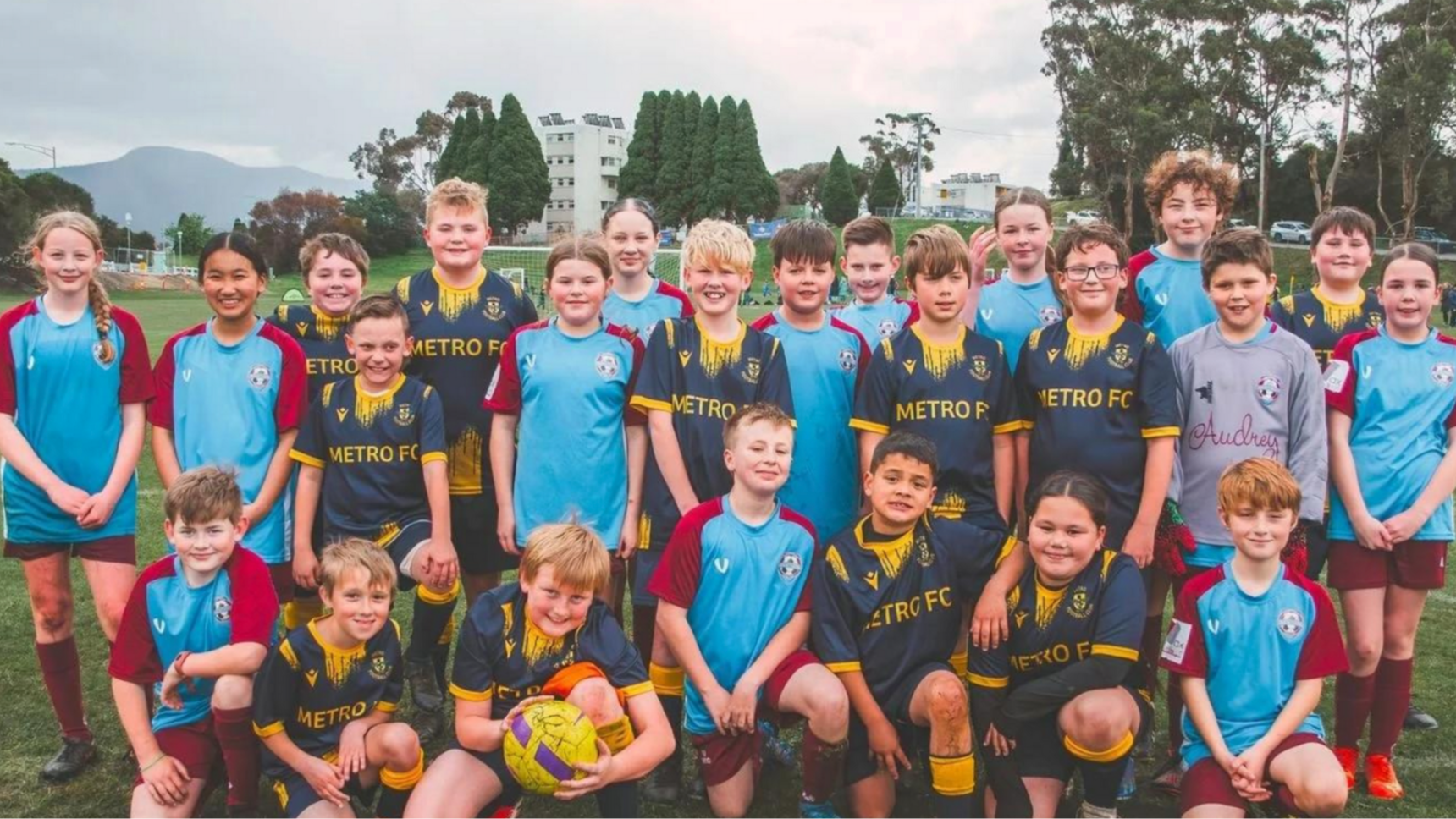
Who Actually Decides Who Leads Tasmanian Football?
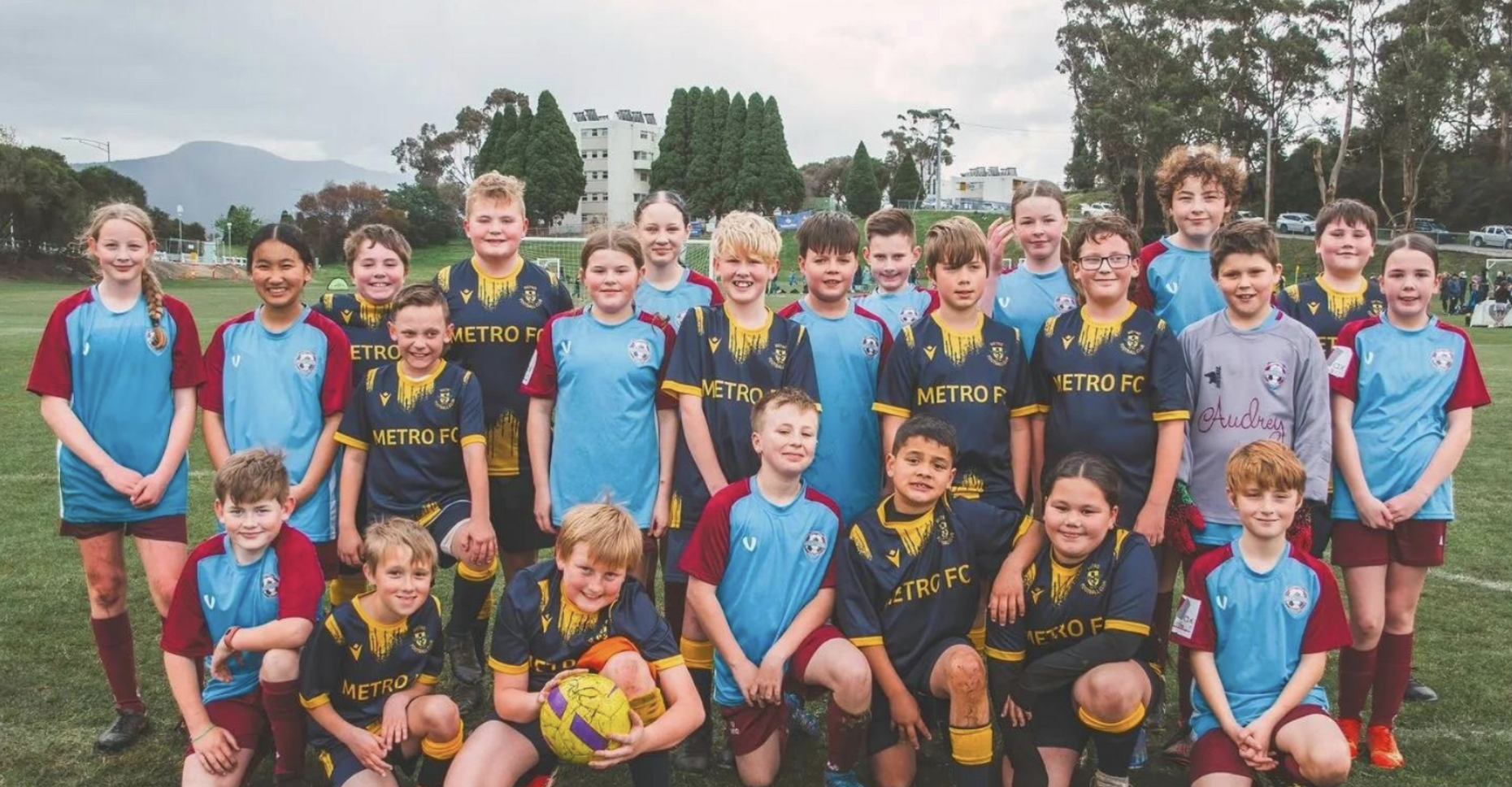
Leaders of the future
After looking at how the AGM works, I found myself coming back to one question.
Who actually decides the formal direction of football in Tasmania?
Because when you look closely, the voting group is much smaller than most people would imagine.
The Members
Under the structure of Football Tasmania, voting rights sit with Members.
In simple terms, those Members are made up of:
clubs
recognised associations
and standing committees
Each Member holds one vote.
Who are the Members?
To make this more tangible, it helps to look at who those Members actually are.
Based on the information provided in the AGM papers and a list provided by the CEO of FT, the current Members include:
Recognised Associations
Central Region JSA
Devonport JSA
Eastern Region JSA
Northern Suburbs JSA
NTJSA
Western Schools Soccer Association
Clubs
Barnstoneworth United
Brighton Storm
Burnie United
Clarence Zebras Football Club
Devonport City Strikers FC
DOSA
Glenorchy Knights
Hobart City FC
Hobart United
Huon Valley
Kingborough Lions
Launceston City
Launceston United Soccer
Metro
Nelson Eastern Suburbs
New Norfolk Soccer Club
New Town Eagles
North Launceston Eagles
North Launceston Eagles Junior Soccer Club
Northern Rangers
Olympia FC Warriors
Phoenix Rovers
Riverside Olympic
Somerset Soccer Club
South East United FC (TAS)
South Hobart Football Club
Southern Football Club
Southern Raiders Junior Soccer Club
Taroona Soccer Club
Ulverstone Soccer Club
University Football Club
Standing Committees
Referee Standing Committee
What stands out
Football in Tasmania involves tens of thousands of people.
But the formal outcomes of the AGM are decided by this relatively small group of Members.
That is not necessarily unusual in governance terms.
But it is worth understanding.
Proxies matter
Not every Member attends the AGM in person.
Some appoint proxies to vote on their behalf.
Looking at the 2025 AGM provides an interesting snapshot of how governance participation works in practice.
Of the 33 Members listed in the financial report:
14 were recorded as attending
10 were represented by proxy
leaving 9 not represented
Which again highlights how the formal outcomes of the AGM can ultimately be shaped by a relatively small group.
And because nominations for President are only formally advised 24 hours before the AGM, those proxy decisions may need to be finalised within a very compressed timeframe.
Representation and distance
The system is built on representation.
Players elect club committees.
Clubs and associations become Members.
Members vote at the AGM.
That is the pathway from the weekend game to the boardroom.
The question is not whether that structure is valid.
The question is how connected people feel to it.
Membership in practice
Another interesting aspect of the structure is membership itself.
The financial report lists 33 Members of Football Tasmania, with annual membership subscriptions applying through the constitution and governance structure.
Which raises a practical question around timing and process.
For example, CRJFA had not received a membership invoice at the time AGM notices and papers were distributed.
That may well be entirely consistent with the normal process and timing of invoicing.
But it does highlight how difficult these structures can sometimes be for ordinary participants in the game to fully understand.
The broader question
Football in Tasmania is not just the people listed above.
It is players.
Parents.
Volunteers.
Coaches.
Referees.
People involved every weekend across the state.
So perhaps the bigger question is this:
outside the AGM itself, how does the Board consistently hear from the wider game?
Next
In the final post, I’ll look at how timing, process and structure combine to shape decisions
and why governance can sometimes feel distant from the people actually participating in the game

The AGM: What Actually Happens

I’ve been thinking a lot about the Football Tasmania AGM.
Not from the outside this time, or as a candidate, or as member who is eligible to vote but simply as someone who has spent a long time in the game and is still curious about how it all works.
Because if I’m being honest, I’m not sure many people really understand it.
And that’s not a criticism. It’s just the reality.
The basics
The 2026 Annual General Meeting of Football Tasmania will be held at:
5.30pm, Wednesday 27 May 2026
Salamanca Inn, Hobart
(or via Teams)
Members need to register attendance by Wednesday 20 May.
That’s the formal part. The part that appears on paper.
What the AGM actually is
At its simplest, the AGM (Annual General Meeting) is the one time each year where Members come together to:
hear reports
receive the financials
and elect the Board, including the President
It is, in theory, the moment where the game looks at itself and decides what comes next.
Nominations
If you want to stand for President, or for a Director position, you need to be nominated.
That involves:
a proposer
a seconder
a completed nomination form
and a statutory declaration
All of which must be submitted by:
5.30pm, Monday 25 May 2026
Again, very clear on paper.
And then something interesting happens
Members are advised of who has been nominated by:
5.30pm, Tuesday 26 May
Which is 24 hours before the AGM.
Pause on that for a moment
That means that for most clubs and associations across Tasmania, the formal list of candidates arrives the day before the meeting.
There isn’t a week.
There isn’t even a few days.
It’s one day.
What that means in the real world
Clubs and associations don’t operate in isolation.
Decisions are usually talked through.
People ring each other.
Committees weigh things up.
That’s how football works here.
But with a 24-hour window, there is very little time for that kind of conversation to happen formally.
So in reality, most of those conversations, if they happen at all, happen beforehand.
Quietly. Informally. Through relationships.
Attendance and proxies
Members can attend the AGM in person, or online.
If they can’t attend, they can appoint a proxy.
That means someone else votes on their behalf.
Again, all very normal.
But it does mean that on the night, not everyone who has a vote is actually in the room.
Proxies and timing
There is also a practical aspect to proxies.
If a Member is unable to attend, they can appoint someone else to vote on their behalf.
But with nominations only confirmed 24 hours before the AGM, there is very little time to make an informed decision about how that proxy should be used.
In some cases, a proxy may be appointed before all candidates are formally known. In others, the decision is made in a very short window the day before the meeting.
Who can attend
It’s also worth noting that the AGM is not a public meeting.
It is a Members’ meeting, which means attendance is limited to a defined group of clubs, associations and representatives. Each Member can send an authorised delegate, or appoint a proxy to attend and vote on their behalf.
While others may attend by invitation or permission, the general football community does not attend as of right.
The bit that isn’t written down
On paper, the AGM is a single meeting.
In reality, it is the end point of a series of conversations that have already taken place.
Who attends.
Who doesn’t.
Who holds proxies.
Who has spoken to who.
By the time people walk into the room at 5.30pm, much of the shape of the meeting is already there.
A note on the Constitution
All of this sits within the current constitution of Football Tasmania.
The version in place dates back to 2009.
That’s not unusual. A lot of sporting organisations are still operating under constitutions written in that period, often aligned with national models at the time.
They tend to be:
structured
formal
and, at times, a little clunky
That’s the nature of these documents. They are designed to ensure process is followed, rather than to make things feel simple or intuitive.
There is nothing inherently wrong with the process outlined. It is clear in a legal sense and it works.
But it isn’t particularly consultative. And it doesn’t always make things easy to understand for the people actually involved in the game.
How does the Board hear from the game?
All of this leads to a broader question.
If the AGM is a Members’ meeting, and attendance and voting sit with a relatively small group, how does the Board hear from the wider game?
Because football in Tasmania is not just the Members in the room.
It is thousands of players.
Coaches.
Volunteers.
Parents.
People involved in the game every week, in all parts of the state.
Formally, that connection tends to sit through the structure. Clubs and associations represent their participants, and the Board receives information and perspective through those channels, often via the CEO.
But from the outside, it is not always clear how those broader voices make their way into decision-making.
Why it matters
It doesn’t mean the system doesn’t work.
But it does raise a simple question.
How well does the structure capture what is actually happening across the game?
Next
In the next post, I’ll look at something I’ve always found interesting:
who actually gets a vote at the AGM
and how small that group is, compared to the size of the game in Tasmania

Who Gets Tapped on the Shoulder?

A $95,000 role.
No advertisement.
No process.
Just a tap on the shoulder.
I read the article this week about the Tasmanian ambassador appointment and kept coming back to that phrase.
Tapped on the shoulder.
Because that phrase tells you everything.
There was no public expression of interest.
No visible selection criteria.
No explanation of why this person, for this role, at this time.
Just a decision.
Made somewhere.
By someone.
About someone.
And then announced as something we are all supposed to get excited about.
Not personal
This isn’t about the individual.
By all accounts, he’s a good operator.
Well liked. Successful.
That’s not the issue.
The issue is the process.
When something isn’t advertised, when it isn’t tested, when it isn’t opened up…
It stops being a selection.
It becomes a choice.
The tap, and the rules that allow it
The contract sits just under the $100,000 threshold.
Which means it didn’t have to go to open tender.
Which means it didn’t have to be tested.
Which means it could be hand-picked.
We’re told all appropriate procurement processes were followed.
That may well be true.
But following the rules is not the same as testing the decision.
This wasn’t just a tap on the shoulder.
It was a tap made possible by the rules.
The context
This was announced in the same period as 250 job cuts in the same department.
Maybe the $95,000 “would not even save one job”.
But it might still deserve scrutiny.
Because public money, regardless of amount, carries an expectation.
Transparency.
Clarity.
Accountability.
What are we actually buying?
The role itself is broad.
Speaking engagements.
Awareness.
Promotion.
Delivered in partnership with Brand Tasmania.
All worthwhile.
But also hard to measure.
Easy to announce.
What exactly is this role meant to achieve?
And how will we know if it has?
Outcomes should be clear.
Measurement should be visible.
Otherwise, it’s just a title.
Perfect, compared to who?
We’re told he is “perfect for the role”.
But perfect compared to who?
Because there was no one else in the process.
The quiet system
This is how decisions get made in small systems.
Quietly.
Internally.
Within familiar circles.
Visibility matters.
Proximity matters.
Being known in the right rooms matters.
And if you’re not in those rooms, it doesn’t matter how much you’ve done.
You’re not in the conversation when the tap happens.
The sport outside the room
Football is the most played sport in Tasmania.
By participation.
By reach.
By community footprint.
Thousands of kids every weekend.
Hundreds of teams.
Clubs in every corner of the state.
The participation is here.
The voice often isn’t.
And when it comes to influence, visibility, and moments like this…
It rarely feels like football is in the room.
Close enough to see.
Not close enough to be asked.
On the couch beside me
Because sitting on the couch beside me is someone who has lived in Tasmania for 40 years.
Someone who came through Manchester United.
Someone who has coached across countries, systems, and generations of players.
More than 50 years in the game.
Someone who understands this place.
Someone who would share his knowledge tomorrow if anyone asked.
When I mentioned the role, he laughed and said, “$95K… pick me, pick me.”
A joke.
But also, not really.
He doesn’t lack experience.
He lacks an invitation.
Most of the time, he doesn’t even get asked.
Not by government.
Not by the broader sporting system.
And, if we are being honest, not often enough by football’s own governing body.
So perhaps this isn’t surprising
Because once you understand how these decisions are made…
Who is in the room.
Who is visible.
Who is already part of the conversation…
The outcome starts to make sense.
But it should
That’s the uncomfortable part.
This isn’t about one role.
Or one sport.
Or one person.
It’s about a pattern.
Public decisions made through closed processes.
Local knowledge overlooked.
Experience sitting quietly on the sidelines while we look elsewhere.
Before the next tap
Before the next announcement.
Before the next contract.
Before the next moment where we are all expected to nod along and celebrate.
Maybe just one question.
Who didn’t we ask?
Or more to the point…
Who was never going to be in the conversation?
Outside the Fence
Sometimes I need a football reset.
Yesterday was one of those days.
At D’Arcy Street.
No camera. No pressure to capture everything.
To be honest, with so much going on, I’ve realised I need to slow down. Take fewer photos. More targeted ones. The editing alone can take hours.
So I left the camera alone.
And instead, I sat with Ken outside the fence.
Not inside, where I usually am.
Outside.
Watching.
A Different View
We watched the Women’s Championship first, then the WSL.
Same games. Same people.
Different feeling.
When you step back like that, you notice different things.
You’re not chasing moments or thinking about what you might have missed.
You’re just there.
The Conversations
Justin asking, almost in passing, “Will Tottenham stay up?”
As I write this, Tottenham are out of the drop zone, having just beaten Villa 1–2.
Justin can breathe for another week.
Clare and Freya stopping for a chat.
Freya itching to move on, keen to get to her friends in the grandstand.
Clare still talking to me… again.
So much to talk about. So little time.
Clare sorting the Hobart Cup merch.
No small thing organising all of that.
Grandparents quietly talking about how nervous the players looked.
Richard, our wonderful, loud supporter, exactly as he always is.
Good coffee. Easy conversation.
And in between it all, football just happening.
The Familiar Faces
Ken being greeted as he walked around.
Stopping. Chatting. Listening.
Always polite. Always willing.
Fran and I talking about the new wall along D’Arcy Street.
One of those small, local things that somehow becomes part of the football conversation.
Abbey moving constantly.
Team manager. Match manager.
Volunteering.
No fuss. Just getting it done.
Nick arriving and settling in with his dad.
Talking through yesterday’s game in detail.
The difference for Devonport without Mulraney.
The kind of conversation you only really hear when you’re standing right there.
Adam had 20 minutes yesterday against Devonport.
Josi is still injured.
Both there.
Supporting the team. Catching up with teammates.
The Quiet Work
A nice chat with the Clarence Zebras FC lads who coached the women’s Championship side and beat South 1–0.
Two young coaches right in the middle of their journey.
Learning. Growing. Doing a really good job.
No spotlight. No noise around it.
Just the work.
Nikki in her little corner.
Rain or shine.
Capturing photos from the other side of the ground.
Volunteering for her football community.
Always thinking about next week.
And at one point, Nikki and I teasing Ken.
Him loving it.
The People
Many people took the time to say how much they enjoy reading the blog.
Encouraging. Kind.
The sort of moments that make you smile in that slightly embarrassed, slightly proud way.
The kind you don’t quite know what to do with, but carry with you anyway.
Mel and Adrian, always there, volunteering, supporting their daughter, thanking me for their morning read.
And more. Many more.
That silly grin returning, whether I like it or not.
Meaghan sharing that she’s moved closer to town.
Less driving after 16 years.
One of those small life shifts that feels big when you say it out loud.
Harvey on his scooter, greeting everyone.
A football community constant.
What It Really Is
We talk a lot about football in terms of structure, results, decisions.
And yes, that matters.
But sitting outside the fence yesterday, it felt very simple.
It’s people.
Talking. Watching. Connecting.
Connected
That’s the word I keep coming back to.
Connected.
Not formally. Not strategically.
Just people who know each other. Care about it. Turn up.
Week after week.
In Hobart, and across grounds all over the state, this is happening quietly all the time.
The Reset
Stepping outside the fence did something.
It slowed everything down.
Reminded me that I don’t have to capture every moment to be part of it.
I can just sit in it.
Watch it.
Be there.
Because I know now that if I’m inside the fence, I miss a lot of this.
You can see the game from there.
But you don’t feel it in quite the same way.
Observing the comings and goings from the other side of the ground is not the same as realising how important the community is on the outside of the fence.
A Quiet Reminder
I spend a lot of time writing about what isn’t working.
And I won’t stop.
But this is the other side of it.
The part that is easy to miss when things feel busy or heavy.
Connected. Caring. Community.
And yesterday, sitting outside the fence, that felt like more than enough.

Is this right for Tasmania? The women’s game deserves an honest answer

This started as a look at the ladders.
Nothing more.
But once you look closely, it becomes something else.
Because what the women’s competitions are showing right now is not subtle.
And it’s not random.
The gaps are already there
Six rounds in, and you can see it clearly:
Strong top sides
A stretched middle
Teams already struggling
Goal differences tell the story:
+30 at one end
-30 at the other
Not in one match, but across multiple rounds.
Games being decided early.
Ladders taking shape quickly.
This is not a competition finding balance.
It is a competition reflecting its structure.
And it’s not just WSL
Look underneath.
Championship North.
Championship South.
Same pattern:
Strong top teams
A stretched middle
Bottom teams falling behind
This is not one league with an issue.
It is the whole system showing the same shape.
The league is getting younger
That’s often framed as a positive.
And in part, it is.
But it is also a signal.
Clubs are:
Filling gaps
Pushing players up earlier
Managing limited depth
That’s not always opportunity.
Sometimes it’s necessity.
There is no promotion. Let’s be clear
Clubs don’t earn their place in WSL through results.
They apply.
They meet criteria.
They are accepted.
So this isn’t a system where performance exposes the gap.
It is a system where entry can create it.
Which leads to a simple question:
What is the criteria actually measuring, and does it include the ability to compete at this level?
Because being able to enter a league is not the same as being able to compete in it.
Let’s look at the numbers
This isn’t opinion.
It is arithmetic.
Greater Hobart: ~230,000
Launceston: ~90,000
North West (Devonport region): ~60,000–70,000
Now look at WSL teams:
Hobart: 4
Launceston: 3
North West: 1
Each squad needs around 18–20 players.
So Launceston is trying to sustain roughly 55–60 WSL-level players from a population of around 90,000.
That’s before you even get into participation rates, age profile and availability.
It’s not a criticism.
It’s a constraint.
And then there’s a reality unique to the women’s game
Players step away.
For:
Pregnancy
Having children
Raising families
Some return.
Some don’t.
Some return differently.
That means depth is not just smaller.
It is fluid.
And if you are already stretching your player base, that matters.
This is the same reality that plays out beyond football, where women step away from work at key stages of life and carry the long-term impact of that. Football doesn’t sit outside it. It reflects it.
One town, one club vs one town, many clubs
Devonport shows something important.
One town
One club
One consolidated player base
In Hobart and Launceston, it is different:
Multiple clubs
Same population
Same player pool
We are not building depth.
We are dividing it.
So what are we actually asking of the system?
We are asking:
Smaller populations
With fluid player availability
Split across multiple clubs
To sustain multiple top-level teams.
And then we are surprised when:
The gaps appear
Results stretch
The competition feels uneven
This matters for the people in it
Because this isn’t abstract.
It’s:
Players in games that are over early
Coaches trying to hold things together
Clubs stretching to stay competitive
And quietly:
Players stop.
Not dramatically.
They just drift away.
To be fair
Football Tasmania does ask the questions.
Clubs are consulted.
Feedback is gathered.
But asking the question is only part of it.
The outcome has to reflect the answer.
Right now, the ladders suggest it doesn’t.
So here is the question
Not:
“How many teams do we want?”
But:
How many teams can Tasmania genuinely sustain at this level?
And just as importantly:
Have we actually had that conversation?
Because this is where it lands
Clubs wanting to be in the top league is not the problem.
That ambition is what drives the game.
The problem is the gap between aspiration and readiness.
And right now, the structure is not bridging it.
What does good actually look like?
A strong competition should feel:
Competitive week to week
Unpredictable
Sustainable for the clubs in it
Right now, too many games are predictable too early.
The honest version
Launceston is trying to run three top-level teams off a population base that probably supports one and a half.
That’s not opinion.
That’s arithmetic.
And the final question
Is this right for Tasmania?
Because right now, it feels like we are:
Stretching the top
Splitting the middle
Exposing the bottom
And calling it a pathway.
One last line
The women’s game is growing.
That’s not in doubt.
But growth without the right structure doesn’t strengthen the game.
It stretches it.
Right now, the structure is shaping the game.
The question is whether we’re comfortable with what it’s creating.

Relegation: Ugly, Brutal, Brilliant

Why we watch
It is a strangely hot Tasmanian evening.
Twenty degrees in May.
Doesn’t feel right.
But here we are anyway, sitting down to watch Launceston United v South East United.
Bottom of the table.
Relegation battle.
Do or die.
And if I’m being honest, Ken and I looked at each other beforehand and said,
Why on earth are we watching this?
We could be watching something easy. Something comfortable. Something “nice”.
A rerun of Downton Abbey.
But we didn’t.
We chose this.
And the reason is simple.
Relegation.
The Fear of Losing
This is what football looks like when it matters.
Not pretty.
Not polished.
Not always good.
But gripping.
Every pass is tight.
Every tackle has consequence.
Every mistake feels like it might end your season.
The football is edgy, cautious, aggressive, all at once.
And then there’s the noise.
We can hear the friction from the coaching benches through the microphone.
Disputing.
Encouraging.
Pushing the boundaries.
It spills into the game.
Into the players.
Into every decision.
Pure theatre.
No one is playing freely.
They are playing to survive.
And that changes everything.
Because it’s not about style.
It’s about stakes.
Then… 9:30pm
Later tonight, we flick over to England.
EFL Championship.
Final round.
Round 46.
Forty-six.
Not 18 rounds like Tasmania.
Forty-six meaningful rounds.
Let’s just sit with that for a second.
Forty-six games where something is always on the line.
Let’s poke the bear a little.
Up. Down. Or Not Quite
Coventry City are already up.
But the rest?
Chaos.
Ipswich Town or Millwall FC.
Millwall.
“No one likes us, we don’t care.”
Millwall in the Premier League.
Just imagine that.
The noise.
The edge.
The theatre.
Ned says it’s his favourite ground in London.
He went on his own several times to the new “Den”.
Sat in the middle of it.
Chanted.
Felt it.
That’s football.
The Scramble
Wrexham AFC.
The Hollywood club.
Can they sneak into the playoffs?
Hull City right behind them.
Same points.
No margin.
Then Middlesbrough FC and Southampton FC lining up for playoff football.
Another chance.
Another layer of pressure.
You can feel it through the screen.
This Is The Point
This is why we watched the game in Tasmania.
Not because it was top of the table.
Not because it was beautiful.
But because it mattered.
Relegation creates something you cannot manufacture.
Urgency.
Fear.
Meaning.
Why It Matters
Relegation is unique to our game.
No drafts.
No safety nets.
No soft landings.
You finish at the bottom, you go down.
Simple.
Brutal.
Ours.
And we should embrace it.
Not hide from it.
Not dilute it.
Not quietly design it out of existence because it makes people uncomfortable.
Because this is what it gives you.
Edge.
Tension.
Desperation.
Meaning.
It gives you a reason to watch Launceston United v South East United on a warm Saturday night in May instead of doing something easier.
And then it gives you forty-six rounds of it in the EFL Championship.
Not 18.
Forty-six.
Forty-six chances for something to matter.
So here’s the uncomfortable question.
If we believe in football,
really believe in it,
why would we ever move away from the very thing that makes it different?
Relegation is not a flaw.
It’s not a problem to be solved.
It is the point.
Messy.
Uncomfortable.
Sometimes ugly.
But absolutely alive.
And on nights like this,
you wouldn’t swap it for Downton Abbey.
Not for a second.
It is 3-5 at the moment. South East holding the lead with 10 to go.

Tasmanian Football Has A Structure Problem - And It Goes Much Deeper Than 8 Or 10

Photo: Football Tasmania
There was a conversation on Tassie Football Central recently about the NPL.
Should it be 10 teams or 8?
Plenty of views. Plenty of strong opinions.
And like most of these threads, it didn’t take long before it drifted.
Into development. Into youth. Into depth. Into clubs.
Which is usually a sign the original question isn’t quite the right one, or at least not the whole one.
It got me thinking.
And then it got me remembering.
So firstly, thanks to Matthew for raising it.
Conversations like that matter.
Opinions matter.
Voice matters.
Being heard matters, even if it’s via social media.
Because if we’re not talking about it, nothing changes.
It Used To Be Simpler
And It Adapted To Reality
Before all of this, we had:
Southern Championship
Southern Championship Reserves
Up north, North and North West played together.
Not because it was designed that way.
Because they had to.
There weren’t enough teams to split it.
So the system adapted to the player pool.
Not the other way around.
And then we came together in the cups.
That was the connection point.
That’s where the state met.
Now We’ve Built The Model First
Now we have:
NPL
U21s
Championship
Championship One
And even “social” underneath
That’s a full pyramid.
But the NPL model wasn’t built for Tasmania.
It was applied to Tasmania.
And it assumes a level of depth that we don’t consistently have.
I Looked At All The Ladders
There Was A Pattern
This isn’t opinion.
It’s visible.
Across every level:
Strong teams at the top
A middle that shifts
Clear drop-offs at the bottom
NPL.
U21s.
Championship.
Championship One.
Same pattern.
If the system is working as intended, depth should be improving across all levels.
The ladders suggest otherwise.
So Clubs Are Bridging The Gap
Some clubs concentrate:
NPL + U21
Others stretch:
NPL + U21 + Championship + Championship One
That’s not just a difference in approach.
That’s a difference in burden.
Some clubs are focusing on performance.
Others are carrying players, pathways and opportunity.
Both sit on the same ladder.
They are not doing the same job.
This Is A Saturday Problem
All of this lands in one place.
Saturday.
Who plays.
Who sits.
Who gets minutes.
Who doesn’t.
If you don’t run a Championship team:
You lose over-21s.
If you do:
You double your load.
If you add Championship One:
You create depth.
But now you’re running four teams.
This isn’t a structural diagram.
It’s a Saturday juggle.
And sometimes it’s a bloody mess.
And players notice.
If they don’t have a place that feels right for them, they don’t move down the system.
They leave it.
The Season Doesn’t Work
And It’s Costing Clubs
This is the part that frustrates me the most.
We don’t play enough football.
Clubs are charging registration fees that people question.
And I understand why they question them.
But walk in the shoes of a club for five minutes.
Registration doesn’t just cover “playing”.
It covers:
Ground hire
Clubroom rent
Utilities
Playing kit
Training gear
Equipment
Insurance
Travel
Referees
Coaching support
Admin systems
Compliance requirements
The list keeps going.
Clubs are not charging what they like.
They are trying to cover what it costs to exist.
And None Of This Works Without Volunteers
If it wasn’t for volunteer labour, most clubs would be buried.
That’s the reality.
There is no spare capacity.
There is no hidden workforce.
There is no ability to just hire someone to fix it.
Clubs cannot afford paid staff to run this system.
So everything you see is being held together by people giving up their time.
And we keep asking them to do more.
And Then We Cut The Revenue Side
But Keep The Fees
Around $2,500 to nominate a Championship team.
Around $23,000 for NPL.
And that’s just licence and nomination.
That’s before you even kick a ball.
Eighteen rounds.
Home and away once.
Fewer home games than we’ve had before.
Less gate.
Less canteen.
Less opportunity to actually bring money in.
But the licence fee?
That stays the same.
So clubs are:
Generating less
Paying the same
Carrying more
It’s not hard to see what that does.
If the governing body’s bottom line has improved, that money has come from somewhere.
And it hasn’t come from thin air.
Clubs are the ones absorbing it.
This Is Where It Falls Apart
Clubs are told:
Be more professional
Develop more players
Run more teams
Meet higher standards
And then given:
Fewer home games
Less revenue opportunity
The same volunteer base
The same licence costs
It doesn’t add up.
Help Us Out
This isn’t complicated.
If clubs are expected to carry the system…
Then give them the tools to do it.
More football.
Not less.
More opportunities to host games.
More opportunities to generate income.
Because right now, we’ve built a system that costs more to run…
and gives clubs fewer chances to pay for it.
This part of the structure is not working.
It’s not just imperfect.
It’s shite.
This Is A Small State
And That’s Not The Problem
We don’t have too many games.
We don’t have too few games.
We have a small player pool.
In a place like Tasmania, you will play the same teams more often.
That’s just reality.
It always has been.
And it’s not the end of the world.
The problem is when that becomes the whole experience.
That’s What The Cups Were For
Cups didn’t replace the league.
They complemented it.
They added:
Different opposition
Different challenges
Different energy
They gave players something outside the weekly rhythm.
They connected the state.
And importantly, they still provide pathways.
Pathways to the Australia Cup.
That doesn’t disappear with a different structure.
If anything, it becomes clearer and more meaningful.
The Balance We’ve Lost
We’ve tried to solve everything through the league.
More structure.
More rounds.
More layers.
But Tasmanian football has always been a mix of:
Familiar opposition
And occasional difference
Right now, we’ve leaned too far one way.
And Then We Call Part Of It “Social”
A 19-year-old doesn’t want to say they’re playing social football.
They want to play.
We’ve labelled part of our own system as something outside it.
And then we wonder why players drift away.
Why Do We Have A State League?
It’s worth asking this.
Not emotionally.
Honestly.
Why do we have a State League in its current form?
Was it created as part of a long-term plan that fits Tasmania?
Or was it, at least in part, a reaction to what other codes were doing at the time?
Because AFL had a state league structure.
Now it doesn’t.
And we do.
So what are we holding onto?
Is it:
A pathway?
A standard?
A necessity?
Or a label?
Are we keeping a State League because it genuinely fits our player pool…
or because it feels like something we should have?
Let’s Be Properly Honest
We’ve built a system that is designed to work perfectly on paper.
Every layer has a purpose.
Every competition has a place.
The problem isn’t the design.
It’s that not enough clubs can realistically carry it…
and not enough players fit neatly inside it.
So What Does This Actually Point To?
Reading this back, I can see where I land.
It probably looks like a return to:
Strong North / North West and South competitions
Properly aligned Championship and reserves
And a much stronger, broader cup structure
More football.
Not less.
Lower cost.
Less burden on clubs.
But still with high standards.
Still with ambition.
Still with pathways.
But More Than Anything
It’s About Listening
Because this can’t be solved with another quick fix.
Not another tweak.
Not another layer.
And not through a consultant flown in who doesn’t understand how football actually works in Tasmania.
We don’t need that.
What we have already is:
Decades of experience
Hundreds of years of combined knowledge across clubs
People who live this every week
Get them in a room.
Ask the question properly.
Listen.
No More Knee Jerk Fixes
This needs a proper look.
A hard look.
At what is:
Sustainable
Affordable
Realistic
For the people actually running the game.
Because the members are the clubs.
And the clubs are the ones carrying it.
Two Lenses
Ken and I talk about this all the time.
He looks at it through a football lens.
Standard. Quality. Competition.
And I understand that.
But I look at it differently.
Through:
Sustainability
Longevity
Volunteer burnout
Because without that…
none of the rest exists.
Final Thought
We don’t need to look like something bigger.
We need to build something that works here.
For our players.
For our clubs.
For the people holding it together every week.
One Line To Leave It With
Ask us.
Listen to us.
And build it with us.