Football Faces Tasmania
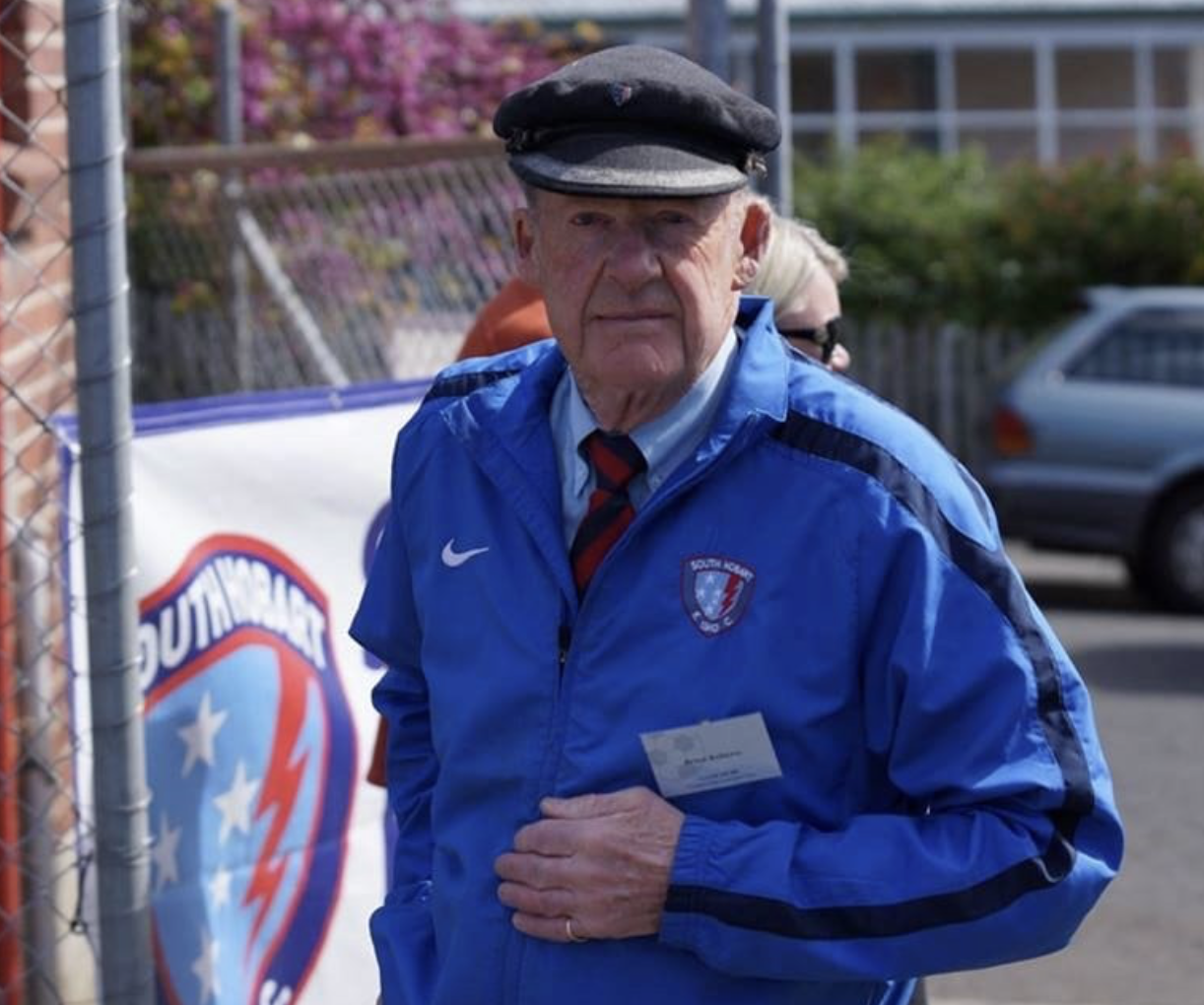
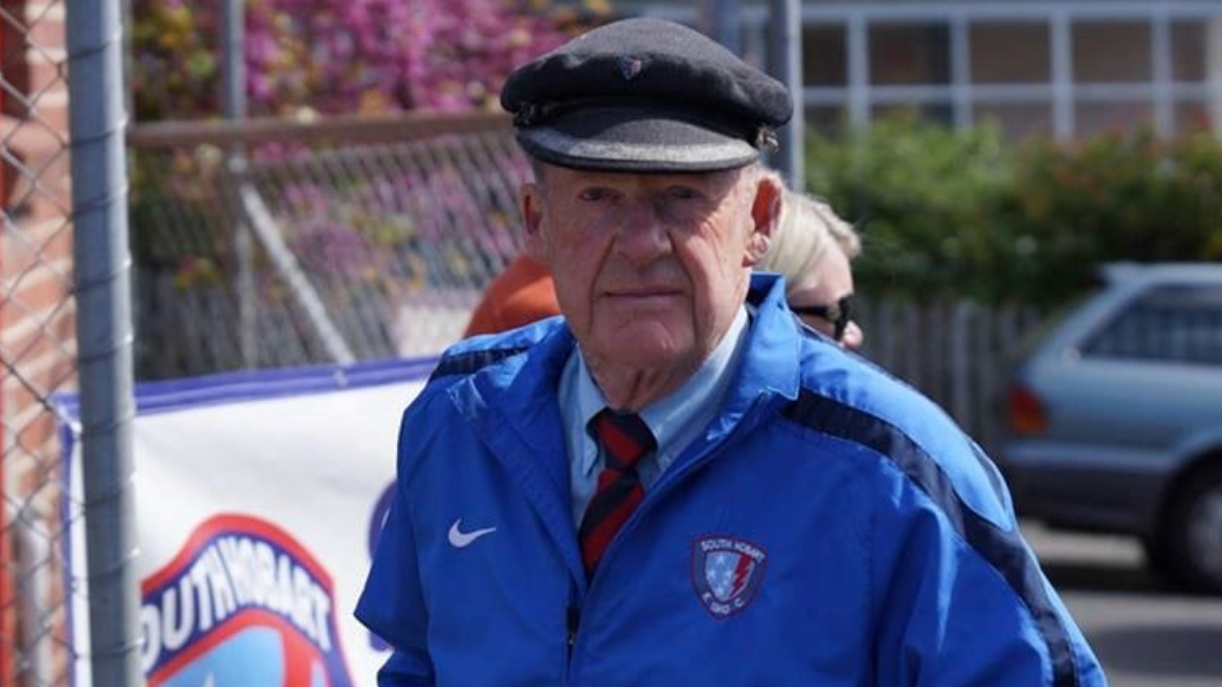
Brian Roberts - much missed by myself and those in football.
Sitting around my kitchen table with my friend, photographer Nikki Long, we talked about something that has bothered me for a long time.
So many people who are deeply loved, deeply committed, and deeply embedded in football in Tasmania are largely invisible. They are known within their clubs and communities but rarely beyond them. Their work is constant, often exhausting and almost always unpaid. And yet their stories are seldom told.
We wondered what might happen if we simply made them visible.
That conversation became a Facebook page called Football Faces Tasmania.
We started interviewing people from across the game. Coaches, volunteers, administrators, parents, quiet achievers. People who have given years, sometimes decades, to football here.
What struck me immediately was this: almost without exception, every person we interviewed said some version of the same thing.
“I’m not really worthy.”
“My story isn’t anything special.”
“There are plenty of others more important than me.”
That reflexive modesty is telling. It says a lot about the culture of football in Tasmania and about who feels seen and who does not.
I disagree with every one of those assessments.
These stories are special. They are worthy. They are the story of the game.
I conducted the interviews and transcribed them. Nikki took the photographs. Together, the words and images capture people as they actually are, thoughtful, generous, worn, proud, funny, uncertain, committed.
I will be publishing these interviews here, with their photographs, as a record and a recognition.
Not to elevate anyone above others.
Not to create heroes.
But to say, clearly and publicly: you matter, your contribution matters and this game does not exist without you.
This is Football Faces Tasmania.
BRIAN ROBERTS
What are your first football memories and did any person instill a love of football into you?
My first memories are during my childhood being taken to watch Wrexham F C and Rhyl Athletic play on Saturday afternoons. I also played for my preparatory school Oriel House where I obtained my colours. I subsequently attended Repton Public School where I played for my house The Mitre.
I do not think anyone instilled a love of the game it was a way of life. My father played for the family firm.
How long have you been involved in football and what roles have you played?
In 1951 we came to Tasmania settling at 7-mile beach where we ran the shop. I tried out with Caledonians but did not make it, to unfit and slow.
Football when we came to Tasmania was going through a transition. the influence of the migrant was being felt accordingly the style of the game was changing from that akin to Australian Football to that which we see today.
You held some influential roles in Tasmanian Football how has it changed from when you were in charge? Tell us what football was like in Tasmania when you first got involved, was it better, worse, different? How has it changed?
After moving to town, I was with the Southern Tasmanian Soccer Federation as their new club’s officer. I had to contact migrant groups to see if they could start a soccer team. I arranged a match between Italian and Greek migrants but their clubs didn’t come to life until later. I only succeeded once assisting in the foundation of Hollandia a Dutch team. I subsequently joined them and played in their reserve side most of the time after a while I moved to Hydro a team based in their drawing office. I played in their 1st team. We were not very successful. Hydro them changed their name to Rangers and started importing players from Scotland. I continued to play for them in the reserves.
I then took a break I cannot remember why. Later a typewriter mechanic Tom McLoughlin who had played with Rangers and used to service our office equipment persuaded me to join him as assistant Coach at Rapid. This was step up as they were one of the better teams. I also used to play in the reserve team.
One of my workmates Jurgen Webb was with South Hobart and he pestered me constantly to join him at South. I eventually did so as all my English-speaking friends had left Rapid, so I moved clubs. Rapid were not very happy.
On joining South, I was immediately recruited on to the committee where I served as Treasurer for 13 or 14 years. At the same time, I coached the underage sides the first and reserve sides and played in the reserves (we were a pretty awful side full of old men). I get tired thinking about those years. I was probably about 55 when I played my last game in Alps a side that had been absorbed into the South machine. One of my happiest recollections is when we won the league under Tony Skaro. It was a very good team. We went to the Cascade where all these old players or supporters kept putting money on the bar. More of that later.
During my time with South, I took a spell of leave and was elected as a director of Soccer Tas. I served for about 6 years rising to Chairman. Due to a difference of opinion, I resigned and returned to South in an advisory role.
Which Tasmanians have affected your involvement in football both on and off the field and why?
One of our chairmen who had a major impact on our club was Les Richardson. Through his influence we acquired the Clubrooms at Wellesley Park. They had originally been built by the South Hobart Cricket Club. They moved to Queenborough, so the rooms were not occupied full time. We purchased the key to the door for $10000 payable in 5 instalments. Through economy and struggle we met the payments though the last year we were late so had to pay an additional penalty. At the time we were the only football club to have permanent office and headquarters. The licensed bar that came with the purchase materially helped our financial management. I do not know how many hours I spent swinging a mattock digging the trenches for the floodlighting of Wellesley Park.
Soccer then went through what I would call the lunatic stage. The first state league was formed. South did not make it. However, that was just as well as professional football hit the state. Money flowed like water. This did work to our benefit as those senior players who were displaced by imports came to South, so we had a very good Div. 1 side. Then the bubble burst the league collapsed and we were all back to square one. Things were pretty tough as all the players we had signed left so the ranks were pretty thin. Nevertheless, we struggled through and survived.
Did you have a role model or football heroes or anti-heroes for that matter?
I do not have any heroes or otherwise however three persons who have had the most impact on South are Brett Anderton, Victoria and Ken Morton. When Brett arrived, we were just a club. He changed our routines and introduced a professional aspect to us on our on and off field standards. Ken took over a few years after Brett departed. He lifted our standards and expectations to a higher standard which continue to this day. Victoria Morton has also made a major contribution to our clubs standing in the football community. I cannot let this pass without mentioning Pam Clarke, her son played for South, so she graduated to the committee then chairperson. She was at the helm during some of our most trying times and worked extremely hard for the club. Another stalwart that comes to mind is Paul Roberts, no relation. How he came to join us I cannot recall probably through junior ranks. Paul was a tower of strength, he maintained the clubrooms, set up the field when we had home games at Wellesley. He used to set up for our home games as dawn broke. Eventually we persuaded him that such early starts were unnecessary. His constant topic of conversation was the drums. We eventually found out that he had a store full of 44 gallon drums in which he stored his collection of cans, cordial, and milk bottles.
Which recalls one of our fundraisers. One Sunday when we were not playing the committee, players and supporters canvased the South Hobart area for milk, cordial bottles, and cans. We would then deliver to the Cascade bottle department for money.
Hilarious happenings, in 1977 we won the Div. 1 league under our new coach Tony Skaro. It was the event of the decade as we had little success for a long time. We obtained a supply of port from an individual whose name is etched in my memory. “You will be OK as long as you only sell it to club members”. It was stored under my house. Well, it took off like a house on fire, perhaps it was the novelty but there was a stream of “supporters” calling for a bottle or two. We presented the licensee of the Cascade hotel with a bottle as sign of our appreciation of his support. His wife was delighted, he not so much. What we did not realize that there was a representative of the licensing board at the bar. Next thing there was a knock on the door and a port collector asked if he could buy a bottle for his collection. OK I said. Next thing cars appeared, and all these detectives spilled out and I was arrested for running a “sly” grog shop.
A friend of mine who was a solicitor in town heard of my situation and decided he would defend the case as a bit of a lark. We spent close to a day in court to the surprise of the prosecuting counsel. The guy who sold us the port gave evidence with an angelic expression on his face. I could have!!!!!!!!! him. The case was adjourned as the magistrate could not give decision. Eventually I had to return, and a conviction was recorded under the probationary offender’s act. The port which had been seized was returned on condition it was stored and consumed in the club house. I still have a bottle.
How has football affected you and your family?
Football must have affected my family though with the passage of time it has faded away. I must say that when things were thin on the ground for the club, I probably spent 4 or 5 nights working for the club. How I kept my domestic life up to scratch I do not know
If you could make any changes to Tasmanian football, what would you do?
Now what changes would I make? Well promotion and relegation for a start. I would examine the cost structures and try to make the game as inexpensive as possible. I would review the FFT staffing structure. Tasmania is too small for us to ape mainland structures. I would try to expand our game by encouraging the formation of Div. 5 or 6 clubs. Large oaks from small acorns grow.
Looking back on your football life what do you think your legacy to the game in Tasmania might be?
How will I be remembered, well for about a fortnight or so then perhaps at the occasional football reunion?

We do not play enough football
And the minutes tell the real story
Football Tasmania has released the fixtures for the 2026 National Premier Leagues Tasmania and the Women’s Super League along with the NPL Under 21s.
The detail that matters most is simple.
The men’s top competition will play eighteen rounds.
That single number explains far more about player development in Tasmania than any pathway document or strategic plan.
We do not play enough football.
And when you stop counting games and start counting minutes, the consequences become unavoidable.
The 2026 NPL season, as confirmed
The men’s National Premier League, Tasmania’s highest level of senior football, will feature ten teams in 2026.
The season begins on 6 March and runs for eighteen rounds, followed by a final’s series for the top five placed teams. The bottom two teams are relegated, with only eight clubs contesting the 2027 season.
Football Tasmania’s CEO has said that every match matters, with ten teams competing for eight places the following year.
That is true.
It is also precisely why this structure creates pressure rather than development.
Almost the same number of games as Under 9s
In the Central Region Junior Football Association, under 9s typically play a regular season that is not far short of the 2026 NPL calendar.
When participation in tournaments such as the Devonport Cup, Hobart Cup, and Launceston Cup is included, many Under 9 players add at least a dozen additional matches across the year. This means a potential 28 plus games per season for an 8 year old.
Under 9s play for fun, learning, and enjoyment.
NPL players are playing for performance, retention, results and often their next opportunity in the game.
The uncomfortable reality is that junior players can end up with more competitive match exposure across a year than players competing in the highest level of men’s football in the state.
This is not a criticism of junior football.
It is a question of proportionality.
Games are limited. Minutes are scarcer.
An NPL match gives a coach eleven players on the pitch for ninety minutes.
That is nine hundred and ninety player minutes per match.
Across an eighteen-round season, the total competitive minutes available are seventeen thousand eight hundred and twenty.
A player who plays every minute of the home and away season finishes with one thousand six hundred and twenty league minutes.
That is the ceiling.
There is no additional supply.
Spread across a real senior squad
Most NPL squads carry between eighteen and twenty-two players.
If a squad carries eighteen players and minutes were shared evenly, each player would finish the season with nine hundred and ninety minutes.
That is eleven full matches.
At twenty players, the average drops below nine hundred minutes.
At twenty two, it drops closer to eight hundred.
Minutes, however, are never shared evenly.
What actually happens inside squads
In practice, eleven to thirteen players carry the majority of minutes.
Five to seven players rotate irregularly.
Two to four players finish the season chronically underfed.
It is entirely normal for capable senior players to complete an NPL season with three hundred to six hundred total minutes.
Some start only once or twice.
Some are used late off the bench.
Some go weeks without meaningful football.
This is not about attitude or commitment.
It is arithmetic.
There are simply not enough minutes to go around.
What this means for clubs
This is where the issue becomes operational rather than theoretical.
Clubs recognised quickly that an eighteen round season cannot sustain a senior squad on its own.
Without a Championship or senior reserves team, fundamental problems emerge.
Where do non starting NPL players get a full ninety minutes.
Where do returning injured players rebuild match fitness.
Where do younger players learn to manage senior pressure.
Where do players stay engaged when results tighten and rotation shrinks.
Without a Championship side, the answer is blunt.
They do not play.
Championship teams did not emerge as optional extras. They became structural necessities.
They function as a minutes bank, a retention tool and a pressure release valve.
Even then, constraints remain.
Under current team stacking rules, any player named in the NPL starting eleven is ineligible to play in another match that weekend. Bench players may be permitted to play in Championship or Under 21s matches, depending on eligibility and scheduling.
If you start on Saturday, your weekend is finished.
If you are on the bench, you may go searching for minutes.
This is not a development model.
It is a workaround forced by the calendar.
Why the Under 21s do not solve the problem
The NPL Under 21s serve an important purpose.
They provide matches and responsibility for younger players.
They do not solve the shortage of senior minutes.
Under 21s football is not senior football.
The physical demands are different.
The tactical tempo is different.
The psychological pressure is different.
The consequences are different.
For a twenty two- to twenty-six-year-old NPL player, being redirected to Under 21s for game time is not development.
It is a holding pattern.
A note on the Women’s Super League
This is not a men only issue.
The Women’s Super League faces its own problems around game volume and continuity.
Byes, cup rounds and interrupted calendars have led to periods where teams have gone three weeks without a competitive match.
That is not a criticism of the women’s game.
It is recognition of the reality players and coaches are working within.
Engagement does not survive long gaps.
Rhythm disappears.
Training begins to feel disconnected from purpose.
The women’s calendar deserves its own proper examination and I will return to it separately.
For now, it is enough to acknowledge that insufficient and inconsistent game time affects more than one competition.
A deeper resistance sits underneath all of this
Beneath the calendar problem sits a cultural one.
Tasmania has long organised sport around traditional winter and summer seasons.
Football has been slotted into winter by habit as much as by design.
That no longer reflects reality.
Many clubs now operate almost year-round through academies, development programs, tournaments and representative commitments.
Players are training beyond winter.
Clubs are stretching across seasons.
Families are already adapting.
The competition calendar has not kept pace.
There remains a reluctance to challenge long standing structures, even as the game itself evolves.
That resistance to change shapes how little football is ultimately played.
What we still fail to measure
We are good at counting teams, programs and pathways.
We are far less willing to count minutes.
How many players finish a season under nine hundred minutes.
How many go weeks without meaningful football.
How many capable players drift away simply because they want to play.
Game time is development.
Minutes are development.
Until minutes are treated as a central measure of success, coaches and clubs will continue to be asked to do the impossible.
Develop players.
Win matches.
Avoid relegation.
Hold squads together.
All in eighteen rounds.
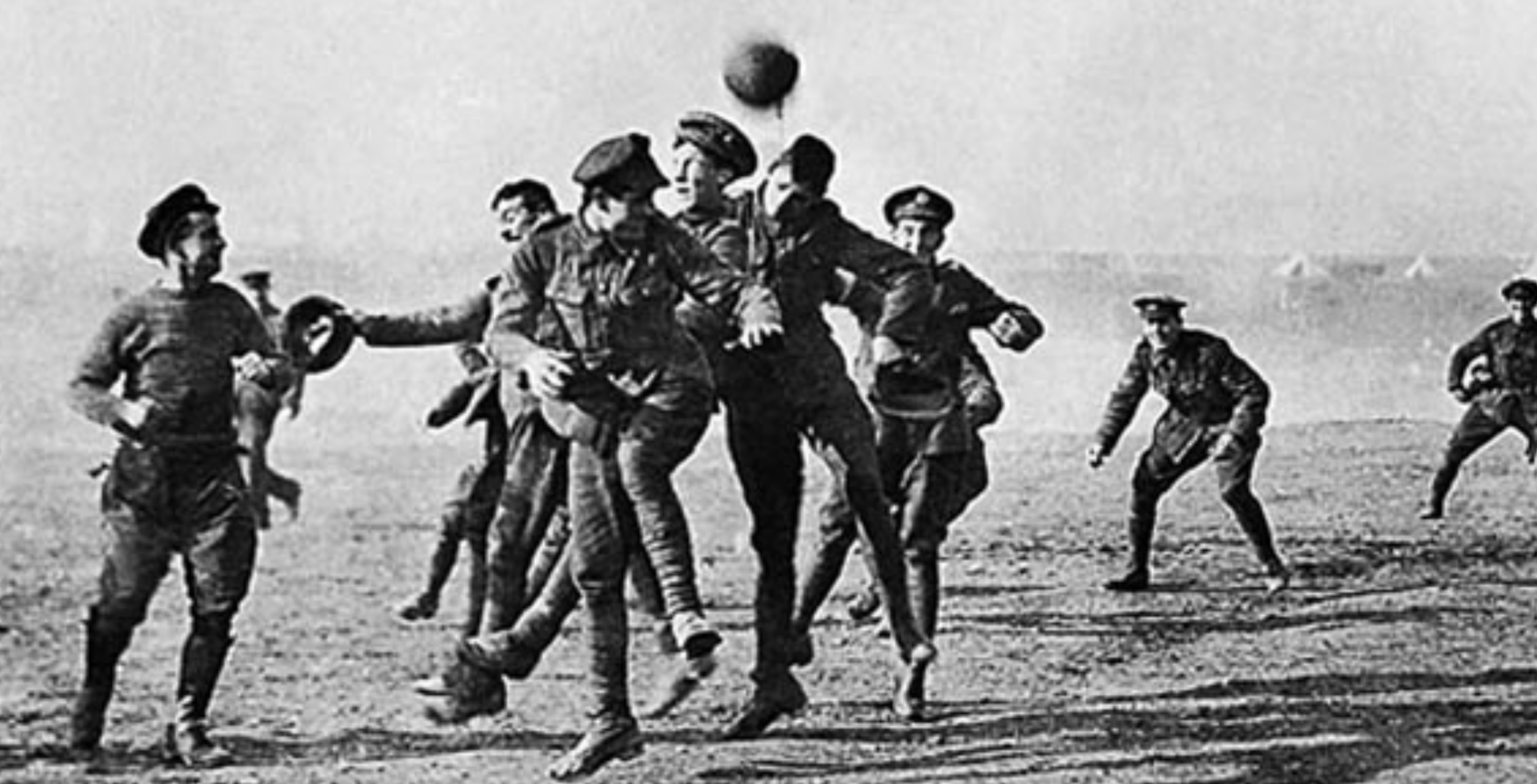
Christmas Day 1914 - When the War Paused and Football Was Played
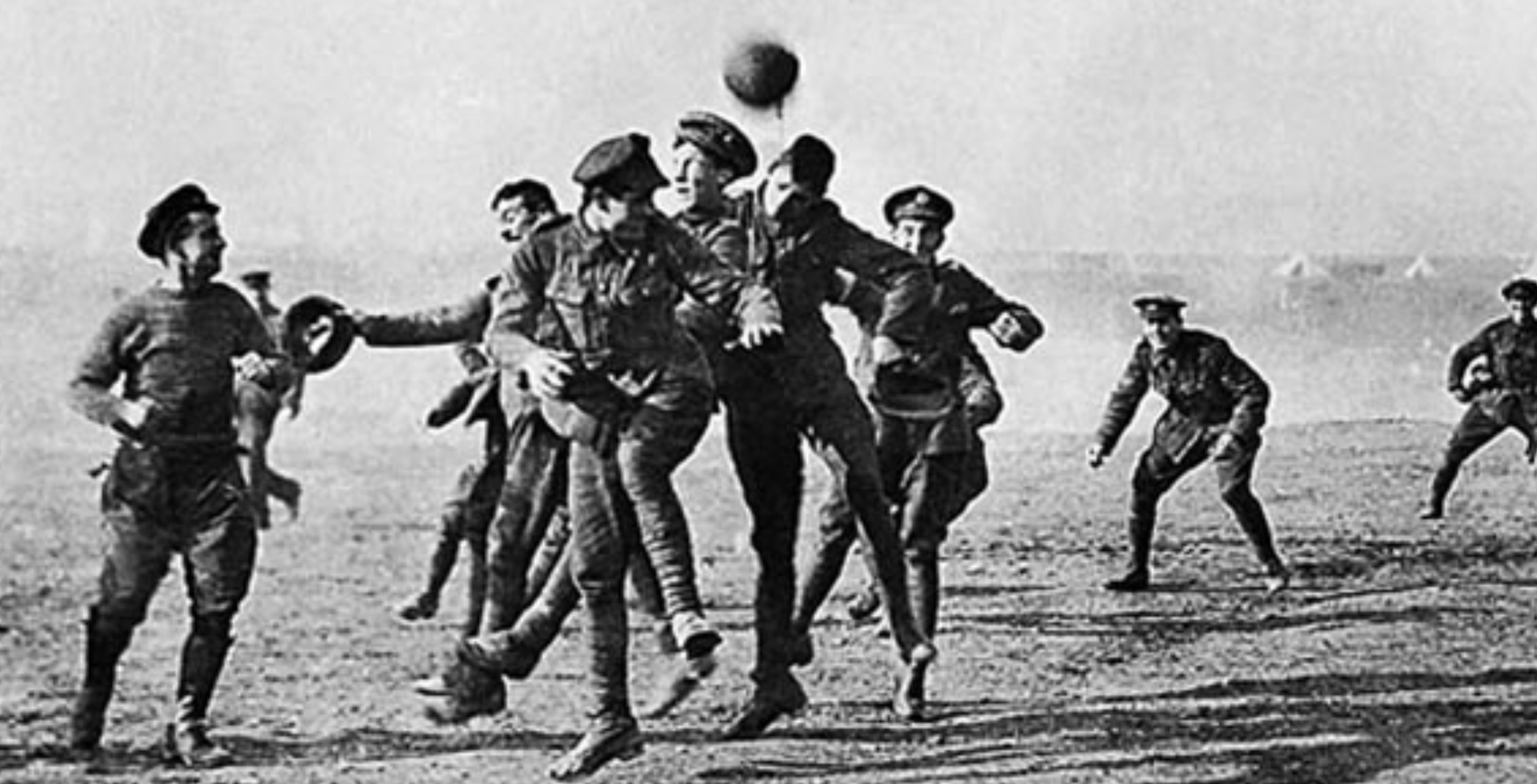
Christmas Day carries a strange weight.
It is meant to be about peace, family and generosity, yet history reminds us that it has often arrived in the middle of humanity’s darkest moments.
One of the most extraordinary Christmas stories comes not from celebration, but from war.
In late December 1914, during the first winter of World War One, fighting stopped in parts of the Western Front.
Not by command.
Not by treaty.
But because ordinary soldiers chose, briefly, to recognise each other’s humanity.
The Setting
By Christmas 1914, the belief that the war would be “over by Christmas” had long disappeared.
British and German troops had been entrenched for months. The ground between them, No Man’s Land, was a churned mess of mud, wire and fear.
Then, in some places, something unexpected happened.
German soldiers placed small Christmas trees and candles along their lines and sang carols, including Stille Nacht, Silent Night.
Across the lines, British troops listened. Then they replied.
The Guns Fell Silent
In places, the shooting stopped.
Men climbed cautiously out of their trenches and met in No Man’s Land. They shook hands. They exchanged cigarettes, food and small souvenirs.
In some sectors, the pause also allowed something deeply human and deeply sobering, the retrieval and burial of the dead who had been lying between the lines.
It didn’t happen everywhere.
But where it did, it remains one of the most striking moments of shared humanity in modern history.
And Then There Was Football
The image most people remember from the Christmas Truce is football.
Soldiers in uniform, boots muddy, kicking a ball where bullets had flown the day before.
And yes, football did happen.
Not neat matches. Not scoreboards or referees. Just informal kick-abouts, described in letters and diaries as impromptu games with whatever ball was available.
The football is real. The myth is the tidiness of it.
Why Football Matters Here
Football mattered because it was familiar.
It needed no shared language, no explanation, no orders.
Just a ball and a little space.
In a landscape defined by division, it created connection.
For men trained to see those opposite them as enemies, it offered a reminder that they were very much the same.
Young men. Far from home. Missing Christmas.
The Aftermath
The truce did not last.
Fighting resumed, and senior commanders were uneasy about what had happened. In the years that followed, any repeat was discouraged.
But the memory remained.
Many soldiers carried that Christmas with them for the rest of their lives.
Why This Story Endures
The Christmas Truce of 1914 matters not because it ended the war.
It matters because it shows what people are capable of despite war.
That peace does not always come from leaders or agreements, but sometimes from individuals choosing empathy over hatred.
And that football, so often dismissed as “just a game”, can be a human language, capable of cutting through fear and division.
A Christmas Wish
So this Christmas, I wish everyone who loves football the chance to have a simple kick-about.
No scores.
No pressure.
No expectations.
Just people together, sharing space, laughter and a ball at their feet.
For a moment, forgetting the noise, the worries and the divisions of everyday life, and remembering the quiet joy of being together.
That, perhaps, is the real gift of football.

Who Actually Runs Football?

FIFA, Confederations, and How the Game Is Structured
One of the most useful things I learned while studying football management was how football is actually organised.
Not who we deal with locally.
But how decisions flow from the very top of the game, through layers most people never see, and eventually land at club level.
Once you understand that structure, a lot of things that feel confusing or frustrating suddenly make more sense.
What FIFA actually is
At the very top of world football sits FIFA, which stands for Fédération Internationale de Football Association.
FIFA was founded in 1904 and is based in Switzerland.
Switzerland is not accidental. It has a long history of political neutrality and is home to many international governing bodies. FIFA sits there as a global regulator, not as a competition organiser.
FIFA does not run local leagues.
It does not manage clubs.
It does not pick teams.
What it does is govern the game globally, set overarching frameworks, and work through continental and national bodies to implement them.
How big the world game really is
FIFA’s reach is enormous.
There are roughly 195 recognised countries in the world, yet FIFA has 211 member associations.
That difference often surprises people, but it exists because football membership is not limited to modern political borders. Football recognises history, identity, and how the game developed, often long before today’s nation-states were defined.
The United Kingdom is the clearest example. It is one sovereign state, yet England, Scotland, Wales, and Northern Ireland all have their own football associations. Those bodies existed before FIFA itself, and they remain independent members today.
In other cases, FIFA membership includes territories or regions that govern their own football competitions and meet FIFA’s criteria, even if they are not independent countries in a political sense.
Football’s map does not perfectly match the political map of the world. That is one of the reasons it truly earns the title the world game.
The pyramid of world football
Football is best understood as a pyramid, not a straight line.
At the top are global decision-makers.
At the base are the people who actually play, watch, and love the game.
The structure looks like this:
FIFA
Continental confederations
National and regional member associations
Clubs
Players
Special interest groups, including fans, referees, coaches, administrators, and volunteers
This pyramid matters, because decisions made high up do not disappear as they move downward. They land, eventually, at club level.
Confederations: the layer most people never hear about
FIFA does not deal directly with clubs or even leagues.
Instead, it works through six continental confederations, each responsible for football in its region.
Those confederations are:
Asian Football Confederation (AFC) – Asia
Union of European Football Associations (UEFA) – Europe
South American Football Confederation (CONMEBOL) – South America
Confederation of African Football (CAF) – Africa
Confederation of North, Central American and Caribbean Association Football (CONCACAF) – North and Central America and the Caribbean
Oceania Football Confederation (OFC) – Oceania
Australia sits within the Asian Football Confederation (AFC), which is why decisions and frameworks developed in Asia matter here.
Asia is not one place
One of the biggest misunderstandings is the idea that “Asia” is a single football environment.
It isn’t.
The Asian Football Confederation has 47 member associations, covering an enormous geographic, cultural, and economic spread. From West Asia to East Asia, from island nations to global megacities, the scale is immense.
Because of that size, Asia is broken into zones and sub-regions for competitions, development, and administration. This helps manage travel, cost, and competitive balance, but it also adds layers of complexity.
Frameworks designed at this level are necessarily broad. How they land locally depends on national and regional implementation.
Australia’s move from Oceania to Asia
Australia was not always part of the Asian Football Confederation.
In 2006, Australia moved from the Oceania Football Confederation (OFC) into Asia. The reasons were largely strategic.
Australia wanted:
stronger and more regular international competition
clearer World Cup qualification pathways
alignment with professional football standards
The move delivered those things, but it also brought new expectations, compliance frameworks, and administrative demands.
Being part of Asia meant operating within AFC systems, not just Australian ones.
The A-League anomaly
This structure also explains something many people find confusing.
Australia is part of the Asian Football Confederation (AFC).
New Zealand is part of the Oceania Football Confederation (OFC).
Yet A-League competitions include clubs from both countries.
This works through specific approvals and agreements between confederations and FIFA. It is unusual, but it exists because football structures sometimes prioritise competition integrity and commercial viability over neat geographic lines.
It is another reminder that football governance is layered, negotiated, and often more complex than it appears from the outside.
Club and country: a tension playing out right now
Watching the Africa Cup of Nations also brings into sharp focus the ongoing tension between club and country.
During the opening match between Morocco and Comoros, I found myself doing exactly what football often makes you do, reaching for a map.
Comoros is a small island nation in the Indian Ocean, located north-west of Madagascar. I had to look it up while watching the game, and it felt like a perfect reminder of just how global football really is.
Many of the players at the Africa Cup of Nations play their club football well outside Africa. Under FIFA regulations, clubs are required to release players for official international tournaments, even when those tournaments take place during domestic seasons.
This has been widely discussed by those following the English Premier League, where a large number of African players compete. The tournament falls during one of the busiest periods of the English season, with clubs juggling league matches, domestic cups, European competitions, and already congested schedules.
For players, the workload is intense. Long seasons, significant travel, and competing demands across club and international football are now the norm. For clubs, it presents real challenges around squad depth, fatigue, and continuity.
It is another example of how football’s global structures don’t stay abstract. Decisions made at FIFA and confederation level land, very directly, on clubs and competitions already operating at full stretch.
One country, one federation
Another important principle in world football is this:
Each country can have only one recognised national member federation.
That federation is responsible for governance, competitions, regulations, and alignment with FIFA and its confederation.
In Australia, that role sits with Football Australia, with state and regional bodies operating beneath it.
Clubs do not sit outside this system. They are part of it.
Why I’m explaining this
This structure was the first unit of my AFC Football Management Diploma, delivered through the Asian Football Confederation Academic Centre of Excellence, and titled Organisation of World Football.
Understanding it changed how I saw everything else.
Club licensing.
Coach accreditation.
Pathways.
Standards.
Compliance.
None of these systems exist in isolation. They are all downstream from this pyramid.
I’m writing this because many of the decisions that affect clubs, volunteers, players, and families happen quietly, several layers above where most people are looking.
Understanding how football is organised globally doesn’t fix every problem, but it does help explain why local realities are so often shaped by forces far beyond the local oval.
And once you understand the structure, the rest of the conversation becomes much clearer.

The Politics of the Urinal

There is a quiet mistake football keeps making when it talks about women in leadership.
It confuses visibility with power.
A woman on a panel.
A woman on a poster.
A woman invited to speak at a breakfast.
A woman featured during a themed week.
All of these things matter, but none of them are the same as influence.
Visibility is being seen.
Power is being listened to.
And the gap between the two is where progress often stalls.
When Being the Only Woman Becomes “Normal”
Over many years, I was often the only woman in the room at presidents’ meetings. There were female employees from Football Tasmania present, but they did not hold leadership roles. Occasionally another woman would appear around the table, but more often than not, it was just me. I became accustomed to it. It felt normal, because it had to. But it wasn’t representative of normal life, and it shouldn’t have been normal for football either.
At the time, I didn’t dwell on it. You don’t survive long in leadership if you constantly focus on what sets you apart. You adapt. You get on with the job. You stop noticing the imbalance, because noticing it doesn’t change it.
But distance brings clarity.
And with it, the realisation that what felt normal inside football was anything but normal outside it.
What I Didn’t Question at the Time
When you are inside a system, you don’t always question it. You adapt to it. You learn its rhythms, its language, its expectations. You focus on doing the work well, because that feels like the only thing you can control.
For a long time, I didn’t question why the imbalance existed. I didn’t stop meetings to ask where the other women were. I didn’t frame my experience as unusual. I assumed that if I worked hard enough, stayed long enough, and proved myself often enough, the system would eventually shift around me.
That is how normalisation works. What begins as noticeable becomes background. What once felt odd becomes familiar. And familiarity has a way of dulling critique.
It was only with distance that the questions surfaced. Not as anger, but as clarity. Why had leadership looked so narrow for so long? Why was representation treated as optional rather than essential? And why were women so often present in football, but rarely powerful within it?
These are not questions I ask with regret. They are questions I ask with perspective.
Standing Just Off to the Side
I often tease my husband about his status in football. Ken has had an illustrious coaching career and is well known in football circles and beyond. I joke that he is a “minor celebrity”. People recognise him. They know his name. They have stories ready before he even extends his hand.
By contrast, I am often introduced as Ken’s wife.
Not because people mean to diminish me, but because familiarity follows reputation. When we arrive at new clubs or football events, Ken is the first handshake. The known quantity. I stand slightly to the side, waiting my turn.
I have learned to be his wing woman.
That dynamic can be deflating at times, even when it is understandable. Ken’s recognition is earned. His career speaks for itself. I don’t begrudge it. But being less visible, less immediately recognisable, can still sting. Especially when your own contribution exists quietly, without a headline or a backstory attached to it.
Over time, you get used to it. You don’t correct the introduction. You don’t make a fuss. You step forward when the moment comes and do the work in front of you.
You suck it up.
And perhaps that, too, is something many women learn early. To wait. To adapt. To accept that recognition often arrives later, if at all.
Learning to Be Seen, Even a Little
I have always been photo shy. There aren’t many photographs of me, particularly from earlier years. I was usually the one taking the picture, standing just outside the frame, making sure everyone else was captured.
It is only in the past few years that I stopped and thought about that. That one day my grandchildren might look back and wonder what I looked like. That there might be very little visual record of me at all.
So I started taking a few photos. The occasional selfie. Nothing staged or dramatic. Just proof that I was there.
It wasn’t about vanity. It was about presence. About leaving some small marker that said I existed in these spaces, in this life, at this time.
Perhaps that says something about leadership too. How often women are present without being visible. How easily we step aside, behind the camera, out of frame. How rarely we think to document ourselves, because we are so busy holding everything else together.
Being seen does not always come naturally. Sometimes it is something you have to choose, deliberately and a little awkwardly, even later in life.
How Governance Is Supposed to Work
For people outside football, it is probably worth explaining how this works.
Football in Australia is overseen by a national governing body, Football Australia. Beneath it sit state federations and competitions. Clubs that want to compete at the highest semi-professional level, known as the National Premier Leagues, must meet a set of licensing requirements. These cover governance, finances, facilities, junior development and administration.
In theory, club licensing exists to lift standards across the game. It is meant to ensure clubs are well run, sustainable, and representative of the communities they serve.
In recent years, Football Australia has also promoted a gender balance principle for boards and committees, commonly referred to as 40-40-20. The idea is simple enough, aim for at least 40 per cent women, at least 40 per cent men, and allow flexibility beyond that.
On paper, it sounds like progress.
Where the System Falls Short
The difficulty is that, in most cases, there are no meaningful consequences for clubs that do not meet it.
There is encouragement.
There is policy language.
There are expectations expressed in documents and presentations.
But there are very few penalties, and no consistent enforcement.
A club can fall well short of gender balance and still meet licensing requirements in every other respect. The mandate exists, but the accountability often does not.
Targets without consequences can create the appearance of action without changing behaviour. They reassure those outside the room that something is being done, while those inside know very little has shifted.
That gap between policy and practice matters.
Representation Without Authority
I have seen women invited into leadership spaces where decisions are discussed but not decided.
They are consulted, but not empowered.
Included, but not trusted.
Visible, but not influential.
This is not always deliberate. Often it is cultural. Familiar voices, long-standing habits and informal networks quietly reassert themselves.
The room looks different.
The outcomes remain the same.
When that happens, the burden of progress is placed on the woman in the room, rather than on the system that put her there without support.
The Politics of the Urinal
It took me a while to work this one out.
I would come to meetings prepared for discussion, only to realise the decision had already been made. The conversation would unfold politely enough, but the outcome felt predetermined. At first, I assumed I had missed something. A meeting I hadn’t been invited to. A phone call I hadn’t been included in.
Then the penny dropped.
Some of the real conversations weren’t happening around the table at all. They were happening beforehand. Informally. Casually. Often in places I wasn’t part of.
The decision had already been made at the urinal.
What followed at the table was process, not power. Discussion without influence. Inclusion without agency.
Once you see it, you can’t unsee it. And it explains so much. Why rooms can look inclusive on paper, yet feel closed in practice. Why being present doesn’t always mean being part of the decision.
It wasn’t malicious. It was cultural. Long-standing habits operating quietly in plain sight.
But it mattered. Because power that operates informally is almost always power that excludes.
The Cost of Being “The First” or “The Only”
Being the first woman, or the only woman, in leadership carries an invisible cost.
You become representative, whether you want to or not.
Your mistakes feel magnified.
Your success is framed as exceptional rather than expected.
And when you step away, the absence is often treated as proof that women do not stay, rather than a sign that the environment was never designed to sustain them.
Token representation does not create pathways.
It creates pressure.
From Symbolism to Substance
I do not want to see fewer celebrations of women.
I want to see fewer excuses for why power remains concentrated.
Visibility should be the starting point, not the finish line.
Until women are present where strategy is set, resources are allocated and priorities are decided, equality remains an idea rather than a reality.
Football does not need more moments.
It needs meaningful shifts.
Until then, I will keep loving this sport fiercely.
Fiercely enough to expect better from it.
The people football puts in your life
Football has brought an extraordinary range of people into my life.
Some have stayed for decades.
Some passed through briefly.
Some challenged me.
Some supported me quietly.
Some never agreed with me at all.
And that, I have come to realise, is exactly what community football does.
Football is a game. It is fun and it is meant to be enjoyed.
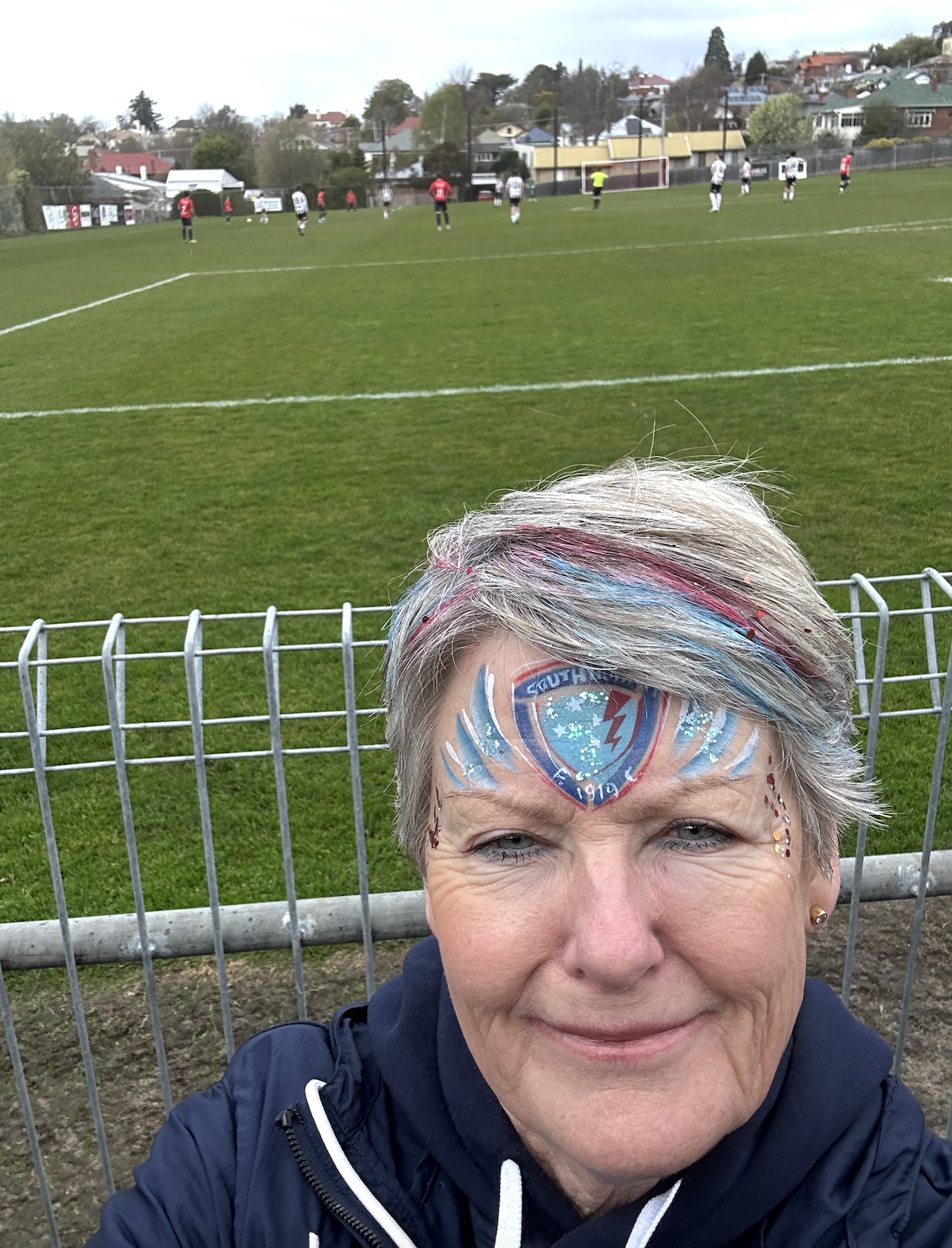
For me, football has always been lived on the sidelines, on winter mornings, behind fences, and in places that slowly become part of your life.
Football is about people first
It’s easy to talk about football as competitions, pathways, structures and results. But anyone who has spent real time in the game knows that football is, first and foremost, about people.
People who give their time.
People who show up week after week.
People who care deeply about their children, their teams and their clubs.
It is emotional. It is personal. And because of that, it brings out the very best, and sometimes the very hardest, parts of people.
The supporters you don’t always see
Some of the most meaningful support I have received over the years has been quiet.
A message sent privately.
A conversation on the sidelines.
A nod of understanding after a difficult decision.
Not everyone wants to be visible. Not everyone feels comfortable speaking publicly. But that does not mean they are not there, watching, caring, and appreciating what is being built.
Those moments matter more than people realise.
Learning to live with disagreement
I have also learned that leadership does not come with universal approval.
In football, decisions are rarely simple, and they are never made in a vacuum. People see situations through their own experiences, fears and hopes for their children. That is human.
Not everyone will like you.
Not everyone will agree with you.
Not everyone will understand decisions made under pressure.
That does not mean those decisions were wrong, and it does not cancel out the good that exists alongside the criticism.
Learning to sit with that has been one of football’s greatest lessons for me.
Speaking while we are still here
I have always found funerals a strange process.
They are not really for the dead. They are for those left behind. A place where people gather to say kind things when the person they are speaking about is no longer there to hear them.
I have often wondered why we wait. Why we save gratitude, honesty and reflection for the end, rather than speaking more openly while people are still here.
I was born in New Zealand, and one of my strongest childhood memories is of tangi. Growing up around Doubtless Bay, tangihanga was not something rushed or contained. It took time. People stayed. They talked. They cried. They sat in silence.
What stayed with me was that people spoke directly to the person who had died, as if they were still present. Stories were shared honestly. Gratitude was spoken plainly. There was space for emotion, humour, regret and love, without polish or performance.
That memory has stayed with me.
It has shaped how I think about community, and about the importance of speaking while people are still here, not just when something ends.
Gratitude, often expressed late
As I step away from the Presidency of South Hobart Football Club after sixteen years, I have found myself reflecting on the people, moments and lessons that have shaped that time.
One of the unexpected things about stepping aside from a role is the messages that arrive afterwards.
Words of thanks.
Reflections shared.
Thoughts people perhaps did not know how, or when, to express earlier.
I am grateful for those words. But I am even more grateful for the everyday conversations, the quiet support, and the relationships built along the way, when they mattered most.
Service, not sacrifice
Sometimes people would ask me why I did so much for the club. They would say, couldn’t someone else step up, or surely there were other things I would rather be doing. The truth is, doing something you love, for a cause you care deeply about, does not feel like sacrifice. It feels valuable.
If my path had not crossed with football, and with South Hobart, I would not have met Ken. Our lives intersected through service to the game and to the club, and from that came a family, friendships, and a shared life shaped by community sport. That alone makes every hour worthwhile.
Serving a cause bigger than myself, in this case my club, has been one of the most valuable experiences of my life. It has given me purpose, perspective and connection, and I would not trade that time or those years for anything.
Looking back
A long time from now, when I am older than I am today, I hope to look back on this day and remember the children who played for my club, their parents, and all the people along the way who loved football for what it truly is, a game that creates community.
Development Programs, Clubs and the Cost of Confusion
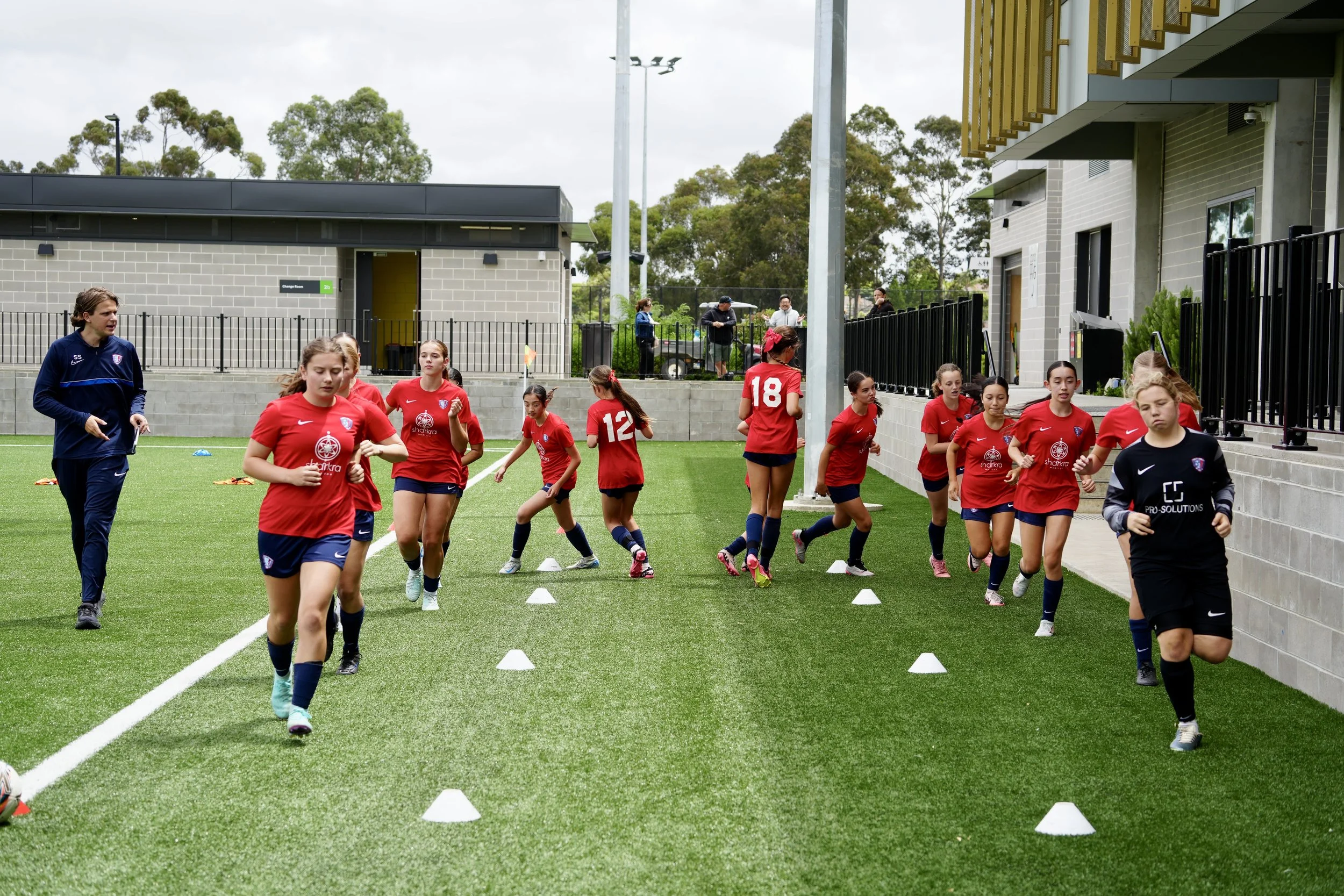
I am often asked by parents about development programs run by our federation.
Which one is best?
Which one matters most?
Which one will get my child noticed?
It is an understandable question, but it is also a revealing one. Because beneath it sits confusion, pressure and a quiet fear of getting it wrong.
My instinctive response is usually simple, stay with your club.
Clubs are more than development programs. They are football families. They provide belonging, continuity, identity and a place to grow over time, not just as players, but as people.
That said, I also recognise that development programs can suit some players, at certain moments, for certain reasons. Families should explore what is on offer, ask questions and make their own decisions.
What troubles me is not choice.
It is the confusion that surrounds it.
A History of Programs and Acronyms
Tasmanian football has seen a long line of development programs over the years.
TIS.
NTC.
SAP.
TSP.
Skillaroos.
NDC
FA Academy
Full-time programs.
Part-time programs.
Festivals, challenges and national championships.
Some have been well intentioned. Some have been well resourced. Some have quietly disappeared, replaced by something new with a different name and a similar promise.
For families on the outside, it can feel like a moving target. The names change. The structures shift. The purpose is often unclear.
Ironically, the complexity of the system often proves the very point parents are grappling with, that there is no single, guaranteed pathway.
We like acronyms. We like neat labels and catchy phrases that make programs sound special, exclusive and important. Kids understand them. Parents remember them. They give the impression that this is where development really happens.
But development is not a brand. And when the label matters more than the learning, we risk confusing visibility with progress.
The Fear That Sits Beneath the Choice
What I hear most often from parents is not ambition. It is fear.
If my child doesn’t get into this program, will they be overlooked?
If they don’t attend extra sessions, will they fall behind?
If they stay loyal to their club, will that be held against them?
This fear is powerful, and it shapes decisions long before any benefit is clear.
Young players worry they are missing out. Parents worry they are failing to provide opportunities. Clubs feel the pressure when players are pulled away from team environments that were working well.
Development should build confidence. Too often, it builds anxiety.
Clubs as the Original Pathway
Not that long ago, clubs were the pathway.
State teams came together at the end of the season. Players trained hard for six weeks. They played for their state, then returned to their clubs.
There were no year-round programs removing players from club environments. There were no parallel systems running alongside each other. Development happened where football lived, at clubs.
Outcomes were not worse. In some cases, they were better.
What changed was not the quality of players, but the belief that development had to be separated from community to be effective.
When Programs Become Disruptive
From a club perspective, some programs have been genuinely disruptive.
Training scheduled on club nights.
Girls’ sessions placed on Sundays, which are match days.
Players missing consistent team training.
Mixed messages about priorities and expectations.
At the same time, clubs are mandated to meet increasingly strict licensing requirements. Coaches are required to hold qualifications, or work towards them, often at significant personal cost. Academies are built, structured and resourced to develop players for senior football.
Then, in the same breath, players are removed from those environments in the name of “better development”.
It is a strange contradiction.
Especially when many club coaches are highly qualified, deeply experienced and working with players week in, week out, in real competitive environments.
One size does not fit all, particularly in a small state.
Tasmania Is Different
Tasmania’s size magnifies every issue.
We have fewer players. Fewer clubs. Smaller talent pools. Fewer places to hide mistakes.
What might work across thousands of players on the mainland does not always translate cleanly here. National technical directors quite rightly take a big-picture view. But small states need adaptive models, not replicas.
Flexibility matters.
So does context.
The Promise of Talent Identification
Development programs often come with an implied promise.
Visibility.
Selection.
Opportunity.
But talent identification is not a straight line. Late developers exist. Confidence ebbs and flows. Physical maturity varies wildly. Connection to a club environment can matter more than exposure to another session.
Removing players from clubs does not automatically make them better. In some cases, it makes them less connected, and less likely to stay in the game at all.
That cost is rarely measured.
There Is More Than One Pathway
A very close friend of my family, Andy Brennan, did not come through a state-run development program.
His pathway was through South Hobart, then South Melbourne, then Newcastle Jets.
Andy had natural talent, but he also had strong grounding, continuity and several years of coaching under Ken. He stayed connected to his club. He played regularly. He was known, trusted and supported.
That was his pathway.
It wasn’t flashy. It wasn’t branded. But it worked.
So, What Should Parents Do?
There is no single right answer.
Clubs matter.
Programs can help some players.
Fear should not drive decisions.
Belonging should count for something.
My advice is usually this:
Ask questions.
Understand the purpose of any program.
Consider the impact on club football.
And remember that development is a long game.
Clubs are not obstacles to development. They are where football lives.
There has never been one perfect pathway. There never will be.
What matters most is that young players are supported, connected and allowed to love the game long enough to see where it might take them.
What Awards Can, and Can’t, Tell us
What Our Awards Say About Us
End-of-season awards are meant to celebrate excellence.
They recognise effort, consistency and impact over a long season. They give us moments of reflection and, ideally, a sense that good football has been noticed.
But awards also reveal something else, often unintentionally.
They show us what a system values, what it sees most clearly, and what it tends to miss.
Who We Notice
In most football competitions, certain players are easier to notice than others.
Goals are obvious.
Assists are visible.
Creative midfielders are constantly involved.
Their influence shows up in moments that stand out.
Defenders, by contrast, rarely win end-of-season awards.
This isn’t a criticism of any voting group. It’s a pattern seen across football at almost every level. Defenders do their best work quietly. When they are excellent, nothing happens. No goal. No celebration. Just an attack stopped before it begins.
Silence, in football, is rarely rewarded.
Proximity and Perception
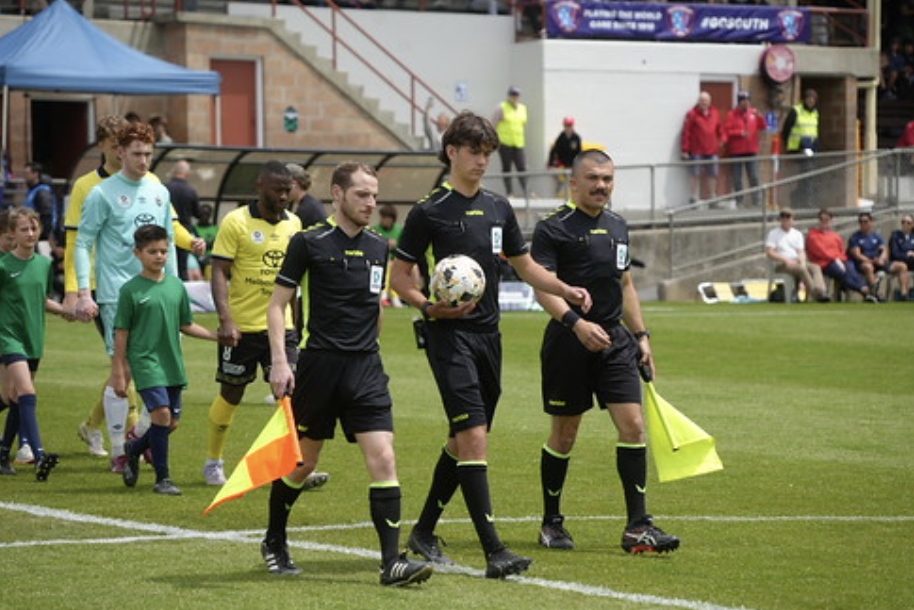
In Tasmania, awards such as Best and Fairest are often voted on by referees.
That has strengths. Referees are neutral. They see both teams. They are present every week. Their perspective is consistent.
But in a small football community, proximity matters.
Referees know players. They see them week after week. Reputations form. Roles become familiar. Certain styles of play are more visible than others.
That doesn’t imply bias or bad faith. It simply acknowledges that familiarity shapes perception, whether we like it or not.
Familiarity in a Small State
In a small state like Tasmania, proximity is part of daily life.
You are just as likely to see your referee at the gym, the supermarket or a local restaurant as you are on the pitch. That closeness isn’t a criticism. It’s simply the reality of a tight football community.
But it does mean familiarity is unavoidable. And familiarity, even when everyone acts with integrity, shapes perception.
In systems built on judgement, that context matters.
Who Gets to Speak
There is also the reality of communication on the field.
Captains are now the only players permitted to speak to referees. That has improved match control and clarity, but it may also shape visibility.
Some players are constantly in conversation. Others do their work without words. Leadership looks different depending on role, position and personality.
Again, none of this is wrong. But it does influence what is seen and remembered.
The Disappearing Football Writer
In the past, football writers played a role in shaping how performances were understood.
They noticed patterns. They explained context. They highlighted players whose contributions didn’t show up on a stat sheet.
That layer is largely gone now.
Without consistent media coverage, awards lean more heavily on internal systems: referees, coaches and players themselves.
That makes it even more important to understand what each award measures, and what it never can.
How Others Try to Balance It
Even at the highest levels of the game, football accepts that individual awards are subjective.
There is no single, universally agreed way to decide who has been “best” over a season, because performance is complex and contribution looks different depending on where you stand.
The Ballon d’Or is one example. Rather than being decided by officials or administrators, it is voted on by a broad panel of football journalists from around the world. The system doesn’t pretend to remove subjectivity. Instead, it spreads judgement across many observers.
FIFA’s Best Awards take a different approach again, with votes shared between national team coaches, captains, media and fans.
Neither system is flawless. Their relevance here isn’t scale, it’s philosophy. They acknowledge a simple truth: how we decide matters just as much as who wins.
Multiple Awards, Multiple Truths
To Football Tasmania’s credit, we now have multiple awards, including:
Best and Fairest
Players’ Player
Golden Boot
Golden Glove
Coach of the Year
Referee of the Year
Each reflects a different lens.
Players notice things officials don’t. Coaches value different qualities again. Goal tallies tell one story. Peer respect tells another.
None of these are wrong. But none of them are complete.
What Our Awards Already Recognise
At Football Tasmania’s annual awards night, recognition is spread across a wide range of contributions.
Awards are given across multiple competitions and roles, and there are also honours recognising service and contribution to the game more broadly.
This breadth matters. It acknowledges that football impact isn’t one-dimensional.
At the same time, it reinforces a simple truth: no single award, no matter how well intentioned, can capture the full story of a season.
When Awards Matter, and When They Don’t
It’s also worth remembering that not everyone places the same weight on awards.
Some people care deeply. Others barely at all.
I remember one year when a South Hobart player won the former Vic Tuting Best Player award and simply wasn’t at the awards night at Wrest Point. Someone had to go looking for him. He eventually arrived late, still in his shorts and thongs, slightly embarrassed by the fuss.
It wasn’t disrespect.
It was perspective.
For him, the football had mattered. The trophy was secondary.
Coach of the Year
Coach of the Year is another interesting example.
It is often voted on by coaches themselves, which brings its own complexities. Results matter. Improvement matters. Context matters.
Sometimes a coach wins everything and doesn’t win the award. Sometimes the award goes to perceived overachievement rather than dominance.
That can feel strange, but it reflects the subjective nature of judgement.
Awards don’t measure absolute truth. They measure consensus.
The Small State Factor
In a football community like Tasmania, these dynamics are amplified.
Everyone knows everyone. Histories overlap. Conversations travel quickly. Perception can carry as much weight as performance.
That doesn’t mean the system is broken.
It means it is human.
Strong systems don’t eliminate subjectivity. They acknowledge it.
What Awards Are, and What They Aren’t
Awards are symbols.
They recognise excellence as seen through a particular lens. They do not define a career. They do not capture every contribution. They do not tell the full story of a season.
A defender who never wins Best and Fairest can still be the reason a team succeeds. A coach who doesn’t win Coach of the Year can still build something lasting.
Football is too complex to be fully captured by trophies.
Questions Worth Sitting With
So perhaps the most useful thing awards can do is prompt reflection.
What do we notice most easily?
What roles are hardest to see?
How does familiarity shape judgement?
And how do we protect both winners and voters from unnecessary doubt?
These aren’t questions with neat answers.
But in a game that values fairness, they are worth asking.

The Quiet Conversation about Player Payments

Paying Players: The Conversation We Avoid
There is a strange discomfort around player payments in Tasmanian football.
It’s often spoken about in hushed tones, behind closed doors, or not at all. When it does surface, it can feel loaded with judgement. As if paying a player to play is something shameful, something to deny, or something that shouldn’t exist in a community game.
And yet, it does exist.
Everyone knows it does.
What Happens Elsewhere
On the mainland, this conversation isn’t nearly as fraught.
Across Australia, in National Premier Leagues and senior state competitions, players are routinely paid. Not full professional wages, but compensation for their time and commitment. Training three nights a week. Playing on weekends. Giving up paid work, family time and recovery days.
There are sign-on fees. Match payments. Win bonuses. Goal bonuses. Clean sheet bonuses. Sometimes accommodation or travel support. Sometimes nothing more than a modest weekly amount that acknowledges the reality of what players are asked to give.
This is not unusual.
It is the accepted model of semi-professional football.
Tasmania is not unique in paying players. It is only unusual in how uncomfortable we are talking about it.
The Reality at Home
Players are paid in Tasmania. Some clubs pay more than others. Some offer cash. Others offer support in different forms.
Registration fees covered.
Training gear provided.
Match kits supplied.
Gym access.
Strength and conditioning.
Physio.
Boots.
Meals when travelling.
End-of-season events.
Support that reduces the personal cost of playing at a high level.
Is that payment?
Or does it only count if money changes hands?
These questions matter, because they reveal how narrow our definition of “being paid” often is.
A Small Community, an Open Secret
Tasmania is a small football community.
Players move between clubs. Clubs lose players to other clubs. Everyone knows why, even if no one says it out loud.
Yet when the subject of payments comes up publicly, it is often met with outrage or denial. As if acknowledging reality somehow damages the integrity of the game.
What actually damages the game is pretending something doesn’t exist.
Silence creates suspicion. Rumour fills the gaps. And instead of having a mature discussion about what is fair, sustainable and transparent, we default to judgement and whispering.
If payments exist, pretending they don’t doesn’t protect the game.
It only erodes trust.
“Left for the Money”
It often surfaces in throwaway public statements.
“He left for the money.”
“She left for the money.”
The words are delivered like a verdict, as if that alone explains everything, and as if it should be a source of shame.
This feels particularly stark in the women’s game, where monetisation is only just beginning and payments are modest at best. Support is framed as greed. Practical assistance is framed as moral failure.
Rarely do we hear the full context. What was offered. What was needed. What a player was giving up to keep playing.
Players make choices based on work, study, injury risk, travel and time. Money is rarely the only factor, but it is often the easiest one for outsiders to point at.
The judgement lands anyway, and the conversation moves on.
Contracts, Control and Consequence
There is another layer to this conversation that is often overlooked.
Tasmania’s senior competitions are considered professional under Football Australia regulations. Clubs contract some or all players. Those contracts bind players to clubs. They can only move during transfer windows. Parent clubs can request transfer fees if another club wants to sign them, provided the player is contracted.
That is not amateur football.
If we are comfortable with professional contracts, transfer windows and compensation mechanisms, then we need to be honest about what that actually means.
You cannot treat players as professionals when it suits governance, and amateurs when it suits public perception.
Why This Feels Like a Dirty Word
Part of the discomfort comes from values.
Community sport prides itself on volunteerism, loyalty and local identity. Money can feel like it threatens that.
But part of it also comes from inequality.
Not all clubs can pay the same. Not all clubs have the same sponsor base. Not all clubs choose to prioritise payments in the same way. That imbalance creates tension, and tension makes people uncomfortable.
So instead of addressing it openly, we pretend it isn’t there.
What Players Actually Give Up
Players at this level are not getting rich.
They are training around work. Turning down shifts. Managing injuries without the safety net of full-time employment. Travelling. Recovering. Performing in public. Living with the pressure of selection and results.
Payment, in whatever form it takes, is often less about reward and more about recognition.
It says: we understand what you are giving up.
A Conversation Worth Having
This isn’t an argument that every club should pay players, or that payments should increase.
It is an argument for honesty.
If players are being paid, let’s talk about it openly.
If clubs choose to support players in non-cash ways, let’s acknowledge that too.
If the system creates inequality, let’s name it rather than pretend it doesn’t exist.
And if we want football to be sustainable, let’s stop treating money as a moral failure rather than a practical reality.
Football has always been about people. Players, volunteers, supporters and communities.
Paying players does not automatically undermine that.
Avoiding the conversation doesn’t keep football pure.
It just keeps it dishonest.

Live Streaming, Empty Stands and the cost of convenience

Not that many years ago, no one filmed local football.
If you wanted to watch a game, you turned up. You stood on the sideline. You rugged up. You bought a pie or a coffee. Clubs lived and died on who came through the gate, because gate takings mattered. Attendance mattered. Being there mattered.
Streaming wasn’t part of the conversation. Football was something you experienced live, together.
When the Question Was First Asked
I remember a considered conversation with Damian Gill, who at the time worked for Football Tasmania and is now CEO of AFL Tasmania. We were discussing whether our FFA Cup match against Tuggeranong United should be filmed. At the time, it felt like a genuine fork in the road.
My concern wasn’t technical. It wasn’t about cameras or production. It was cultural.
I worried that if people could watch from home, many would choose to do exactly that. That cold nights, travel, inconvenience and habit would slowly give way to comfort. That people would sit at home in slippers with a cup of tea rather than stand on a sideline on a Friday night.
At the time, that concern felt theoretical.
It doesn’t anymore.
Where We Are Now
Today, an AI camera is being installed at Darcy Street. Games across Tasmania are routinely live streamed. This isn’t being done by clubs or volunteers. It is delivered centrally, filmed by contractors engaged by Football Tasmania.
In many ways, this is progress.
Families who can’t attend can still watch. Interstate relatives can follow along. Players can review matches. Sponsors get exposure beyond the fence line. Football becomes more accessible to people who otherwise miss out.
These are real benefits, and they shouldn’t be dismissed.
But change always comes with trade-offs, and it’s the quieter ones that often go unexamined.
What We’ve Gained
Live streaming has undeniably expanded access.
It allows parents to watch when work or distance gets in the way. It gives visibility to competitions that once existed only for those who turned up. It offers sponsor value in a digital world. It creates an archive of games that previously vanished the moment the final whistle blew.
For governing bodies, it also provides consistency, quality control and scale that clubs alone could never deliver.
All of that matters.
What We’ve Lost Along the Way
But there is another side to this shift.
Clubs once relied heavily on gate takings. Attendance wasn’t just about atmosphere, it was income. Canteens, bars, raffles and community presence were part of a fragile ecosystem that helped keep clubs afloat.
Now, many people choose to watch from home. The weather doesn’t matter. Travel doesn’t matter. Habit changes.
Even Ken and I don’t go to many night games anymore. We used to go to them all.
This isn’t a criticism of supporters. It’s a recognition of human behaviour. If watching from the couch is an option, many people will take it.
The question is whether we have fully reckoned with what that means for clubs, particularly at the community level.
Who Carries the Cost
Football Tasmania pays the streaming costs. Clubs receive some sponsor exposure in return. That arrangement is often presented as a fair trade-off.
But is it?
Gate revenue doesn’t disappear evenly. Some clubs absorb the loss more easily than others. Some grounds are easier to attend than others. Some communities are more digitally engaged. Some clubs rely far more heavily on match-day income to survive.
These differences matter.
Streaming is centrally controlled, but its impacts are felt locally. And while the technology has moved quickly, the conversation about revenue, sustainability and unintended consequences has lagged behind.
The Direction of Travel
There is also a broader shift underway.
Live streaming appears to be increasingly centralised at a national level, with Football Australia taking on a role that state federations once held. At the same time, rapid advances in AI technology mean cameras can operate without crews, and commentary can be delivered remotely, sometimes from hundreds or thousands of kilometres away.
From a technical perspective, this is impressive. The quality improves. The costs reduce. The reach expands.
But it also further separates the product from the place.
When games are filmed automatically, commented on remotely, and consumed primarily from home, the connection between football and its local environment weakens. The ground becomes a backdrop rather than a gathering point.
For professional competitions, this may be an acceptable trade-off. For community clubs, it is far more complex.
Clubs do not exist on broadcast metrics. They exist on attendance, on canteen sales, on bar takings, on the habit of people turning up week after week. These are not nice extras. They are often the difference between breaking even and falling short.
As technology accelerates, it is worth asking whether the economic realities of community clubs are keeping pace with the direction of travel.
Nothing Beats Being There
None of this is an argument against streaming.
But it is a reminder that nothing quite replaces live football. The noise, the conversations, the shared frustration and joy, the sense of belonging that only exists when people turn up together.
Football was never meant to be consumed entirely from a distance. It is a community sport, built on presence.
Streaming adds something. It should not quietly replace everything else.
Questions Worth Asking
As live streaming becomes the norm rather than the exception, there are questions worth asking, calmly and honestly.
How do we support clubs who lose gate income as viewing habits change?
How do we balance access with attendance?
Who measures the long-term impact on club finances and community engagement?
And how do we ensure that convenience doesn’t slowly erode the very culture that makes football matter?
Technology moves fast. Culture shifts slowly.
If we don’t stop to ask these questions, we may only realise what we’ve lost once it’s already gone.

Football Without Consequence Is Not Football

Promotion and relegation is what makes football unique.
It rewards hard work. It punishes complacency. It makes survival as meaningful as success. Every match matters because every season carries consequence.
Why Promotion and Relegation Matters
Globally, this is not controversial. Promotion and relegation is the norm. It exists across almost every footballing nation, at every level of the game, from elite competitions to grassroots leagues. Only two countries operate long-term closed shop, franchise-style systems: Australia and the United States.
Frankly, that should give us pause.
In a closed system, it does not matter how poor a season is. You stay in the competition. Survival is guaranteed. Hard work does not necessarily lead to progression, and failure does not necessarily carry consequence.
That is not football as most of the world understands it.
What Football Looks Like With Consequence
I love looking at the league tables in the English Premier League.
Above the line sit the Champions League places, ambition rewarded. Just below, the Europa League, still something to fight for. And at the bottom, three clubs clinging on for dear life. Survival, not glory, is the goal.
That tension is football at its rawest.
Every match matters. Every point matters. A late goal can mean European football or relegation. A missed chance can mean another season at the table or financial ruin. Managers live and die by it. They are praised when it works and blamed when it does not. Sometimes unfairly. Often brutally. And yes, they are sacked.
It is harsh. It is unforgiving. And it is what makes football compelling.
The Drama That Cannot Be Manufactured
Then there are the play-offs.
By all accounts, some of the richest games on the planet. One match that changes everything. Promotion as the holy grail. Careers made. Clubs transformed. Generations of supporters carried along by ninety minutes of possibility.
That is football.
There is nothing quite like the final day of the season.
Kick-off at the same time across every ground. Phones glued to ears. Eyes flicking between the pitch in front of you and scores from elsewhere. A goal at one ground changes the fate of another. Staying up or going down, kick by kick.
That shared moment, the collective tension, is football at its most alive.
What We Don’t Have in Australia
This simply does not happen in Australia.
Our competitions are structured to avoid that level of jeopardy. Results rarely have consequences beyond pride. Seasons drift to their conclusion rather than building to a crescendo. The most powerful emotional tool football has is largely absent.
It is almost as if the most played team sport in an AFL-dominated landscape is afraid to take that step. Afraid of risk. Afraid of instability. Afraid of what happens when outcomes are not controlled.
The Distance Argument, and Why It Falls Short
Distance is often offered as the explanation.
In England, you can get around most places in a few hours. In Australia, Perth is five hours away by plane. Travel is expensive. Logistics are complex. These challenges are real.
But distance alone does not explain the choices we have made.
Australian football has chosen to stretch itself across vast geography while simultaneously rejecting the mechanisms that make that scale meaningful. We now have two teams from Oceania playing in the Asian confederation and competing in the A-League.
It is extraordinary when you stop to think about it.
We accept international travel across continents, time zones and cultures, yet hesitate to embrace promotion and relegation within our own domestic structure.
Tasmania as a Microcosm
Tasmania reflects these contradictions in miniature.
There is no true promotion and relegation here. Advancement is not earned purely on the pitch. It is assessed through licensing, benchmarking and compliance. Clubs are judged on spreadsheets, facilities and perceived capacity, not simply on results.
Tasmania has had promotion and relegation. It was stopped. It was replaced with the NPL licensing model, licence fees and administrative gatekeeping.
Championship clubs do not always want to be promoted. Some cannot afford it. Some do not meet licensing requirements. Some are blocked because they already have teams in the NPL. Others look at the cost, the compliance, the facilities and decide it is not worth the risk.
Across Australia, models have come and gone. Structures change. Competitions are rebranded. Pathways are redesigned. Yet the core issue remains.
Progression is rarely earned purely on the pitch.
Why Instability Is the Point
Football is cyclical.
My own club spent years languishing in the lower leagues before rising again. That is not an argument against promotion and relegation. It is the argument for it. Clubs rebuild. Communities regroup. Fortunes change. The ladder reflects reality over time, not permanence.
There are uniquely Tasmanian realities, including geography and a long-standing north–south divide. These factors are real and should be acknowledged. But complexity should not be used as a reason to remove consequence altogether.
The irony is that instability is the point.
Football is not meant to be safe. It is meant to be earned. Survival should be celebrated. Promotion should be chased. Relegation should hurt.
Without consequence, results lose meaning.
Without jeopardy, ambition dulls.
Where I Stand
I am unapologetically pro promotion and relegation.
Because football without consequence is not football.
It is participation.
The S Word: Stadium
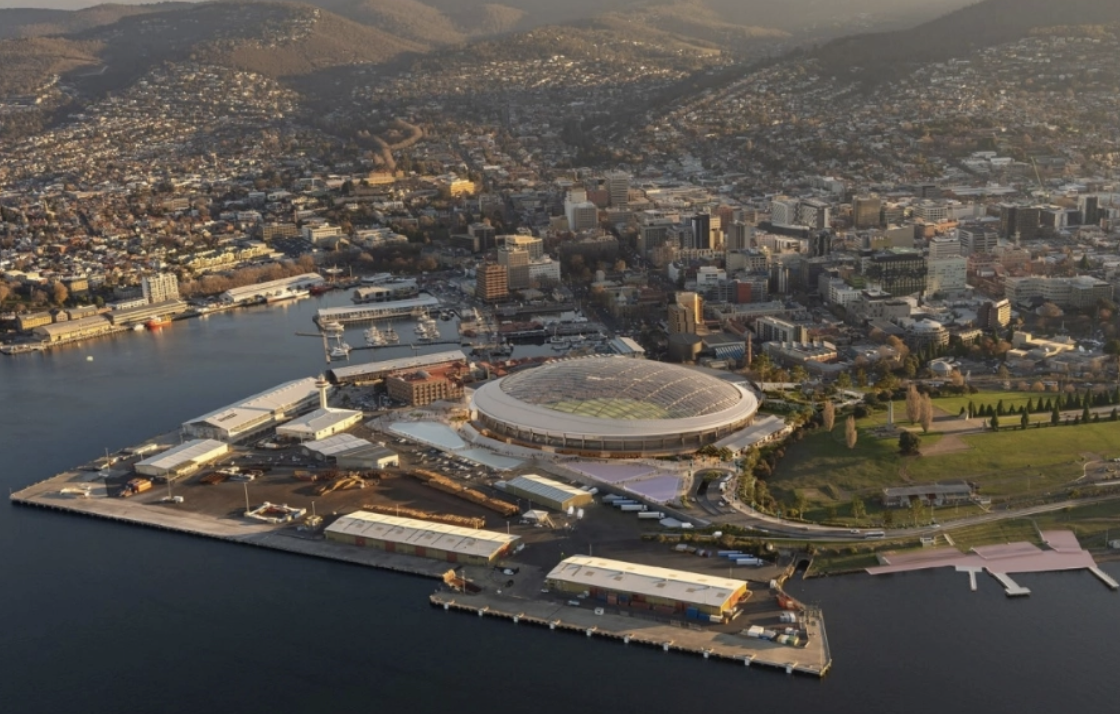
I want to be upfront.
I do not come to this debate as an AFL expert.
I was born in New Zealand. Rugby union was the sport of worship, almost a religion, and while I have not lived there for more than forty years, that lens has stayed with me. Football, soccer, is where my life has landed, not because it was glamorous or well-resourced, but because it was community-driven, volunteer-led and accessible.
Why This Debate Makes Me Uneasy
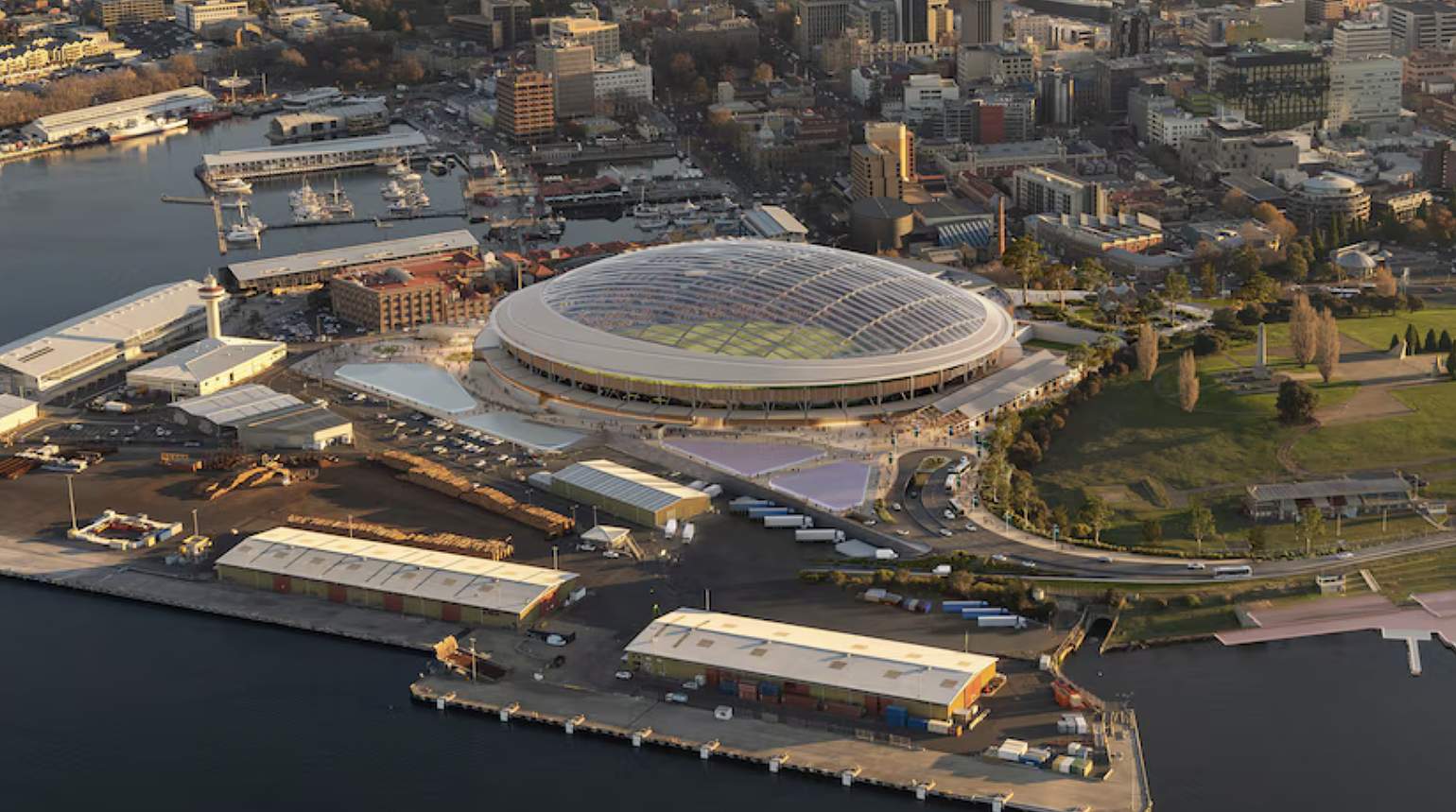
That is why the stadium debate makes me uneasy. Not because I am anti-team or unwilling to dream big. I hear the “yes team” argument. I hear “whatever it takes”. I understand the excitement. But I also worry, deeply, about what gets lost when one sport becomes the Government’s clear priority.
I have spent more than two decades working in football, not because it is easy or well-funded, but because I believe grassroots sport matters. Children deserve safe places to play. Volunteers deserve to feel valued. Governments should invest where participation and community impact are greatest, not where prestige, politics or broadcast deals are loudest.
What I Am Actually Concerned About
My concern is not about elite pathways or shiny “homes of football” floated by our own governing body. It is about the club grounds, council grounds and everyday facilities that grassroots football relies on, the places used daily by associations and schools across Tasmania.
These are not abstract concerns. Every weekend, junior football fields more than 450 teams across the Central Region alone, from Dover to Chigwell. Demand consistently outstrips supply. Tasmania has hundreds of AFL ovals and very few rectangular fields. This is the result of long-standing policy choices that have shaped who gets space, funding and priority.
The Reality on Winter Weekends
On winter weekends, I see it up close. Volunteers unlocking gates before sunrise. Parents holding umbrellas over children pulling on boots. Training sessions cancelled or shortened because there is nowhere safe or suitable to play. This is not elite sport. This is community sport, and it runs on goodwill.
Earlier this year, ABC announcer Leon Compton attended our match against Heidelberg United. The following morning on radio, he described the facilities as Dickensian. He sounded genuinely shocked. It haunts me.
For those of us in football, that reaction was confronting, not because it was unfair, but because it was familiar.
This is the reality for football clubs all over Tasmania.
Women Have Lived This Reality for Decades
Women have been playing soccer in Tasmania for more than fifty years in these conditions. We trained, played, coached and volunteered in facilities that would never meet today’s expectations, and we did so without headlines or outrage. When AFL introduced women’s competitions, the poor state of facilities suddenly became a surprise. For footballers, it never was.
Maybe we have just been more resilient. Or maybe we have simply been conditioned to accept less.
The Question No One Wants to Answer
I wrote to Members of the Legislative Council because I am genuinely fearful for grassroots sport. When hundreds of millions of dollars are committed to a single elite project, the question is not ideological, it is practical. Where does that money ultimately come from?
Every community sport in Tasmania competes for the same limited pool of grants. Clubs fill in applications year after year, justify need, and hope. Some succeed. Many do not. And the reality is that money is rarely new. It is usually reallocated.
Yes, my club has done well over my two decades, and I am grateful.
Thank you to Andrew Wilkie and the Federal Government.
Thank you to the State Government.
Thank you to the City of Hobart.
And thank you to the extraordinary club members and volunteers who have contributed time, money and energy over decades.
But my concern is not just about now. It is about five years’ time. Ten years’ time.
What happens if the stadium runs over budget?
What happens when operational costs escalate?
What happens when funding has to be redirected from somewhere else?
Do grant opportunities dry up because it all went to elite sport at the stadium?
Who Benefits, and Who Misses Out
Football is the most played team sport in Tasmania. Basketball participation continues to grow. Other sports are crying out for facilities. There is still no ice-skating rink. Yet one sport continues to be favoured above all others, without a transparent comparison of participation, community impact or long-term need.
Stadiums are visible legacies. Community facilities are lived ones. One photographs well. The other quietly shapes childhoods, weekends and lives.
This Is Not an Anti-AFL Argument
This is not about being anti-AFL. Many of us support a Tasmanian team. But support should not come at any cost, and certainly not at the cost of grassroots sport being quietly sidelined.
The suggestion that an A-League team could play at Macquarie Point does nothing for community football. Elite sport can be brought in. Community sport has to be built. Purchased content does not create a single new training field, safer changeroom or place for children to belong. The volunteers who hold community sport together will see no benefit from a stadium they will never use.
What This Decision Really Means
Grassroots sport is the lifeblood of Tasmanian communities. It keeps children active, builds friendships and creates connection in ways no broadcast product ever could. Yet too often, those who make sport possible, families, volunteers and local clubs, are invisible in these decisions.
This is not just a debate about a stadium.
It is a decision about what, and who, we choose to value.
I hope to be proven wrong. I hope this investment does not come at the expense of the sports and communities that quietly carry the greatest load.
Long after the ribbon cutting and headlines fade, Tasmanian children will still need places to play.

The Strength of Our Associations, the Scale of our Community and the questions worth asking.

Junior Football in Tasmania
I should also put it out there that I am the President of the Central Region Junior Football Association (CRJFA), and have been for close to a decade.
Much like my journey at South Hobart Football Club, this role began when, once again, I was tapped on the shoulder and asked if I would help. I said yes, thinking it would be a small commitment. It has turned into one of the most meaningful and rewarding roles I’ve ever taken on, and it has given me a deep understanding of just how much work, care and community spirit sits behind junior football in Tasmania.
If you are new to junior football in Tasmania, the first thing you need to know is this.
Our junior football is run not by Football Tasmania, but by volunteer-driven associations who manage thousands of children, hundreds of teams, and an enormous volume of weekly logistics.
These associations, CRJFA, the Eastern Region Junior Soccer Association, the Northern Suburbs Junior Soccer Association, the Northern Tasmanian Junior Soccer Association and the Devonport Junior Soccer Association, are the heartbeat of grassroots football in this state. They are uniquely Tasmanian, deeply community-based, and astonishingly effective.
A Uniquely Tasmanian Model
Unlike every mainland state, where junior players register through clubs and competitions are delivered by the state federation, Tasmania’s junior system grew out of school sport.
That history still shapes the structure today.
Many children play for their school, not a club.
Associations work directly with schools and community clubs.
Competitions prioritise participation, friendships and accessibility.
The atmosphere feels local, warm and familiar, unmistakably Tasmanian.
It is a model that produces extraordinary engagement and keeps football accessible to families of all backgrounds.
But its strength comes from the people who run it.
What Associations Actually Do
To understand the scale of the work, consider what CRJFA delivered in 2025 alone.
3,792 matches played across the winter.
426 teams entered, including 102 all-girls teams, up from 86 in 2024.
413 washed-out matches rescheduled or managed.
Only 32 forfeits, exceptionally low for a competition of this size.
3,750 registered junior players.
560 volunteers registered at CRJFA level, and many more through clubs via Football Tasmania.
Behind the scenes, the administrative load is immense.
In 2025, our Rosters Secretary alone received 18,672 emails between January and September. I also managed the CRJFA phone on match days.
Football Tasmania’s admin team provides valuable help setting up registration categories each year, but everything beyond that point, all the communication, corrections, queries and changes, is handled at association level.
The people keeping junior football running are parents, teachers, helpers, coordinators, club delegates, committee members and community-minded volunteers.
It is easy to forget how much is done by how few.
The Responsibilities Carried at Association Level
Associations are responsible for a long list of practical, weekly tasks.
Creating fixtures and formats.
Managing registrations and team organisation.
Paying council ground hire.
Providing ground rebates.
Employing contractors to prepare fields on match day.
Supplying training balls.
Handling behaviour and disciplinary matters.
Communicating every change, cancellation and update.
Managing social media.
Liaising with councils, schools and clubs.
Maintaining governance, finances and compliance.
Associations also have no ability to directly apply for most government grants. Only a State Sporting Organisation can apply, which means grants must go through Football Tasmania.
Frustrating to say the least.
It is a staggering community effort.
The System Works, and It’s Worth Celebrating
Despite the workload, Tasmania’s junior system is one of the strongest and most community-focused in Australia.
It offers low-cost participation.
It delivers local competition.
It provides school and club pathways.
It accommodates social and competitive options.
It continues to drive tremendous growth in girls’ football.
It creates an environment that prioritises enjoyment and inclusion.
The growth speaks for itself, particularly on the girls’ side.
Moving from 86 to 102 all-girls teams in CRJFA in just one year reflects the work schools, clubs, associations and families are doing to nurture the female game.
And the atmosphere on a Saturday morning, children in their school colours, parents on the sideline with coffees, volunteers setting up grounds in the dark, is something genuinely special.
Where the System Isn’t Perfect
No system is.
One of the biggest challenges comes at the transition point to Under 13, where football shifts from association-based competitions to club-based, Football Tasmania-run youth leagues.
For some families this move is smooth. For others, it can be daunting.
Choosing a club.
Understanding new expectations.
Adjusting to a different competition structure and expense.
Navigating pathways or selection processes.
Balancing social football with more structured team environments.
Tasmania’s school-based junior system is beautiful, but it is different from the national model. That means the transition requires clarity, communication and support.
Associations can do more to help families prepare. Clubs can do more to welcome new players. And Football Tasmania can do more to bridge the gap between community participation and youth pathways.
The Question of Support
In 2026, CRJFA will charge $105 per player, including GST, for 15 rounds of football. The number of games per season varies because of the Easter holiday and when it falls.
It remains an incredibly affordable experience, especially considering what the association provides. Grounds, equipment, communication systems, administration, contractor costs, volunteer honorariums and the thousands of hours required to deliver the competition.
By comparison.
Football Australia receives $18 per junior player.
Football Tasmania receives $28 per junior player.
CRJFA retains $59 less GST, which is $53.64 per player.
That equates to $3.57 per game, per child.
A fair and reasonable question, one rooted in governance rather than criticism, is this.
What support does junior football receive in return?
Because when a system is powered by volunteers delivering nearly 4,000 games a season, questions about resourcing and support are not political. They are practical.
And they matter because the success of Tasmanian football begins right here, at the grassroots, on those cold Saturday mornings where thousands of children discover the joy of the game.
A Community Worth Protecting
Tasmania’s junior associations are one of the great strengths of our football landscape.
They are effective, community-driven, resilient and deeply valued.
They are not perfect. No grassroots system is. But they are extraordinary in what they accomplish with so little.
And if we want junior football to remain strong, inclusive and accessible, we must recognise the work of associations, support volunteers, improve the transition to club football, ask fair questions about where support is needed, and strengthen the partnerships that underpin the game.
Because when associations thrive, junior football thrives.
And when junior football thrives, the whole football ecosystem in Tasmania is stronger for it.
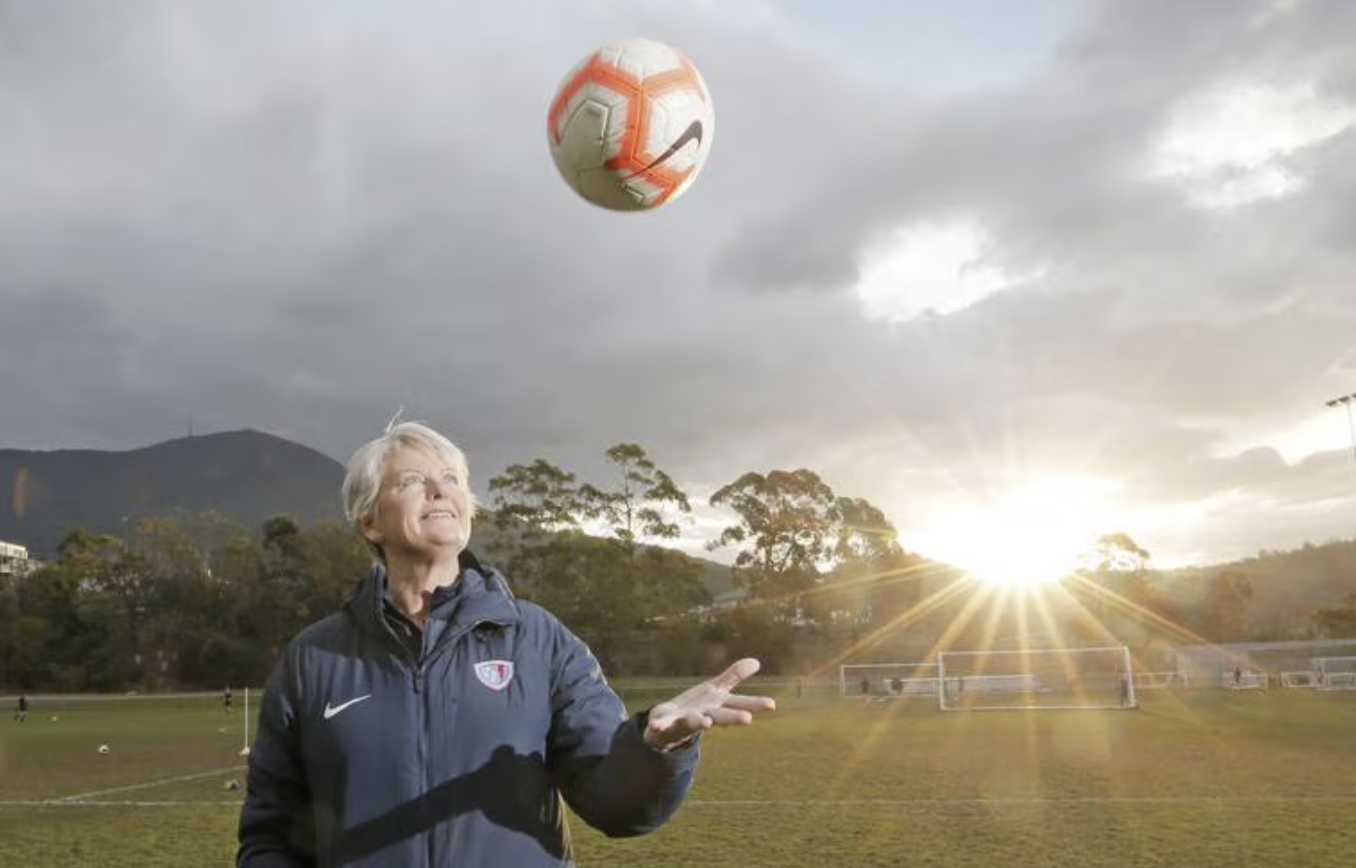
Women in Football Leadership: Progress, Reality, and What Comes Next
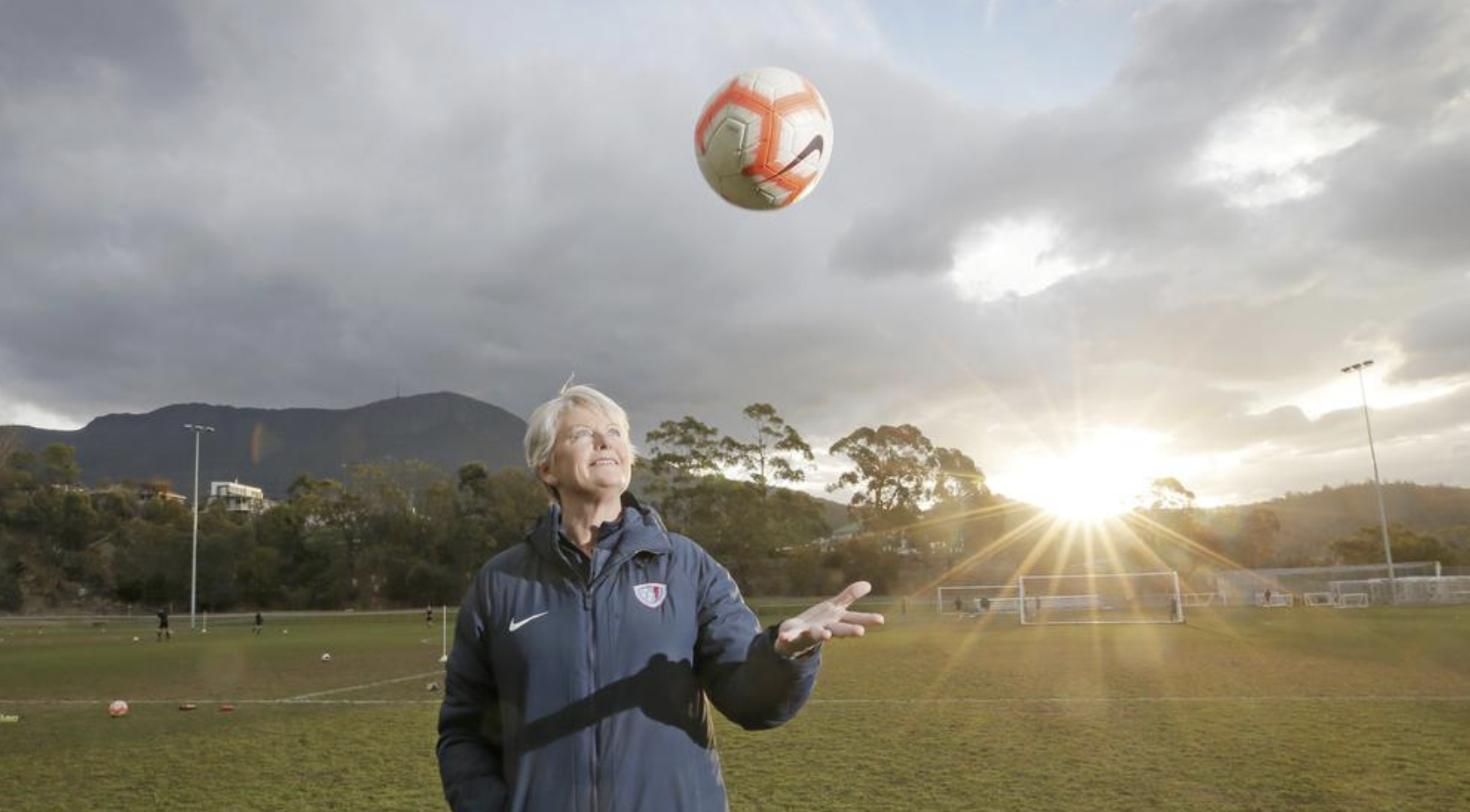
Photo credit Patrick Gee
When Equality Isn’t a Theme Week
If there is one thing football has taught me, it’s that progress rarely happens by accident. It happens because people are prepared to say the uncomfortable thing out loud.
In 2019, I did exactly that when I stood in a room of football people and politicians and delivered a speech at a breakfast for Female Football Week organised by Football Tasmania. It raised eyebrows and, I suspect, made a few people shift in their chairs.
It wasn’t meant to shock anyone. It was simply the truth as I saw it then, and still see it now.
Here is an excerpt from that speech:
“Thank you for considering me for this award.
I am a woman and I don’t just wash the shirts.I want to preface the comments I am about to make. I love this game. I have a great working relationship with my male colleagues, and I respect the administrators of our game at Football Tasmania. I am sorry if the following might appear inappropriate while we are celebrating the wonderful women in the room. Oh, and I might add, I like men very much.
Unfortunately, I don’t feel particularly special, because in reality how many female football administrators are there in Tasmania? Three? Five? Ten?
This is my ninth year as President of South Hobart Football Club and my sixteenth year at the club. My club is 108 years old and I am only its second ever female President. In that time there has been no female CEO of Football Tasmania, no female technical director, no female NPL coaches, and only a handful of women on the Football Tasmania Board. We cannot accept this as normal.
Why do we need Female Football Week? Who created this week? When is Male Football Week? Who decided that women needed to be celebrated separately?
I don’t want to be a quota or a percentage. I don’t want to be celebrated because I am female. I want to be recognised because I am a club President, not a female club President, just a club President.
Women make up 51% of the population and we want 51% of the jobs in football. Not because we are women, but because we do a good job.
So to the young women in the room, I hope you are not the best female anything. I hope you are the best referee, the best player, and I hope one day I am just the best administrator.”
At the time, those comments surprised some people. They still do.
The truth is, Female Football Week has always felt tokenistic to me. Well-intentioned, perhaps, but ultimately superficial. A way to say “we’ve acknowledged women” without changing the structures that keep them out of leadership the rest of the year.
Celebrating women for seven days does not fix the reality that we are under-represented in leadership 365 days a year.
I don’t want a themed week. I want equality embedded into the culture of the game.
What Has Improved Since 2019
There has been progress, and it deserves to be recognised.
Football Australia now has its first female Interim CEO. Several state federations have appointed women as Presidents or Chairs. More women are appearing on boards and governance committees. Pathways for referees, coaches and administrators are slowly opening, and young women can now see female leaders where once they saw none.
I’ve also witnessed moments of genuine progress: young female referees taking control of senior matches with confidence, women joining committees as contributors rather than tokens, and coaches stepping into leadership roles that simply did not exist when I started.
These aren’t symbolic wins. They are signs of a sport beginning, slowly, to grow up.
But We Are Still a Long Way from Equality
The uncomfortable truth is that women remain largely absent from the rooms where decisions are made.
Most state federations still have male CEOs. Technical and football leadership roles remain overwhelmingly male. Club presidencies and high-performance coaching roles are still dominated by men. Female leaders are often praised symbolically, but rarely supported structurally.
Women are not missing from leadership because they lack ability. They are missing because the path remains steeper and narrower than it should be.
Until we say that plainly, nothing changes.
What Leadership Has Taught Me
Leadership has shaped me in ways I didn’t expect. It has made me sharper, more resilient, more strategic, more patient, and occasionally more tired than I’d like to admit.
It has also made me very clear about the game we could have if we stopped accepting the bare minimum as progress.
Football doesn’t need women to be grateful.
It needs women to be visible, respected, and supported.
Acknowledging the Men Who Support Equality
I have worked with many male colleagues who have been supportive, respectful and collaborative. Men who understand that equality is not a threat, but an asset. They have never treated my leadership as a novelty or an inconvenience.
Their presence proves that cultural change is possible.
I have also encountered attitudes and behaviours that made leadership harder than it needed to be. Both realities can exist at the same time, and acknowledging one does not cancel out the other.
As I Step Down, What I Hope Comes Next
Stepping down from my role at South Hobart has given me space to reflect.
I never wanted to be “the female President” or “the only woman in the room.” I wanted to lead because I cared, because I worked hard, and because I was capable.
What I want now is simple: more women in positions of influence.
Women setting direction.
Women shaping competitions.
Women running clubs.
Women leading football departments.
Not as exceptions. Not as gestures. As a normal, expected part of the game.
Football doesn’t need more symbolism.
It needs women in roles that actually matter.
Where My Voice Goes From Here
I will continue to speak openly about these issues, because football in Tasmania will never reach its potential while half its participants remain under-represented in leadership.
If you are a club administrator, parent, coach or player, ask yourself:
Does leadership at your club reflect the people you represent?
If the answer is no, then ask the next question.
What are you prepared to do about it?
Football will be better, stronger and fairer when leadership reflects the people who love the game.
When women stop being the exception and finally become the expectation, then we will know the sport has grown up.
Until then, I will continue to love this game fiercely.
Fiercely enough to demand better from it.

How a Coaching Interview, a Swear Word, and a Soccer School Altered My Life
I didn’t arrive in football with a plan. I wasn’t chasing a title, a presidency, or a platform. I was a parent with a football-obsessed son and nowhere for him to play.
My youngest, Max, showed promise from the moment he could kick, a wicked left foot, but his school didn’t offer football for children under Grade 2. No teams. No pathway. Nothing.
So, like thousands of parents before me, I went looking.
I contacted the Central Region Junior Football Association (CRJFA), spoke to Tony Chaffey and John Barker, and before long I was standing at South Hobart Primary School training sessions, surrounded by children who simply wanted to play. At that point, South Hobart Football Club didn’t have junior teams. That came later. So we stayed put until my boys were old enough to transition into SHFC at youth level.
And that’s how football gets you. Not by ambition, but by proximity. Once you start standing on sidelines, you’re in the system before you even notice.
I Didn’t Come from Football
Most people in Tasmanian football aren’t born into it. They simply find themselves there. I was one of them.
I wasn’t a player, referee, or coach. I was a restaurant owner, a single parent, and a small-business operator who made cakes and desserts so I could work around my sons’ schooling, sport, and activities.
Hospitality was in my blood, not football. I’d owned two restaurants, worked in some of the biggest hotels in Australia in banqueting, and organised events far larger and more demanding than Saturday morning kick-offs.
Football was never the plan.
But like countless parents before me, I didn’t choose football.
Football chose me.
Despite my accidental entry into the sport, football didn’t just shape my life, it shaped my family. Two of my sons, Ned and Max Clarke, grew up on the sidelines with me. What began as something to keep them busy became a passion that defined their futures. Both now hold AFC A-Licence coaching qualifications and teaching degrees, and both work in football.
Football isn’t something you watch from a distance. It pulls you in.
The Tap on the Shoulder
Training nights became routine. Too far to go home. Too cold to sit in the car. Too interesting to ignore what was happening.
One night, someone tapped me on the shoulder and asked if I’d join the board. I can’t remember if it was Brian Roberts, Rod Hill, or John Barker, but the tap came.
And I said yes.
Not because I understood football governance or politics, but because I was there. That was more than twenty years ago. I started as Secretary. The gateway role. Innocent enough.
Until it wasn’t.
The Day Everything Changed
In 2007, I found myself interviewing a man named Ken Morton for the senior coaching role.
He had played for Manchester United and coached across England, Ethiopia, New Zealand, Malaysia, Vietnam, and in the old National Soccer League for Wollongong Wolves and Heidelberg United. He also had a long history with Tasmanian clubs.
And he was offering to take the South Hobart job for free.
The board hesitated.
They debated. They stalled. They questioned whether he was the right choice.
My filter vanished.
“You have got to be fucking joking,” I said. “This man played for Manchester United, has coached all over the world, and you’re not going to give him the job?”
Not subtle.
Very effective.
Ken was appointed.
I didn’t know it that night, but that moment would change everything, not just for the club, but for me.
The Presidency I Didn’t Ask For
By 2009, conversations about leadership became pressure. Ken and Jed, the Division One men’s coaches at the time, cornered me after training.
“You have to do it. We need change.”
I didn’t feel ready. Women rarely do unless every box is ticked. Men tend to look at the same checklist and think, “I’ll be right.”
I stepped forward anyway.
Reluctantly.
Awkwardly.
Completely unprepared, and exactly what the moment required.
I became President of South Hobart Football Club in 2009.
How Morton’s Soccer School Was Born
After Ken’s appointment, there was no payment for senior coaching and no income to support staying in Tasmania. Ken’s son Nick was 11, and Ken wanted to stay to see him grow up.
One afternoon he said, “I’ve always wanted to start a soccer school.”
So we did.
Morton’s Soccer School began with 16 players. Four were our own sons.
Not exactly a lucrative start.
The rest paid $50 a month for four sessions a week. Skills-based, not team-based. Proper coaching. Real development. Something Tasmania hadn’t seen before.
People criticised us for charging fees.
They saw cost.
We saw value.
The following year, the school doubled.
Now, nearly every club uses some version of the model we were criticised for creating.
Progress is always called a problem before it becomes a standard.
The Cold Nights No One Talks About
While the school grew and the club evolved, I spent countless hours waiting. Standing. Sitting. Freezing.
If you were ever at Wellesley Park in the old days, you’ll understand when I say it was the worst building in football.
One toilet. No heat. No privacy. No consideration for women. I used to hold on, not because I was busy, but because I couldn’t face the facilities.
I remember thinking, surely this can get better. Surely someone is going to fix this.
That someone, apparently, was me.
Years later, when the new clubhouse opened, I put a sign on the toilet door:
“Female Staff Only.”
It sounds trivial. It isn’t.
It was the first time I’d walked into a football toilet without wondering what might crawl out.
If you want people to stay in football, stop treating them like they’re lucky to be uncomfortable.
That’s a whole post of its own.
Football, Accidentally, Became My Life
Somewhere between board meetings, player pathways, and cold nights in tin sheds, I found more than a club.
I found purpose.
And I found Ken.
The coach I swore the board into appointing became my partner in football and in life. We’ve been together since 2007.
I came for my son.
I stayed because the game needed me.
Somewhere along the way, football became my world.
Why I’m Writing This
After sixteen years as President, I’m stepping down in December 2025. I’ll remain on the board for a time, not because I can’t let go, but because knowledge in football isn’t passed on. It has to be extracted.
When Brian Roberts died, an ocean of history went with him. I wish I’d written more down.
I’m not making that mistake again.
This blog is my attempt to document what I know, the stories, the battles, the politics, the wins and the failures, before they’re lost.
If You Love Football, You’re in the Right Place
If you’ve ever stood in the rain for football, stayed late to lock rooms, carried cones, bibs or dreams, fought councils for space, coached because no one else would, defended volunteers, or believed this sport deserves more than it gets, then this isn’t just my story.
It’s ours.
This isn’t a farewell.
It’s a beginning.
Football didn’t just give me a club.
It gave me a voice.
And now, finally, I’m using it.
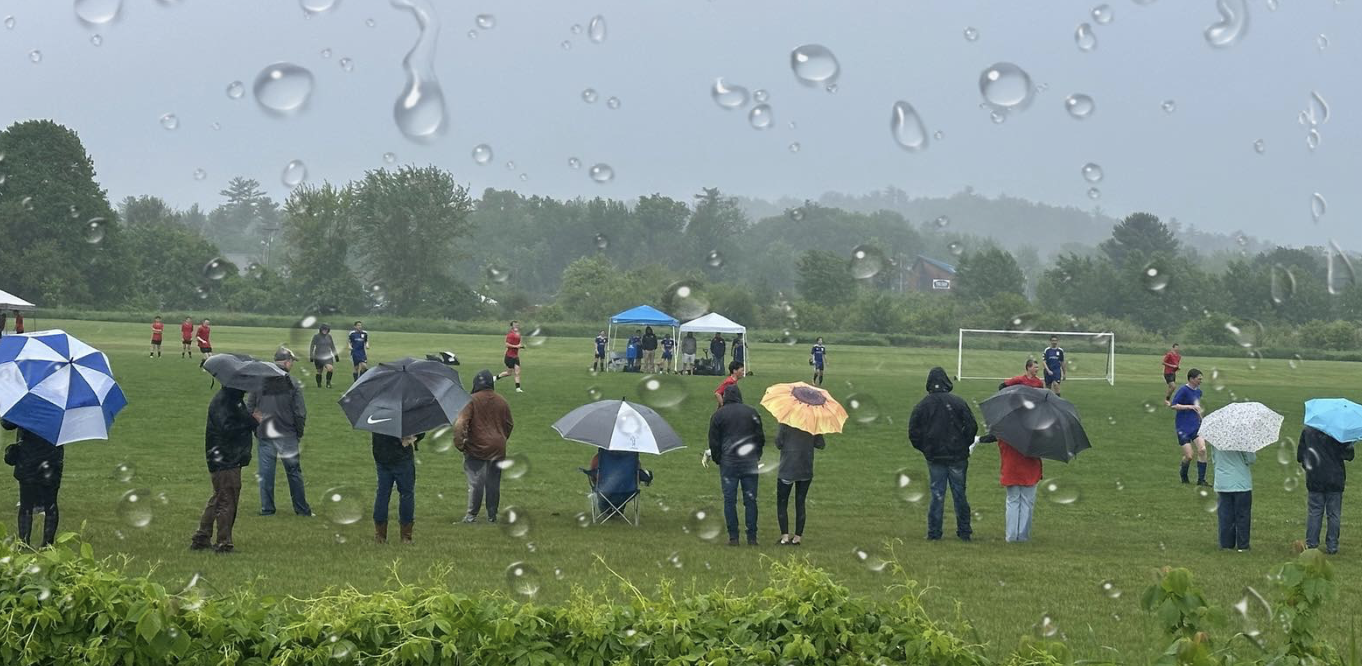
Football Deserves Better — And So Do the People Who Carry it
For more than twenty years, I’ve watched Tasmanian football grow, stall, reinvent itself, and then circle back again. The pattern has become familiar. Big ideas. Small follow-through. Endless passion. Very little communication.
Football has been part of my life for decades. I’ve spent long hours on cold sidelines, in clubrooms, at council meetings, on training grounds and at finals, alongside people who give everything to this game. The highs have been extraordinary. The frustration, at times, has been exhausting.
There are moments when it feels easier not to say anything at all. To keep your head down. To just get on with it. But there is also a truth that keeps resurfacing for me, no matter how often I try to ignore it.
We can do better.
The Weight of Being Unheard
Over the years, I’ve watched football in Tasmania flip and flop its way through strategies and decisions.
Pathways are built, abandoned, then rebuilt.
Competitions are reshaped year after year.
Promises are raised, dropped, then raised again.
Consultation processes are run, only to deliver outcomes that look nothing like what was discussed.
Participation continues to grow, while resources struggle to keep pace.
Some clubs access facilities with ease, while others beg for basics.
None of this happens in isolation. It wears people down. It makes good volunteers retreat quietly. It leaves clubs feeling invisible. And eventually, you start asking yourself a simple question.
Why is this so hard?
It shouldn’t be.
Football is the most played sport in the country. It has numbers, history, diversity and deep community roots. What it often lacks is not passion or effort, but communication, clarity, and a willingness to genuinely listen to the people doing the work.
Why Silence Isn’t Helping
I’ll be honest. I go through phases of speaking up, and then phases of saying nothing at all. Not because I stop caring, but because it can feel like shouting into the wind.
You start wondering what the point is. You question whether raising concerns changes anything, or whether it simply marks you as difficult.
Sometimes it shows up in small moments. A meeting where questions are noted but never answered. A decision announced without explanation. A season ending with more uncertainty than clarity. None of it dramatic on its own. All of it familiar.
But silence doesn’t protect football. It protects the systems that keep it stuck. It allows poor communication to continue unchecked. And it quietly tells volunteers that their experience doesn’t matter enough to be heard.
No one expects perfection. No one expects every decision to go their way. But it is not unreasonable to expect respect. To expect transparency. To expect decisions that reflect the realities faced by the people who actually run the game week to week.
That should be the baseline.
Football Is People
Football isn’t policy documents, structures or slogans.
It’s parents driving children across the city after work.
It’s coaches planning sessions late at night.
It’s referees turning up, even when they know abuse is likely.
It’s volunteers washing bibs, setting up fields, unlocking gates and locking rooms.
It’s young players dreaming big because someone once believed in them.
Football is people.
Without them, it is nothing more than grass and goalposts.
And those people deserve better.
What Comes Next
This isn’t a complaint. It’s a reflection.
Tasmanian football has everything it needs to thrive, except alignment. When communication breaks down, when lived experience is overlooked, and when silence becomes the default, progress stalls.
But it doesn’t have to stay that way.
If we listen more carefully, communicate more honestly, and value the experience that already exists within our clubs and communities, the best years of Tasmanian football don’t have to sit in the past.
They can still be ahead of us.
The real question isn’t whether football can be better.
It’s whether we are prepared to listen.