
Donald, Gianni and the Get Out of Red Card Free Card

Because for twenty years I've been telling players a red card meant a mandatory holiday.
For the best part of two decades my phone would ring.
"Vicki... surely we can appeal this?"
"It was never a red card."
"The referee got it wrong."
"There has to be something we can do."
As the contact person at South Hobart FC, my answer was always exactly the same.
"No."
"It doesn't matter whether we agree with the referee."
"A red card means an automatic one-match suspension."
End of discussion.
Sometimes they were furious.
Sometimes they thought it was unfair.
Sometimes, privately, I agreed with them.
But that was football.
Red card.
One week holiday.
See you next Saturday.
Apparently...
...not anymore.
A little background
For those who haven't been glued to the FIFA World Cup over the past week, here's the short version.
Folarin Balogun is one of the United States' key attacking players.
He was shown a red card during the Americans' Round of 32 victory over Bosnia and Herzegovina. Like every player sent off at this World Cup, everyone assumed exactly the same thing.
He would miss the next match.
The United States' next opponent?
Belgium.
The American media accepted it.
The Belgian media accepted it.
Football accepted it.
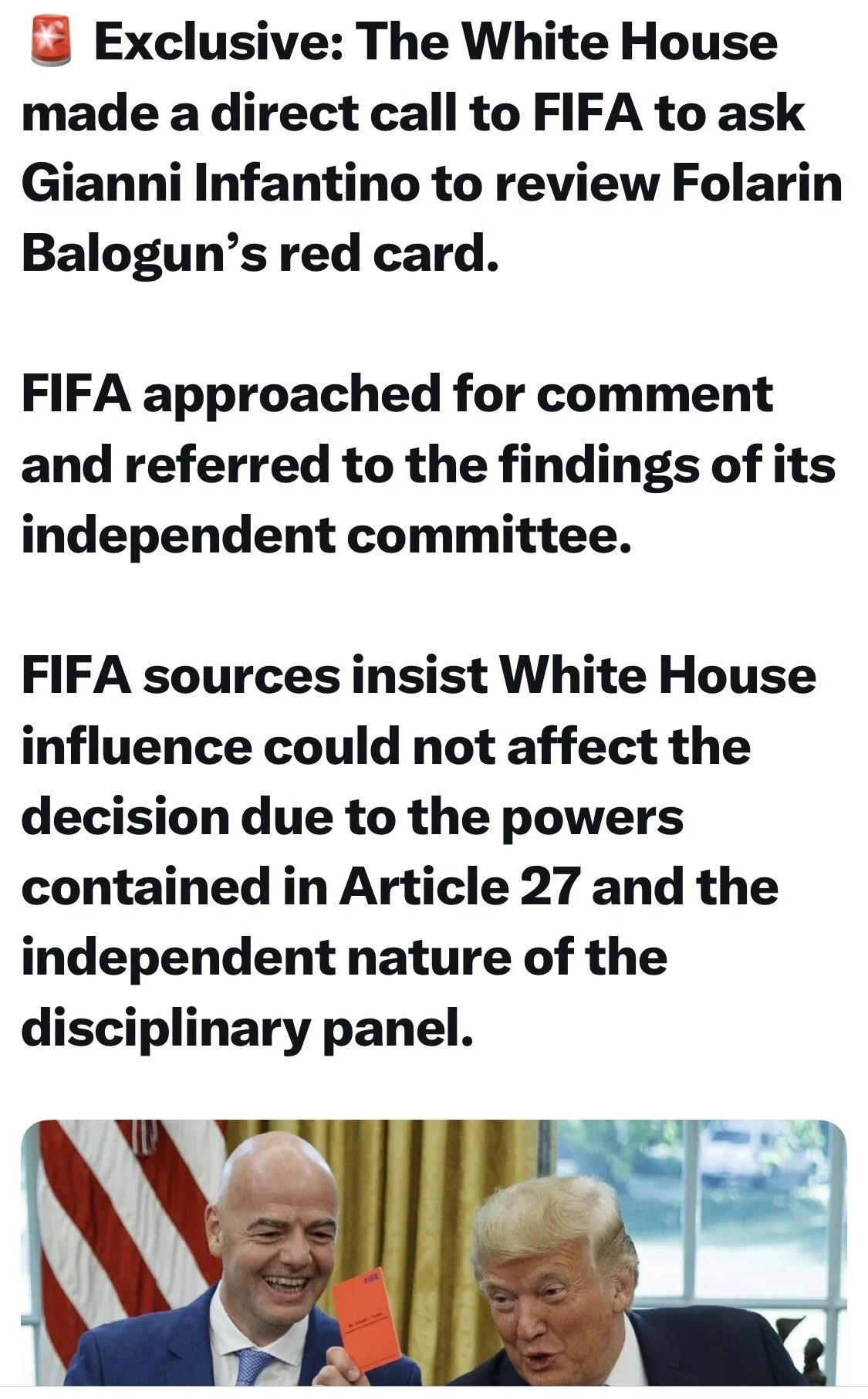
Then FIFA announced something nobody saw coming.
Using Article 27 of its Disciplinary Code, the FIFA Disciplinary Committee suspended the implementation of Balogun's suspension.
Yes...
Read that again.
The suspension...
...was suspended.
Which meant Balogun was suddenly available to play Belgium after all.
And that's when this story stopped being about one footballer and became a story about football's rule book.
Somewhere in Zurich...
Phone rings.
"Hello, Gianni speaking."
"Gianni, it's Donald."
"Oh... hello Mr President."
"I've got a little problem."
"What seems to be the issue?"
"Our striker has a red card."
"Oh dear."
"I'd like him to play."
"..."
"..."
"Leave it with me."
Before anyone rushes to the comments...
Relax.
It's satire.
But let's be honest.
Reality has become so bizarre that satire is struggling to keep up.
The FIFA Rule Book
For as long as I can remember, football has been wonderfully simple.
Red card.
Automatic suspension.
Not "maybe."
Not "subject to review."
Not "depending who you are."
Automatic.
In fact, that's exactly what FIFA's own rules say.
Article 66.4 of the FIFA Disciplinary Code states that a player sent off is automatically suspended for the team's next match.
Article 10.5 of the FIFA World Cup Competition Regulations says exactly the same thing.
FIFA Circular No. 16 reminded every competing nation of that rule before the tournament.
And the same message was reportedly reinforced at every pre-match coordination meeting.
So everyone thought they understood the rules.
Until they didn't.
Because FIFA relied on Article 27 of the Disciplinary Code to suspend the implementation of Balogun's suspension.
The suspension...
...was suspended.
If that sentence hurts your head...
You're not alone.
Belgium isn't laughing
The Royal Belgian Football Association has responded with one of the strongest statements you'll ever read during a World Cup.
They say they are "astonished."
Not disappointed.
Not concerned.
Astonished.
They argue that FIFA has contradicted both its own Disciplinary Code and its own World Cup Competition Regulations.
They point out that every federation was told before the tournament that a red card automatically resulted in a one-match suspension.
They note that the same rule was reinforced before every match.
Now they say they are investigating "all potential options" to safeguard the rights of participating teams and protect the fundamental principles of fair play.
It's hard to blame them.
Their argument is devastatingly simple.
If the suspension was automatic for every other player...
...why wasn't it automatic this time?
Dear Football Tasmania...
May I respectfully ask a question?
Can we all now begin applying to have our automatic suspensions suspended?
Should every club lodge an application after every red card?
Perhaps there needs to be a new form.
Application to Suspend My Suspension
Reason for application:
☐ I didn't mean it.
☐ The referee got it wrong.
☐ It was my first red card.
☐ Mum says I'm a good kid.
☐ I promise never to do it again.
☐ I know someone who knows someone.
☐ The White House has been informed.
I'm joking.
Mostly.
But you can see the problem.
Twenty years of getting it wrong?
How many conversations have club administrators around Australia had just like mine?
"Sorry.
Nothing we can do.
It's an automatic suspension."
How many coaches have accepted that?
How many players have served their mandatory holiday because everyone believed the rules were crystal clear?
How many clubs have never even bothered asking because they were told there was simply no avenue of appeal?
If Article 27 can now suspend an automatic suspension...
...what exactly have we all been telling players for the last twenty years?
The optics couldn't be worse
Perhaps Balogun should never have been sent off.
Many respected football people believe the referee got it wrong.
That's a perfectly legitimate football debate.
But once the red card stood...
...everyone believed the consequence was automatic.
Then came reports that the White House had contacted FIFA asking for the decision to be reviewed.
FIFA insists the decision was made independently by its Disciplinary Committee using powers available under Article 27.
I accept that's FIFA's position.
But football has another problem.
Justice doesn't just have to be done.
It has to be seen to be done.
And the optics of this are dreadful.
The host nation loses one of its key players before a knockout match.
Political interest becomes public.
The suspension disappears.
Even if everything was handled entirely properly, football was always going to have a credibility problem.
The precedent
This is bigger than one player.
Bigger than Belgium.
Bigger than the United States.
Because every federation in the world will now be asking the same questions.
Can this happen again?
What criteria were used?
Why this player?
Why now?
And perhaps the biggest question of all...
If "automatic" doesn't always mean automatic...
...is it really automatic at all?
One final thought
For twenty years, I thought I understood one of football's simplest rules.
Red card.
One-match suspension.
Apparently, I didn't.
And if someone who has spent decades helping administer one of Australia's most respected football clubs no longer knows how an "automatic suspension" works...
Imagine how every club president...
Every club secretary...
Every coach...
Every volunteer...
And every football administrator around the world feels today.
Because the next time a player receives a red card, every club president will probably ask exactly the same question.
"Is this suspension really automatic?"
Or...
"Can we ask for the suspension to be suspended?"
Perhaps the first phone call should be to Gianni.
And if that doesn't work...
Well...
Maybe someone has the White House switchboard.
Because if an automatic suspension isn't automatic anymore...
Football may have just rewritten one of its oldest and simplest rules.
And judging by Belgium's response...
This story is only just getting started.

Nominate That Woman

It's time our Hall of Fame reflected the whole story of Tasmanian football.
Like many around me, when I saw the inaugural Football Tasmania Hall of Fame announced last year, I had two immediate thoughts.
The first was congratulations.
The recipients were all worthy. Among them was my husband, Ken Morton. I couldn't have been prouder.
Ken's contribution to Tasmanian football spans more than five decades as a player, coach and developer of thousands of young footballers. His induction was richly deserved, and as a family we were incredibly proud to see him recognised.
I also want to acknowledge Matthew Rhodes, whose advocacy and determination were instrumental in making the Hall of Fame a reality. Preserving the stories of those who built our game is something football should have done years ago, and Matthew deserves enormous credit for seeing it through.
My second thought was this.
Where were the women?
I simply couldn't believe that, after more than a century of organised football in Tasmania, there weren't more women whose contribution was worthy of Hall of Fame recognition.
I've since heard that one woman may have been nominated but declined the honour. If that's the case, I respect that decision completely.
But it also made me ask another question.
Surely there were other women.
Or were there remarkable women whose stories were never put forward?
I almost didn't write this article.
Not because I don't believe what I'm about to say, but because I knew some people would immediately assume it was really about me. That somehow this was my way of saying, "Nominate me."
I wrestled with whether to leave it unwritten.
Then I realised something.
If I stayed silent because of what people might think, I'd also be staying silent about the many women whose contribution to football deserves to be recognised.
So this isn't about me.
It's about them.
Now, before anyone jumps to conclusions, let me be equally clear.
I have no idea who was nominated. I don't know what discussions took place around the selection table. It may well be that very few women were nominated.
But perhaps that's exactly the issue.
Why Aren't More Women Being Nominated?
Across Australia, women receive fewer honours than men. Those responsible for the Order of Australia have publicly acknowledged one of the reasons. Women are nominated less often.
In recent years, around 62 per cent of nominations for the Order of Australia have been for men. More interestingly, both men and women have tended to nominate men more often than women.
I don't know whether Football Tasmania faces the same challenge.
But I do know this.
Over the past two decades I've had the privilege of visiting clubs all over Tasmania. I've sat in cold committee rooms, stood on muddy sidelines, worked with associations and watched football in every corner of our state.
Along the way I've met some extraordinary women.
Not women looking for recognition. Quite the opposite.
Women who simply got on with the job because the game needed them.
I've met women who have devoted twenty, thirty and even forty years to our game.
Women who have played.
Women who have coached.
Women who have refereed.
Women who have run clubs.
Women who have led associations.
Women who have organised competitions.
Women who have built junior football.
Women who have balanced budgets, written grant applications, found sponsors, answered thousands of emails, organised rosters, welcomed new families and quietly held clubs together when no one else would.
Many of them have quietly shaped our game in ways that deserve to be remembered.
Too often, that work is described as "helping out."
It isn't.
It's leadership.
It's governance.
It's football.
Too often, football honours naturally gravitate towards the people we watched every Saturday afternoon.
The goalscorers.
The captains.
The coaches.
And they absolutely deserve to be celebrated.
But football greatness should never be judged solely by what happened on the pitch.
Football is greater than that.
It is built by players.
Coaches.
Referees.
Administrators.
Committee members.
Parents.
Volunteers.
Groundskeepers.
Registrars.
Treasurers.
Canteen managers.
The people who establish clubs.
The people who develop players.
The people who fight for better facilities.
The people who organise competitions.
The people who quietly create opportunities for others.
Without them, there is no game to celebrate.
Every great player stood on the shoulders of someone whose name rarely appeared in the headlines.
Sometimes those shoulders belonged to a woman.
If we genuinely want our Hall of Fame to tell the story of football in Tasmania, then it must tell the whole story.
Not just the story of the men who built the game.
The story of the women who built it too.
That isn't about lowering standards.
It's about recognising excellence wherever we find it.
There are women whose contribution unquestionably meets the Hall of Fame standard.
The question isn't whether they exist.
The question is whether we are nominating them.
Because honours cannot recognise the people whose names never appear on a nomination form.
The Hall of Fame Belongs to All of Us
Football Tasmania Chief Executive Officer Tony Pignata recently said there are "plenty more trailblazers and loyal servants of the football community that deserve to be recognised."
I couldn't agree more.
My hope is that among those trailblazers and loyal servants are the many remarkable women whose contribution has too often gone unnoticed.
Football Tasmania has now opened nominations for the 2026 Hall of Fame.
Community members are invited to nominate deserving individuals by outlining their contribution and impact, with nominations assessed by a panel drawn from the Tasmanian football community. Nominations close at 5.00pm on Thursday, 23 July.
A Challenge
When you finish reading this article, I want you to do one thing.
Think of one woman.
Just one.
One woman whose contribution has genuinely shaped your club, your association or football in Tasmania.
Not someone who simply volunteered.
Someone who led.
Someone who built.
Someone whose influence is still being felt today.
Tell her story.
Write the nomination.
Don't assume someone else will do it.
History remembers the names we choose to record.
Let's make sure we're recording the whole history of Tasmanian football.
Football Tasmania has opened the door.
Now it's our turn.
Let's not let another year go by asking where the women were.
Let's make sure they're nominated.
Nominate that woman.
More Than Ninety Minutes
What Australia v Egypt could mean for Australian football
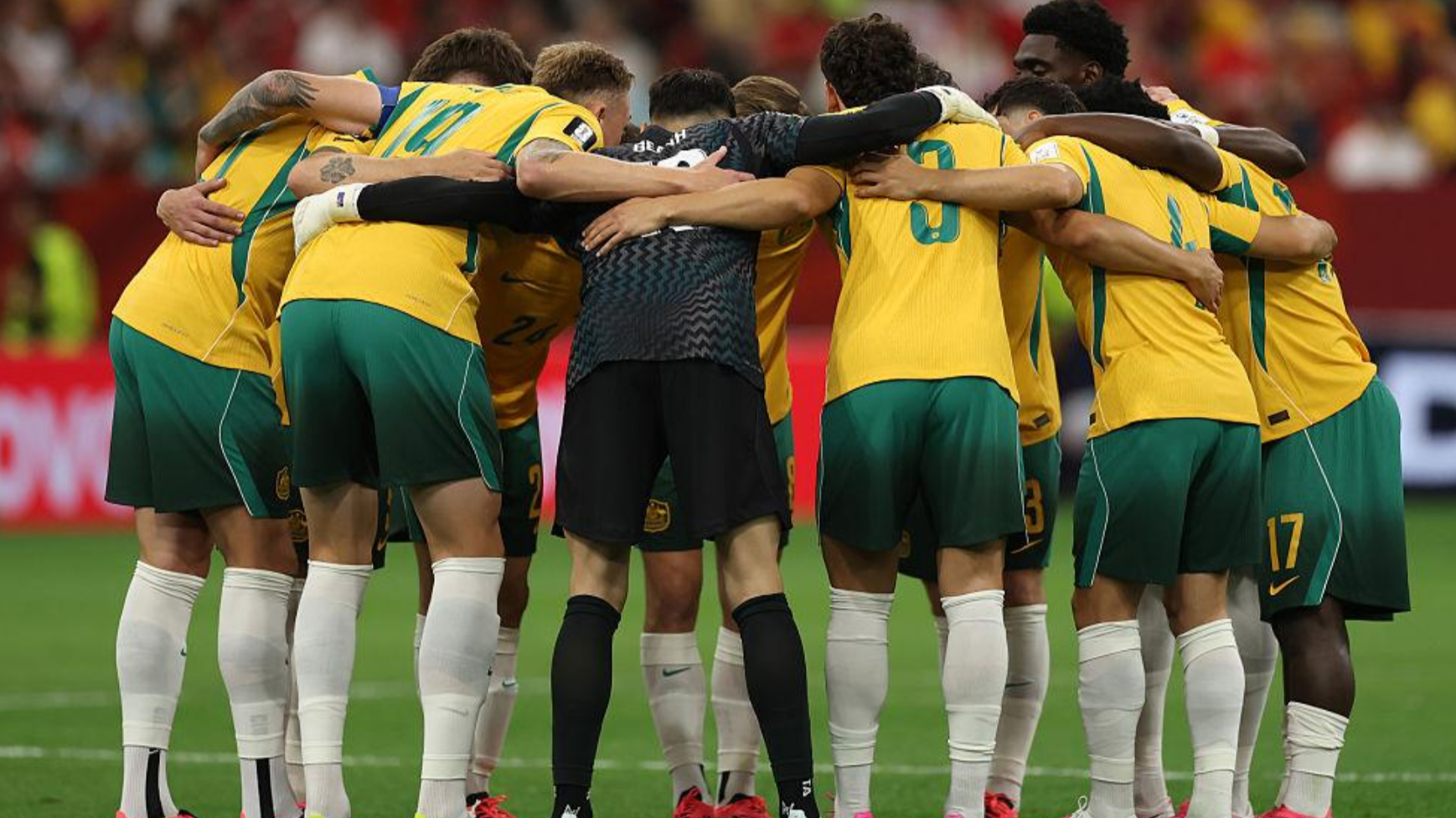
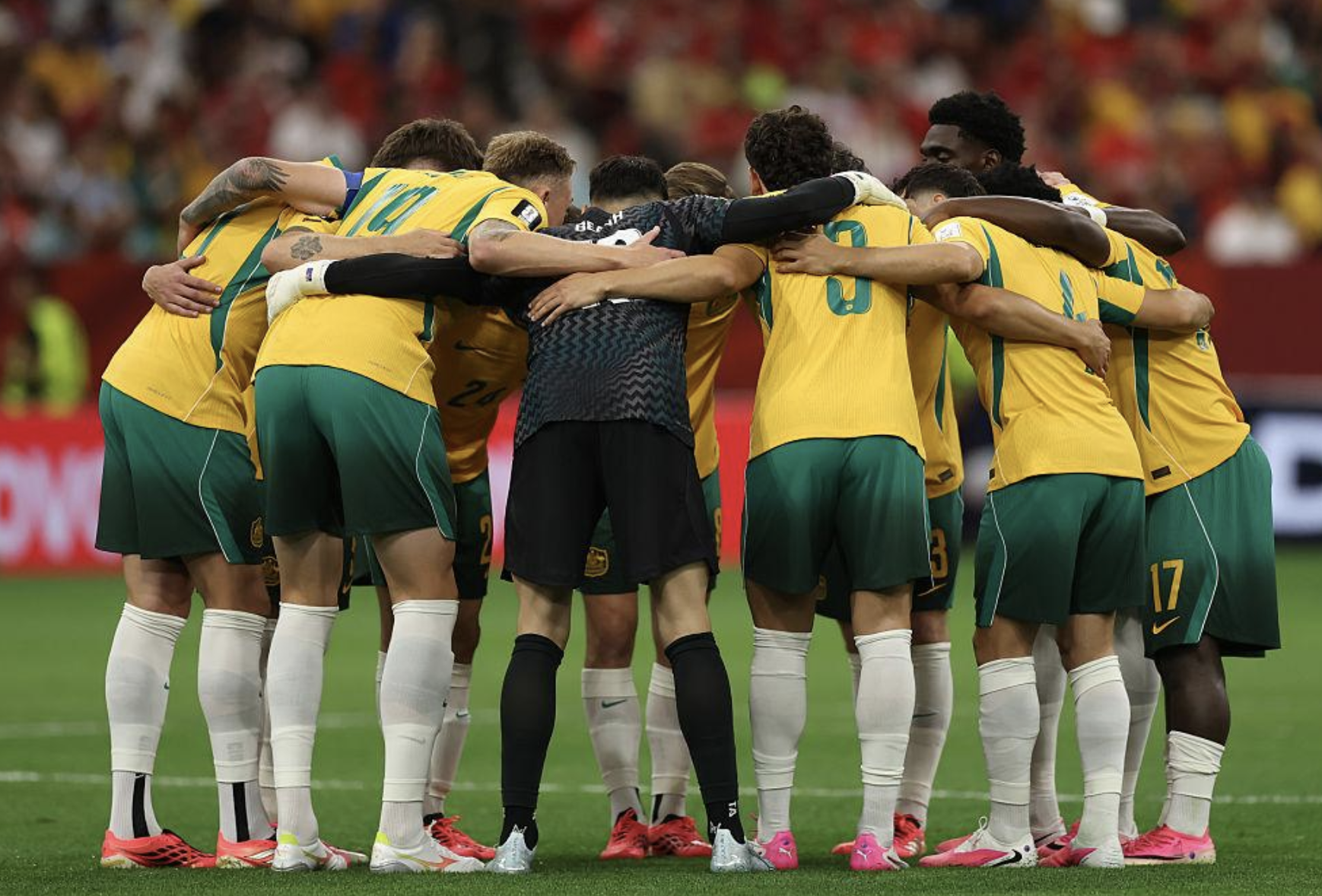
Tomorrow morning, Australia will play Egypt for a place in the FIFA World Cup Round of 16.
On paper, it is simply another football match.
In reality, it could become one of those rare sporting moments that changes how a nation feels about a game.
I've been around football long enough to know that some matches are remembered long after the score has been forgotten.
The result will determine whether the Socceroos continue their World Cup journey.
But it may also influence participation, investment, media attention and, perhaps most importantly, how Australians value football itself.
That is why this match matters.
Bigger than one result
At four o'clock tomorrow morning, millions of Australians will quietly make a choice.
Some will stay in bed.
Others will set an alarm.
Some will wander into the lounge room with a coffee, trying not to wake the family.
Pubs and clubs across the country will open before dawn. Football clubs will gather to watch together. Children will fight sleep because they don't want to miss history.
That, in itself, tells us something.
Football still has an incredible ability to bring Australians together.
Moments matter in sport.
Not just because of what happens on the scoreboard.
Because they shape memories.
They inspire children.
They create conversations in schoolyards and workplaces.
They remind us why we care.
If Australia falls short...
It will hurt.
Every World Cup campaign eventually comes to an end for all but one nation, and this Socceroos side has already earned enormous respect.
They have once again shown the resilience that has become part of Australia's football identity.
There will still be that familiar question.
What if?
What if this was the generation that could have gone one step further?
If Australia wins...
Something shifts.
Not because football suddenly becomes Australia's biggest sport.
It won't.
But success changes conversations.
The Matildas showed us that during their remarkable run in 2023.
Suddenly football dominated the national conversation.
Families who had never watched the game became emotionally invested.
Young girls and boys wanted to play.
Participation grew.
Success reaches people in ways that advertising campaigns never can.
Imagine Australia reaching the quarter finals.
Breakfast television leads with football.
The back pages belong to football.
Schools buzz with conversation.
Children recreate the winning goal at lunchtime.
Parents who barely watched football suddenly know the names of the Socceroos.
That is how sporting cultures grow.
A thank you to the Premier
One person who deserves credit this week is Premier Jeremy Rockliff.
A lifelong AFL supporter by his own admission, he recognised what this match means to thousands of Tasmanians by allowing pubs and clubs to remain open through the early hours of the morning so supporters could gather to watch together.
That was a thoughtful gesture.
It also highlights something worth considering.
If football can unite Tasmania at four o'clock on a winter's morning, perhaps it is also time to think about whether the game receives facilities that reflect the number of people who play it every weekend.
Football is not asking to be bigger than AFL.
Nor should it.
But Australia's most participated team sport deserves facilities that allow it to thrive.
If we celebrate football when the world is watching, we should also support football when thousands of volunteers and families turn up every weekend.
Every journey starts somewhere
Every Socceroo once stood on an ordinary football ground somewhere in Australia.
Before the television cameras.
Before the national anthem.
Before the professional contracts.
Long before they represented Australia, someone simply gave them the chance to play.
A coach encouraged them.
A club welcomed them.
A family believed in them.
A community became part of their journey.
That is why tomorrow morning belongs to more than the players wearing green and gold.
It belongs to every person who has helped a child fall in love with football.
International success doesn't begin in a World Cup stadium.
It begins on community grounds all over Australia.
What it means in Tasmania
Sometimes we wonder whether football matters down here.
We travel.
We fundraise.
We advocate.
We celebrate another set of lights, another upgraded pitch or another small improvement because we know how much difference it makes.
Yet tomorrow morning, Tasmania will feel exactly the same as Sydney, Melbourne and Brisbane.
For ninety minutes, the tyranny of distance disappears.
We are simply Australian football supporters.
Tomorrow morning, every one of us will hope the Socceroos take another step.
Whatever happens, football in Australia has another opportunity to show the country why this game matters so much to so many people.
More Than Ninety Minutes
Tony Popovic has spoken throughout this campaign about making history rather than simply admiring it.
Perhaps tomorrow morning the Socceroos will do exactly that.
If they lose, they will still have represented Australia with courage and pride.
If they win, Australian football may wake up just a little bit bigger than it was the day before.
And if that happens, let's make sure we do something with it.
Let's build the pitches.
Let's improve the changerooms.
Let's light the grounds.
Let's invest in the facilities that every football family deserves.
Because history is not made only in packed stadiums before millions of television viewers.
It begins on ordinary football grounds all over Australia.
And perhaps that is what tomorrow morning is really about.
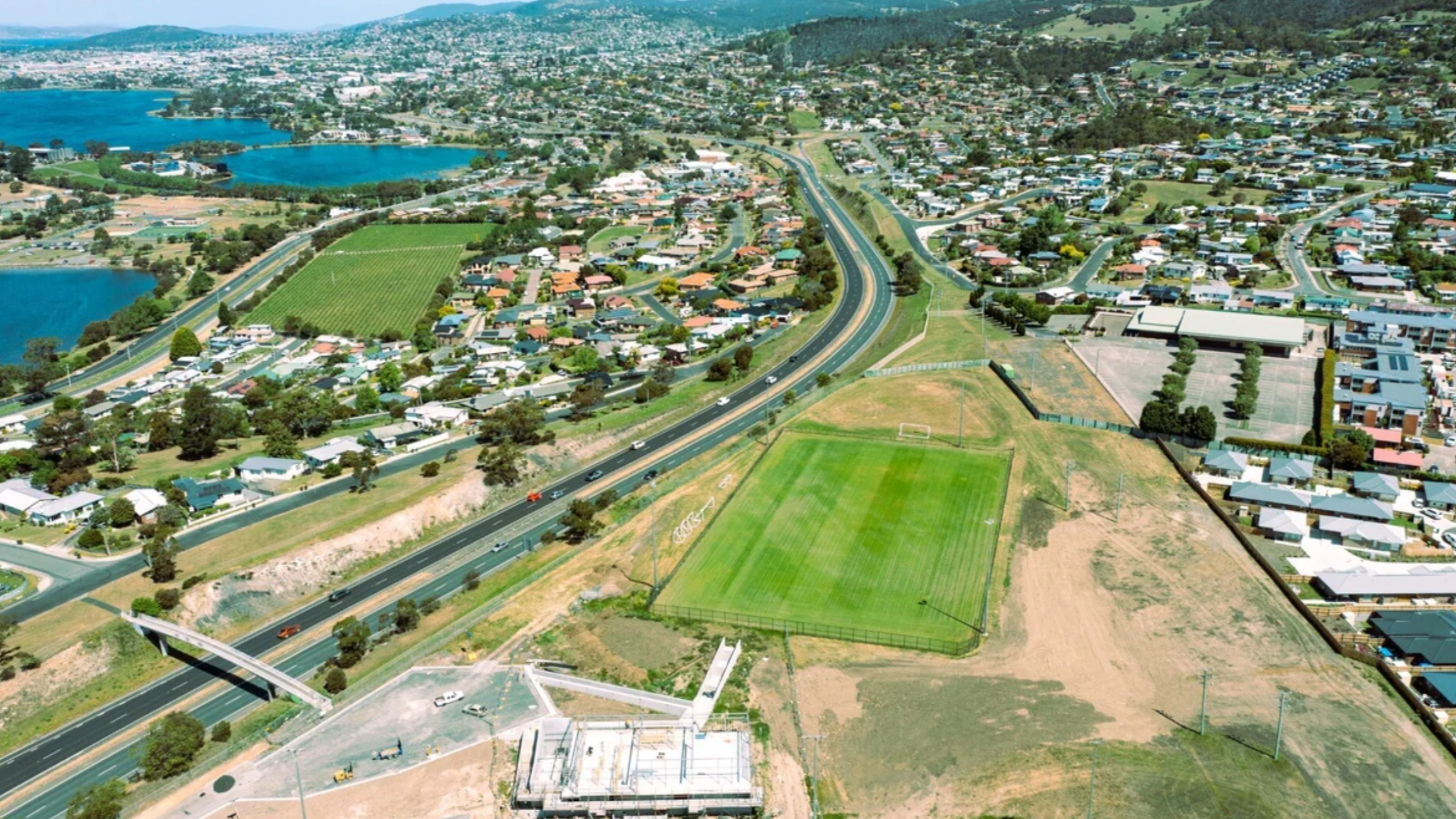
Why Metro FC Leaves Me Green with Envy

Tonight is the night.
Every now and then, you visit a football club that simply makes you smile.
For the past few years, I've been fortunate to build a wonderful relationship with Simon, Greg and Lisa at Metro FC. Through Morton's Soccer School we've trained there, the club has generously hosted Hobart Cup matches, and I've worked closely with them in my role as President of the Central Region Junior Football Association.
Every interaction has been positive.
Every visit has been enjoyable.
But I'll admit something.
Every time I drive through those gates, I'm just a little bit green with envy.
A Club I Always Enjoy Visiting
The facilities at Metro FC are simply outstanding.
Two fully lit pitches.
Spacious, modern changerooms.
A magnificent new clubhouse that has become the heart of the club.
There is room for football to breathe, to grow and to bring people together.
As someone who has spent decades around football grounds across Tasmania, I genuinely appreciate what Metro has built.
It is a facility any community club would be proud to call home.
Just a Little Green With Envy
The envy isn't about wanting what someone else has.
It's about recognising what is possible.
Every football club dreams of facilities like these.
We all want somewhere our players can develop, our volunteers can gather, our parents can enjoy a coffee and our community can feel at home.
Metro has created exactly that.
And football in Tasmania is better for it.
Who Remembers the Old Clubhouse?
Of course, it wasn't always like this.
Who remembers the old Metro clubhouse?
Golly.
Whenever I think back, I can't help but hear the Monty Python sketch.
"Luxury!"
"We used to dream of living in a corridor..."
"We lived in a shoe box in the middle of the road..."
Now, I'm not suggesting the old Metro clubhouse was quite a shoe box in the middle of the road...
...but by today's standards, it certainly feels like another era.
Yet those old facilities produced footballers.
They produced coaches.
They produced volunteers.
They produced lifelong friendships.
They produced memories that have lasted generations.
The buildings may have changed, but the spirit of the club has remained exactly the same.
The Tasmanian Tyranny of Distance

So near, and yet so far.
There is one thing that always makes me smile.
Living in Tasmania, we seem to have our own version of the tyranny of distance.
I still hear people say, "It's all the way out at North Chigwell."
Really?
North Chigwell is only about 13 kilometres from the Hobart CBD. On a normal day, it's little more than a 10 to 15-minute drive.
Sometimes we convince ourselves somewhere is a long way away simply because we don't go there very often.
The reality is that football families travel much further than that every weekend.
Parents leave the Huon before sunrise.
Families come from Sorell, the Eastern Shore, Brighton, New Norfolk and the Channel.
Compared to those journeys, North Chigwell is hardly an expedition.
And once you arrive, you'll quickly realise the drive was worth it.
It Doesn't Happen by Accident
Facilities like this don't simply appear.
They are built through vision.
Through persistence.
Through grant applications, fundraising, planning meetings, negotiations and thousands of volunteer hours that most people never see.
The ribbon cutting might last only a few minutes.
The work behind it often takes years.
It is also only fair to acknowledge Independent Federal MP Andrew Wilkie, whose support in securing Federal Government funding helped turn this vision into reality.
But funding is only the beginning.
It still takes committed club people to turn bricks and mortar into a football home.
Metro has been blessed with generations of volunteers who have done exactly that.
Everyone who has contributed to Metro FC should feel incredibly proud of what has been achieved.
Eighty Five Years of Community
This weekend isn't just about opening a wonderful new clubhouse.
It's about celebrating 85 years of football.
Think about that.
Eighty five years of players pulling on the Metro shirt.
Eighty five years of coaches giving up evenings.
Eighty five years of volunteers cooking barbecues, marking pitches, washing jerseys, serving in canteens and balancing budgets.
Clubs don't survive for 85 years by accident.
They survive because generation after generation decides they are worth fighting for.
That is something every football person can respect.
A Great Day for Tasmanian Football
Football shouldn't be jealous of facilities like Metro's.
Football should celebrate them.
Every quality facility strengthens our game.
Every successful community club raises the standard for everyone else.
Metro's new clubhouse isn't just good news for Metro FC.
It's good news for football in Tasmania.
So congratulations to everyone who has been part of the journey.
To Simon, Greg, Lisa and the many volunteers, committee members, players, coaches and families who have contributed over the years, well done.
I'm still just a little green with envy every time I visit.
But much more than that, I'm grateful that our game has another home we can all be proud of.
Happy 85th birthday, Metro FC.
Here's to the next 85 years.
Who Measures the Health of Our Clubs? I Fear Too Many Are Quietly Struggling.
There is an old saying that every organisation should know what its most important asset is.
In football, I sometimes wonder whether we've forgotten.
We spend countless hours discussing competitions.
League structures.
Promotion and relegation.
Finals.
Streaming.
Governance.
Licensing.
Scheduling.
Participation.
Referee development.
Coach education.
All of these things matter.
They should matter.
But perhaps we've forgotten to ask a much simpler question.
What is the most important part of the football ecosystem?
I would argue it isn't the competition.
It isn't the governing body.
It isn't the representative team.
It isn't even the elite pathway.
It's the football club.
Everything in our game begins there.
A five-year-old doesn't join Football Tasmania.
They don't join Football Australia.
They join a football club.
Parents don't volunteer for governing bodies.
They volunteer for clubs.
Sponsors don't invest in fixture lists.
They invest in clubs.
Children don't create lifelong football memories because of a competition structure.
They create them because of the people around them.
The coach who encourages them.
The volunteer who lines the field.
The canteen manager who knows everyone's name.
The committee member who quietly unlocks the clubhouse every Tuesday and Thursday night.
The teammate who becomes a lifelong friend.
Every Socceroo.
Every Matilda.
Every NPL player.
Every coach.
Every referee.
Every administrator.
Every volunteer.
Almost every football journey begins at a football club.
That is why I believe the health of football should never be judged solely by the strength of its competitions or governing bodies.
It should also be judged by the health of its clubs.
Are they financially sustainable?
Are volunteers still willing to put their hands up?
Are sponsors seeing value?
Are families enjoying the match-day experience?
Are committees growing stronger?
Or are clubs simply becoming better at surviving?
These aren't anti-governing body questions.
They're governance questions.
Because the role of a governing body isn't simply to administer competitions.
Surely it is also to create an environment where clubs can flourish.
Strong clubs create strong competitions.
Strong competitions strengthen governing bodies.
The flow of football has always been from the grassroots up - not from the boardroom down.
Why I'm Writing This
Those thoughts were already in my mind this week when I received an email from someone heavily involved in running a football club.
It wasn't written for publication.
It wasn't intended to make headlines.
It was simply an honest reflection on the pressures they believe their club is facing.
Their identity will remain confidential because this article isn't about one club.
It's about a much bigger issue.
As I read their words I couldn't help wondering how many presidents, treasurers, committee members and volunteers across Tasmania would quietly nod their heads.
Not because every club faces exactly the same challenges.
But because many are probably confronting similar ones.
Increasing costs.
The constant search for sponsors.
More administration.
More compliance.
More travel.
Fewer volunteers.
Trying to remain competitive while balancing a budget that never seems quite large enough.
The email wasn't angry.
It wasn't political.
It wasn't looking for sympathy.
It was simply the honest thoughts of someone trying to keep a football club healthy.
And it made me stop and ask myself a question.
If clubs are the foundation of football...
Who is measuring their health?
Football's Hidden Economy
Most supporters see ninety minutes of football.
Club committees see everything else.
They see the invoices.
The insurance.
The electricity bills.
The travel costs.
The equipment that needs replacing.
The ground hire.
The fundraising.
The sponsorship meetings.
The grant applications.
The rosters.
The volunteers who ring at 7.00am to say they can't make it.
The search for someone else to cook the barbecue.
Football has a hidden economy.
Thousands upon thousands of volunteer hours.
Hours that never appear on a balance sheet.
Hours freely given because people love their football club.
That goodwill has carried football for generations.
But goodwill is not an unlimited resource.
Nine Home Games
For clubs competing in the NPL, there are only nine home games.
Nine opportunities to generate gate income.
Nine opportunities to welcome sponsors.
Nine opportunities to sell food and drinks.
Nine opportunities to showcase the club to its community.
Those weekends matter.
Lose one to poor weather.
Lose another to a rescheduled midweek fixture.
Lose another because supporters don't know when the game is on.
Suddenly opportunities become very limited.
Many clubs rely on those match days to help fund everything else they do.
When attendance falls, the impact extends well beyond the gate.
The canteen feels it.
The bar feels it.
Sponsors notice it.
The entire club feels it.
Has The Club Day Changed?
I wonder whether we've quietly lost something that once made football clubs special.
There was a time when multiple teams from the same club played at the same venue.
Families arrived early.
Players stayed after their own game.
Parents watched older age groups.
Senior players watched juniors.
Juniors stayed to watch the first team.
The clubhouse remained busy.
Children kicked footballs around between games.
People belonged.
Today that experience is becoming harder to create.
It isn't unusual for one club to have teams spread across multiple venues and sometimes multiple cities on the same weekend.
Nobody intended to weaken the traditional club day.
But perhaps that has become one of the unintended consequences.
Volunteers Are Football's Greatest Asset
Every year volunteers are asked to do more.
Safeguarding.
Governance.
Licensing.
Reporting.
Digital systems.
Compliance.
Risk management.
Every one of those requirements exists for a good reason.
This isn't an argument against standards.
Football should have high standards.
But volunteers don't experience these requirements one at a time.
They experience the cumulative weight of all of them.
Another form.
Another deadline.
Another meeting.
Another policy.
Another online module.
Another audit.
Eventually every volunteer asks themselves the same question.
"How much more can I realistically do?"
That should concern every single person who loves football.
Because volunteers don't usually resign dramatically.
They simply stop volunteering.
And when they do, replacing them becomes one of the hardest jobs in football.
A Licence Fee Is Not A Health Check
Perhaps this is the question that troubles me most.
Every year clubs pay their licence fees.
They complete the paperwork.
They satisfy the compliance requirements.
They meet the standards expected to participate.
This year many also absorbed an increase in licence fees.
From the outside everything appears healthy.
The fee has been paid.
The boxes have been ticked.
The licence has been granted.
But is the club actually healthy?
That's a completely different question.
Is the treasurer lying awake wondering how the next bill will be paid?
Are volunteers burning out?
Has sponsorship become harder to secure?
Are committees getting smaller?
Are gate receipts falling?
Is the canteen generating the income it once did?
A club can be fully compliant and quietly dying at the same time.
Paying a licence fee proves only one thing.
It proves a club has managed to pay a licence fee.
It tells us nothing about the financial or operational health of the organisation behind it.
Sometimes it feels as though the relationship between governing body and club has become increasingly centred on compliance.
Whether intended or not, the cumulative effect is that many clubs feel they are spending more time satisfying the system than strengthening their football community.
That perception alone should concern us.
Participation in the NPL and WSL should absolutely require high standards.
Nobody is arguing otherwise.
But there is an important difference between setting standards with clubs and simply placing obligations on clubs.
The strongest sporting systems don't simply regulate their clubs.
They strengthen them.
They don't just ask:
"Have you met the standard?"
They also ask:
"What can we do to help you succeed?"
That is what genuine partnership looks like.
Because the success of a governing body can never be separated from the success of its clubs.
Who Measures The Health Of Our Clubs?
Football measures many things.
Participation.
Coach education.
Referee numbers.
Registrations.
Safeguarding.
Facilities.
Governance.
Licensing.
All of these are important.
But who measures whether clubs themselves are becoming stronger?
Do we know if sponsorship is increasing or declining?
Do we know whether volunteers are staying or walking away?
Do we know whether clubs are financially healthier today than they were five years ago?
Do we know whether committees are finding it easier or harder to recruit volunteers?
I don't have those answers.
Perhaps that's part of the problem.
If we aren't measuring them, how do we know whether our reforms are achieving what they were intended to achieve?
Good governance isn't simply introducing change.
It is evaluating whether that change is strengthening the game.
Football has become very good at measuring compliance.
I'm not sure we've become equally good at measuring sustainability.
And What About Our Associations?
While this article has focused largely on clubs, the same questions should also be asked of our regional associations.
They too rely heavily on volunteers.
They coordinate thousands of matches every season.
They support hundreds of teams and volunteers.
They solve problems that most people never see.
Much of that work is carried out quietly, behind the scenes, by people who simply care about football.
If clubs are the heartbeat of football, then associations are its circulatory system.
Both need to be healthy if the game is to thrive.
The Conversation We Need
This article isn't about blaming Football Tasmania.
Nor is it about suggesting that every reform has been wrong.
Many changes have improved our game.
Higher standards matter.
Better governance matters.
Safeguarding matters.
Coach education matters.
Live streaming has brought enormous benefits.
But perhaps it is time to ask one more question alongside all of those.
Are our clubs becoming stronger?
Because if the answer is no, then we owe it to ourselves to understand why.
For twenty years I have watched football from almost every angle imaginable.
As a parent.
A volunteer.
A club administrator.
A board member.
An association president.
One thing has never changed.
Football has always been built from the grassroots up.
Every player.
Every coach.
Every referee.
Every volunteer.
Every administrator.
Almost every football journey begins at a football club.
If we ever lose sight of that, we risk measuring the success of our game by the wrong things.
The true health of football isn't found in a strategic plan.
It isn't found in a licensing document.
It isn't found in a compliance checklist.
It is found on a cold Tuesday night when volunteers unlock the gates, coaches put out the cones, parents arrive with children full of excitement and another generation falls in love with football.
Protect the clubs.
Support the associations.
Strengthen the volunteers.
If we get those things right, football will look after itself.

When "Mid-Season" Isn't Really Mid-Season

Today, at 5.00pm, Tasmania's transfer window closes.
Normally, that wouldn't be particularly remarkable.
Transfer windows close all over the football world.
But Tasmania isn't like most football competitions.
Some clubs now have only five league matches remaining.
Others have six.
A couple have seven because of games in hand.
Which made me stop and ask a very simple question.
In what world is that "mid-season"?
Tasmania Isn't England
Transfer windows weren't invented for Tasmania.
They were introduced to provide stability to football competitions by limiting when clubs can register players during the season.
That makes perfect sense.
But most football leagues are much longer than ours.
England plays 38 league matches.
Spain plays 38.
Italy plays 38.
Germany plays 34.
Major League Soccer plays around 34.
Even Australia's A-League Men now plays a 26-match regular season before its finals series.
Tasmania?
Eighteen.
That changes everything.
The Brutal Mathematics
Let's strip it back to the numbers.
Ten clubs.
Eighteen rounds.
Five finalists.
Two clubs relegated.
Now look at what that actually means.
50% of clubs qualify for the finals.
20% are relegated.
Only 30% simply finish where they finish.
Stop and think about that.
Seventy per cent of the competition either celebrates or suffers because of the way the competition is structured.
That's not criticism.
That's mathematics.
There Is No Time
An 18-round season offers a maximum of 54 points.
Lose your opening three matches...
...and you've already surrendered 16.7% of every point available for the entire season.
There isn't time to build slowly.
There isn't time to quietly recover.
There isn't time to "come good after the break."
Every point becomes magnified.
Every mistake becomes more costly.
Every decision carries greater weight.
You either hit the ground running...
...or you spend the rest of the year chasing.
The Scramble
Just look at today's ladder.
South Hobart is chasing the Premiership.
Kingborough Lions, Devonport City and Launceston City are trying to reel them in.
Riverside Olympic currently occupies fifth place.
Clarence Zebras, Glenorchy Knights and South East United are all trying to force their way into the finals.
Meanwhile, Launceston United and Ulverstone are fighting for survival.
Every point matters.
Every goal matters.
Every injury matters.
Every suspension matters.
Every signing matters.
That is exactly what promotion and relegation should create.
I absolutely love that.
But then we arrive at today.
The transfer window closes.
For some clubs there are only five league matches remaining.
That isn't the middle of the season.
That's the run home.
Then There's The Finals
This is where I start asking even more questions.
What is the purpose of the finals series?
Not because I'm against finals.
Because I genuinely want to understand the philosophy.
Football has traditionally been beautifully simple.
You play everyone.
Home and away.
Finish first.
You're champions.
Cup competitions provide the knockout football.
Australia has largely chosen a different path.
Finish first and you're the Premiers.
Win the finals series and you're the Champions.
That's a perfectly legitimate model.
But is it the right model for a ten-team competition lasting only eighteen rounds?
Or have we simply adopted finals because that's what Australian sport does?
The Birthday Party
Then another thought popped into my head.
Maybe it's just me...
...but sometimes I wonder whether we've become just a little too generous.
Half the competition plays finals.
Twenty per cent gets relegated.
Only three clubs simply finish where they finish.
It almost feels like the football equivalent of a five-year-old's birthday party where everyone goes home with a prize.
Before anyone rushes to the comments...
Yes, I'm being deliberately provocative.
But beneath the cheeky analogy sits a serious question.
What is the purpose of a five-team finals series in a ten-team, eighteen-round competition?
What problem is it solving?
Is it about excitement?
More meaningful matches?
Commercial value?
More football?
Or something else entirely?
I'd genuinely like to know.
One Competition Or A Collection Of Ideas?
Football people often debate promotion.
Or relegation.
Or finals.
Or transfer windows.
As though they're separate conversations.
They're not.
They're all connected.
An eighteen-round season.
Five finalists.
Two relegated.
A transfer window that closes with only five to seven league matches remaining.
Has anyone ever stood back and asked whether all of those pieces actually fit together?
Or have we gradually assembled a competition one decision at a time?
Good Design Starts With A Philosophy
Good competition structures don't happen by accident.
They're designed.
Every decision changes another part of the competition.
The length of the season.
The transfer window.
Promotion and relegation.
The number of finalists.
Prize money.
Scheduling.
Everything is connected.
And every design should begin with a philosophy.
I'm simply asking...
What is Tasmania's philosophy?
I'd Genuinely Like To Know
I've written before about Tasmania's eighteen-round competition.
Today's transfer deadline simply brought those questions flooding back.
Who designed this model?
What problem was it trying to solve?
Why eighteen rounds?
Why five finalists?
Why two relegated?
Why does "mid-season" arrive when, for some clubs, the finish line is already in sight?
Perhaps there are excellent answers.
If there are, I'd genuinely like to hear them.
Because competition structures shouldn't exist simply because they've always existed.
They should exist because they are the best structure for the football we're trying to produce.
And if we were designing Tasmania's premier football competition from a blank sheet of paper today...
Would we really build exactly this?
Or would we start by asking a different question?
What sort of football competition are we actually trying to create?

England Wrote the Rules. The World Wrote the Story.

Photo: Al Jazeera
Ken stayed in bed.
I didn't.
Seven minutes into England's Round of 32 match against DR Congo, my television told me everything I needed to know.
DR Congo 1.
England 0.
"It ain't coming home," I announced to an empty lounge room.
It's become a bit of a tradition in our house.
Whenever England wobble at a major tournament, I can't help myself.
"It ain't coming home."
Harry Kane had other ideas.
England recovered to win 2-1 and, for another few days at least, the dream lives on.
But as I watched the match unfold, I realised I had been asking the wrong question.
Perhaps the question isn't whether football is coming home.
Perhaps it is whether it ever really belonged to just one home in the first place.
England's Burden
No football nation carries expectation quite like England.
Every World Cup arrives with memories of 1966.
Every tournament is viewed through the lens of history.
Every victory fuels belief.
Every setback invites national soul-searching.
The tabloids sharpen their headlines.
The broadsheets sharpen their analysis.
Managers are dissected.
Players are scrutinised.
By breakfast, England's performance has become a national conversation.
England doesn't just carry expectation.
It carries ownership.
Every World Cup feels like another opportunity to reclaim something it believes began with it.
That is the burden of being the nation that codified the modern game.
England doesn't just play the opposition.
It plays history.
It plays expectation.
It plays a song that has become famous around the football world.
The Wrong Story
England survived.
Harry Kane delivered.
Thomas Tuchel lives to fight another day.
That will dominate the headlines.
Every country watches the World Cup.
England watches England.
But I am not convinced England's victory is the most interesting football story.
The more interesting story is this:
DR Congo scored after seven minutes and pushed one of the world's traditional football powers all the way.
Twenty or thirty years ago, many people would have described that as one of the great World Cup shocks.
Today?
I am not sure it even qualifies as a surprise.
The Numbers Tell Their Own Story
If England's comeback felt like a narrow escape, perhaps that tells us more about modern football than it does about England.
Consider a few numbers.
DR Congo had not appeared at a World Cup for 52 years.
Before this tournament, their only previous appearance was in 1974 as Zaire, when they lost all three matches without scoring a goal.
This year they returned, drew with Portugal, defeated Uzbekistan to reach the knockout stages for the first time, and then took the lead against England after just seven minutes.
Fifty-two years ago, DR Congo came to the World Cup hoping to belong.
This year, they came expecting to compete.
There is a world of difference between those two ambitions.
African football isn't rising anymore.
It has arrived.
This is no longer a collection of isolated upsets.
It reflects decades of investment in coaching, academies, player development and belief.
Japan's story is just as compelling.
Once considered outsiders, they are now expected to compete.
Their players are scattered across Europe's biggest leagues, and victories over traditional powers are no longer treated as miracles but as genuine possibilities.
The gap has not disappeared.
But it has narrowed.
And every World Cup seems to narrow it a little more.
While England Looked Back, The World Looked Forward
England gave us the modern laws of football.
That contribution can never be overstated.
When football spread around the world, it didn't simply copy England.
It evolved.
Every nation added something of its own.
England codified the game.
Scotland taught it to pass.
Uruguay gave it a World Cup.
Italy made defending an art.
Brazil made it beautiful.
The Netherlands reinvented movement.
Germany made excellence routine.
Spain made possession irresistible.
Argentina made football poetry.
France demonstrated the strength of a modern multicultural football nation.
Japan showed what patience, planning and technical excellence could achieve.
Asian football continues to close the gap.
Morocco inspired a continent.
African football is writing the next chapter.
Football Belongs Everywhere
None of this diminishes England's contribution.
The modern game still owes an enormous debt to England.
The Premier League remains one of the world's great competitions.
English clubs attract the best players, coaches and supporters from every continent, and English football continues to shape how the game is played and consumed around the world.
England never stopped contributing.
It simply stopped being the only nation shaping football's future.
The English media will rightly celebrate Harry Kane.
They'll analyse England's performance.
They'll debate whether this was a warning or a turning point.
But perhaps they'll spend less time asking how DR Congo became good enough to make England work so desperately for victory.
That, to me, is one of the defining stories of modern football.
England exported football.
The world imported it.
Then it started making improvements.
England gave the world football.
The world said, "Thank you."
Football isn't trying to come home.
It found millions of homes a long time ago.
In Rio.
In Buenos Aires.
In Tokyo.
In Casablanca.
In Kinshasa.
In Sydney.
In Hobart.
And yes...
In England too.

More Than a Visa Player

Photo courtesy of the Mercury 2018
Every transfer window, football clubs receive hopeful emails from players around the world. Behind every highlight reel lies a much bigger question than "Can he play?" Sometimes, if you're very lucky, the answer changes your club forever.
Today’s inspiration came from an email I received overnight.
It landed in my inbox from a young Norwegian striker looking for an opportunity in Australia.
It was beautifully presented.
A professional football CV.
Highlight videos.
Statistics.
References.
An agent.
Photos alongside Erling Haaland and other talented Norwegian footballers from their junior days.
It was exactly the sort of application football clubs receive during every transfer window.
As I read it, I found myself smiling.
Not because I knew whether the player was good enough.
The truth is, I had absolutely no idea.
Instead, it reminded me of the hundreds of similar emails that landed in my inbox during my years as President of South Hobart.
Every one of them was asking the same question.
"Will you give me a chance?"
The Sales Pitch
There is absolutely nothing wrong with those emails.
In fact, if I were trying to build a football career on the other side of the world, I'd probably do exactly the same.
The transfer window is just as busy for agents as it is for clubs.
Their job is to create opportunities for their players.
They are selling potential.
Every highlight video shows the best moments.
Every CV lists achievements.
Every reference comes from someone who believes in the player.
That's exactly as it should be.
But a football club has a very different job.
The club isn't buying a product.
It's welcoming a person.
Someone who will spend every day with teammates.
Someone who will represent your badge.
Someone who may become a role model for your youngest players.
The club's job isn't simply to ask,
"Can he play?"
It's to ask,
"Will he make our club better?"
The Three-Minute Superstar
A three-minute highlight reel can make almost anyone look outstanding.
Goals.
Skills.
Perfect passes.
Great tackles.
What it doesn't show are the other eighty-seven minutes.
Does the player work for the team?
How do they react when things aren't going well?
Do they train hard?
Will they embrace the club?
Will they respect the volunteers?
Will they be happy living on the other side of the world?
Football clubs aren't simply recruiting footballers.
They're inviting someone into their culture.
The Real Cost
Supporters often ask why clubs don't simply sign more overseas players.
The answer is that the player's wage is only part of the story.
There are flights.
Visas.
Accommodation.
Transport.
Insurance.
Finding employment.
Helping someone settle into a new country.
At community and semi-professional clubs, those responsibilities rarely belong to paid staff.
They belong to volunteers.
Over the years, Ken and I have collected players from airports.
Helped them find somewhere to live.
Introduced them to employers.
Helped them open bank accounts.
Invited them into our home for meals.
Sometimes they arrived knowing nobody in Tasmania.
Sometimes they spent Christmas on the other side of the world, thousands of kilometres from their own families.
That's what football clubs do.
You don't simply recruit a player.
You welcome a person.
Sometimes Football Finds You
Not every overseas player arrived through an agent.
Sometimes football found us instead.
A backpacker travelling through Tasmania would hear about the club and ask if they could train.
Someone on a working holiday visa would simply want somewhere to play while they were here.
No polished CV.
No glossy sales pitch.
Just a footballer asking for a chance.
Sometimes they stayed for a few weeks.
Sometimes a season.
And every now and then...
...you hit the jackpot.
Ken's Test
Ken has always had a very simple philosophy when it came to recruiting overseas players.
"Is he better than what we've already got?"
Then came the second question.
"Is he better than one of the young players we've spent years developing?"
They're fair questions.
Every visa player takes a place in your squad.
Every visa player requires more work.
More organisation.
More responsibility.
More volunteer time.
If they aren't genuinely going to improve the team, or raise the standards around them, why wouldn't you invest that same time and energy into a young player you've developed yourself?
That never meant we were against overseas players.
Far from it.
It simply meant the benchmark had to be high.
More Than Talent
Football is funny like that.
One player can change the personality of an entire dressing room.
The right person raises standards without saying very much.
They train well.
They encourage teammates.
They make younger players want to improve.
Their enthusiasm becomes contagious.
Unfortunately, the opposite can also be true.
One player with a poor attitude can drain the energy from an entire squad.
They don't just affect their own performances.
They affect everyone around them.
That's why recruiting overseas players has never simply been about ability.
Character matters just as much.
Perhaps more.
Because when you bring someone halfway around the world, you're not just adding another footballer.
You're helping shape the culture of your club.
Then There Was Renato
Every now and then, though, you got it right.
One of those players for us was Renato De Vecchi.
Renato arrived in Tasmania in 2018 having already played professionally in Brazil, Croatia, Denmark, Northern Ireland and Sweden.
On paper, he looked like an exciting signing.
On the pitch, he was even better.
He scored goals.
He created goals.
But statistics never really explained what made him special.
There was style in everything he did.
Every touch carried confidence.
Every time he received the ball, you sensed something might happen.
It didn't take long before Renato became one of those players people looked forward to watching.
But if that was all he had brought, I don't think I'd still be writing about him today.
What made Renato such a successful signing wasn't just his football.
He embraced the club.
He respected the volunteers.
He connected with teammates.
He became part of the South Hobart family.
Years later, I read that another club had described him as someone who would be a role model for younger players.
I smiled when I saw that.
That was exactly the Renato we knew.
He proved something we've always believed.
The best visa players don't simply improve your first team.
They improve your club.
The Next Email
Every transfer window another email would arrive.
Another striker.
Another midfielder.
Another beautifully prepared application.
Another dream.
Some would never come to Tasmania.
Some would stay only briefly.
A few would become very good footballers.
And every now and then one would become something much more than that.
Supporters only ever see the player running onto the pitch.
They rarely see the emails.
The research.
The phone calls.
The uncertainty.
The airport pickups.
The meals around the family table.
The volunteers quietly helping someone build a life in Tasmania.
Every transfer window was a gamble.
Somewhere in that pile of emails might be the next great goalscorer.
Somewhere might be a player who never settles.
Somewhere might be a player who changes the personality of your club.
You never really know.
That's why, after all these years, I came to one simple conclusion.
Agents sell opportunity.
Football clubs recruit people.
Because the very best visa players don't just score goals.
They leave your club stronger than they found it.
And every now and then...
...if you're very fortunate...
...you find a Renato.

What Principles Determine Football Tasmania's Financial Settings?

Sometimes Football Gives You Questions
One of the unexpected joys of writing over the past six months has been discovering that I enjoy asking questions as much as offering opinions.
Sometimes football gives you answers.
Sometimes it simply gives you better questions.
This week, while researching an entirely different topic, I stumbled across two Football Tasmania memorandums.
One outlined Championship entry fees and prize money.
The other explained referee charges for the 2026 season.
I found myself reading them side by side.
By the time I finished, I wasn't thinking about the numbers.
I was thinking about the principles.
Why I've Narrowed The Focus
Before anyone asks why I haven't included the National Premier League or Women's Super League, it's because those competitions operate under different financial arrangements.
The NPL and WSL are governed by participation agreements and licence fees that create a very different financial model.
Rather than comparing competitions with different funding structures, I've deliberately focused on the men's and women's Championship competitions, where the comparisons are much clearer.
A Conversation I Remember
Reading the referee memorandum reminded me of a Football Tasmania Presidents' meeting from years ago.
I remember asking a fairly simple question.
"If I was a referee, and one appointment paid more than another, why wouldn't I naturally prefer the higher-paying game?"
I also remember there being an explanation.
The problem is...
I can't remember what it was.
Perhaps it was a perfectly sound reason.
If so, I'd genuinely like to understand it again.
The Numbers
Looking only at the Championship competitions, the published financial settings are different.
Entry Fees
Men's Championship: $2,795
Women's Championship: $1,830
Prize Money
Men's Championship
Winners: $4,000
Runners-up: $2,000
Women's Championship
Winners: $3,000
Runners-up: $1,000
Referee Payments
Men's Championship
Referee: $141
Assistant Referee: $69
Women's Championship
Referee: $107
Assistant Referee: $58
These are simply the published figures.
On their own, they don't tell us whether the decisions are right or wrong.
They simply raise a question.
One Thing That Caught My Eye
Interestingly, Men's and Women's Social League matches attract the same referee payments.
So Football Tasmania already applies equal referee remuneration in those competitions.
The different financial settings appear in the Championship competitions.
That made me curious.
What principle changes between those levels?
A Good Example Of Transparency
One thing I genuinely liked was the referee memorandum itself.
It didn't simply announce that referee charges were increasing by five per cent.
It explained why.
Football Tasmania outlined growth in referee numbers, improved match coverage across the state, increased investment in referee development and the decision to increase referee remuneration.
Whether clubs agreed or disagreed with the increase wasn't really the point.
The reasoning was there for everyone to understand.
To me, that's good governance.
So What Are The Principles?
That naturally led me back to the Championship figures.
Are entry fees, prize money and referee remuneration all based on the same underlying principles?
Or does each have its own rationale?
Are the figures based on participation numbers?
Competition costs?
Revenue generated?
Historical arrangements?
Strategic investment?
Referee experience?
Appointment criteria?
Or something else entirely?
There may be perfectly sound reasons.
There may be several.
I simply don't know.
Why It Matters
This isn't really an article about four thousand dollars versus three thousand dollars.
Nor is it an argument that every figure should automatically be identical.
Football is more complex than that.
Competitions cost different amounts to administer.
Different competitions may generate different revenue.
Strategic investment decisions have to be made.
I understand all of that.
What interests me is understanding the principles.
Transparency doesn't require everyone to agree with every decision.
It simply helps everyone understand how the decision was reached.
Once the principles are understood, clubs and the wider football community can have informed discussions.
Without them, we're left guessing.
A Genuine Question
Football Tasmania has invested considerable effort into growing the women's game.
Participation continues to increase, and that's something the football community should celebrate.
Against that backdrop, I think it's reasonable to ask how the financial settings for the men's and women's Championship competitions are determined.
This isn't an accusation.
It isn't a criticism.
It's simply a governance question.
What principles determine Championship entry fees, prize money and referee remuneration?
I'd genuinely be interested in hearing the answer.
Because good governance isn't just about publishing the numbers.
It's also about helping the football community understand the thinking behind them.
A Coaching Licence Can't Teach This
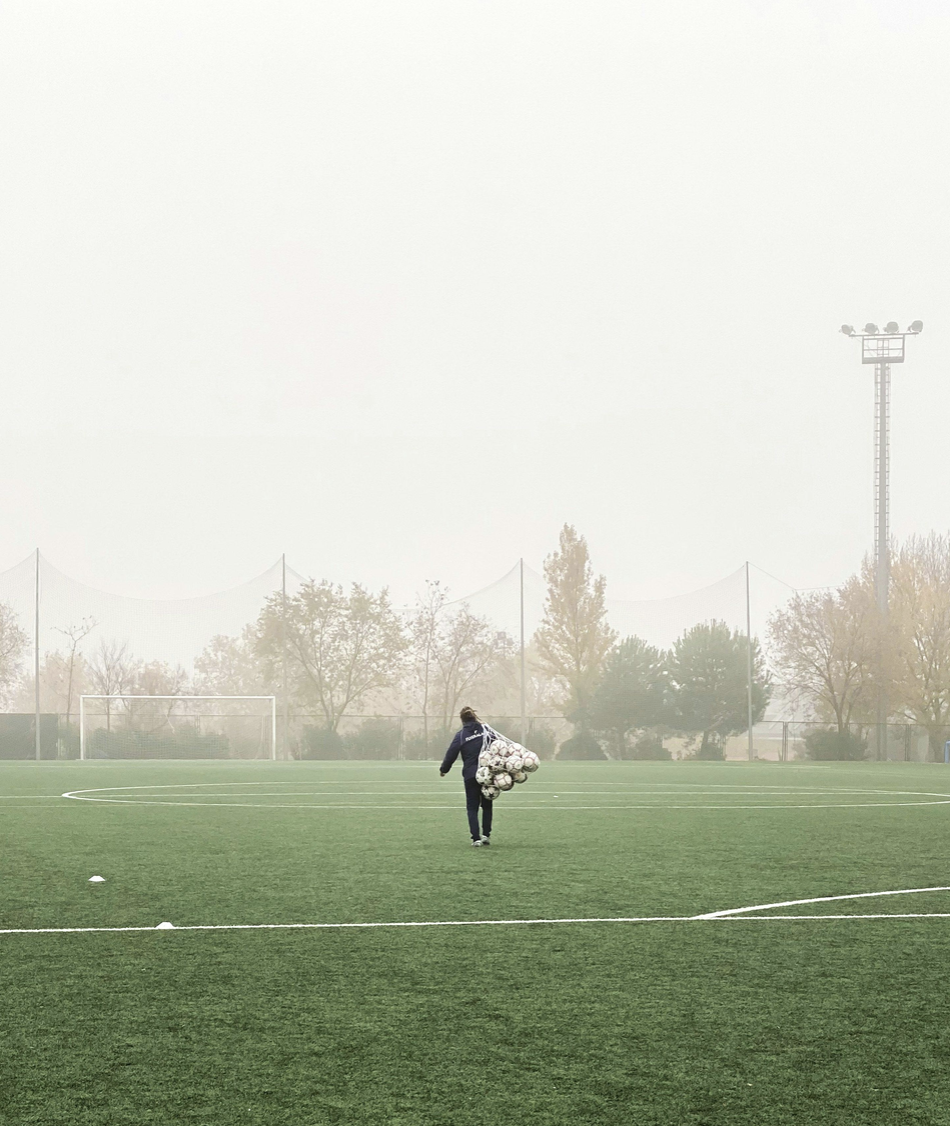
A week of reflection on coaching, leadership and the qualities that no certificate can ever fully measure.
Can a coaching licence teach someone to lead?
It's a question I found myself asking this week after reading a lively Facebook debate about coaching licences.
As always, opinions were divided.
Some argued coaching licences are essential if football is to improve.
Others insisted that some of the best coaches they had ever known didn't hold the highest qualifications.
As I scrolled through hundreds of comments, I realised they were all debating knowledge.
But I wasn't thinking about knowledge.
I was thinking about leadership.
Let Me Start Here
Before I go any further, let me make something absolutely clear.
I believe in coach education.
I believe in lifelong learning.
Why else would I spend eighteen months completing the AFC Certificate in Football Leadership and the AFC Diploma of Club Management?
I wasn't required to undertake those qualifications.
I chose to.
Because I wanted to become a better football administrator.
A better leader.
A better contributor to our game.
Education matters.
Learning matters.
Football is better when people continue to invest in themselves.
A Week That Made Me Think
This week three Tasmanian coaches made me stop and think.
Brian Murphy.
Tom Ballantyne.
James Sherman.
Different clubs.
Different personalities.
Different coaching journeys.
Yet each of them reminded me of something different about coaching.
I've only known Brian Murphy for a relatively short time.
I've interviewed him and met him a couple of times.
Like every coach, he won't get everything right all of the time.
What impressed me about his recent public reflections wasn't that he claimed to have all the answers.
Quite the opposite.
He questioned his own preparation, communication and leadership before looking anywhere else.
Whether people agreed or disagreed with every decision he has made as a coach, that willingness to reflect honestly on his own performance is something I admired.
Tom Ballantyne reflected on the emotional rollercoaster that coaching can be.
The joy.
The disappointment.
The people around him.
His players.
His staff.
The privilege of leading a football team.
Again, I was struck by how little he spoke about himself and how much he spoke about the people beside him.
Then came the announcement that Glenorchy Knights and James Sherman had parted company.
James leaves behind one of the strongest coaching résumés in Tasmanian football.
His departure was another reminder that coaching is one of the most rewarding, yet one of the most unforgiving, professions in our game.
Results are visible every weekend.
The thousands of hours of preparation rarely are.
As I reflected on all three, one thought kept returning to me.
Football often searches for quick fixes.
Change the coach.
Change the formation.
Change the players.
Yet the coaches I've admired most have always spoken about something different.
Learning.
Development.
Patience.
Process.
Building something that lasts.
Their reflections made me think about the coaches I've been fortunate enough to live alongside.
The View Most People Never See
Perhaps I have been a fortunate woman.
For many years I had a front-row seat to senior football that very few club presidents ever experience.
Not because I was President.
Because I lived with coaches.
I've spent a lifetime watching coaching from the inside.
Not from the grandstand.
Not from social media.
But from the kitchen table.
Our family has always believed in education.
Ken, Ned and Max all hold AFC A Licences.
Yet none of them would tell you they have finished learning.
Ken has continually developed himself throughout a lifetime in coaching and still analyses matches with the same enthusiasm he had decades ago.
Ned has invested in three university degrees, accumulated a considerable HECS debt, completed coaching qualifications and dedicated himself to coach education, technical development and academy leadership. His appetite for learning seems almost endless.
Max is no different. Alongside his teaching degree and senior coaching career, he is travelling to Wales later this year, at considerable personal expense, to complete his UEFA C Licence. Not because anyone expects him to, but because he wants to become a better coach.
Their qualifications aren't trophies.
They're milestones on a lifelong journey of learning.
Watching them taught me something.
The best coaches don't simply prepare their teams.
They prepare themselves.
I didn't just watch ninety minutes on a Saturday afternoon.
I watched everything that happened before those ninety minutes.
The preparation.
The tactical planning.
The video analysis.
The endless phone calls.
The difficult conversations.
The player management.
The notebooks full of ideas.
The games replayed over and over searching for one small improvement.
The sleepless nights after defeats.
The excitement before big matches.
The relentless pursuit of becoming better.
Football didn't stop when training finished.
It came home.
It sat around the dinner table.
It travelled in the car.
It filled weekends.
It occupied holidays.
To them, football wasn't simply a game.
It was a responsibility.
It was a profession.
It was a craft they were constantly trying to master.
To them...
It was life.
The Things You Can't Print on a Certificate
That experience has taught me something.
A coaching licence is important.
It demonstrates commitment.
It demonstrates education.
It demonstrates a willingness to learn.
But it cannot tell me everything.
It can't measure leadership.
It can't measure preparation.
It can't measure communication.
It can't measure character.
It can't measure humility.
It can't measure integrity.
It can't measure passion.
It can't measure curiosity.
It can't measure resilience.
It can't measure empathy.
It can't measure whether players trust you.
It can't measure whether they'll follow you when things become difficult.
It can't measure whether, after a disappointing result, your first instinct is to point the finger...
...or to look in the mirror.
Those qualities aren't awarded at the end of a course.
They're built over years.
Through mistakes.
Through reflection.
Through experience.
Through a willingness to keep learning.
Football's Greatest Strength... and One of Its Greatest Challenges
Football is a wonderful game because almost everyone has an opinion.
Many of us have played.
Millions watch it every week.
Parents coach junior teams.
Supporters analyse tactics every Monday morning.
Perhaps that's why football has always faced one unique challenge.
Almost everybody believes they can coach.
When Ken and I started Morton's Soccer School nearly twenty years ago, one of the biggest barriers wasn't finding children who wanted to improve.
It was convincing parents that coaching itself had value.
"Why would I pay someone to coach my child?"
"We've always done it ourselves."
Thankfully, attitudes have changed.
Coach education is now rightly valued.
That is good for football.
But perhaps we should be careful not to confuse qualifications with coaching itself.
Knowledge matters.
Experience matters.
Leadership matters.
Character matters.
The Best Coaches Never Stop Learning
Looking back over this week, I realised something.
I've never met a great coach who thought they were one.
The best coaches I've known have all had different personalities.
Different philosophies.
Different ways of communicating.
Different ways of leading.
Brian Murphy.
Tom Ballantyne.
James Sherman.
Ken Morton.
Ned Clarke.
Max Clarke.
Different journeys.
Different stories.
Yet every one of them shares something remarkably similar.
They are all still learning.
They are all still asking questions.
They are all still searching for ways to become better.
The more experienced they become...
...the more curious they seem to be.
Perhaps that's the one qualification every truly great coach possesses.
Not a licence.
Not a trophy.
Not a title.
But curiosity.
The humility to believe there is always something else to learn.
Final Whistle
The older I get, the less interested I become in what hangs on a person's wall and the more interested I become in what sits inside their heart.
Qualifications matter.
Education matters.
Experience matters.
But so do curiosity.
Humility.
Preparation.
Leadership.
Character.
Communication.
The willingness to ask yourself difficult questions.
They are qualities no certificate can ever fully measure.
Football should continue investing in coach education.
It should continue raising standards.
It should continue encouraging coaches to challenge themselves.
A coaching licence can teach tactics.
It can teach methodology.
It can teach session design.
It can teach the technical side of our game.
But the qualities I've admired most in coaches have never been framed on a wall.
They've been demonstrated every day through preparation, humility, curiosity and leadership.
Because coaching can be taught.
Leadership has to be lived.
104 Matches. 48 Nations. 211 Dreams.
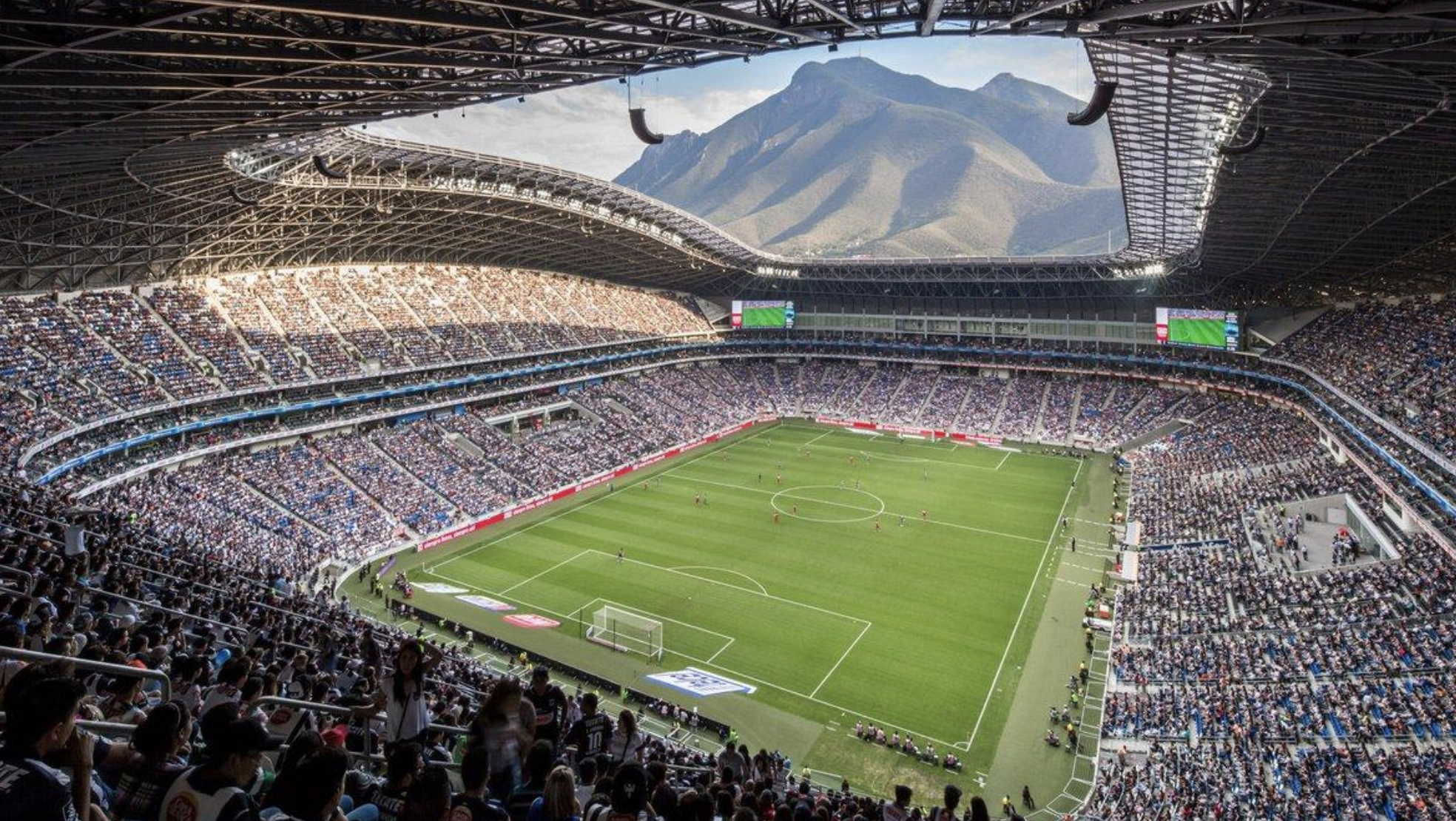
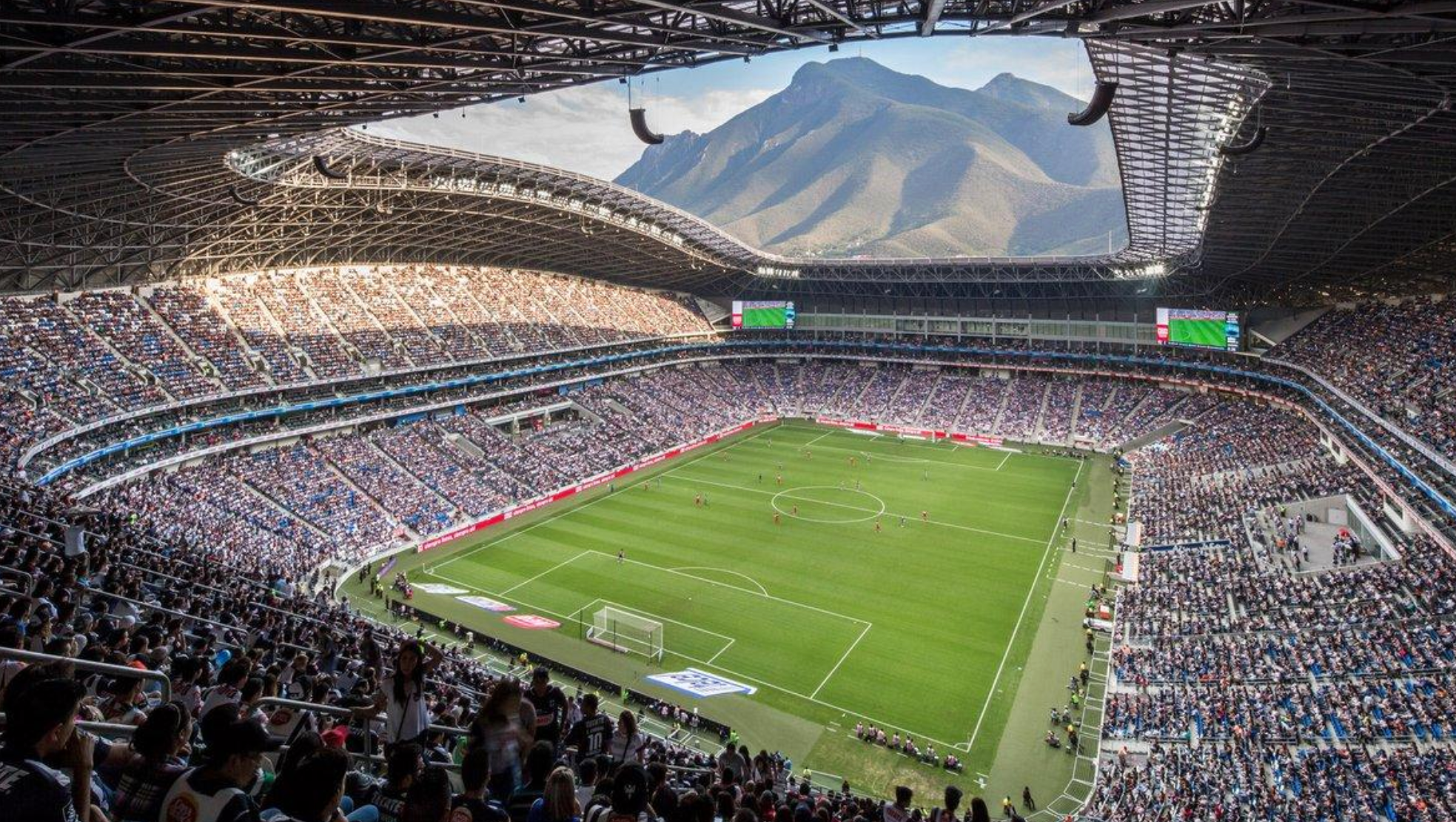
Estadio BBVA, the home of CF Monterrey. Monterrey is the third largest city in Mexico.
It has become famous during this World Cup because of the spectacular backdrop of Cerro de la Silla, the iconic mountain that rises behind the stadium. Many fans have said the photos look so perfect they appear AI-generated.
Just how big is the FIFA World Cup?
Most of us sit down and watch the FIFA World Cup without giving much thought to what it actually takes to stage it.
We see the football.
The goals.
The upsets.
The penalty shootouts.
But behind every match is one of the biggest sporting businesses on Earth.
As I started researching this article, I found myself saying, "I didn't know that."
Hopefully you will too.
It Starts With 211
FIFA has 211 member associations.
That means football is officially played in more countries than there are members of the United Nations.
From Australia to Argentina.
From Brazil to Bhutan.
From England to Eswatini.
I have to admit, I had to look up Eswatini. It used to be called Swaziland until 2018.
If I learned something while researching this article, perhaps you will too.
Every one of those 211 nations dreams of reaching the FIFA World Cup.
In 2026, 48 countries have achieved that dream.
For the first time in history, almost one quarter of FIFA's member associations are represented at the tournament.
Bigger Than Ever
Until now, the men's World Cup featured 32 teams and 64 matches.
This year there are:
48 nations
104 matches
39 days of football
Three host countries
16 host cities
That's an extra 40 World Cup matches compared with Qatar in 2022.
Why?
From a football perspective, more countries get the chance to experience the world's biggest tournament.
For nations that have spent decades falling just short, that's enormous.
But there is another consequence.
Forty extra matches also means more football for broadcasters, more sponsorship opportunities, more tickets, more hospitality and more fans watching around the world.
Football and business often grow together.
Just How Big Is It?
Here are a few numbers that surprised me.
211 FIFA member associations.
48 nations qualify.
104 matches.
39 days.
Around 1.4 billion people watched the 2022 World Cup Final.
Billions more will watch at least part of the 2026 tournament.
More than US$4 billion comes from television rights alone.
The tournament is expected to generate almost US$9 billion in total revenue.
It's almost impossible to comprehend.
For just over a month, football becomes the biggest entertainment event on the planet.
So How Much Money Are We Talking About?
The 2026 World Cup is expected to generate almost US$9 billion.
Spread across 104 matches, that's an average of around US$86 million per match.
That doesn't mean FIFA makes US$86 million every time the referee blows the whistle.
It isn't ticket sales.
It isn't profit.
It's simply the total money expected to come into the tournament divided by the number of matches.
Like any business, FIFA also has enormous costs.
It has to organise 104 matches across three countries, produce the global television broadcast, provide technology like VAR and goal-line technology, pay prize money, manage security, transport, staffing and logistics, and continue investing in football around the world.
Think about your local café.
It might take $10,000 in a week.
That doesn't mean the owner earns $10,000.
They still have wages, rent, electricity and suppliers to pay.
FIFA works exactly the same way.
The numbers are simply much bigger.
Television Is King
Most people would probably assume ticket sales are FIFA's biggest source of income.
They aren't.
Television is.
Broadcasters around the world are expected to pay more than US$4 billion simply for the right to show the matches.
Why?
Because live sport is one of the few things people still insist on watching live.
You might watch a movie next week.
You might binge a television series next month.
But when the World Cup Final kicks off, people want to watch it as it happens.
That makes live football incredibly valuable.
The rest of FIFA's income comes from sponsors, hospitality, ticket sales, licensing, merchandise and digital partnerships.
Why It Matters
One thing I hadn't fully appreciated is this.
The World Cup isn't simply FIFA's biggest event.
It's also FIFA's biggest fundraiser.
Unlike a football club, FIFA doesn't sell tickets every weekend.
It doesn't have a domestic league.
Instead, every four years it stages the biggest football tournament on the planet.
The money generated during those few weeks helps fund football over the next four years, including prize money, coaching education, development programmes and investment across FIFA's 211 member associations.
The Bigger Picture
You don't have to agree with every decision FIFA makes.
But it helps to understand the economics behind them.
Expanding the tournament gave more countries the opportunity to qualify.
It also created 40 additional World Cup matches.
Those matches create more football.
More excitement.
More opportunities.
And yes, more money.
The next time you sit down to watch a World Cup match, remember this.
You're not just watching 22 players chasing a ball.
You're watching an event that brings together 211 football nations, billions of viewers and one of the biggest sporting enterprises the world has ever seen.
And if you're like me, you'll probably never look at the World Cup in quite the same way again.
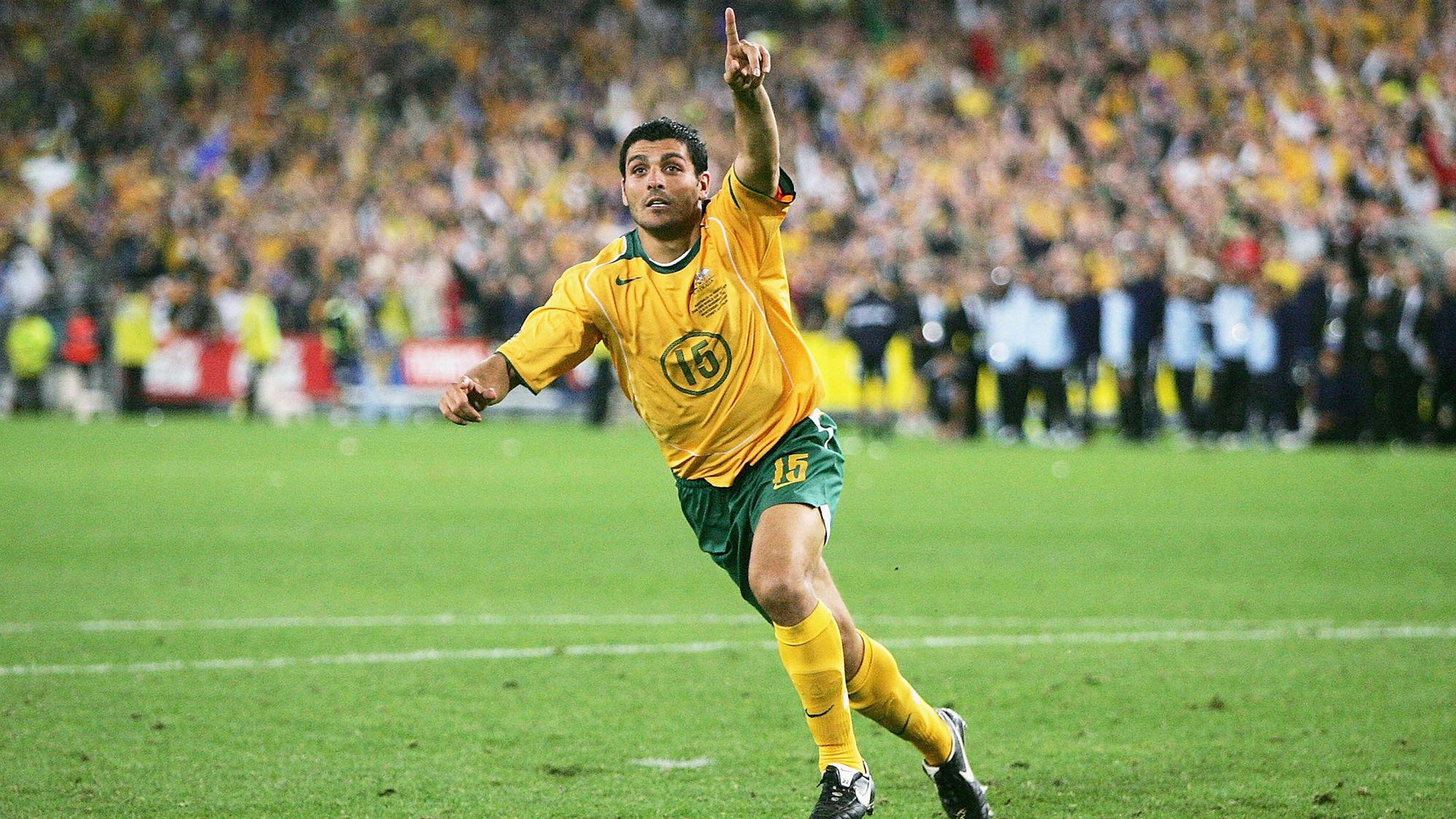
Silly O'Clock
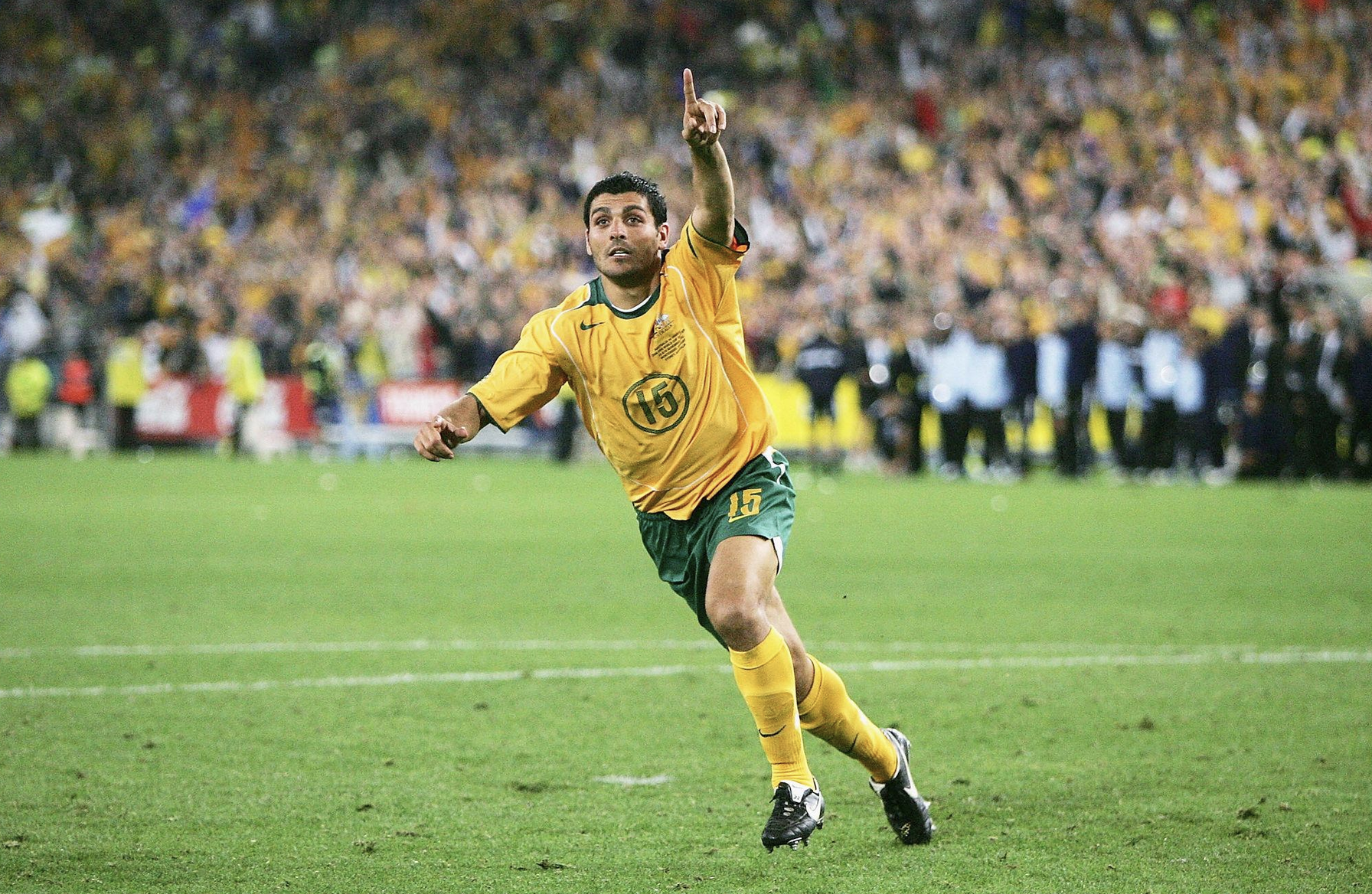
They used to say Australia came to a standstill for the Melbourne Cup.
On Friday afternoon, it wasn't a horse race that stopped the nation.
It was the Socceroos.
Pubs filled before lunchtime.
People booked annual leave.
Others balanced work laptops beside pints.
City squares overflowed.
Primary school halls and classrooms across Tasmania were transformed into mini fan zones, with children dressed in green and gold to cheer on Australia. Teachers embraced the occasion, recognising this was one of those rare moments that transcended the classroom. Some even turned it into lessons about geography, culture and national identity.
And somehow, after ninety tense minutes, a nil-all draw felt like a victory.
As I watched it all unfold, I wasn't surprised.
I smiled.
Because I'd seen it all before.
Where It All Began
Long before I met Ken, I was that football mum.
The one waking the kids at silly o'clock because the Socceroos were playing.
Blankets on the couch.
Hot chocolate in hand.
School uniforms waiting by the door.
Looking back, perhaps I wasn't winning any Parent of the Year awards.
School could wait.
The Socceroos couldn't.
But before all those early morning alarms came one unforgettable night.
16 November 2005. Homebush.
I was there with my boys.
More than 82,000 Australians packed into Telstra Stadium believing this just might finally be our night after 32 years away from the World Cup.
Marco Bresciano gave Australia the lead.
Mark Schwarzer saved two penalties.
Then came the moment every Australian football supporter can still picture.
John Aloisi stepped forward.
The net bulged.
The shirt came off.
And an entire nation erupted.
We weren't just going back to the World Cup.
Australian football had changed forever.
From then on, life seemed to be measured in World Cups.
Germany in 2006 gave us Tim Cahill's unforgettable double against Japan, John Aloisi's stunning volley and Harry Kewell's injury-time equaliser against Croatia that sent Australia into the Round of 16.
South Africa in 2010.
Brazil in 2014.
Russia in 2018.
Qatar in 2022.
Now North America in 2026.
Every tournament brought another excuse to wake the family at ridiculous hours.
Another excuse to tell the kids, "Just this once."
Looking back now, I don't regret a single one of those early mornings.
The boys are grown now.
The hot chocolate has become coffee.
Ken sits beside me instead.
The kick-off times are still ridiculous.
The excitement hasn't changed one bit.
I Found My Tribe
When you've spent decades involved in football, you sometimes forget that not everyone lives and breathes the game the way you do.
Then the World Cup arrives.
Suddenly, people are taking long lunches to watch Australia.
Pubs are overflowing.
Workplaces wheel televisions into meeting rooms.
Friends who haven't mentioned football for four years suddenly become experts on goal difference and knockout permutations.
And you realise something.
You've found your tribe.
Not just people who watch football.
People who understand why ninety minutes can matter.
People who know why a draw can feel like a win.
People who are prepared to rearrange their day because Australia is playing.
For one afternoon, the football community wasn't a small group scattered around grounds every weekend.
It was everywhere.
The School Halls
One of my favourite images from Friday wasn't from a packed pub.
It was from schools.
Across Tasmania, primary schools embraced the occasion.
School halls became live sites.
Classrooms filled with children dressed in green and gold.
For one morning, football wasn't a distraction from learning.
It was the lesson.
It was about community.
Belonging.
National pride.
And sharing an experience together.
Years from now, many of those children probably won't remember what they learnt in maths that Friday.
But they'll remember watching Australia qualify for the knockout stages with their classmates.
Just as I remember waking my own children at ridiculous hours to watch the Socceroos all those years ago.
We Should Know Better Than To Forget
Of course, this feeling doesn't belong only to the men's game.
Those of us in football certainly should know better.
The Matildas showed us exactly what a nation falling in love with football looks like.
Packed stadiums.
Big screens.
Children wearing jerseys.
Families gathering together.
People who had never watched a full football match suddenly living every kick.
In two years' time, when the Women's World Cup comes around again, I have no doubt Australia will do it all over again.
The same colours.
The same excitement.
The same sense of belonging.
Because this isn't really about the men's game or the women's game.
It's about football.
It's Always Been There
For years we've heard the same old line.
"Australia isn't really a football country."
Friday reminded us that it absolutely is.
The World Cup doesn't create football fans.
It reveals them.
The Guardian captured the scenes perfectly.
Packed pubs.
Overflowing live sites.
People taking long lunches.
Workplaces pausing.
Families gathering.
Thousands of Australians putting everything else on hold to watch the Socceroos.
Here in Hobart, something special happened too.
After ABC Radio Hobart's Ryk Goddard asked why Tasmania didn't have a proper public viewing opportunity, the community responded.
The Odeon opened its doors before dawn.
The Hanging Garden welcomed more than a thousand supporters.
Sometimes football simply needs someone prepared to ask,
"Why not?"
Maybe that's the lesson.
Australia has never needed convincing to love football.
Every four years, the World Cup simply reminds us.
Until Next Time
In another few weeks, life will return to normal.
The pubs will empty.
The school halls will return to assemblies.
The giant screens will come down.
Those of us who live our lives around football will head back to community grounds, junior matches, NPL fixtures, WSL matches and cold winter mornings.
We'll still be there.
We always are.
Because football isn't something we discover every four years.
It's something we live every week.
And in two years' time, when the Matildas step onto the biggest stage once again, I have no doubt Australia will answer the call all over again.
Because football has never really left us.
For one glorious Friday afternoon, the whole country simply remembered.
My tribe became the whole country.

Football Deserves Better Than Silence

Football 101 | Part 1: Bringing the Game into Disrepute
Football deserves better than silence.
It deserves informed conversation.
It deserves people prepared to ask difficult questions.
It deserves people willing to challenge ideas.
It deserves accountability.
But it also deserves respect.
Somewhere between silence and abuse sits the conversation football should be encouraging.
That made me wonder.
How many of us actually understand where that line is?
Football people love quoting the Code of Conduct.
Sometimes as a warning.
Sometimes as a weapon.
Sometimes because they genuinely care about standards.
But I often wonder how many of us have actually read it.
Welcome to Football 101.
Over the coming months I'd like to explore some of the phrases, rules and governance concepts we hear every week but rarely stop to explain. Not as a lawyer, but as someone who has spent decades involved in football administration, governance and volunteering.
I have always believed football needs more people willing to speak up.
Not fewer.
The game doesn't improve because everyone agrees.
It improves because people ask questions.
They challenge decisions.
They debate ideas.
They hold clubs, administrators and governing bodies accountable.
Healthy football welcomes respectful discussion.
It shouldn't fear it.
But speaking up also comes with responsibilities.
There is a line.
The challenge is understanding where that line sits.
Can you publicly criticise a decision?
Can you question a policy?
Can you write a blog?
Can you challenge a governing body?
Can you say the board got it wrong?
The answer isn't simply yes.
And it isn't simply no.
It depends on how you do it.
So I went back to the Code of Conduct.
Not looking for reasons to stay quiet.
Looking for where football draws the line.
Because if we're going to encourage people to speak up, and I think we should, we also owe them an understanding of the boundaries.
It's Not Just About Players
One of the first things that struck me is that many football people assume the Code of Conduct is aimed at players.
A player sent off for abuse.
A coach dismissed for misconduct.
A referee writing a report.
In reality, it is much broader than that.
Depending on your role, the Code can apply to coaches, administrators, directors, volunteers, referees, committee members and club officials.
In other words, most of us.
It's Not Just About What You Say
Another surprise is that much of the Code isn't actually about words.
When people hear "Code of Conduct" they often think about social media posts or interviews after a match.
In reality, much of it deals with behaviour.
Integrity.
Honesty.
Respect.
Conflicts of interest.
Safeguarding.
Discrimination.
Abuse.
The Code is as much about how we conduct ourselves as it is about what we say.
The Grey Area
The easy examples are easy.
Most football people would agree there is no place for racism, bullying, harassment, threats or discrimination.
The interesting part comes later.
Football has always been built on opinions.
We debate competition structures.
We debate player pathways.
We debate scheduling.
We debate coaching appointments.
We debate governance.
We debate promotion and relegation.
And occasionally we debate whether an 18 degree day really requires a hydration break.
So where is the line?
Let's put it to the Pub Test.
The Pub Test
Imagine somebody standing outside your local club saying these things.
"I disagree with that decision."
"I think the competition structure needs changing."
"I would have handled that differently."
Most people would probably say that's healthy football debate.
Now consider these.
"That administrator is incompetent."
"The board lied."
"The competition was fixed."
Most of us instinctively feel the difference.
The first group criticises decisions.
The second group makes statements about people.
You don't need a law degree to understand that those are very different conversations.
Whenever I'm writing, I try to ask myself one simple question.
Am I challenging an idea, or am I attacking a person?
It is a surprisingly useful test.
The Facebook Effect
Twenty years ago, if you disagreed with a football decision, you probably told a few people around the clubrooms.
The conversation lasted ten minutes.
Then everyone went home.
Today that same opinion can be shared online and reach thousands of people within minutes.
Football hasn't changed.
The audience has.
That is one reason why Codes of Conduct have become increasingly important.
Words that once disappeared into the night now remain online.
So What Happens If Someone Complains?
This was the part that fascinated me most.
Most football people know there are disciplinary panels.
Very few know what happens before a matter ever reaches one.
Someone raises a concern.
That concern is assessed to determine whether there appears to be a case to answer.
Not every concern becomes a formal complaint.
Not every complaint proceeds.
Not every disagreement becomes a hearing.
Not every Facebook post results in charges.
Some matters go no further.
Some are investigated.
Some proceed through the disciplinary process.
Some don't.
I suspect most football people have no idea how many concerns never make it beyond that first assessment.
Who Decides?
This was probably the question I wanted answered more than any other.
If somebody believes you've breached the Code of Conduct, who actually decides?
Is it the person making the complaint?
The CEO?
A member of staff?
The answer is more complicated than that.
A concern may be raised.
It may then be assessed to determine whether there is a case to answer.
If it proceeds, the question of whether the Code has actually been breached is determined through football's disciplinary process.
That distinction matters.
A complaint is not a finding.
An allegation is not a determination.
An opinion is not the same thing as a decision.
Football has processes for a reason.
I suspect most football people would be surprised to learn how that process actually works.
Perhaps that's a topic for another Football 101 article.
What If The Complaint Is Wrong?
This question interested me just as much.
What happens if somebody complains, but the complaint has no merit?
What if criticism is mistaken for misconduct?
What if somebody simply doesn't like what has been written?
That's why football has processes.
Evidence matters.
Fairness matters.
People should have an opportunity to know the case against them and respond.
Most of us would call that common sense.
Lawyers call it natural justice.
The Blogger's Rule
After writing football articles, I've developed a rule of my own.
Criticise decisions.
Criticise policies.
Criticise structures.
Criticise outcomes.
Ask difficult questions.
Hold organisations accountable.
But be very careful when you start criticising people's motives.
There is a big difference between saying:
"I disagree with the decision."
and
"I know why they made the decision."
One is opinion.
The other is often assumption.
As a writer, that distinction matters.
I've also learnt that the strongest articles rarely need speculation.
The facts are usually powerful enough.
My Take
After reading the Code of Conduct, I came away with one overwhelming thought.
Football doesn't need fewer people prepared to speak up.
It needs more.
The game improves because people ask questions.
Because they challenge ideas.
Because they debate respectfully.
Because they hold all of us accountable.
The Code of Conduct shouldn't be viewed as something that silences discussion.
It should encourage better discussion.
Criticise decisions.
Challenge policies.
Question governance.
Hold leaders accountable.
Just don't confuse robust debate with personal attack.
Football deserves better than silence.
It deserves informed conversation.
Perhaps that's the real lesson.
The question isn't whether you should speak up.
It's how you choose to do it.
And if Football 101 helps even a few people better understand where that line sits, then writing this first article will have been worthwhile.
Forgive Me If I Call Bullshit
I laughed when I saw the image.
Not because it was particularly clever.
Because it perfectly captured what football supporters around the world are thinking.
There stood Harry Kane, captain of England, one of the fittest athletes on the planet.
The game stopped.
The hydration break arrived.
And a supporter held up a sign in front of the television screen that simply read:
ADVERTISEMENT
That, in one image, is the entire debate.
Football is played in halves.
Two of them.
Not quarters.
Which is why so many supporters are struggling with FIFA's latest obsession.
FIFA says the hydration breaks are purely about player welfare.
Football supporters aren't so sure.
Get On With It
Before somebody accuses me of wanting players collapsing from heat exhaustion, let's be clear.
If it is dangerously hot, stop the game.
If conditions genuinely put player welfare at risk, have a cooling break.
Nobody sensible disagrees with that.
Cooling breaks in extreme conditions already existed. Most football people had no problem with them.
I've spent decades standing on football grounds around Tasmania.
I've watched junior football at North Chigwell in weather where parents could barely feel their fingers.
I've stood at Wentworth Park in winter rain wondering whether I should have packed another jacket.
I've watched players train under lights on freezing Hobart evenings.
Football has always adapted to the conditions in front of it.
That's why cooling breaks in extreme heat never bothered me.
If it's 40 degrees, stop the game and let the players cool down. If it is freezing deal with it.
That's common sense.
What makes less sense is stopping every match regardless of whether the conditions justify it.
Australian football supporters have spent years arguing that the A-League shouldn't be played in summer because of the impact of extreme heat.
If FIFA wants to see a match that genuinely needs a hydration break, I can introduce them to a January afternoon in Western Sydney.
That's where footballers deserve sympathy.
That's where cooling breaks make sense.
That's where player welfare becomes the dominant consideration.
Not when it's 18 degrees in Boston and raining.
Yet during this World Cup, a hydration break was still taken in exactly those conditions.
Nobody looked at 18 degrees and rain in Boston and thought:
"You know what these players need? A hydration break."
And that's the problem.
At that point it stops looking like a heat policy.
It starts looking like a football policy.
Even The Coaches Are Complaining
This isn't just grumpy supporters yelling at clouds.
Marcelo Bielsa says the breaks add nothing and take away a lot.
Thomas Tuchel says they change the identity of the game.
That is exactly the point.
The issue isn't hydration.
The issue is identity.
Football feels different when you stop it every twenty minutes.
The rhythm changes.
The momentum changes.
The atmosphere changes.
And football people instinctively know it.
Thankfully Harry Kane Was Saved
There stood Harry Kane, captain of England and one of the fittest athletes on the planet.
Thankfully the game was stopped just in time.
Another few minutes and he may have forgotten to apply Rexona.
Harry got a drink.
The coaches got a team talk.
The broadcasters got a commercial break.
Everybody wins.
Or so we are told.
Forgive Me If I Call Bullshit
We are told the hydration breaks are essential for elite athlete welfare.
Fair enough.
Then the players return from the break and spend the next five minutes surrounded by advertisements for burgers, soft drinks, potato chips, beer and deodorant.
Apparently dehydration is the health issue we are worried about.
We are told modern footballers are elite athletes whose bodies must be treated like temples.
The match stops so they can hydrate correctly.
Then the television coverage immediately encourages the rest of us to eat a Big Mac, demolish a family-sized bag of Smiths chips and wash it all down with a soft drink.
Forgive me if I call bullshit.
If this is genuinely about player welfare, then say it.
If it is genuinely about heat management, then have a heat policy.
But don't be surprised when supporters connect the sporting decision with the commercial opportunities that suddenly appear around it.
Football supporters aren't stupid.
The Coincidence
The problem FIFA has isn't that supporters oppose player welfare.
The problem FIFA has is that football supporters possess eyes.
We can see the game stopping.
We can see the advertisements appearing.
We can see the extra commercial inventory being created.
Then we are told the two things are completely unrelated.
Football supporters are being asked to ignore a coincidence that arrives every 22 minutes.
And once supporters stop believing the explanation, the argument is already lost.
The irony is that FIFA may be right.
The breaks may genuinely help players recover.
The problem is that every time the game stops, supporters are given another reason to suspect there is more going on than player welfare.
The Slippery Slope
Football has spent decades telling us every change is small.
VAR was a small change.
Longer added time was a small change.
Hydration breaks are a small change.
Individually, perhaps they are.
Collectively they create a different game.
A game that feels increasingly designed for television.
A game that feels increasingly comfortable with interruptions.
A game that looks a little less like football and a little more like every other sport competing for advertising dollars.
Maybe that's inevitable.
Maybe I'm simply getting older.
But not every old idea is a bad one.
My Armpits Can Wait
If it is 40 degrees in Dallas, stop and get a drink.
If players are genuinely at risk, stop the game.
Player welfare should always come first.
But if it is 18 degrees in Boston and raining, get on with it.
Football doesn't need more interruptions.
Football doesn't need more commercials.
And football certainly doesn't need more opportunities for somebody to sell me deodorant in the middle of a football match.
Trust me.
At my age, I am already aware.
My deodorant can wait.
Football is played in halves.
Not quarters.
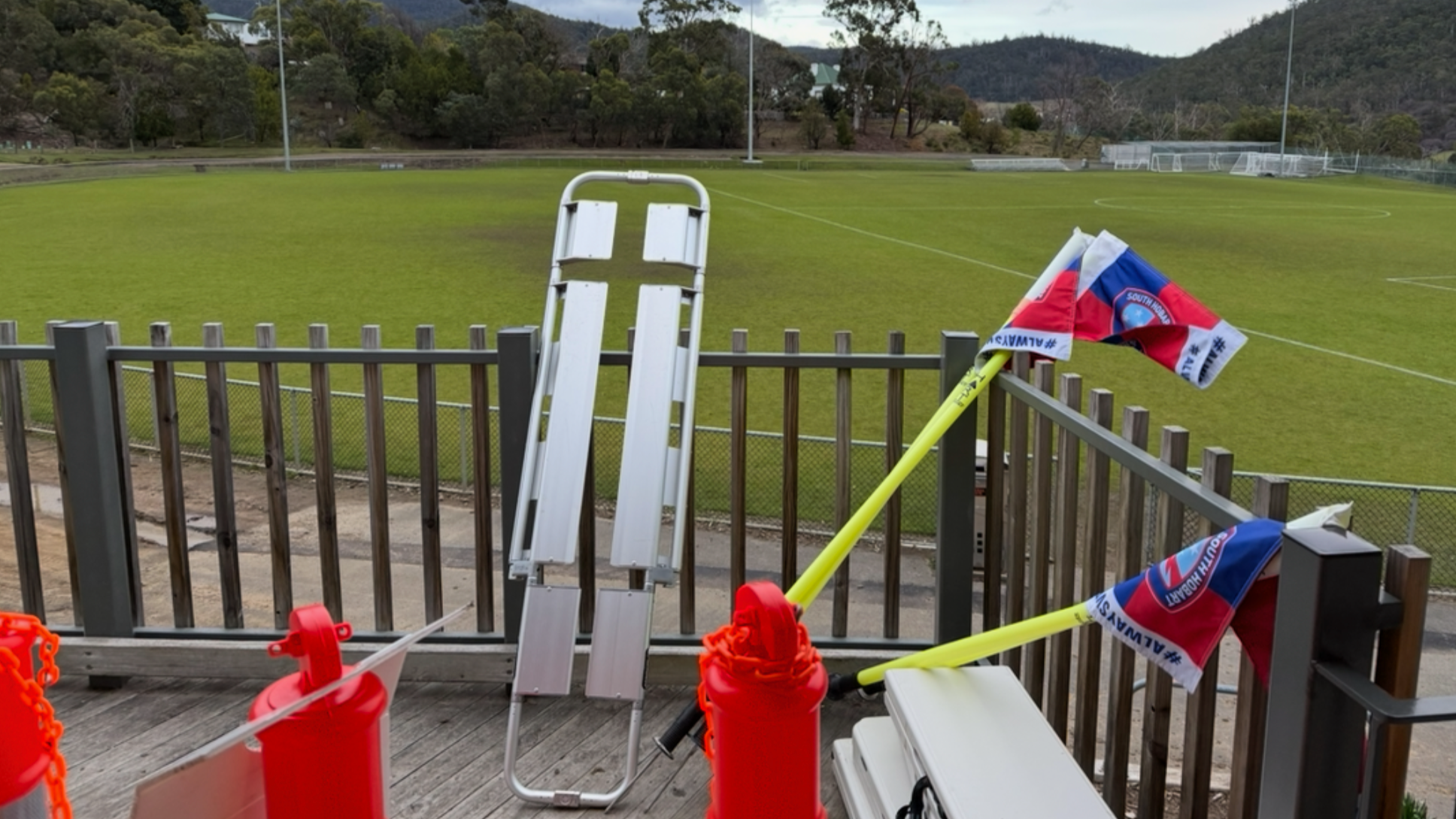
The First One There
I started writing this article a few weeks ago.
Back then it was going to be a thank you to the volunteers who are always the first ones there.
The people who unlock gates.
Put out flags.
Pump up footballs.
Get everything ready before anybody else arrives.
Then life happened.
A few difficult conversations happened.
A few disappointments happened.
And somewhere along the way this article became about something else entirely.
Or perhaps it didn't.
Perhaps it was always about the same thing.
The first one there.
This weekend at Wellesley Park, while the light is still dim, the dew sits heavy on the grass and Mt Wellington/kunanyi watches over an empty football ground, I will be the first one there.
The corner flags are still stacked against the fence.
The goals are still chained together.
The car park is empty.
Football hasn't started yet.
Somebody still has to make it happen.
For seventeen years, give or take, that somebody has often been me.
Not because anybody appointed me.
Not because there was a roster.
Not because I was looking for recognition.
Simply because somebody had to do it.
Ask Vicki
Over time, being the first one there becomes a habit.
Then a responsibility.
Then, somehow, part of your identity.
Need a ball pumped up?
Ask Vicki.
Lost a shirt?
Ask Vicki.
Need a gate unlocked?
Ask Vicki.
Can't find the first aid kit?
Ask Vicki.
Need an answer?
Ask Vicki.
The funny thing is I don't remember volunteering for most of those jobs.
They just sort of found me.
Somewhere along the way, "Does anybody know?" became "Vicki will know."
The first one there becomes the keeper of football's small secrets.
Which key opens which door.
Where the spare bibs are stored.
Which goal wheel is broken.
How to get the lights working when they decide they don't want to.
Who ordered the medals.
Where the pump is.
The knowledge builds up slowly over years until one day people simply assume you know.
And usually, you do.
Seventeen Years Later
One small responsibility became another.
One season became another.
One year became another.
Then suddenly seventeen years had gone by.
For most of that time I never really questioned it.
Like thousands of volunteers across Australia, I simply got on with it.
Because that's what volunteers do.
We see a problem and fix it.
We see a gap and fill it.
We carry things because somebody has to carry them.
And if we're honest, because we care.
We care about the players.
We care about the coaches.
We care about the game.
We care about creating opportunities for others.
For years that was enough.
Lately though, I have found myself asking a question I never really considered before.
If I had known then what I know now, would I still have been the first one there?
It is not a comfortable question.
Because it forces you to look back over years of early mornings, late nights, meetings, emails, planning, problem-solving and responsibility.
It forces you to ask whether the sacrifices were worth it.
It forces you to ask whether the people around you understood what it cost.
And perhaps most uncomfortably of all, it forces you to ask whether you would make the same choices again.
The Strange Reward For Being Reliable
The older I get, the more I realise football has a habit of relying on people who simply keep turning up.
Reliable people.
Capable people.
People who don't seek credit.
People who quietly get things done.
The problem is that reliability can become invisible.
Not because people are ungrateful.
Because they become accustomed to it.
Expected becomes normal.
Normal becomes unnoticed.
Until one day somebody else has to do the job.
Then suddenly everyone discovers how much work there actually was.
I think that's what many long-serving volunteers struggle with.
Not the work itself.
Not the hours.
Not even the responsibility.
It is the feeling that what was given freely somehow became expected.
That the contribution became ordinary.
That years of commitment became just part of the furniture.
The strange reward for being reliable is that people come to rely on you.
Again.
And again.
And again.
Until one day you find yourself standing alone on an empty football ground wondering whether you still want to be the first one there.
Not because you don't love football.
Not because you don't care.
Not because you have stopped believing in what football can do for people.
But because you are tired.
Tired of carrying responsibility.
Tired of solving problems.
Tired of being the answer every time there is a question.
The Question
Perhaps every long-serving volunteer reaches this point eventually.
The point where they stop asking, "What else needs doing?"
And start asking a different question.
Not who takes over.
But why they kept doing it for so long in the first place.
The truth is that lately I have found myself wondering whether I was foolish.
Whether I gave too much.
Whether I should have said no more often.
Whether football took more from me than it gave back.
Some days I think it did.
Other days I stand on the side of a football field filled with players and know it didn't.
Maybe that is why this question is so difficult to answer.
Because seventeen years can never be measured in hours.
They are measured in people.
The players who found confidence.
The coaches who found opportunity.
The volunteers who became friends.
The children who became adults.
The football journeys that started with a single training session.
The memories that still make you smile years later.
The first ones there are rarely looking for recognition.
Most would be embarrassed by it.
But every now and then they deserve to know that somebody noticed.
This weekend I will unlock the gate.
I will put out the flags.
I will answer the questions.
I will get football underway.
Just as I have done for years.
But for the first time in a very long time, I find myself wondering something.
What happens when the first one there no longer wants to be the first one there?
I'm not sure I know the answer.
Maybe that's a question every long-serving volunteer eventually has to ask themselves.

The Most Disposable People In Football

A respected coach was sacked this week.
As always happens in football, the conversations started immediately.
Was it the right decision?
Who should replace them?
Who is available?
Would somebody relocate?
Would there be suitable applicants?
Within hours, the discussion had moved from the coach who had left to the challenge of finding the next one.
Football coaches are disposable.
That sounds harsh, but it comes with the job.
Contract or no contract, every coach understands the reality.
At some point they will be questioned.
At some point they will be criticised.
At some point they may be replaced.
That is football.
Coaches leave for better money.
Coaches leave for bigger opportunities.
Coaches are sacked.
Coaches resign.
One club's failed appointment somehow becomes another club's exciting new recruit.
Football coaching has to be one of the most unique professions in the world.
Ask José Mourinho.
By now he has probably been sacked more times than I have had hot breakfasts.
Yet clubs keep hiring him.
Why?
Because football has always believed the next opportunity might produce a different outcome.
The same thing happens at every level of the game.
A coach can be considered the problem at one club and the solution at another six months later.
Which is why I have always found football's relationship with coaches so fascinating.
Coaches Understand The Risk
For more than twenty years I have lived in a coaching family.
My husband is a coach.
My two sons are coaches.
One now coaches in Melbourne, meaning I increasingly hear the Victorian conversations as well as the Tasmanian ones.
What strikes me is that coaches generally understand the profession better than the clubs employing them.
Most coaches know their tenure might be short.
Many clubs behave as though finding another coach will be impossible.
The coaches I know understand the risks.
They know results matter.
They know expectations matter.
They know patience is often in short supply.
At some point every coach will be criticised.
At some point every coach may be replaced.
Good coaches accept that reality the day they take the job.
Tasmania Is An NPL Coaching Destination
The idea that quality NPL coaches are impossible to find has always puzzled me.
If anything, Tasmanian football provides evidence to the contrary.
Look around the NPL.
Many of the coaches leading clubs today were not born in Tasmania.
Many were not even born in Australia.
They relocated here because they wanted the opportunity.
They came because they saw Tasmania's NPL as a chance to build a reputation, develop their careers and test themselves in a senior environment.
That is not a criticism.
In many ways it is a compliment to our competition.
People relocate for opportunities they value.
The reality is that Tasmania has become a destination for ambitious coaches.
Post an NPL coaching vacancy on LinkedIn and you probably won't be waiting long for expressions of interest.
Coaches are always looking for opportunities.
For many years Tasmania has been viewed as a stepping stone, a shop window and a chance to build a coaching résumé.
Ambitious coaches know that strong work in Tasmania can lead to opportunities elsewhere.
Which raises an obvious question.
If coaches are willing to move from interstate and overseas to coach in Tasmania, why do clubs continue to behave as though coaching candidates are impossible to find?
Football Is Not A Normal Job
Part of the problem is that clubs sometimes think about coaching recruitment like they are filling a conventional vacancy.
Football does not work like that.
You are not recruiting an accountant.
You are not recruiting an administrator.
You are not recruiting somebody to tick a box in an organisational chart.
Football coaching is not a nine-to-five job.
It never has been.
Nobody becomes a football coach because they are chasing predictable hours.
Nobody becomes a football coach because they want their weekends free.
Nobody becomes a football coach because they are looking for a quiet life.
Most NPL coaches are part-time.
Many earn less than what would be considered a living wage if you calculated the hours they actually commit.
Yet they keep coaching.
Why?
Because coaching is rarely a financial decision.
It is an emotional one.
People coach because they love football.
They coach because they love competition.
They coach because they love building teams.
They coach because they love the challenge.
They coach because there is nothing quite like the feeling before a big game and nothing quite like the feeling after a significant win.
The people attracted to coaching are usually wired differently.
The best coaches I know never really switch off.
Football follows them everywhere.
A family dinner becomes a discussion about selection.
A holiday becomes a chance to watch football somewhere else.
A quiet evening becomes an opportunity to review video.
Most sensible people would look at that lifestyle and decide it isn't for them.
Coaches look at exactly the same lifestyle and think it sounds fantastic.
My husband coached for years with little or no financial reward.
In fact, for ten years he coached without being paid at all.
Not because it made economic sense.
Because he loved it.
Was that unusual?
Yes.
Was the motivation unusual?
No.
Across Tasmania and across Australia, football is full of coaches who continue because they love the game far more than the game loves them back.
Nobody relocates to Tasmania for an NPL coaching salary.
They relocate for the opportunity.
The Question Clubs Need To Ask
Which brings me to the question at the heart of this discussion.
There is a difference between backing a coach because you believe they are the right person and backing a coach because you are frightened you won't find another one.
One is a football decision.
The other is a fear of making one.
Good coaches understand they may lose their job.
They accept that risk the day they sign a contract.
Many boards seem far less comfortable with uncertainty.
The fear of replacing a coach can become more powerful than the assessment of the coach itself.
And that is where clubs can get themselves into trouble.
Because finding the right coach and finding a coach are not the same thing.
There are coaches willing to relocate.
There are coaches willing to take risks.
There are assistant coaches who believe they are ready.
There are coaches succeeding at lower levels who are waiting for an opportunity.
The challenge is not always finding candidates.
The challenge is having the confidence to make a decision.
Stability Or Comfort?
For sixteen years I was President of South Hobart.
For much of that time the senior coach happened to be my husband.
Fortunately, I never had to seriously consider sacking him.
He did an adequate job.
South Hobart never finished lower than third.
Success makes life easier.
When results are strong, clubs talk about stability, culture and long-term planning.
When results are not so strong, clubs start talking about fresh voices, fresh ideas, new directions and opportunities to freshen things up.
Sometimes those conversations are justified.
Sometimes they are not.
But stability is not automatically a virtue.
Sometimes stability is excellent.
Sometimes it is simply comfort.
And sometimes comfort is just fear dressed up as strategy.
Football's Great Coaching Contradiction
Perhaps football's biggest coaching contradiction is this.
The coach understands they may lose the job.
The club is frightened of finding another coach.
One side accepts uncertainty.
The other often tries to avoid it.
For more than twenty years I have watched coaches move between clubs, states and countries.
I have watched coaches arrive with big reputations and leave quietly.
I have watched coaches be criticised one year and recruited the next.
Football moves on remarkably quickly.
If NPL coaching in Tasmania was about money, we would have a coaching shortage.
If NPL coaching in Tasmania was about job security, we would have a coaching shortage.
If NPL coaching in Tasmania was about lifestyle, we would have a coaching shortage.
Yet coaches continue to arrive.
They relocate from interstate.
They relocate from overseas.
They come for the challenge.
They come for the opportunity.
They come because Tasmania remains a place where ambitious coaches can build a reputation, develop their craft and perhaps take the next step in their coaching journey.
Which leaves one final question.
Are clubs backing their coaches because they genuinely believe they are the right person for the job?
Or because they are frightened of searching for the next one?
Those are very different reasons.
And football people usually know the difference.

The Draw Is Over. Now The Real Work Begins

First things first, congratulations to Kingborough Lions United.
Drawing Melbourne Victory is exactly the sort of tie clubs dream about when they enter the Australia Cup.
It will bring attention, excitement, a strong crowd and another opportunity to showcase Tasmanian football on a national stage.
The players should enjoy it.
The supporters should enjoy it.
The club should enjoy it.
But having been involved in several Australia Cup campaigns with South Hobart over the years, I can tell them something else.
The draw is the fun part.
The following morning is when the real work begins.
From 777 Clubs To 32
This year a record 777 clubs entered the Australia Cup.
After months of qualifying matches, only 32 remain.
Kingborough are one of them.
Less than five per cent of the original field are still standing.
That achievement should not be overlooked.
The Australia Cup remains one of the few competitions in Australian sport where a community club can earn the right to host one of the country's biggest professional clubs.
There are no invitations.
There are no wildcards.
You qualify by winning matches.
How The Competition Works
The Round of 32 is where the A-League clubs enter the competition.
The draw is completely open.
There are no seeds.
No conferences.
Anyone can draw anyone.
If a Member Federation club is drawn against an A-League club, the Member Federation club receives hosting priority.
That is why Melbourne Victory will travel to Tasmania rather than the other way around.
If scores are level after ninety minutes, extra time is played.
If they are still level after extra time, penalties decide the winner.
There are no second chances.
Lose and your campaign is over.
Win and you move on.
The Competition Has Changed
One interesting feature of today's competition is that everybody goes into the same draw.
That was not always the case.
In the early years of the competition, Football Australia protected a number of A-League clubs by matching them against each other before the wider draw took place.
The result was fewer A-League clubs available for Member Federation clubs to draw.
At South Hobart we often felt that the ideal scenario was to draw another Member Federation club in the first round.
Win that match and suddenly your chances of drawing an A-League club in the next round improved significantly.
There was always a balance between protecting professional clubs and creating opportunities for community clubs.
The modern open draw feels much closer to the spirit of what the Australia Cup was designed to be.
Home Draws Are Not Always At Home
This is one of the biggest misconceptions about the competition.
People assume that if you are drawn at home, you play at home.
That is not always the case.
South Hobart qualified for the national rounds four times.
Yet we never played a single Australia Cup match at D'Arcy Street.
We didn't have lights that met the competition requirements.
Our "home" matches were played elsewhere.
We hosted Marconi at Blundstone Arena.
We hosted Tuggeranong United at KGV.
We hosted South Melbourne at KGV.
We travelled away to Sydney United 58.
South Hobart supporters used to celebrate the draw.
Those of us organising the match would celebrate for about ten minutes before asking the same question.
"Right. Where are we actually going to play it?"
Supporters Celebrate. Administrators Check Their Calendars.
Supporters see a home draw and think they have won the lottery.
Administrators see a home draw and immediately start checking their calendar.
An away draw is relatively straightforward.
Book flights.
Book accommodation.
Turn up and play.
A home draw is something entirely different.
The Australia Cup is a national competition.
It is also a national broadcast product.
The moment the draw is completed, clubs begin working through venue requirements, security plans, media requirements, broadcasting arrangements, operational meetings and compliance obligations.
The emails start arriving very quickly.
Usually before the excitement from the draw has completely worn off.
Home Draws Are Not Always The Jackpot
The reality for South Hobart was that despite qualifying multiple times, we either lost money or only just broke even on our Australia Cup campaigns.
That wasn't because the competition itself was flawed.
It was because we couldn't play at D'Arcy Street.
Our home ties were relocated to larger venues to meet competition requirements and once venue hire and additional operational costs were factored in, the numbers simply didn't stack up.
Other clubs have had very different experiences.
Devonport have been able to host Australia Cup matches at Valley Road and have enjoyed the benefits that come from bringing large crowds into their own facility.
Kingborough may find themselves in a similar position.
If the match can be played at a venue they control and manage effectively, hosting Melbourne Victory could prove to be a significant opportunity both financially and for the club's profile.
Every club's circumstances are different.
There Is No "Warm Up Out The Back"
One thing I learned quickly through South Hobart's Australia Cup experiences is that the standards are understandably strict.
Professional clubs are entitled to appropriate facilities.
Match officials are entitled to appropriate facilities.
Broadcasters have requirements.
Sponsors have requirements.
Football Australia has requirements.
There is no telling Melbourne Victory to warm up behind the clubhouse because there happens to be some spare grass there.
There is no improvising television camera positions on match day.
Everything is planned.
Everything is assessed.
Everything is documented.
This is not local league football.
For one night, your club becomes part of a national competition.
And all of that starts long before the first whistle.
Why Cupsets Happen
One of the fascinating quirks of the Australia Cup is that state league clubs are often in the middle of their season when these matches are played.
The A-League clubs are frequently still in pre-season.
On paper the professional clubs have stronger squads.
In reality the state league clubs can be fitter, sharper and carrying the confidence that comes from playing competitive football every week.
That is one reason the Australia Cup produces so many memorable upsets.
The Midweek Challenge
Another thing many people don't realise is that Australia Cup matches are always played midweek.
That creates a unique challenge.
Players still have jobs.
Volunteers still have jobs.
Club officials still have jobs.
Supporters have work and school the next morning.
People finish their working day and then help stage a national football event.
The players are not full-time professionals.
Most of the volunteers are not paid.
Yet the event is expected to operate at a professional standard.
That is one of the remarkable things about the Australia Cup.
For all the professionalism on display, much of the competition is still powered by volunteers.
For One Night, You Become Event Managers
For most of the year football clubs worry about results.
For an Australia Cup tie, clubs suddenly become event organisers.
You are hosting Football Australia.
You are hosting broadcasters.
You are hosting match officials.
You are hosting the visiting club.
You are hosting media.
You are hosting sponsors.
And you are often hosting a crowd several times larger than normal.
Parking.
Security.
Catering.
Signage.
Entry points.
Toilets.
Traffic management.
Everything changes.
Why It Is Still Worth It
Reading all this, you might wonder whether hosting is worth the effort.
Absolutely.
For one night a local football club becomes part of the national football conversation.
Players who train after work get the chance to test themselves against professionals.
Volunteers who normally operate in the background help deliver a national event.
Supporters get to experience something special.
Communities get to showcase themselves.
That is the reward.
One thing I learned from South Hobart's Australia Cup journeys is that every club secretly wants a glamour tie.
What they really hope for is a glamour tie they can successfully host.
Kingborough have earned this opportunity.
They should enjoy every minute of it.
Because while Melbourne Victory will dominate the headlines, the real story is that a club from southern Tasmania has fought its way through a field of 777 clubs and earned the right to host one of Australia's biggest football brands.
Last night Kingborough supporters celebrated drawing Melbourne Victory.
This morning the planning began.
That, in many ways, is the Australia Cup.
Equal parts dream and logistics.
And all the better for it.

The Only Surprise Is That It Took This Long

Nick Morton - photo taken at Riverside a couple of weeks ago. Apologies I cannot find who to credit.
Give Nick a Break
Before the commentary starts, and it will, I'd like to ask the Tasmanian football community for one thing.
Give Nick a break.
He is about to be criticised by some for leaving.
Some will say it's about the money.
Some will say he should have stayed.
Some will question his loyalty.
Frankly, that is nonsense.
A player who joined South Hobart as an 11-year-old does not need to defend his loyalty.
A player who became captain does not need to defend his loyalty.
A player who became the club's all-time leading goalscorer does not need to defend his loyalty.
A player who was recognised as Tasmania's best player three years in a row does not need to defend his loyalty.
A player who gave nineteen years to one club does not need to defend his loyalty.
That conversation ended years ago.
Nick has fielded opportunities for years.
Tasmanian clubs wanted him.
Interstate clubs wanted him.
Opportunities came and went.
Yet he stayed.
Partly because South Hobart is his club.
Partly because his father Ken was there.
And partly because loyalty still meant something to him.
For nineteen years Nick chose South Hobart when many others would have left.
That choice should not be forgotten now.
Nor should his standing within the game.
This is a player who became South Hobart's captain.
A player who became the club's all-time leading goalscorer.
A player who became a three-time Tasmanian Player of the Year.
A player whose standards, professionalism and winning mentality have been praised by teammates, coaches and opponents alike.
The reality is that nobody in Tasmanian football should be surprised that a club like Northcote City came calling.
The only surprise is that it took this long for him to finally say yes.
A Fabulous Opportunity
Let's also not pretend this is not a fabulous opportunity.
Nick is joining Northcote City in Melbourne, a club chasing promotion into Victoria's top division.
They have recruited him because they believe he can help get them there.
Think about that for a moment.
A club in one of Australia's strongest football environments believes a player from Tasmania can help lead them to promotion.
That is not something to dismiss.
It is something to celebrate.
And yes, he will be paid.
After everything he has contributed to the game over the years, nobody should begrudge him that opportunity.
For most of his football career Nick played for little or nothing.
While players came and went, while clubs recruited from elsewhere, while others chased opportunities, Nick stayed.
He trained.
He played.
He captained.
He scored.
He represented South Hobart year after year.
If a Melbourne club believes he can help them succeed, wants to test him in a stronger environment and is prepared to reward him accordingly, good on him.
I would hope every footballer gets that opportunity at some point.
There is also something fitting about the destination.
At Northcote City, Nick will reunite with his brother.
Over the years they have shared a unique football journey. They have been teammates and last season Max coached Nick at South Hobart.
Now they have the opportunity to work together once again as Northcote City chase promotion to Victoria's top division.
Football has connected their lives for almost two decades.
It seems fitting that it will help write the next chapter too.
South Hobart Got the Best Years
What makes Nick's story remarkable is not that he is leaving.
It is that he stayed so long.
South Hobart got the goals.
South Hobart got the trophies.
South Hobart got the captaincy.
South Hobart got the leadership.
South Hobart got the standards.
South Hobart got the best years of his football career.
Few clubs get nineteen years from a player of that calibre.
South Hobart did.
For years South Hobart supporters have enjoyed watching one of Tasmania's best players wear their colours.
Now another club gets that opportunity.
And make no mistake, Nick loves this football club.
I know this decision was harder than many people realise.
Leaving a club after a season or two is one thing.
Leaving after nineteen years is something else entirely.
South Hobart is where he grew up.
It is where he became a senior player.
It is where he became a captain.
It is where many of his closest friendships were formed.
It is where he celebrated some of the best moments of his football life.
When you spend that much time somewhere, it stops being a club.
It becomes part of who you are.
For years South Hobart has also been the place where father and son shared a football journey.
That chapter changes too.
For the best part of two decades, South Hobart supporters never had to imagine a season without Nick Morton.
Now they will.
Who knows what the future holds?
Perhaps one day we will see Nick back at South Hobart.
Perhaps we won't.
What I do know is that very few players leave behind what he leaves behind.
Records.
Goals.
Memories.
Standards.
Respect.
And a place in the club's history that nobody can take away.
Records are made to be broken, but some feel like they might stand forever.
One Final Thought
Football has taken Nick and Max on some interesting journeys over the years.
They have been teammates, player and coach.
Now football has found a way to bring them together again.
As someone who has had a front-row seat to both journeys, I cannot help but think there is something rather nice about that.
Next Saturday, when Nick Morton walks off D’Arcy Street for the final time as a South Hobart player, the club won't simply be saying goodbye to a captain, a goalscorer or a three-time Tasmanian Player of the Year.
It will be saying goodbye to an era.
Whatever happens next, Nick Morton has earned the right to write the next chapter on his own terms.
And after everything he has given South Hobart Football Club, he owes nobody an explanation.
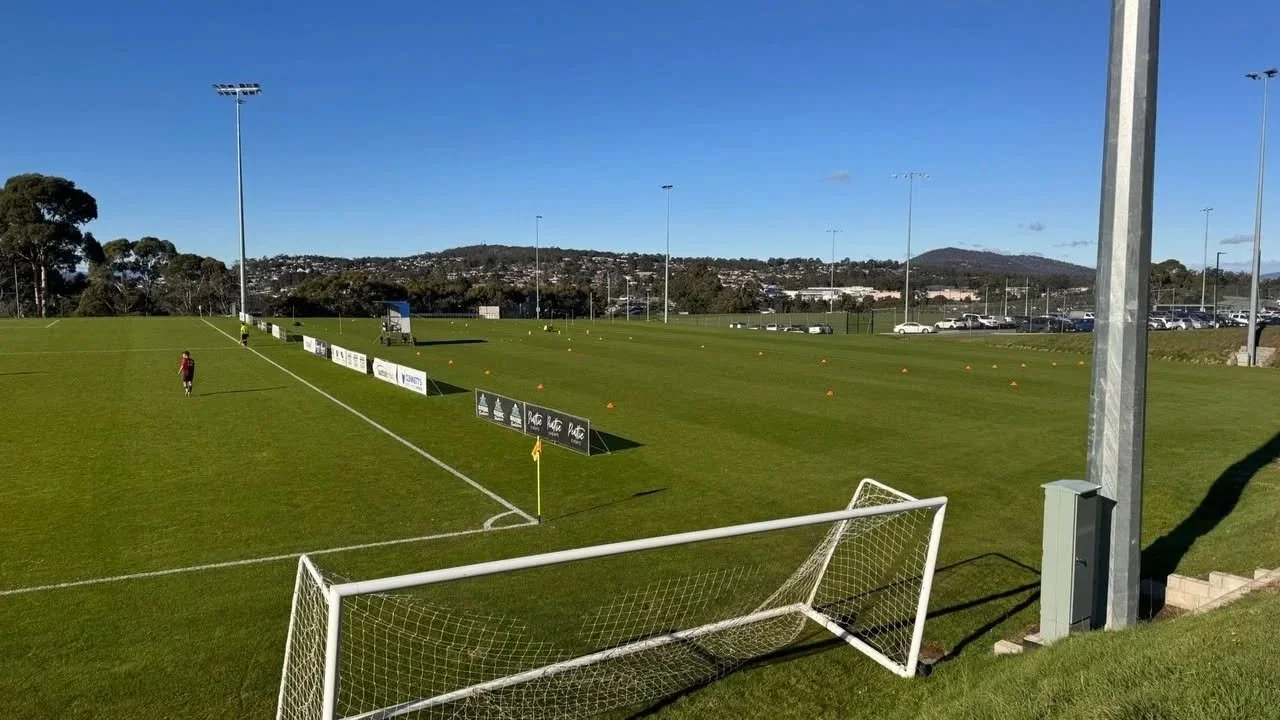
The Warm-Up Area Wars
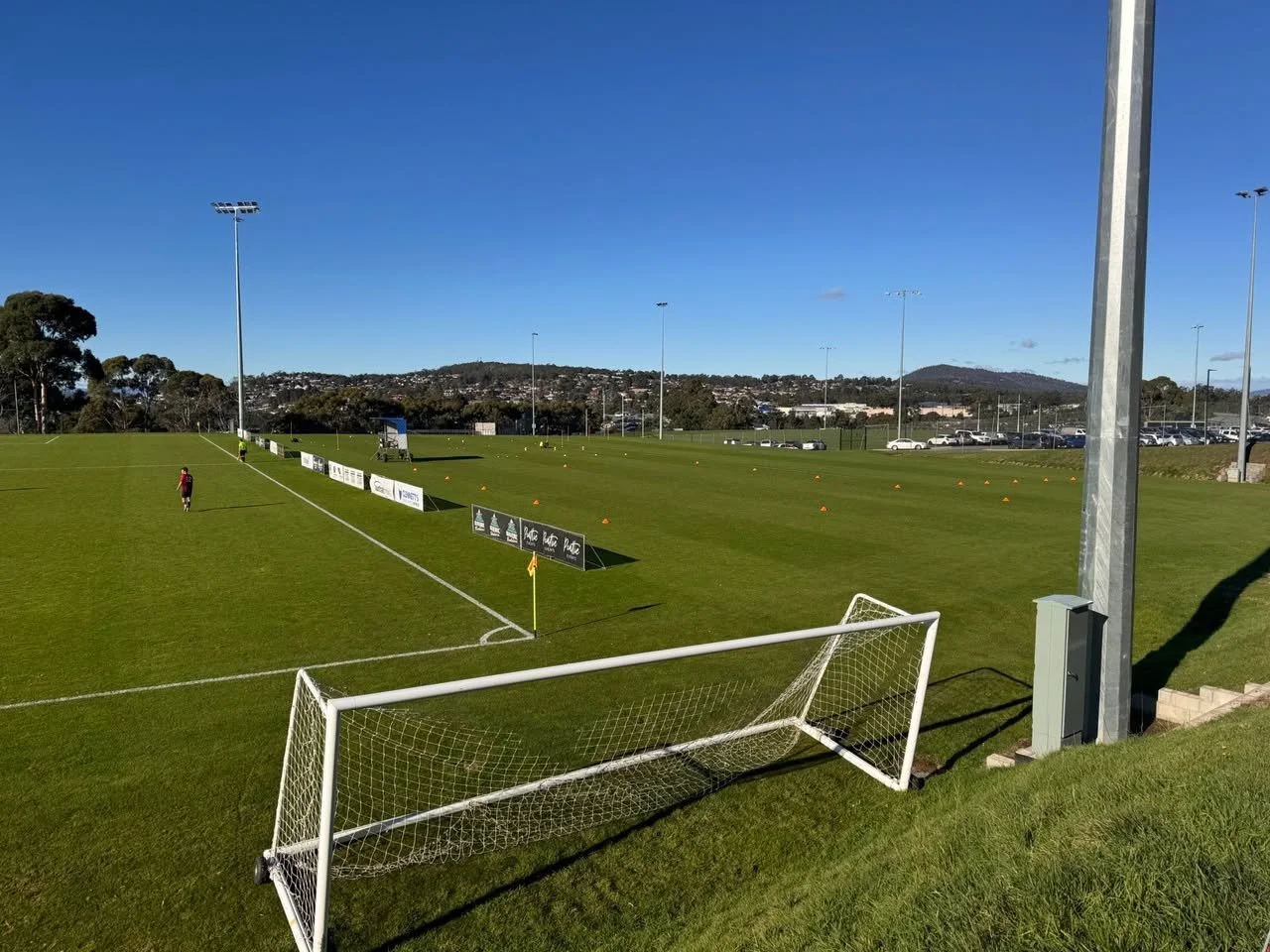
Photo courtesy of Matthew Rhodes
A post on Tassie Football Central yesterday about South Hobart's trip to Lightwood Park sparked one of the livelier football debates I've seen for a while.
The issue?
The pre-match warm-up area.
Some believed both teams should have access to the area beside the main pitch.
Others felt the home club had every right to decide how the facility was used.
Some people dismissed it as a storm in a teacup.
Others were genuinely unhappy about it.
I should say from the outset that I wasn't at the game.
I'm relying on what I read in the Tassie Football Central discussion and the conversations that followed.
For years when South Hobart visited Lightwood Park, both teams appeared to use the same warm-up area. To be honest, it always looked big enough to me.
Perhaps there are reasons I don't know about.
Perhaps there is more to the story.
But what fascinated me wasn't the warm-up area itself.
It was the reaction.
Because within minutes football people from all over Tasmania were sharing their views.
And suddenly a discussion about a patch of grass became a discussion about football gamesmanship.
Football Has A Long Memory
The comments quickly moved beyond Lightwood Park.
Some people questioned whether the decision was necessary.
Others argued it was simply home-ground advantage.
A few were frustrated by what they saw as an attempt to gain an off-field edge.
Reading through the discussion reminded me of things I have experienced and witnessed over many years in football.
I have seen sponsor banners suddenly appear over whiteboards in away changerooms.
I have experienced music being turned up so loudly that coaches struggled to conduct team talks.
I have seen visitors allocated the least convenient facilities available.
I have seen arguments over warm-up areas, access arrangements and all sorts of little inconveniences that appeared designed to make life just a little more difficult for the opposition.
None of those things ever seemed particularly important at the time.
Yet football people remember them.
The fact that a discussion about a warm-up area on Tassie Football Central immediately triggered such strong reactions tells you something.
Football has always had a curious fascination with gamesmanship.
Football's Small Wars
The funny thing about football is that some people spend enormous amounts of energy looking for tiny advantages that probably make very little difference at all.
Not better coaching.
Not better players.
Not better preparation.
Just little inconveniences for the opposition.
The sort of things that make people feel clever.
Cover the whiteboard.
Turn up the music.
Give the visitors the awkward dressing room.
Make them take the longer walk.
Send them somewhere else to warm up.
The objective is always the same.
Create a small edge.
The question is whether those edges actually exist.
The Big Names Did It Too
If you think this is unique to Tasmania, think again.
Some of the biggest names in football history have been associated with gamesmanship.
Sir Alex Ferguson's Manchester United became famous for creating an intimidating environment at Old Trafford. Opposition managers regularly complained about the away dressing room and the treatment they received on match day.
Jose Mourinho built much of his reputation on searching for every possible advantage. Opposition teams often accused his clubs of manipulating pitch conditions, watering schedules and match-day environments to suit their style of play.
Marcelo Bielsa, one of the most respected coaches in world football, became the centre of the famous "Spygate" scandal when it emerged he had sent someone to observe an opponent's training session before a match.
For years Arsène Wenger and Ferguson traded accusations about psychological warfare as Arsenal and Manchester United battled for Premier League titles.
Across South America, stories about transport delays, noisy hotels, fireworks, dressing-room conditions and hostile environments have become part of football folklore.
The funny thing is that very few people remember who won most of those individual battles.
What people remember are the stories.
Even The Stadiums Have Changed
One thing that struck me during our recent trip to the United Kingdom was hearing stadium tour guides talk about how much football has changed.
At several grounds we were told that UEFA requirements now mean home and away dressing rooms must meet the same standards for European competition.
Gone are the days when clubs could provide themselves with luxurious facilities and squeeze the opposition into a broom cupboard.
In some cases, clubs actually had to renovate facilities to meet UEFA requirements.
The principle is simple.
If two teams are competing in the same match, they should be provided with the same standard of environment.
Listening to those stories, I couldn't help but think of football's long history of gamesmanship.
The tiny away dressing room.
The uncomfortable seats.
The inconvenient facilities.
Many of those old traditions have gradually disappeared as the game has become more professional.
Sir Alex Ferguson probably wouldn't have approved.
Some of those old psychological advantages were part of Old Trafford folklore.
But modern football increasingly recognises that the contest should be decided on the pitch rather than in the dressing room.
The Difference Between Gamesmanship And Respect
One example has always stayed with me.
It wasn't about tactics.
It wasn't about football.
It was about respect.
Ken was around 75 years old at the time. He was still coaching.
We were visiting a club where he had previously coached.
He wasn't just another visitor turning up on match day.
Yet he wasn't allowed to drive the van close enough to the changerooms to unload the gear.
Instead, he had to park outside and carry everything in himself.
Now perhaps there was a reason.
Perhaps there was a policy.
But hearing what had happened I remember thinking it wasn't clever.
It wasn't creating a competitive advantage.
It wasn't gamesmanship.
It simply felt disrespectful.
Football is a small community.
Players become coaches.
Coaches become volunteers.
Volunteers become life members.
People move between clubs all the time.
The score is forgotten remarkably quickly.
The way people are treated is often remembered for years.
Let The Football Do The Talking
During my sixteen years as President of South Hobart, I saw all sorts of examples of football gamesmanship.
Some aimed at us.
Some suggested by people on our side.
My reaction was usually the same.
Why?
If you're good enough, you shouldn't need any of it.
Ken's response was even simpler.
Just get on with it.
Let the football do the talking.
The funny thing is that many of these little tricks seem to backfire anyway.
Nothing motivates players quite like feeling they've been disrespected.
Nothing creates a stronger "us against the world" mentality than believing someone is trying to gain an advantage away from the pitch.
Football history is full of examples where the side trying to be clever simply provided the opposition with extra motivation.
The Reality
Did Sunday's result have anything to do with where either team warmed up?
Almost certainly not.
The game was decided by the same things football games are always decided by.
Taking chances.
Defending well.
Making good decisions.
Executing under pressure.
The things that happen between the first whistle and the last.
The teams that usually succeed aren't the ones worrying about warm-up areas, whiteboards, parking spots or loud music.
They're the ones focused on playing better football.
Perhaps that's why Ken never worried much about any of it.
He had coached too long and seen too much.
He knew matches weren't decided by warm-up areas.
Or parking spots.
Or sponsor banners.
Or loud music.
They were decided by players.
The tricks create headlines.
The football wins championships.
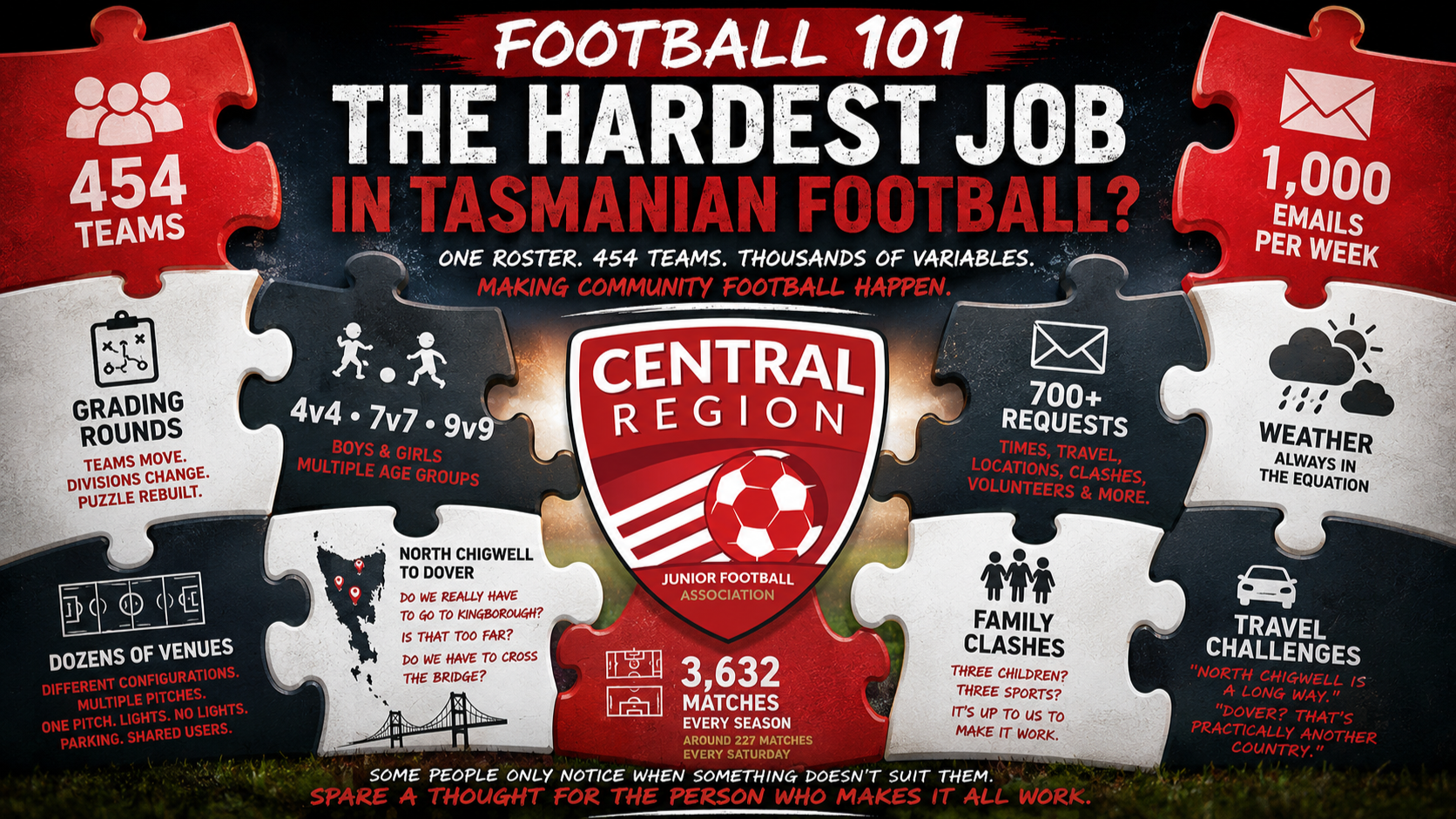
Football 101: Spare A Thought For The Person Who Writes The Roster

Yesterday I wrote about how the Premier League creates its fixture list.
It was fascinating.
Months of planning.
Specialist software.
Police requirements.
European competitions.
Supporter consultation.
More than 2,000 professional fixtures being coordinated across England's top four divisions.
By the time I finished writing, I found myself thinking about somebody much closer to home.
Our CRJFA Rosters Secretary.
Because if you think the Premier League fixture process sounds complicated, wait until you see what happens in junior football.
Let's Start With The Numbers
The Premier League schedules 380 matches.
CRJFA has 454 teams.
Across 16 rounds that equates to approximately 227 matches every Saturday.
Over the season that becomes around 3,632 scheduled matches.
Nearly ten times the number of fixtures played in the Premier League.
Yet most people never think about it.
But The Numbers Don't Tell The Whole Story
The Premier League has one competition.
Twenty teams.
One format.
Home and away.
Junior football is something entirely different.
We have 4v4 football.
We have 7v7 football.
We have 9v9 football.
We have boys competitions.
We have girls competitions.
Multiple age groups.
Venues stretching from North Chigwell to Dover.
And every ground has a different configuration.
Some can host multiple small-sided games.
Some can host a mixture of formats.
Some have several pitches.
Others have only one.
The roster is not simply a list of matches.
It is a giant football jigsaw puzzle.
Then We Change The Puzzle
The Premier League knows exactly where its clubs belong.
Junior football doesn't.
We run grading rounds.
Teams move.
Divisions change.
Competitions are adjusted.
Fixtures are rebuilt.
Imagine completing a giant jigsaw puzzle only to discover somebody has changed the picture on the box halfway through.
That's grading.
This year grading was made even more difficult by an early washout and incomplete results being submitted.
Yet decisions still had to be made.
Teams still had to be moved.
Competitions still had to be balanced.
Because at the end of the day the objective isn't a perfect spreadsheet.
The objective is making sure children enjoy their football.
The Part We Never See
Recently our CRJFA Rosters Secretary sent an update to delegates.
Reading it was eye-opening.
This season she has dealt with more than 700 fixture requests.
Seven hundred.
Requests relating to kick-off times.
Locations.
Travel.
Volunteer availability.
Team clashes.
Other sports.
And all the other challenges that come with organising community football.
At the same time she has been averaging between 800 and 1,000 emails every week.
Every week.
I suspect most of us would struggle to keep up with that volume in a full-time job.
Then Come The Emails
Jimmy has a recital.
Penny needs to play two games.
Can we move this fixture?
Can we swap this time?
Can we avoid travelling that week?
Can we start later?
Can we start earlier?
Can we play somewhere else?
Can we make it work around another sport?
The thing is, every request is reasonable.
Every request matters to the family making it.
The challenge is that there are hundreds of them.
And every solution creates another problem somewhere else.
The roster is not designed around one team, one family or one child.
It is designed around 454 teams.
The Great Tasmanian Travel Crisis
Then there is travel.
Or more specifically, Tasmanian football's relationship with travel.
We all know the conversations.
"Do we really have to go to Kingborough?"
"North Chigwell is a long way."
"Dover? That's practically another country."
"Do we really have to cross the bridge?"
The funny part is that many mainland football people would consider these routine trips.
Yet in Tasmania we can sometimes treat a 20-minute drive as if we are preparing for an expedition across the Nullarbor.
Thank goodness Eastern Region runs its own competition, some might say, because then people don't have to travel over the bridge.
Which is slightly amusing when Clarence Zebras happily travel the other way every week to compete in CRJFA.
Of course everyone prefers local games.
The challenge is that somebody has to make 454 teams fit across dozens of venues.
Sometimes that means travelling.
And occasionally that means crossing a bridge.
Sometimes Families Need To Adapt Too
One of the most common requests relates to families with multiple children playing football.
Can games be moved?
Can times be adjusted?
Can fixtures be changed to avoid clashes?
Again, every request is understandable.
But there is also a reality.
Football cannot be scheduled around every family.
I know this because I lived it.
My three boys played football.
They played futsal.
There were clashes.
There were impossible mornings.
There were favours called in.
No grandparents in Tasmania for me to phone.
There were lifts organised.
There were plenty of occasions when making it all work felt like a military operation.
That's what happens when children are active.
The solution wasn't changing the roster.
The solution was adapting.
Most football families have done exactly the same thing.
The Person Behind The Roster
The person building the roster is not trying to ruin your Saturday.
She is not deliberately sending your team to Dover.
She is not sitting there wondering how she can make life difficult for your family.
She is trying to make more than 3,600 matches work across hundreds of teams, dozens of venues, multiple formats, grading rounds, volunteers, clubs and families.
It is an extraordinary balancing act.
One that most people only notice when something doesn't suit them.
A Remarkable Piece Of Work
After writing yesterday's article, I reached one conclusion.
If somebody offered me the choice between creating the Premier League fixture list or the CRJFA roster, I know which job I wouldn't be volunteering for.
So the next time your fixture arrives and you find yourself wondering why your game is at a particular venue or a particular time, spare a thought for the person who built the roster.
Because somewhere between 454 teams, 3,632 matches, grading rounds, changing competitions, field configurations, weather, volunteers, 700 fixture requests and 1,000 emails a week, she somehow managed to make community football happen.
And that is a remarkable achievement in itself.