
Who Football Chooses to Honour

Every so often football celebrates one of its leaders.
A medal.
An award.
A formal citation.
Words like service, leadership, contribution, legacy.
And each time, something interesting happens.
The people at the top nod.
The people at the bottom go quiet.
Not angry.
Not outraged.
Just… tired.
Two different footballs exist at the same time
There is the football of boardrooms, strategy documents, governance reform and executive titles.
That football speaks the language of impact, systems, growth, sustainability and national pathways.
It is structured.
It is reportable.
It is visible.
That is the football awards are built to see.
Then there is the other football.
The football that doesn’t appear in citations
This football looks like line marking at 7am, fixing nets with cable ties, chasing unpaid fees and calming upset parents.
It looks like running canteens, cleaning changerooms, writing grants at midnight and finding a fill-in keeper when someone doesn’t turn up.
It looks like turning up week after week, season after season.
Knowing families, players and volunteers across generations.
Making sure every child is accounted for at training and matches.
Holding teams together when numbers drop and seasons get hard.
This football does not have job titles.
It has people.
Recognition flows one way
In our game, recognition usually travels upward.
Formal honours go to executives, administrators and system-level leaders.
Meanwhile responsibility flows the other way.
Downward.
To volunteers.
To clubs.
To community football.
They implement.
They comply.
They absorb costs.
They absorb pressure.
They absorb fallout.
And they do it for free.
Community football also runs on a long-standing expectation that people will give endlessly and ask for little, because it is “for the love of the game”.
That culture of gratitude is powerful. It keeps the game alive. But it also helps explain why visibility for this kind of service has historically lagged behind.
What took so long
It is also worth pausing on something else.
Football built competitions, pathways, executive structures and governance systems long before it built formal ways of honouring the people who sustained the game locally.
Systems to regulate clubs came before systems to recognise community service.
The fact that local halls of recognition are such a recent development says something.
Not about individuals.
About priorities.
Community contribution existed long before formal recognition structures did.
Football has always relied on it. It just did not always record it.
Visibility versus reality
The football that is visible at national level is structured and measurable.
The football that keeps the game alive is messy, human and constant.
It does not have KPIs.
It does not come with tenure.
It does not produce glossy reports.
It simply turns up, every week, every season, for decades.
Moments of high-level recognition often highlight the gap between the football that is visible and the football that is lived.
Who is missing
There is another pattern that is harder to ignore.
Women have driven enormous growth in football in recent years. Junior participation, girls’ pathways, safeguarding, club administration, community engagement, retention. Much of that work has been led or carried by women.
Yet formal recognition structures still struggle to reflect that reality.
That is not about whether any individual deserves an honour. It is about the pipeline that leads to recognition.
Historically, men have occupied more of the titled, visible leadership roles that honours systems recognise.
Women have often done the organising, sustaining and fixing.
One type of contribution has tended to be recorded as leadership.
The other has often been absorbed as support.
The absence tells its own story.
What football chooses to honour tells us something
Awards are not just about individuals.
They are signals.
They show which forms of service the system sees most clearly.
Which roles carry prestige.
Which types of impact are considered leadership.
Volunteers notice that.
They see the structure being celebrated.
They live the substance.
And sometimes that creates a quiet sense of distance, a feeling that the version of football being recognised is not quite the one they experience every week.
Both things can be true
Professional administrators matter.
So do volunteers.
National leadership matters.
So does the person who unlocks the shed every Saturday morning.
Recognition at one level does not cancel out contribution at another. But when visibility consistently sits in one place, it is worth reflecting on what that says about how the game understands value.
The quiet truth
Grassroots football does not run on honours.
It runs on obligation, love of the game and people who simply keep turning up.
No medal required.
And perhaps the next step for football is not to question who is recognised, but to keep widening how we define service, leadership and legacy, so that the full shape of the game can be seen.

The Night We Almost Shocked Sydney United 58

Photo of Brayden Mann - Getty Images
Some matches stay with you because they were beautiful.
Some stay with you because they were brutal.
This one was both, in the worst possible way.
In August 2015, South Hobart travelled to Sydney to play Sydney United 58 in the Round of 32 of the FFA Cup.
We went close.
Painfully close.
And then we lost on penalties, for the second year in a row.
A heavyweight draw
Sydney United 58 weren’t just a Sydney club.
They were Sydney United 58.
A club with history, presence, and a ground that felt like a fortress the moment you walked into it.
This wasn’t a polite cup tie.
This was a proper away day.
The kind where you know from the minute you arrive that you are not home.
The lead, then the swings
We scored first.
Chris “Rex” Hunt in the 27th minute, and suddenly it was real.
Not fantasy. Not hope. Not let’s just compete.
We were in front.
Brayden Mann made it 2–0 early in the second half, and at that point people started to sit up. This wasn’t a token Tasmanian appearance. This was South Hobart playing fearless football, in Sydney, against a club with pedigree.
Then Sydney United hit back.
They always do.
They scored three times and suddenly we were 3–2 down and staring at another brave effort story.
But then came Alfred Hess.
Late.
86th minute.
3–3.
For a second, everything lifted. Noise, belief, disbelief, all at once.
A goal that still makes you inhale when you replay it in your mind.
Extra time
And then it went to extra time.
The kind of extra time where nobody is fresh and every decision feels heavy.
It wasn’t glamorous.
It was exhausting.
It was survival football.
Bodies were cramping. Shirts heavy. Every run felt like a decision.
It finished 3–3 after extra time.
And then we went to penalties.
A shootout, again
The second year in a row.
That part matters.
Because once you’ve lost on penalties, you don’t walk into the next one clean. You carry memory.
We lost 3–1 on penalties.
There is no soft way to say it.
It was awful.
Exhausting.
Hard to take.
A match we were good enough to win, and close enough to steal, but still ended up walking away empty handed.
A ground that said something
The pitch was artificial.
Not the luxury FIFA kind.
A bit tired, a bit worn, but still doing its job.
The grandstand was the same.
Not flash. Not new.
But solid. Permanent.
And I remember sitting there thinking something I did not expect to think on a night like that.
If only we owned a grandstand like this.
Because in football, infrastructure is not just comfort. It is power. It is belonging. It is permanence.
One arrival, one message
We were dropped at the back gate.
No front entrance.
No greeting.
No President stepping forward to welcome the away club.
We found our own way in.
At the time, it didn’t irritate me.
It was more an eye opener.
A quiet lesson in how football culture works at that level. You are there to play, not to be hosted. Respect is earned on the pitch, not given at the gate.
The message was clear.
The invaders from the Apple Isle were nothing special.
Rudan’s relief
After the game, Coach Mark Rudan went over to Ken and said,
“We got out of jail with that one, Kenny.”
He didn’t look like a man who had cruised through a cup tie.
He looked like a man who knew how close they had been to going out.
That reaction tells the story better than any headline.
Sydney United did not feel comfortable that night.
South Hobart made them work for it.
Post-match hospitality
After the game came the hospitality.
Dry buns.
Leftovers.
Food that stuck in your throat a bit.
And maybe it wouldn’t have mattered on a win.
But after extra time, penalties and that kind of loss, it felt even more unpalatable.
Not because it was bad food.
But because everything feels harder to swallow when you’ve just come that close.
Hostile, right to the end
Even the penalties carried an edge.
Hostile kids behind the goalkeeper.
Trying to rattle.
Trying to tip the balance.
And when you’ve travelled across Bass Strait and dragged a giant to extra time, that kind of atmosphere doesn’t just sting.
It hardens the memory.
A Tasmanian reality
Tasmanian clubs don’t get many chances in national competitions and when we do, they come with travel, cost, fatigue and a subtle message that we’re lucky to be included.
That night in Sydney felt like that.
And yet, we still took them to extra time.
We still equalised late.
We still pushed a giant to the edge.
A night to remember
The Cup sells romance.
Magic.
Fairytales.
Sometimes that is true.
And sometimes the magic is not in winning.
Sometimes the magic is in getting close enough that the big club feels fear.
We didn’t win.
We didn’t get the storybook ending.
But we went to their place, in their environment, with everything against us and we nearly knocked them out.
There are losses that shrink you.
And there are losses that confirm what you are capable of.
This one did both.
And that is why it still sits in the body.
The flight home felt longer than the trip over.
A night to remember.
For all the right reasons, and all the wrong ones.

Hope, Under Pressure: Inside Football’s Deadline Day

Deadline Day Is Not Normal Life
For most people, it’s just another week in January.
For football people, the transfer window is open and nothing feels normal.
The English winter window opened on 1 January and slams shut on 2 February. That stretch of weeks is its own universe. Phones buzz constantly. Rumours fly. Group chats explode. Everyone is “just checking something”.
Deadline Day smells like coffee, stress and stale office air. Phones on charge. Laptops open. Someone pacing.
And if you know an agent? Forget it.
Our English player agent friend Mark says it best, deadline day is frantic, so if you send him an email, don’t expect a reply. He’s not ignoring you. He’s juggling clubs, contracts, player decisions, paperwork, travel, medicals and someone chasing a signature in another city.
This is the part fans see as drama. Behind the scenes, it’s organised chaos.
Transfer windows are football’s way of putting order around chaos. Without them, the richest clubs could just keep buying all season.
Why This Window Feels So Big
January is the hardest window.
Good players are under contract.
Prices are inflated.
Clubs are fixing problems they didn’t plan to have.
And this year feels even bigger because of what’s at stake. In England, staying up or going down is everything. Survival moves. Promotion pushes. Squads reshaped with urgency rather than patience.
This is where long-term planning collides with short-term panic.
One signing can mean a promotion charge, avoiding relegation, covering an injury crisis, or a season slipping away if a deal collapses.
That’s why people like us are glued to it. It’s not gossip. It’s consequences.
And fans live every rumour like it’s personal, refreshing feeds, convincing themselves one signing will change everything.
If You’ve Watched Sunderland ’Til I Die, You Get It
Anyone who’s watched Sunderland ’Til I Die will remember the transfer window scenes.
The phones.
The waiting.
The uncertainty.
Deals hanging by a thread.
You see directors and staff trying to hold everything together while the clock ticks down. It’s not glamorous. It’s tense, emotional and messy. That’s what Deadline Day really looks like.
It looks glamorous on Sky Sports. It feels like paperwork and pressure.
And that’s why people like Mark go missing. It’s not rudeness. It’s survival mode.
The Scroll Is Part of It Now
Deadline Day used to mean TV coverage and club statements.
Now it lives in your hand.
I still peek at X. I loved Twitter once, but since a certain person bought it, it’s less palatable. So like a lot of football people, I follow Fabrizio Romano everywhere else.
And when it comes to transfers, Fabrizio just knows.
The notifications. The “here we go”. The constant refresh. It’s part of the ritual now. Fans track deals in real time while clubs are still negotiating them. Rumours move faster than paperwork.
The window isn’t just happening in offices.
It’s happening on timelines.
The New Deal Sheet Twist
Now even more drama has been added.
The EFL, the English Football League, which runs the three divisions below the Premier League, Championship, League One and League Two, has introduced deal sheets, like the Premier League uses. If a deal is agreed but paperwork is running late, clubs can lodge a form before the deadline and get extra time to finish the admin.
It sounds technical. It’s huge.
It stops transfers collapsing just because a form was late or a printer jammed somewhere.
It won’t stop the panic.
It just moves the chaos from 7pm to even later.
The Risk No One Talks About
Deadline Day isn’t just exciting. It’s risky.
Clubs are overpaying because time is short, rushing medicals, gambling on short-term fixes, and making decisions under pressure.
That’s why so many January signings don’t work. For every signing that saves a season, there’s another that quietly disappears by April.
And somewhere in all of this is a player waiting to find out where they’re living next week.
Why We Love It Anyway
The clock becomes the main character. Every minute louder than the last.
It’s unpredictable.
It’s tense.
It’s full of possibility.
Deadline Day is football’s version of the final minute of a grand final. Anything can change.
The window might look like theatre on TV, but at every level of the game it’s really about one thing, trying to give your team a fighting chance.
The scale changes.
The stress doesn’t.
Deadline Day isn’t about money.
It’s about hope, under pressure. ⚽
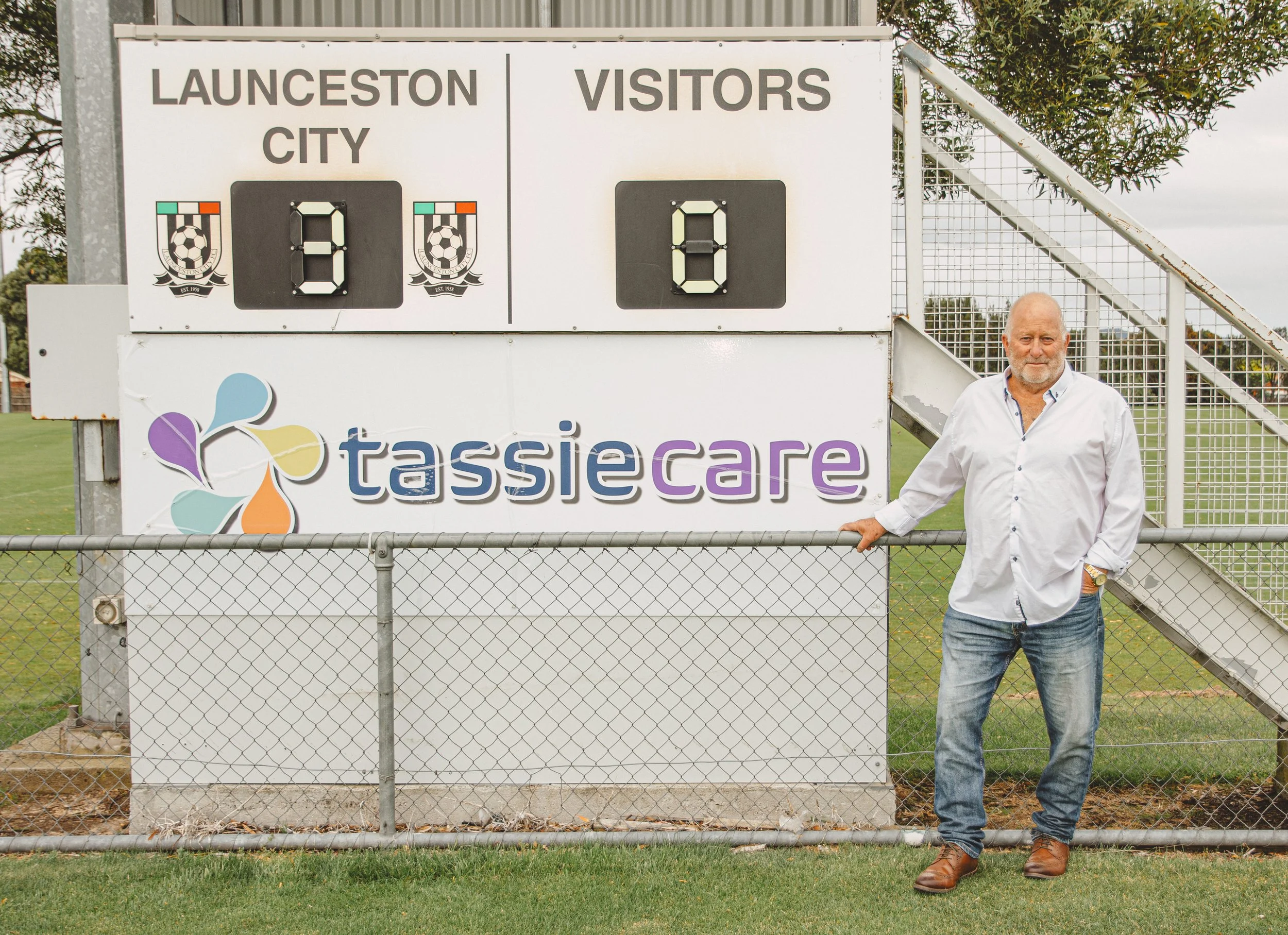
Danny Linger - The Accidental Football President
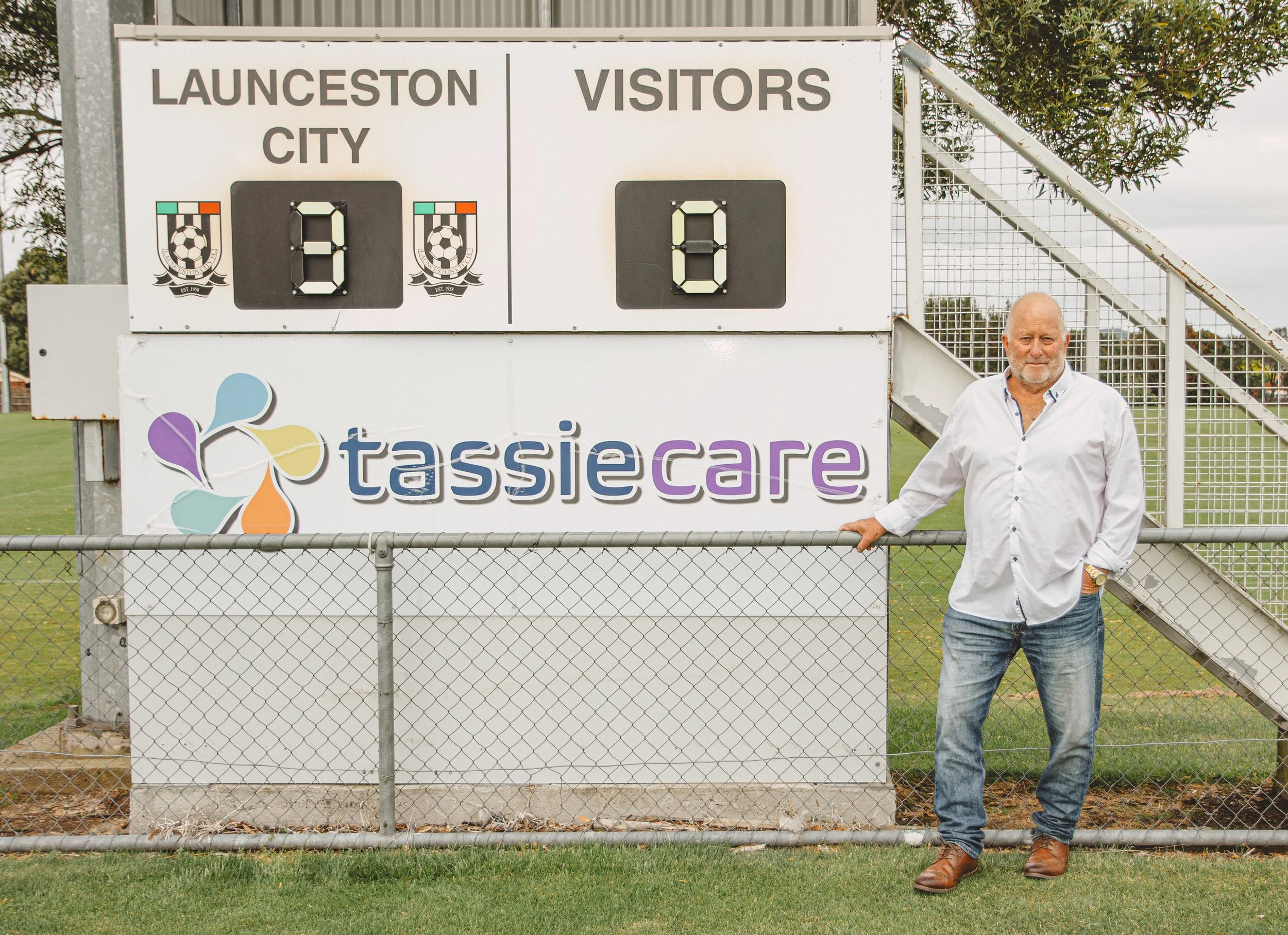
Danny Linger photographed by Nikki Long
Community football in Tasmania runs on volunteers who often arrive as parents, then slowly find themselves carrying whole clubs. Danny Linger, President of Launceston City FC, is one of those people. His story is practical, personal and at times blunt, especially when it comes to the demands placed on Tasmanian clubs and the gap between national expectations and local realities.
How Danny found football
Danny’s first involvement in football was not as a player or a coach.
It was as a parent.
When his son Jarrod started playing with his mates from school, Danny found himself at the sideline. He thinks it was around 2006, although he says he should check. Football, still referred to as soccer across most of the country, was not his first choice. He is more aligned to motorsport. But he could see the benefits of a “non-contact” sport and he jokes that it was probably more the mums who liked that part.
What struck him early was how enjoyable it was for all participants, even the parents. He remembers the smiles on those little faces and says that alone was reward enough.
In those early days he even thought it was great to get an early game on a Saturday at Churchill Park, because it left the rest of the weekend free to do all manner of other activities.
Little did he know that would soon change once they moved into senior football.
From there, joining Westside Devils felt natural. It was the power of numbers, all the boys from school joining the same club. For those not in the know, Westside Devils Junior Football Club was the junior feeder club to Launceston City FC, the senior counterpart based out of Prospect Vale Park.
Danny says he feels very fortunate and extremely proud that circumstances ensured he became part of such a fantastic club.
Why he still shows up
Jarrod has long since moved on with his life in Queensland but Danny is still deeply involved.
He says the question of why he keeps doing it could involve a very long winded and in-depth answer, but he tries to keep it as concise as he can. After working so many hours at all manner of tasks and club positions, he says the real answer is a sense of social responsibility to do as much as he can in this space.
Even now, he gets a huge amount of satisfaction seeing all the juniors running around in their treasured City tops each week. Whether that is normal team training or as part of the Juventus Academy, he says it really is a great sight.
He takes great pride in seeing junior and youth players develop into genuine respectful adults. Regardless of whether they continue in the sport or not, he says if that is all they achieve then they have succeeded.
The second part of the answer, he says, is a determination to continue developing the facilities.
He is careful here. He says his next comment is not intended to upset any other clubs because everyone has a passion for their own home base, but he firmly believes that, in general terms at least, Prospect Vale Park is right up there with any other football facility in the state, at least on field.
The pitches and the overall available space are right up there.
Off field, he says, they are lacking. Things are moving, but as everyone knows it is a slow burn and they need to keep pushing for what they deserve. With almost 900 members, he says four change rooms just do not cut it.
He says it has been a long road, but they are slowly making ground. They have also worked very hard to build relationships with major partners, mainly The Australian Italian Club and Meander Valley Council.
What a club President actually does
Danny says his day-to-day tasks have changed over time.
In the early days he was setting up on game day, acting as NPL team manager, something he says he really enjoyed, driving the bus and generally communicating with members, Football Tasmania and council.
During COVID, he describes it as a big year, with many early mornings trying to produce all manner of documents so everyone could get back on the park. He says he was exhausted after that.
In later years he says he has mainly dealt with infrastructure, senior committee matters and of course the various NPL regulatory requirements.
He does not think he would be too different from many other volunteers, but he believes most people outside club management would be shocked at how many hours volunteers dedicate to their club, to the point of it almost being a second job. He points to volunteers who are at the club multiple times per week to ensure everything is clean, tidy and runs smoothly on game day.
His message is straightforward.
Do not sit back and think it all just happens.
Roll up your sleeves and help, even if it is only for an hour.
You might actually enjoy it.
The hardest part nobody sees
Danny says straight up that volunteers do not do this for any accolades or thanks.
That is not it at all.
In saying that, he says it is nice to hear compliments instead of complaints, but at the end of the day they do the best they can with the time they have available, they really do try.
He often admits they do not always get it right, but he says the column with the ticks is much longer than the one with the crosses. They do make a difference.
He says the hardest part is not having enough time and energy to devote to getting things done. He always feels there is more to do and so little time to make it happen. He says it can be frustrating getting bogged down in official red tape.
Standards he will not compromise on
Danny says that in the last few years the club has really developed its management structure, especially since the amalgamation with the junior club back in 2019.
They are always aiming for best practice in all areas and he says they are proud of their work in achieving national Club Changer accreditation and all the work that went into it. He says the recognition from Football Australia reflects that work.
If he has to pick a standard that is non-negotiable, he says it is their child protection framework, ensuring they value and protect their junior members.
That is something, he says, they cannot and will not compromise.
How do you balance being welcoming and inclusive with lifting standards and performance?”
Danny says this is a very difficult question and he is not sure he can answer it without writing a novel.
He points to the scale. More than 70 teams, from U6 to WSL to NPL.
He says they have highly valued and smart professionals working at the club, much smarter than him, and each person makes a commitment to ensure the club aligns to its values without compromise.
What junior football should be about
Danny says his view is probably already evident.
He believes junior football should be about developing respectful well-balanced adults.
To some degree the rest is secondary.
By the time players get to senior football, he says winning becomes part of life and something they strive for each day.
The biggest structural weakness in Tasmanian development
Danny is blunt.
An 18-game senior NPL roster.
He says it is embarrassing.
He asks how this happened. He asks how Tasmania can possibly expect to develop and compete on the national stage when the competition is so short. He acknowledges finals exist, but he points out not all clubs will reap any benefit from those extra games.
He then compares it to other states. He says NPL Victoria plays a roster of 26 games while NPL New South Wales ends up with a 30-game roster, and he asks you to check that.
The true cost of facilities
Danny explains that Launceston City is in a unique position.
The club facilities are located on private land they lease, while the pitches are owned by Meander Valley Council. The location brings certain advantages, but it also carries a huge burden as they develop their infrastructure.
He says they are extremely grateful to council for the work they have done and continue to undertake to develop the on-field facilities, but as the club increases its investment off field it comes at a cost, and he suggests asking the finance department.
He says they are starting to see an increase in external entities wishing to utilise Prospect Vale Park, which is exciting, but to make the most of those opportunities they need to invest even more money.
His wish is to finish stage 2 of their development, but he fears that is a long way off and the cost is growing each year.
Where clubs are carrying too much
Danny laughs and says, oh boy, this is a good one.
He says the short answer is he finds it incredible that in a state of a little over 550,000 people, about the same as the population of the Gold Coast for instance, clubs are expected to meet the same criteria as every other NPL club in the country.
He says some of this has meant clubs have stepped up and improved, but when clubs are expected to meet the same infrastructure requirements as mainland NPL clubs, he feels it goes too far. There is just not the money available to invest.
He says certain entities forget they are all volunteers working their butts off just to put teams on the park. At the end of the day, he says it is the volunteer clubs that have the most to lose financially, and they are not given enough credit for all that hard work.
If Football Tasmania handed him the pen
Danny’s answer is short and sharp.
Listen and engage with your stakeholders.
Do not just nod and smile.
Actually act on the feedback provided by the major stakeholders, and he says he does not mean cherry pick what suits a pre-set agenda.
He says between the clubs across the state, the level of expertise available is immense, something any national organisation would cherish, yet he does not feel it is tapped into too wisely.
The best decision he made, and what he would do differently
Without doubt, Danny says the best decision would be pushing ahead with the junior and senior amalgamation in 2019.
He says it had been spoken about for some time, and the opportunity arose due to the senior club needing to update its 40-year-old constitution and the fact the junior club did not have one at all.
He says they discussed it with the junior committee, and then Alex Aylott, Junior President at the time, and Danny exchanged letters of intent. They worked at it during that year and took it to a Special General Meeting.
He says it was almost an anticlimax with a unanimous vote, but it was a great feeling to finally get it done.
Since then, he says, the club has gone from strength to strength. They have a board in place overseeing various committees and he says it seems to be working well.
He is careful to add they would not be where they are today without the commitment of previous committees. He does not want to take away from what people did over the years to establish the club in the first place.
On regret, he says he is not sure there is anything in particular. He says maybe over the years he could have spent less time on the day-to-day stuff and concentrated on moving the club forward, but it is not really a regret as such.
The brutally honest message to councils and government
Danny says football is here.
Football is growing.
And it is not about the shape of the ball.
He says football deserves better and government and councils should come along for the ride, not sit back and watch.
He adds, and remember, we vote too.
If he stepped away tomorrow
Danny says the club is currently undertaking refurbishment of nearly 50-year-old original change rooms thanks to a Federal Grant on the back of Play Our Way funding.
Construction is due for completion around April, but it still only gives them four individual change rooms. For a club of their size, with both male and female teams, he says they really need at least six, along with the additional storage that comes with that.
He says he is proud of the Peter Mies Pavilion, but they still need another $2 to $3 million to complete the development. He jokes that other than selling kidneys on the black market, he is not sure when or how they can gain that funding, and says they will just keep pushing.
He says council is working on an upgrade to their access off Westbury Road and they are collaborating on a lighting upgrade that is long overdue.
Watch this space, he says.
Finish this sentence honestly
Tasmanian football won’t truly improve until we actually come together as one.
Danny says that means grass roots, clubs and all participants have a voice that is heard, actually listened to and given a real chance to collaborate on the future of the sport. That voice needs to be clearly heard and understood from all key bodies.
Football Tasmania, Football Australia, and most of all politicians.
He says they should be seen all year round at games and events and collaborate to enrich the game, participation and the lives of young people. He says he does not mean show up when it is convenient, he means actually listen and act to make change.
He says they do not want to just see politicians at election time, although to be fair there are some that show up more than just every three years and that is appreciated. They know who they are.
He then returns to governing bodies. They say they are consulting and listening. He says he is yet to be convinced on that point and he will just leave that right there.
The final word
Danny adds something he wants included.
How much the club values volunteers and sponsors.
He says Launceston City and in fact all clubs, cannot function without them. Together they provide a community service that is quite often undervalued.
Launceston City really does have the best support, he says.
And he cannot thank them enough.
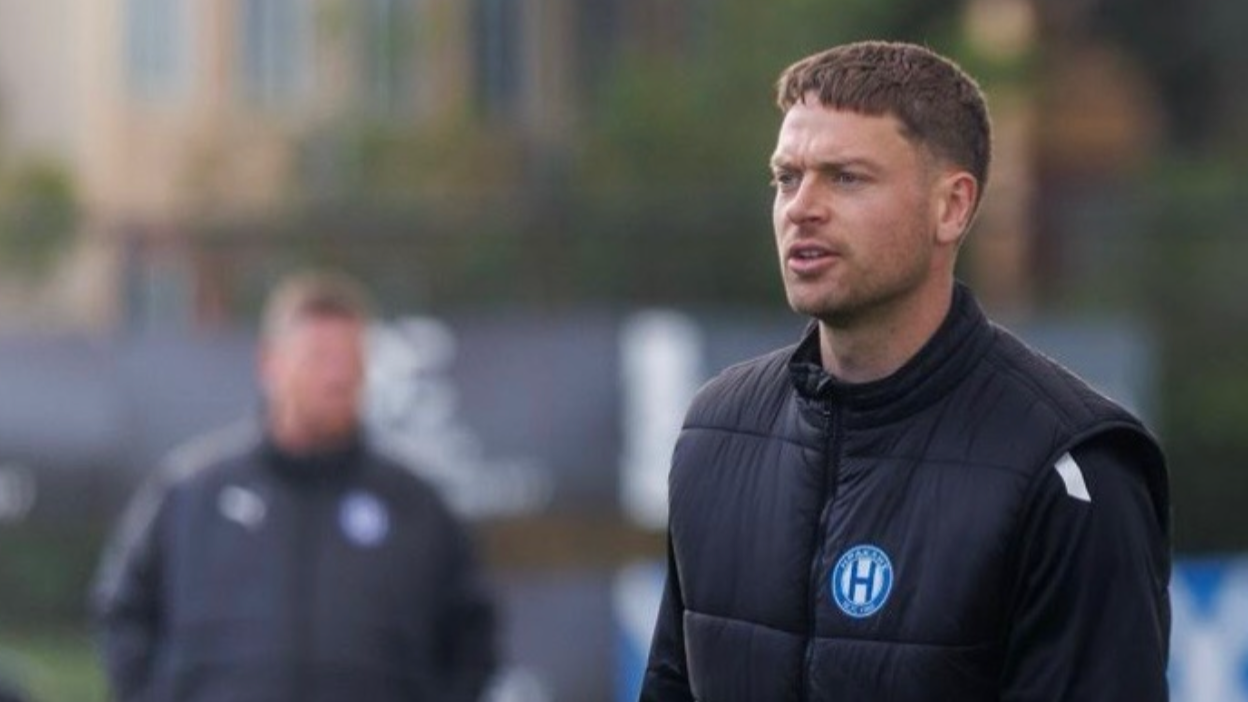
Max Clarke: Home, But Not Home
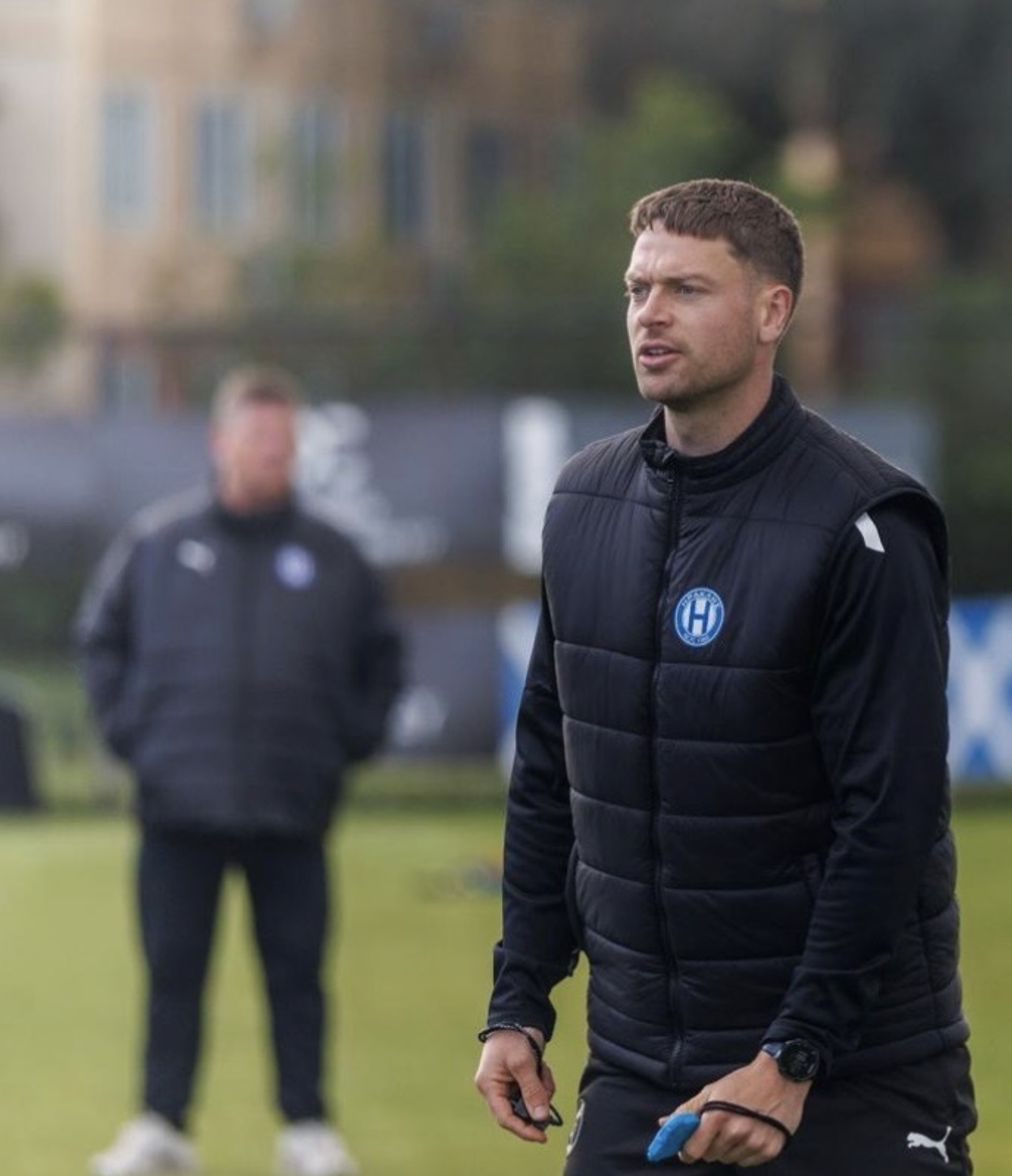
Max Clarke - Photo courtesy of Northcote City
Tomorrow my son Max will walk back into Darcy Street, not as South Hobart’s coach, but as the opposition.
That sentence still feels strange to write.
Last season, Max coached South Hobart. He didn’t just coach us, he led the club through one of those rare seasons that supporters remember for years, a League and Cup double and a team identity that people genuinely connected with.
Now he is returning with Northcote City.
Different badge.
Different changeroom.
Same ground.
Same faces.
And for me, as his mum, it’s an odd mix of emotions, pride, sadness and the quiet reality of what ambition looks like in football.
Tasmanian football is small enough that nothing is anonymous.
When someone leaves, everyone has an opinion.
When someone returns, everyone reads meaning into it.
But most of the time, the real story is not drama.
It is growth.
It is the emotional cost of choosing a pathway.
And it is the complexity of holding two things at once, love for your home club and the need to keep moving.
I wanted to capture this moment properly.
Not as a match preview.
Not as a headline.
But as part of the written record I am building about football in Tasmania, what it asks of people, and what it gives back.
So I asked Max to reflect honestly on returning home, and on leaving home.
Coming back with a piece of home intact
Max said the return feels exciting.
Not loaded.
Not bitter.
More like pride.
A chance to share his hometown and his home club with his new team, and to show how he has evolved as a coach.
“It doesn’t feel like a return with bad blood,” he told me.
“It feels like coming back with a piece of home still intact.”
That line stayed with me.
Because it is possible to leave without rejecting where you came from.
And that is not always how Tasmanian football reads it.
Home, but not home
Darcy Street will feel familiar.
But Max will not be walking into the home changeroom.
He will walk in, take in the place that still holds memories, and then step into the away changeroom and flick the switch.
He described the contrast perfectly.
Walking into Darcy Street will feel like home at first.
But the moment he steps into the away changeroom, it becomes business.
He has never experienced that contrast before.
And he is curious about how it will land in the moment.
That is the reality of football.
The same ground.
The same smell.
The same people.
But suddenly the emotional context is different.
The decision to leave
When a coach wins a double, people assume they will stay.
Comfort is seductive.
Success makes you want to settle.
Max didn’t.
He said leaving South Hobart was the hardest part.
Not because the club was failing.
The opposite.
It was because the club felt like family and was genuinely growing.
But ambition outweighed comfort.
He was careful about choosing his next environment.
He wanted the right next step, not just the next step.
And he is confident he got it right.
That matters to say.
Because too many people interpret leaving as an insult.
Sometimes it is simply a coach being honest with themselves about their pathway.
The emotional cost people don’t see
This is the part many football people pretend isn’t real.
They talk about “opportunities” like the human being is not attached.
Max described the emotional weight clearly.
He said people judge these decisions at surface level.
What they don’t see is the emotional cost, the sacrifice, the uncertainty, and the loneliness that can come with football.
That loneliness is real.
Leaving familiarity.
Leaving daily support systems.
Leaving identity.
Football is a career pathway, but it is also a constant dismantling and rebuilding of self-belief.
Especially for young coaches.
And especially when the football world is watching, even if it doesn’t understand what it is looking at.
Why he came back last year
There is another piece of the story that matters.
Max returned to Hobart last year after being in Melbourne.
He said he recognised football is built on connections as much as qualifications.
Coming home gave him stability, support, and familiarity.
It gave him the kind of environment where he could work clearly.
While there were other opportunities, he said Northcote felt right and allowed him to build with confidence rather than rush the next step.
That’s maturity.
Not taking the first offer.
Not chasing status.
Building carefully.
The double wasn’t the real prize
The trophies mattered.
They always do.
But Max said the bigger achievement was rediscovering his confidence and passion as a coach.
That is not a line you hear often, but it is the truth behind most successful seasons.
Coaching is exhausting.
It is exposure.
It is giving everything, and being judged anyway.
The double did more than fill a cabinet.
It solidified identity.
Max said South Hobart built an identity in how the team played and carried itself, and that clarity has shaped the way he coaches now.
When you watch coaches closely, that is what separates them.
It is not tactics alone.
It is identity.
What he is proud of, beyond trophies
When I asked Max what he was most proud of from his season at South Hobart that had nothing to do with trophies, he didn’t hesitate.
He said he was proud of the collective.
The identity the group built.
The behaviours they lived by.
The way players grew into new roles.
He said the togetherness of the group and the bond they shared across the season is something he will always value.
That is a coach speaking about leadership, not results.
The coaching evolution, what has actually changed
It is easy for coaches to say they have “evolved tactically”, but Max went a step further.
He said he is more adaptable now and manages games better.
He has clearer principles around his style of play, and a better understanding of when adjustments are needed to get results.
He is also more conscious of selecting players based on what a game requires, not just who looks best on paper.
Then he gave a specific example, and I appreciated the honesty.
Looking back at his last away game at Heidelberg with South Hobart, he felt he was probably too stubborn and didn’t respect how strong they were.
Now, he said he would approach that game with more balance and pragmatism.
That is real coaching growth.
Not the tactical diagram stuff.
The psychological stuff.
The humility to learn.
The Northcote project
He is excited about Northcote’s potential.
He described a club with strong history, ambition, and a willingness to do things properly.
He said the challenge has been quickly reacquainting himself with the league, and that has meant leaning on staff and players.
That line matters too.
Young coaches often think they have to prove themselves by doing everything alone.
Max is learning how to lead, and how to trust.
And that builds teams.
Family clubs and professional programs
Max’s perspective on environments was balanced.
Some clubs are exceptional at building a family culture, which matters deeply to him.
Other clubs have resources that allow for sustainable, professional programs.
He said he has learned from both.
That is football in Australia.
Especially in states like ours.
We do not all have the same foundations.
We do not all have the same money.
But the love of the game is not the only ingredient.
Structure matters too.
Tomorrow at Darcy Street
I asked Max what will be the hardest moment tomorrow.
His answer surprised me.
He said he doesn’t think there will be a hard moment.
He tries to enjoy games for what they are.
And tomorrow will be about appreciating a good contest with familiar faces and two teams trying to play the right way.
That is not a defensive answer.
It is a grounded one.
It shows how he’s processing this return, not as drama, but as football.
Although everyone else will probably still feel the emotion.
What he would tell his younger self
This was the line that wrapped the whole thing into one truth.
Max said he would tell his younger self to do it anyway.
Growth is uncomfortable, but necessary.
Leaving doesn’t mean disloyalty.
It means being honest about your potential.
And trusting that the relationships that matter will endure.
Final thoughts
Tomorrow’s match will have its own story.
But this post is not about the score.
It is about the complexity that sits underneath the surface of football in a small community.
Ambition has a cost.
And in Tasmania, where football is tight-knit and long-memoried, that cost is amplified.
But people don’t leave because they don’t care.
Often, they leave because they do.
Because they are trying to become something.
And because deep down, they trust that what mattered will still be there when they return.
Even if it is with a different badge.

It All Started at Meercroft Park

Danelle Last. It all started at Meercroft Park.
Danelle Last: Devonport Junior Soccer Association
I have known Danelle Last for many years, and I have lost count of the times I have called her for advice.
Usually it has been around the messy, high-pressure stuff, administering big junior events like the Hobart Cup, sorting systems, schedules and solving problems before anyone else even realises they exist.
Danelle is one of those people who makes junior football work.
Not with noise.
With competence.
With care.
And with a steady hand.
Football Faces Tasmania interview -
I love stories like Danelle Last’s because they are so recognisable.
Not the “born with a football at your feet” stories.
The real ones.
The ones where football comes barging into a family’s life, almost by accident, and then never really leaves.
Danelle didn’t grow up in football.
She grew up in an oval shaped football family, which is Tasmania in a nutshell.
But once her boys stepped onto the grass at Meercroft Park, it was over.
Saturday mornings became the rhythm of their family.
And eventually, so did committee meetings, team management, state team travel and all the invisible work that holds junior football together.
Since this interview was first done, Danelle has stepped away from her formal role at Devonport Junior Soccer Association, but in the way that so many good volunteers do, she hasn’t stepped away from the people.
She continues to mentor those who have taken on the roles behind her and she is still right there in the background, supporting her family as they chase their own sporting journeys.
That says as much about her as anything in this interview.
First football memories
My first football memories came from my boys.
Growing up we were an oval shaped football family. I knew absolutely nothing about the round football.
When our children got to an age where they could participate in a team sport, our first chose football.
In 2007 our Saturday mornings at Meercroft Park started with one playing and the other three following in the years to come.
My husband was always involved with coaching one of their teams.
Who instilled my love of football?
Most definitely watching my four boys play.
How long have you been involved and what roles have you played?
My personal involvement started in 2013.
It was the first year of the new Port Sorell Primary School and I was asked to coordinate the school teams. A joint role at the time with Ian Davies.
In 2014 I was asked to attend a Devonport Junior Soccer Committee meeting.
In 2017 I stepped into the role of Secretary, knowing I had big shoes to fill with the amazing job my predecessors, Marlene Crabtree and Bonnie Phillips, had done.
As my boys reached high school, I also filled roles as team manager for Youth Strikers teams.
What was football like in Tasmania when you started, and how has it changed?
I knew nothing about football when our boys started to play.
But in the time I have been involved, I have seen lots of good progressions and a few regressions.
The development and priority of women and girls has been encouraging.
There is now, for most people, a bigger emphasis on development.
How has football affected you and your family?
When football came along and became such a big part of my life it was quite a surprise.
The people who are now lifelong friends.
The DJSA committee (former and current) that are, in my biased opinion, the best committee in the state.
Friendships made at the Strikers, other associations, the boys state teams and through Football Tasmania.
Regardless that two of our boys have eventually chosen different sports, football has been a big part of all their lives.
Playing, reffing, coaching, state teams, the year of travelling to Hobart two to three times a week.
The friendships, the mentors, the coaches, the managers.
The people that have supported, encouraged, celebrated, and commiserated.
Which Tasmanians have affected your involvement in football, on and off the field?
When I saw this question, my thoughts went to the people that have made me want more for the game, more for Devonport, and made me want to be a part of the progression.
They have become my close friends, the people that have shared so much of this football journey with me.
Richard and Jayne Bidwell.
The other person is someone who has always been there for Justin and myself as a go-to person for advice, but more importantly as a mentor and role model for my boys.
Chris McKenna.
If you could change anything in Tasmanian football, what would you do?
Playing, training, coaching, refereeing would be accessible and welcoming to everyone.
Looking back, what do you think your legacy might be?
I hope it is a while before I leave a legacy as such!
I have been fortunate that football has enriched my life personally and as a Mum.
So many highlights, proud moments, and experiences.
Those first under six games to NPL and everything in between.
Standouts being, a manager for a team DJSA took to the Kanga Cup in Canberra, watching my eldest son coach my youngest and a special recent NPL game.
But it all started for us at Meercroft Park.
I would hope that I have helped make a difference in ensuring that each and every player, coach and referee attend on a Saturday morning and at the Devonport Cup, feeling safe, supported, included, and looking forward to the fun they will have.
I cannot take credit for the success of Devonport Junior Soccer Association, but I can be proud to be part of such a great team.

Glen Roland and the Fight Clubs Shouldn’t Have to Have

I have been thinking about Glen.
Not just about the shock of his death, but about the conversations.
The football conversations.
Because Glen didn’t talk football like small talk.
He talked football like someone trying to build something that would last.
And in the last couple of years, that meant one thing in particular.
Glen was trying to get South East United into the State League, the NPL, the highest level of club football in Tasmania.
He wanted his club to be stronger
Glen and I talked about football, clubs, ambition and growth.
He wanted South East United to be stronger.
Not just for the current players.
But to build something with real pathways, something that made sense, something that gave kids a chance to climb.
He loved talking football with Ken
One thing I always noticed.
Glen loved talking football with Ken.
Not politics.
Not drama.
Not the noise.
Football.
He wanted to learn.
He wanted to compare ideas.
He wanted to understand what “good” looked like.
And he wasn’t offended by standards.
He wanted standards and he wanted to meet them.
He rang me for advice
During the State League application process, Glen rang me for advice a couple of times.
He didn’t call to complain.
He called to understand.
To check what he might be missing.
To make sure he wasn’t walking into a dead end.
I told him what I knew and I said it plainly.
Because Glen could handle plain.
He wanted clarity, not comfort.
He didn’t even know he could appeal
And I still remember this part clearly.
Glen didn’t even know he could appeal.
It was me who told him to.
That fact alone says a lot.
Not about Glen.
About the system.
If the pathway is clear, people don’t need to be told the rules by someone else who has been around long enough to learn them the hard way.
What is CLAS, and why it matters
For readers who aren’t immersed in football governance, CLAS is worth explaining.
CLAS stands for Club Licensing and Accreditation Scheme.
It is the framework clubs must meet to participate at higher levels.
In simple terms, it is a set of standards and compliance requirements that clubs must satisfy in areas such as:
governance and administration
finance and reporting
child safety and member protection
coaching and technical programs
facilities and match day requirements
strategic planning and club operations
In theory, this is a good thing.
Standards should exist.
Licensing should exist.
No one wants chaos, poor governance or unsafe environments.
The issue is not that standards exist.
The issue is what happens when the system becomes unclear, inconsistent, or subject to shifting interpretation.
He did what clubs are told to do
Glen worked out what the requirements were.
He worked out what the boxes were.
And then he set about ticking them.
He looked at the CLAS categories, what was needed, what evidence was required, what the pathway looked like.
He worked hard.
It wasn’t a casual ambition.
It was proper.
He didn’t just say his club wanted to go up.
He tried to do it the right way.
He thought he had met the standard
Glen genuinely believed they had done what was asked.
That they had met the requirements.
That if you do the work and you meet the standard, you get the opportunity.
That is how sport is supposed to work.
Then Football Tasmania said no
Football Tasmania said no.
So Glen appealed.
Because he was determined and because he believed he had met the standard.
And when it went beyond Tasmania, Football Australia ultimately found in his favour.
They were in.
That should not be how clubs find certainty.
Not in a system that claims to be transparent.
Not in a system clubs are expected to trust.
Competition structures should not be this hard
This is the part I keep coming back to.
Competition structures should not be this hard.
Clubs should not have to fight for clarity.
Clubs should not have to fight for certainty.
Clubs should not have to feel like they are on shifting sand every season.
And it is not just the big licensing decisions.
It is the constant churn.
The constant changes.
The constant re-explaining.
Explaining change is exhausting.
It drains volunteers.
It burns clubs out.
And it makes the game feel unstable.
We still don’t know next year’s structure
And here we are again.
We still don’t know next year’s competition structure.
Clubs are expected to plan budgets, recruit coaches, recruit players, support juniors, build pathways, schedule training and match days and retain volunteers.
Yet we are not given the certainty that any well run system would provide.
Did clubs get a say?
Were clubs consulted?
Or do we find out when we are told?
Football Tasmania must work for its members. Us.
Competitions should be Football Tasmania’s number one priority
I have harped on about this before and I will keep saying it.
Competitions should be the number one priority of Football Tasmania.
Not branding.
Not performance.
Not endless frameworks.
Competitions.
Because when competitions are clear, predictable and stable, clubs can breathe.
And when clubs can breathe, they can build.
And above all, supporting clubs and volunteers with clarity and consultation, instead of constant change and confusion.
Glen deserved better than a fight
Glen did what clubs are told to do.
He worked hard.
He was ambitious.
He wanted to build something good.
He should not have had to fight for certainty.
He should not have had to navigate a maze.
His story should be a warning.
Not about ambition.
About governance.
What I want to say, simply
Glen cared.
He cared about his club.
He cared about pathways.
He cared about standards.
And he cared enough to do the work.
That matters.
That is leadership.
And that is why his absence will be felt deeply across Tasmanian football.
Vale Glen Roland.
I’m glad we spoke about football. I’m glad Ken spoke with him. I’m glad he kept pushing.

Vale Glen Roland

Thanks to South East for the photo. A perfect photo of Glen.
For Glen Roland, a Big Man with an Even Bigger Heart
Some news stops you in your tracks.
The sudden passing of Glen Roland, President of South East United Football Club, is one of those moments.
A young man taken far too soon.
A man with a family who adored him.
A football person, through and through.
And a club leader who carried more than most people will ever see.
Today, my heart is with the South East United community and most of all with Glen’s family, his loved ones and the people who will now have to work out how the world continues without him.
Because the truth is, when you lose someone like Glen, it is never just the loss of one person.
It is the loss of a whole centre of gravity.
Football is not just a game
This is one of the reasons I write.
Because from the outside, football clubs can look like something simple.
A weekend hobby.
A bit of sport.
Eleven players, a referee, some goals, a few cheers.
But anyone who has lived inside a club knows the truth.
A football club is a community.
A football club is belonging.
A football club is family.
A football club is the thing that holds people together when life is hard.
And sometimes, heartbreakingly, it is the thing that people pour themselves into right up until the end.
Glen was more than a President
South East United has shared the sad news of Glen’s passing, and their words were true.
Glen was far more than a President.
He was one of those club leaders who doesn’t just “hold the position”.
He holds the whole club.
The organising.
The worrying.
The meetings.
The emails.
The quiet planning nobody sees.
The constant pressure.
The responsibility.
And still, he showed up.
A leader driven by love
I spoke with Glen not that long ago.
And what I saw was not ego.
Not status.
Not politics.
I saw love.
He loved his club.
He loved his people.
He cared deeply about what South East United could become and what it could offer the players and families who belong there.
He was ambitious too.
He wanted South East to grow, to be taken seriously, to earn its place.
He was worried about licensing and whether the club would be granted the opportunity to step up.
That matters.
Because licensing is not just paperwork.
It is not just systems and boxes and policies.
For clubs like South East United, licensing is the difference between being told “you are welcome” or being told “you do not belong here”.
And Glen cared because he knew what that outcome would mean to his people.
That was Glen.
Ambitious, driven, determined.
But underneath it all, motivated by love.
The hidden work of volunteer presidents
Volunteer club presidents don’t get applause.
They don’t get press conferences.
They don’t get an annual wage.
What they get is the late-night phone calls.
The complaints.
The constant stress.
The weight of being the person everyone expects to fix everything.
They carry the club on their shoulders and then go home and try to be a parent, a partner, a son, a friend.
They do it out of duty and out of care.
And when that kind of person is suddenly gone, it leaves a hole that is hard to describe.
Because they weren’t just a name on a committee list.
They were the engine.
Vale Glen
It is a terribly sad day.
Glen Rowlands was a big man with an even bigger heart.
He mattered to South East United.
He mattered to Tasmanian football.
And he mattered, most of all, to his family.
To Glen’s loved ones, I am so sorry.
There are no words that can meet a loss like this, but please know that the football community feels it with you.
And to South East United, I know your grief will be deep, because your gratitude will be deep too.
Rest in peace Glen.
You will be greatly missed, but never forgotten.
Love from Ken and Victoria
Changerooms: Not a Luxury, Not Grand Designs
Letter to the Editor - The Mercury 21 January 2026
To the Editor,
The Mercury Newspaper
I write in response to the letter published in The Mercury this morning 21 January regarding the cost of upgrading changerooms at a community sporting ground.
In my view, it reflects a narrow understanding of what something as simple as a decent changeroom can mean to the people who use it.
It is not about luxury. It is about belonging.
It is about the quiet message a facility sends to every player, volunteer, coach, parent and referee who walks through the door: you are valued, you matter.
Why would we want our community spaces to send any other message?
For decades in Tasmania, community sport has been expected to “make do”. We have normalised inadequate infrastructure and learned to wear it like a badge of honour.
The truth is, we weren’t tougher. We were simply underprovided for and we got used to it.
A changeroom is not just a concrete box with a light bulb.
It is a public community space. And like any public space, it should meet modern expectations of safety, accessibility and dignity.
That matters for everyone, but especially for women and girls.
We cannot keep saying we want to grow female participation in sport while expecting women’s teams to change in outdated facilities with poor privacy, poor lighting, poor security and little regard for basic comfort.
Many people have no idea how often women and girls have been expected to change in toilets, in cars, or arrive already changed because facilities simply aren’t fit for purpose.
In 2026, sporting facilities must also support child safety and appropriate supervision, not create risk through outdated layouts, poor lighting, and inadequate design.
The same applies to volunteers.
Community sport runs on the backs of volunteers who arrive early, stay late, clean up, lock up, pick up rubbish, comfort children, manage conflict, wash bibs and organise equipment.
The least we can do is provide environments that reflect respect for their time and effort.
And for those who scoff at the cost, I would ask: what do people believe modern public buildings cost?
Construction costs have risen sharply. Compliance requirements are higher. Accessibility standards are non-negotiable. Materials must be durable, vandal resistant, safe and fit for year-round use.
This is not a “Grand Designs” fantasy.
It is what it costs to build properly, once, instead of cheaply, twice.
We rarely see this level of outrage when money is spent on projects that don’t touch community life nearly as directly.
There is also a particular Tasmanian habit of mocking improvement, as though wanting decent public facilities is somehow a character flaw.
Sport is one of the last spaces where Tasmanians still gather across generations, incomes, suburbs and backgrounds.
It gives children routine and belonging.
It builds community identity.
It strengthens wellbeing.
It provides connection, not just competition.
If governments and councils are serious about health, participation and community cohesion, then sport cannot continue to operate out of facilities built for another era, alongside attitudes that suggest we should simply be grateful for whatever we are given.
We should not be mocking changeroom upgrades.
We should be asking why community sport has been expected to tolerate neglect for so long.
Yours sincerely,
Victoria Morton
Hobart
About the author
I’m Victoria Morton. I’ve spent 20 years in Tasmanian football as a volunteer, club leader and advocate.
I’m writing a personal record of what I’ve seen, what I’ve learned and what Tasmania’s football community lives every week.
👉 Read more about me here: About Victoria
Stop Telling Football to be Grateful: Follow up- This is What ‘Apply for Grants’ Looks Like
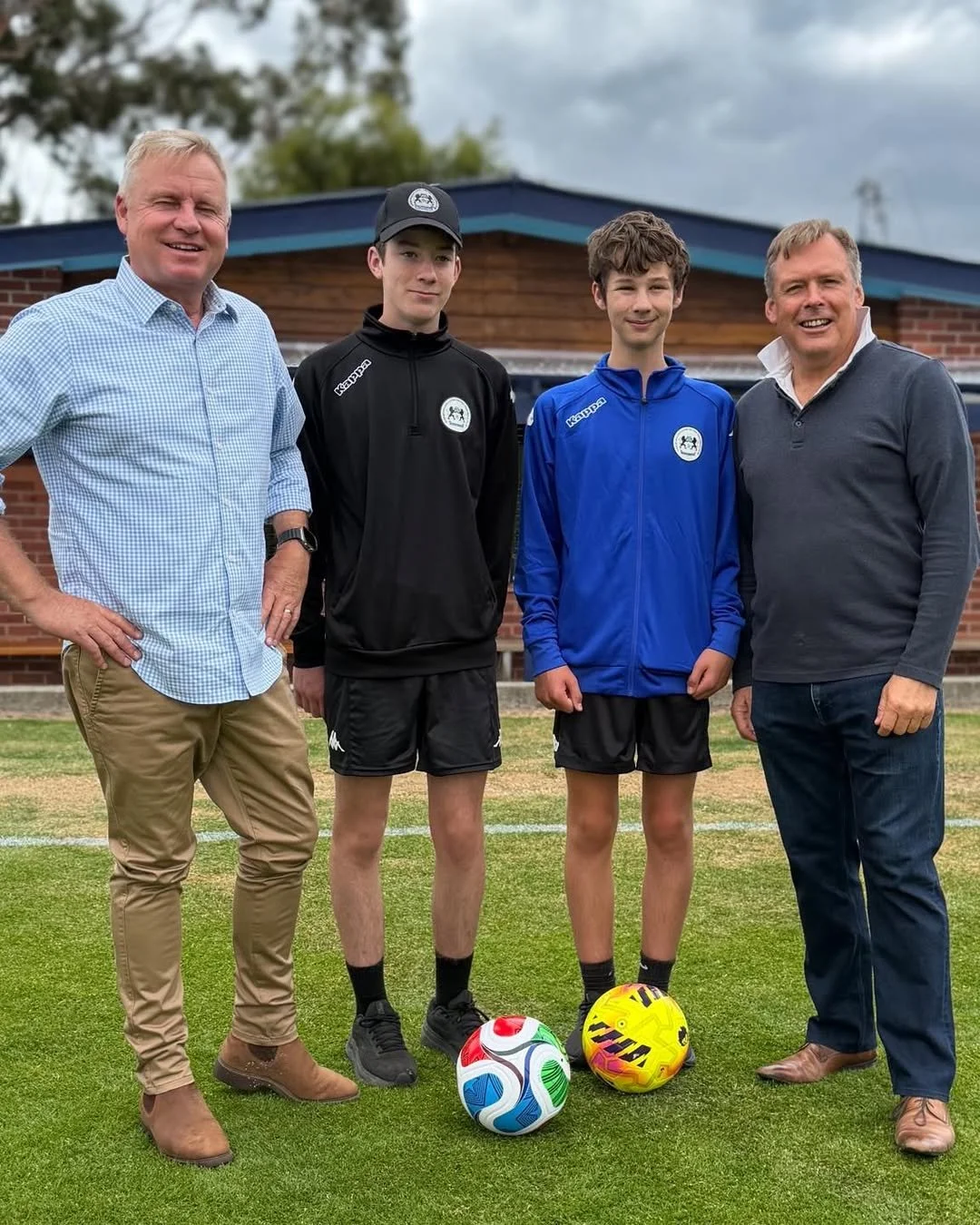
Photo: Kingborough Lions United Facebook Page
A quick follow-up to Part 3
After publishing Stop Telling Football to be Grateful, Part 3: OMG the Money! I want to add a short follow-up.
Not to re-run the stadium debate.
Not to pick fights.
Simply to add a real-world example that landed this week that perfectly illustrates what I mean when I talk about Tasmania’s funding culture.
Sherburd Park is getting an upgrade (and that is good news)
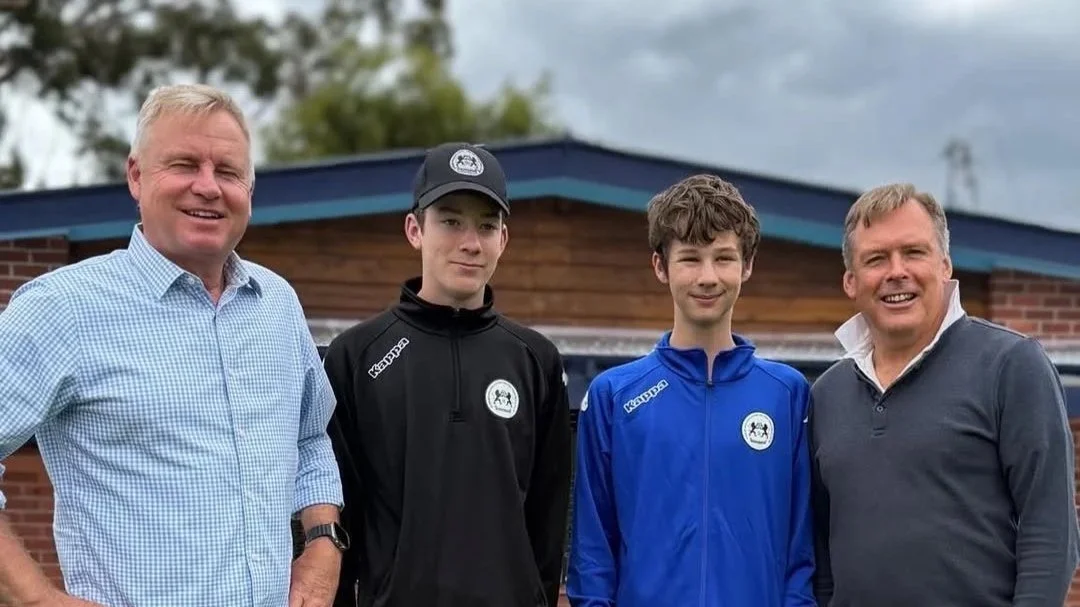
The Tasmanian Premier, Jeremy Rockliff, announced funding for new changerooms at Sherburd Park in Blackmans Bay.
I want to say this upfront.
This is good news.
Sherburd Park has been a poor facility for a long time. I have visited it many times over the years. Anyone who has spent a wet winter afternoon there understands exactly why this upgrade is needed.
Modern, inclusive changerooms are not “nice to have”.
They are basic sporting dignity, especially for women and girls.
So yes, I’m pleased to see this happening.
What the funding actually looks like
Sherburd Park’s upgrade has been funded through the Tasmanian Government’s Active Tasmania – Active Infrastructure Grants Program.
The funding for Sherburd Park is:
$463,575 in grant funding
with the Premier stating the total co-funded investment is more than $925,000
because it is being matched by Kingborough Council
That co-contribution matters.
Because when people read “government grant”, they often imagine money simply arriving.
But that is not how it works.
A small pool, spread thin
This year’s Active Infrastructure grant pool was $5 million, split across 30 projects.
That is the entire pot.
Statewide.
Across every sport.
Across every region.
And that works out to an average of around $166,000 per project.
It is not hard to see why so many clubs have ageing toilets, unsafe changerooms, no lighting, poor storage and worn-out surfaces.
Not because clubs aren’t trying.
Because the infrastructure need massively exceeds the money available.
The hidden reality: grants require capacity (and cash)
Behind every successful grant announcement is a huge amount of work.
Quotes. Designs. Budgets. Risk documentation. Support letters. Planning. Reporting.
Need isn’t enough. Clubs and councils also need capacity.
And in community sport, capacity usually means volunteer hours.
Capacity is not evenly distributed across Tasmania.
These grants also come with requirements that quietly shape who can even compete.
The program guidelines allow grants in the range of $25,000 to $500,000 and require a minimum 20% co-contribution.
So clubs don’t just need.
They need money.
They need people.
They need time.
This is the point that never makes it into the press releases.
Football people are not just running teams.
They are writing grant applications at night.
They are chasing quotes between work and children.
They are doing governance paperwork so kids can train under a light that actually works.
And what clubs are chasing isn’t glamorous
This matters too.
Most clubs are not applying for luxury items.
They are applying for the unsexy basics:
lights
toilets
changerooms
drainage
storage
safe access
warm, dry spaces where players can get changed with dignity
The things that make weekend sport possible.
Full disclosure
Full disclosure, South Hobart Football Club applied for lighting funding in this same round and was unsuccessful.
That isn’t a complaint.
It’s simply reality.
This program is competitive because the need is enormous and the pool is limited.
The point (and why this follows Part 3)
Sherburd Park getting an upgrade is not the story.
The story is what it reveals.
A funding culture built on scarcity.
A system where clubs are expected to compete for crumbs, carry the admin burden and then be grateful for whatever they can scrape together.
It’s worth saying this clearly, before anyone turns this into the wrong argument.
Football did receive one major grant in this round and Sherburd Park deserves it.
But one successful project doesn’t change the structural reality.
Even in a round where football receives a large grant, the total statewide pool is still only $5 million.
So this is not about football trying to get everything.
It’s about a system where community life, community sport and participation are placed inside a permanent scarcity model.
And scarcity produces predictable outcomes.
Most clubs miss out.
Many committees spend months preparing applications that don’t succeed.
And the infrastructure backlog stays right where it is.
Why this matters in the AFL context
This is why Part 3 mattered.
Football is told to apply for grants.
Football is told to share.
Football is told to co-contribute.
Football is told to be grateful.
AFL doesn’t live inside that same system.
AFL gets structural investment as certainty.
Locked in money.
Large scale money.
Not “if you’re lucky”. Not “if your volunteer committee can write a perfect application”. Not “if you can raise the co-contribution”.
That is the difference.
Football is managed through scarcity.
AFL is funded through certainty.
This isn’t just football (and that matters)
One of my neighbours is heavily involved in the arts.
And they made the same point.
The arts are scrimping too.
Grants. Applications. Co-contributions. Volunteers. Small pools spread thinly across massive need.
It is the same pattern.
Community sport scrimps. The arts scrimp. Councils scrimp. Volunteers fill the gaps.
And the message is always the same:
There isn’t enough money.
But what people are really experiencing is this:
There isn’t enough money for community life.
The real question
If Tasmania is serious about participation, wellbeing, inclusion and active communities, then we need to stop pretending a small competitive grant pool is a solution.
Grants help.
But they do not fix the structural problem.
They manage it.
And they normalise scarcity.
Football people aren’t ungrateful.
They are exhausted.
They are doing the maths.
And they are done being told to clap politely while their sport is squeezed into whatever space and whatever scraps are left over.
Sources / References
Active Tasmania – Active Infrastructure Grants Program (2024–25 successful applicants list)
Premier’s media release / announcement re Sherburd Park funding
Kingborough Lions United Football Club Facebook post
About the author
I’m Victoria Morton. I’ve spent 20 years in Tasmanian football as a volunteer, club leader and advocate.
I’m writing a personal record of what I’ve seen, what I’ve learned and what Tasmania’s football community lives every week.
👉 Read more about me here: About Victoria

Don’t Swear, It’s Not Ladylike. For Fuck Sake.

You are probably wondering why I have become so noisy.
Why I have become so busy in the advocacy space.
Why I keep writing.
Why I keep speaking.
Why I keep turning up.
Why I don’t just let it go, move on, step back, enjoy the quiet life.
Some people will say I am outspoken.
Some will say I am loud.
Some will say I am difficult.
Some will say I make everything about myself.
I’ve heard it all before.
But what I am doing now is not new.
The truth is, I have always had opinions.
I have always had strong instincts about fairness.
I have always noticed who holds power, who gets listened to, who gets dismissed and who gets told to be grateful.
The difference is that now I am saying it out loud.
And that shift did not happen overnight.
It took a lifetime.
This post is not directly about football.
But it is absolutely connected to football, because sport reflects culture and football reflects culture as loudly as anything.
If you want to understand why women hesitate before speaking in meetings, why they soften every sentence, why they apologise before disagreeing, why they get labelled “emotional” or “difficult”, here is one version of that story.
Mine.
I was taught to be quiet
When I was a girl, I was told to be quiet.
Not because I had done something wrong.
Not because I was being rude.
Because I “didn’t know what I was talking about”.
It’s amazing how early girls learn that speaking is risky.
That having an opinion is something you should earn.
That the safest thing to be is pleasant and silent.
I learnt it early.
And I learnt it well.
What school trained into me
At school you had to put your hand up to speak.
Even that simple rule teaches something deeper.
You don’t speak when you think of something.
You speak when you are permitted.
You wait.
You consider whether it’s worth it.
You measure whether the room will approve.
I went to boarding school.
We were made to go to chapel.
And you had to be quiet.
Quiet was not just behaviour.
It was virtue.
Quiet meant good.
Quiet meant obedient.
Quiet meant acceptable.
The kind of quiet that keeps the peace
I got married young.
Actually, more than once.
I got married young.
Actually, more than once.
And in those marriages (not Ken, he is my wonderful number 3) I stayed quiet for the sake of happiness and peace.
Not my own.
That sounds noble when you say it like that.
But it’s not.
It’s not peace if one person is always swallowing their own thoughts.
It’s not happiness if you are constantly managing yourself so the atmosphere stays calm.
It’s compliance.
It’s self-erasure dressed up as maturity.
It’s the quiet women do to survive.
“You’re loud.” “You’re outspoken.”
All my life I was told I was loud.
Or outspoken.
As if that was a character flaw.
As if it was a warning.
As if my job was to soften, not to speak.
I look back now and realise something.
“Loud” is rarely about volume.
It’s about permission.
Women are “loud” when we stop whispering.
Women are “outspoken” when we stop editing ourselves to keep everyone comfortable.
The careful years
When I became President of South Hobart Football Club, I had to be careful.
Careful not to bring the game into disrepute.
Careful not to say the wrong thing.
Careful not to upset someone important.
Careful not to ruffle feathers.
Careful not to offend a politician who might one day decide to give us money.
Careful.
Careful.
Careful.
If you’ve ever sat in leadership as a woman, you know this feeling.
You can feel the invisible line.
Speak too plainly and you’re “unprofessional”.
Speak too strongly and you’re “emotional”.
Speak too often and you’re “dominating”.
Speak at the wrong time and you’re “difficult”.
So you learn to manage yourself.
You learn to read the room.
You learn to phrase truth like a question.
You learn to use the polite voice.
And you become very, very good at it.
I was good at it.
Weaponising speech
At a Football Tasmania AGM I was told it was all about me.
Not my points.
Not the substance.
Not what I was raising.
Me.
That line is designed to do one thing.
Shut you up.
It’s a tactic.
A way to turn advocacy into ego.
To make the person speaking the problem, instead of what they are saying.
To embarrass you in public and warn others not to align themselves with you.
It is not a rebuttal.
It is not leadership.
It is speech used as a weapon.
And I have seen that tactic used on women over and over.
Not just in football.
In meetings, in organisations, in families.
You keep speaking and instead of engaging with the issue, someone says you’re “making it about yourself”.
It is a cheap line.
It works because it creates doubt.
And doubt is often enough to silence a woman who has spent her entire life trying to stay acceptable.
The fear underneath
I was afraid to speak.
Afraid to have an opinion that seemed loud.
Afraid that speaking up would backfire.
Afraid of the consequences.
Afraid of being disliked.
Afraid of being “that woman”.
I let myself be pushed around.
I heard versions of the same message over and over.
You better not do that.
It might backfire.
What will people think?
Maybe just let it go.
Maybe don’t stir things up.
And because I was trained to seek approval, I listened.
What happens when you get older
And then something happens.
You get older.
And you stop caring.
Not in a sad way.
Not in a defeated way.
In a free way.
You stop caring if your clothes aren’t perfect.
You stop caring if you carry too much weight.
You stop caring if you say the wrong thing.
You stop caring if someone thinks you’re too much.
You stop living your life like a performance for other people’s comfort.
You stop shrinking.
You stop apologising.
You stop editing.
You stop asking permission.
And at some point, you look back at all the years you spent trying to be “good”, trying to be “nice”, trying to be “ladylike”, trying to be quiet and acceptable and palatable and manageable, and you just think:
Fuck me.
I am not available for silence anymore
This is not just my story.
It’s a story many women will recognise.
Women who were raised to be good.
To be polite.
To be modest.
To not make it about themselves.
To keep the peace.
To smooth things over.
To be grateful.
And if they ever stepped out of that role, they were called loud.
Outspoken.
Hard work.
Too intense.
Too much.
But “too much” is often just what a woman looks like when she’s finally living in full size.
I’m not interested in being quiet anymore.
Not for comfort.
Not for permission.
Not for approval.
Not for peace that only exists when I swallow myself.
I have opinions.
I have earned them.
I have lived them.
And I will say them.
Football taught me many things.
One of them is this:
Silence protects power.

Stop Telling Football to be Grateful, Part 3: OMG the Money!

Artists impression of the Macquarie Point Stadium - show me the money
Follow the money (and what Tasmania funds and what it doesn’t)
Before I get into the figures, I want to clarify something.
When I say “the Government is funding AFL”, I’m not talking about some separate, mysterious pot of money that has nothing to do with ordinary Tasmanians.
Government money is not magic money.
It’s not someone else’s money.
It is our money.
It comes from taxpayers, ratepayers, workers, business owners, parents, volunteers, clubs, communities, everyone.
Sometimes people talk about “government” as if it is a completely separate entity, floating above society, handing out favours.
But it’s not separate.
It’s us.
So when millions of public dollars go into AFL facilities, AFL programs, AFL pathways and AFL priorities, that is not “AFL getting funding”.
That is Tasmania choosing, through its elected representatives, to direct our shared money into that code.
And if you are a football person, and you pay tax and you coach and you volunteer and you fundraise and you run a canteen and you pay club fees, then you are allowed to ask:
Why does one sport receive structural investment as a certainty, while another sport is told to share space and be grateful?
That isn’t bitterness.
That’s civic literacy.
Participation (so we’re talking facts, not opinions)
Football is often treated like the noisy code that should just calm down.
But football is not small.
Football Tasmania’s published participation summary (using Football Australia reporting) states Tasmania has 31,278 football participants, including 14,552 outdoor football participants.
AFL Tasmania reporting in 2024 put total registered participation at 21,002.
Participation data is never perfect, and categories are never identical across sports, but the point is obvious.
Football is a major participation sport.
AFL is a major sport too.
But in Tasmania, only one of them is treated like it deserves serious public investment.
What the Tasmanian Government gives football (soccer)
This is the number that should stop everyone mid-sentence.
A Tasmanian Parliament Question on Notice response states the Tasmanian Government provided Football Tasmania $1.85 million from 2022–23 to 2025–26. (afl.com.au)
That’s roughly $462,500 per year (averaged across four financial years).
If you break that down using Football Tasmania’s total participation figure:
31,278 participants.
That works out to about:
$14.80 per football participant per year
That is what the baseline public investment looks like for the biggest participation sport in Tasmania.
And the rest is made up by:
volunteer labour
fees
fundraising
canteens
raffles
parents topping up what the system refuses to provide
What the Tasmanian Government gives AFL (before we even talk about a stadium)
The Tasmanian Government’s funding commitment for the AFL licence has been reported as $12 million per year for 12 years (a total of $144 million). (ABC)
That is:
$12,000,000 per year
for 12 years
locked in
Now break it down against the AFL participation figure (21,002):
That’s approximately:
$571 per AFL participant per year (afl.com.au)
So, on a straight annual comparison:
Football baseline: ~$462,500 per year (afl.com.au)
AFL licence funding: $12,000,000 per year (ABC)
That is roughly 26 times higher, every year.
Not over the long run.
Every year.
AFL’s High Performance Centre (another major public spend)
AFL funding does not stop at the licence.
Reporting has stated a $105 million cap on State funding for the AFL High Performance Centre. (ABC)
In other words, AFL gets:
direct annual licence funding
plus a purpose-built high performance facility
And football gets told to share ovals and apply for a grant.
AFL infrastructure across Tasmania (the statewide pattern)
This isn’t just about Hobart.
The AFL infrastructure investment pattern exists across Tasmania.
York Park / UTAS Stadium (Launceston)
The redevelopment of York Park has been widely reported as a $130 million upgrade, consisting of $65 million from the Australian Government and $65 million from the Tasmanian Government. (ABC)
Dial Park (Penguin)
The Tasmanian Government committed $25 million (2024–2026) for infrastructure upgrades at the Dial Regional Sports Complex in Penguin (Dial Park). (Central Coast Council)
Again, not a competitive grant.
Not “if you’re lucky”.
A structural public funding decision.
And then there’s the stadium
Macquarie Point is now being discussed publicly as a $1.13 billion stadium project.
I’m not going to re-run the stadium debate here.
But the point is unavoidable:
Tasmania can mobilise a billion-dollar project for one sport.
But football people still can’t get basic rectangular field access, lighting and changerooms that respect women and girls.
The costs don’t stop at construction
There’s another point people keep missing.
These big projects aren’t a one-off cheque.
They come with ongoing costs.
ABC reporting has pointed to the stadium having substantial operating and lifecycle cost implications, with safeguards calling for information to be released on ongoing subsidy and lifecycle costs after contractor selection. (ABC)
So this isn’t just money spent.
It’s money committed.
The totals (this is what “be grateful” looks like)
Here’s the part people hate seeing written down.
If we set the stadium aside for a moment, AFL-linked government funding and upgrades include:
AFL licence funding: $144 million (ABC)
AFL High Performance Centre (State cap/commitment): $105 million (ABC)
York Park upgrade: $130 million (ABC)
Dial Park upgrade: $25 million (Central Coast Council)
That’s $404 million in AFL-linked public funding and infrastructure, before the stadium.
And if Macquarie Point proceeds at $1.13 billion, the scale becomes something else entirely.
So when football people are told to be grateful, this is what they are being asked to accept:
AFL gets hundreds of millions (and potentially over a billion) while football fights for crumbs.
Dollars per participant (the comparison that hurts)
This is where it becomes impossible to pretend this is “equal treatment”.
Annual comparison (rough but revealing)
Football baseline public investment:
$462,500 per year for Football Tasmania (avg) (afl.com.au)
31,278 participants
= ~$14.80 per participant per year
AFL licence funding public investment:
$12,000,000 per year (ABC)
21,002 participants
= ~$571 per participant per year
That’s not a small gap.
That is a policy decision.
Twelve-year comparison (so no one can argue “short term”)
Over 12 years:
AFL: $144m / 21,002 ≈ $6,857 per participant over 12 years (ABC)
Football baseline: $1.85m over 4 years = ~$5.55m over 12 years
$5.55m / 31,278 ≈ $177 per participant over 12 years (afl.com.au)
Read that again.
Over the same time period:
AFL: $6,857 per participant
Football: $177 per participant
And that’s still before HPC, York Park, Dial Park, or the stadium.
The grant myth (the rigged part nobody admits)
This is where football people start to feel like they’re going mad.
Because yes, football can apply for grants.
But so can AFL.
So AFL gets:
direct government funding at scale
elite facilities and upgrades as a default
and then still competes for the same grant pools community sport is forced to fight over
Football gets:
a tiny baseline allocation (afl.com.au)
the same competitive grant pools
minus the spare volunteers and spare time required to survive constant applications just to stand still
That is not an even playing field.
That is stacking advantage on advantage.
Why this matters (and why I’m done being polite about it)
This is not an anti-AFL post.
People can love AFL.
People can play AFL.
People can attend AFL matches.
The issue is not AFL existing.
The issue is Tasmania’s funding culture, where prestige sport receives investment as a certainty…
…and participation sport is treated like a problem to manage.
Football people aren’t ungrateful.
They are exhausted.
They are doing the maths.
And they are done being told to clap politely while their sport is squeezed into whatever space is left over.
Stop telling football to be grateful.
About the author
I’m Victoria Morton. I’ve spent 20 years in Tasmanian football as a volunteer, club leader and advocate.
I’m writing a personal record of what I’ve seen, what I’ve learned and what Tasmania’s football community lives every week.
👉 Read more about me here: About Victoria
Sources / Bibliography
Tasmanian Parliament, Question on Notice: Government funding provided to Football Tasmania (2022–23 to 2025–26), total $1.85m (afl.com.au)
Football Tasmania participation summary (Football Australia reporting): 31,278 participants (incl. outdoor, futsal, schools)
AFL Tasmania participation figure: 21,002 registered participants (2024 reporting)
ABC News (19 Sept 2022): Tasmanian Govt increased AFL licence funding offer to $144m over 12 years (ABC)
AFL.com.au (Nov 2022): In-principle agreement notes Tas Govt commitment includes $12m/year over 12 years (and HPC funding) (afl.com.au)
ABC News (3 Dec 2025): Stadium bill safeguards include $105m cap on state HPC funding; lifecycle/ongoing subsidy info (ABC)
AFL.com.au (13 Aug 2025): State contributing $105m to high performance centre (afl.com.au)
ABC News (28 Apr 2023): York Park upgrade includes $65m federal + $65m Tasmanian Govt (= $130m total) (ABC)
Central Coast Council (14 Mar 2025): Tas Govt committed $25m (2024–2026) for Dial Park upgrades (Central Coast Council)
Tasmanian Infrastructure: Dial Park major project info (Infrastructure Tasmania)
Macquarie Point stadium cost publicly reported as $1.13b
Stop Telling Football to be Grateful - Part 2 - Who Heard Us, and Who Didn’t
Who replied, who didn’t, and what that revealed
Before the Upper House vote on the Macquarie Point stadium, I wrote to every Member of the Legislative Council.
Not as a politician.
Not as an activist.
Not as part of a pro-stadium or anti-stadium machine.
I wrote as a football person.
A grassroots football person. A volunteer. A parent. A club president. A junior association president. Someone who represents thousands of families who spend their weekends doing what Tasmania always claims to value.
Showing up. Pitching in. Holding the line.
In Part 1, I said this wasn’t about the stadium.
That is still true.
This series is about what the stadium debate exposed.
Because once you strip away the politics, the press conferences and the slogans, one message kept coming through loud and clear to Tasmanian football people.
You are expected to stay quiet.
And if you do speak up, you’re expected to do it politely.
And if you keep going, you’re told you should be grateful.
Part 2 is about correspondence.
Who replied. Who didn’t. And what was revealed in the silence.
Who I wrote to
I wrote to every Member of the Legislative Council, regardless of party.
Football families don’t live in one electorate or vote in neat little blocks.
We are everywhere.
We are the sport that fills the weekends, fills the grounds, fills the car parks, fills the volunteer rosters and still somehow gets treated like we should wait our turn.
Who replied (and how)
This is the list, as accurately as I can make it from my inbox.
Thoughtful reply
Megan Webb (Independent), reply received
Rebecca Thomas (Independent), reply received
Ruth Forrest (Independent), reply received
Michael Gaffney (Independent), reply received
Dean Harriss (Independent), reply received
Reply received (Minister)
Nick Duigan (Liberal), reply received
Acknowledgement only, or triage reply
Rosemary Armitage (Independent), acknowledgement only
Joanne Palmer (Liberal), acknowledgement only
Tania Rattray (Independent), electorate priority or office triage response
Cassy O’Connor (Greens), acknowledgement only
No reply received
Luke Edmonds (Labor), no reply
Craig Farrell (Labor), no reply
Casey Hiscutt (Liberal), no reply
Sarah Lovell (Labor), no reply
Kerry Vincent (Liberal), no reply
That’s the pattern.
Not “all bad”. Not “all good”.
But a pattern.
And when you represent thousands of families who already feel invisible in decision-making, patterns matter.
The “thousands of emails” factor
I also want to acknowledge something else, because fairness matters.
Several MPs said they received thousands of emails about the stadium. One MLC told me directly they had received over 3,000 pieces of correspondence. Another office advised that because of the volume, they prioritised replies only to people who live inside their electorate.
I understand that workload pressure is real.
But it is also revealing.
Because football families don’t stop mattering at electorate boundaries. And when a grassroots sport representing tens of thousands of Tasmanians is raising a structural fairness issue, “sorry, too many emails” is not an answer.
It might be an explanation.
But it is not an answer.
The line that made my blood boil
Only one response raised the point that football has already received grants.
It wasn’t framed as a reprimand, but it carried the same implication.
That football should accept what it gets and move on.
That is exactly the culture I’m pushing back against.
You’ve received grants already.
You’ve had funding.
You’ve gotten something.
In other words.
Stop complaining. Be grateful.
That is the culture I’m calling out.
Because “you’ve received grants” is not an argument.
It is a silencing tactic.
It’s the logic you would use on a community group running a bake sale, not the largest participation sport in Tasmania.
It turns football into a charity case and casts its volunteers as ungrateful whenever they insist on fairness.
Grants are not fairness
Let’s be very clear.
Grants are not the same thing as equitable investment.
Grants are not policy.
Grants are not planning.
Grants are not infrastructure strategy.
Grants are not long-term development.
Grants are not fairness.
Grants are often what governments do when they want to look supportive without making structural commitments, and when they want community sport to keep scraping and scrambling, competing with each other for crumbs.
And football families are sick of it.
We are sick of being told we’re “lucky” to receive a one-off grant while other sports receive major, sustained, strategic investment built into the long-term planning of the State.
We are sick of being told we should smile and say thank you.
That’s not respect.
That’s containment.
This is not personal
I want to say something clearly here.
This series is not about attacking individuals.
Some people replied thoughtfully. Some engaged properly. Some clearly tried to balance competing priorities.
And I respect that.
I also want to be clear about this.
I do not want to work against people who have supported football or genuinely engaged with the issue. Tasmania is too small for scorched earth politics. Good governance requires honest relationships.
But honest relationships also require honest truths.
And one honest truth is this.
Football people are repeatedly treated like we should accept whatever we are given, quietly.
The silence is also a message
The no-replies matter.
Not because every MP is obliged to agree with me.
Not because I’m entitled to personal attention.
But because football families were polite, factual, and measured.
We raised participation numbers.
We raised fairness and equity.
We raised infrastructure shortages.
And still, many were met with silence.
That silence reinforces exactly what football families already feel.
We are seen as background noise.
We are not seen as a priority.
We are expected to keep functioning anyway.
And the reason we keep functioning is not because the system supports us.
It’s because volunteers do.
A fair go
Tasmania loves a few phrases.
“A fair go.”
“Pub test.”
“Common sense.”
So let’s apply that here.
If the biggest participation sport in the State is still short of basic rectangular facilities, still overcrowded, still squeezed, still sharing, still training in the dark, still fighting for ground space, still treated like it should be grateful for scraps.
Does that pass the pub test?
Does that feel like a fair go?
What happens next
In Part 3, I’m moving away from correspondence and into the numbers.
Because this argument is not emotional.
It is measurable.
Participation.
Facilities.
Infrastructure.
Public spending.
And the opportunity cost paid by every other sport, every weekend, in mud, darkness and over-crowded rosters.
Football is not asking for special treatment.
Football is asking for what every other code would demand in our position.
A fair reflection of our size, our load and our contribution to Tasmanian community life.
Part 3 is where the numbers begin.
And once you see them, it becomes harder to pretend this is just football people “whingeing again”.

Stop Telling Football to Be Grateful - Part 1.

Before the Upper House vote on the Macquarie Point stadium, I wrote to every Member of the Legislative Council.
Not as a politician.
Not as an activist.
Not as part of a pro- or anti-stadium machine.
I wrote as a football person.
A grassroots football person. A volunteer. A parent. A club president. A junior association president. Someone who has watched thousands of Tasmanian kids pull on boots every weekend and has also watched those same kids train on paddocks that would embarrass us if they were in any other state.
I wrote because I’m tired of football (soccer) being treated like a side issue.
And I wrote because I knew what was coming.
The vote has now passed.
The legislation is done.
The stadium will proceed.
But this blog isn’t about the stadium.
This blog is about what happened around it.
What was revealed during it.
And what Tasmanian football families are expected to accept, quietly, politely, gratefully.
What I wrote about
My message was simple.
Football is Tasmania’s most played team sport.
We are not asking for billions.
We are asking for fairness.
Funding should reflect participation and community impact.
Not tradition.
Not political convenience.
Not which code has the biggest lobby.
And certainly not some vague promise that football will “benefit later” if we just stay patient.
We’ve been patient for decades.
Who replied
Some did reply.
Some did not.
Some replied thoughtfully, and I genuinely appreciate that. Not because it made me feel better, but because it showed respect for the people I represent.
A few replies stood out because they exposed the pattern.
One MLC asked if he could refer to my email in Parliament
That was Michael Gaffney (MLC, Mersey).
He wrote to me before the debate and asked if I was comfortable for him to reference my email in his speech.
That matters.
Because it means the message landed.
It means football’s argument was heard.
And it means that, at least for some, the issue wasn’t dismissed as emotional noise.
I want to be clear about something.
This series is not about attacking individuals.
But here’s the part that made me see red.
More than one response - explicitly or implicitly - carried the same message:
You’ve received funding already.
You’ve had grants.
You’ve gotten something.
In other words:
Stop complaining. Be grateful.
That is the culture I am calling out.
Because “you’ve received grants” is not an argument.
It’s a silencing tactic.
It’s a way of turning community sport into a child at the grown-ups table, being told to stop making noise because someone slid them a biscuit earlier.
Football is not asking to be treated like a charity case.
Football is asking to be treated like a mainstream sport.
Stop telling football to be grateful
If football is the sport with the largest participation footprint in Tasmania, why are we still begging for rectangles?
Why do we still have clubs sharing the same tired facilities year after year while huge public investments are made elsewhere?
Why are we still told to “apply for grants” like that is the answer?
Grants are not policy.
Grants are not planning.
Grants are not equity.
Grants are often what governments use when they want to look supportive without making any structural commitments.
And football families are sick of it.
A note on the ugliness
I also want to say this clearly.
The abuse directed at MPs during this whole debate has been ugly and unacceptable. I know at least one MP has locked their Facebook profile because of the backlash.
That is not leadership.
That is not civic debate.
That is not Tasmania at its best.
You can oppose a decision without tearing people to shreds.
Why this is my first blog series
I am writing this as the first blog in a series because there is too much to say in a single post.
The deeper you go into sporting investment in Tasmania, the more uncomfortable the numbers become.
Not feelings.
Not vibes.
Not “football people whingeing again”.
Numbers.
Participation.
Facilities.
Infrastructure.
Public spend.
And the opportunity cost paid by every other sport, every weekend, in mud and darkness and overcrowding.
Football is not asking for special treatment.
Football is asking for what every other code would demand in our position:
A fair reflection of our size, our load, and our contribution to Tasmanian community life.
In the next post, I’m going to move from correspondence to facts.
Because this argument is not emotional.
It is measurable.
And it is long overdue.

Marina Brkic, Glenorchy Knights FC: Mud, Bonfires and Making it Happen
Photo credit: Lisa Creese
This Football Faces interview was originally done in 2022.
In football, two years can feel like ten. Coaches move on. Committees turn over. Programs change names. Roles evolve. People take a step back, or step up.
So yes, a few details in this interview may have shifted since it was first written. But the story underneath it hasn’t changed, a life spent in the game, a club carried by volunteers, and that familiar combination of mud, bonfires, chips, and doing whatever needs doing.
That’s why I’m republishing it now.
Marina Brkic, Glenorchy Knights FC: Mud, Bonfires, and Making It Happen
There are football people you notice because they are loud.
And there are football people you notice because they are everywhere, doing everything, holding everything together, usually without a fuss.
Marina Brkic is one of those people.
A Glenorchy Knights stalwart. A long-time player. A club official. A coach. A team manager. A social media machine. A youth team driver. A volunteer. A mother of three football boys.
Still playing herself, and loving it.
When I look back over the last couple of decades of Tasmanian football, faces like Marina’s are the ones that stand out. Not because they chase attention, but because they are always there, still doing the work.
This interview was done a couple of years ago, but it still rings true. It’s the kind of story that belongs on the record.
First football memories
Marina’s first football memories are not polished, glamorous, or Instagram-friendly.
They’re real Tasmanian football memories.
Doing the scoreboard at KGV with her sister, paid in the most authentic grassroots currency possible, a packet of chips and a drink.
Standing in the mud next to the bonfire while the games rolled on.
If you’ve been around long enough, you can smell that sentence.
That’s football.
Not elite. Not high performance. Not “pathways”.
Just people, cold hands, smoke in your hair and a community built around the game.
A life in football
Marina doesn’t just say she’s been around football forever.
She has.
Her dad took her to watch Croatia-Glenorchy from early on. The game was in her bones before she could properly name it.
She’s been involved for most of her life, playing for 30 years, starting with Raiders and DOSA, but with most of that time spent with Glenorchy Knights. That sort of loyalty is not as common as it once was and it matters.
Along the way she has also taken on the roles that clubs rely on:
Coach.
Team manager.
Committee member across various roles for 20+ years.
And now she’s club secretary, part of the executive, manages social media, manages a youth team, and “many other things” (which is volunteer code for too many things).
And as if that wasn’t enough, she has three boys who all play at the club, too.
This is what football looks like when you live it properly.
What Tasmania’s football used to feel like
One of the striking things Marina remembers is senior men’s football crowds.
Big crowds.
That atmosphere has faded in many places and I think most of us can admit it. We can debate why, we can blame a dozen things, but the shift is real.
Marina also points out something important about female football, girls her age simply were not encouraged to play. She was a late starter because of that cultural barrier.
And yet she’s spent years doing the opposite for the next generation.
She has pushed female football at her club and beyond it. She speaks with real pride about seeing lots of girls playing now in junior and youth teams and she notes that the quality and support for female football has improved.
That’s not an abstract achievement.
That’s a direct outcome of people like Marina doing hard work over a long time.
Heroes, anti-heroes, and what actually matters
Marina doesn’t go looking for celebrity football heroes.
She values something different, and it’s a quiet lesson in what club culture is built on.
Hard-working.
Reliable.
Club loyal.
Respectful.
She’s met plenty of those people along the way, and that’s what she appreciates.
No drama.
No ego.
No hype.
Just the people you can count on.
The ones who make football happen.
Football and family: the reality
People underestimate how much football takes from a family when someone becomes deeply involved in running a club.
Not playing.
Running it.
Marina is honest about that.
She talks about the impact on personal time. The work. The load. The constant demands. The unspoken expectation that you will simply keep doing it.
But she also says what makes it worth it.
Her whole family loves the game.
There are lows, but the highs are shared, and those shared highs are the reward that keeps you going.
I also loved her line about being supported to play herself. Especially when her children were young, it’s not easy. Someone has to hold the home, manage the logistics, make it possible.
Because women in football are often expected to sacrifice the playing part first.
Marina didn’t.
And that matters.
If she could change Tasmanian football
This answer should be printed and pinned to a wall in every governance meeting.
Marina’s view is shaped by time on the ground as a club official. She’s not theorising. She’s speaking from the trenches.
She says the demands on clubs have increased significantly and are about to increase further.
That’s the warning line.
And she makes it clear, any change that makes football easier for clubs, mostly run by volunteers with day jobs, would be welcomed.
Then she gets practical.
Not ideological. Not fluffy.
Rostering.
She points out that teams playing in different locations stretches club resources. It impacts the matchday experience. It chips away at club culture.
So she calls for something simple and sensible, consistent rostering of teams together.
It’s the kind of idea that doesn’t make for a glossy strategy document, but makes an immediate difference to actual volunteers.
That’s the kind of thinking Tasmanian football needs more of.
Her legacy
Marina doesn’t claim a grand legacy.
She says something much more accurate.
All clubs have committed and hard-working people that make it happen.
Her legacy is that she’s one of those people.
And then she finishes with humour, saying she would have liked to have scored more goals over the years, “no legacy there lol!”
That made me laugh because it’s exactly the kind of line football people write when they’ve been through enough seasons to know what really matters.
Legacy is not medals.
Legacy is being there, doing the work, shaping the culture, and helping the club survive and thrive across generations.
That is what Marina has done.
And she’s still doing it.

FOMO Isn’t Development: The Small State Pathway Problem

In a big state, a pathway program can be an option.
In a small state, it becomes a verdict.
And that is the beginning of the problem.
Tasmanian football has spent years living in the tension between club football and Federation programs. The tension isn’t personal. It’s structural.
In a small state, there isn’t enough “air in the room” for competing priorities, competing calendars and competing identities.
We don’t have the scale.
So the minute a Federation program expands, club football feels the pressure.
Not because clubs fear standards.
But because clubs fear becoming second best in the system they built.
Big States and Small States Are Not the Same
A one-size-fits-all pathway model doesn’t work in Australian football.
Not because small states lack ambition, or talent.
But because small states don’t have scale.
In Victoria and New South Wales, a pathway program sits inside a crowded ecosystem. There are huge player pools, many clubs, multiple development environments and multiple chances to be seen.
In Tasmania, the ecosystem is tight.
When one program is elevated, everything else is pushed down.
In a big state, missing one camp is inconvenient.
In a small state, missing one camp feels like a risk.
And that changes everything.
FOMO Is Not Development
One of the most damaging effects of small-state pathways is the pressure it places on children and families.
Kids should not have to live in a permanent state of football anxiety.
They should not have to agonise over every decision, wondering:
Will I be overlooked if I don’t go?
Will I be seen as not committed?
Will I fall behind?
Will I be quietly crossed off a list?
That isn’t high performance.
That is fear, pressure, and FOMO dressed up as opportunity.
It can quietly drain the joy out of football, and joy matters, because joy is what makes children return.
The Communication Gap Is Where Trust Breaks
The relationship between Federations and clubs in small states is fragile. It needs care, respect and communication.
Clubs plan training. Coaches volunteer their time. Parents organise work and family life around sessions.
Then suddenly a pathway event appears.
Not always with meaningful notice. Not always with coordination. Not always with a shared calendar that respects club environments.
Club coaches turn up to training and discover half their players are missing.
It doesn’t feel like partnership.
It feels like clubs are expected to comply.
Small-state football cannot survive on assumptions. It needs genuine two-way communication and planning that treats clubs as part of the solution, not an afterthought.
Clubs Aren’t Even Kept in the Loop
As a club President, I was often asked by parents simple, reasonable questions.
When are the TSP trials?
When are the Academy sessions?
What do we need to do to be considered?
And I would have to answer honestly.
I had no idea.
Not because I wasn’t paying attention and not because the club didn’t care. I didn’t know because Football Tasmania did not share that information with clubs.
That is not a minor communication gap.
That is a relationship gap.
It forces clubs into an awkward position, standing in front of families with no information about a program that is clearly influencing selection and opportunity.
It makes clubs look uninformed.
Worse, it makes clubs look irrelevant.
And in a small state, that matters.
Secrecy Creates Suspicion
Football Tasmania may be trying to improve communication now and if they are, that is welcome.
But when key information is kept quiet, the message it sends is not neutral.
It tells clubs that this information is not for them.
It makes it feel secretive, like something clubs shouldn’t know about, just in case clubs tell kids:
Don’t bother.
It’s a waste of time.
That may not be the intent, but it becomes the perception.
And perception shapes trust.
Acronyms Come and Go, Clubs Remain
Then there’s the churn.
We had SAP licensing requirements and then SAP disappeared.
So what will be next?
What will be the next acronym?
What will be the next “must do” program?
And when it vanishes, what happens to the kids, the parents and the clubs that rearranged everything around it?
This constant cycle of programs and terminology might look like progress from the outside.
But from inside a small-state football ecosystem, it often feels like instability.
Clubs need clarity, consistency and partnership, not the next vanishing pathway.
If Clubs Feel Second Best, The Whole System Weakens
Clubs are not the lower tier.
Clubs are the foundation.
Clubs are where habits are built, confidence is built, resilience is built, belonging is built and love of the game is built.
In small states, weekly club football is not separate from development.
It is development.
So when clubs feel like the second-best option, the culture deteriorates.
And once you lose culture, you don’t build it back by running another camp.
Do These Programs Actually Improve Results?
This is the question nobody likes being asked.
When I first came to football, the process was simple.
A coach would pick their squad. They would train together in the six weeks leading into National Championships, then they would go away and play.
It wasn’t perfect.
But clubs weren’t constantly inconvenienced.
Kids weren’t forced into a permanent cycle of fear of missing out.
Families weren’t juggling endless competing commitments.
And the results?
From where I stand, the results were similar.
So the question is fair, and it is unavoidable.
Do the current Football Tasmania programs lead to better results at National Championships than the method used back then?
If the answer is no, or even “not much”, then the next question matters even more.
If outcomes are broadly similar, why is the cost to clubs so much higher?
The Spreadsheet Would Tell the Truth
If we really want to understand why big states dominate national championships, we should put the politics aside and open Excel.
Make a spreadsheet.
One column is the number of registered players in each state.
The next column is national championship performance.
The pattern will not be surprising.
Bigger states have bigger talent pools. More depth. More competition. More specialist coaching environments.
They will almost always produce stronger squads, because they are drawing from a larger pool.
This is not an insult to small states.
It is the mathematics of scale.
Which leads to an honest question.
If a small state cannot out-number the big states, why are we pretending it can out-program them?
Small States Improve By Multiplication, Not Extraction
This is the heart of it.
In small states, the most powerful development tool is not selection.
It is coaching.
One expert coach can mentor ten club coaches.
Those ten coaches can improve hundreds of children.
That is the multiplier effect.
And it exposes a flaw in the current way we think about “development”.
If we funnel time, energy and resources into centralised programs for a small group of selected players, we might improve those players.
But we do not lift the system.
We do not lift the clubs.
And clubs are where most children will spend most of their football lives.
Imagine If That Funding Went Back Into Clubs
Imagine if the funds spent administering and delivering repeated pathway programming were redirected into club support.
Not symbolic support.
Real support.
Support that makes clubs better at what they do every week.
Support that invests in the people doing the work.
Support that reduces volunteer load rather than adding to it.
For example:
embedded technical mentoring for club coaches
subsidised coaching licences
structured curriculum support
coach education delivered inside clubs
practical planning and administration support
coordinated calendars that respect club training environments
That is how you lift a small state.
Not by creating parallel programs that compete for the same children.
Football Tasmania’s Most Important Job
In a small state, the Federation’s job is not to become the biggest and most important provider.
It is to strengthen the clubs who carry the game.
That is not glamorous.
It doesn’t always photograph well.
But it is the only strategy that works.
Because small states don’t have room for competing pathways.
They have room for one ecosystem.
And the clubs are not an optional extra in that ecosystem.
They are the system.

Women’s Football: “But No One Comes to Watch”

This week Professional Footballers Australia (PFA) released a 39-page document titled Ready for Takeoff.
It’s a long document.
But the message is simple.
Australian women’s football is at a Rubicon moment again and the A-League Women needs to relaunch as a fully professional competition, using the upcoming Women’s Asian Cup as the springboard.
Not someday.
Not slowly.
Now.
The paper makes one key argument that applies far beyond the A-League.
Progress is itself the product.
Women’s football will not grow through slogans or marketing.
It will grow when the sport embodies the advancement of women athletes.
That means standards.
And if that feels relevant nationally, it should feel even more relevant here in Tasmania.
Because in local football, standards aren’t theoretical.
They show up in the smallest details.
And they shape the whole experience.
Progress is not a vibe
There is a habit in sport of treating women’s football as something that can be marketed into importance.
A new logo.
A new campaign.
A few nice words.
But women’s football audiences can smell tokenism immediately.
Progress is not a vibe.
Progress is practical.
Progress looks like:
the same training opportunities
the same access to facilities
the same seriousness in matchday presentation
coaching standards that are not negotiable
a league structure that matches the words “elite competition”
You cannot market your way out of low standards.
“But no one comes to watch”
I remember being in a Presidents meeting years ago discussing the idea of charging a gate for women’s football.
Someone said it casually, as if it was a final truth.
As if crowd numbers were the test women’s football had to pass before it deserved standards.
I didn’t see that as the point then.
I don’t see it as the point now.
Because in women’s football, crowds are not the starting point.
Standards are.
Crowds don’t come first
If you want people to treat something like a serious product, you have to treat it like a serious product first.
Women’s football doesn’t grow because someone waited patiently for the crowd numbers to justify investment.
It grows because leadership decided the product was worth backing.
This is the loop women’s football keeps getting trapped in.
Women’s football won’t draw crowds until it looks serious.
But it won’t be treated as serious until it draws crowds.
Standards are the circuit breaker.
The gate is not just money
At South Hobart, we charge a gate for women’s games.
Some people argue they shouldn’t have to pay.
They say they’ve never had to pay before.
But what that really reveals is this.
Women’s football has never been valued properly before.
A gate is not just a fundraiser.
It is a signal of value.
A gate says:
This match matters.
This competition matters.
This is elite sport in this state.
Set the standard.
Raise the bar.
Celebrate the product.
The quiet hypocrisy
There are people who sneak in before we are even set up, just so they don’t have to pay.
They will talk about supporting the women’s game.
Then they won’t hand over $12 at the gate.
To me, that is totally pathetic.
Not because the club needs their $12.
But because it exposes what they really believe women’s football is worth.
If you can’t pay $12 to watch women athletes competing at the top level of the state game, then your support is performance, not principle.
Classification drives standards
This conversation connects directly to one of the most important issues in Tasmanian women’s football.
Women have not always been classified and treated the same as men.
Here is the truth.
If the women are not classified as NPL, they are not treated as NPL.
Classification is not symbolic.
It is a lever.
It creates:
minimum standards
compliance expectations
resourcing decisions
matchday requirements
seriousness in delivery
When standards are optional, women’s football becomes optional.
And optional always means last.
Women’s football cannot grow on leftovers
In community football, inequality rarely arrives as policy.
It arrives as default.
It shows up in hundreds of small decisions.
Later training times.
Smaller spaces.
No full-sized goals.
Facilities that are “good enough”.
Then months later, someone asks why more people aren’t watching.
That isn’t analysis.
That is sabotage.
Local football is nuanced
Sometimes inequity is not malicious.
Sometimes it is simply invisible.
I remember complaints coming to me as President that could have been fixed instantly if someone had spoken earlier.
No full-sized goals.
No access to a full field.
Sorted.
Often with one conversation.
But sometimes those concerns arrive months later.
And by then, you’re not fixing a problem.
You’re repairing trust.
Silence becomes a survival strategy for many women.
But silence is expensive.
Why FT hesitates to call it NPL
Calling the women’s competition NPL is not just a label change.
It changes everything.
NPL triggers standards.
Standards trigger consequences.
Once you attach the NPL badge, you are promising minimum expectations around facilities, training access, coaching quality, and matchday professionalism.
That means compliance.
And compliance means enforcement.
Enforcement means saying no.
Some clubs would not meet the standards.
So the governing body has to choose.
Lift standards and enforce them.
Or keep standards negotiable.
Negotiable standards allow everyone to say they support women’s football without ever having to prove it.
That is the blunt truth.
A fair note on volunteers
Volunteer clubs are stretched.
People are tired.
Raising standards does increase workload.
That is real.
But this is exactly why the governing body has to return to basics.
Not by charging clubs more each year.
But by actually helping them lift standards.
Practical support.
Clear templates.
Shared services.
A governing body that serves, not just administers and invoices.
“The way it has always been” is not an argument
This is the most common defence in football.
Someone challenges the standard.
The reply is tradition.
But tradition is not a reason.
It is a habit.
And women’s football has spent decades on the wrong end of convenience.
If Tasmanian football wants women’s football to grow, it must be built through standards.
Not excuses.
Progress is the product
The PFA paper is national.
But its logic applies everywhere.
Progress does not happen because we post the right graphic.
Progress happens when we act like women’s football matters.
On the field.
Off the field.
In facilities.
In standards.
In classification.
Women’s football is already good enough.
What’s missing is the will.
When the Pathway Breaks
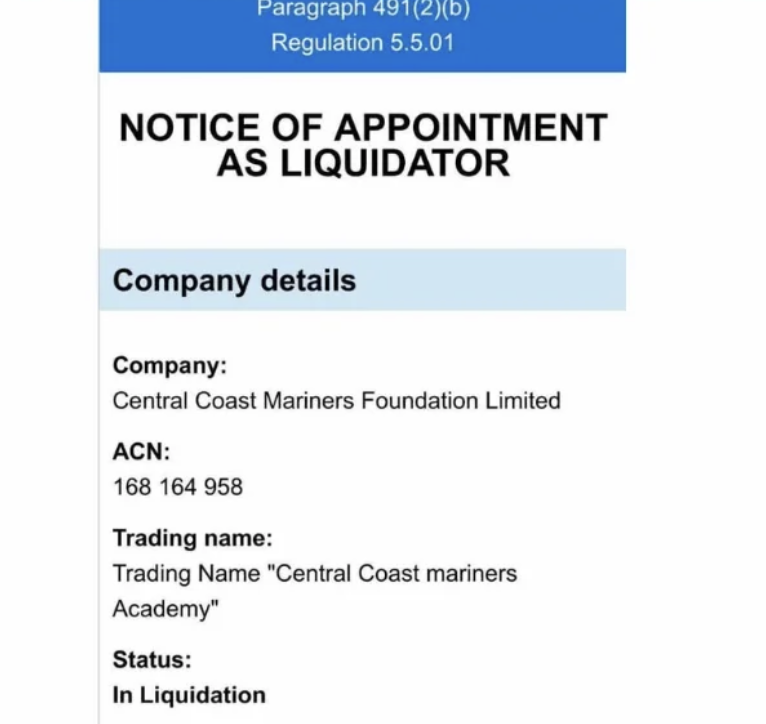
I woke up this morning to the kind of football news that lands like a thud.
Not a result.
Not a rumour.
Not a coaching change.
Administration.
The Central Coast Mariners academy has been placed into liquidation.
Western United has been fighting for its survival.
Two clubs in the A-League system, both shaking at once.
And the story most people will tell is the business story.
Debt.
Governance.
Ownership.
Stability.
Sustainability.
But that isn’t where my mind goes first.
My mind goes to the children.
My mind goes to the parents.
Because they are the ones who live inside the dream.
And when the dream collapses, it doesn’t collapse gently.
The pointy end of the pyramid
Australian football is a pyramid.
Grassroots at the base.
Clubs and associations holding up the middle.
NPL and state leagues building the structure.
And at the top, the A-League.
That pointy end is the dream.
It is the finish line kids can picture.
It is the summit parents cling to when they are driving in the dark to training, packing lunches, paying fees and watching their child give everything.
Academies exist because the dream exists.
They are the bridge between hope and reality.
They are the part of the pyramid that tells children: this could be you.
And for the families who are inside A-League academies, it stops being a concept.
It becomes their life.
Tasmania sits outside the summit
And to be clear, Tasmania doesn’t even have an A-League team.
We are not part of that top layer and realistically won’t be.
So for Tasmanian kids, the pyramid is not just narrow at the top — it is also distant.
The “pointy end” sits across Bass Strait.
It exists in a different weekly ecosystem of eyeballs, metrics and opportunity, where scouts watch, data accumulates and pathways are visible in real time.
Here, we build our football in the margins.
We produce talent and we lose talent.
We ask families to commit and then, if a child is good enough, we often ask them to leave.
That’s the Tasmanian truth.
And it makes the instability at the top of the pyramid even harder to stomach, because the dream already asks more of our kids than it asks of most.
What A-League academy life actually looks like
A-League academy football is not “extra training”.
It is a lifestyle.
It is early mornings, long commutes, gym programs, recovery sessions, injury management, physio, school juggling, fatigue.
It is families rearranging work rosters.
It is holidays planned around football calendars.
It is birthday parties missed.
It is the quiet intensity of teenagers trying to behave like professionals.
And most of all, it is belief.
Belief that it is worth it.
Belief that the system is real.
Belief that the pathway is stable.
Because families don’t commit like this if they think the pyramid can simply fall down.
A note on where I sit in this
I write this fully aware of my own position in the system.
Morton’s Soccer School provides the coaching program for South Hobart and we charge fees, because coaching, grounds, equipment and administration all have real costs.
But philosophy matters.
Our role is not to sell professional dreams to children.
Our role is to help kids love football, train in a quality environment and stay in the game for decades, whatever level they eventually reach.
When the adults fail, the kids pay
Here is the part that is hardest to sit with.
The people running the top of the pyramid are adults.
They make adult decisions.
They take adult risks.
They build business models, chase licences, sign deals, borrow money, spend money.
But the ones exposed when it collapses are not the adults.
It’s the kids.
The academy kid who has built their identity around being “on the pathway”.
The teenager whose confidence rises and falls with selection.
The quiet hard worker who is not the star but is hanging on.
The goalkeeper who knows there are only two positions on the team, and one mistake can erase them.
The parents who have poured years into this.
Time.
Money.
Energy.
Hope.
And then it’s gone.
Not because of performance.
Not because of injury.
Not because they weren’t good enough.
Because the adults above them couldn’t keep the structure standing.
That is a different kind of heartbreak.
I’ve heard what this sounds like from the inside
I know a little about this because my son, Max, has coached in both the Melbourne City and Western United academy systems.
I have heard his stories.
I have listened to the pain and indecision from players who genuinely don’t know what to do.
Because the choices they face aren’t normal football choices.
They are career gambles.
Stay at Western United and risk missing another opportunity somewhere else, but hang on to the professional dream.
Or step back into NPL, find stability, even get paid to play football… but maybe miss the one opportunity that matters.
The one trial.
The one contract.
The one moment when a coach sees you and thinks: yes.
That is the cruelty of it.
Young players are forced to gamble with their own futures.
Not because of their attitude.
Not because they aren’t good enough.
But because the adults above them have built a system where the dream can collapse without warning.
And these are teenagers trying to make adult decisions with no safe answer.
The scramble for 2026
This is the reality nobody says out loud.
Season 2026 is now a scramble.
Families will be chasing alternatives.
Players will be looking for placements.
Parents will be sending messages, making calls, searching for opportunities.
And it won’t be neat.
Because there are only so many spots.
Only so many squads.
Only so many coaches.
Only so many programs.
And when A-League academy players flood into the market, the impact doesn’t stop with them.
It ripples outward.
Kids already in NPL teams may be pushed down.
Some may be pushed out.
Some will lose minutes.
Some will lose confidence.
Some will quietly quit.
Not because they hate football.
But because football has stopped loving them back.
This is what people miss when they talk about “pathway reform”.
It isn’t just the academy kids who get hurt.
It’s every kid underneath them too.
It makes me relieved we don’t have an A-League team and this can’t happen in Tasmania.
The pathway becomes pressure
A-League academies are supposed to develop players.
But at times they also create something else.
Pressure.
Adult pressure, applied to children.
Selection.
De-selection.
Rankings.
Benchmarking.
Constant comparison.
A belief that the next session matters more than joy.
A belief that a child’s value is measurable, sortable, replaceable.
And now, with clubs collapsing and academies destabilised, the pressure becomes heavier.
Because the pathway no longer feels hard.
It feels unsafe.
It feels like the ground can move beneath you even when you are doing everything right.
That is not sport.
That is stress.
These are children
This is where I keep coming back to the simplest truth.
These are children.
Football should be fun.
Not easy.
Not soft.
Not without disappointment.
But fun.
Because fun is what keeps people in the game for decades.
Fun is what creates lifelong players.
Fun is what builds adults who still love football at 30, 40, 50, 60.
And if football is not fun, if football becomes something children dread, something that makes them anxious, something that makes them feel disposable, then we are doing it wrong.
Because children do not have the emotional armour of adults.
They carry their failures differently.
They internalise rejection.
They confuse de-selection with worth.
They mistake a club collapse for personal collapse.
This is why instability at the top is not just a “professional football issue”.
It is a wellbeing issue.
It creates sad children.
And sad children don’t become better players.
They just become children who stop loving the game.
If the pyramid shakes, everyone shakes
When professional clubs wobble, the effect doesn’t stop at the top.
It moves down.
And down.
And down.
It touches every layer.
That is why this matters, even if you have never set foot inside an A-League academy.
Because every junior club, every community ground, every parent who hopes, every kid who dreams, is part of the same pyramid.
And the pyramid is only as strong as its top.
Right now, the top is shaking.
And the ones standing underneath it are the kids.
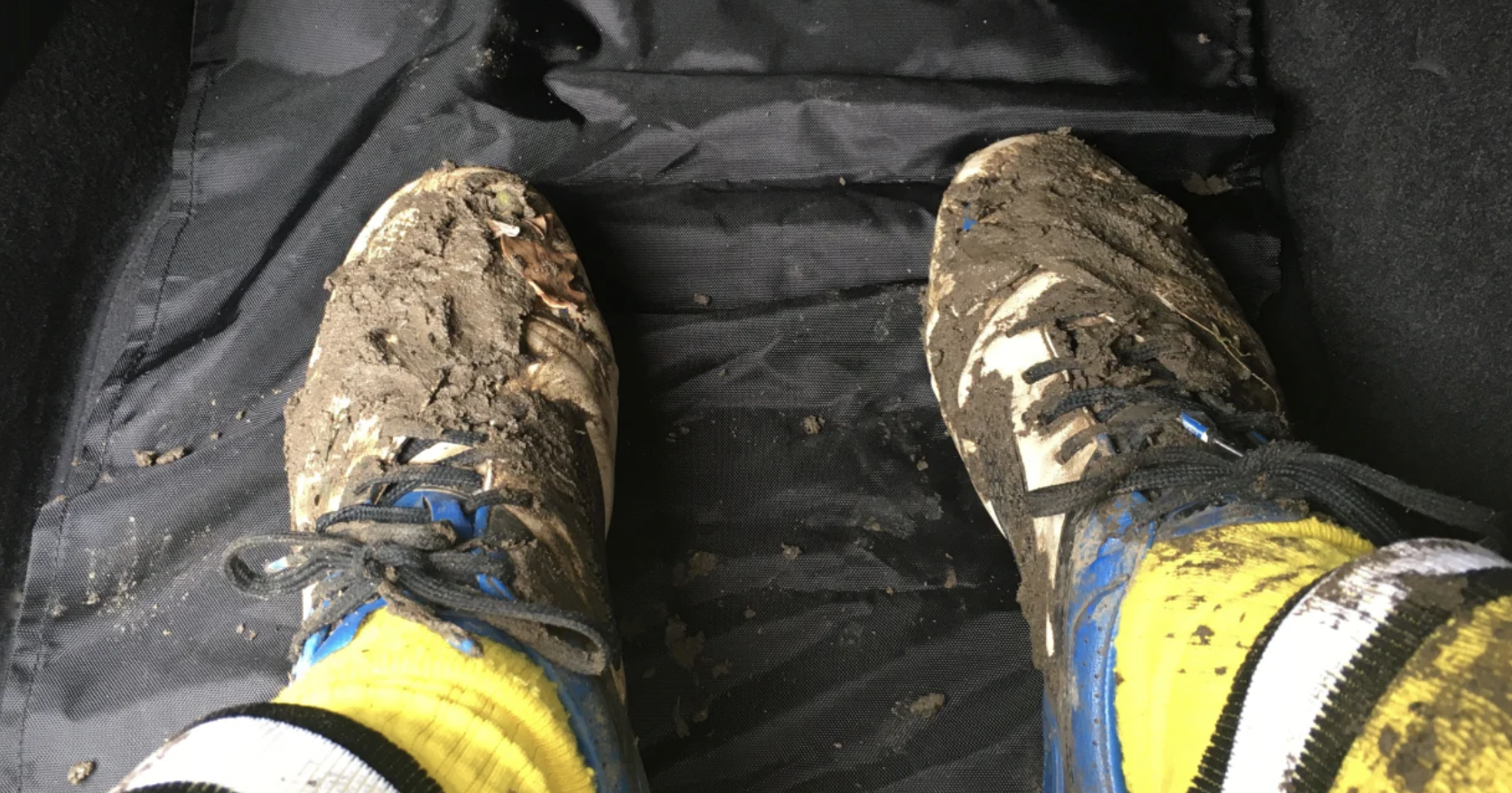
Football, Before Anything Else
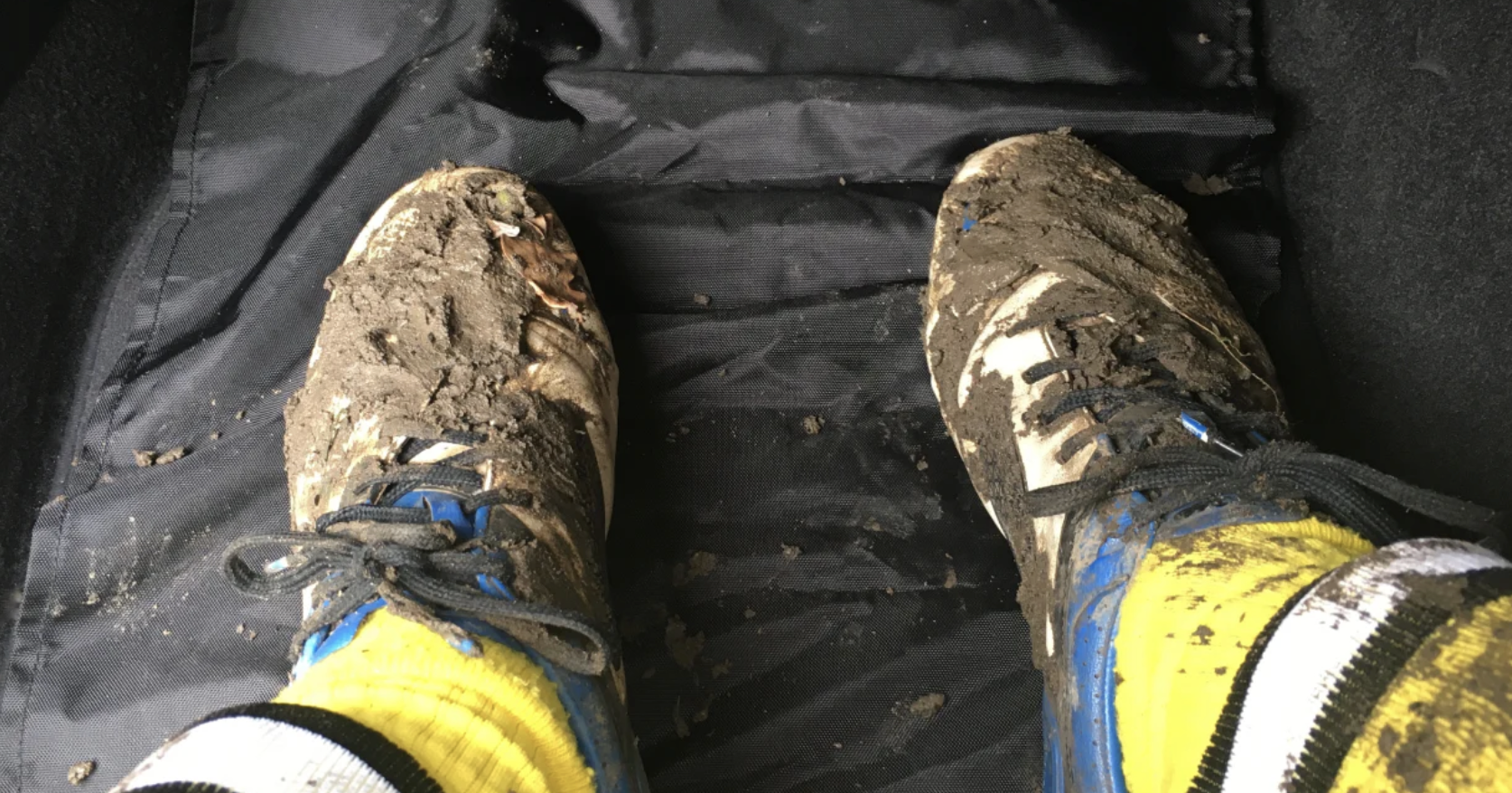
Before I write more about governance, I want to remember why I love this game and why it is more important than meetings, policies or power.
Because football is not a document.
Football is not a spreadsheet.
Football is not an email chain.
Football is laughter.
It’s the kind of nerves that make you hide in the changerooms, not because you don’t belong, but because you care so much it’s almost unbearable. It’s the nerves that make you find something practical to do, like taking photos, just to keep yourself steady.
Sometimes the best way to cope with the moment is to give your hands a job so your heart can calm down.
Football is the most dramatic emotional training ground you can imagine.
Winning at the last minute.
Conceding at the last minute.
Turning up expecting to lose because everyone has tipped you to lose, then somehow, unbelievably, you win.
Pride and relief and disbelief all at once.
It’s hugging friends at full time.
It’s receiving messages you never expected, the kind that remind you people noticed and people care.
The Purest Bits
Football is also the small, ridiculous, beautiful things.
Five-year-olds running the wrong way and kicking a goal into the opposition’s net, then celebrating like they’ve just won the World Cup.
No embarrassment.
No self-consciousness.
Just pure delight.
Football is wet grounds and muddy boots and the smell of dirty socks in the car after a long weekend away. It’s the gear bag sitting in the back a day too long.
It’s excited chatter.
The banter.
The noise.
The endless energy.
It’s the food at games and the small moment of giving myself permission to just eat the hot chips. Not because it’s healthy. Not because I’ve “earned” them. Just because football weekends are long and joy is allowed.
Football is a sunset at Launceston City on those 4:45pm kick-offs, when the light goes gold and the game feels bigger than the scoreboard.
It’s stepping onto the fabulous surface at Lightwood Park and thinking, this is what football should feel like.
The Things Only Football People Understand
Football is checking Tassie Football Central because you just have to know what is going on at other grounds.
Not because you’re nosy.
Because you’re invested.
Because football is a living ecosystem and you can’t help caring about it.
Football is Brian welcoming me with, “What news?”
Not hello.
Not small talk.
Just straight into it.
Because in football, you don’t just attend the game.
You live it.
Football is Clare making sure everyone is decked out in merch.
Wearing our colours.
Looking like a club.
Football is Darrin volunteering, and somewhere along the way becoming a friend for life.
Football is going to Valley Road and bringing home three points when it is so damn difficult to do.
Football is also the generosity of other clubs.
The food for the opposition.
The kind words offered after.
The moment where you remember that underneath the competition, football people understand each other.
Football Is Identity
At some point, football stops being something you do.
It becomes part of who you are.
You don’t just go to games.
You plan your weekends around fixtures without even thinking.
You know which grounds are windy and which ones are cold.
You carry the game with you all week.
Football becomes a second language.
And one day you realise you don’t even know how you would live without it.
Not because you can’t.
Because you don’t want to.
Football Is Pride (And Time)
Football is pride in your club.
Pride in your team.
Pride in the kids you’ve watched grow up from tiny uniforms into young adults who can handle pressure, disappointment, responsibility.
Pride in my family too.
A family that has lived football properly, not as a hobby, but as a craft.
Advanced coaching qualifications.
Decades of learning.
Decades of teaching.
Decades of giving.
And then one day you look up and realise football has become generational.
Players you once coached are now bringing their own children to training.
Kids are turning up with the same surnames on their backs.
Old stories are repeating in new ways.
It makes me feel proud, and it makes me realise just how long I’ve loved this game.
Not just watched it.
Loved it.
Football Is Quiet Service
Football is also the work nobody sees.
It’s washing bibs.
Sorting balls.
Packing cones.
Unlocking sheds.
Chasing keys.
Borrowing equipment.
Marking lines.
Texting team managers at night.
Trying to solve problems before anyone else even realises there was one.
It’s volunteering for things you don’t actually want to do, because you know if you don’t do it, the whole thing falls over.
It’s being the person who holds the detail so others can just enjoy the game.
And most of the time nobody notices.
But clubs are built on this kind of quiet service.
This is what football is made of.
Football Is Women Carving Out Space
Football is watching girls fill the grounds.
Not being included.
Belonging.
Owning space.
Some chasing high performance.
Some just there for fun.
It doesn’t matter.
They’re there.
And every season it becomes more normal.
More expected.
More obvious.
Like it should have been all along.
Girls in club colours.
Girls with confidence.
Girls with swagger.
Girls who don’t ask permission.
That makes me happy.
Because once you’ve seen it, you can’t unsee it.
This is what the future of football looks like.
Football Is Legacy
Football is the generosity of people who understand that clubs outlast all of us.
Tony Chaffey remembered the club in his will.
Such a generous thing to do.
Not for attention.
Not for applause.
Just because some people love football so deeply they want to protect what they helped build, even after they’re gone.
That stays with you.
Football Is Memory
Football is being able to laugh about how absolutely shit Manchester United are at the moment, while still remembering how glorious they were when Sir Alex was in charge.
That era wasn’t just winning.
It was identity.
It was standards.
It was belief.
And sometimes football is ridiculous in the best way.
Like when the underdog does you a favour and takes points off your nearest rival.
You don’t even pretend to be neutral.
You celebrate like it was your own win.
Football Is Big Days and Old Stories
Football is Launceston United and the brilliant Hudson Cup days.
Football is the Hobart Cup.
Not just as a tournament, but as an experience.
A weekend where thousands of children get to feel what it’s like to play in something bigger than their own weekly routine.
Rain, hail or shine.
It doesn’t matter.
They turn up anyway.
Umbrellas blowing inside out.
Freezing hands.
Freezing feet.
People huddled on the sidelines trying to look like they’re coping.
Volunteers who looked half-frozen but kept going anyway.
That weekend is exhausting.
It is also magic.
Football Is Chaos, Courage, and Characters
Football is red cards and big moments.
Jimmy James taking heart medication at Kingborough because we just have to win.
Goals scored from halfway.
The kind of goals that make everyone stop and look at each other like, did that just happen?
Football is Richard yelling “Carn Souf”.
Not in a polished, corporate way.
In the real way.
The way that sounds like home.
And football is 63 games undefeated.
Then finally breathing a sigh of relief when Eagles beat us.
Not because losing is good.
But because the weight of defending that record every week is finally gone.
You can breathe again.
Football is also John Boulos sitting at Mt Nelson with the League Winners trophy.
Not knowing whether to go South or East.
Kick-offs at the same time on the last day.
That moment where the whole season squeezes into ninety minutes, and everybody is waiting, and nobody wants to be the one who says it out loud, but everyone knows what is at stake.
Football is suspense.
It’s nerves you can barely contain.
It’s hope that feels reckless.
It’s people holding their breath together.
Football Is The After
Football is also what happens after.
The silence in the car.
The replaying of moments you can’t stop thinking about.
The anger that fades into perspective.
The sadness that sits quietly next to you on the drive home.
The win that doesn’t even feel real until later.
The tiredness.
The calm.
The reflection.
And sometimes the message that arrives that night, long after the crowd has gone.
Well done.
Proud of you.
Thank you.
Football doesn’t end at full time.
It follows you home.
Why This Matters
And this is the point.
When you’ve lived football like this, when you’ve watched it build children and friendships and belonging in real time, you stop being able to tolerate governance that treats the game like numbers on a spreadsheet.
Because football isn’t a product.
It’s people.
It’s volunteers and families and kids in muddy boots.
And if the people who sit above the game can’t see that, or won’t protect it, then it becomes the responsibility of those of us inside it to speak up.
This isn’t complaining for sport.
This is advocacy for the thing that deserves better.
Football is too important to be governed poorly.
So yes.
I’m going to talk about it.
Because I love this game.

Nick Di Giovanni: A Life in Football

Nick Di Giovanni - photo Nikki Long
I have known Nick Di Giovanni for the entirety of my time as a club president.
Over many years, we have sat across tables from each other in meetings, shared rooms where difficult decisions were discussed, and navigated the realities of leading football clubs in a small state. We have not been close friends, but we have always been respectful, direct, and able to engage honestly, even when football politics made things uncomfortable.
Nick is one of the longest-serving presidents in Tasmanian football. Through Hobart Juventus, the evolution into Hobart Zebras and the merger that formed Clarence Zebras, he has been a constant presence during a period of significant change in the game. His experience spans grassroots football, club mergers, infrastructure challenges and the increasing demands placed on volunteer leaders.
As part of my own written record of the past twenty years in football, it felt important to include Nick’s story. Not as commentary and not as analysis, but in his own words.
What follows is Nick Di Giovanni’s reflection on football, leadership and what it takes to sustain a club over decades in Tasmania.
A football beginning
Nick’s football journey began with Juventus.
His first game was with the Under 13s, coached by Franco Cortese, who stayed with the group through to Under 17s. It was a successful team that won multiple titles and included players such as Luciano Fabrizio, Bruce Pears, Darren Bacon, Leon Darko, Frank Genovesi, Alistaire Cochrane and the late Darren Wells.
All of them went on to play senior football at Juventus under the guidance of Ken Morton.
Nick also represented Tasmania as a goalkeeper from Under 13s through to Under 18s and was coached by Steve Darby and Barry Shacklady, both of whom he remembers as influential figures.
In 1985, Nick moved to Queensland to open Jupiter’s Casino, now known as The Star. While there, he continued playing with Merrimac, another Italian-based club on the Gold Coast.
Four years later, he returned to Hobart. Work commitments at Wrest Point made it difficult to train at the level required for senior football but he stayed involved, playing socially and remaining connected to the game.
From member to President
Like many of that era, Nick’s deeper involvement came through volunteering.
Football clubs were busy, social places and one role often led to another. Over time, that hands-on involvement grew into responsibility, and eventually into leadership.
Nick believes he has now been President for close to eighteen years.
He stepped into the role when long-serving Juventus President Michael Pace retired and no one else put their hand up. There was no defining moment, no dramatic call to action. The club was in a good place and simply needed someone to take on the role.
So he did.
What the role really involves
Being club President, Nick says, is a year-round commitment.
Day to day, it involves constant communication with players, coaches, councils, Football Tasmania, committee members, sponsors and parents. It never really stops. There is always someone wanting a friendly chat, some information, or occasionally voicing frustration.
What people often don’t see is the work behind the scenes, or the fact that the role doesn’t end when the last match is played in September.
When Clarence Zebras formed through the merger of two clubs, Nick expected both the difficult and the positive moments that would come with it. The work was hard, but he believes it was necessary and hopes it proves beneficial for football on the Eastern Shore in the long term.
The Home of Football
The idea of a Home of Football has been discussed for many years, and Clarence Zebras has often been mentioned in that conversation.
From Nick’s perspective, sharing a facility with Football Tasmania would not be a problem in principle. The venue is large enough, similar to KGV but on a larger scale.
He sees clear opportunities if such a project were to eventuate, including year-round astro pitches, new club rooms, improved playing facilities and a covered grandstand. Much of this infrastructure is currently lacking and the venue itself is tired, having seen little upkeep compared to facilities for other sporting codes.
Nick is clear, however, that the club’s identity would remain, regardless of any shared arrangement.
He is also realistic. From what he understands, discussions so far have been limited, and when councils and government are involved, progress is slow. In his view, the project is a long way from happening.
Personally, Nick doubts it will occur at Wentworth Park. Even if the significant funding required were found, he believes the timeline would be five to ten years at best.
Access remains a major challenge. Limited seasonal availability, high costs, and shared use with touch football make the venue difficult to sustain without significant volunteer effort and sponsor support.
Longevity and stepping away
Rumours about Nick stepping away from the presidency have circulated for years, and he confirms there is truth in them.
He now has family on the Gold Coast and has purchased a place there. For now, he remains President, but like many long-serving volunteers, he believes the time is approaching for new, younger faces to step forward and shape the club’s future.
What has kept him in the role for so long is simple. He has loved being involved.
But the role is changing. Increasing expectations from Football Australia, combined with work commitments, have made the presidency feel more like a full-time position.
When the time comes to step away, Nick expects it will be difficult. The club has been part of his life across multiple identities. Still, he is certain he will remain involved in some capacity, regardless of where he is living.
Meetings, mergers, and reality
Reflecting on years spent in Presidents’ meetings, Nick doesn’t point to any single pivotal moment. There were many sighs, many disagreements, and frequent moments where clubs and Football Tasmania found themselves at odds.
In the end, decisions were accepted. There was often little choice.
On the subject of mergers, Nick believes they are likely to become more common in Tasmania. With too many clubs, increasing administrative demands and volunteer fatigue, mergers may be the only path to long-term survival for many.
He is clear that for a merger to work, both clubs must contribute meaningfully and be prepared for a difficult beginning. Success depends on ongoing committees and volunteers maintaining the commitment over time.
Without change, Nick fears more clubs will retreat into social football only, fielding a few teams without junior or youth pathways.
He is particularly critical of national expectations that do not account for Tasmania’s population and resources. What is required of a state of 500,000 people mirrors expectations placed on much larger states and he believes that imbalance is unsustainable.
Final reflections
Nick says his greatest pride has been growing the club and seeing so many juniors and youth now playing football on the Eastern Shore.
What he wishes people understood better is that club leadership is a volunteer role, requiring countless hours of work each week, often with little reward and significant stress.
Despite everything, football still gives him joy.
The excitement of match day remains. So does the camaraderie and the lifelong friendships built through the game.
For Nick, that remains the greatest reward of all.
About the author
I’m Victoria Morton. I’ve spent 20 years in Tasmanian football as a volunteer, club leader and advocate.
I’m writing a personal record of what I’ve seen, what I’ve learned and what Tasmania’s football community lives every week.
👉 Read more about me here: About Victoria