Is Bigger Always Better?
From John Aloisi to 64 Teams
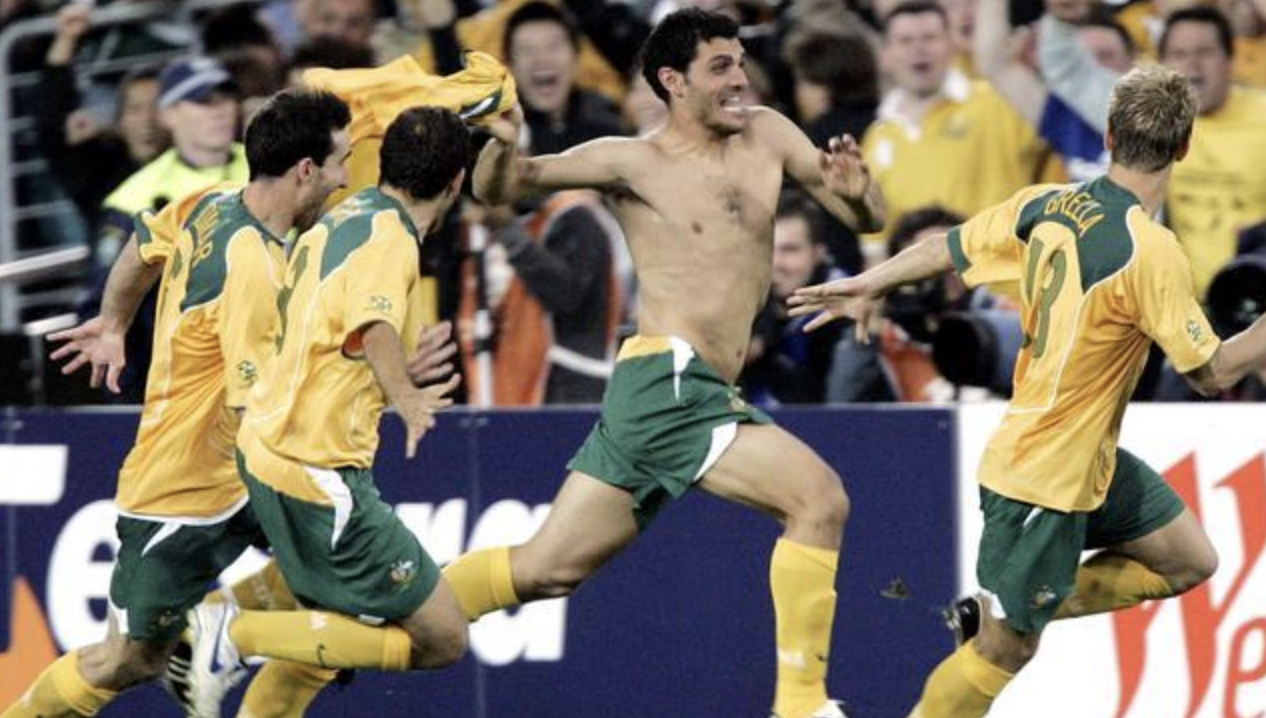
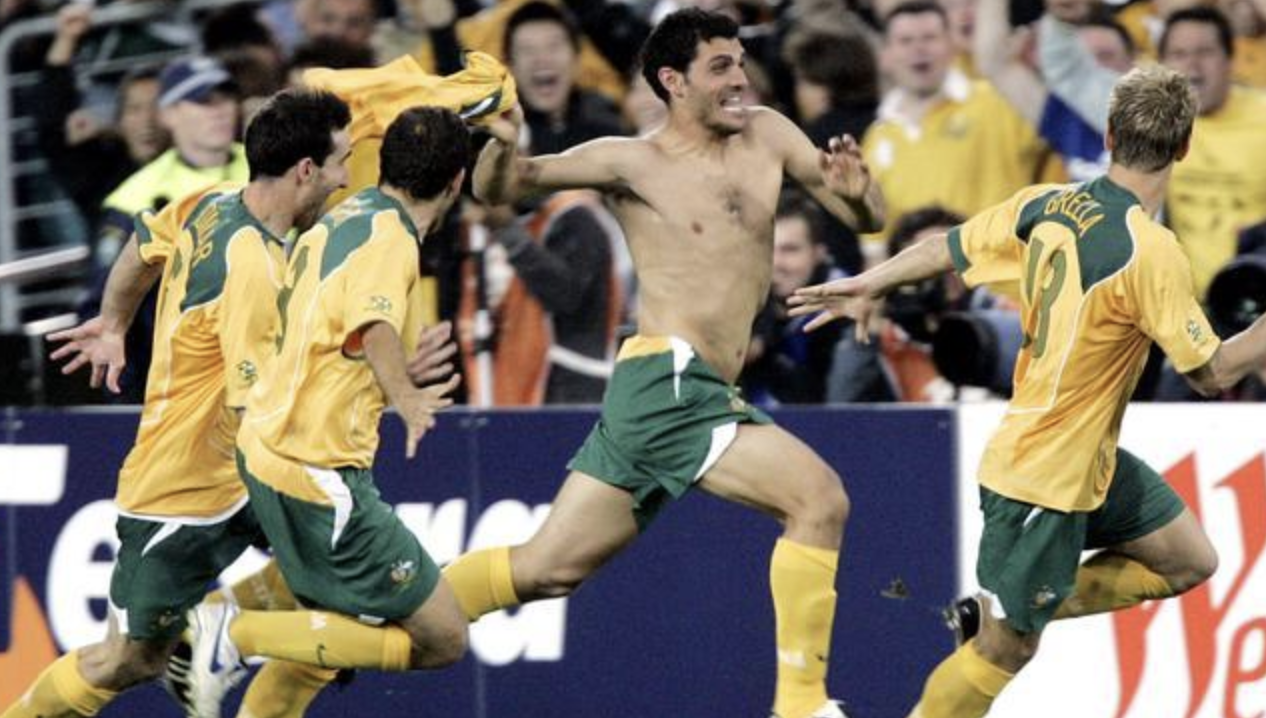
I was there.
Sitting with my children.
Two hours of football.
Extra time.
Then penalties.
Every kick seemed to take forever.
Mark Schwarzer made the saves.
John Aloisi stepped forward.
One swing of his right boot.
The net bulged.
His shirt came off.
The stadium erupted.
We hugged complete strangers.
More than twenty years on I can still picture every moment.
If you're old enough you know exactly where you were that night.
If you're younger find the footage on YouTube. It still gives me goosebumps.
That wasn't just another World Cup qualification.
It was the end of 32 years of waiting.
It was relief.
It was joy.
It was Australian football finally believing we belonged.
Which is why FIFA's latest proposal made me stop and think.
FIFA Doesn't Hang Around
The confetti from the first 48-team FIFA World Cup has barely settled.
Yet FIFA is already exploring another expansion.
This time to 64 teams for the 2030 tournament.
What surprised me wasn't just the proposal.
It was the speed.
FIFA has already invited expressions of interest from consultants to examine the financial sporting and logistical impacts of a 64-team tournament.
The successful consultant is expected to be appointed by 14 August.
The full analysis is due back by 11 September.
That is barely a month for a decision that could fundamentally reshape football's biggest tournament.
Normally you would expect a governing body to let one major expansion settle before considering another.
Instead FIFA appears keen to move on to the next expansion before we've really had time to evaluate the last one.
There's More Going On Than Football
Here's the part that made me raise an eyebrow.
That 11 September deadline doesn't sit in isolation.
Just over a week later, on 19 September, FIFA's member associations are due to vote on something entirely different. Gianni Infantino's plan to sell a stake in FIFA's commercial rights to outside investors, through what's being called FIFA Forward Enterprise.
I wrote about that proposal in more detail a little while back, if you want the full picture.
Its Not Really about the Money
It's a plan that has already drawn strong opposition from UEFA, Concacaf and the Asian Football Confederation.
One senior adviser to Infantino has reportedly resigned over it.
So the timing is worth sitting with.
A major football decision, landing just days before a hugely contested commercial vote.
Maybe that's coincidence.
Maybe a bigger tournament is simply a way to build goodwill and momentum heading into a difficult vote.
I don't know which it is.
But when a governing body moves this fast on one front while fighting a much bigger battle on another, it's fair for supporters to ask what's really driving the timeline.
Football decisions rarely happen in a vacuum. This one certainly doesn't.
Why Uruguay Mattered
For readers who are newer to football let me explain why that night against Uruguay meant so much.
Australia hadn't qualified for a FIFA World Cup since 1974.
For decades we competed in the Oceania Football Confederation.
Winning Oceania wasn't enough.
We then had to face a nation from another continent in a winner-takes-all playoff.
Often that opponent came from South America.
It was one of the toughest qualification pathways in world football.
Many outstanding Australian teams never made it.
The 2005 playoff against Uruguay was brutal.
Two tense matches.
Extra time.
Penalties.
One kick that changed Australian football forever.
Soon afterwards Australia left Oceania and joined the Asian Football Confederation.
The move gave Australia stronger opposition a more logical qualification pathway and regular competition against some of Asia's best nations.
The pathway became fairer.
Not easy.
But certainly fairer.
How Hard Is It Today?
Since joining the Asian Football Confederation Australia has qualified for every FIFA World Cup.
That is an outstanding achievement and a credit to generations of Socceroos players and coaches.
The numbers tell an interesting story.
The Asian Football Confederation has 47 member associations.
For the 2026 FIFA World Cup Asia received eight automatic qualification places plus one intercontinental playoff place.
That means almost one in every five Asian member associations now has a direct pathway to the World Cup with another still getting a second chance.
If FIFA expands to 64 teams many expect Asia to receive additional qualification places although FIFA has not yet announced how those places would be allocated.
That would be fantastic news for developing football nations.
It would also make Australia's pathway to qualification easier again.
The Case For Expansion
There is plenty to like.
More countries would experience football's biggest event.
More players would fulfil lifelong dreams.
More supporters would have the joy of watching their own nation at a World Cup.
Football would genuinely become more global.
More matches also mean more stories.
And I have to admit something.
I really enjoyed the expanded tournament.
Like many people I wondered whether there would be too many one-sided matches.
Instead many of the so-called minnows held their own.
They defended brilliantly.
Played without fear.
Created memorable moments.
Perhaps we underestimated just how much the global standard of football has improved.
That was one of the biggest positives for me.
The Case Against
But there is another side.
The World Cup has never just been about the finals.
It's about qualifying.
The tension.
The pressure.
The heartbreak.
The nights that become part of football folklore.
Scarcity creates value.
It does in life.
It does in sport.
If Australia qualifies almost automatically every four years will qualification still feel the same?
Or will it simply become...
"The World Cup's on again.
Are we ready?"
Sometimes the journey is every bit as important as the destination.
There's also a football argument against rushing this. Critics of a 64-team format have warned it would mean far more uncompetitive matches and could stretch qualifying competitions in some regions to the point of meaninglessness. That's not a small concern for a tournament that prides itself on being the pinnacle of the sport.
Spot Gianni
Of course FIFA President Gianni Infantino would tell us this is exactly why football should expand.
More countries.
More dreams.
More opportunity.
And to be fair there is merit in that argument.
But during the last World Cup I found myself playing a little game.
Spot Gianni.
No matter which match I switched on...
...there he was.
Los Angeles.
Toronto.
Dallas.
New York.
Television directors have an uncanny ability to find him sitting in the grandstand.
If the tournament expands to 64 teams there will be another 16 official team photos to attend.
Or...
Maybe that's the real reason for expansion.
Sorry Gianni.
I couldn't resist.
So Where Do I Stand?
Honestly...
I'm torn.
I loved the expanded tournament.
I enjoyed watching nations we don't usually see on football's biggest stage.
I hope more countries get the opportunity to experience that magic.
But I also remember sitting with my children on that unforgettable night against Uruguay.
I remember the silence before the penalties.
I remember the roar when Aloisi scored.
I remember complete strangers hugging each other as if we'd known one another forever.
Those moments mattered because qualifying was incredibly difficult.
Part of me wants more countries to experience the joy of reaching a World Cup.
Another part wonders whether making the destination easier to reach also makes the journey a little less memorable.
And now there's a third part of me. The part that wants FIFA to slow down and make this decision on its football merits alone, not as a bargaining chip in a much bigger fight over who controls the game's money.
One Final Thought
FIFA has 211 member associations.
Even with a 64-team World Cup almost 150 nations would still miss out.
Perhaps that's the question FIFA has to answer.
Is bigger automatically better?
Or is part of the World Cup's magic the fact that it has always been so difficult to reach?
I don't know the answer.
But I do know this.
I'll never forget sitting beside my children watching John Aloisi score that penalty.
Because sometimes it's not the destination that creates the memory.
It's just how hard the journey was.
Acknowledgement: This article was prompted by recent reporting regarding FIFA's accelerated consideration of a 64-team FIFA World Cup, together with publicly available FIFA information.

The Mercury’s Top 15 Women Footballers: The Real Story Isn’t the Rankings
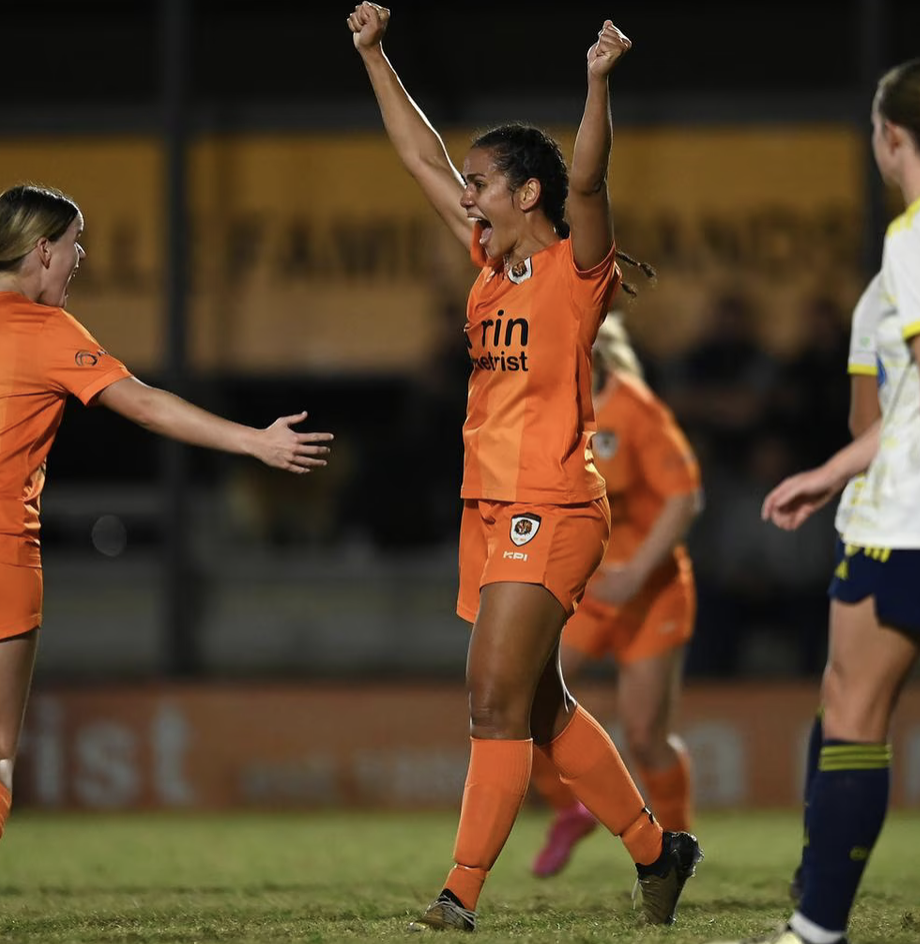
The rankings celebrate an outstanding group of Tasmanian women. Perhaps the real story is not the order of the list, but how far women’s football in Tasmania has come.
The day before yesterday The Mercury published its ranking of Tasmania’s top 15 women footballers.
Congratulations to every player named.
Being included represents years of dedication, sacrifice and hard work. Every player should feel proud of the recognition.
After writing about the men’s rankings, I found myself asking a slightly different question as I worked through the women’s list.
Not simply whether the order was right.
But whether everyone was being measured by the same standard.
How do you compare a player who has scored more than 200 Women’s Super League goals with a teenager who has only recently entered senior football?
How do you compare an established A-League Women player with someone beginning to attract attention through Australia’s youth pathways?
Or a footballer competing in England or Spain with a young Tasmanian still learning her craft in our own Women’s Super League?
They are all talented footballers.
But they are at very different stages of their careers.
There were also some details in The Mercury’s list that deserved closer examination. Positions were not always accurately described, some names and pathways required clarification, and the phrase “Junior Matildas watchlist” appeared several times without explaining whether that meant formal selection, a national training camp or simply that a player was being monitored.
Rather than repeat those descriptions unquestioningly, I wanted to look more closely at the players, celebrate what they have achieved and acknowledge the Tasmanian clubs and pathways that helped shape them.
Because every player on this list started somewhere.
On community grounds.
With local coaches.
At Tasmanian clubs that gave them their first opportunity to fall in love with football.
Perhaps that is the real story these rankings tell.
15. Emily Heazlewood
Emily emerged through Launceston United and Football Tasmania’s development system before moving to South Australia in 2020.
She attended a Junior Matildas camp while still a Launceston United player and won consecutive Northern Women’s Championship Best and Fairest awards as a teenager.
Leaving Tasmania to pursue stronger competition requires courage and commitment. Emily has continued to test herself in South Australia’s leading women’s competitions, building a career that began in northern Tasmania.
14. Harkana Tkatchenko (née Dixon)
Many Tasmanian football followers will remember Harkana as Harkana Dixon.
A former Clarence United player, she progressed through Tasmania’s TIS, NTC and representative programs before establishing herself with Eastern Suburbs in Queensland.
With more than 100 appearances for the club, Harkana’s career has been defined by longevity, leadership and resilience. She also returned to senior football after time away following her marriage and the birth of her first child.
That is an achievement deserving considerable recognition.
13. Layla Brewster
Riverside Olympic’s Layla Brewster is already regarded as one of Tasmania’s most promising young midfielders and attackers.
She has featured prominently in Tasmania’s youth representative pathway and is continuing to develop in senior football.
At this stage, Layla’s ranking is naturally based as much on potential as established senior achievement.
That is not a criticism. It simply reflects how early she is in a career that may have a very exciting future.
12. Francesca Johnstone
Francesca Johnstone has already broken into South Hobart’s senior Women’s Super League side at a remarkably young age.
Her composure, passing range and technical ability have made her one of the most exciting players emerging from Tasmania’s youth representative system.
Young players entering senior football deserve time and space to develop without the weight of enormous expectations.
Francesca has made an impressive beginning. Where her football takes her from here will be fascinating to watch.
11. Lucy Foote
The Mercury described Lucy Foote as a striker, but that does not fully capture the role she plays.
The Devonport Strikers captain has been one of the competition’s most influential midfielders and has played a central part in one of the strongest periods in the club’s history.
She combines work rate, vision and composure with the ability to score important goals.
Devonport’s success has not happened by accident, and Lucy has been one of the players driving it.
10. Abbie White
Abbie has been another cornerstone of Devonport Strikers’ sustained success.
A dependable midfielder who also contributes regularly in front of goal, she was named player of the match in Devonport’s 2024 Statewide Cup final victory.
The Mercury credited her with more than 100 WSL goals. Whether or not that total can be independently confirmed, her influence is about far more than one statistic.
She has been a consistent and important performer in an outstanding team.
9. Georgia King
Every dominant side needs players capable of contributing in different roles, and Georgia King provided exactly that for Devonport Strikers.
Whether operating in midfield, central defence or standing over a dangerous set piece, Georgia’s versatility and quality helped underpin Devonport’s success.
Her departure during 2026 to pursue a cricket opportunity in England also reflects the considerable ability of a genuine dual-sport athlete.
Whatever direction her sporting career ultimately takes, her contribution to Tasmanian football deserves to be remembered.
8. Bonnie Davies
Few Tasmanian footballers have tested themselves in as many environments as Bonnie Davies.
She established herself as one of the Women’s Super League’s most dangerous attackers with Olympia Warriors, winning the 2020 Golden Boot as Olympia claimed the league title, before later representing South Hobart.
Her career then took her to the A-League Women with Newcastle Jets and Brisbane Roar before she moved to England, where she has represented Blackburn Rovers and Halifax.
That is a substantial football résumé and a pathway few Tasmanians have been able to follow.
7. Ruby Geach
A Launceston City product, Ruby Geach progressed through Tasmania’s youth representative pathway before earning an A-League Women opportunity with Newcastle Jets.
She is now continuing her football in Spain.
Goalkeepers rarely receive the same attention as goalscorers, but earning opportunities at that level requires technical quality, courage and resilience.
Tasmania has produced some outstanding goalkeepers over the years, and Ruby is continuing that tradition.
6. Aimee Medwin
Aimee Medwin’s story is one of the most complete football pathways on the list.
Her journey began with Taroona and continued through Football Tasmania’s NTC, Olympia Warriors and South Hobart.
From there she progressed to South Melbourne, American college football and the A-League Women, representing Melbourne City, Western United and Brisbane Roar. She has also represented Australia at youth level.
It is exactly the type of journey young Tasmanian footballers now dream of following.
Aimee’s success reflects her own determination, but also the contribution of every club and coach who helped her along the way.
5. Ebony Pitt
Glenorchy Knights central defender Ebony Pitt has already progressed beyond simply being “on a watchlist.”
After representing Tasmania at Under-14 and Under-15 level, she was selected for a national Junior Matildas training camp in 2025.
That distinction matters.
A national camp selection is a genuine achievement and recognition of her standing among Australia’s emerging players.
Now in her third Women’s Super League season, Ebony is also gaining the senior experience that will be essential to the next stage of her development.
4. Ruby Powell
Ruby Powell has risen through Launceston City and Tasmania’s youth representative pathway, including appearances at the National Youth Championships.
She is now playing senior Women’s Super League football as Launceston City returns to the competition.
For any young player, the step from representative football into consistent senior performances is an important one.
Ruby is beginning to turn years of youth promise into senior football and remains one of Tasmania’s most highly regarded emerging players.
3. Jaz White
Some careers are measured by potential.
Others are measured by what has already been achieved.
Jazmin White, better known as Jaz, has built one of the great résumés in Tasmanian women’s football.
Her story includes a remarkable goalscoring season with Ulverstone, repeated individual honours with Devonport Strikers, a season with South Hobart, and a return to Devonport in 2026.
She won the Women’s Super League Best and Fairest and Golden Boot in both 2022 and 2023 and has now passed 200 league goals.
Sometimes we become so familiar with excellence that we stop appreciating it.
Jaz White’s record deserves to be celebrated.
2. Addison Broadbent
Addison Broadbent represented Hobart City FC, South Hobart and Tasmania in the youth pathway before playing senior Women’s Super League football with Glenorchy Knights.
Her move into Victoria’s NPLW system has continued her development in a stronger and more demanding football environment.
Like several players near the top of the list, Addison’s ranking reflects both what she has already achieved and the belief that her best football may still be ahead of her.
That makes comparisons difficult, but it also demonstrates the excitement surrounding her future.
1. Amelie Millar
Launceston City goalkeeper Amelie Millar captained Tasmanian representative sides in consecutive years before earning national youth selection and signing with Adelaide United at just 16.
Her rise has been exceptional.
She has moved from community football in northern Tasmania into a professional A-League Women environment and Australia’s youth international pathway in a very short period.
There will be few arguments about the scale of her potential.
At the same time, placing a young player with limited senior experience above footballers who have produced outstanding careers over many seasons again raises the central question behind these rankings.
Are we measuring current performance, career achievement or future potential?
Depending on the answer, the order could look very different.
The Real Story
Reading through this list, I found myself thinking less about who should have been first or fifteenth and more about where these football journeys began.
Launceston United.
Clarence United.
Riverside Olympic.
South Hobart.
Devonport Strikers.
Olympia Warriors.
Launceston City.
Taroona.
Glenorchy Knights.
Ulverstone
Hobart City
Football Tasmania’s representative and development programs.
None of these careers happened in isolation.
They were made possible by parents driving children to training, volunteers marking grounds, coaches giving their time, administrators building competitions and clubs creating places where girls could play.
They were also made possible by the women who came before them.
Women who played when opportunities were fewer.
Women who coached, administered and advocated.
Women who refused to accept that football was a game belonging only to men and boys.
Twenty years ago, could we have imagined a list of Tasmanian women that included A-League players, professionals in England and Spain, Australian youth internationals, national camp selections and local footballers with more than 200 league goals?
Perhaps not.
That is the real achievement.
Not deciding who should be first.
But recognising how many outstanding footballers Tasmania is now producing.
The rankings will create discussion, as all rankings do. Some people will value professional experience. Others will favour sustained achievement in the Women’s Super League. Some will be most excited by the enormous potential of the next generation.
There is no single formula capable of comparing all three.
Perhaps separate categories for established professionals, outstanding domestic players and emerging talent would provide a fairer way to recognise such different achievements.
But whatever order you would choose, every player named deserves congratulations.
And every Tasmanian club that helped begin these football journeys should feel enormously proud.
The Mercury's Top 15 Tasmanian Footballers: A Ranking That Starts an Important Conversation
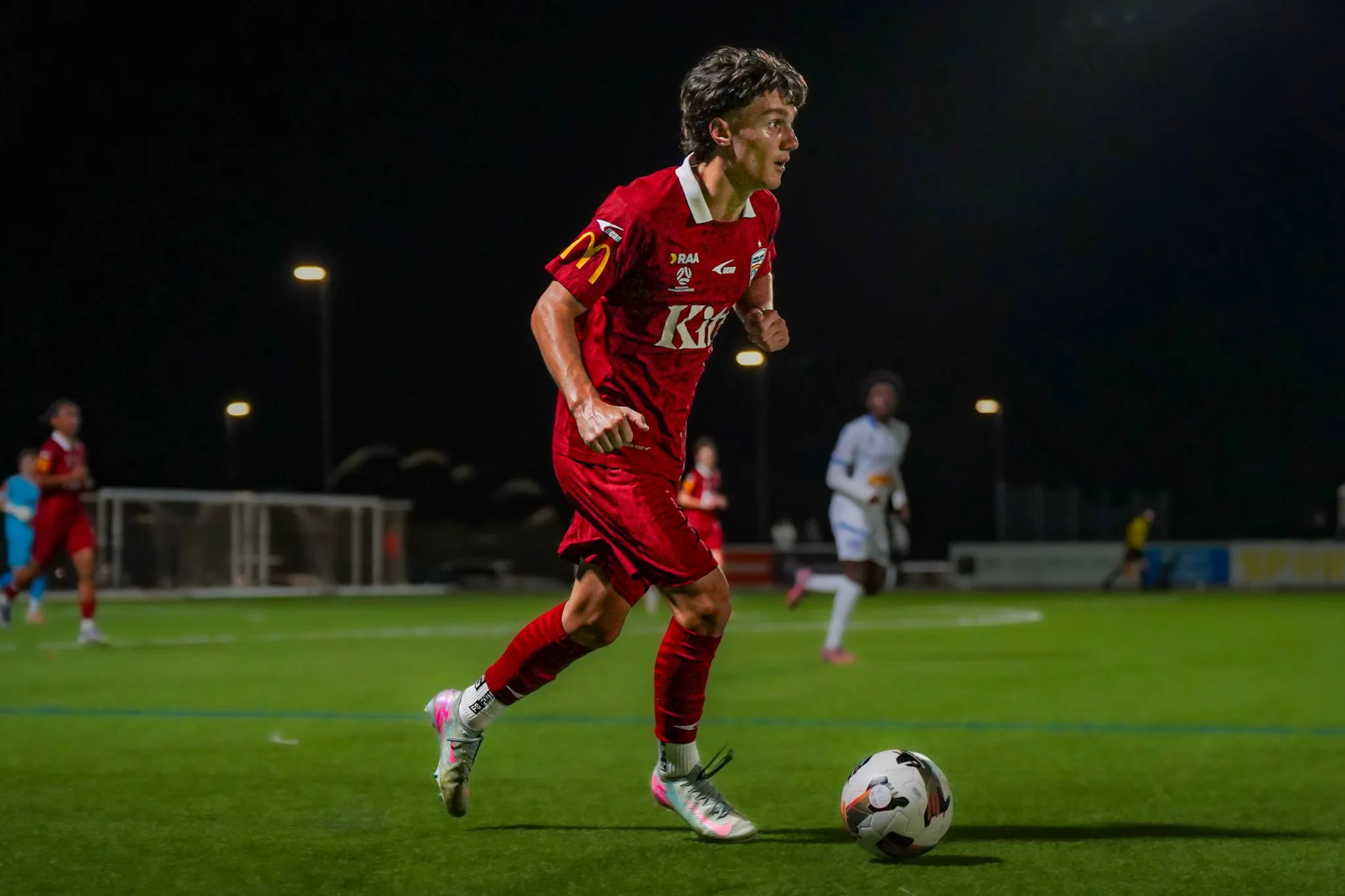
Iluka Wootton
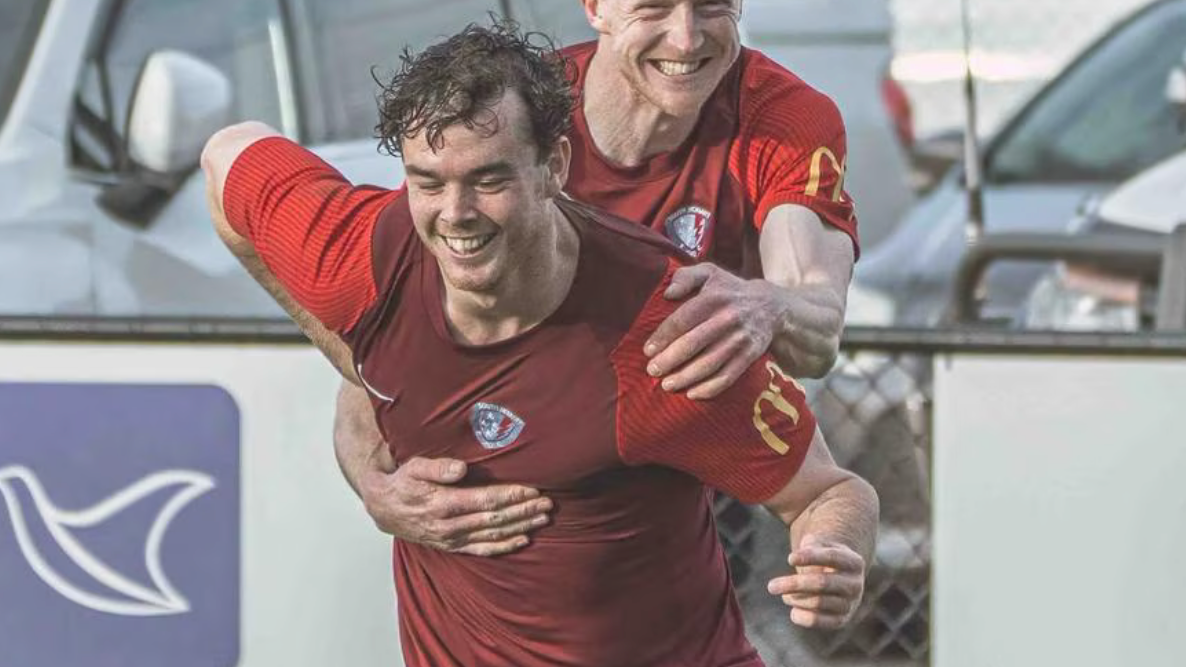
The Mercury's rankings have certainly sparked a conversation. Perhaps the more interesting question isn't who should be first, but how we judge greatness.
Yesterday The Mercury published its rankings of Tasmania's top 15 men's footballers, alongside a separate top 15 for the women's game.
The women's list deserves its own space rather than a few paragraphs tacked onto the end of this one, so I'll come back to that in a separate post.
For now, the men.
Congratulations to every player named.
Simply making the list is recognition of years of hard work, dedication and sacrifice.
Like many football supporters, my first reaction was probably the same as yours.
"Really?"
Within minutes I was mentally moving players up, moving others down and wondering who had missed out altogether.
Then I stopped.
Because here's the question nobody asked before they started ranking.
Can we really compare a Socceroo with a Joeys international?
Can we compare an established NPL legend with a teenager only just beginning a professional career?
Can we compare someone whose achievements span more than a decade with a player whose greatest football may still lie ahead?
They're all outstanding footballers.
They're all Tasmanians.
But are they even competing for the same title?
Keep that question in your back pocket. We'll come back to it.
One thing I noticed was that the article appeared without a byline.
I looked for the author's name but couldn't find one.
Personally I think that's a pity.
Lists like these are always subjective. There is no right or wrong answer and that's exactly what makes them interesting. But if you're prepared to rank players, put your name to it and be part of the argument that follows.
One small observation before we begin. The published rankings also appear to contain two players listed at number 14, so there seems to be a minor editing error in the numbering.
Rather than simply agreeing or disagreeing with The Mercury, I thought it might be interesting to work through the list, add a little context, and give credit where it's due.
15. Kobe Kemp
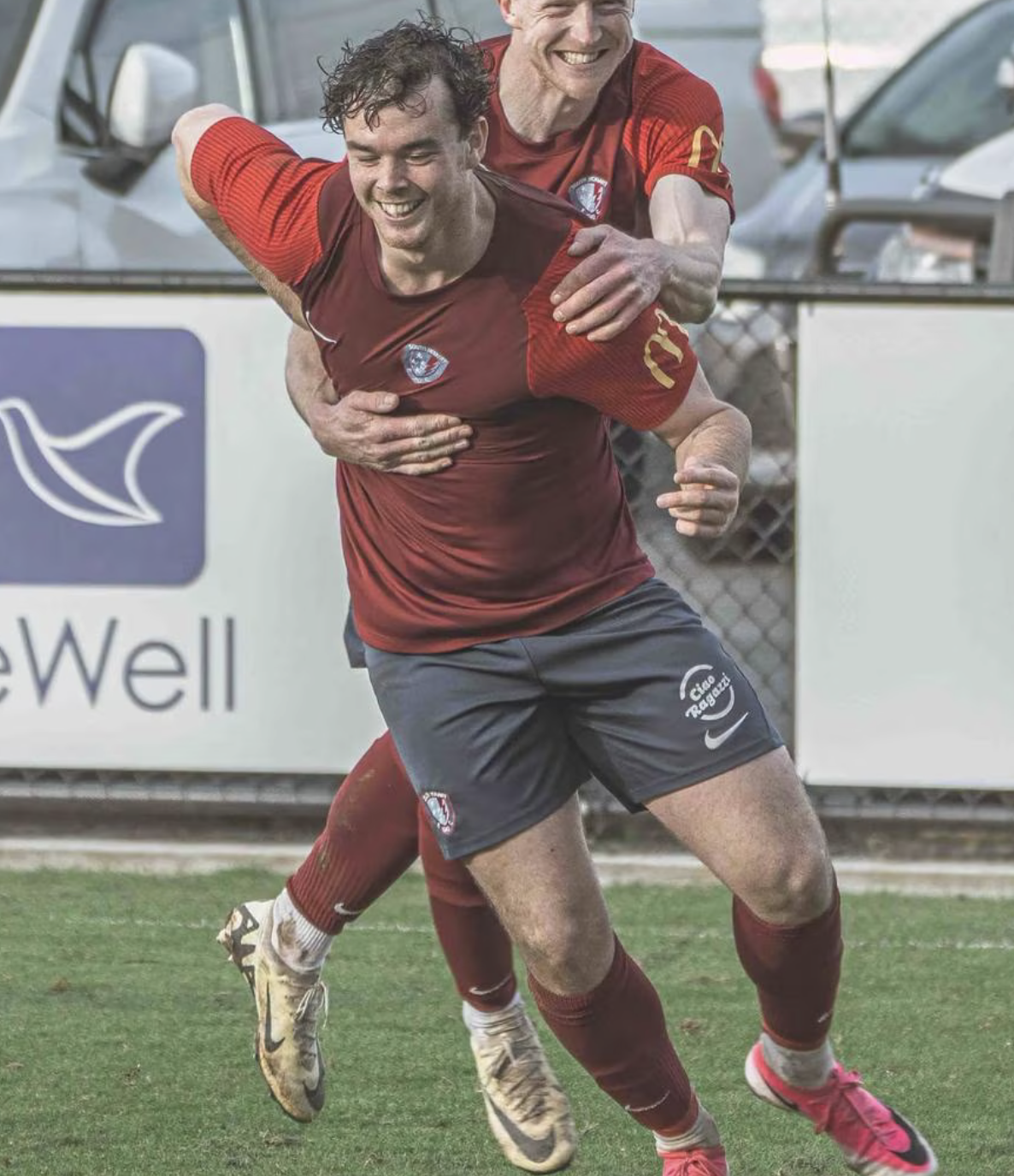
Photo credit: Nikki Long
The Mercury describes Kobe as an NPL stalwart whose spectacular bicycle kick in last year's Australia Cup was the goal of the tournament.
That goal got him the headlines.
Those who watch Tasmanian football every week know there is much more to Kobe than one spectacular goal. His consistency, work rate and influence have made him one of the competition's most respected midfielders over many seasons.
The bicycle kick made him famous. His football is what has kept him there.
14. Toby Simeoni
The Mercury highlights Toby's football journey through the United States, South Melbourne, Launceston City and now Northcote City.
Here's what the article doesn't mention. Toby has spent much of this season sidelined through injury.
Most supporters ranking him this year haven't actually seen him play this year.
Worth remembering, before we get too confident about anyone's spot on this list.
14. William Humphrey
Recognised by The Mercury as one of Tasmania's most composed defenders, William has quietly built one of the state's most consistent NPL careers over more than 150 senior appearances.
Quietly is the right word.
He's not the one making the highlight reels. He's the one making sure the highlight reels are even worth watching.
13. Sam Lancaster
The Mercury highlights Sam's progression from South Hobart to Sydney FC and his senior Australia Cup debut.
Since the rankings were published, Sam's added another line to his CV. He came off the bench against Tottenham Hotspur in Sydney FC's Festival of Football fixture.
Tottenham Hotspur.
A kid from South Hobart, on the same pitch as a Premier League club, inside the same year he's being ranked against players who've barely left the state.
That's the comparison problem in one sentence.
12. Taylor Last
Taylor's move from Devonport to Victoria reflects something bigger than one player's career. It's the growing number of Tasmanian players prepared to leave home to test themselves in stronger competitions.
We should be proud of that.
We should also be honest about what it costs our own competitions when they go.
11. Eddie Bidwell
Now back with Magic United after helping the club to a championship, Eddie continues to build an impressive career interstate.
A premiership medal and a return to the club that gave it to him. Not a bad way to make a list.
10. Charles Bidwell
A Devonport stalwart before signing with Broadmeadow Magic for last year's Australian Championship. Now at Birkenhead United, chasing a title in New Zealand's National League.
Three competitions, three countries worth of football, in as many years.
Not many Tasmanian midfielders can say that.
9. Eli Luttmer
School assistant principal by day. Kingborough Lions captain by weekend.
Led the club to its first Statewide Cup trophy this year, off the back of a Lakoseljac Cup run that deserved a lot more attention than it got.
If you missed it, that's on us, not on him.
8. Austin Yost
Twenty one years old. Already five seasons into the NPL, since he was 16.
Since the rankings were published, Yost has returned to South Hobart, adding more firepower to a squad that hardly needed it.
Half the players on this list are still working out what kind of career they'll have. Yost has been answering that question since he was old enough to need a permission slip.
7. Fletcher Fulton
Part of Heidelberg's Australia Cup upset over Wellington Phoenix last year. One of the biggest results by a Tasmanian linked player against A-League opposition in recent memory.
A consistent performer at Heidelberg, trusted by Jonny A to do a job.
6. Andy Brennan
Started at South Hobart. Won an NPL title there in 2014.
Then Newcastle Jets. Then years at South Melbourne, before departing late last year.
A long career, and one worth more than a single line in someone else's list.
5. Nick O'Connell
Kingborough's Lakoseljac Cup triumph elevated several players into the spotlight, and Nick's performances between the posts were central to that success.
Two penalty shootouts. Semi and final.
That's not luck, that's nerve.
4. Nick Morton
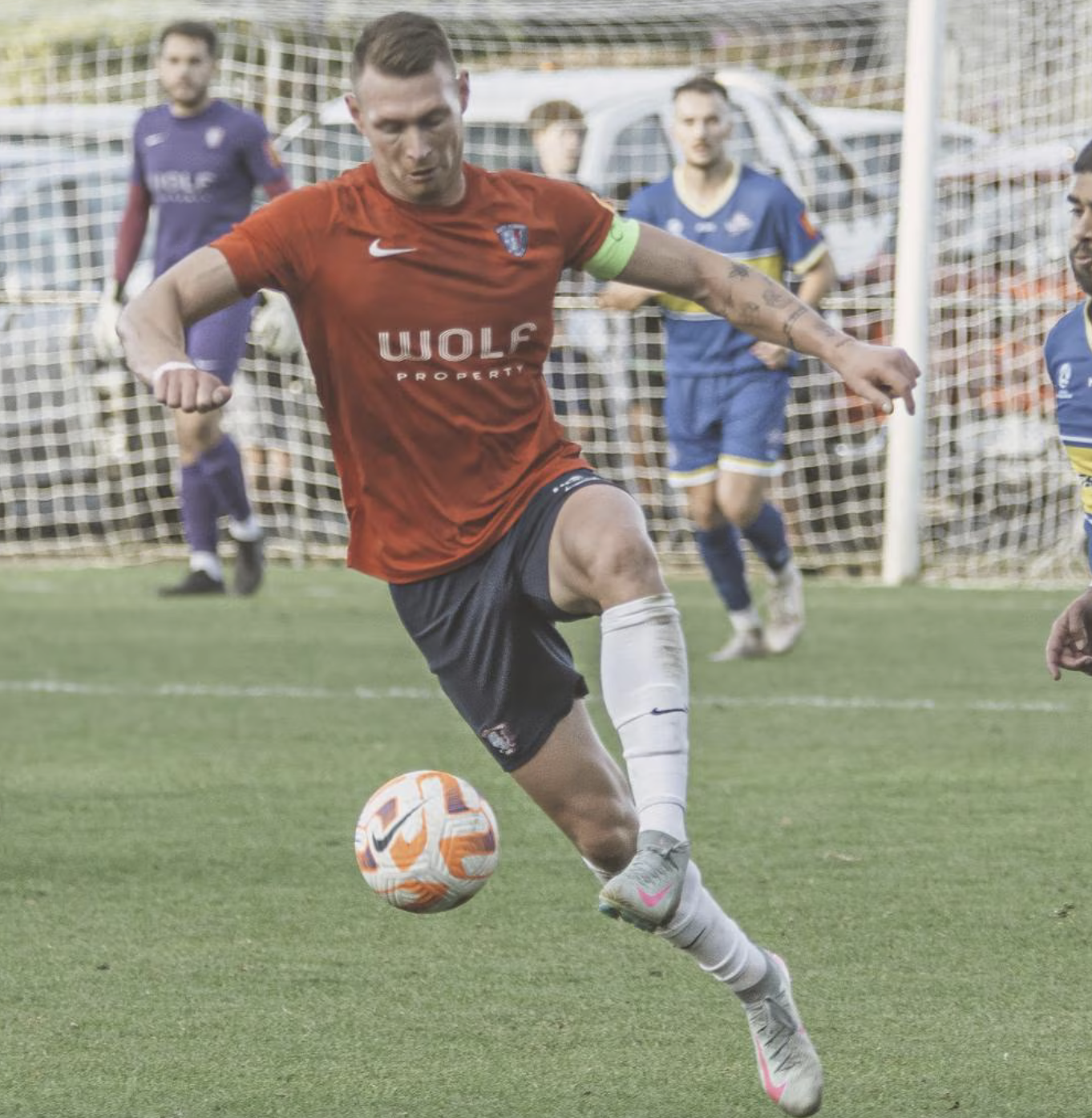
Photo credit: Nikki Long
Few players have dominated Tasmanian NPL football over such a sustained period.
Three Best and Fairest awards. Golden Boots. Club best player.
And now the opportunity to challenge himself at Northcote City, under his stepbrother Max.
His place near the top of this list isn't up for debate.
3. Iluka Wootton
Still only at the beginning of his career, Iluka continues to establish himself at Adelaide United and remains one of Tasmania's brightest young prospects.
This is exactly the comparison problem again. He's third on a list that has players twice his age with a decade more football behind them.
Third now. Ask again in five years and the answer might be completely different.
2. Daniel Wojcik
Daniel's move to Adelaide United and his selection for Australia's Joeys underline why so many people believe his future is exceptionally bright.
A Joeys call up at his age is not a small thing.
It's also, again, not the same thing as fifteen years of NPL football. Which is exactly why ranking the two of them on one list was always going to be an argument, not a fact.
1. Nathaniel Atkinson
There is little debate about Nathaniel's place at the top.
From Riverside Olympic to Melbourne City and the Socceroos, including representing Australia at the FIFA World Cup, he has established himself as the benchmark for every young Tasmanian footballer with professional ambitions.
If there's one name on this list that transcends the argument I've been making all along, it's his.
Everyone else on here can be reasonably debated. Nathaniel can't.
Final Thoughts
Whether you agree with every ranking or not, one thing is beyond dispute.
Tasmania continues to produce footballers capable of succeeding on the national and international stage. From players starring in our own NPL to those building careers interstate and representing Australia, our football community has much to be proud of.
Perhaps that is the greatest value of lists like these. They make us stop, reflect and appreciate just how many outstanding footballers Tasmania has produced.
There will never be universal agreement on rankings like this, and perhaps there shouldn't be.
Every supporter brings their own experiences, memories and values to the discussion.
Perhaps the answer isn't one list at all.
Perhaps it's several. Our greatest professional footballers. Our greatest NPL footballers. Our brightest young talents. Our most influential careers.
Different achievements deserve to be celebrated in different ways.
So rather than arguing over who should have been fourth instead of sixth, or who missed out altogether, I'll leave you with the question that started this.
If a Socceroo, a Joeys international and an NPL legend are all Tasmanians, are they even competing for the same title?
I don't think there's a right answer.
But it's worth asking before the next list comes out.
It's Not Really About Money
Fédération Internationale de Football Association
Trying to make sense of FIFA's biggest proposal in years
X has been bursting at the seams over the past couple of days.
Former players.
Journalists.
Football administrators.
Economists.
Politicians.
Supporters.
Everyone seems to have an opinion about FIFA's proposal to create something called FIFA Forward Enterprise.
To be honest, when I first saw the headlines, I wasn't entirely sure what everyone was arguing about.
Some people were saying FIFA was selling the World Cup.
Others were talking about private equity.
Some called it visionary.
Others described it as dangerous.
So I did what I usually do.
I started reading.
One article led to another.
Then another.
I read FIFA's proposal.
UEFA's response.
The AFC statement.
Craig Foster's thoughts.
Andy Burnham's comments.
Financial analysis.
Media reports from around the world.
The more I read, the more I realised this wasn't simply another football story.
It's a governance story.
And I suspect many football people are just as confused as I was when they first saw the headlines.
So let's start with Football 101.
Football 101
World football is governed by FIFA.
Under FIFA sit six continental confederations.
Australia belongs to the Asian Football Confederation (AFC).
Under the AFC sits Football Australia.
Under Football Australia are the Member Federations, including Football Tasmania.
Below that are our clubs, coaches, players, referees and volunteers.
Why does that matter?
Because decisions made at FIFA eventually work their way through the entire football pyramid.
From the FIFA Council in Zurich...
...right down to community football here in Tasmania.
So what is FIFA actually proposing?
Let's clear up one of the biggest misconceptions first.
FIFA is not proposing to sell the World Cup.
Nor is it proposing to hand control of football to private investors.
Instead, it wants to create a new commercial subsidiary called FIFA Forward Enterprise.
That company would manage many of FIFA's commercial activities, including broadcasting, sponsorship, licensing, ticketing and aspects of tournament operations.
FIFA would then invite investors to purchase up to a 20 per cent minority stake in that commercial business.
According to FIFA, control of football itself would remain exactly where it is today.
The Laws of the Game.
International competitions.
The World Cup.
The international calendar.
Sporting decisions.
Those would all remain under FIFA's control.
Why now?
Football has never generated more commercial interest.
Broadcast rights continue to grow.
Sponsors continue to invest.
The World Cup remains one of the biggest sporting events on the planet.
So why bring in outside investors?
FIFA's argument is that rather than waiting decades for that future commercial growth, it can unlock part of that value today.
The proposal could raise up to US$4.2 billion.
FIFA says much of that money would be reinvested back into football through increased development funding.
For many member associations, that could be transformational.
As I was reading, I couldn't help thinking about another article I wrote not that long ago.
When James Johnson left Football Australia to take up a leadership role with Canadian Soccer Business, we explored how Canada had separated many of its commercial rights from its governing body.
If you didn't read that articles, you can find them here.
Why Canada Matters Right Now - Part One
Why James Johnson Changed Jobs - Canada Soccer Part Two
Canada's model has generated plenty of debate over the years, but it also shows football isn't entering completely uncharted territory. Different commercial structures already exist around the world.
In fact, Canada has recently renegotiated aspects of its commercial arrangements in an effort to strengthen transparency, governance and long-term revenue.
FIFA's proposal is obviously much bigger.
It operates on a completely different scale.
But it reminded me that football has been experimenting with different commercial models for some time.
That doesn't necessarily make FIFA's proposal right.
Nor does it automatically make it wrong.
It simply means this conversation didn't begin this week.
What if FIFA is right?
This is the part that I think deserves equal attention.
It's easy to focus on the risks.
But what if FIFA is right?
What if this creates more football facilities?
More investment in women's football.
Better coach education.
Stronger grassroots programmes.
More support for developing football nations.
Those are outcomes every football person would welcome.
Which is why this debate isn't as simple as some headlines would have us believe.
So why is there so much opposition?
Part of the answer lies in history.
FIFA and UEFA have not always seen eye to eye.
For years there has been an ongoing power struggle over the future direction of world football.
The international calendar.
The expanded Club World Cup.
Commercial rights.
Player workload.
Who should shape the future of the global game.
Understanding that history helps explain why UEFA's response has been so strong.
But the debate has now spread well beyond Europe.
The AFC has expressed disappointment about the level of consultation before such a significant proposal was announced.
Concacaf has raised similar concerns.
Former Socceroo Craig Foster has questioned aspects of the proposal.
Before anyone asks, "What's Andy Burnham got to do with football?" ... quite a lot, actually.
Burnham is a lifelong football supporter, the former Mayor of Greater Manchester and someone who has never been afraid to speak up for the game. When he publicly questioned the proposal, people took notice.
Even former FIFA President Sepp Blatter has voiced concerns.
Interestingly, not all of these people are making the same argument.
Some are questioning governance.
Some are questioning consultation.
Some are worried about increasing commercialisation.
Others are asking whether football should move more cautiously before making a decision of this magnitude.
Australia's perspective
This is where my thoughts kept returning.
Earlier this year we learnt that Football Australia is forecasting a significant financial shortfall over the coming years.
At the same time, Australian football continues to advocate for better facilities, stronger pathways, coach education and greater investment across the game.
Against that backdrop, significantly increased FIFA funding would be incredibly attractive.
That isn't a criticism.
It's simply reality.
Every football administrator understands how difficult it is to find money.
Not just in Australia.
Across much of the football world.
For smaller nations especially, additional FIFA funding could change what's possible for future generations.
Who decides?
Another important point.
This isn't a decision Gianni Infantino makes on his own.
Ultimately, FIFA's Member Associations will decide whether the proposal proceeds.
That's an important distinction.
This isn't simply about one person's vision.
It's about whether the football family believes that vision is the right one.
The question I kept coming back to
As I finished reading, one question stayed with me.
If there were no promise of significantly increased funding...
...would member associations feel exactly the same about this proposal?
I don't know the answer.
But I think it's an important question.
My Take
I've spent enough years in football to know that governance decisions are rarely black and white.
The easy decisions are usually made quickly.
The important ones are the ones where thoughtful people can see merit on both sides.
I understand why FIFA believes this proposal could transform football.
I also understand why others are urging caution.
For me, this isn't really a story about billions of dollars.
It's a story about governance.
About transparency.
About consultation.
About stewardship.
Whatever happens from here, I hope football doesn't rush.
Decisions of this magnitude deserve time.
They deserve scrutiny.
They deserve robust debate.
And perhaps most importantly, they deserve football people who are prepared to read beyond the headlines before deciding where they stand.
Those entrusted with leading our game are not simply making decisions for today.
They are helping shape football for the next generation.
That is a responsibility none of us should ever take lightly.

Puella Nautam Amat

Who knew that one day this little girl would fall in love with football... and then, decades later, with words?
The girl loves the sailor. I discovered I loved words.
A Lifelong Learner?
The other day my daughter-in-law said something that made me stop and think.
"You're a lifelong learner."
I smiled, but it stayed with me.
I hadn't really thought of myself that way before. Football has certainly taught me plenty over the years, but "lifelong learner" wasn't a description I would ever have chosen for myself.
Then I started thinking back to boarding school.
Fiat Lux
Unlike many of my classmates, I chose to study Latin because I was convinced I was going to study law at university. Somehow, six years of Latin seemed like a sensible idea at the time.
Life, thankfully, had other plans.
I don't remember much of it now.
I remember Canon Pierard sweeping into the classroom with a booming Fiat lux! before someone dutifully switched on the lights.
I remember saying grace in Latin before meals.
And I still remember puella nautam amat.
It means, "The girl loves the sailor."
For years I wondered why I'd spent six years learning a language that, as far as I could tell, had absolutely no practical application to my life.
The sailor certainly never turned up.
Neither did law school.
Life Had Other Plans
Instead, football happened.
Football became my career, my volunteer work, my passion and, in many ways, my education.
Committee meetings replaced courtrooms.
Football grounds replaced lecture theatres.
The years rolled by and I never really gave Latin another thought.
Until now.
An Unexpected Discovery
Because over the past eight months something quite unexpected has happened.
I've discovered that I absolutely love writing.
That has surprised me more than anyone.
Not because I think I'm a journalist. I'm not.
I'm simply someone who enjoys asking questions, researching issues, listening to people, challenging my own thinking and trying to tell stories that matter.
I've interviewed people I admire.
I've written about grassroots football, governance, facilities, junior football, the Socceroos, the Matildas, the FIFA World Cup and, most importantly, the wonderful people who make our game what it is.
Some articles have been easy to write.
Others have taken days of research.
Every single one has taught me something.
Perhaps my daughter-in-law was right.
Perhaps I really am a lifelong learner.
And perhaps those years of Latin weren't completely wasted after all.
Maybe they taught me something I didn't appreciate at the time.
That words matter.
That language has rhythm.
That there is satisfaction in searching for exactly the right word instead of settling for almost the right one.
Everyone Wins
One thing I've also learnt over the past eight months is that if you discover something you genuinely love doing...
...you tend to do quite a lot of it.
Which probably explains why readers of Tassie Football Central have stumbled across rather a large number of my football articles over the past eight months.
Matthew has been incredibly generous in allowing me to share them and, if I'm honest, I suspect there have been times when people have thought, "Oh no... not another Victoria Morton article!"
That's perfectly okay.
Football people are wonderfully patient, but even I have to admit that another 2,000-word article appearing in your feed every second day might be a bit much.
So I've decided to make a small change...I'm not going to stop writing.
If anything, I'll probably write more.
I won't stop interviewing people.
I won't stop researching football issues.
I won't stop writing about grassroots football, governance, the Socceroos, the Matildas or the people who make our game such a fascinating part of Australian life.
The difference is that it won't be quite so "in your face."
From now on, Victoria Morton Football will remain the home of my writing, with every article also published through my free Substack newsletter.
If you enjoy reading my articles, you can subscribe and every new article will arrive automatically in your inbox.
If you don't enjoy reading them...
...well, your Facebook feed has just become a little quieter.
Everyone wins.
Thank You
I'd also like to take this opportunity to sincerely thank Matthew at TFC for allowing me to share my articles with the TFC community over the past eight months.
The amount of time he gives to Tasmanian football is extraordinary. Anyone who has run a football page knows it isn't just the posts people see. It's the messages, the moderation, the constant updates, the conversations behind the scenes and the commitment to keeping people informed.
I'll continue to proudly support TFC and write my weekly coverage of the NPL Under 21 competition because I genuinely appreciate what Matthew has built for football in Tasmania.
To everyone who has taken the time to read, comment, disagree, encourage, share an article or simply send me a private message...
Thank you.
Writing has become one of the great surprises of my life.
At sixty-eight, I never expected to discover something that makes me look forward to sitting down with a cup of tea and a blank screen quite as much as this does.
If you'd like to continue the journey with me, I'd be delighted to have you along.
Subscribing is completely free.
Simply click Subscribe free below, enter your email address, and every new article will arrive automatically in your inbox.
Perhaps It Was Useful After All
And as for puella nautam amat...
After all these years, perhaps puella nautam amat was never really about a girl and a sailor.
Perhaps it was simply the beginning of a lifelong love affair with words.
What Misty Taught Me About Women's Football

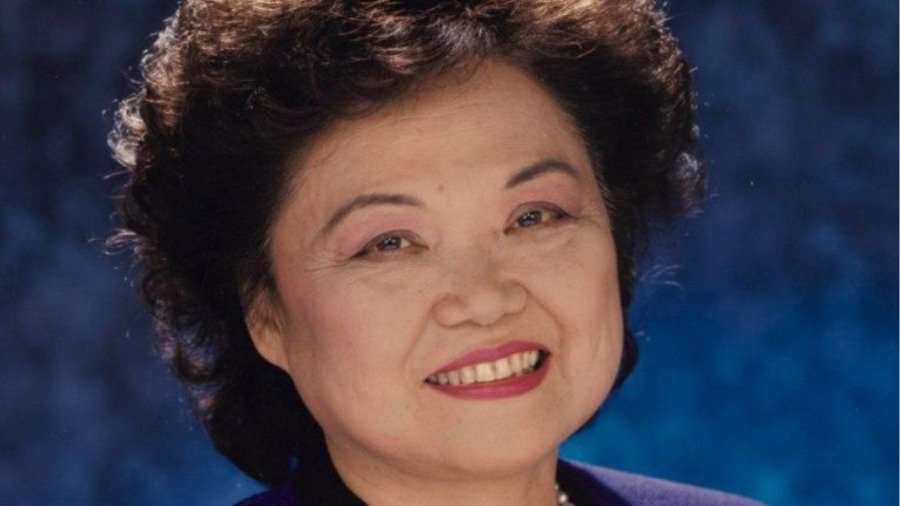
Congresswoman Patsy Mink of Hawaii, one of the driving forces behind Title IX. The landmark 1972 legislation transformed opportunities for millions of women in education and, indirectly, helped reshape women's sport.
One of the things I enjoy most about writing is that I'm still learning.
After my recent article about equal prize money in football, I received exactly what I expected. There was plenty of thoughtful discussion, but also the usual criticism.
Some people argued that the commercial gap between the men's and women's game simply justified the difference in prize money. Others quoted ticket sales and television revenue as though the discussion began and ended with a balance sheet.
Then, one morning, my daughter-in-law Misty called in on her way to school. Misty is a teacher, but before that she played college soccer in the United States.
We were chatting about my article and the reaction it had received when she asked me a simple question.
"Have you ever heard of Title IX?"
I hadn't.
That surprised me.
I've spent more than twenty years immersed in football, yet somehow I'd never come across one of the most influential pieces of legislation in the history of women's sport.
Regular readers will know I'm not exactly first in line to sing America's praises these days. I've been openly critical of plenty of things happening there, particularly under its current political leadership.
But credit should always be given where it is due.
Because what Misty told me sent me down a fascinating rabbit hole.
It Was Never About Football
The first thing I discovered was that Title IX wasn't written to help women's football.
In fact, it never even mentions sport.
Passed by the United States Congress in 1972, Title IX states that no person can be excluded from participation in, denied the benefits of, or discriminated against on the basis of sex in any education program or activity receiving federal funding.
It sounds straightforward now.
Back then, it was revolutionary.
Women were routinely denied opportunities that men took for granted. Some universities limited female enrolments into certain courses. Scholarships overwhelmingly favoured men. Women found themselves excluded from educational opportunities simply because they were women.
One of the driving forces behind the legislation was Congresswoman Patsy Mink of Hawaii, who had herself experienced discrimination after being refused entry to medical school because she was a woman. Alongside education activist Bernice Sandler and others, she helped expose widespread discrimination in American education and fought for equal opportunity.
The goal wasn't to create better female athletes.
It was to ensure women had the same educational opportunities as men.
Sport simply came along with it.
When Opportunity Becomes Reality
As I was reading about Title IX, Misty shared a story from her own life that suddenly brought all of this into focus.
She grew up in the United States during the 1990s, watching players like Mia Hamm, Brandi Chastain and Julie Foudy. They weren't just outstanding footballers. They inspired an entire generation of young girls to believe they belonged in the game.
Then came a moment she has never forgotten.
At 17, in her final year of high school, she travelled with her club team from a small town in the United States on a football tour of England and Wales. Along the way they had the opportunity to play against academies including Manchester United.
"I expected them to be miles ahead of us," she told me.
"They weren't."
At the time, she couldn't understand why. Manchester United was one of the biggest football clubs in the world. Surely their girls' academy would be untouchable.
Looking back now, she understands exactly what she was seeing.
The talent in England was always there.
What wasn't there were the pathways.
While England and many other football nations were still developing opportunities for girls, the United States had already spent decades building them through youth clubs, high school football, college scholarships and the opportunities created by Title IX.
The United States wasn't producing better footballers because girls were more talented.
It was producing better footballers because girls had more opportunities.
That is a very important distinction.
Today the picture looks very different.
England, Spain and many other countries have invested heavily in girls' academies, professional leagues and player pathways. The quality of women's football has risen dramatically because the investment has finally begun to catch up.
The gap wasn't about ability.
It was about opportunity.
Misty also told me about something else that struck her.
In 2024, Kansas City opened the world's first purpose-built stadium for a professional women's sports team. It wasn't shared with a men's club. It wasn't an existing ground adapted for women. It was designed and built from the ground up as the home of the Kansas City Current.
That, perhaps more than anything, symbolises how far the women's game has come.
The United States Women's National Team has also used its platform to push for greater equality, often attracting criticism along the way. Whether people agree with every stance they have taken or not, they have undoubtedly helped move the women's game forward.
Listening to Misty, I realised that what she experienced as a teenager wasn't simply a football tour.
She had unknowingly witnessed the difference that decades of investment can make.
That's the Part We Often Forget
Some people responded to my previous article by quoting ticket sales from the FIFA Men's and Women's World Cups.
Those figures are real.
The men's tournament still generates substantially more revenue.
Nobody sensible disputes that.
But what Title IX taught me is that today's commercial success is often the result of decisions made decades earlier.
The men's game has benefited from well over a century of uninterrupted investment, professional structures, media attention and commercial backing.
Women's football has not.
For decades, in many countries, it wasn't simply underfunded.
It was actively discouraged.
In England, the Football Association banned women's matches from being played on grounds affiliated with its member clubs for fifty years.
You cannot under-invest in something for generations and then point to today's financial results as proof it was never worth investing in.
Markets don't simply exist.
They are built.
Investment Comes Before Success
That's why I continue to believe prize money is about more than rewarding what has already happened.
It also helps shape what happens next.
Investment funds coaching.
Facilities.
Player development.
Professional environments.
Opportunities for the next generation.
If we base every decision solely on today's commercial returns, we risk locking yesterday's inequalities into tomorrow's future.
Title IX demonstrated something incredibly important.
Investment came first.
Commercial success followed.
Not the other way around.
A Lesson Worth Learning
Australia doesn't need to copy everything America does.
Nor should we.
But we should never be too proud to learn from ideas that have worked.
One conversation with Misty taught me something I genuinely didn't know.
It reminded me that sometimes the best conversations aren't the ones where someone tells you you're right.
They're the ones where someone teaches you something new.
The debate about equal prize money will continue, and people will hold different views.
That's healthy.
But before we use today's revenue figures to decide what women's football deserves tomorrow, perhaps we should remember one simple lesson from Title IX.
The market didn't build the opportunity.
The opportunity helped build the market.
For me, that was the biggest lesson of all.

Tony Pignata: Explaining the Decisions That Shape Tasmanian Football

Photo credit: Nikki Long
A Coffee, A Conversation… and a Different Perspective
Part One of this interview was about getting to know Tony Pignata the person.
Part Two is about Tony Pignata the football administrator.
Before we go any further, I need to deal with the reaction to Part One.
More than a few people asked whether the interview had changed my relationship with Tony Pignata.
Some even joked we'd become best mates.
No.
Nothing about spending an hour and twenty-two minutes over coffee changes my willingness to challenge decisions that deserve scrutiny.
If Football Tasmania makes a call tomorrow that I disagree with, I'll still write about it.
What that interview changed was my understanding of how Tony thinks through the biggest issues facing football in this state.
Twenty years in this game, as a volunteer, a club president, a tournament director, a business owner and now a writer, has taught me one thing.
Football administration is rarely black and white.
It's easy to criticise a decision when you don't understand how it was reached.
It's just as easy to defend every decision simply because you know the people making it.
Neither approach serves our game.
So here's what I actually did.
I asked difficult questions.
I listened carefully to the answers.
Then I tested those answers against my own experience.
Before we sat down, I gave Tony every question in advance. He accepted them all.
Afterwards, I sent him ten follow-up questions where I wanted greater detail.
He answered every one of those too.
In a climate where it's increasingly normal for people to dodge hard questions, that's worth noting.
It doesn't mean I agree with every answer.
Some of what follows I remain unconvinced by.
Some of it genuinely shifted my thinking, even where it didn't change my mind.
Respecting someone's willingness to explain a decision is not the same as endorsing it.
If we're prepared to publicly criticise the people running our game, we owe them the same willingness to genuinely hear why they made the call.
That's what this is.
Not a verdict.
The beginning of a better conversation.
FIFO Leadership: Can Tasmanian Football Be Led From Melbourne?
One of the first issues I wanted to raise with Tony was also one of the most frequently discussed across Tasmanian football.
Can the Chief Executive of Football Tasmania effectively lead the game while living interstate?
It's a question that has been debated in clubrooms, committee meetings and around football grounds across Tasmania since Tony returned to live in Melbourne around eighteen months ago.
Rather than speculate, I asked him directly.
His answer wasn't about football.
It was about family.
"I lived in Tasmania full-time for the first eighteen months of my tenure," he told me.
"Around eighteen months ago, I made the decision to move back to Melbourne to be closer to my children and my ageing mother. I have lived away from Melbourne for nineteen years through my previous roles and it came at a great personal cost to me and my family. That needed to change."
He was also keen to address what he believes is a common misconception.
"I pay my own travel costs to and from Melbourne," he said.
He explained that he travels to Tasmania regularly, generally every second week, while also travelling around Australia for meetings with Football Australia and other national stakeholders.
"I understand there may be a perception among some people that the arrangement affects my leadership," he said. "But I don't believe it has diminished my contribution or commitment to Football Tasmania. I remain closely connected to our staff, clubs and stakeholders, and I believe I should be judged by the work I do and the outcomes we achieve."
I found it difficult not to sympathise with Tony's personal circumstances.
After spending almost two decades living away from Melbourne, wanting to be closer to his family is something most people would understand.
But understanding why someone made a decision isn't quite the same as deciding whether it is the right arrangement for Tasmanian football.
Football Tasmania is the governing body responsible for leading the game across an entire state.
That naturally raises another question.
Should Tasmanian football expect its Chief Executive to live in Tasmania full-time?
Tony's position is clear.
He believes he should be judged by his work and the outcomes Football Tasmania achieves.
I can understand that argument.
Equally, I can understand why clubs, volunteers and participants might believe leadership is about more than outcomes alone.
Visibility matters.
Relationships matter.
Being present matters.
Some leadership happens in boardrooms.
Some happens by turning up to local grounds on wet Saturday mornings, attending club functions, having conversations that never appear on an agenda and simply being part of the football community.
Those things are difficult to measure.
But they matter.
This is also bigger than Tony's personal decision.
The Football Tasmania Board has evidently determined that this arrangement is compatible with the responsibilities of the role.
The football community is entitled to decide whether it agrees.
Tony gave me a thoughtful and honest explanation for why he made the decision.
I understand it.
Whether it is the arrangement Tasmanian football needs or deserves is a different question altogether.
Rugby Park: Why Stay?
Our discussion about where Tony lived naturally led me to another question about place.
This time it wasn't the Chief Executive's home.
It was Football Tasmania's.
Tony had been remarkably candid about Rugby Park.
Rather than defending the organisation's headquarters, he criticised them.
That immediately raised another question in my mind.
If the offices were as poor as he was describing, why was Football Tasmania still there?
So I asked whether the organisation had considered renting commercial office space while continuing to pursue its long-term vision for a Home of Football.
He didn't hesitate.
"I rang Bob Gordon on my first day," he recalled. "I said these are the worst offices I've ever been in."
He then explained why.
There was mould in the boardroom.
Around twenty staff shared a single toilet.
One staff member had even received an electric shock while turning on a heater.
It was one of the most candid moments of our interview.
Having painted such a bleak picture, my original question became even more relevant.
If Rugby Park was really that bad, why not move?
He explained that Football Tasmania had investigated other premises.
The problem wasn't finding office space.
It was paying for it.
Suitable commercial accommodation, he estimated, would cost somewhere between $120,000 and $150,000 a year in rent.
For him, that was a difficult expense to justify.
His view was that football's money should be invested in developing the game rather than paying substantial rent for what would only ever be a temporary solution.
He also explained that Football Tasmania works differently today than it once did.
Staff work flexibly.
They spend significant time with clubs and stakeholders across the state.
They're often out in the football community rather than sitting behind office desks every day.
I found the financial argument easy to follow.
For a sporting organisation, an additional annual expense of more than $100,000 is a significant decision.
Then one thought struck me.
Tony wasn't asking Tasmanian football to settle for Rugby Park.
He was asking it to endure Rugby Park a little longer.
Whether that is the right decision is a different question.
Every organisation has a responsibility to provide its staff with a workplace that is safe, functional and fit for purpose.
If Rugby Park really is as inadequate as Tony described, is continuing to work there the right choice, even if it saves football money?
People will answer that question differently.
But one thing became clear during our conversation.
Rugby Park and the Home of Football are not separate discussions.
They are the same discussion.
Tony sees the shortcomings of Rugby Park not as a reason to spend heavily on temporary offices, but as further evidence that Tasmanian football needs a permanent home of its own.
That naturally led me to my next question.
If Rugby Park is no longer the answer, what exactly is the Home of Football?
And why does Tony believe it could transform the game in Tasmania?
More Than Bricks and Mortar
If Rugby Park explained why Tony believed Football Tasmania needed a new home, our conversation naturally moved to what that home might actually look like.
One thing became clear very quickly.
Tony wasn't talking about replacing an ageing office building.
He was talking about something much bigger.
When I later asked him to expand on the idea in writing, he described a Home of Football as a central base for Football Tasmania's administration, coach and referee education, player development programs, representative teams and community football.
He wrote that it could also provide better facilities for women and girls, support major events and give football a stronger public identity.
"The long-term value is not just a building or pitches," he wrote.
"It is the infrastructure, connection and sense of belonging that would support generations of Tasmanian players, coaches, referees and volunteers."
During our interview he also spoke about a precinct with multiple pitches capable of supporting development programs and representative football.
Whether people agree with the vision or not, it's certainly ambitious.
The obvious question, though, is how it becomes reality.
Football Tasmania doesn't own the land.
He told me Wentworth Park remained Football Tasmania's preferred location because of its size and because it is already used for sporting purposes.
That immediately led me to another question.
Wentworth Park is already home to Touch Football.
I asked what would happen if football pursued the site.
He said Football Tasmania had already begun discussions with Touch Football and acknowledged that any proposal would require further work with both Touch Football and Clarence City Council.
As we continued talking, I found the discussion becoming less about one building and more about football infrastructure across Tasmania.
I raised South Hobart's long-running efforts to improve the lighting at D'Arcy Street and the challenges clubs often face when dealing with local councils.
He said Football Tasmania would continue supporting clubs through meetings, advocacy and letters of support while also pursuing the longer-term vision of a Home of Football.
I then asked what he hoped football infrastructure across Tasmania might look like over the next twenty years.
His answer wasn't really about one facility.
He said he wanted every NPL club to have quality pitches, lighting, drainage and facilities capable of supporting players, coaches and volunteers.
That struck me as important.
Throughout our conversation he kept returning to the same theme.
Not one project.
Not one building.
Football infrastructure.
We also found ourselves talking about government investment.
Football is one of Tasmania's largest participation sports, yet much of our discussion centred on how difficult it has been to secure funding for football facilities compared with other sports.
I came away understanding Tony's vision more clearly.
He believes Tasmania needs a permanent home for football.
But he also believes clubs need better facilities.
The challenge isn't identifying what football needs.
It's finding governments prepared to invest in it.
Whether a Home of Football eventually becomes reality is a question for governments, councils and the football community.
Tony's role is to make the case.
Whether others are persuaded is another question altogether.
Player Pathways: Whose Job Is It to Develop a Player?
Home of Football led naturally into a question I'd been wanting to ask for a while.
Where do clubs actually fit into all of this?
I've written before that clubs are the heart of community football.
I've also questioned whether Football Tasmania's pathway programs risk pulling talented players away from their clubs instead of supporting them.
So I asked Tony directly.
He pushed back straight away on the idea that pathways exist to replace clubs.
"The intention is not to replace or duplicate the work of clubs," he told me. "Many clubs already provide very good coaching, and that work should be recognised and supported."
His argument was that touchpoints - extra sessions run outside a player's club - serve a different purpose.
Exposure to different coaching perspectives.
Specialist support.
Higher intensity environments.
Connections to national pathways that a single club often can't offer on its own.
"The club should remain central to a player's development," he said, "with Football Tasmania adding value around it."
On paper, it's a convincing answer.
I've spent twenty years in clubrooms, not boardrooms, and I know how this can feel from the other side.
When a talented fifteen-year-old is selected for a representative session, the club coach who has worked with that player for three years doesn't always feel like something is being added.
They can feel like they're being overlooked.
His answer suggested he recognised that tension.
"We need to communicate with club coaches, be clear about what each session is designed to achieve and carefully manage player workloads," he said.
Communication.
It came up more than once during our conversation.
It will come up again later in this piece.
A good intention on paper is not the same as a club coach feeling they were genuinely consulted before losing a player for a Saturday.
That's the gap Tony needs to close.
Not the policy.
The practice.
Coach Development: More Than a Certificate
Pathways raised questions about players.
Naturally, our conversation turned to the people coaching them.
Tasmania has never had a shortage of people willing to coach.
What it has struggled with, by Tony's own admission, is the number of qualified coaches and the ongoing support they receive.
"Our biggest priority is increasing both the number and quality of coaches across Tasmania," he told me.
That means making coach education more accessible, more affordable and more relevant, particularly outside Hobart.
I asked what that actually looks like over the next five years.
He spoke about stronger coaching pathways from community football through to the advanced levels.
More mentoring after courses finish, not just during them.
A greater focus on developing female coaches.
Then he said something that stayed with me.
"Qualifications are important, but coach development cannot simply be about completing a course. It must involve practical support, observation, feedback and continuous learning."
It's difficult to argue with that principle.
It's also one of the hardest things for any football organisation to deliver.
Running a coaching course is relatively straightforward.
Book a venue.
Bring in a presenter.
Hand out a certificate.
Ongoing mentoring is something else entirely.
It requires experienced people on the ground, week after week, observing sessions, offering feedback and building relationships with coaches who are all at different stages of their development.
Tony didn't present that as something Football Tasmania has already solved.
He presented it as the priority.
That's an important distinction.
Whether Football Tasmania has the people, the resources and the budget to deliver that vision, particularly outside Hobart where accessibility remains the greatest challenge, is the question that will ultimately determine its success.
Coming in Part Three
We've talked about leadership.
We've talked about infrastructure.
We've talked about player pathways and coach development.
In Part Three, the conversation turns to governance, communication and the future direction of football in Tasmania.
Some of the toughest questions are still to come.
The Biggest Gap in Football Isn't On the Pitch. It's In FIFA's Prize Money.
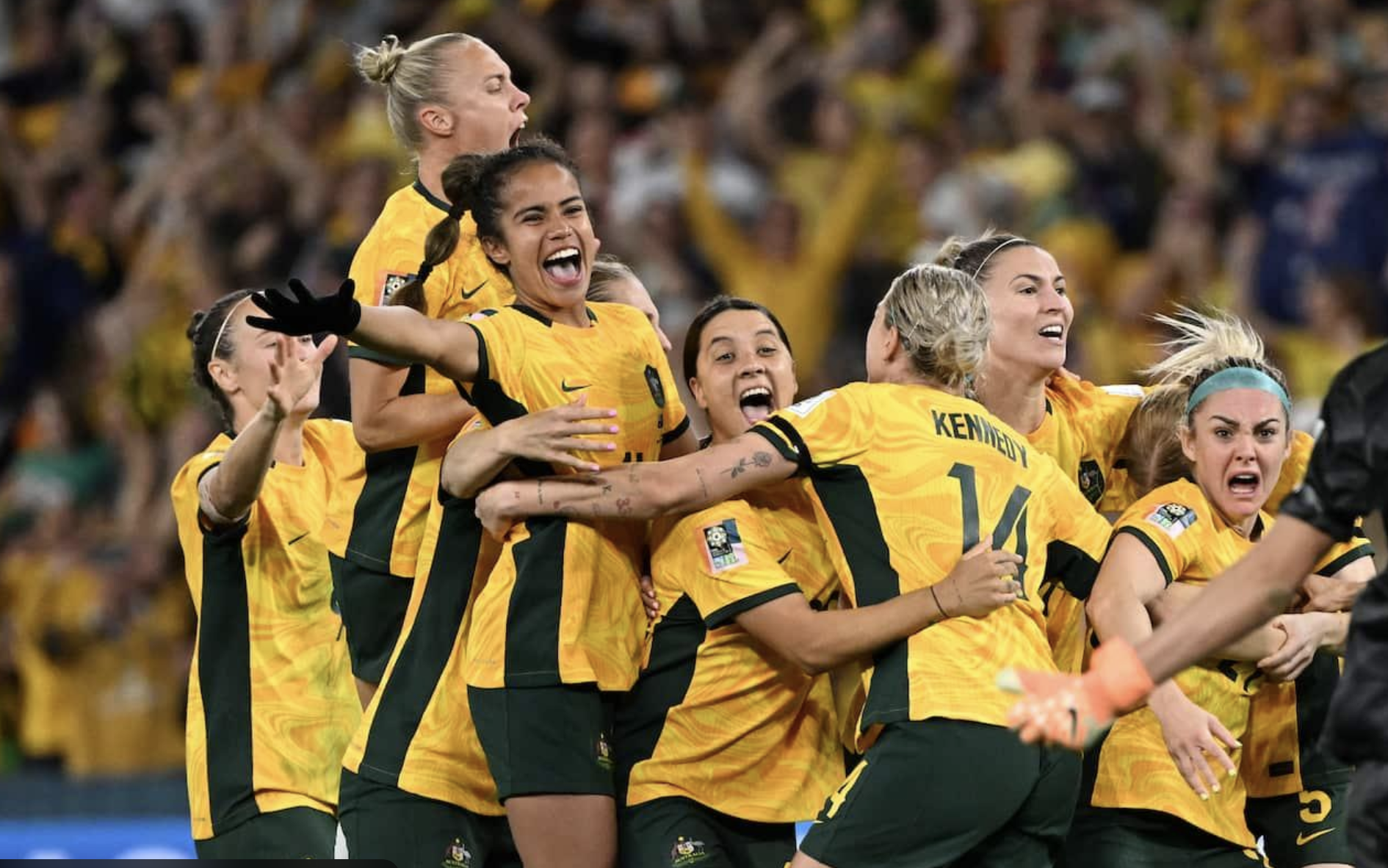
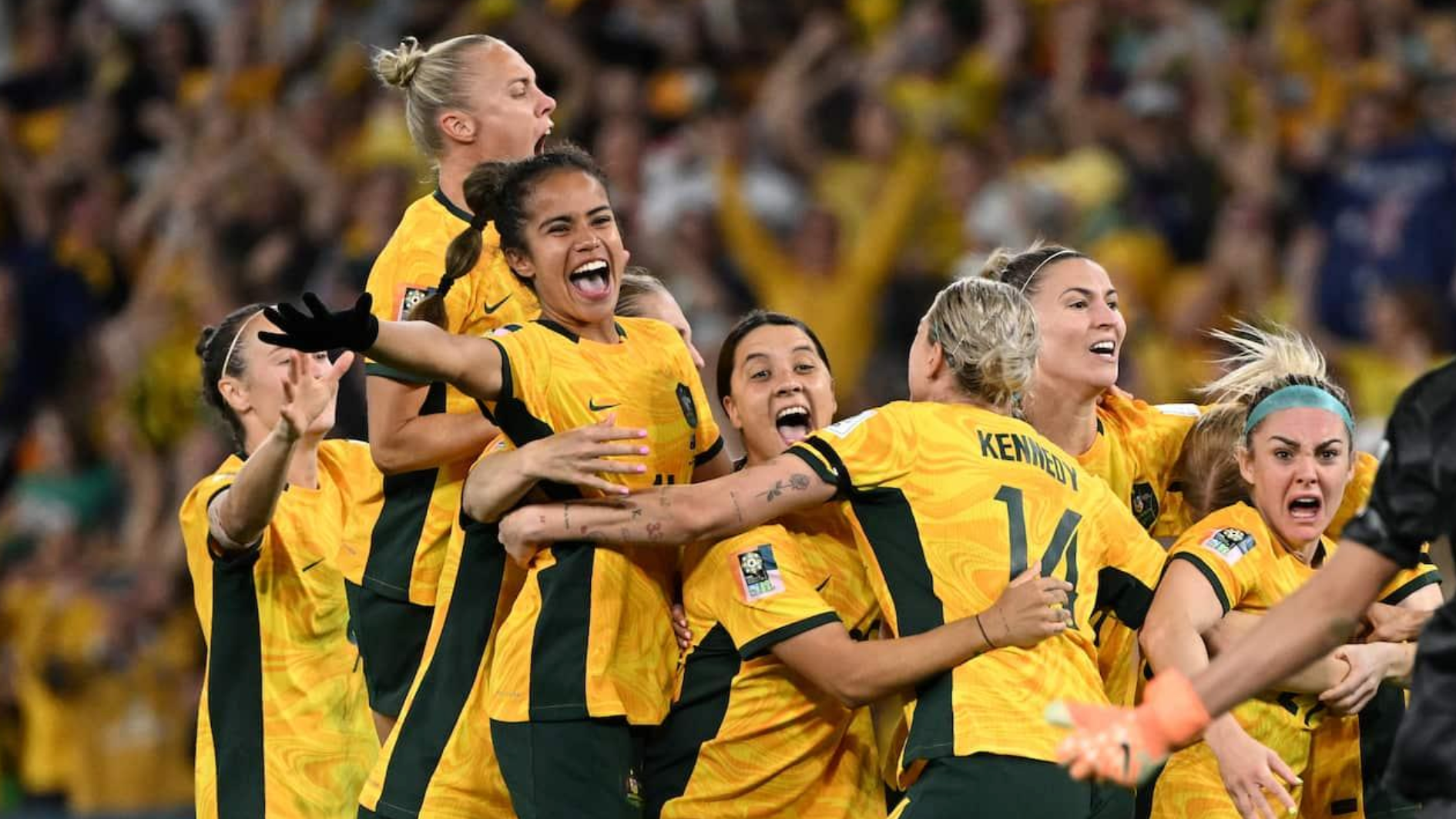
The Socceroos crashed out of the 2026 World Cup in the round of 32.
FIFA paid them about $15.8 million.
The Matildas reached the semi finals of a home World Cup in 2023. They filled stadiums. They stopped the country. They made a generation of girls believe they could play too.
FIFA paid them $8.9 million.
Read that again.
One team went out early. The other went further than any Australian football team ever had. And the team that achieved less got paid more.
This isn't a dig at the Socceroos. They earned every dollar of it.
It's a question about what FIFA's prize money actually says about what it values.
Before You Blame Football Australia
Don't.
Football Australia actually got this right. The Socceroos and Matildas split their share of World Cup winnings the same way under the same collective bargaining agreement. Whatever FIFA sends through gets divided fairly once it lands here.
The problem isn't here.
It's Zurich.
The Numbers FIFA Doesn't Want You Thinking About Too Hard
The 2026 Men's World Cup paid out $871 million across 48 teams. The champion alone took home $51 million.
The last Women's World Cup pool was $110 million. Total. For every team combined.
Fewer teams competed in 2023 than in 2026. Even so. A fourth placed women's team earning less than a men's team knocked out in the round of 32 is not a rounding error.
It's a decision.
Then Came the Asian Cup
If you want to know how deep this goes, don't stop at FIFA.
Australia hosted the Women's Asian Cup this year. Stadium Australia. A packed house. A final against Japan that broke every attendance record the tournament has ever had.
The prize pool for that record breaking tournament was $2.62 million.
The same as 2022.
The men's Asian Cup pool in 2023 was $21.5 million. Nearly ten times as much. And unlike the women, every men's team got a $200,000 participation fee just for turning up. Eight of the twelve women's nations got nothing at all, because only the semi finalists were paid a cent.
The AFC's own research said this tournament could generate up to $82.4 million in revenue.
They paid the players like it generated nothing.
The Matildas and Nadeshiko Japan asked the AFC to sit down before the tournament and talk about equal pay. They were ignored. Afterwards, both teams put out a joint statement saying so publicly.
Two finalists. One record breaking tournament. Ignored anyway.
Then Look At What America Did
The US Soccer Federation splits men's and women's World Cup prize money straight down the middle.
No matter who actually earned it.
People assume that's generosity.
It isn't.
Audited US Soccer financial reports showed the women's team's matches generated more revenue than the men's from 2016 through 2018. In the years after they won the 2015 World Cup.
Ticket sales mostly.
Real numbers. Not sentiment.
The revenue argument that every federation leans on to justify the pay gap had already fallen apart in America. The USWNT wasn't asking to be subsidised. They were the more valuable team by the ledger. And still being paid less.
That's what forced the equal split.
Not charity.
Evidence.
Is It Really That Simple
Here's where I have to be honest with you.
FIFA's argument isn't nothing in theory. If one competition generates more broadcast revenue and more sponsorship and more ticket sales you could argue its prize pool should stay bigger for a while yet.
But that argument only survives if it's actually tested.
And the one place it has been tested properly. The US. It lost.
Everywhere else, women's football hasn't been given the chance to prove itself commercially because it hasn't been invested in the way the men's game has.
England's own FA banned women from playing on its grounds from 1921 until 1971. Fifty years. While the men's game spent that half century building leagues, stadiums, broadcast deals and a hundred years of head start.
We keep comparing two competitions like they started from the same line.
They didn't.
You don't grow revenue by starving a product for decades and then pointing at the revenue gap as proof it was never worth investing in.
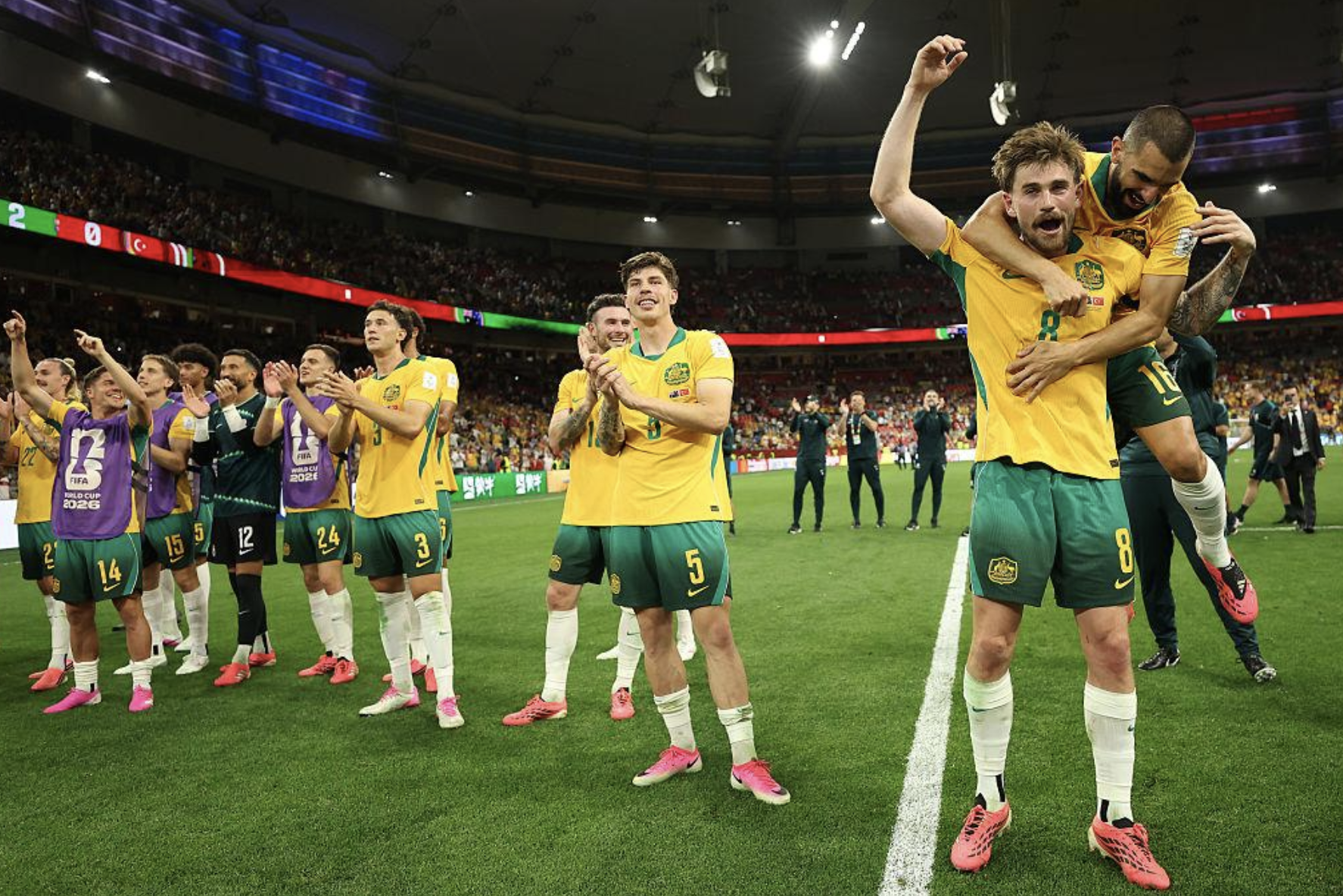
Where I Land
Progress deserves credit where it happens. The women's prize pool is bigger than it was a decade ago and pretending otherwise would be dishonest.
But bigger than it was is not the same as fair.
A team that goes further than any Australian side in history should not take home less than a team that went out early. Not once. Not ever. And when the same governing bodies that talk about growing the women's game quietly freeze their prize pool the year attendance records get smashed, well, the intent shows itself pretty clearly.
Football Australia proved equal pay isn't complicated. It's a choice.
FIFA and the AFC have made theirs.
The question is how long the rest of us keep accepting it.

Sunday Pondering: Coverage, Cup Upsets and a Bloke Who Won't Go Away
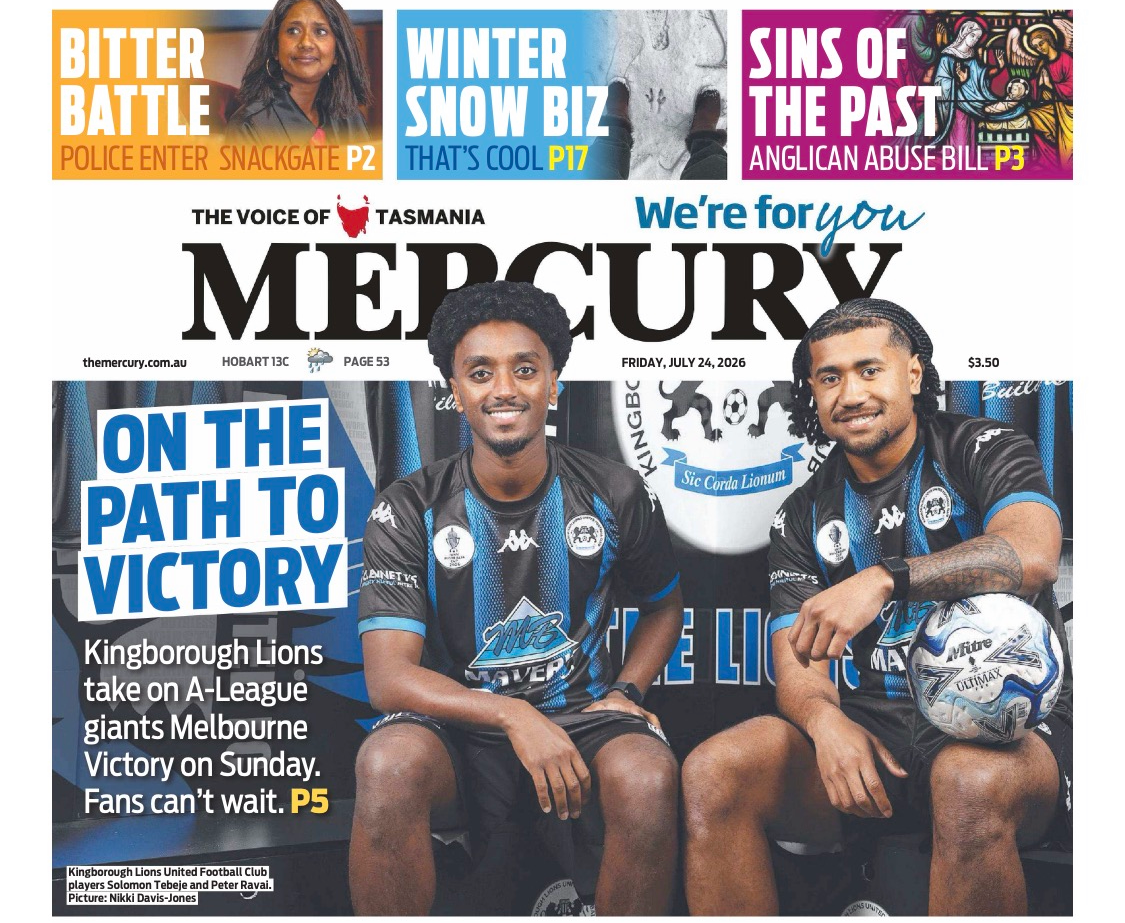
Photo courtesy of the Mercury
Funny old week.
For months I've been banging on about the Mercury and their patchy coverage of grassroots football.
Then Kingborough draws Melbourne Victory in the Australia Cup.
Suddenly it's front page.
Double page spread.
Under 11s posing with jerseys.
The lot.
Nothing like a giant killer story to get the ink flowing.
I'm not complaining.
Genuinely thrilled for Kingborough.
Thrilled for the kids who get their photo in the paper.
Thrilled the whole state gets to see what our football looks like when the spotlight actually turns up.
But I'd be lying if I said I wasn't filing this away for later.
Apparently all it takes is an A-League team.
Who knew.
Kingborough play Victory tonight at 5pm and I'm not going to get in the way of that story today.
It deserves its own air.
Go well, Lions.
Roar loud.
It's not just us
Turns out Tasmania isn't the only state having this exact experience.
Preston Lions, an NPL Victoria club most Australians couldn't point to on a map, knocked out reigning A-League premiers and Australia Cup holders Newcastle Jets this week.
A 93rd minute winner, scored by a signing only weeks out of Victory colours.
One of the biggest upsets in the competition's history.
Up in Queensland, Lions FC did the same to Perth Glory, on penalties, with a striker who's the NPL Queensland's leading goalscorer this season and was working a normal job before kickoff.
And down in Sydney, NPL side Sydney United 58 knocked out the Central Coast Mariners in a penalty shootout for the ages.
1-1 after extra time, then 11-10 on spot kicks, with a 17 year old's miss finally settling it after 22 penalties.
Suddenly these clubs and their volunteers are getting the kind of coverage they've never had before either.
Same story as Kingborough.
Same reason.
Except Preston's week wasn't all good news.
Days after their giant killing, Football Victoria hit the club with sanctions after a group of their supporters displayed offensive anti-Greek and misogynistic banners at their league match against South Melbourne.
Preston's next two home fixtures will now be played behind closed doors while the matter goes to the Football Victoria Tribunal, with further penalties still possible.
So even the good news story has its own footnote.
A club can produce one of the great cup boilovers and still have to answer for what a handful of its own supporters put on display days earlier.
Football doesn't let you have the highlight reel without the accountability that comes with it.
As it shouldn't.
It says something too about the Australia Cup's coverage bump.
The whole country gets to see what grassroots football looks like once a year, warts and all, and it only happens because a big name is standing across the halfway line.
Meanwhile the big name is having its own week

While all this was going on, the A-League was busy falling out with its own players.
The competition's collective bargaining agreement lapsed at the end of June and the players knocked back the new offer from the league, unanimously.
There's now genuine talk of industrial action, and reports of players already walking for the NPL and overseas rather than wait it out.
On top of that, there's now real doubt over whether clubs will see any money at all from this year's TV distribution.
SEN's Adam Peacock said this week that the figure has fallen from $3.5 million in the Fox Sports heyday to potentially nothing this season, and he hoped he was wrong.
So here's the thing I keep turning over this morning.
The A-League can't get its own house in order, can't guarantee its clubs a cent from television this year, and still gets wall to wall coverage as of right.
Grassroots clubs run entirely on volunteers, somehow keep producing giant killings on the biggest stage in the country, and get a guernsey in the paper only when they happen to be standing next to a famous jersey.
Make of that what you will.
I know what I make of it.
Out on the muddy fringes
It's a bye round for a lot of us, which has been a small mercy.
Not because anyone wanted a weekend off, but because half the grounds around the state can't take a full round right now.
Watching some of the livestreams this week, the fields have been a mess.
Not from one big dump of rain, but from the sheer consistency of it.
Day after day of steady, soaking rain that never quite lets a ground dry out or recover.
Mud where the centre circle should be.
Puddles collecting in the goal mouths.
Every outdoor sporting club in Tasmania is dealing with the same thing right now.
Groundskeepers, committees, volunteers, all trying to keep pitches playable through a winter that just won't ease up.
Spare a thought for them today.
What's coming
Tony Pignata's Part two interview is coming, I promise.
There's enough from our conversation for a Part Two and a Part Three, and I want to do it properly rather than rush it out around a big game weekend.
It'll get there.
One last thing
Photo courtesy of Julian Proud
Somehow this bloke keeps turning up everywhere at the moment.
Donald was in Tasmania, apparently.
Turned up pitchside for a trophy presentation, medals and all.
Reckon he just can't resist a trophy presentation, this bloke.
Photo courtesy of Julian Proud, who clearly has too much time and talent on his hands.
But even football can't get away from him lately.
Right.
Go Kingborough.
SBS keeps the World Cup. Again.
Photo credit: SBS
Free to air, and still free
Free to air football is still a thing in this country.
Say what you like about Australian TV, but SBS, the Special Broadcasting Service, just delivered every single match of the 2026 World Cup live and free.
All 104 games. No subscription. No paywall. No having to explain to your kids why the biggest tournament on the planet lives behind someone else's login.
In our house that meant every match, watched on the couch, with the volume up too loud for a school night more times than I'll admit to.
That matters more than people give it credit for.
A quick 101 on SBS and football
For anyone who's ever wondered why SBS and football go together like that, here's the short version.
SBS started broadcasting in 1980. From very early on it leaned into football hard, at a time when the code was still seen by a lot of Australia as an "ethnic" game rather than a mainstream one.
That wasn't an accident. Post war migration had brought huge numbers of Southern European fans to Australia, and football was the game they'd grown up with. SBS built its football coverage around those communities, at a time when almost nobody else in Australian media was interested.
Les Murray and Johnny Warren became the faces of it. For decades they were "Mr and Mrs Soccer" to a whole generation of fans, and they carried SBS's World Cup coverage from the mid-1980s onward.
SBS has held the World Cup rights on and off for close to forty years now. Along the way it's been credited with helping drag football from the margins into the mainstream, particularly through moments like the Socceroos' famous run at the 2006 World Cup.
So when people ask why SBS bothers fighting so hard to keep these rights, that's why. It's not just a broadcaster with a sports package. It's the network that backed this game before anyone else would.
The timezones will be brutal
Let's talk about the timezones for 2030, because that's where the real story is now.
This one needs a bit of explaining. The 2030 World Cup will be spread across six countries on three continents, which has never happened before.
Spain, Portugal and Morocco will host the bulk of the tournament. Then, to mark the World Cup's 100th birthday, Uruguay, Argentina and Paraguay will each host one commemorative opening match, since Uruguay hosted the very first World Cup back in 1930.
Once those three opening matches wrap up in South America, the tournament shifts entirely to Spain, Portugal and Morocco for the rest of the way.
Here's the thing though, checking that against Hobart properly, it's not the easy run it sounds like. An early afternoon kickoff in Spain lands around 9 or 10pm here, which is perfectly watchable. But a typical evening kickoff, 7pm or 9pm local, lands at 3am or 5am the next day in Hobart. Same brutal territory as the North American tournament we just survived.
So it's a mixed bag. Some matches at a sane hour. Plenty more in the middle of the night. Set your alarms accordingly, because I'll be setting mine.
Tough break for the rest of South America
Here's a quirk worth knowing about this format. All six host nations qualify automatically, not just the three main hosts.
So Spain, Portugal and Morocco get their spot as tournament hosts, and Uruguay, Argentina and Paraguay get theirs as centenary hosts.
Argentina would likely have qualified on merit anyway given their current squad. But Uruguay and Paraguay both walk in with a guaranteed place they'd otherwise have had to earn through South American qualifying.
Which means everyone else in that confederation is now fighting over fewer open spots. If I were a South American nation outside those three, I'd be more than a little annoyed. Qualifying just got harder through no fault of your own.
The bit that got my attention
Turns out SBS had already locked in the rights for the 2030 World Cup months ago. Quietly. No press release, no fanfare.
It only came out via the Australian Financial Review, days after SBS wrapped up its most watched World Cup on record.
When asked by the AFR about it, SBS wouldn't comment.
What did SBS actually pay?
What I really want to know is what SBS paid for it.
The 2026 rights reportedly went for something like $30 million, after three rounds of bidding. SBS has said the gap between the top two bids wasn't huge.
Which raises the obvious question, who else was in the room. Streaming platforms have been circling live sport for years now.
Are we really meant to believe none of them wanted a piece of the biggest sporting event on earth. But to be fair its ok with me because football on mainstream TV is a wonderful thing!
Why the quiet approach probably makes sense
Rights negotiations are commercial deals.
Confidentiality clauses, competitive tension with other bidders, timing around FIFA's own announcements, all of that is normal in this world.
So I'll say it plainly. SBS didn't do anything wrong here, and I'm not going to pretend otherwise just because the timing looked awkward.
What I do know is this. Free to air football is a genuine public good, and SBS has backed this game for longer and more consistently than anyone else in Australian media.
And in the end, who really cares how it happened. Football is mainstream in our loungerooms now, and that's the bit that matters. Bring on 104 games and 48 countries.
Just don't get me started on Gianni Infantino's talk of 64 teams.
Gianni, we've got enough games. We've got enough spectacle. We've got enough of you turning up in every camera shot wanting more content, more matches, more everything.
How many more games is he trying to shove into our homes before someone tells him enough is enough?
At least one thing's certain for 2030. Unless the American Constitution gets rewritten between now and then, we won't have to watch that clown Trump hovering over the trophy presentation this time either.

The World Cup Is Over. The Violence Isn't.
The final day of our school holiday football clinics finished much the way a Hobart winter often does.
The children barely noticed the cold.
They were too busy playing.
High above Wellesley Park, kunanyi / Mount Wellington wore a fresh blanket of snow while dark curtains of rain slowly rolled across the mountain towards us.
Every few minutes I found myself looking up, watching another squall make its way across the city.
My phone told me it was 3°C.
It felt colder than that.
The children, of course, wanted one more game.
They always do.
Parents began arriving one by one, collars pulled up against the wind, hands buried deep in pockets.
They looked towards the mountain too, wondering whether we could squeeze in just a few more minutes before the weather finally caught us.
We did.
Then, perhaps five minutes earlier than planned, we called everyone in.
The footballs were packed away.
The bibs were collected.
Wet boots disappeared into the backs of cars.
Another school holiday clinic was over.
I drove home to North Hobart, cold and wet.
Inside, I peeled off another layer of winter clothing, turned on the shower and stood beneath the hot water.
It was one of those simple moments most of us barely notice.
Warm.
Dry.
Safe.
How lucky am I, I thought.
Then another thought quietly entered my mind.
Not everyone gets to go home feeling safe.
Somewhere, A Woman Is Still Cold
As I stood beneath that hot water, I thought about how easily I had escaped the cold.
I had driven home.
I had walked through my own front door.
I had turned on the shower.
Warmth was waiting for me.
Safety was waiting for me.
Then I thought about the women for whom home is not the safest place at the end of the day.
Somewhere tonight, a woman may be sitting in a parked car with her children, trying to keep them warm through another freezing winter night because returning home feels more dangerous than staying where they are.
Perhaps she left in a hurry.
Perhaps she packed only what she could carry.
Perhaps the children are asking when they can go home.
Perhaps she does not know what to tell them.
Perhaps she is wondering where they will sleep tomorrow night.
And perhaps the man who forced them out is still inside the house.
Warm.
Dry.
Comfortable.
Watching television.
Sleeping in his own bed.
We often call him her partner.
I do not think we should.
A partner does not make a woman afraid to enter her own home.
A partner does not threaten her.
A partner does not control her money, her movements, her friendships or her phone.
A partner does not force her and her children into a car in the middle of winter.
He may be her husband.
He may be her boyfriend.
He may be the father of her children.
But he is not behaving as a partner.
Standing beneath that shower, I realised something that should never depend on luck.
Every woman should be able to go home knowing she is safe.
Here We Go Again
Within the space of just a few days, Australia woke to another unbearable reality.
Four more females were allegedly killed by males known to them.
Lavanya Chappa.
A 39-year-old mother whose two children were inside the family home when she died.
Jana Armstrong.
Thirty years old.
A young mother whose four-month-old son will now grow up without her.
Layla Jeffery.
Just 13 years old.
A little girl with her whole life ahead of her.
And an unnamed 17-year-old Yolŋu girl from the Northern Territory.
Another young life cut short before adulthood had even begun.
They are no longer able to tell their own stories.
So today, I have written about them instead.
Because they were never simply four headlines.
They were daughters.
One was a mother.
Some were sisters.
Some were friends.
All were loved.
All had futures.
All should still be here.
By the middle of July, Counting Dead Women Australia had recorded 27 women allegedly killed across Australia during 2026.
Twenty-seven.
It is just a number until you stop and imagine twenty-seven empty seats around twenty-seven family dinner tables.
Twenty-seven birthdays that will never be celebrated again.
Twenty-seven families trying to understand how someone they loved is never coming home.
Here we go again.
We have become accustomed to hearing the words.
Another woman.
Another family.
Another vigil.
Another promise that this time things will change.
The language almost writes itself now.
That should frighten us.
Because violence against women rarely begins with murder.
It begins much earlier.
With control.
With intimidation.
With jealousy disguised as love.
With isolation.
With threats.
With coercive control.
With a woman slowly becoming afraid inside her own home.
It grows when warning signs are ignored.
It grows when controlling behaviour is excused.
It grows when we ask why she didn't leave before we ask why he believed he had the right to frighten her.
And each time another woman is killed, we mourn.
We hold vigils.
We make speeches.
We promise to do better.
Then the news cycle moves on.
Until another name is added to the list.
Before the World Cup, We Knew
Before the FIFA World Cup began, I wrote an article with a title I wish had never been necessary:
The World Cup Is Coming. Support Services Are Preparing.
It wasn't written because football causes domestic violence.
It was written because experience, research and frontline services told us exactly what they expected to happen.
As millions of people around the world prepared to enjoy football's greatest tournament, domestic violence organisations, police and emergency services were preparing for something very different.
They were preparing for an increase in demand.
Not because football creates violent men.
Not because a missed penalty or a controversial refereeing decision suddenly transforms an ordinary man into an abuser.
But because major sporting events can become occasions where existing patterns of abuse intensify.
The tournament simply becomes another opportunity.
Another excuse.
Another trigger.
The violence was already there.
The control was already there.
The fear was already there.
Football did not create it.
It merely became part of the backdrop against which it unfolded.
That distinction matters.
It matters because blaming football lets perpetrators avoid responsibility.
The responsibility belongs to one person.
The man who chooses to abuse.
Before a single match had been played, support services knew they would likely become busier.
Police knew they would likely receive more call-outs.
Refuge workers knew more women and children might need somewhere safe to sleep.
Counsellors knew more frightened voices would be heard at the other end of the telephone.
Think about that for a moment.
While many of us were debating formations, predicting winners and setting our alarms for 3.00 am kick-offs, there were people quietly preparing for the darker side of what major sporting events can bring.
That should make every football supporter stop and think.
Because the people working on those front lines were not guessing.
They were preparing.
And tragically, they had good reason to.
The Statistics Were Never Just Statistics
The World Cup is over.
The football has finished.
The stadiums have emptied.
The trophies have been lifted.
Now comes the opportunity to ask an uncomfortable question.
What happened away from the football?
In the United Kingdom, police, prosecutors and domestic violence organisations had spent weeks preparing for an increase in abuse during the tournament.
They were not speculating.
They were planning for something they had seen before.
When the tournament ended, the figures confirmed why.
Across England and Wales, 384 football-related domestic abuse incidents were recorded during the World Cup, the highest total reported for a men's major international tournament.
Domestic abuse accounted for around 17 per cent of all football-related incidents reported during the competition.
Those numbers should concern all of us.
But they should never become the whole story.
Statistics do not answer the phone in fear.
Women do.
Statistics do not hide in bathrooms waiting for shouting to stop.
Children do.
Statistics do not sleep in cars on freezing winter nights because home no longer feels safe.
Families do.
Behind every number is a person whose life has been turned upside down.
A woman wondering whether tonight will be worse than yesterday.
A child learning far too young that raised voices can mean danger.
A police officer knocking on another front door.
A refuge worker trying to find one more bed that doesn't exist.
A counsellor listening to another frightened voice.
These are not numbers on a spreadsheet.
They are human beings.
And while it is tempting to focus on whether the number was 384, or whether incidents rose by this percentage or that percentage, we risk missing the point entirely.
One incident is too many.
One woman living in fear is too many.
One child believing violence is a normal part of family life is too many.
The figures matter because they remind us that this is not an isolated problem.
They reveal a pattern.
A pattern that police expected.
That prosecutors expected.
That support services expected.
And that is perhaps the most confronting statistic of all.
The people working on the front line knew what was coming before the tournament even began.
Football Didn't Cause This
Let me be absolutely clear.
Football did not cause these women to be abused.
Did not cause these children to grow up in fear.
Did not create violent men.
And if England had won instead of lost, if Australia had gone further, or if there had been no World Cup at all, these men would still have been responsible for their own behaviour.
That matters.
Because every time we blame football, alcohol, bad refereeing, a missed penalty or a heartbreaking defeat, we shift the focus away from the only person responsible.
The perpetrator.
Sport does not create domestic violence.
It exposes it.
It can provide another occasion when existing patterns of coercive control, intimidation and violence escalate.
But the violence already existed.
The controlling behaviour already existed.
The belief that one person has the right to dominate another already existed.
Football simply becomes another excuse.
And excuses are dangerous.
Because they allow society to say, "He just got carried away."
No.
He made a choice.
Millions of people watched every minute of the World Cup.
Millions celebrated.
Millions were disappointed.
Millions argued with referees, questioned substitutions and complained about VAR.
The overwhelming majority then hugged their families, congratulated the opposition, turned off the television and went to bed.
They did not assault their partner.
They did not threaten their children.
They did not destroy their home.
That is because football was never the problem.
The problem is men who believe they have the right to control, intimidate or harm the people closest to them.
If we are serious about ending violence against women, then we must stop looking for something else to blame.
The match is not responsible.
The stadium is not responsible.
The television broadcast is not responsible.
Football is not responsible.
The man who chooses violence is responsible.
Every single time.
Football Can Help Change It
If football didn't create this problem, why should it be part of the conversation?
Because football has something incredibly powerful.
Influence.
Every week, thousands of boys pull on football boots.
They listen to their coaches.
They watch their teammates.
They copy the behaviour of senior players.
They learn how to win.
They learn how to lose.
They learn how to treat officials.
They learn how to treat opponents.
And whether we realise it or not, they are also learning how men behave.
Every training session.
Every team talk.
Every handshake.
Every conversation.
Grassroots football is about much more than developing better footballers.
It is about developing better people.
When coaches teach respect, accountability and self-control, they are teaching lessons that extend far beyond the touchline.
When clubs create environments where girls and women feel respected, valued and safe, they are shaping the culture of the next generation.
When senior players challenge sexist language, bullying or controlling behaviour instead of laughing along, they are leading.
That matters.
Because football reaches communities that governments, schools and campaigns sometimes cannot.
It reaches families every weekend.
It reaches children at an age when values are still being formed.
It reaches fathers, sons, brothers and mates.
Football has never had the power to solve domestic violence on its own.
But it absolutely has the power to influence the culture in which the next generation grows up.
That is why I will continue writing about this.
Football has given me a platform.
I intend to use it.
If one coach decides to speak to his players about respect.
If one father reflects on the example he sets at home.
If one young man understands that strength is self-control rather than dominance.
Then every word has been worthwhile.
Awareness will not solve domestic violence on its own.
But silence never has.
Football has given me a voice.
I hope to use it well.
Governments Build What They Value
I have spent most of my adult life in football.
I have volunteered thousands of hours.
I have celebrated grand finals, championships and cup victories.
I have fought for better facilities, better pitches and better football infrastructure because I genuinely believe our game deserves them.
Football matters.
It brings communities together.
It gives children friendships that last a lifetime.
It teaches teamwork, resilience and belonging.
I will always believe football is worth investing in.
But there is something even more important.
The safety of women.
The safety of children.
We are often told there isn't enough money.
Not enough for emergency accommodation.
Not enough for counselling.
Not enough for prevention programs.
Not enough for specialist police.
Not enough for children's recovery services.
Yet governments somehow find billions of dollars when something becomes a priority.
We have seen governments prepared to borrow heavily and make difficult financial decisions to fund major infrastructure projects, including sporting stadiums.
That tells us something.
Not that stadiums are unimportant.
But that when governments decide something matters, they find a way.
Surely protecting women and children deserves the same determination.
Surely no woman escaping violence should be told there is no refuge bed available.
Surely no child should spend another night sleeping in the back seat of a car because there is nowhere safe to go.
Governments are ultimately judged not only by the infrastructure they build.
They are judged by the people they protect.
One day, no one will remember how many seats a stadium had.
But the women whose lives were saved because help arrived in time...
The children who grew up free from fear...
Those are the investments that define a nation.
That is not an argument against football.
It is an argument for priorities.
This Should Never Be Normal
By the time you finish reading this, another football season somewhere in the world will have kicked off.
Children will pull on oversized boots for the first time.
Parents will stand on cold sidelines with a coffee in their hands.
Coaches will set out cones before the sun comes up.
Referees will volunteer their weekends.
Supporters will argue about selections, celebrate victories and lament defeats.
Football will continue doing what it has always done.
Bringing people together.
My hope is that it can also help bring about change.
Not because football is responsible for violence against women.
It isn't.
But because football has the reach, the influence and the people to help build something better.
A generation of boys who grow into men who understand that strength is not measured by power over someone else.
That respect is not weakness.
That love is never control.
That home should be the safest place in the world.
Every World Cup eventually ends.
The cheering stops.
The stadium lights are switched off.
The television broadcasts come to an end.
The shirts are folded away until next time.
But for too many women and children, the fear continues long after the final whistle.
That should trouble every football supporter.
It should trouble every Australian.
As I stood beneath that hot shower on a freezing Hobart afternoon, I realised something that should never depend on luck.
I was grateful to be warm.
Grateful to be dry.
Grateful to be safe.
No woman should have to rely on good fortune to experience those simple things.
They should be ordinary.
They should be expected.
They should be guaranteed.
Because every woman deserves to go home knowing she will be safe.
Every child deserves to fall asleep without fear.
Until that becomes our reality, I will keep writing about it.
Not because I believe football caused the problem.
But because I believe football can help become part of the solution.
Because awareness matters.
Because conversations matter.
Because silence has never protected a single woman.
And because one day, I hope every woman can stand beneath a hot shower at the end of a cold winter's day, grateful only for the warmth...
...not for the fact she made it home alive.
If you or someone you know needs help
If you or someone you know is experiencing domestic, family or sexual violence, help is available.
1800RESPECT
1800 737 732
Lifeline Australia
13 11 14
In an emergency, always call Triple Zero (000).
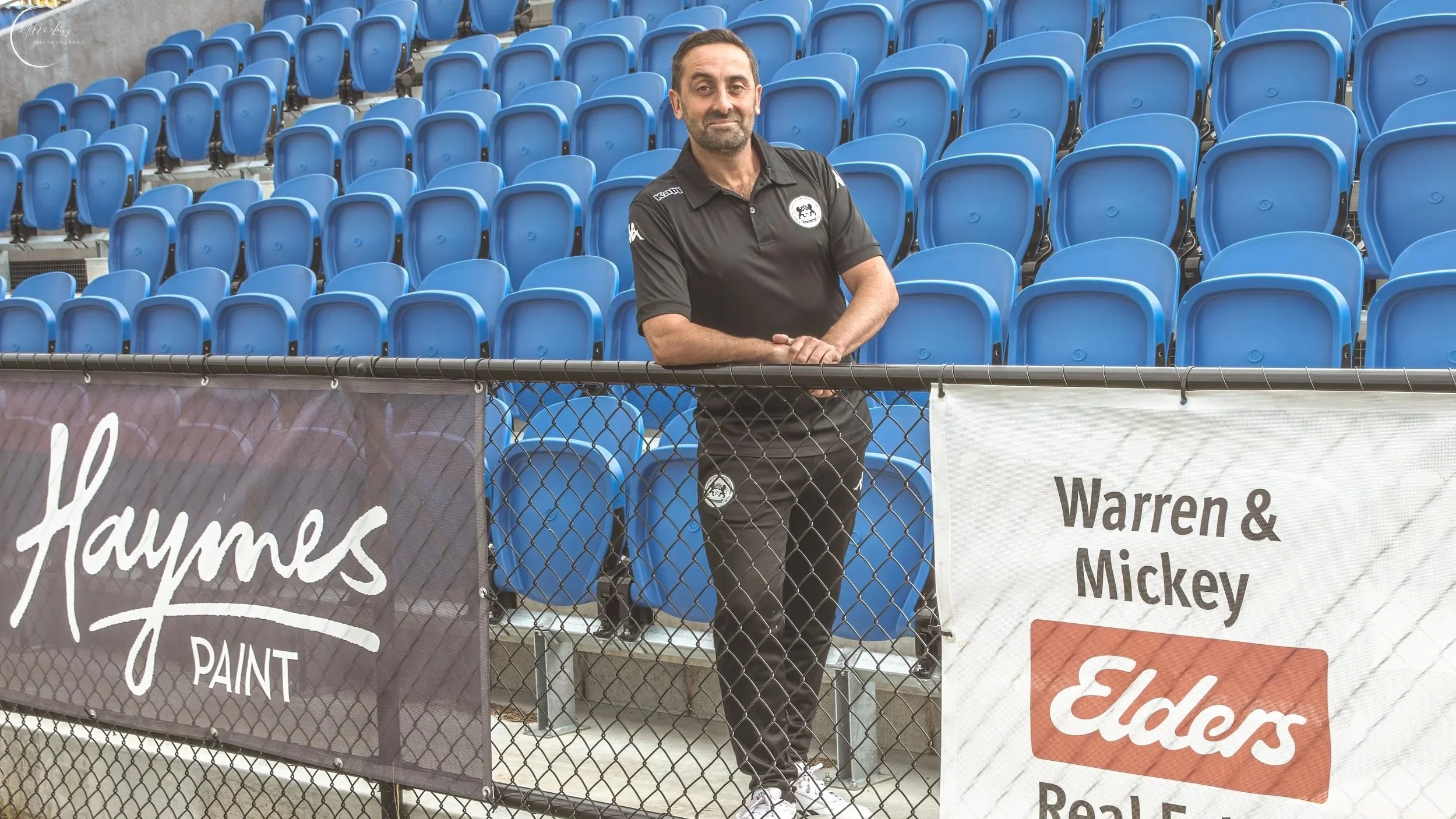
“We Want To Respect Melbourne Victory Without Losing Our Own Identity”
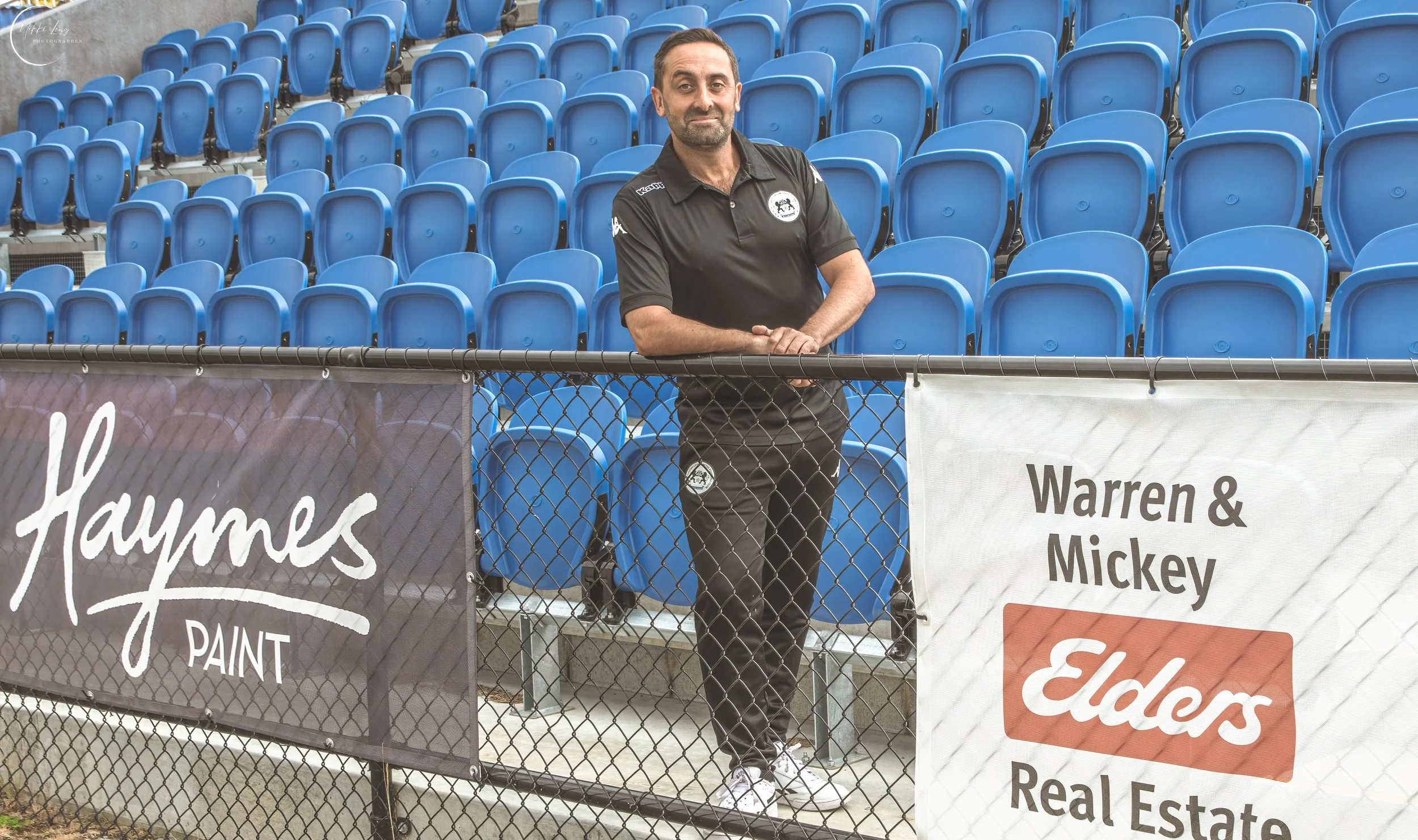
Jon Fenech by Nikki Long
At such a busy time I greatly appreciated Jon’s willingness to agree to my email to be interviewed.
There was something in Jon Fenech's email that stayed with me long after I'd finished reading it.
It wasn't his analysis of Melbourne Victory.
It wasn't his thoughts on tactics.
It wasn't even the enormity of Kingborough Lions hosting one of Australia's biggest football clubs in the Australia Cup Round of 32.
It was this.
"Go easy on me and be kind! I'm really just trying to highlight that we're very much the underdogs. We know how difficult this challenge will be, so our main aim is to represent the club, our players and our community in the best possible way, and stay in the game for as long as we can."
Then, almost as an afterthought, came another line.
"If Ken has any tips or suggestions, I'd really appreciate them as well."
That told me a great deal about the man preparing for Sunday's game.
Here was a coach facing arguably the biggest match in his club's history, yet he wasn't pretending to have all the answers. He was still learning. Still listening. Still willing to seek advice from those with more experience.
When I first sent Jon my questions, I expected pages of tactical discussion about Melbourne Victory.
Instead, I found myself reading about people.
Players.
Volunteers.
Coaching colleagues.
Community.
It became obvious very quickly that while Sunday's match might carry Jon Fenech's name as head coach, he doesn't see it that way at all.
This is a club effort.
Perhaps that's why I wanted to tell this story from the coach's perspective.
The headlines this weekend will be about Melbourne Victory travelling to Tasmania. The television cameras will capture the atmosphere. Thousands will pack Kitchen Centre Park. Around the country people will wonder whether another Australia Cup cupset might be about to unfold.
But what fascinated me was something different.
How does a coach prepare a group of part-time footballers to face one of Australia's biggest clubs?
Reading through Jon's responses, I found very little about Jon.
Instead, I found a coach talking about everyone else.
The Occasion Belongs to Everyone
When Kingborough Lions drew Melbourne Victory, Jon's thoughts weren't about formations or famous names.
"My first thought was what an incredible moment it was for everyone involved with Kingborough Lions. It guarantees a spotlight for our club on the national stage, and that's something everyone connected with Kingborough should be really proud of."
"Personally, it's a privilege to lead the club into what is arguably the biggest game in its history, and hopefully it's an occasion that inspires the next generation of young Tasmanian footballers by showing them what's possible."
He immediately looked beyond the result.
"To showcase our players, our club, our facilities, our volunteers and the wider Kingborough and Tasmanian football community on a national stage is something we'll never take for granted."
Then came perhaps the quote that best sums up the occasion.
"We also knew a fixture like this doesn't just happen. It takes an enormous amount of work behind the scenes, and so many people have put in countless hours to make it possible. This occasion belongs to everyone who has contributed to the club over many years, not just the current playing group or coaching staff."
One thing became impossible to ignore as I worked through Jon's answers.
He rarely spoke about himself.
Almost every answer became "we".
The players.
The coaches.
The volunteers.
The club.
The community.
Perhaps that says everything about the culture Kingborough Lions has built.
The Coach Takes Over
Once the excitement of the draw faded, reality arrived.
"You're coming up against one of Australia's biggest football clubs, and you know it's going to be a huge challenge. As coaches, that's when your focus immediately shifts from the occasion to the preparation."
"Our responsibility is to prepare the players as well as we possibly can, give them the confidence to embrace the challenge, and make sure we represent our club, our members and our community in a way they can all be proud of."
One answer particularly resonated with me.
"I'm still relatively early in my journey as a head coach, so every game is a learning opportunity for me."
There is no false bravado in that statement.
Instead, there is a quiet confidence built around preparation and process.
"Over that time, though, I've developed a preparation process that I believe in, and I think it's important to stay true to it rather than trying to reinvent everything because of the opposition."
"The process itself doesn't really change. We analyse, we prepare and we build a game plan. The level of detail might increase because you're facing a different calibre of opponent, but if you completely change who you are, you can confuse your own players."
Preparing for Melbourne Victory has brought another challenge.
Victory arrive under recently appointed head coach Giovanni Savarese. A new coach often means new ideas, different structures and fewer clues for opposition analysts. Jon acknowledged that uncertainty, but his philosophy didn't change. Analyse what you can, prepare thoroughly, trust your process and be ready to adapt once the game begins.
Respect... Without Fear
Jon has no illusions about the size of the task.
"Being well into our season certainly helps with fitness, rhythm and understanding between players. But they're still a full-time professional environment with exceptional quality. We'd be naïve to ignore that."
He also understands where professional football separates itself.
"Professional players execute actions at a very high level over and over again. Their decision-making under pressure is quicker, their movement without the ball is excellent and they punish mistakes more often."
Yet despite that respect, Kingborough won't abandon what has brought them this far.
"Our principles stay the same. We'll respect Melbourne Victory, but we won't lose sight of what has made us successful."
Then came the sentence that became the title of this article.
"We want to respect Melbourne Victory without losing our own identity."
For me, that wasn't just a coaching philosophy.
It was a life lesson.
Respect your opponent.
Never lose yourself.
Belief Is Built During the Week
One of my favourite responses came when Jon explained where belief comes from.
"I think belief comes from preparation. You can't just tell players to believe; they need to feel prepared."
It's a wonderfully simple sentence.
But it probably explains his coaching philosophy better than anything else he wrote.
"Our role as coaches is to create an environment where they're confident because they know exactly what's expected of them. Once the game starts, the players have to bring that belief to life together."
Without revealing too much tactically, Jon also outlined what will matter most.
"Our organisation without the ball, our communication and our discipline will be really important. When we win the ball, we need to be brave enough to play rather than simply survive."
He also returned to something every coach understands.
Control the controllables.
"Our attitude, our work rate, our concentration, how well we stick to the game plan and how we respond to difficult moments. We can't control who we're playing or what happens externally, but we can control our effort and our behaviour."
When asked what success would look like, Jon's answer wasn't defined purely by the scoreboard.
It was about competing.
Remaining together.
Representing Kingborough Lions with pride.
Leaving the field knowing every player had given everything they had.
Football Is About People
Reading Jon's responses, I expected to learn about Melbourne Victory.
Instead, I learnt far more about Kingborough Lions.
His admiration for his players shines through.
"They make sacrifices because they genuinely love the game. They train after work, they support each other and they represent the club with real pride."
"Without that commitment, nights like Sunday simply wouldn't be possible."
He also deliberately acknowledged the people standing beside him.
Alex Tatnell.
Nick Atwell.
Sam Rossetto.
Michael Simeyoni.
That wasn't accidental.
Throughout every answer, Jon directed praise towards others.
"I'm incredibly fortunate to have people around me who challenge ideas, share knowledge and are willing to have honest conversations about the game. We all know we don't have every answer, but we're passionate about continuing to learn and improve."
He also acknowledged the generosity of the wider football community.
"The willingness of people to share insights, offer support and pass on their best wishes over the past few weeks has been greatly appreciated."
For a coach preparing for the biggest match of his career, there was no ego.
Only gratitude.
Sunday Belongs to the Players
By the time I'd finished reading Jon's responses, one thing had become very clear.
This isn't a coach trying to talk his team into an upset.
This is a coach trying to prepare his players for the biggest challenge of their football lives.
"If we compete with courage, remain disciplined, stay together and leave everything on the pitch, then I think we've represented ourselves and our club well."
"We go into every game wanting to win, regardless of the opponent, but I also want people to walk away recognising that we competed, contested the game, showed real character and played football in a way that reflects who we are."
There have already been several cupsets around Australia this season.
Perhaps there will be another.
Why not?
Melbourne Victory deserve to start as favourites.
Nobody disputes that.
But football has always had a wonderful habit of ignoring reputations once the whistle blows.
Jon Fenech and his coaching staff have done everything they can. The planning is complete. The preparation is complete.
Now comes the part no coach can control.
Ninety minutes.
Twenty-two players.
One football.
Kitchen Centre Park won't simply host an Australia Cup match on Sunday. It will showcase what a committed community club, built over many years by players, coaches, volunteers and supporters, can achieve.
Long after the final whistle, many of the volunteers who helped create this occasion will still be there packing away goals, collecting rubbish, taking down signs and reflecting on a day their club will never forget.
One final thought.
Sometimes, as Tasmanians, we're too quick to label ourselves as underdogs before a ball has even been kicked.
On Sunday, shrug that off.
Respect the opponent, absolutely.
Never fear them.
Jon and his coaching staff have prepared this group as well as they possibly can.
Now it's over to the players.
Play with courage.
Play with belief.
Play for each other.
And if the opportunity presents itself, write your own chapter in Australia Cup history.
Go Kingborough.
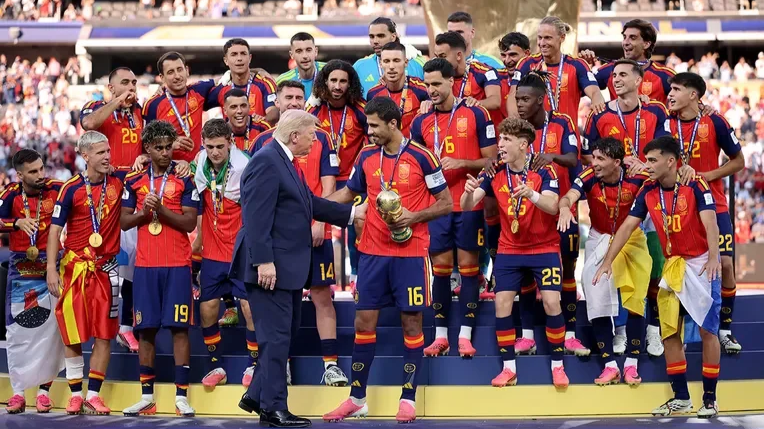
The Good, The Bad and The Ugly
Getty Images
At our house in North Hobart, we have loved almost every minute of this World Cup.
In fact, I think we watched nearly every minute of every game live. We may have missed a couple of those brutal 1.00am kick-offs, but not many.
For 39 days, the World Cup became part of the rhythm of our home.
We watched in our pyjamas and warm dressing gowns, with coffees in hand and the heater going, while players from every corner of the world gave us something to talk about, argue about, laugh about and occasionally swear about.
When the rest days arrived, we were genuinely at a loss.
What were we supposed to do?
Go to bed at a sensible hour?
Have a normal conversation?
It has been a tremendous World Cup.
There have been wonderful teams, extraordinary young players, brilliant goals, surprises, heartbreak and all the magnificent chaos that only a World Cup can provide.
So, before I get to the good, the bad and the ugly of the final, thank you.
Thank you to the nations of the world for bringing 39 days of football into our living room.
Thank you to the players who gave us so much.
And thank you, SBS.
Yet again, you delivered the World Cup to Australian football supporters and made it feel as though the whole tournament belonged to us too.
All 104 matches were shown live and free in Australia. That matters. At a time when more and more sport disappears behind subscriptions and increasingly expensive streaming services, SBS continues to understand that the World Cup belongs to everyone. (SBS Australia)
From a warm living room in North Hobart, in our pyjamas and dressing gowns, we loved it.
Just wow.
And then came the final.
The good.
The bad.
And the very, very ugly.
The Good
Spain won the World Cup.
More importantly, football won the World Cup.
Spain wanted the ball.
They wanted to move it, protect it and use it.
They wanted to find spaces, create chances and win the match by playing football.
Argentina spent much of the final trying to ensure that a game of football did not break out.
Spain kept coming.
They dominated possession and created 20 shots. Argentina defended desperately, disrupted constantly and survived until the 106th minute, when substitute Ferran Torres finally scored the goal that made Spain world champions.
It was fitting that the winner came from the bench.
Spain did not merely have an excellent starting eleven. They trusted their entire squad. They believed that if they continued playing, continued moving Argentina around and continued searching for the opening, eventually the game would reward them.
It did.
Then there was Rodri.
Rodri, marry me.
What a footballer.
He controls games without appearing to rush. He sees danger before it develops, finds space before anyone else notices it and makes incredibly difficult things look ridiculously simple.
Some players dominate matches by running faster than everyone else.
Rodri dominates them by thinking faster.
He was awarded the Golden Ball as the best player of the tournament, and rightly so.
Spain also trusted youth.
Lamine Yamal was still only 19.
Pau Cubarsí, who was named the tournament’s best young player, was also 19.
Teenagers playing in a World Cup Final.
Think about that.
While Argentina were holding tightly to the legends of their past, Spain were putting the future of their football onto the biggest stage in the game.
And the young players did not look frightened.
They looked as though they belonged there.
That is not luck.
It is not a golden generation appearing from nowhere.
It is the result of a football culture that develops players properly, trusts them and gives them meaningful opportunities.
Spain did not win because they were older, tougher or more experienced.
They won because they were braver.
The Bad
Argentina were awful to watch.
There is no polite way to say it.
This was Argentina.
The defending world champions.
A country with some of the most talented footballers on the planet.
Yet they produced almost no attacking ambition in regulation time.
Their plan appeared to be to defend, disrupt, frustrate, foul and hope Lionel Messi might somehow manufacture one last miracle.
There is nothing wrong with defending.
There is nothing wrong with tactical discipline.
There is nothing wrong with recognising that the opposition is technically superior and adjusting accordingly.
But at some point, surely, a team in a World Cup Final must attempt to win the football match.
Argentina appeared far more interested in preventing Spain from winning it.
That is different.
And it raises an uncomfortable question.
At what point do you stop thinking about the legend and start thinking about the game in front of you?
Lionel Messi is one of the greatest footballers who has ever lived.
Possibly the greatest.
His place in football history is untouchable.
He has played in six World Cups, broken records across generations and achieved almost everything it is possible for one footballer to achieve.
But history cannot press a defender.
Reputation cannot make a run in behind.
Sentiment cannot provide the energy required to lead the attack for nearly two hours in a World Cup Final.
Messi was 39.
At times, he looked it.
That is not an insult.
It is time.
It catches every player eventually, including the greatest ones.
We have seen a similar conversation around Cristiano Ronaldo.
Respect for a magnificent career can gradually become confused with an obligation to keep constructing the team around the player.
The question is not whether Messi deserved to be at the World Cup.
Of course he did.
The question is whether Argentina’s reverence for him prevented them from making the decisions most likely to win the final.
Could a younger and quicker forward have stretched Spain’s back line?
Could fresh legs have pressed Spain’s defenders?
Could Argentina have offered more of an attacking threat had they stopped waiting for one final piece of Messi magic?
We will never know.
What we do know is that Argentina offered almost nothing going forward until very late in the match. Spain finished with 20 attempts and ultimately got the reward their ambition deserved.
The defending world champions played not to lose.
Eventually, they lost.
Then came the half-time show.
For fuck’s sake.
The World Cup Final does not need to become the Super Bowl.
It does not need Madonna arriving in a vehicle.
It does not need the Muppets, although I liked the muppets a lot.
It does not need a procession of international celebrities performing pieces of songs while millions of football supporters wonder when the football might begin again.
Madonna is as old as I am, FFS!
One song?
Fine.
A short performance?
No problem.
But this sprawling, overproduced collection of celebrity appearances felt like FIFA desperately trying to prove that the biggest football match in the world was not entertaining enough on its own.
Wayne Rooney called the show “crap”.
For once, Wayne spoke for all of us.
Football already has drama.
It already has music.
It has supporters singing in the stands, players waiting in the tunnel, national anthems, nerves, anticipation and the knowledge that the next 45 minutes might change someone’s life forever.
That is the show.
Stop trying to improve it.
The Ugly
The match itself became increasingly unpleasant.
Argentina’s approach had been physical and combative throughout, and Enzo Fernández was eventually sent off as the world champions finished with ten players.
There were also confrontations after the final whistle.
Losing a World Cup Final must be devastating.
I understand the emotion.
I understand the anger.
I understand that players have spent their entire lives preparing for a moment that has suddenly disappeared.
What I do not understand is allowing disappointment to become aggression.
That is not passion.
It is not competitiveness.
It is not evidence that someone cares more than everyone else.
It is poor behaviour.
Argentina had spent much of the evening trying to drag Spain into a battle rather than defeat them in a football match.
When they finally lost, some of them appeared unable to accept that Spain had beaten them by doing the thing Argentina had largely refused to do.
Play football.
But even that was not the ugliest part of the evening.
Then came the trophy presentation.
Donald Trump walked onto the stage alongside Gianni Infantino.
Fine.
He is the president of the main host nation.
Present the trophy.
Shake hands.
Congratulate the winners.
Stand for the official photograph.
Then leave.
Instead, Trump remained on the podium as Spain prepared to lift the World Cup. Eventually, even Gianni Infantino appeared to realise the moment belonged to the players, gesturing for Trump to move towards the back of the group before the celebrations began.
That should never have been necessary.
The trophy lift belongs to the players.
It belongs to the people who trained, travelled, tackled, scored, sacrificed, suffered and won.
It does not belong to politicians.
It does not belong to FIFA executives.
It does not belong to visiting dignitaries who want to appear in the photograph.
The players had earned that moment.
This is where FIFA increasingly loses sight of what makes the World Cup special.
The administrators are not the stars.
The politicians are not the stars.
The celebrities are not the stars.
The half-time performers are not the stars.
The players are the stars.
Hand them the trophy.
Shake their hands.
Then leave the stage.
It should not be complicated.
Unfortunately, FIFA under Gianni Infantino appears determined to make everything around the World Cup bigger, louder, longer and more commercial.
A 48-team tournament.
A Round of 32.
More matches.
More content.
More sponsors.
A Super Bowl-style half-time show.
Celebrities everywhere.
Politicians on the podium.
Infantino in every camera shot.
More spectacle.
More FIFA.
The World Cup does not need more FIFA.
It needs more football.
The Final Thought
Despite everything surrounding it, the football eventually delivered the right winner.
Spain trusted the ball.
Spain trusted young players.
Spain trusted their bench.
Spain trusted that courage and football would eventually overcome fear and obstruction.
Argentina trusted survival.
FIFA trusted spectacle.
Donald Trump trusted that every camera was really there for him.
Only Spain’s trust was rewarded.
The best football team won the World Cup.
Then everyone else tried to make the moment about themselves.
Back in North Hobart, the television has finally gone quiet.
There will be no next match to plan around.
No alarm to set.
No reason to be sitting in front of the television in our dressing gowns at some ridiculous hour of the morning.
For 39 days, the world came into our living room.
We saw brilliant footballers, unfamiliar nations, extraordinary supporters, young stars emerging and old legends saying goodbye.
We complained about the kick-off times.
We complained about the referees.
We complained about FIFA.
We certainly complained about the half-time show.
But we watched.
Almost every minute.
And we loved it.
Thank you, football.
Thank you, SBS.
See you in four years.
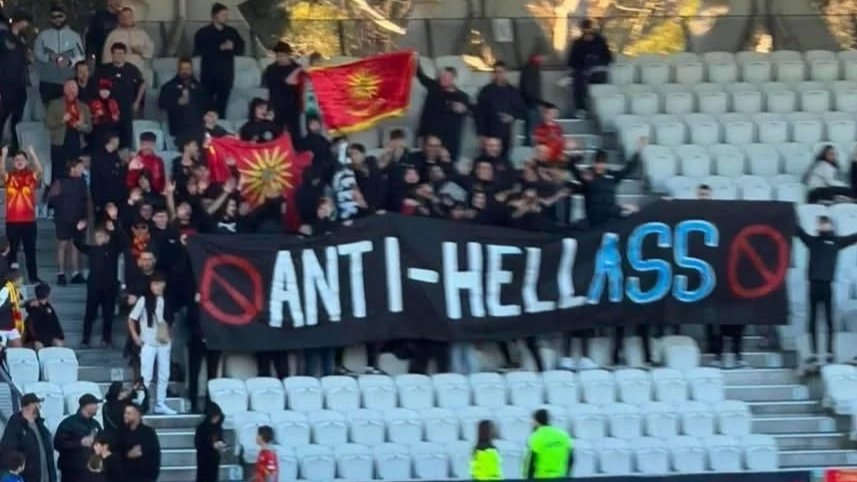
The Big Show
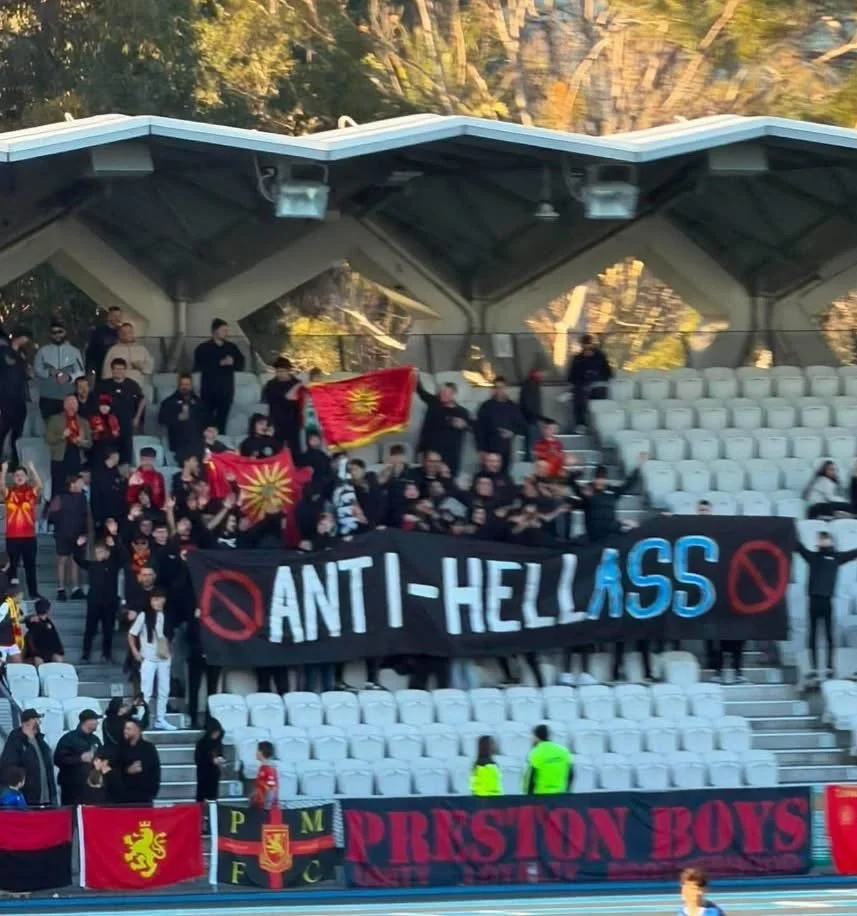
Editor's note: The following photographs contain banners that some readers may find offensive. They were displayed publicly at the match and are already widely available online. I have included them so readers can see the evidence for themselves and make up their own minds.
A 0-0 draw that left Australian football asking much bigger questions.
They called it The Big Show.
It was hard to argue with the name.
South Melbourne versus Preston Lions isn't just another NPL Victoria fixture. It is one of the competition's showcase occasions.
Two historic clubs.
Two clubs built by proud migrant communities.
Two passionate supporter bases.
A rivalry stretching back generations.
The build-up reflected the occasion.
Tickets were sold in advance.
Supporters were directed to separate entrances.
Additional security was brought in.
Police were on hand.
Everyone understood this wasn't going to be just another Saturday afternoon in Victorian football.
This was The Big Show.
A celebration of two clubs whose history helped shape Australian football.
Long before kick-off, supporters filtered into Lakeside Stadium.
Scarves.
Flags.
Friends catching up before finding their place on the terraces.
Families.
Long-time supporters.
People who understood the history of the occasion.
The atmosphere built steadily.
The colour.
The noise.
The anticipation.
This is football.
For ninety minutes, two proud clubs fought out a tense contest.
The match finished 0-0.
Yet by the final whistle, the scoreline had almost become irrelevant.
Instead of talking about the football, much of the conversation centred on several banners displayed by supporters.
I'll let readers look at the photographs and make up their own minds about whether they crossed the line.
A rivalry older than football
The origins of this rivalry lie not in football, but in a decades-old dispute over history, identity and the name "Macedonia".
Like many migrant communities, supporters brought their heritage to Australia.
For the overwhelming majority, that heritage is something to celebrate. It has enriched Australian football beyond measure.
Occasionally, however, old political and cultural tensions spill into football.
That history helps explain why emotions can run so high.
It doesn't excuse behaviour that crosses the line.
The clubs that built Australian football
Before anyone thinks this is an attack on migrant clubs, let me be absolutely clear.
Without clubs like South Melbourne, Preston Lions, Heidelberg, Melbourne Knights, Marconi, APIA Leichhardt, Sydney United and many others, Australian football would not be where it is today.
These clubs built facilities.
Developed junior players.
Produced Socceroos and Matildas.
Created communities.
Kept football alive through the commitment of generations of volunteers.
Their contribution deserves enormous respect.
This article isn't about those clubs.
It's about what happens when the actions of a small number of supporters threaten to overshadow everything generations before them built.
Frank Lowy's big gamble
Frank Lowy wasn't an outsider looking in.
He wasn't someone who failed to understand traditional Australian football.
Quite the opposite.
Before becoming one of the most influential administrators in Australian sporting history, Lowy was deeply involved in one of Australia's great migrant clubs.
He served as president of Hakoah Sydney City, a club founded by Sydney's Jewish community. Like South Melbourne, Preston Lions, Heidelberg, Marconi and so many others, Hakoah wasn't simply a football club. It was a place where migrants found community, friendship and identity in a new country.
Lowy lived and breathed that culture.
He understood the passion.
He understood the pride.
He understood what those clubs meant to the communities that built them.
That is what makes his vision for the A-League so fascinating.
It wasn't born from a desire to erase football's history.
It was born from someone who knew that history intimately.
Lowy believed Australian football could honour the contribution of its migrant clubs while creating a national competition that appealed to every Australian.
Twenty years ago, he and Football Federation Australia CEO John O'Neill made a bold decision.
They wanted Australian football to appeal to everyone.
City-based clubs.
Family-friendly environments.
A competition that represented modern Australia rather than individual ethnic communities.
Looking back, Lowy wrote:
"We built on this and removed all trace of ethnicity for the new top league."
He also reflected:
"Instead of being an ethnic fight between various ethnic groups in Sydney and Melbourne, soccer has become a national sport in Australia."
Whether you agree with that vision or not, it fundamentally changed Australian football.
Which raises an interesting question.
Did we sanitise football too much?
Football is different.
Supporter culture is part of its identity.
The songs.
The chants.
The colour.
The tribalism.
The rivalry.
Without those things, football loses something that makes it unique.
Anyone who has stood on the terraces in England knows exactly what I mean.
As the opposition goalkeeper prepares to take a goal kick, thousands of supporters join together with the familiar chant:
"You're just a fat bastard... ahhh!"
Is it classy?
Probably not.
Is it part of football culture?
Absolutely.
It's tribal.
It's designed to put the opposition off their game.
It's echoed around English football grounds for decades, and most people understand it for what it is - football banter.
Football without rivalry isn't football.
Liverpool versus Manchester United.
Boca Juniors versus River Plate.
South Melbourne versus Preston Lions.
Passion is not the problem.
But there is a line.
There is a difference between trying to distract an opposition goalkeeper and targeting someone's ethnicity.
There is a difference between football banter and sexist abuse.
There is a difference between celebrating your own heritage and denigrating someone else's.
Perhaps that is the balance Australian football is still trying to find.

Football Victoria's dilemma
Football Victoria now finds itself in an unenviable position.
Its Spectator Code of Behaviour exists for a reason.
It also has a responsibility to create an environment where everyone feels welcome at football.
If Football Victoria concludes those standards were breached, does it take disciplinary action?
If it does, some will argue it is punishing two proud clubs for the actions of a small number of supporters.
If it doesn't, others will ask why the rules exist in the first place.
Neither option is easy.
Doing nothing sends a message.
Taking action sends a message too.
This debate is much bigger than one match.
I wonder what the clubs think
I also wonder how the volunteers, administrators and countless good people at both clubs are feeling today.
They worked incredibly hard to promote The Big Show.
They wanted people talking about one of Victorian football's showcase occasions.
Instead, the conversation drifted away from football.
I suspect that's not how anyone wanted this weekend to be remembered.
The real legacy of The Big Show
Frank Lowy didn't reject ethnic football.
He emerged from it.
Perhaps that's why his vision still deserves to be debated today.
He recognised that football's greatest strength was its diversity.
He also feared that its greatest weakness was allowing old political and ethnic divisions to overshadow the game itself.
Twenty years later, perhaps we're still searching for the right balance.
Football should be loud.
It should be colourful.
It should be tribal.
Supporters should sing.
Wave flags.
Celebrate their history.
Create an atmosphere that makes people want to come back.
But football should also be welcoming.
It should unite communities more than it divides them.
Football has always reflected society.
It brings together people from every culture, every background and every generation.
Maybe that's why getting this balance right matters so much.
The Big Show deserved to be remembered for the football.
Instead, a hard-fought 0-0 draw has left Australian football asking a question that still doesn't have an easy answer.
Not whether football should become sanitised.
Not whether rivalry should disappear.
But whether we can preserve everything that makes football the world's game while leaving behind the divisions that have nothing to do with it.
Perhaps Victorian football doesn't have an atmosphere problem.
Perhaps it has a balance problem.
How do we protect the passion that makes football unique while ensuring the next generation inherits the best parts of our history, not the divisions that belong in the past?
That, perhaps, is the real legacy of The Big Show.
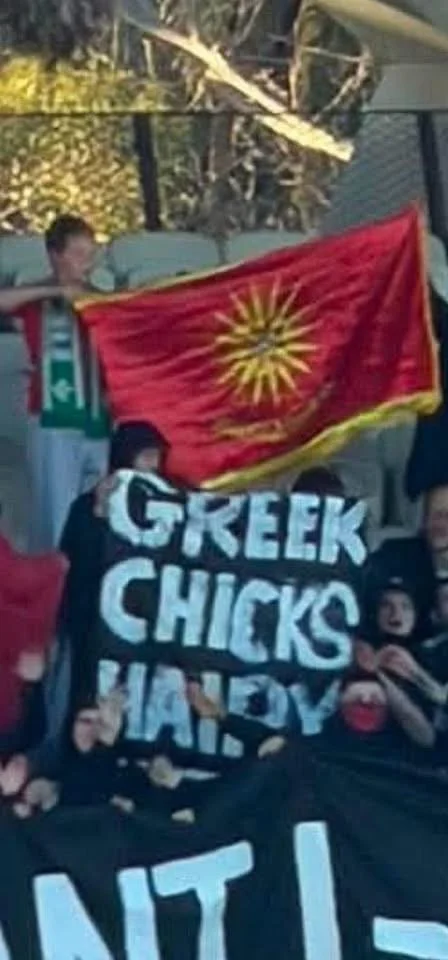

It Ain't Coming Home... Again

Thomas... What the Hell Were You Thinking?
This won't be a comfortable read for my English friends.
My husband Ken was born in 1947.
He was nineteen when England won the World Cup in 1966.
Football did come home once.
England have simply spent almost sixty years waiting for it to find the address again.
During the twenty years we've been together, we've watched five World Cups.
We've seen Italy, Spain, France and Argentina lift the trophy.
Yesterday morning, for one glorious hour, Ken thought England might finally witness England lift the World Cup again.
Then Thomas Tuchel changed the script.
And millions of people watching around the world found themselves asking the same question.
Thomas... what the hell were you thinking?
It Was All Going To Plan
For the first hour England were excellent.
They were organised.
They were disciplined.
They pressed.
They counter-attacked with purpose.
Most importantly...
They looked dangerous.
Argentina couldn't simply throw everyone forward because England always looked capable of hurting them on the break.
Anthony Gordon scored.
England led 1-0.
The World Cup Final was within touching distance.
Everything made sense.
Then...
Something changed.
The Great Retreat
We've all heard the expression "parking the bus."
This wasn't parking the bus.
This was parking the bus.
Locking it.
Putting wheel clamps on it.
Building a garage around it.
Then applying for heritage protection.
Tuchel switched England to a back five.
Now, before every coach reading this jumps into the comments, I know defensive substitutions work every week somewhere in the football world.
Sometimes they're exactly the right call.
The issue wasn't simply that defenders came on.
It was the message the changes appeared to send.
Footballers aren't silly.
They look around.
They see who's coming off.
They see who's coming on.
They feel the shape of the team changing around them.
Nobody has to say,
"Right lads... we're hanging on now."
The players already know.
Apparently...
So did Argentina.
Twelve Per Cent
Now before anyone reminds me...
No, I'm not a coach.
I don't have coaching qualifications.
I've simply spent the last twenty years alongside Ken, observing football at every level, from grassroots grounds to the elite game.
Had I collected a few coaching badges along the way, I would presumably be coaching the Matildas by now.
So I'll happily leave the detailed tactical analysis to others.
But one statistic made even me stop.
According to Opta, from the moment England took the lead until Argentina scored the winner, England had just 12 per cent possession.
Twelve per cent.
Read that again.
Not forty.
Not thirty.
Not even twenty.
Twelve.
Against Argentina.
In a World Cup semi-final.
While trying to protect a one-goal lead.
You don't need coaching qualifications to look at that and think...
What the hell?
Defending Wasn't The Problem
There is absolutely nothing wrong with defending.
Great teams know how to defend.
They protect space.
Win second balls.
Deal with crosses.
Manage difficult periods.
The problem wasn't that England defended.
The problem was that they became passive.
There is a difference.
For the first hour Argentina still had to respect England.
They had to worry about England's pace on the counterattack.
They couldn't simply commit numbers forward because England looked dangerous every time possession changed hands.
Once that attacking threat diminished, Argentina had fewer reasons to be cautious.
Their full backs pushed higher.
Their midfield squeezed further forward.
England dropped deeper.
Every clearance seemed to come straight back.
Wave after wave of pressure followed.
The substitutions didn't lose England the game on their own.
Football is rarely that simple.
But whether intentionally or not, they appeared to change the psychology.
England stopped looking like a team trying to reach a World Cup Final.
They started looking like a team trying to protect a one-goal lead.
Against Argentina...
That's a dangerous invitation.
Dear Thomas...
You've coached Chelsea.
Paris Saint-Germain.
Bayern Munich.
You've won the Champions League.
You've forgotten more about coaching than I'll ever know.
That is precisely why the decision was so bewildering.
England had found an approach that was working.
Argentina were behind.
They were being forced to respect England's attacking threat.
Then England changed.
Not just their formation.
Their mindset.
Harry Kane later revealed that the instruction was actually to keep attacking.
If that was the message...
It never looked like it from the stands.
Or from the lounge rooms of millions watching around the world.
Perhaps fatigue was a factor.
Perhaps the players simply retreated naturally.
Perhaps the substitutions unintentionally reinforced that instinct.
Whatever the reason...
England appeared to stop asking Argentina questions.
For the rest of the match...
They simply tried to answer theirs.
Why They Keep Singing It
It is easy for the rest of us to roll our eyes when It's Coming Home begins another tournament lap.
Here we go again.
The song.
The expectation.
The belief that this time will somehow be different.
But perhaps I understand it a little better after twenty years with Ken.
We've watched five World Cups together.
We've seen Italy, Spain, France and Argentina lift the trophy.
And at each tournament, Ken has carried the memory of the one England won before we ever met.
So perhaps It's Coming Home isn't really a prediction.
It's hope set to music.
Spare A Thought For Ken
I genuinely feel for England supporters.
Especially Ken.
He was nineteen when England won the World Cup in 1966.
He'd already been at Manchester United, sharing the dressing room and training ground with Bobby Charlton.
During the twenty years we've been together, I've watched him believe five times.
Yesterday morning, nearly sixty years after 1966, he allowed himself to believe one more time.
By breakfast...
That familiar hope was folded neatly back into the cupboard.
Waiting for 2030.
Final Thought
This isn't really about England.
It's about football.
We've all watched teams score first.
Then slowly retreat.
Possession disappears.
Confidence disappears.
Momentum disappears.
The opposition senses it.
And suddenly everyone watching can feel what's coming.
Yesterday morning it happened on the biggest stage of all.
The substitutions may have been intended to make England safer.
Instead, England became deeper, more passive and increasingly unable to keep the ball.
Football can be cruel.
But it can also be remarkably predictable.
Give a team of Argentina's quality enough possession...
Enough territory...
And enough encouragement...
Eventually they'll make you pay.
Yesterday morning, for one glorious hour, it really did look as though football might be coming home again.
It wasn't.
But in four years' time, I'll probably be sitting beside Ken once again.
Listening to It's Coming Home.
Because after twenty years together, I've finally realised something.
It isn't a prediction.
It's hope set to music.
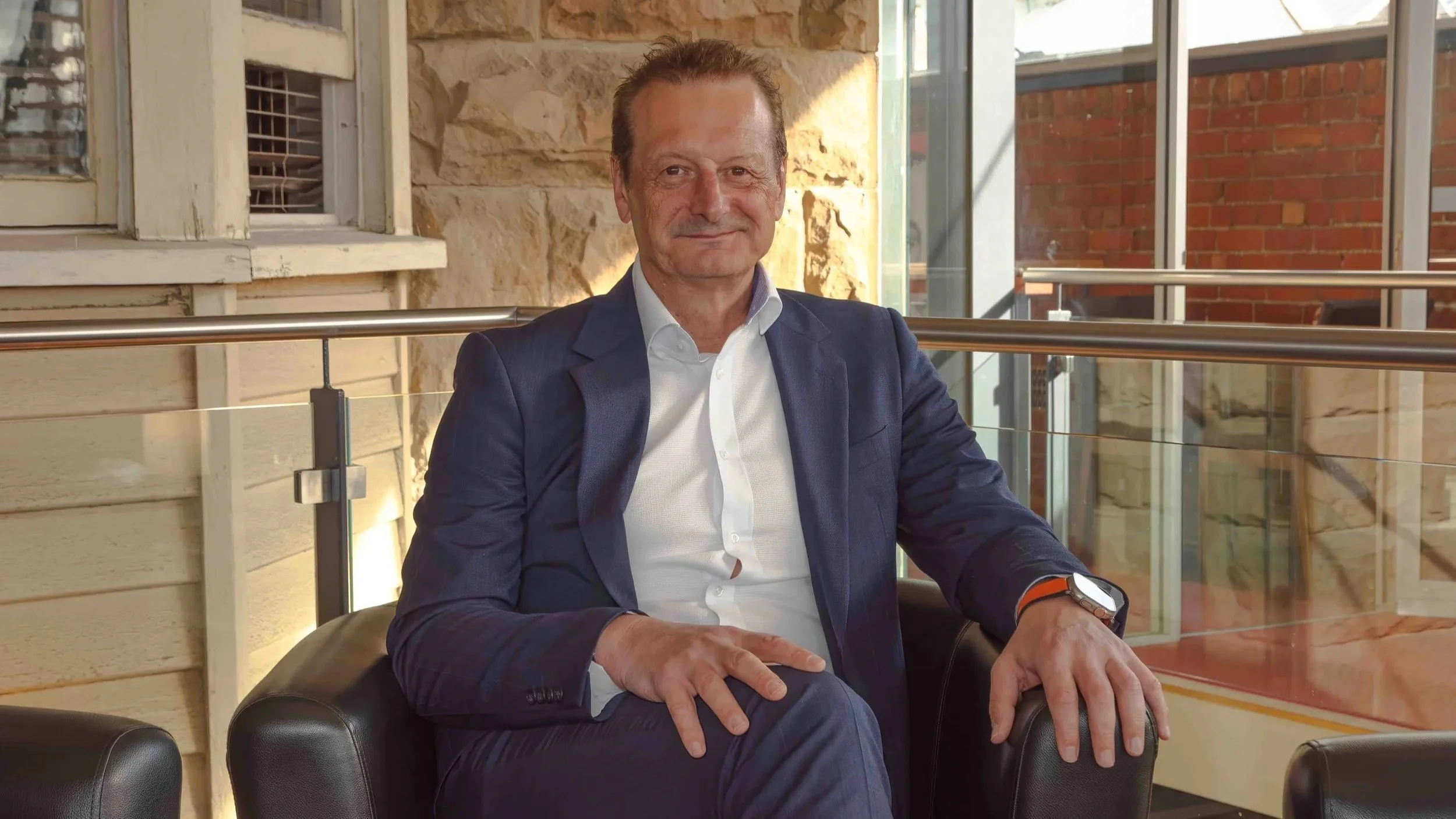
Tony Pignata – The Football Person Part One
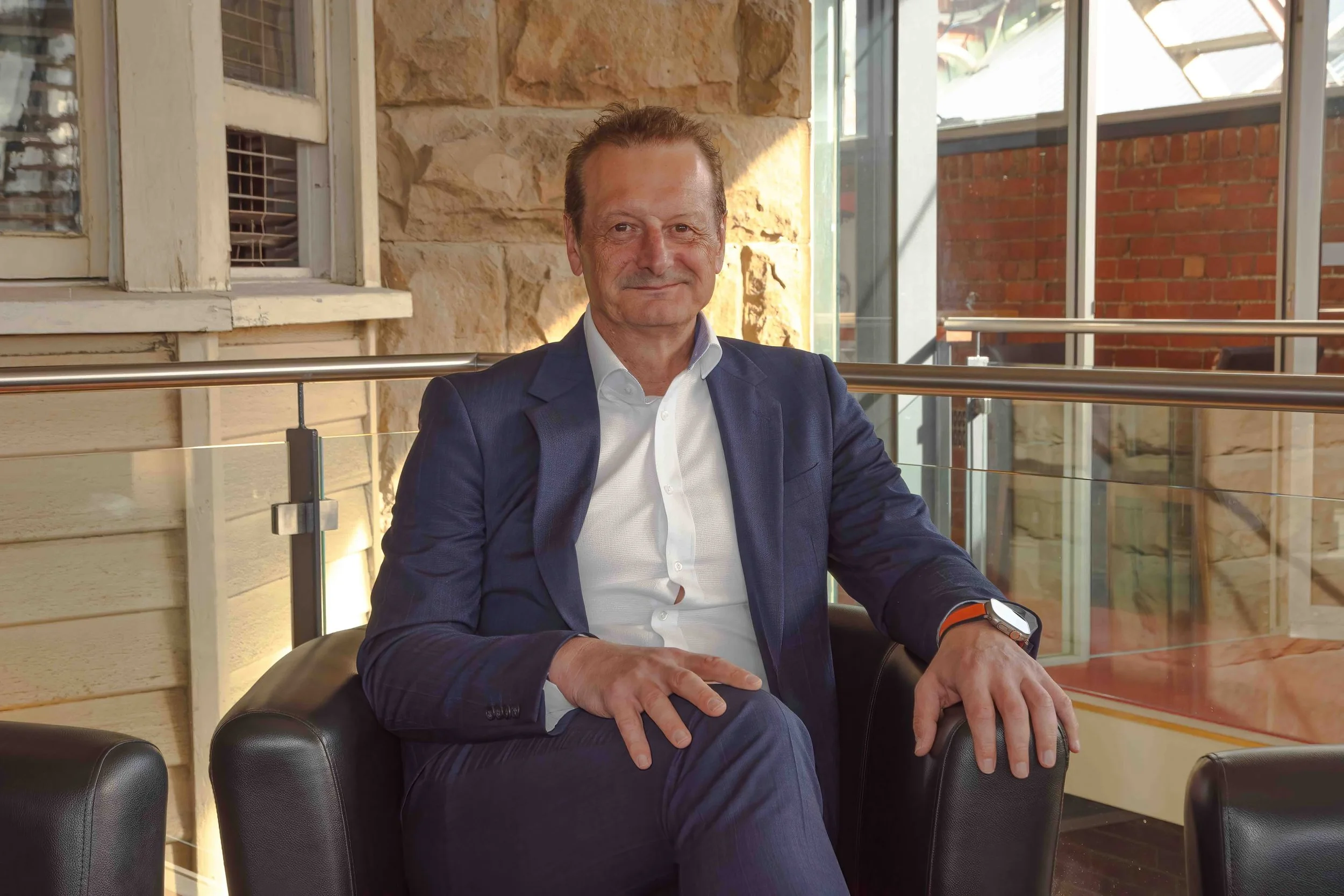
Photo - Nikki Long
When you've publicly challenged someone in print, you don't usually expect them to agree to sit down for an interview. Yet that's exactly what Football Tasmania CEO Tony Pignata did. In the first of a two-part series, I discover the football person behind the title.
A Coffee, A Conversation… and a Different Perspective
When you publicly criticise someone, you don't usually expect them to say yes when you ask for an interview.
I've only been writing football blogs since December. In that relatively short time, I've questioned Football Tasmania on facilities, pathways, governance and the future direction of our game. At times, I've questioned Tony Pignata himself.
So, when I sent Tony an email asking if he would agree to be interviewed, I genuinely wasn't sure what the response would be.
His reply surprised me.
It was warm, generous and gracious.
Of course, he said. He'd be happy to be interviewed.
There was just one condition.
The interview had to be in person.
That challenged me more than he probably realised.
One of my weaknesses is confrontation.
My sons often call me a "keyboard warrior."
They're probably right.
It's much easier to write a blog behind a laptop than it is to sit across the table from someone you've publicly criticised and ask difficult questions face to face.
I'll admit, I briefly wondered whether I should back away from the idea.
After all, Tony would have read many of my blogs over the past seven months. Some had been critical of Football Tasmania and, on occasion, of him personally. Being the Chief Executive Officer of Football Tasmania probably makes him one of the easiest targets in Tasmanian football.
Instead, we arranged to meet over coffee at Hobart's iconic State Cinema.
One hour and twenty-two minutes later, we were still talking.
In truth, we could easily have kept going.
I had arrived expecting to interview the Chief Executive Officer of Football Tasmania.
Instead, I found myself talking to another football person.
Growing Up Italian
The conversation didn't begin with Football Tasmania.
It didn't begin with governance, facilities or the A-League.
Instead, it began where every football story should.
Childhood.
Tony Pignata grew up in Melbourne as the son of Italian migrants from the Naples region.
"I'm a first-generation Australian," he told me. "Mum and Dad came from the Napoli area."
Football wasn't simply another sport in the household.
It was part of the family's identity.
Napoli was his club.
His football club.
His connection to his parents' homeland.
Years later, he would experience something that most football supporters only dream about.
Watching Diego Maradona play for Napoli at the famous Stadio San Paolo against the great AC Milan side of Marco van Basten, Ruud Gullit and Frank Rijkaard.
"I think it might even have been during my honeymoon," he laughed.
I couldn't resist asking what his wife thought about spending part of a honeymoon watching football.
Tony smiled.
"She's not my wife anymore."
It wouldn't be the last time Tony laughed at himself during our conversation.
As the coffee arrived, I had a feeling this interview might not unfold quite as I had imagined.
More Than Just One Sport
Growing up in Melbourne meant football competed with almost every other sport imaginable.
Australian Rules football was impossible to escape.
"I'm an Essendon supporter," Tony admitted with a grin. "For my sins."
Like many boys of his generation, he played everything.
Football.
Cricket.
Australian Rules.
He even played A Grade cricket.
But football always won.
"It was my passion."
One of Tony's earliest football influences came from his father, who played local football in Melbourne.
Football wasn't just something he played.
It was something he grew up around.
Then came 1982.
Italy won the FIFA World Cup.
For millions of Italian families around the world, it wasn't simply another sporting triumph.
It was deeply personal.
Tony still remembers it vividly.
Football had become part of who he was.
"I Knew at Thirteen"
Many footballers spend years believing they'll become professionals.
Tony didn't.
"I knew when I was about thirteen," he said matter-of-factly.
"I wasn't going to be a professional player."
Why?
"I just wasn't quick enough."
There was no disappointment in his voice.
No regret.
Just honesty.
"I just loved playing."
It turned out that was enough.
He worked his way through the Victorian competitions before playing senior football with Box Hill. He was equally happy captaining the reserve side when that was where he was needed.
"I didn't really care," he said.
"If I was in the first team, great. If I played reserves, I played reserves. I just wanted to play."
One thing I like in people is honesty.
Tony could easily have told me he was unlucky.
He could have blamed injuries.
He could have suggested someone overlooked his talent.
He didn't.
"I wasn't quick enough."
There was no self-pity.
No excuses.
Just an honest assessment from someone who loved football enough to keep playing anyway.
As our conversation continued, I realised this wasn't the only time Tony answered a difficult question with disarming honesty.
In fact, I began to notice something else.
Tony rarely tried to make himself sound more important than he was.
He spoke openly about not being quick enough to become a professional footballer. He was just as comfortable talking about captaining the reserves as he was discussing running A-League clubs.
There was no attempt to rewrite history.
I found that refreshing.
Football administration can sometimes feel full of titles and egos.
Tony seemed much more interested in talking about football than talking about himself.
It wouldn't be the last time during our conversation that I found myself quietly reassessing some of my earlier assumptions.
Playing for the Love of the Game
Although Tony accepted early that he wasn't going to become a professional footballer, he also knew football wasn't going to disappear from his life.
"I just kept playing," he said.
He remained with Box Hill until he was around thirty-three years of age.
That wasn't the end of his playing days. Tony continued in a thirds competition into his early fifties, coached Box Hill's reserves and later moved into club administration as a volunteer board member.
Football kept finding new ways to hold him.
Listening to him describe those years, something struck me.
Today we talk endlessly about elite pathways, scholarships and professional opportunities.
Tony's measure of success seemed much simpler.
"I just wanted to play."
There was no suggestion that reserve football was beneath him.
No frustration about not being a permanent first-team player.
Football wasn't about status.
It wasn't about recognition.
It was about belonging.
Friendships.
Shared experiences.
Being part of a club.
Perhaps that's something many of us lose sight of as football becomes increasingly professional.
For Tony, the game itself was always enough.
The Lessons Football Teaches
As we continued talking about his playing days, Tony spoke less about goals and trophies and more about what football had given him.
Not medals.
Not championships.
Life lessons.
Resilience.
"I remember getting dropped for a cricket grand final," he recalled. "My brother took my place."
Many young players might have walked away.
Tony didn't.
"I played in the reserves instead."
He smiled as he remembered it.
"It teaches you resilience."
That word came up more than once during our conversation.
Resilience.
Not the kind you learn in a boardroom.
The kind you learn on muddy pitches, in changerooms and after difficult conversations with coaches.
You get dropped.
You lose games.
You have setbacks.
You just keep going.
Listening to him, I found myself thinking that perhaps football's greatest gift isn't producing elite players at all.
Perhaps it's producing resilient people.
The friendships matter.
The discipline matters.
Learning to cope with disappointment matters.
Long after the final whistle has blown, those lessons remain.
Tony spoke warmly about the friendships football had given him over the years.
"Most of my friends are from football," he said.
It wasn't hard to understand why.
Training two or three nights each week.
Playing on weekends.
Travelling together.
Winning together.
Losing together.
Football has a way of creating friendships that often last a lifetime.
I found myself nodding.
My own football journey has been different, but I understood exactly what he meant.
Some of my closest friendships have also come through football.
Perhaps that's one of the game's greatest strengths.
Long after players stop playing, the relationships remain.
A Different Kind of Ambition
Unlike many talented young footballers, Tony wasn't driven by dreams of fame.
His ambition was remarkably uncomplicated.
Play at the highest level he could.
Enjoy the game.
Stay involved.
There was something refreshing about that.
Today we often measure success by contracts, representative honours or professional careers.
Tony measured it differently.
If football was part of his life, he was happy.
That simple philosophy would quietly shape the rest of his journey.
Life Beyond the Touchline
While football filled his evenings and weekends, Tony's professional life was taking a very different direction.
He studied finance at university.
It was there he met his future wife.
"I got married when I was twenty-three," he told me.
Like many football people, he learned to juggle two worlds.
By day, he was building a career in investment banking.
By night, and every weekend, football remained his escape.
He spoke about those years almost matter-of-factly.
There was no suggestion he was chasing a career in football.
In fact, quite the opposite.
He was building a successful corporate career.
Football was simply the thing he loved.
As our conversation drifted away from football for a moment, Tony spoke proudly about his two sons, Jack and Max.
His pride in his boys was unmistakable.
It was another reminder that there is always much more to a person than the title on their business card.
Before he was a football administrator, he was simply a dad.
The Career Change
Then opportunity knocked.
The organisation now known as Football Victoria was looking for a new Chief Executive Officer.
"There was an opportunity," Tony explained.
"It just felt like the right career change."
Again, I was struck by how understated he was.
Many people describe life-changing decisions as moments they had dreamed about for years.
Tony didn't.
There was no dramatic story.
No lifelong ambition.
No carefully mapped-out career plan.
He saw an opportunity.
He applied.
He got the job.
Sometimes the biggest decisions in our lives aren't accompanied by fireworks.
Sometimes they simply feel right.
The role became Tony's first experience leading the game rather than simply playing it.
"It was a tough environment," he admitted.
Victorian football is complex.
Large clubs.
Strong personalities.
Politics.
Competing interests.
Anyone who has spent time in football administration would understand exactly what he meant.
It was a steep learning curve.
Looking back now, Tony doesn't dwell on the politics.
Instead, he talks about what those years taught him.
How governing bodies operate.
How clubs think.
How impossible it is to make everyone happy.
That final lesson would become something of a theme throughout our conversation.
No matter where you work in football, someone will disagree with your decisions.
It's simply part of the job.
"I'm a Numbers Man"
I asked Tony whether his years in banking still influenced the way he approached football.
His answer came quickly.
"I'm a numbers man."
He wasn't boasting.
He was explaining.
Football clubs may exist because of passion.
But they survive because of good financial management.
Budgets matter.
Cash flow matters.
Every dollar matters.
Later in our conversation, when we discussed Football Tasmania's finances, those same themes would emerge again.
The football supporter in Tony might dream.
The banker in Tony still counts.
It is an interesting combination.
One built on emotion.
The other built on discipline.
Perhaps successful football administration requires both.
A Phone Call That Changed Everything
After several years leading Victorian football, another opportunity appeared.
This one was unlike anything he had experienced before.
A brand-new professional football club in New Zealand was looking for a Chief Executive Officer.
Its name was Wellington Phoenix.
The club had a licence.
An owner.
An idea.
Everything else still had to be built.
Tony smiled as he remembered it.
"We had six weeks."
I looked at him.
"Six weeks to build an A-League club?"
He nodded.
"Six weeks."
It sounded almost impossible.
It probably was.
And yet, somehow, they did it.
Before the Difficult Questions
As I packed away my notebook and switched off the recorder, I realised something.
We had spent an hour and twenty-two minutes together.
In truth, we probably could have talked for another hour.
What surprised me most wasn't Tony's football journey.
It wasn't the stories about Wellington Phoenix, Sydney FC or Perth Glory.
It wasn't even the football people he had worked alongside.
It was discovering how much we actually had in common.
Both of us have devoted more than twenty years of our lives to football.
Both of us have sat through countless meetings.
Both of us have wrestled with budgets, facilities, volunteers and the never-ending challenge of trying to leave the game in a better place than we found it.
We have both experienced the highs that football brings and the frustrations that come with trying to improve it.
The obvious difference is that Tony has spent much of his career working professionally in football.
Mine has always been as a volunteer.
Perhaps that gives each of us a different perspective.
Neither is necessarily right or wrong.
They're simply different ways of looking at the same game.
When I walked into the State Cinema that morning, I thought I was going to interview the Chief Executive Officer of Football Tasmania.
Instead, I met the football person behind the title.
That doesn't mean I've suddenly changed my views on every issue.
I haven't.
There are still difficult conversations to have.
Facilities.
Pathways.
The future of the NPL and our competitions.
The A-League.
Wentworth Park.
Government funding.
The relationship between Football Tasmania and its clubs.
Those were the questions sitting in my notebook when I first emailed Tony asking for an interview.
To his credit, he didn't shy away from any of them.
He simply said yes.
Those conversations deserve the same honesty that shaped this first one.
We'll tackle them in Part Two.
Because sometimes, before you challenge the decisions, it's worth understanding the person making them.
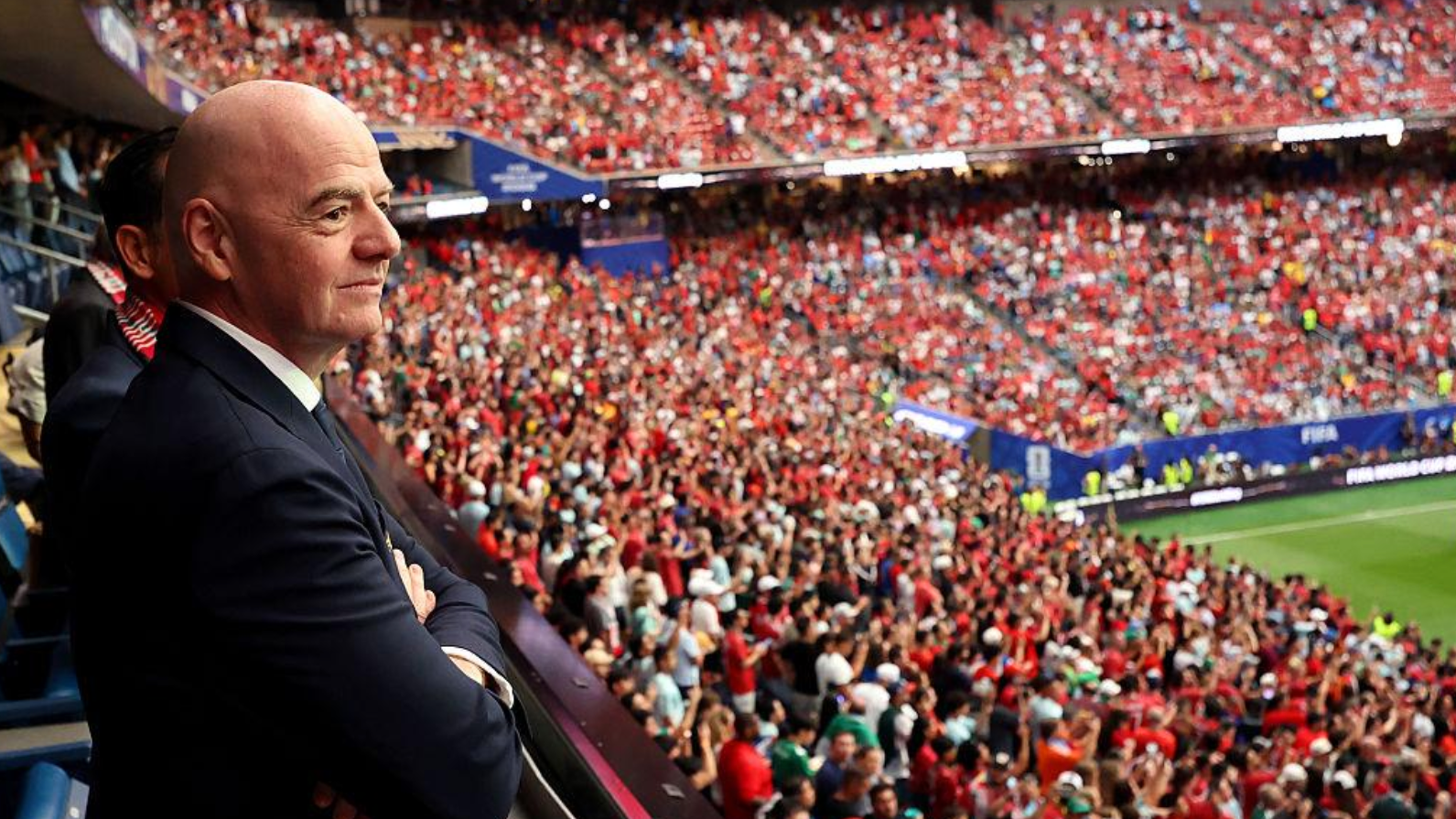
Who's the Star of the Show?
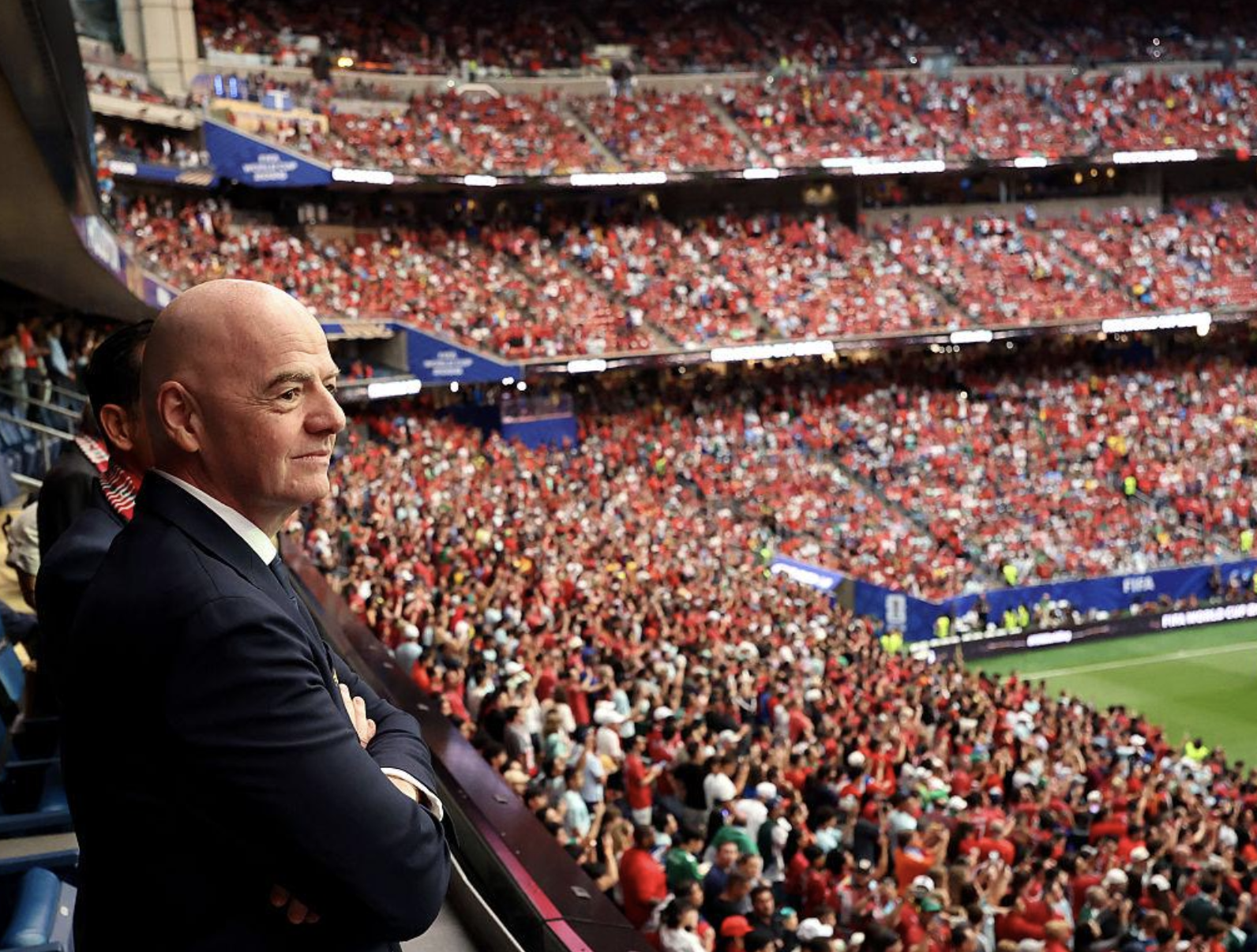
Why does the camera keep finding FIFA President Gianni Infantino?
In a few minutes, Spain and France will walk onto the pitch for a FIFA World Cup semi-final.
Millions of us will tune in.
We’ll be watching Lamine Yamal.
We’ll be watching Kylian Mbappé.
We’ll be watching Rodri.
We’ll be watching Ousmane Dembélé.
We’ll be watching one of the biggest matches in world football.
But here’s something else to watch for.
See how long it takes before the television cameras find FIFA President Gianni Infantino.
You may never have noticed it before.
After tonight, you probably will.
Will it be before the first hydration break?
After the opening goal?
At half-time?
Or perhaps all three.
Once is understandable.
Twice is coincidence.
By the tenth time during a tournament, you begin asking questions.
At first, I thought it was simply clever television.
Now I’m not so sure.
The Ultimate Away Day
While most of us are setting the alarm for 3.00am, making a coffee and hoping the Wi-Fi holds together, Gianni Infantino has enjoyed a rather different World Cup experience.
Breakfast in Mexico City.
Football in Mexico City.
Private jet.
Football in Guadalajara.
Dinner in the VIP lounge.
Repeat tomorrow.
Apparently, this is exhausting.
During the group stage, Infantino regularly attended two World Cup matches in the same day, flying between host cities aboard a Qatar Airways private jet supplied by one of FIFA's major commercial partners.
While supporters compare hotel prices, airline baggage allowances and airport queues, the FIFA President simply compares departure times for the next private jet.
I must admit, this is exactly how I would like to watch football.
Front-row seat.
VIP hospitality.
Police escort.
Private jet waiting on the tarmac.
No queues.
No airport security.
No "your gate has changed."
No trying to remember where you parked the car.
Just another day at the World Cup.
The difference is, I am not asking 211 national football associations to vote for me at FIFA's next presidential election.
By the end of this tournament, Gianni may have earned enough frequent flyer points to attend the 2030 World Cup for free.
Although, somehow, I suspect he won't be flying economy.
Humour aside...
This is where the story becomes serious.
Who is Gianni Infantino?
Giovanni Vincenzo "Gianni" Infantino became FIFA President in 2016 following one of the darkest periods in FIFA's history after the corruption scandals that engulfed the organisation.
A Swiss lawyer of Italian heritage, he previously served as UEFA General Secretary before taking football's most powerful office.
Whether you admire him or criticise him, his influence on the game is undeniable.
During his presidency the men's FIFA World Cup has expanded from 32 to 48 teams, increasing from 64 to 104 matches.
The FIFA Club World Cup has expanded.
Prize money has increased.
FIFA revenues have reached record levels.
Supporters see him as the man who has helped globalise football and increase investment in the game.
Critics argue FIFA has become increasingly centralised around the presidency.
With FIFA's 2027 presidential election approaching, Infantino has confirmed he will seek another term. If successful, he would remain FIFA President until 2031.
The Election Nobody Talks About
While the football has captured the world's attention, another contest is quietly approaching.
The FIFA presidential election.
Unlike a national election, supporters don't vote.
Players don't vote.
Coaches don't vote.
Referees don't vote.
Volunteers don't vote.
Instead, FIFA's 211 member associations each receive one vote.
Australia gets one.
Brazil gets one.
San Marino gets one.
Cook Islands gets one.
Every member association is equal.
That is one of FIFA's great democratic strengths.
It is also why relationships matter.
Recognition matters.
Visibility matters.
A Comfortable Lead
Before campaigning has properly begun, the incumbent already enjoys an extraordinarily strong political position.
Three of FIFA's six continental confederations have publicly endorsed Gianni Infantino's re-election.
That endorsement came well before FIFA's member associations will cast their votes.
In most democratic systems, such an early and overwhelming declaration of support for an incumbent would attract considerable public scrutiny.
In football, it barely rated a headline.
The Confederation of African Football.
The Asian Football Confederation.
CONMEBOL, representing South America.
Together they represent 111 of FIFA's 211 member associations.
More than half.
In politics, that would be described as a commanding head start.
Australia, through Football Australia's membership of the Asian Football Confederation, sits within one of the confederations that has publicly endorsed Infantino.
It also raises an interesting question.
Was that endorsement discussed publicly with Australian football?
Were clubs consulted?
Were coaches asked?
Were volunteers, referees or players invited into the conversation?
Or was it simply accepted as part of confederation politics?
Perhaps those are questions Football Australia should answer.
At the time of writing, no serious challenger has emerged.
That may change.
But for now, the incumbent appears comfortably placed.
The Camera Never Lies... Does It?
This is where the story becomes interesting.
The television pictures seen around the world don't come from SBS.
Or the BBC.
Or Fox.
They come from FIFA's Host Broadcast Services (HBS), which produces the official world feed used by every broadcaster.
FIFA says there is an agreement that each half should include a "dignitary shot".
That could be a head of state.
A celebrity.
A football official.
Or the FIFA President.
FIFA also says broadcasters are not instructed to show Gianni Infantino specifically.
I accept that.
But the outcome remains the same.
Game after game.
Day after day.
Tournament after tournament.
The camera finds him.
A Constitutional Question
To be clear, this article does not suggest any rules have been broken.
Nor does it suggest Gianni Infantino is directing television cameras.
It simply asks whether FIFA's governance arrangements and broadcast practices create the right balance between promoting the office of the FIFA President and keeping the focus where it belongs.
On the football.
Every organisation has an incumbent advantage.
Prime ministers have one.
Presidents have one.
Company CEOs have one.
Sporting organisations are no different.
The holder of the office is naturally more visible than anyone seeking to replace them.
That is understandable.
But should the world's biggest football tournament also become the world's biggest platform for the incumbent FIFA President?
No one is suggesting Gianni Infantino shouldn't attend World Cup matches.
Attending them is part of his role.
The question is different.
When the office itself is repeatedly placed before billions of viewers during football's greatest event, does that create a level of visibility that no potential challenger could realistically match?
After all, there are no televised debates.
No campaign advertising.
No public vote.
FIFA presidents are elected by national football associations.
Relationships matter.
Recognition matters.
Visibility matters.
If the office of FIFA President is repeatedly placed at the centre of the world's biggest football event while its holder seeks another term, asking whether that creates an institutional advantage is not a personal criticism.
It is a governance question.
And governance questions deserve to be asked.
Imagine if, during every Australian federal election campaign, the ABC was expected to show the Prime Minister during every major sporting event.
Not speaking.
Not campaigning.
Simply appearing.
Again.
And again.
And again.
Eventually people would ask whether visibility itself had become part of the campaign.
Why should football be any different?
Football's Biggest Stage
The World Cup has never belonged to FIFA.
It belongs to football.
To the child kicking a ball against the garage door.
To the volunteer marking muddy pitches on a Saturday morning.
To the referee trying to keep twenty-two passionate players under control.
To the coach who has spent decades helping young footballers believe in themselves.
To the supporters who have saved for years to travel halfway around the world for ninety minutes of hope.
And, of course, to the players.
Administrators matter.
Good governance matters.
Strong leadership matters.
But the administrator should never become the attraction.
The office should serve the game.
The game should never serve the office.
Nobody is suggesting Gianni Infantino has broken a rule.
Nobody is suggesting he should not attend World Cup matches.
But when football's biggest tournament repeatedly reminds billions of viewers who the FIFA President is while that same president prepares to seek another term in office, asking questions isn't cynical.
It's responsible.
Football has spent generations telling us that the game belongs to the players, the coaches, the volunteers and the supporters.
Perhaps it is time our television pictures reflected that.
Because football deserves great leadership.
Football deserves transparent governance.
Football also deserves a World Cup where the biggest stars wear boots.
Not business suits.
So the next time the camera leaves the pitch and finds the FIFA President once again, ask yourself one simple question.
Who's the star of the show?
Every Player Pathway Begins With a Coach
We spend countless hours discussing player pathways. But what about the people standing on the touchline?
The Premier League recently confirmed its 20 managers for the 2026-27 season.
Like most football supporters, I recognised the names immediately. We debate who will challenge for the title, who might be under pressure by Christmas and which clubs have made the smartest appointments.
I found myself asking a different question.
How do you actually become one of only 20 managers in the most watched football league in the world?
Is it simply a reward for being a great player?
Or is there a far more deliberate pathway that develops elite coaches?
The more I researched it, the more fascinating it became.
Not all Premier League managers were superstars
The overwhelming majority played professional football.
But that's where the similarities begin to disappear.
Some were world-class players.
Others forged respected careers in lower divisions.
Some saw their playing careers cut short through injury.
A handful were never household names as players.
Being an elite player, it turns out, is not the ticket to becoming an elite coach.
The superstar pathway
Names like Xabi Alonso, Frank Lampard, Mikel Arteta and Michael Carrick are instantly recognisable.
They enjoyed outstanding playing careers.
Yet none walked straight from the dressing room into a Premier League technical area.
Xabi Alonso learnt his coaching craft with Real Madrid's academy before taking Bayer Leverkusen to an unbeaten Bundesliga title and earning the Chelsea job.
Mikel Arteta spent more than three years learning under Pep Guardiola at Manchester City before Arsenal entrusted him with rebuilding one of England's biggest clubs.
Michael Carrick served an apprenticeship as an assistant before earning his own opportunity.
Their playing careers opened the first door.
Their coaching careers earned every opportunity that followed.
The professional footballer
This is perhaps the most common pathway.
Managers such as Marco Silva, Andoni Iraola, Daniel Farke, Keith Andrews and Roberto De Zerbi all played professionally.
Good players.
Respected professionals.
But they became known as outstanding coaches rather than famous footballers.
Their coaching résumés eventually became stronger than their playing ones.
The academy coach
One trend stood out more than any other.
Modern football increasingly values coaches who understand player development.
Several Premier League managers spent years working in academy football before taking charge of senior teams.
Xabi Alonso began coaching in Real Madrid's academy.
Kieran McKenna built his reputation developing players at Tottenham Hotspur and Manchester United before leading Ipswich Town to successive promotions.
Michael Carrick learnt his craft within Manchester United's coaching structure.
Fabian Hürzeler developed through Germany's youth coaching system before becoming one of the youngest managers in Premier League history.
These weren't glamorous jobs.
They involved countless training sessions.
Developing young players.
Building environments.
Refining coaching philosophies.
Learning how people improve.
The apprentice
Perhaps football's most underrated pathway.
Many of today's managers spent years standing beside experienced coaches rather than standing in front of them.
Watching.
Listening.
Planning.
Learning.
Arteta often speaks about what he learnt from Guardiola.
Others followed similar journeys, quietly refining their own ideas before becoming the person making the final decisions.
Football management has become an apprenticeship.
The student
This may be the biggest change of all.
The modern football coach is expected to understand far more than tactics.
Leadership.
Communication.
Sports science.
Performance analysis.
Psychology.
Recruitment.
Culture.
Data.
Coach education.
Continuous professional development.
The days of simply being an ex-player are disappearing.
Modern football wants educated coaches.
The modern coaching pathway
After looking at all 20 Premier League managers, some common themes became impossible to ignore.
The overwhelming majority played professional football.
Every manager has invested heavily in coach education, with the UEFA Pro Licence representing the highest coaching qualification in European football.
Many began coaching in academies.
Many served lengthy apprenticeships as assistant coaches.
None became Premier League managers overnight.
Every one of them treated coaching as a profession.
None of those managers arrived fully formed.
Every one of them was given opportunities.
Somebody trusted them with an academy team.
Somebody invited them into a senior coaching staff.
Somebody mentored them.
Somebody believed they could become more than they were.
Looking through those pathways made me stop and think.
What does the coaching pathway actually look like in Tasmania?
Then I started thinking about Tasmania
Over the past year I've had the privilege of interviewing many of Tasmania's senior NPL coaches.
Hélder Manuel dos Santos Silva.
Daniel Syson.
Tom Ballantyne.
James Sherman.
Jon Fenech.
Brian Murphy.
Peter Edwards.
Gediminas Krasa.
Every conversation has been different.
Every journey has been unique.
Some arrived from overseas.
Some built careers interstate before making Tasmania home.
Some enjoyed long playing careers.
Others discovered that coaching, rather than playing, would become their greatest contribution to football.
Different countries.
Different football cultures.
Different philosophies.
What struck me wasn't their differences.
It was how much time every one of them had invested in becoming a better coach.
That mirrors exactly what we see in the Premier League.
Then it became personal
This isn't just an academic discussion for me.
It's something my own family has lived.
My son, Max, is 31 years old and holds an AFC A Licence.
He made the difficult decision to leave Tasmania to continue his coaching journey.
Could he have stayed here and coached successfully?
Absolutely.
Could he have continued developing players and contributing to Tasmanian football?
Without question.
But would staying here have accelerated his coaching education?
Would it have exposed him to more full-time high-performance environments?
More experienced mentors?
Different football cultures?
Greater competition?
I don't think so.
So, like many ambitious Tasmanians before him, he packed his bags and crossed Bass Strait.
Not because he wanted to leave.
Because he wanted to grow.
That isn't a criticism of Football Tasmania, our clubs or the people who work tirelessly for the game.
It is simply the reality of living on an island of just over half a million people.
Our football ecosystem is naturally smaller.
Our opportunities are naturally fewer.
But acknowledging that reality leads to another question.
If our most ambitious coaches need to leave Tasmania to continue developing, what can we do to make that journey a little less necessary for the generation that follows?
The people who shape every player
Every Socceroo was coached by somebody.
Every Matilda was coached by somebody.
Every Premier League footballer was coached by somebody.
Long before the bright lights, the crowds and the television cameras, there was a coach standing on a cold training ground helping a young player improve.
That leads me to one fundamental question.
Every footballer has a pathway.
Shouldn't every coach?
Not just through licence courses.
Not just by accumulating enough Continuing Professional Development points to satisfy the next licence renewal.
I mean genuine development.
Mentoring.
Observation.
Constructive feedback.
The opportunity to spend time in elite environments.
To challenge ideas.
To share knowledge.
To learn from experienced coaches.
To keep growing long after the certificate has been framed and hung on the wall.
We ask coaches to invest thousands of dollars in qualifications.
We ask them to dedicate evenings and weekends.
We ask them to keep learning.
But are we providing enough opportunities for that learning to continue once the course is over?
The Premier League's managers weren't developed overnight.
Their coaching journeys took years, sometimes decades, supported by football systems that invested in people as much as results.
We talk endlessly about player pathways.
And we should.
Because every player pathway begins with a coach.
Perhaps the most important pathway in football isn't the one our players walk.
It's the one our coaches walk first.
And perhaps Tasmania's next great football conversation isn't about producing our next Socceroo or Matilda.
Perhaps it's about producing Tasmania's first Premier League manager.

The Numbers Don't Lie. The World Cup Has Captured Australia and the World.

Every now and then, the numbers tell a story that words simply can't.
This is one of those moments.
Forget the old stereotypes. Forget the tired argument that Australians only care about football when the Socceroos are playing. Forget the idea that football is somehow still a niche sport.
The numbers have spoken.
And they are extraordinary.
Australia Is Watching
By the end of the first three weeks of the FIFA World Cup, more than 16.2 million Australians had watched some part of the tournament on SBS.
Think about that for a moment.
That's well over half the country.
Not half the sporting public.
Half the country.
Just as impressive, SBS says its World Cup coverage has been the number one television choice among Australians aged 16 to 39 on 23 of the first 25 days of the tournament. Across its digital platforms, World Cup content has generated 979 million video views and 1.1 billion impressions.
These are remarkable numbers.
It Isn't Just the Socceroos
One of the biggest myths surrounding football in Australia is that people only watch when the Socceroos are playing.
The ratings tell a completely different story.
On Sunday, Australia's most-watched television programs were all football.
Norway v England
Reach: 3.701 million
Average audience: 2.103 million
Argentina v Switzerland
Reach: 3.192 million
Average audience: 1.723 million
Neither match involved Australia.
Yet millions of Australians tuned in.
Earlier in the tournament, England's Round of 16 victory over Mexico reached 2.88 million Australians, becoming the biggest audience for a match not involving the Socceroos at that point of the competition.
Australians aren't simply supporting Australia.
They're embracing the World Cup itself.
The Statistic That Made Me Smile
My favourite number isn't actually from a football match.
It's from the program that followed it.
Al Jazeera English News Morning reached 2.941 million Australians.
Think about that.
Millions of people simply stayed on SBS after the football had finished.
Even the Norway v England post-match coverage reached 3.051 million Australians.
That's the power of the FIFA World Cup.
It doesn't just lift football.
It lifts everything around it.
The World Is Watching Too
This isn't just an Australian story.
Across the globe, the 2026 FIFA World Cup is rewriting television records.
In Brazil, one group match attracted more than 51 million viewers across Globo's platforms, while CazéTV set a new YouTube live-streaming record for a football broadcast.
In the United States, FOX has described this as its biggest non-NFL sporting event in more than 30 years, while the USA's Round of 16 match became the most-watched football broadcast in American television history.
Every continent is reporting record audiences.
Every day, more viewing milestones are being broken.
The Fans Are Turning Up Too
It isn't only television audiences setting records.
The stadiums are overflowing.
FIFA has already announced a new single-day World Cup attendance record of more than 281,000 spectators, with average crowds exceeding 65,000 people per match.
From Mexico to Canada and across the United States, the atmosphere has been extraordinary.
Packed stadiums.
Packed fan parks.
Packed living rooms.
The world has embraced this tournament.
More Than Just Numbers
Of course, the statistics only tell part of the story.
This World Cup has given us stunning upsets.
Last-minute winners.
Penalty shootouts.
Superstars delivering when it matters most.
New heroes emerging.
Every morning Australians wake up wondering what happened while they were asleep.
Every night they set another alarm because they don't want to miss the next chapter.
That's what great sporting events do.
They become part of our daily lives.
Football's Biggest Stage
For those of us who have spent decades involved in football, these numbers are deeply satisfying.
Not because they prove anyone wrong.
But because they confirm something many of us have known for years.
Football connects people.
It doesn't matter whether you're watching in Hobart or Houston.
São Paulo or Seoul.
London or Launceston.
For 90 minutes, millions of people are sharing the same emotions, the same drama and the same joy.
There aren't many things left in the world that can do that.
The Numbers Have Already Answered
For years we've heard that football is still a niche sport in Australia.
That Australians only care when the Socceroos play.
That the World Cup is just another sporting event.
The evidence says otherwise.
More than 16.2 million Australians have already tuned in.
Millions are watching matches that don't involve Australia.
Record crowds are filling stadiums.
Record audiences are watching across every continent.
Billions are engaging with the tournament through television, streaming and social media.
This World Cup hasn't just captured football fans.
It has captured the world's attention.
And if anyone is still wondering whether football belongs at the heart of Australia's sporting conversation...
The numbers have already answered the question.

Every League Must Have a Purpose
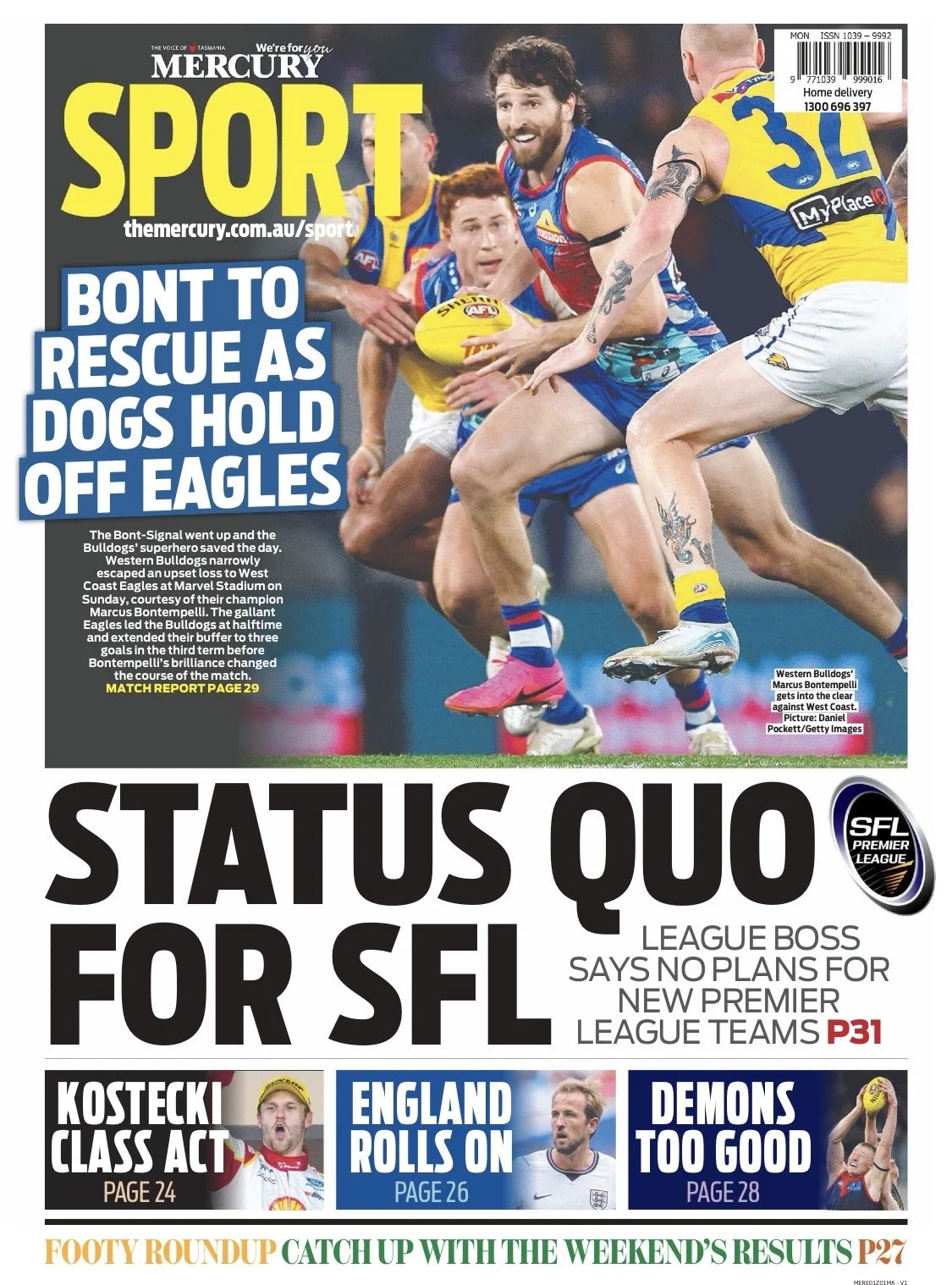
The Mercury 13 July 2026
"The restoration of the regional leagues has, I think, restored and underpinned the success of the various Premier Leagues. I think having teams play in the region week in, week out, making it easier for volunteers, making it easier for families and supporters to follow their team, getting back into the habit of going to football every weekend is really important.
There is a purpose to regional leagues and I don't think there's a purpose to a statewide league."
— David O'Byrne, Southern Football League President, The Mercury, July 2026.
I read those comments in The Mercury this morning and stopped.
Not because David O'Byrne was talking about Australian Rules football.
Because he could just as easily have been talking about football.
For the record, David O'Byrne and I don't always see eye to eye. I support the Tasmania Devils every bit as much as he does. The Macquarie Point stadium is where our opinions part company. But none of that stopped me nodding along as I read his comments this morning. When he spoke about regional competitions, volunteers, supporters and club days, I couldn't help thinking he could just as easily have been talking about football. And I also couldn't help wishing football had someone championing our clubs with the same passion he champions his game.
Today, I find myself agreeing with him.
Not because regional competitions are perfect.
But because he asked a question football in Tasmania perhaps hasn't asked for a very long time.
What Is the Purpose?
What is the purpose of the State League in Tasmania in 2026?
That's not the same as asking whether it's a good competition.
Or whether the standard is high.
Or whether clubs have worked incredibly hard to be part of it.
The question is much simpler.
What purpose does it serve today?
David O'Byrne said every league must have a purpose.
I think that's a question football should be asking too.
Can We Raise Standards Without the NPL?
If the purpose is to qualify for the Australia Cup, regional competitions can still provide that pathway.
If the purpose is raising standards, why does that require three letters?
Football Tasmania doesn't need an NPL to drive standards.
It can establish Championship club licensing.
It can set coaching requirements.
It can insist on youth development.
It can regulate visa players.
It can require sound governance.
It can encourage home-grown players.
Standards don't come from three letters.
They come from leadership.
And if the football calendar needs more meaningful football, create another cup competition.
Give clubs another trophy to chase.
Give supporters another reason to come through the gate.
There are ways to strengthen football without sending clubs from one end of Tasmania to the other every second weekend.
I Once Fought for the Victory League
Years ago, when the Victory League was introduced, South Hobart fought fiercely to be part of it.
I remember sitting before what felt like a terrifying interview panel, presenting our club and making the case that South Hobart deserved its place.
We wanted it.
We believed in it.
We worked incredibly hard to earn it.
I don't regret any of that.
But looking back now, I realise there was one question I never asked.
What was the purpose?
Good administrators shouldn't be afraid to revisit yesterday's decisions when today's circumstances are different.
Football changes.
Communities change.
The financial landscape changes.
The way talented players are identified has changed dramatically.
Asking whether a competition structure still serves the game isn't admitting it failed.
It's simply good governance.
Let's Talk About Saturdays
Imagine a football club's perfect home day.
The Under 18s kick off.
The reserves follow.
The Championship match finishes the afternoon.
Or in the women's game, Youth Girls, then Under 18s, then Championship.
One opposition club.
One venue.
Families stay all day because there is always another game to watch.
Young players can see exactly where the pathway leads.
Sponsors have people walking through the gate from morning until late afternoon.
The canteen is busy.
The clubhouse is alive.
That's a genuine club day.
Now compare that with what we often have now.
South Hobart travels to Ulverstone.
Kingborough heads to Devonport.
Launceston City heads to KGV.
A handful of loyal supporters make the trip.
Many others follow the scores on their phone.
Or watch the livestream from home.
Livestreaming has been fantastic for people who genuinely can't get to games.
But let's not pretend it hasn't changed behaviour.
If the game is available on the lounge room television, there is less incentive for many people to drive to the ground.
That means fewer people through the gate.
Fewer coffees sold.
Fewer raffle tickets bought.
Fewer conversations around the clubhouse.
Fewer kids kicking a football behind the goals while waiting for Mum or Dad to finish playing.
The game is still being watched.
But it isn't always being experienced.
And that's a loss community football should never ignore.
The Cost Nobody Wants to Talk About
Then there is the cost.
Not just the dollars.
The travel.
The administration.
The compliance.
The endless work required to maintain NPL status.
It's a fucking shit load of work. I know because I did the club licencing for both NPL and WSL for years.
When clubs are paying nomination/licence fees of more than $20,000 simply to be part of the NPL while Championship clubs pay around $2,800, it's fair to ask what they are actually buying.
Volunteers Are the Real Pathway
We spend millions of words talking about developing players.
We spend almost none talking about retaining volunteers.
Yet without volunteers there are no players, no pathways and no competitions.
They're the people opening clubrooms before the first game, marking lines, organising teams, cooking the barbecue, washing shirts, balancing budgets and locking the gates long after everyone else has gone home.
Every decision we make about football should make their lives easier, not harder.
Give Me a Club Day
I'd swap those three letters for another fifty people through the gate every second Saturday without a second thought.
I'd rather see clubs spending an entire day together than spending an entire day on the road.
One venue.
One opposition.
Youth football.
Reserves.
Championship.
The canteen buzzing.
The clubhouse full.
Kids staying to watch the seniors.
Senior players arriving early to watch the youngsters.
That's community football.
That's what our clubs were built on.
Time for an Honest Conversation
This isn't an attack on Football Tasmania.
It's an invitation to have an honest conversation.
Tasmania has a small population.
A limited playing base.
A finite number of volunteers.
Limited sponsorship.
Limited money.
Perhaps the structure that served football twenty years ago isn't necessarily the structure that best serves football today.
Perhaps it is.
But we should at least be prepared to ask the question.
David O'Byrne was talking about Australian Rules football.
Today, I think he asked a question football should be asking too.
What is the purpose of the State League in Tasmania in 2026?
I'm not pretending to have all the answers. But I do think football owes itself the conversation. Because if every league must have a purpose, then every few years we should be brave enough to ask whether it still does.