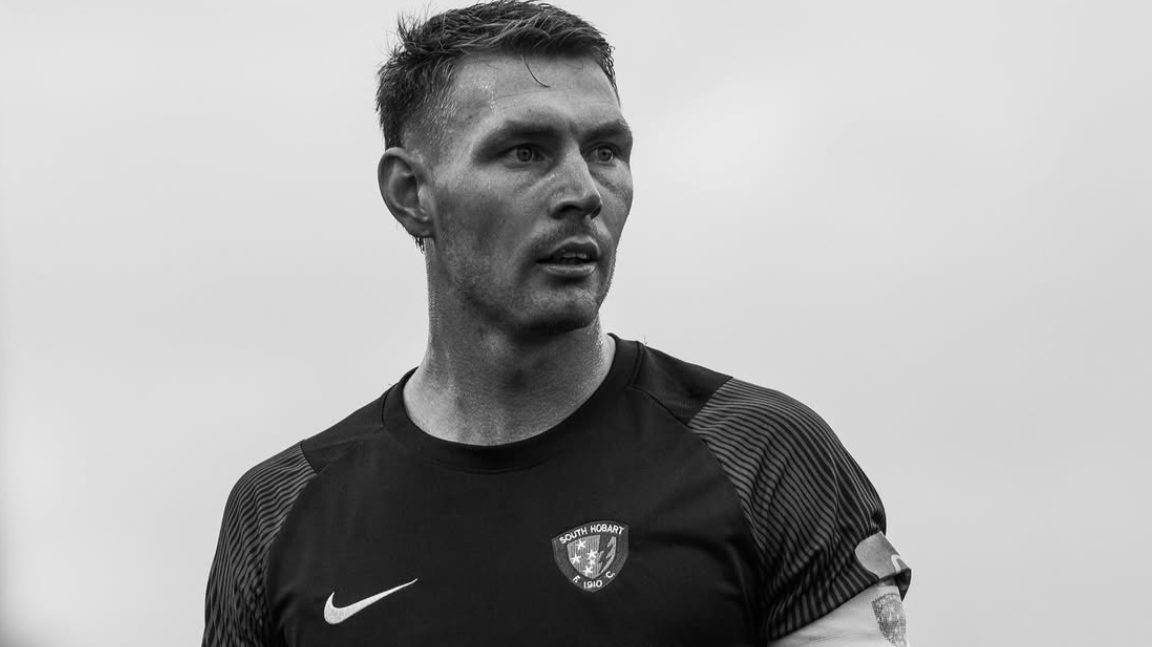
The Only Surprise Is That It Took This Long
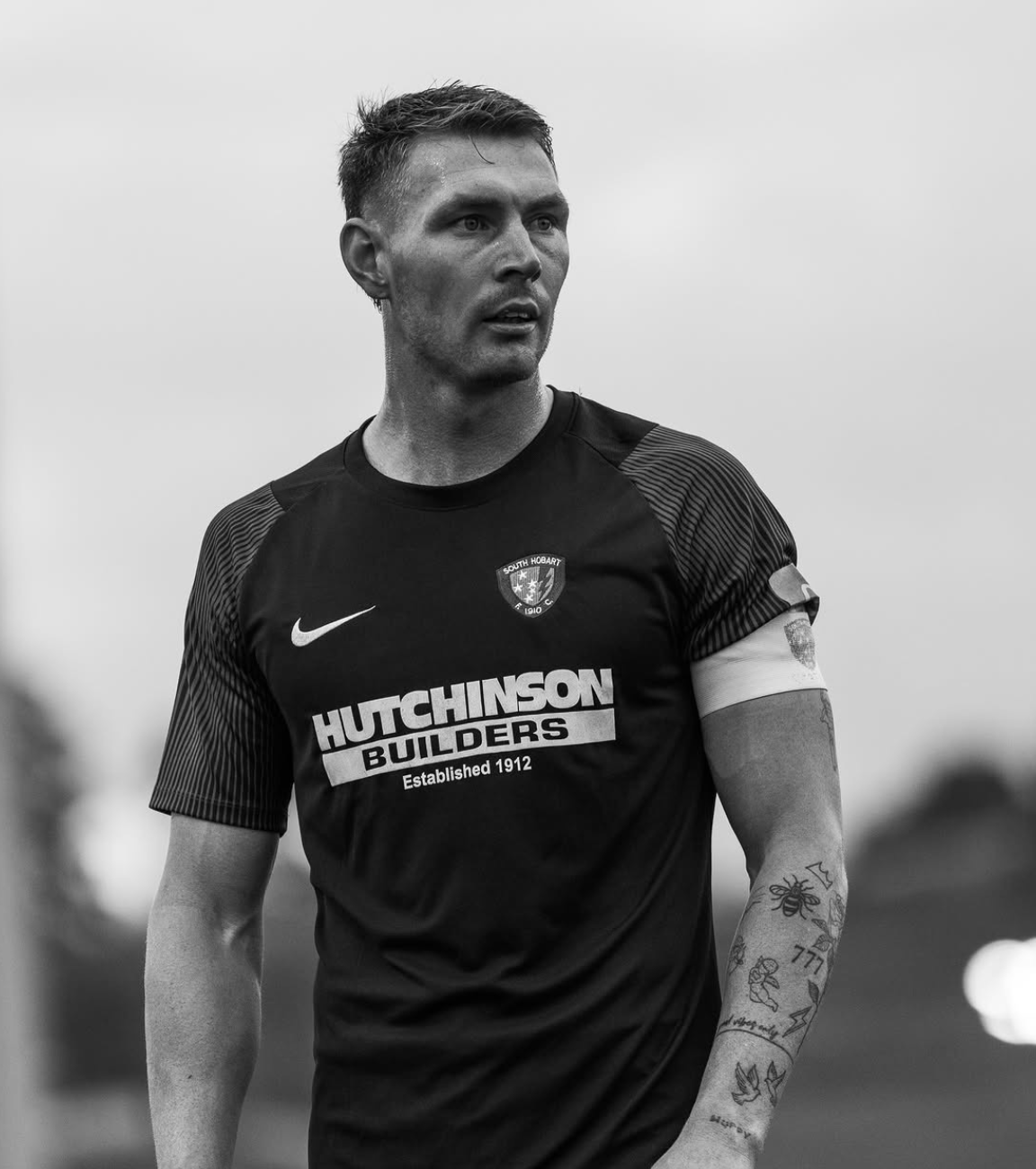
Nick Morton - photo taken at Riverside a couple of weeks ago. Apologies I cannot find who to credit.
Give Nick a Break
Before the commentary starts, and it will, I'd like to ask the Tasmanian football community for one thing.
Give Nick a break.
He is about to be criticised by some for leaving.
Some will say it's about the money.
Some will say he should have stayed.
Some will question his loyalty.
Frankly, that is nonsense.
A player who joined South Hobart as an 11-year-old does not need to defend his loyalty.
A player who became captain does not need to defend his loyalty.
A player who became the club's all-time leading goalscorer does not need to defend his loyalty.
A player who was recognised as Tasmania's best player three years in a row does not need to defend his loyalty.
A player who gave nineteen years to one club does not need to defend his loyalty.
That conversation ended years ago.
Nick has fielded opportunities for years.
Tasmanian clubs wanted him.
Interstate clubs wanted him.
Opportunities came and went.
Yet he stayed.
Partly because South Hobart is his club.
Partly because his father Ken was there.
And partly because loyalty still meant something to him.
For nineteen years Nick chose South Hobart when many others would have left.
That choice should not be forgotten now.
Nor should his standing within the game.
This is a player who became South Hobart's captain.
A player who became the club's all-time leading goalscorer.
A player who became a three-time Tasmanian Player of the Year.
A player whose standards, professionalism and winning mentality have been praised by teammates, coaches and opponents alike.
The reality is that nobody in Tasmanian football should be surprised that a club like Northcote City came calling.
The only surprise is that it took this long for him to finally say yes.
A Fabulous Opportunity
Let's also not pretend this is not a fabulous opportunity.
Nick is joining Northcote City in Melbourne, a club chasing promotion into Victoria's top division.
They have recruited him because they believe he can help get them there.
Think about that for a moment.
A club in one of Australia's strongest football environments believes a player from Tasmania can help lead them to promotion.
That is not something to dismiss.
It is something to celebrate.
And yes, he will be paid.
After everything he has contributed to the game over the years, nobody should begrudge him that opportunity.
For most of his football career Nick played for little or nothing.
While players came and went, while clubs recruited from elsewhere, while others chased opportunities, Nick stayed.
He trained.
He played.
He captained.
He scored.
He represented South Hobart year after year.
If a Melbourne club believes he can help them succeed, wants to test him in a stronger environment and is prepared to reward him accordingly, good on him.
I would hope every footballer gets that opportunity at some point.
There is also something fitting about the destination.
At Northcote City, Nick will reunite with his brother.
Over the years they have shared a unique football journey. They have been teammates and last season Max coached Nick at South Hobart.
Now they have the opportunity to work together once again as Northcote City chase promotion to Victoria's top division.
Football has connected their lives for almost two decades.
It seems fitting that it will help write the next chapter too.
South Hobart Got the Best Years
What makes Nick's story remarkable is not that he is leaving.
It is that he stayed so long.
South Hobart got the goals.
South Hobart got the trophies.
South Hobart got the captaincy.
South Hobart got the leadership.
South Hobart got the standards.
South Hobart got the best years of his football career.
Few clubs get nineteen years from a player of that calibre.
South Hobart did.
For years South Hobart supporters have enjoyed watching one of Tasmania's best players wear their colours.
Now another club gets that opportunity.
And make no mistake, Nick loves this football club.
I know this decision was harder than many people realise.
Leaving a club after a season or two is one thing.
Leaving after nineteen years is something else entirely.
South Hobart is where he grew up.
It is where he became a senior player.
It is where he became a captain.
It is where many of his closest friendships were formed.
It is where he celebrated some of the best moments of his football life.
When you spend that much time somewhere, it stops being a club.
It becomes part of who you are.
For years South Hobart has also been the place where father and son shared a football journey.
That chapter changes too.
For the best part of two decades, South Hobart supporters never had to imagine a season without Nick Morton.
Now they will.
Who knows what the future holds?
Perhaps one day we will see Nick back at South Hobart.
Perhaps we won't.
What I do know is that very few players leave behind what he leaves behind.
Records.
Goals.
Memories.
Standards.
Respect.
And a place in the club's history that nobody can take away.
Records are made to be broken, but some feel like they might stand forever.
One Final Thought
Football has taken Nick and Max on some interesting journeys over the years.
They have been teammates, player and coach.
Now football has found a way to bring them together again.
As someone who has had a front-row seat to both journeys, I cannot help but think there is something rather nice about that.
Next Saturday, when Nick Morton walks off D’Arcy Street for the final time as a South Hobart player, the club won't simply be saying goodbye to a captain, a goalscorer or a three-time Tasmanian Player of the Year.
It will be saying goodbye to an era.
Whatever happens next, Nick Morton has earned the right to write the next chapter on his own terms.
And after everything he has given South Hobart Football Club, he owes nobody an explanation.
The Warm-Up Area Wars
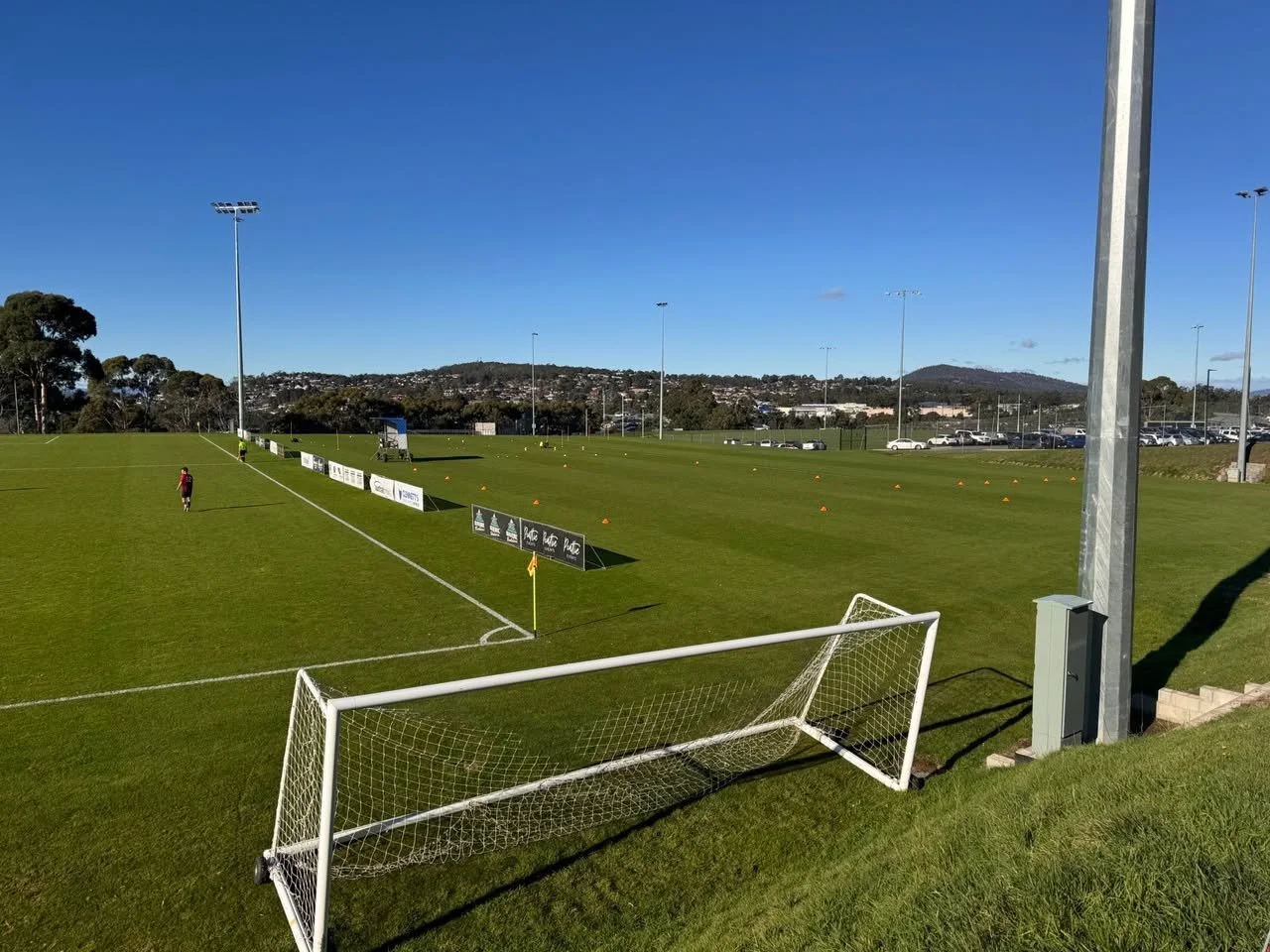
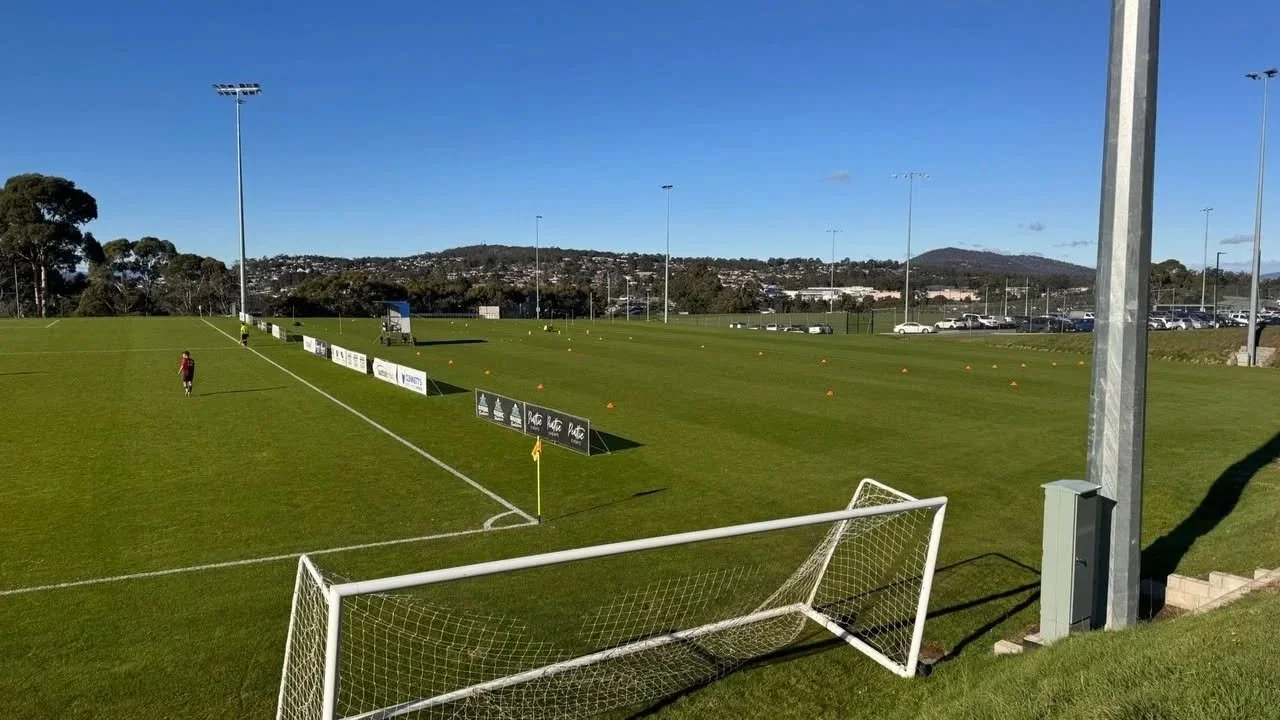
Photo courtesy of Matthew Rhodes
A post on Tassie Football Central yesterday about South Hobart's trip to Lightwood Park sparked one of the livelier football debates I've seen for a while.
The issue?
The pre-match warm-up area.
Some believed both teams should have access to the area beside the main pitch.
Others felt the home club had every right to decide how the facility was used.
Some people dismissed it as a storm in a teacup.
Others were genuinely unhappy about it.
I should say from the outset that I wasn't at the game.
I'm relying on what I read in the Tassie Football Central discussion and the conversations that followed.
For years when South Hobart visited Lightwood Park, both teams appeared to use the same warm-up area. To be honest, it always looked big enough to me.
Perhaps there are reasons I don't know about.
Perhaps there is more to the story.
But what fascinated me wasn't the warm-up area itself.
It was the reaction.
Because within minutes football people from all over Tasmania were sharing their views.
And suddenly a discussion about a patch of grass became a discussion about football gamesmanship.
Football Has A Long Memory
The comments quickly moved beyond Lightwood Park.
Some people questioned whether the decision was necessary.
Others argued it was simply home-ground advantage.
A few were frustrated by what they saw as an attempt to gain an off-field edge.
Reading through the discussion reminded me of things I have experienced and witnessed over many years in football.
I have seen sponsor banners suddenly appear over whiteboards in away changerooms.
I have experienced music being turned up so loudly that coaches struggled to conduct team talks.
I have seen visitors allocated the least convenient facilities available.
I have seen arguments over warm-up areas, access arrangements and all sorts of little inconveniences that appeared designed to make life just a little more difficult for the opposition.
None of those things ever seemed particularly important at the time.
Yet football people remember them.
The fact that a discussion about a warm-up area on Tassie Football Central immediately triggered such strong reactions tells you something.
Football has always had a curious fascination with gamesmanship.
Football's Small Wars
The funny thing about football is that some people spend enormous amounts of energy looking for tiny advantages that probably make very little difference at all.
Not better coaching.
Not better players.
Not better preparation.
Just little inconveniences for the opposition.
The sort of things that make people feel clever.
Cover the whiteboard.
Turn up the music.
Give the visitors the awkward dressing room.
Make them take the longer walk.
Send them somewhere else to warm up.
The objective is always the same.
Create a small edge.
The question is whether those edges actually exist.
The Big Names Did It Too
If you think this is unique to Tasmania, think again.
Some of the biggest names in football history have been associated with gamesmanship.
Sir Alex Ferguson's Manchester United became famous for creating an intimidating environment at Old Trafford. Opposition managers regularly complained about the away dressing room and the treatment they received on match day.
Jose Mourinho built much of his reputation on searching for every possible advantage. Opposition teams often accused his clubs of manipulating pitch conditions, watering schedules and match-day environments to suit their style of play.
Marcelo Bielsa, one of the most respected coaches in world football, became the centre of the famous "Spygate" scandal when it emerged he had sent someone to observe an opponent's training session before a match.
For years Arsène Wenger and Ferguson traded accusations about psychological warfare as Arsenal and Manchester United battled for Premier League titles.
Across South America, stories about transport delays, noisy hotels, fireworks, dressing-room conditions and hostile environments have become part of football folklore.
The funny thing is that very few people remember who won most of those individual battles.
What people remember are the stories.
Even The Stadiums Have Changed
One thing that struck me during our recent trip to the United Kingdom was hearing stadium tour guides talk about how much football has changed.
At several grounds we were told that UEFA requirements now mean home and away dressing rooms must meet the same standards for European competition.
Gone are the days when clubs could provide themselves with luxurious facilities and squeeze the opposition into a broom cupboard.
In some cases, clubs actually had to renovate facilities to meet UEFA requirements.
The principle is simple.
If two teams are competing in the same match, they should be provided with the same standard of environment.
Listening to those stories, I couldn't help but think of football's long history of gamesmanship.
The tiny away dressing room.
The uncomfortable seats.
The inconvenient facilities.
Many of those old traditions have gradually disappeared as the game has become more professional.
Sir Alex Ferguson probably wouldn't have approved.
Some of those old psychological advantages were part of Old Trafford folklore.
But modern football increasingly recognises that the contest should be decided on the pitch rather than in the dressing room.
The Difference Between Gamesmanship And Respect
One example has always stayed with me.
It wasn't about tactics.
It wasn't about football.
It was about respect.
Ken was around 75 years old at the time. He was still coaching.
We were visiting a club where he had previously coached.
He wasn't just another visitor turning up on match day.
Yet he wasn't allowed to drive the van close enough to the changerooms to unload the gear.
Instead, he had to park outside and carry everything in himself.
Now perhaps there was a reason.
Perhaps there was a policy.
But hearing what had happened I remember thinking it wasn't clever.
It wasn't creating a competitive advantage.
It wasn't gamesmanship.
It simply felt disrespectful.
Football is a small community.
Players become coaches.
Coaches become volunteers.
Volunteers become life members.
People move between clubs all the time.
The score is forgotten remarkably quickly.
The way people are treated is often remembered for years.
Let The Football Do The Talking
During my sixteen years as President of South Hobart, I saw all sorts of examples of football gamesmanship.
Some aimed at us.
Some suggested by people on our side.
My reaction was usually the same.
Why?
If you're good enough, you shouldn't need any of it.
Ken's response was even simpler.
Just get on with it.
Let the football do the talking.
The funny thing is that many of these little tricks seem to backfire anyway.
Nothing motivates players quite like feeling they've been disrespected.
Nothing creates a stronger "us against the world" mentality than believing someone is trying to gain an advantage away from the pitch.
Football history is full of examples where the side trying to be clever simply provided the opposition with extra motivation.
The Reality
Did Sunday's result have anything to do with where either team warmed up?
Almost certainly not.
The game was decided by the same things football games are always decided by.
Taking chances.
Defending well.
Making good decisions.
Executing under pressure.
The things that happen between the first whistle and the last.
The teams that usually succeed aren't the ones worrying about warm-up areas, whiteboards, parking spots or loud music.
They're the ones focused on playing better football.
Perhaps that's why Ken never worried much about any of it.
He had coached too long and seen too much.
He knew matches weren't decided by warm-up areas.
Or parking spots.
Or sponsor banners.
Or loud music.
They were decided by players.
The tricks create headlines.
The football wins championships.
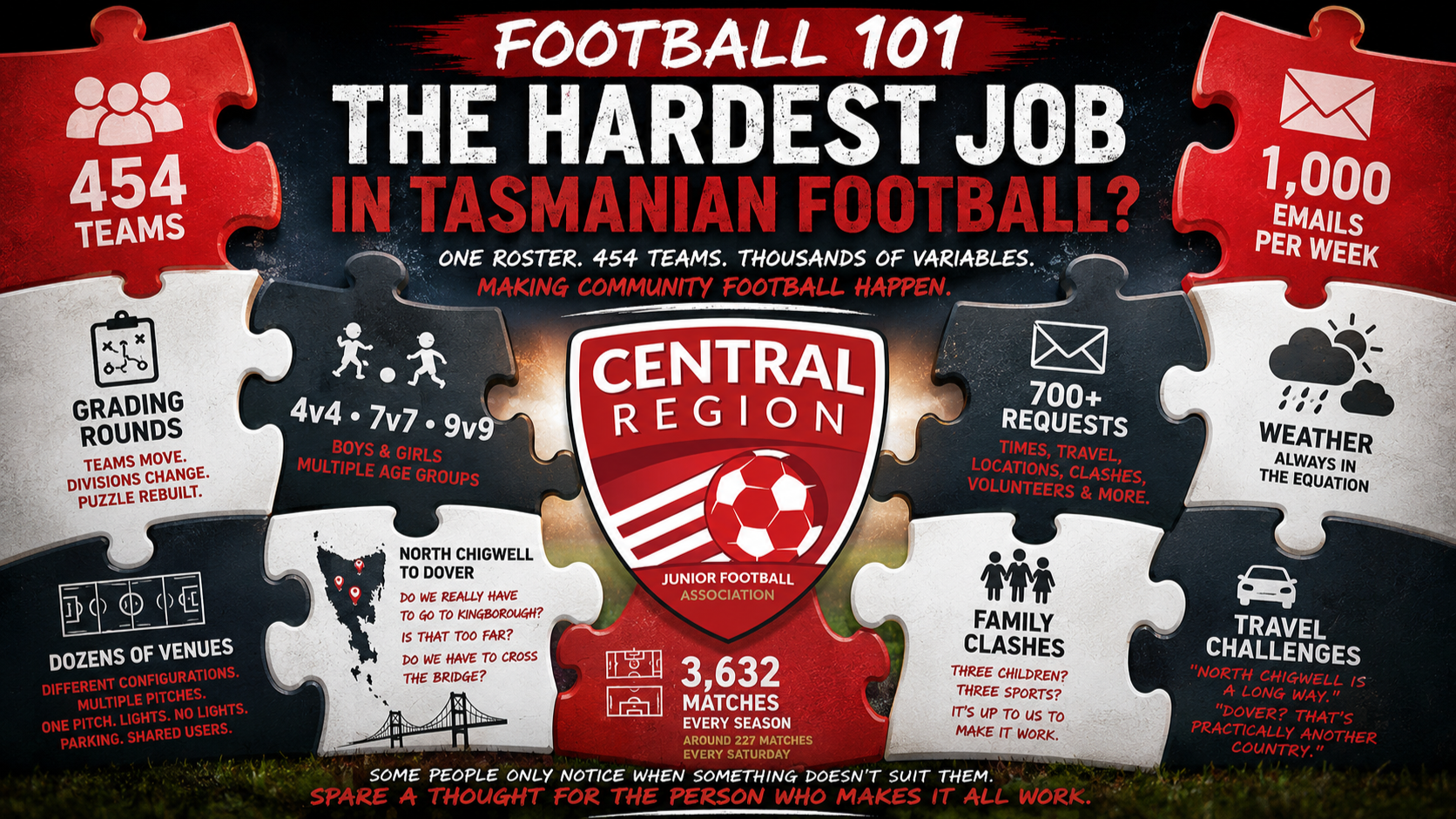
Football 101: Spare A Thought For The Person Who Writes The Roster

Yesterday I wrote about how the Premier League creates its fixture list.
It was fascinating.
Months of planning.
Specialist software.
Police requirements.
European competitions.
Supporter consultation.
More than 2,000 professional fixtures being coordinated across England's top four divisions.
By the time I finished writing, I found myself thinking about somebody much closer to home.
Our CRJFA Rosters Secretary.
Because if you think the Premier League fixture process sounds complicated, wait until you see what happens in junior football.
Let's Start With The Numbers
The Premier League schedules 380 matches.
CRJFA has 454 teams.
Across 16 rounds that equates to approximately 227 matches every Saturday.
Over the season that becomes around 3,632 scheduled matches.
Nearly ten times the number of fixtures played in the Premier League.
Yet most people never think about it.
But The Numbers Don't Tell The Whole Story
The Premier League has one competition.
Twenty teams.
One format.
Home and away.
Junior football is something entirely different.
We have 4v4 football.
We have 7v7 football.
We have 9v9 football.
We have boys competitions.
We have girls competitions.
Multiple age groups.
Venues stretching from North Chigwell to Dover.
And every ground has a different configuration.
Some can host multiple small-sided games.
Some can host a mixture of formats.
Some have several pitches.
Others have only one.
The roster is not simply a list of matches.
It is a giant football jigsaw puzzle.
Then We Change The Puzzle
The Premier League knows exactly where its clubs belong.
Junior football doesn't.
We run grading rounds.
Teams move.
Divisions change.
Competitions are adjusted.
Fixtures are rebuilt.
Imagine completing a giant jigsaw puzzle only to discover somebody has changed the picture on the box halfway through.
That's grading.
This year grading was made even more difficult by an early washout and incomplete results being submitted.
Yet decisions still had to be made.
Teams still had to be moved.
Competitions still had to be balanced.
Because at the end of the day the objective isn't a perfect spreadsheet.
The objective is making sure children enjoy their football.
The Part We Never See
Recently our CRJFA Rosters Secretary sent an update to delegates.
Reading it was eye-opening.
This season she has dealt with more than 700 fixture requests.
Seven hundred.
Requests relating to kick-off times.
Locations.
Travel.
Volunteer availability.
Team clashes.
Other sports.
And all the other challenges that come with organising community football.
At the same time she has been averaging between 800 and 1,000 emails every week.
Every week.
I suspect most of us would struggle to keep up with that volume in a full-time job.
Then Come The Emails
Jimmy has a recital.
Penny needs to play two games.
Can we move this fixture?
Can we swap this time?
Can we avoid travelling that week?
Can we start later?
Can we start earlier?
Can we play somewhere else?
Can we make it work around another sport?
The thing is, every request is reasonable.
Every request matters to the family making it.
The challenge is that there are hundreds of them.
And every solution creates another problem somewhere else.
The roster is not designed around one team, one family or one child.
It is designed around 454 teams.
The Great Tasmanian Travel Crisis
Then there is travel.
Or more specifically, Tasmanian football's relationship with travel.
We all know the conversations.
"Do we really have to go to Kingborough?"
"North Chigwell is a long way."
"Dover? That's practically another country."
"Do we really have to cross the bridge?"
The funny part is that many mainland football people would consider these routine trips.
Yet in Tasmania we can sometimes treat a 20-minute drive as if we are preparing for an expedition across the Nullarbor.
Thank goodness Eastern Region runs its own competition, some might say, because then people don't have to travel over the bridge.
Which is slightly amusing when Clarence Zebras happily travel the other way every week to compete in CRJFA.
Of course everyone prefers local games.
The challenge is that somebody has to make 454 teams fit across dozens of venues.
Sometimes that means travelling.
And occasionally that means crossing a bridge.
Sometimes Families Need To Adapt Too
One of the most common requests relates to families with multiple children playing football.
Can games be moved?
Can times be adjusted?
Can fixtures be changed to avoid clashes?
Again, every request is understandable.
But there is also a reality.
Football cannot be scheduled around every family.
I know this because I lived it.
My three boys played football.
They played futsal.
There were clashes.
There were impossible mornings.
There were favours called in.
No grandparents in Tasmania for me to phone.
There were lifts organised.
There were plenty of occasions when making it all work felt like a military operation.
That's what happens when children are active.
The solution wasn't changing the roster.
The solution was adapting.
Most football families have done exactly the same thing.
The Person Behind The Roster
The person building the roster is not trying to ruin your Saturday.
She is not deliberately sending your team to Dover.
She is not sitting there wondering how she can make life difficult for your family.
She is trying to make more than 3,600 matches work across hundreds of teams, dozens of venues, multiple formats, grading rounds, volunteers, clubs and families.
It is an extraordinary balancing act.
One that most people only notice when something doesn't suit them.
A Remarkable Piece Of Work
After writing yesterday's article, I reached one conclusion.
If somebody offered me the choice between creating the Premier League fixture list or the CRJFA roster, I know which job I wouldn't be volunteering for.
So the next time your fixture arrives and you find yourself wondering why your game is at a particular venue or a particular time, spare a thought for the person who built the roster.
Because somewhere between 454 teams, 3,632 matches, grading rounds, changing competitions, field configurations, weather, volunteers, 700 fixture requests and 1,000 emails a week, she somehow managed to make community football happen.
And that is a remarkable achievement in itself.

Football 101: How the Premier League Fixture List Is Really Created

When the Premier League released its fixtures this week, I did what most football supporters do.
I looked for the opening weekend.
I looked for the big derbies.
I looked for the Christmas fixtures.
I looked to see who had the easiest start and who had been handed a nightmare run.
Then I moved on.
To be honest, I had never really given much thought to how the fixture list was actually created.
I assumed somebody sat in an office somewhere, pressed a few buttons and out came 380 matches.
As it turns out, I couldn't have been more wrong.
The Premier League fixture list is one of the most complicated scheduling exercises in world sport.
And the really surprising part?
The Premier League isn't even the first thing they schedule.
The Premier League Doesn't Come First
That was the first thing that surprised me.
When work begins on a new Premier League season, the Premier League itself effectively joins the queue.
Before a single league fixture can be allocated, other competitions get priority.
First come FIFA international windows.
Then UEFA competitions.
Then domestic cup competitions.
International windows are protected.
Champions League dates are protected.
Europa League dates are protected.
Conference League dates are protected.
FA Cup dates are inserted.
Only once all of those dates have claimed their place on the calendar can the Premier League begin fitting its own fixtures around them.
Imagine trying to complete a jigsaw puzzle after somebody has already glued hundreds of pieces into place.
That's essentially where the process starts.
Even The Season Start Date Isn't Random
I assumed the Premier League simply started in August because that's when football starts.
Not quite.
The 2026/27 season actually begins a week later than the previous campaign because the Premier League wanted to allow 89 clear days from the end of the previous season and 33 days from the FIFA World Cup Final.
Even the first day of the season is part of a carefully managed process.
Then Came The Next Surprise
The people building the Premier League fixture list aren't really building a Premier League fixture list at all.
They are coordinating more than 2,000 professional matches across England's top four divisions.
In fact, the process involves scheduling approximately 2,036 fixtures across the Premier League, Championship, League One and League Two.
The Premier League's 380 fixtures are only one piece of a much larger puzzle.
Suddenly Arsenal v Coventry doesn't seem quite so important.
The UEFA Problem
The job became significantly harder in recent years when UEFA expanded its competitions.
More Champions League matches.
More Europa League matches.
More Conference League matches.
More dates disappearing from the calendar.
The puzzle didn't get bigger.
The space available to solve it got smaller.
This season there are nine Premier League clubs playing in Europe.
Five are involved in the Champions League.
Four are playing in the Europa League or Conference League.
Every one of those clubs creates additional restrictions.
A club cannot play a European fixture and a Premier League fixture during the same midweek.
Every restriction removes options.
Every removed option makes the puzzle harder.
There Are Only So Many Dates Available
After all the FIFA, UEFA and domestic cup dates have been protected, the Premier League is left with surprisingly few opportunities to schedule its matches.
This season there are only 33 weekends and five midweek rounds available.
That's it.
Thirty-eight rounds in total to fit 380 fixtures.
And that's before the clubs start making requests.
Then The Clubs Get Involved
Around April, Premier League clubs are invited to submit requests.
Some want particular home dates.
Others request to be away.
Some stadiums are hosting concerts.
Others are preparing for NFL matches.
Some clubs may be undertaking stadium works and need extra time before hosting their first home fixture.
Not every request can be accommodated.
But every request must be considered.
Supporters Get A Say Too
This was another surprise.
Supporter groups are consulted during the process.
The Premier League discusses the season calendar and scheduling challenges with supporter representatives and other stakeholders before the fixture list is finalised.
Supporters don't get to choose who plays whom.
But they are not entirely absent from the conversation either.
Then The Police Get Involved
This was probably my favourite discovery.
Certain clubs cannot both be at home at the same time.
Arsenal and Tottenham.
Chelsea and Fulham.
Manchester United and Manchester City.
Everton and Liverpool.
Newcastle United and Sunderland.
Why?
Police resources.
Local authorities do not want multiple major matches requiring significant operations in the same area at the same time.
Again, another set of restrictions gets added to the puzzle.
Then The Computer Finally Gets A Turn
Only after all of these constraints have been entered does the scheduling software begin its work.
The Premier League works with specialist fixture software developed specifically for the task.
The objective is not perfection.
Perfection is impossible.
The objective is to create the least imperfect fixture list.
The software attempts to balance home and away matches.
It tries to avoid long runs of home fixtures.
It tries to avoid long runs of away fixtures.
It works towards a fair balance over the season.
It considers supporter travel.
It attempts to share Christmas and New Year scheduling fairly.
And it somehow manages to squeeze 380 Premier League fixtures into the spaces that remain.
One Change Can Trigger Forty More
This was the statistic that stopped me in my tracks.
According to the Premier League, changing a single fixture can sometimes trigger around forty other changes.
Forty.
Move one game.
Another club loses a date.
Move that game.
A policing issue appears.
Move that one.
A European clash emerges.
The entire process resembles a giant set of dominoes.
Suddenly it becomes much easier to understand why fixture scheduling is such a specialised job.
Humans Still Check Everything
The computer does not simply print a fixture list and send it to the clubs.
The proposed schedule is reviewed.
Requests are checked.
Potential conflicts are examined.
Alternative solutions are considered.
Only after that process is complete are the fixtures released.
So Who Actually Creates The Fixtures?
Former commentator Richard Keys looked at Arsenal hosting Coventry City on opening night and asked a simple question.
"Who makes these decisions?"
The reality is that no single person does.
The fixture list is the final product of months of planning, hundreds of restrictions and thousands of calculations.
Richard Keys asked who makes these decisions.
After reading about the process, I think the better question might be:
"How on earth do they make any of it work at all?"
Because once you understand what sits behind those 380 fixtures, the remarkable thing isn't that supporters complain about the draw.
It's that a draw exists in the first place.
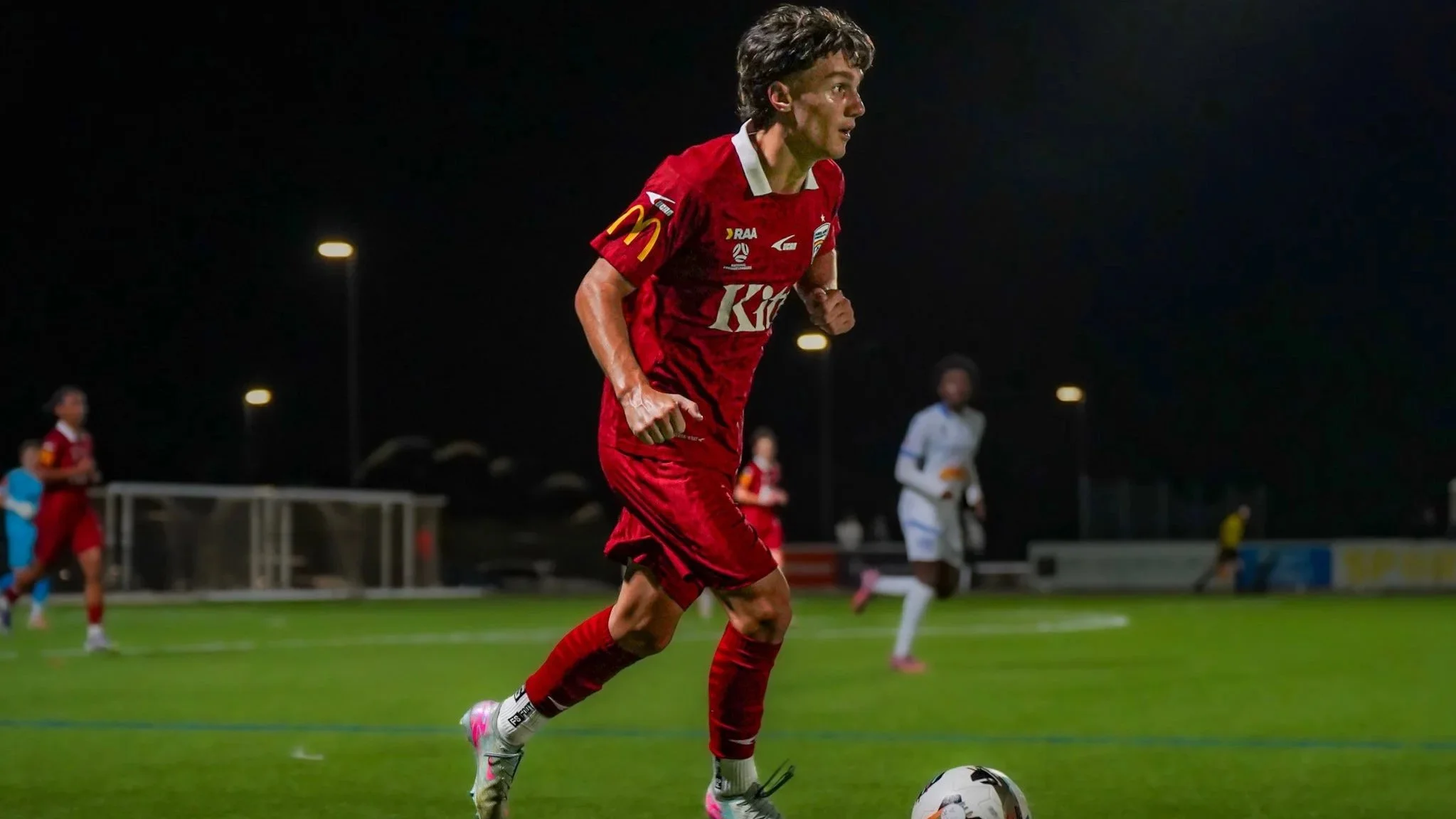
The Road Out of Tasmania
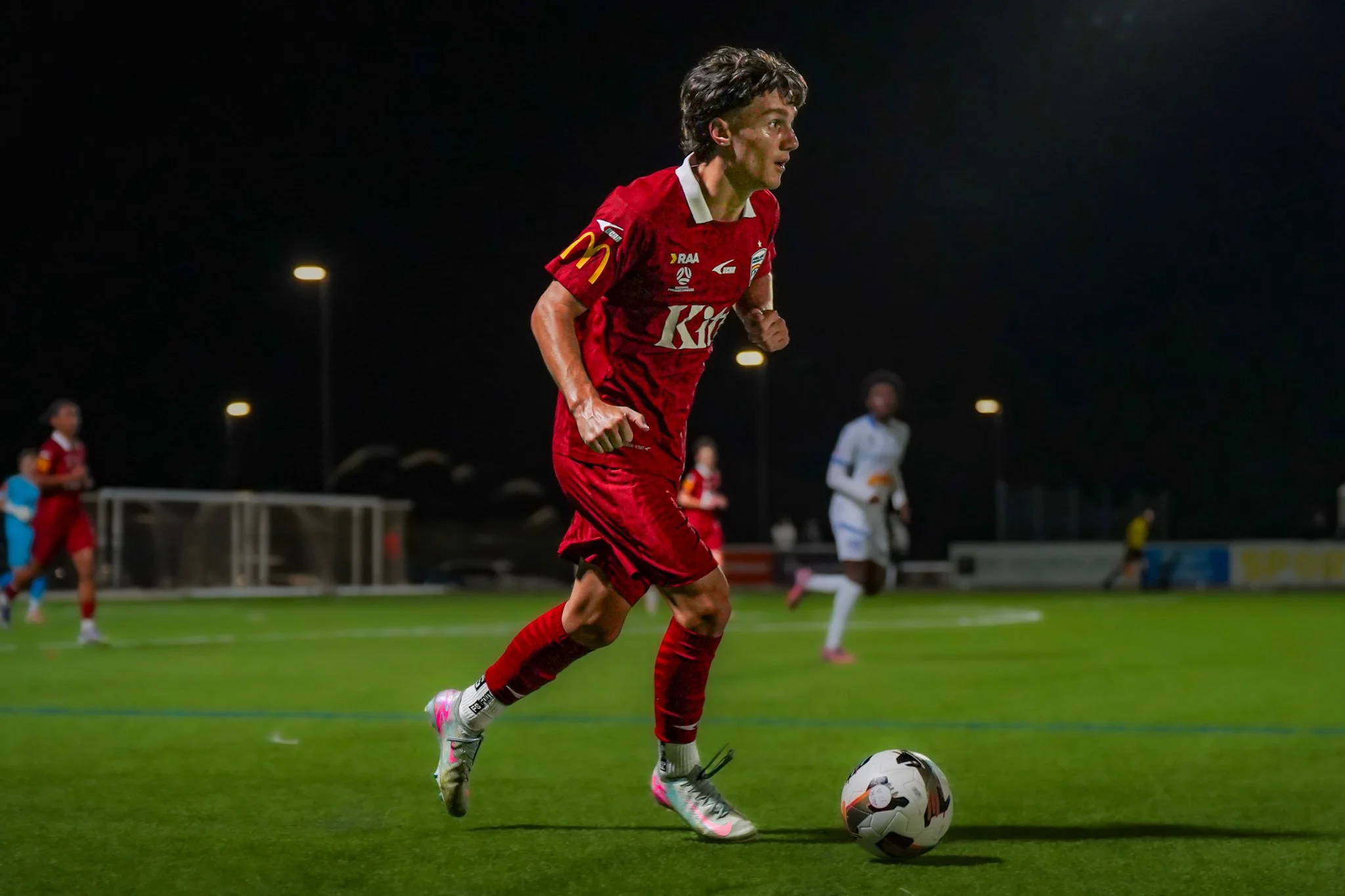
2026- Adelaide United - Photos courtesy of Caroline
A few weeks ago I received an email from someone I had never met.
She wasn't pitching a story.
She wasn't seeking publicity.
She wasn't asking for help.
She simply wanted to thank me for some of the articles I had been writing and sharing online.
Her name was Caroline Noulton.
Caroline and her family left Tasmania several years ago, but through football they remain deeply connected to home.
As I read her email, and the messages that followed, I realised there was a story hidden inside it.
Not just about one young footballer.
Not even really about football.
It was a story about family, sacrifice, uncertainty and what happens when talented young Tasmanians start asking questions that our football system doesn't always have clear answers for.
I should also be clear.
Caroline didn't write asking me to tell her family's story.
In fact, she was simply sharing her experiences as part of a broader conversation about football in Tasmania.
But as I read about the decisions her family had made, the risks they had taken and the uncertainty they had navigated, I realised there was something valuable here for other football families.
The question every football family asks
Most parents spend years driving to training, standing in the rain, washing muddy uniforms and watching games from the sidelines.
Very few expect football to fundamentally change the course of their lives.
Yet for some families, it does.
Caroline's son, Iluka Wootton, was one of Tasmania's promising young footballers.
Growing up in the North West, he played his junior football in Devonport and represented Tasmania through state programs while developing a reputation as an exciting attacking player.
Like many young footballers from the North West Coast, his football foundations were built in Tasmania long before interstate opportunities emerged.
With those opportunities came questions.
Should we stay?
Should we leave?
What pathway gives our child the best chance to reach their potential?
Who do we even ask?
As Caroline wrote:
"We literally had to just wing it and hope for the best."
Later in her email she wrote something that I suspect resonated with football parents everywhere.
"I always wished there was a manual for sports parents."
In many ways, that sentence became the theme of our correspondence.
Putting your money where your mouth is
Parents often tell their children they will support their dreams.
The Noultons were prepared to prove it.
They sold their house.
They sold their business.
They left Tasmania and moved to Melbourne.
Not because anyone offered a professional contract.
Not because success was guaranteed.
Simply because they believed the opportunity was worth pursuing.
That decision becomes even more remarkable when you learn the family was also navigating the challenges of raising a child with significant disabilities.
As Caroline put it, moving interstate under those circumstances is not for the faint-hearted.
The Melbourne chapter
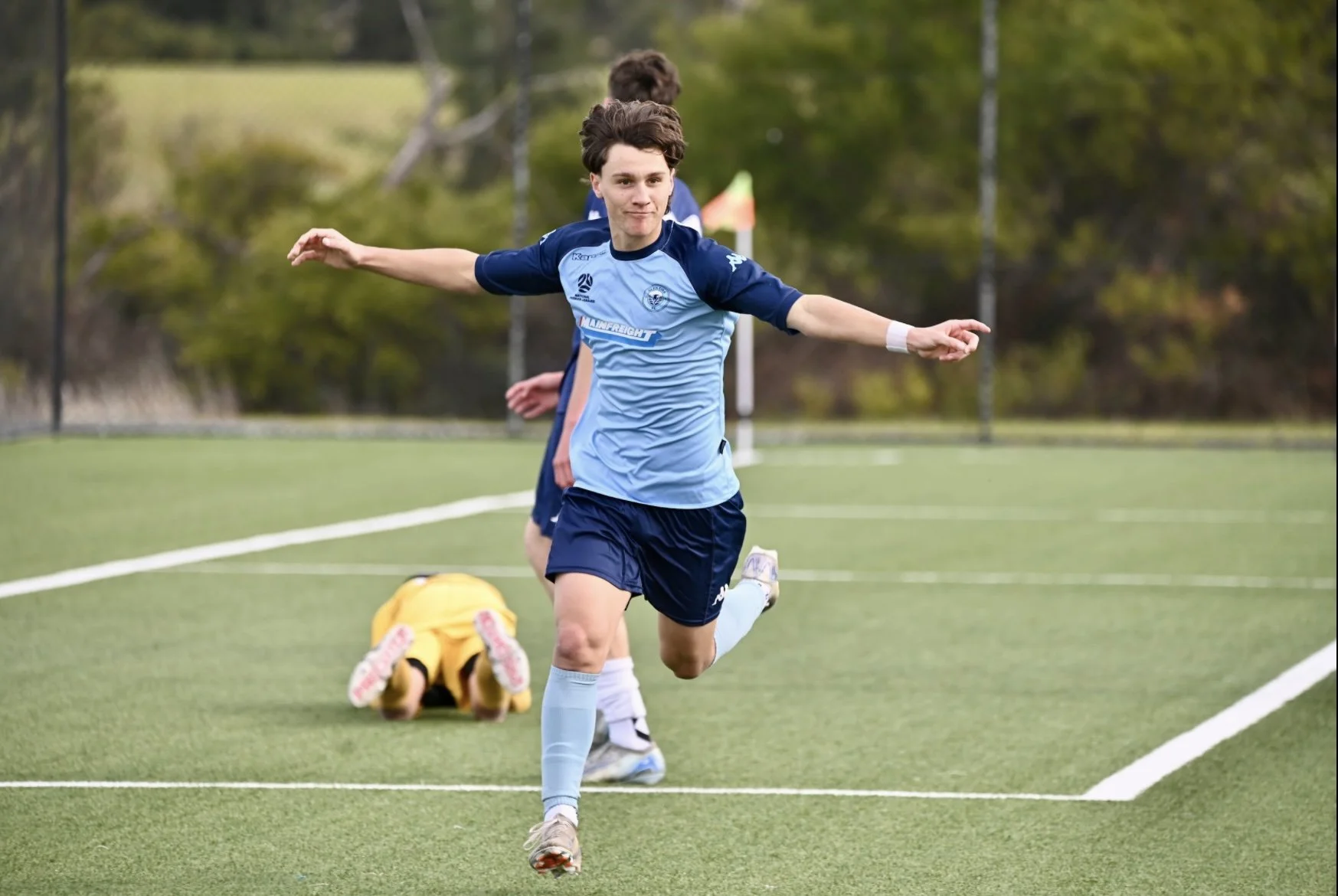
2025- Glen Eira FC
As opportunities began to emerge beyond Tasmania, the family started exploring what might come next.
One of those opportunities was Football Technique School (FTS), a Melbourne-based football development program operating in partnership with Glen Eira FC.
The move was far from straightforward.
The family would be leaving behind their home, business, friends and support networks.
Yet after speaking to coaches, seeking advice and exploring different options, they felt FTS and Glen Eira offered the environment they were looking for.
Northcote City made an offer.
Western United expressed interest.
There were other pathways available.
But the Noultons chose FTS and Glen Eira because they believed it offered the best environment for Iluka's long-term development.
Looking back, Caroline says they never regretted the decision.
Under coaches including Jasper Kristensen and Nav Velupillay, Iluka spent two important years developing his game and testing himself against strong opposition.
The move wasn't about finding the biggest badge.
It was about finding the right place to learn.
There is no single pathway
One point is worth making.
Iluka's journey is exactly that. His journey.
Football people often become obsessed with finding the pathway, as though there is one road and one road only.
The reality is far more complicated.
Some players are identified through representative football.
Others through NPL football.
Some through academy environments.
Some through interstate trials.
Others develop later and emerge through senior football.
Football careers rarely follow a straight line.
While representative football and national tournaments formed part of Iluka's story, they were only one chapter.
Development does not belong to any single club, academy, federation or program.
What matters is finding an environment where players can improve, be challenged and continue learning.
Opportunity knocks
During his time in Melbourne, Iluka maintained his connection with Tasmania and remained available for representative opportunities.
One of those opportunities came when Tasmania required an injury replacement player for the National Youth Championships.
On the eve of the tournament, the call came.
A player had withdrawn.
Tasmania needed a replacement.
Iluka packed his bags.
What followed proved to be an important week.
His performances attracted the attention of Adelaide United and eventually led to an invitation to trial with the club.
The trial was successful.
The opportunity was significant enough that the family once again packed up their lives and moved interstate.
Today, Iluka is part of Adelaide United's youth program alongside fellow Tasmanian Daniel Wojcek.
Two young footballers from Tasmania pursuing opportunities in professional football.
That is something our football community should celebrate.
The second leap
Most people would view moving interstate as the hard decision.
For the Noultons, there were two.
Having established themselves in Melbourne, another opportunity arose.
Another difficult decision had to be made.
Another move had to be considered.
Another leap of faith had to be taken.
Football has a habit of asking families difficult questions.
The Noultons kept answering them.
The manual that doesn't exist
The longer I reflected on Caroline's emails, the more I kept coming back to that line.
"I always wished there was a manual for sports parents."
I suspect many football mums and dads smiled when they read that.
Because there is no manual.
There is no roadmap.
There is no guarantee.
There is only information, advice, instinct and hope.
Families gather information where they can.
They seek advice from coaches.
They talk to former players.
They compare notes with other parents.
Then they make the best decision they can and hope they have chosen wisely.
Still Tasmanian
What I perhaps loved most about Caroline's emails was this.
Three years after leaving Tasmania, the family still feels deeply connected to Tasmanian football.
They still follow the players.
They still watch the streams.
They still read articles from home.
They still celebrate Tasmanian success.
Caroline told me her family sat on their back deck cheering South Hobart during its National Second Tier campaign.
Not because they were South Hobart people.
Not because they had a direct connection to the club.
But because it was Tasmania.
I suspect many readers will understand exactly what she means.
When South Hobart played Heidelberg, plenty of people who would normally never support South Hobart suddenly found themselves wanting the club to succeed.
Not for South Hobart.
For Tasmania.
Bringing us home
That is why I wanted to share parts of Caroline's story.
Not because Iluka has reached the finish line.
Far from it.
His football journey is still unfolding.
But somewhere in Tasmania tonight there is another young footballer with a dream.
And there is probably a parent sitting beside them wondering what comes next.
The Noultons do not claim to have all the answers.
In fact, they would probably tell you they are still figuring it out themselves.
But their story is proof that there are many pathways, many possibilities and many different ways to chase a football dream.
Three years, two interstate moves, countless kilometres, trials, injuries, uncertainty and sacrifice later, they still tune in to Tasmanian football and still cheer for Tasmania whenever one of our clubs or players steps onto a bigger stage.
Caroline's email began as a thank you for my writing.
Ironically, by the time I reached the end of it, I found myself thanking her.
Not for sharing the story of a talented young footballer.
But for sharing the story behind the footballer.
The uncertainty.
The sacrifices.
The decisions.
The leaps of faith.
Because football pathways are often discussed through the lens of players.
Caroline reminded me that every pathway usually begins with a family willing to take the journey with them.
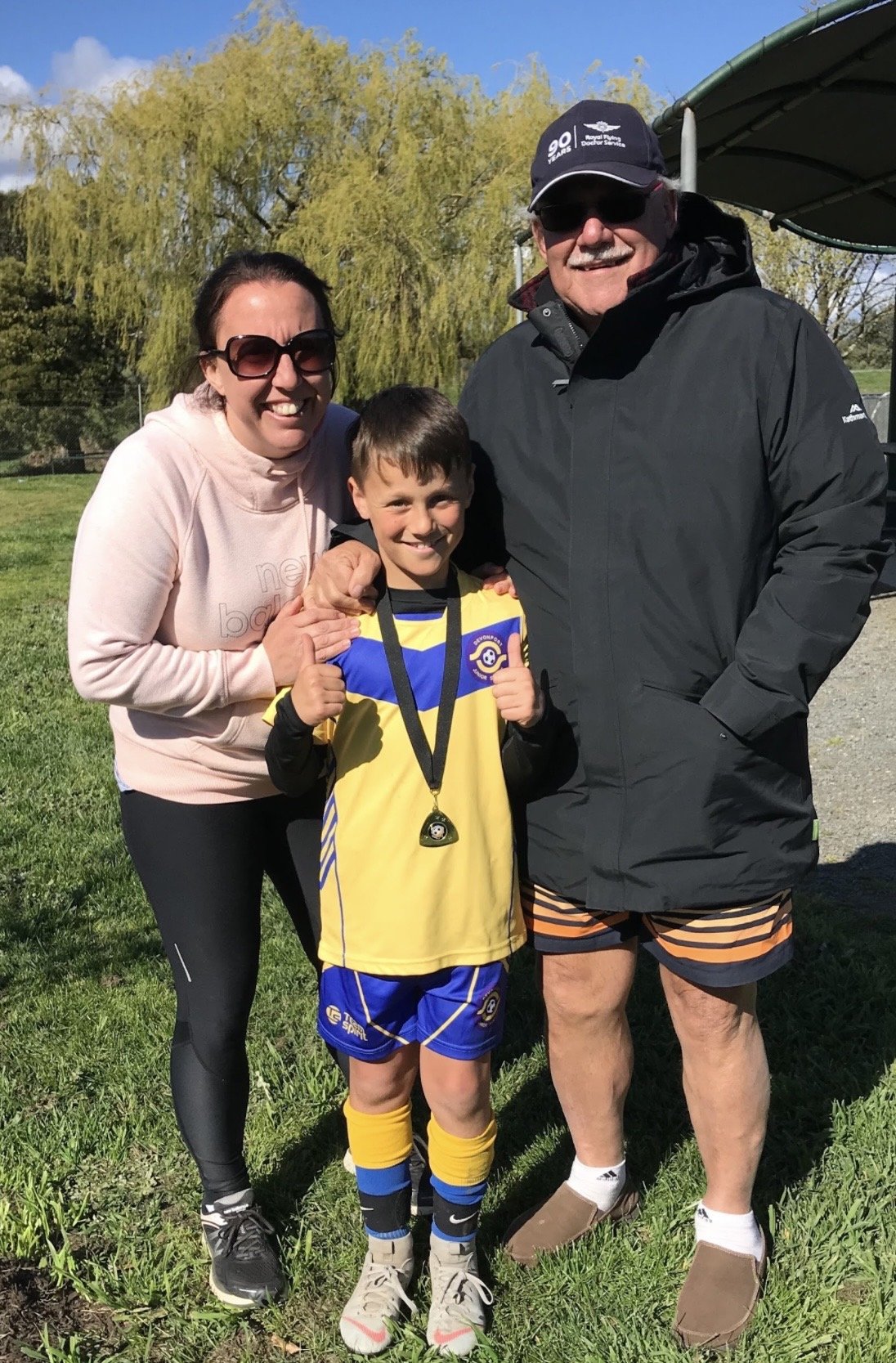
2018- Launie Cup, representing Devonport Junior Soccer Club- with Iluka’s grandfather Leon and me
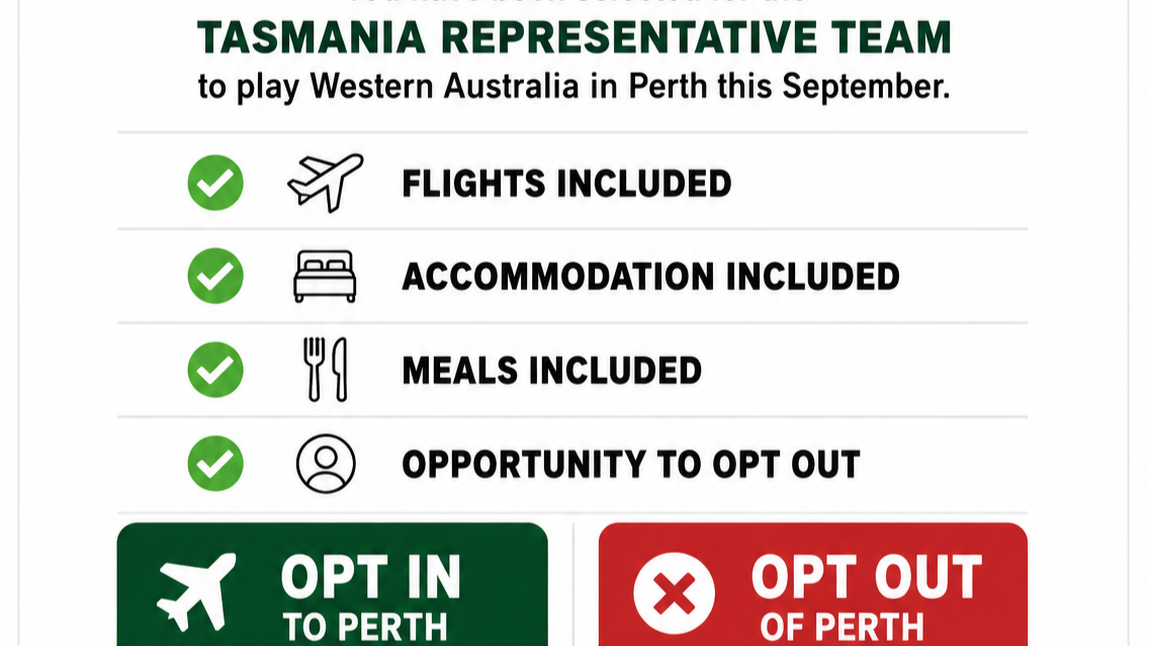
The Opt In Box
A couple of weeks ago Football Tasmania announced a representative fixture against Western Australia.
At the time I found myself asking a fairly simple question.
Why?
What exactly is this trying to achieve?
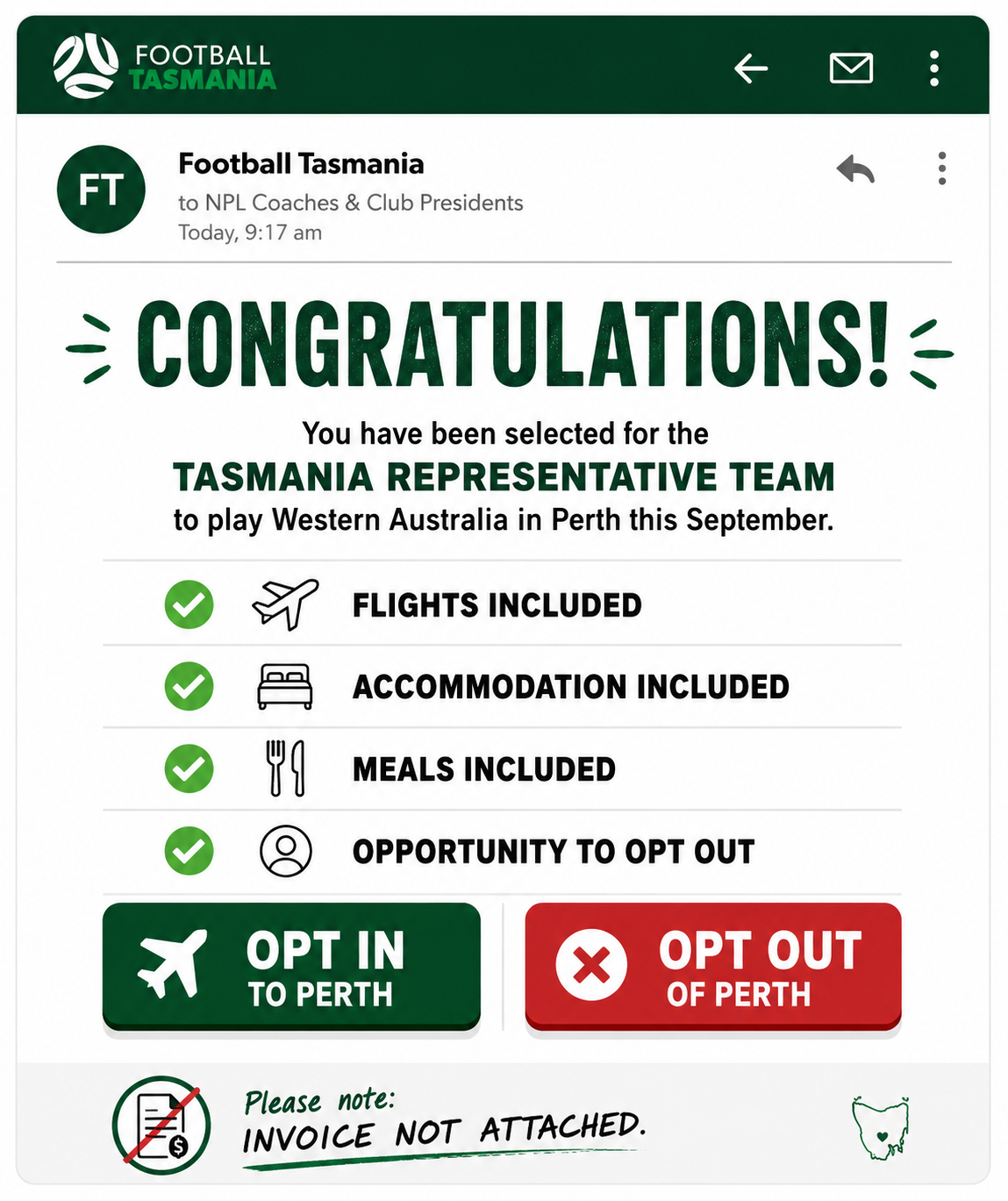
This week an email arrived in the inboxes of NPL club presidents and coaches providing further details.
And while the email answered some questions, it raised a few others.
Most notably, it introduced me to something I didn't know existed.
The opt in box.
The Process
The email outlined how the side would be selected.
NPL coaches will vote for a Team of the Year, nominating players across goalkeeper, defence, midfield and attack.
Coaches are not permitted to vote for players from their own club.
Football Tasmania will then confirm a starting eleven, select additional players to complete a squad of seventeen and appoint coaching staff.
The squad will travel to Perth in September to play Western Australia.
Players can choose to opt in or opt out of the trip.
If somebody declines, replacement players will be selected.
So far, so good.
The email also confirmed that flights, accommodation and meals will be covered for players and coaching staff.
Which is where things started to get interesting.
The Opt In Box
This was my favourite part of the email.
Selected players will be given the opportunity to opt in or opt out of the trip.
I nearly spat out my coffee.
Opt in?
What a magnificent concept.
For years football families have been opting into invoices.
Now somebody gets to opt into Perth.
Not pay for Perth.
Opt into Perth.
Football really is a game of pathways.
Flights Included
The email goes on.
Flights covered.
Accommodation covered.
Meals covered.
Seventeen players.
Coaches.
Flights to Perth.
Accommodation.
Meals.
This is not the sort of trip you fund with loose change found behind the couch.
At this point I became fascinated.
Not by Perth.
Not by the fixture.
Not even by the Team of the Year.
By the discovery that this level of Tasmanian football apparently exists.
A level where Tasmanian football pays.
I genuinely had no idea.
So There Is Money After All
For years football has been explaining why things can't happen.
There isn't enough money.
There isn't enough funding.
There aren't enough resources.
Then suddenly an email arrives offering flights, accommodation and meals.
I have to admit, I found that oddly reassuring.
Because it means the money exists after all.
I just hadn't realised this was where we were planning to spend it.
What Happens If We Win?
Having established that football has money, I found myself returning to another question.
What exactly are we hoping to achieve?
Let's say Tasmania wins.
Then what?
Do we receive extra FIFA points?
A World Cup berth?
A second airport?
A commemorative tea towel?
Let's say Western Australia wins.
Then what?
One thing the email didn't explain was what success actually looks like.
Perhaps there is a strategic objective.
If so, I look forward to hearing it.
I Had No Idea This Level Existed
My understanding of football pathways has always been fairly simple.
A parent receives an email.
The email contains a cost.
The parent pays the cost.
Football continues.
Representative football.
Development football.
Interstate football.
Football generally involves opening your wallet.
Apparently I have misunderstood the pathway entirely.
There is another level.
A magical level.
A level where the email arrives and football pays.
Who knew?
The Ultimate Football Pathway
Perhaps Football Tasmania should publish a new pathway graphic.
Age 12 girl: Parents pay.
Age 14 girl: Parents pay.
Age 16 girl: Parents pay.
Age 18 girl: Parents pay.
Age 12 boy: Parents pay.
Age 14 boy: Parents pay.
Age 16 boy: Parents pay.
Age 18 boy: Parents pay.
Adult male NPL player: Opt into Perth.
Everyone else: Please see attached invoice.
At last the pathway makes sense.
All these years I thought the destination was professional football.
Turns out it was an opt in box.
Equality At Last
For a brief moment I wondered whether there might be a similar opportunity for women.
Then I remembered this is football.
Silly me.
Of course, it is entirely possible that Football Tasmania is about to announce a fully funded women's representative trip as well.
If that happens, I will happily write a mea culpa article.
In fact, I'll probably write it with great enthusiasm.
I may even volunteer to carry the bags.
Until then, however, the fully funded interstate representative pathway appears to begin at the adult men's end of the pyramid.
Which remains an interesting design choice.
I Thought My Time Had Finally Come
As somebody who has recently qualified for the age pension, I was briefly excited.
Flights covered.
Accommodation covered.
Meals covered.
For a moment I assumed Football Tasmania had finally identified one of the most overlooked groups in the game.
Pensioners.
Finally.
A pathway for those of us who have survived decades of football administration.
The Veteran Volunteer Interstate Development Program.
At last, some recognition.
I was already mentally packing.
I had visions of a football exchange program where volunteers from around Australia gather to discuss exciting topics such as canteen rosters, referee abuse, registration systems and why nobody ever volunteers for the committee.
Sadly, it appears I do not qualify.
I have once again been overlooked by the talent identification process.
Perhaps next year I'll make the extended squad.
The Opt Out Box
The more I thought about it, the more I realised the opt out option might actually be the funniest part.
Most football parents spend years trying to find opportunities.
Trying to create opportunities.
Trying to afford opportunities.
Trying to make opportunities possible.
Somewhere in Tasmania a parent is currently paying for a development squad.
Somewhere else a parent is paying for an interstate tournament.
Somewhere else a parent is booking flights, accommodation and uniforms for a football trip.
Then an email arrives explaining that the highest level of the pathway includes the option to politely decline a free one.
That really is elite football.
The Real Question
Perhaps I am the only person who found the opt in box amusing.
I doubt it.
Because for years football families have been opting into costs.
The opportunity at the end of the pathway was apparently not a professional contract.
Not a national team call-up.
Not football glory.
It was the ability to choose whether football pays for your trip to Perth.
Most football parents spend years trying to find opportunities.
This pathway appears to end with the opportunity to decline one.
Football really is a game of pathways.

Five World Cup Stories Bigger Than The Scoreline

The football has been excellent.
Australia is unbeaten.
The favourites are being challenged.
The atmosphere has been everything a World Cup should be.
But as always, some of the most interesting stories are happening away from the scoreboard.
Here are five talking points from the opening week that have caught my attention.
1. The Mercury discovers football
For years, football supporters have argued that our game struggles for mainstream media attention.
Then the World Cup arrived.
Suddenly there were special editions.
Socceroos posters.
Front pages.
Pages and pages of football coverage.
To be clear, I think that's fantastic.
Football deserves it.
But the timing was interesting.
Australia had already beaten Turkey before the coverage really exploded.
Perhaps that was coincidence.
Or perhaps, like many Australians, people were waiting to see whether the Socceroos were actually going to become a story.
Football often seems to have to prove itself before it receives the attention other sports take for granted.
And before anyone reaches for the word "whinging", let me say that I think the coverage is terrific.
Football deserves it.
I just find it fascinating that after years of fighting for attention, football suddenly became impossible to ignore once the Socceroos started winning.
For a few weeks, the rest of the country gets a glimpse of what football people already know.
This game matters.
2. Japan's lesson in gratitude
My favourite moment of the tournament didn't involve a goal.
After Japan's draw with the Netherlands, coach Hajime Moriyasu sat down in front of the world's media and thanked the Dutch.
He spoke about the coaches and football people who helped shape Japanese football and acknowledged the role they played in his own development.
It was a remarkable moment.
No ego.
No self-promotion.
Just gratitude.
The Japanese have a concept known as On (恩), recognising the debt we owe to those who help us along the way.
We see that mentality in football too.
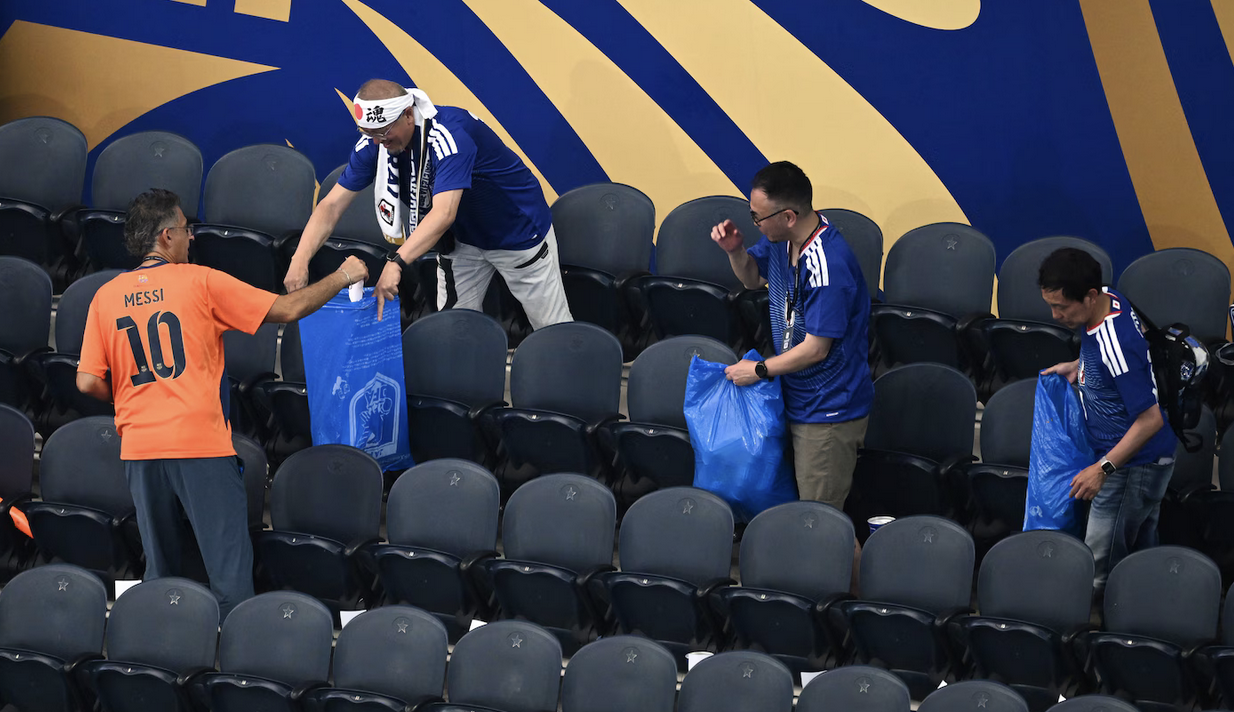
Every major tournament seems to produce stories of Japanese supporters staying behind to clean stadiums after matches.
Players leaving dressing rooms spotless.
Small gestures that have become almost expected because they happen so consistently.
Australians are familiar with it. We saw it during the Asian Cup and through countless interactions with Japanese teams and supporters over the years.
Yet Japan is more complicated than the stereotype.
Former international Keisuke Honda has built a reputation for saying the things many others won't. He is a commentator during the FIFA World Cup for Japan.
He questions standards.
He challenges assumptions.
He openly discusses the areas where Japan can improve.
At times his commentary can sound blunt, almost uncomfortable.
But perhaps that is precisely why it is valuable.
One side of Japanese football demonstrates gratitude and respect.
The other refuses to accept that good is good enough.
Most football cultures tend to favour one approach or the other.
Japan seems comfortable with both.
The humility to recognise those who came before you.
And the honesty to admit there is still work to do.
There is probably a lesson in that for the rest of us.
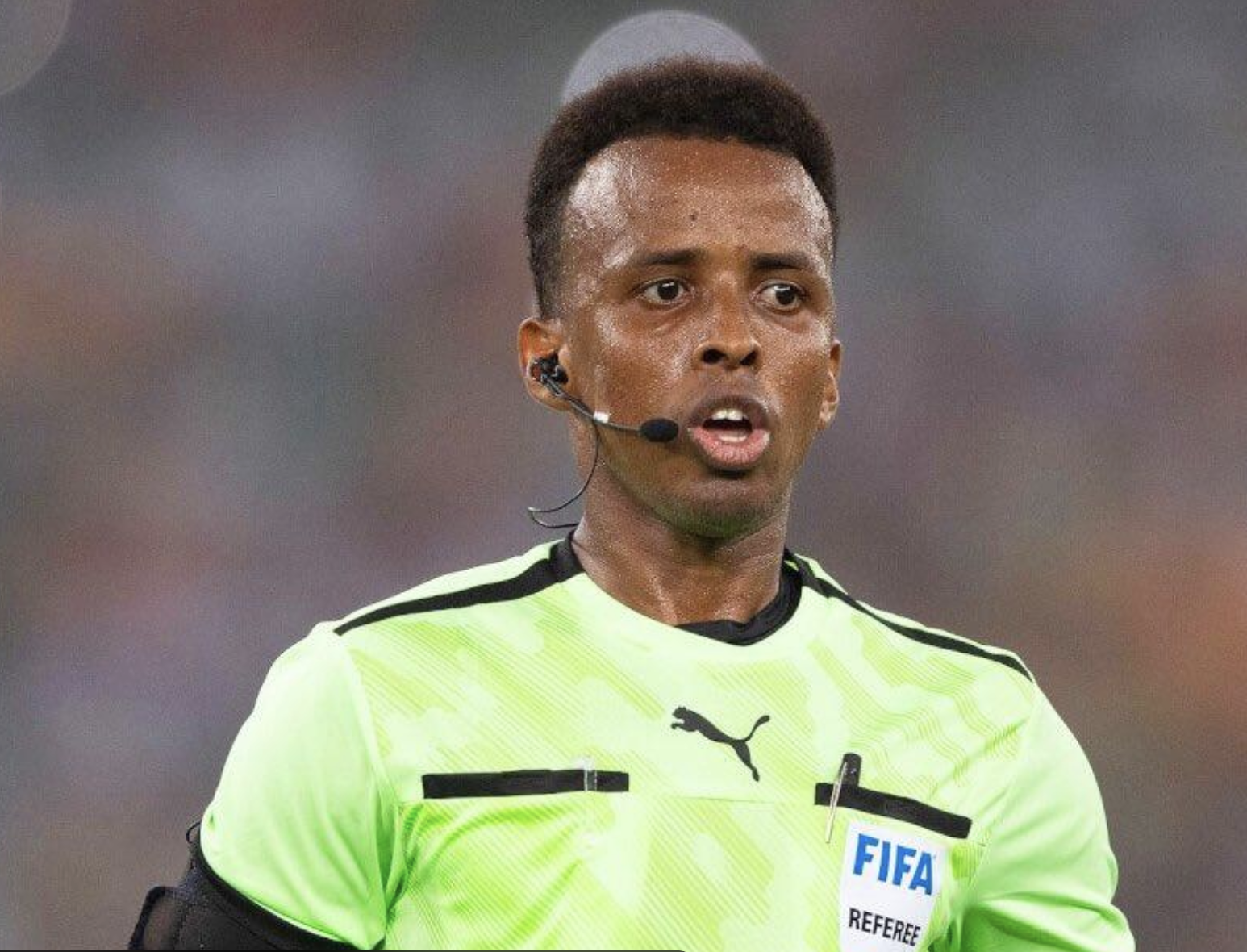
3. The referee who lost his World Cup
Most football supporters had never heard of Omar Artan before this week.
Now many will never forget him.
After years of work, Artan had earned selection for the World Cup and was set to become the first Somali referee to officiate at a men's World Cup.
Instead, he was denied entry to the United States and removed from the tournament.
The circumstances surrounding that decision remain unclear and have been widely debated.
What is not disputed is the outcome.
A referee who had reached the pinnacle of his profession was unable to take part in the tournament he had worked so hard to reach.
His response said everything.
"I don't want compensation. I wanted to referee at the World Cup."
Players understand that feeling.
Coaches understand it.
Football people understand it.
Some opportunities only come once.

4. What are football's leaders bringing home?
Every World Cup attracts football administrators from around the globe.
Australia is no different.
A number of federation executives and leaders are currently enjoying the biggest tournament on earth.
To be fair, perhaps they are undertaking vital research.
Perhaps somewhere between the corporate hospitality, premium seating and world-class stadiums they will discover the secret to fixing the drainage issues at local grounds.
Perhaps they will uncover the answer to volunteer shortages.
Perhaps they will return with revolutionary insights into canteen rostering and fundraising.
After all, what better place to learn about grassroots football than a FIFA World Cup?
The sarcasm writes itself.
I don't actually begrudge anyone attending.
If I was offered a trip to a World Cup, I'd probably be packing my suitcase too.
But football people are entitled to ask a reasonable question.
What exactly comes back?
What lessons from billion-dollar stadiums and FIFA hospitality suites are being translated into better facilities, better coaching, better referee development and better opportunities for community clubs?
Perhaps there are genuine benefits.
If so, tell us.
Show us.
Share the outcomes.
Because volunteers who spend their weekends in canteens, on mowers and behind barbecue plates have every right to know how these experiences ultimately benefit the game they are helping to sustain.
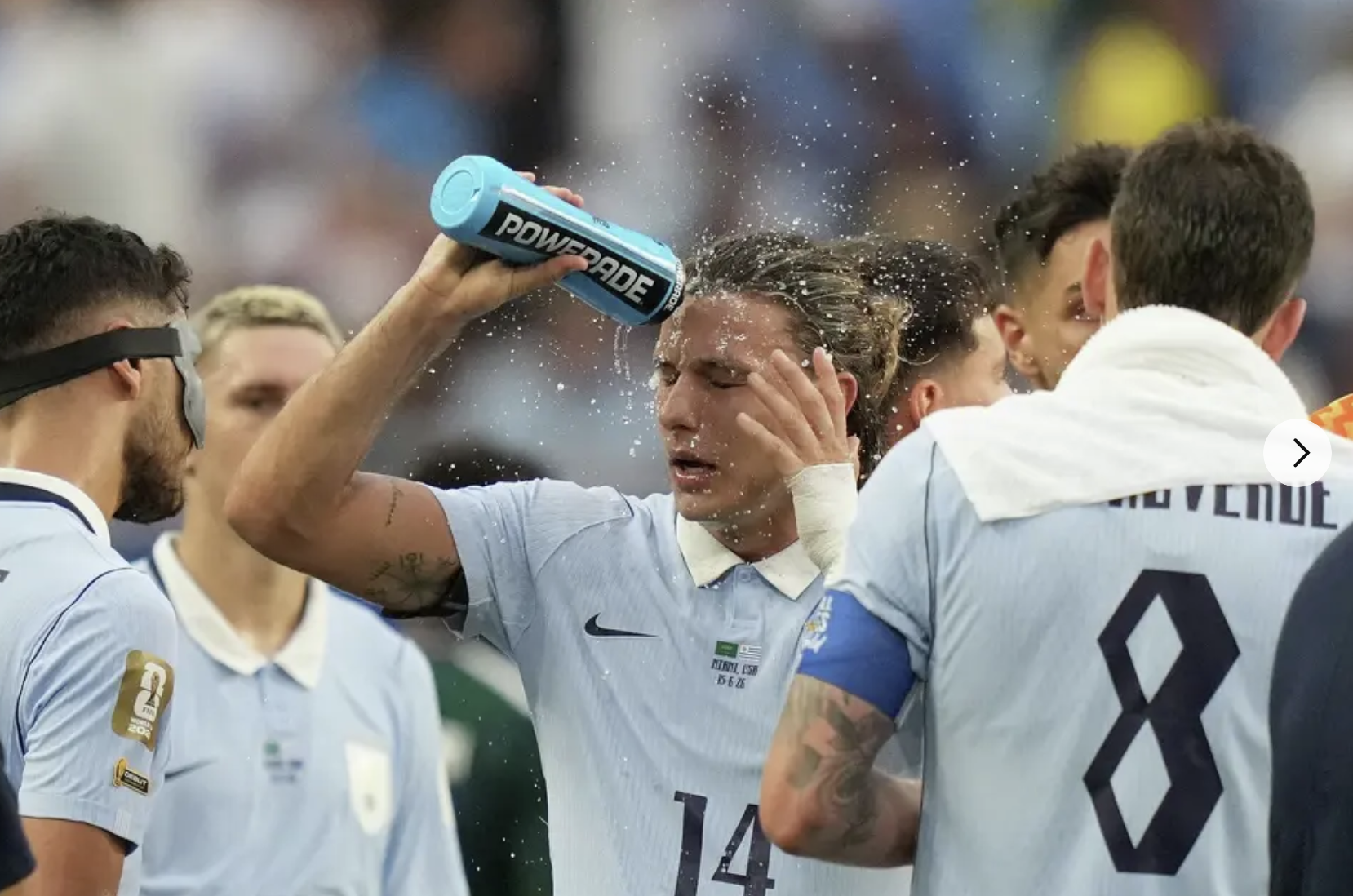
5. The hydration break rebellion
One of the more unexpected controversies of the tournament has been the hydration breaks.
The official explanation is player welfare.
And to be fair, player welfare matters.
No sensible person wants footballers collapsing in extreme heat.
But Australian football supporters are entitled to raise an eyebrow.
We have spent years watching and playing football in temperatures that would make a North American summer seem almost pleasant.
Thirty-five degrees.
Thirty-six degrees.
Thirty-eight degrees.
We have had hydration breaks when conditions genuinely demanded them.
Yet somehow football survived without mandatory interruptions becoming a central feature of the spectacle.
Which raises an obvious question.
Is this really about hydration?
Or is it also about creating another stoppage in the game?
Another opportunity for advertising.
Another television break.
Another chance to maximise commercial value.
Perhaps the answer is genuinely player welfare.
Perhaps it is both.
But football supporters are naturally suspicious when changes that interrupt the flow of the game also happen to create additional commercial opportunities.
Many dislike the interruptions.
But it isn't just the interruption itself.
Football has always been a game where coaches have relatively limited opportunities to influence players once the match begins.
Apart from half-time, decisions are made on the run.
Players solve problems.
Captains lead.
The game unfolds naturally.
Hydration breaks change that dynamic.
Suddenly coaches have another opportunity to gather players, deliver tactical instructions, reorganise shape and influence the contest.
Some people see that as sensible.
Others see it as another step away from what makes football unique.
Whether you support the breaks or not, they unquestionably create a coaching opportunity that traditionally has not existed in the game.
And when that extra coaching opportunity happens to coincide with another advertising break and another television timeout, football supporters are naturally entitled to ask questions.
Many simply don't like seeing football broken into additional tactical timeouts.
Football's greatest strength has always been its simplicity.
Two halves.
A running clock.
Very few interruptions.
Supporters have spent generations falling in love with that rhythm.
They are understandably protective of it.
Football is never just football
What strikes me most is that none of these stories are really about football.
One is about recognition.
One is about gratitude.
One is about a dream denied.
One is about accountability.
One is about commercialisation.
Together they tell us something about the game we love.
The goals will be replayed for years.
The results will fill the record books.
But long after this tournament is over, it may be these stories that people remember most.
Because football is never just football.
And the first week of this World Cup has reminded us exactly why.
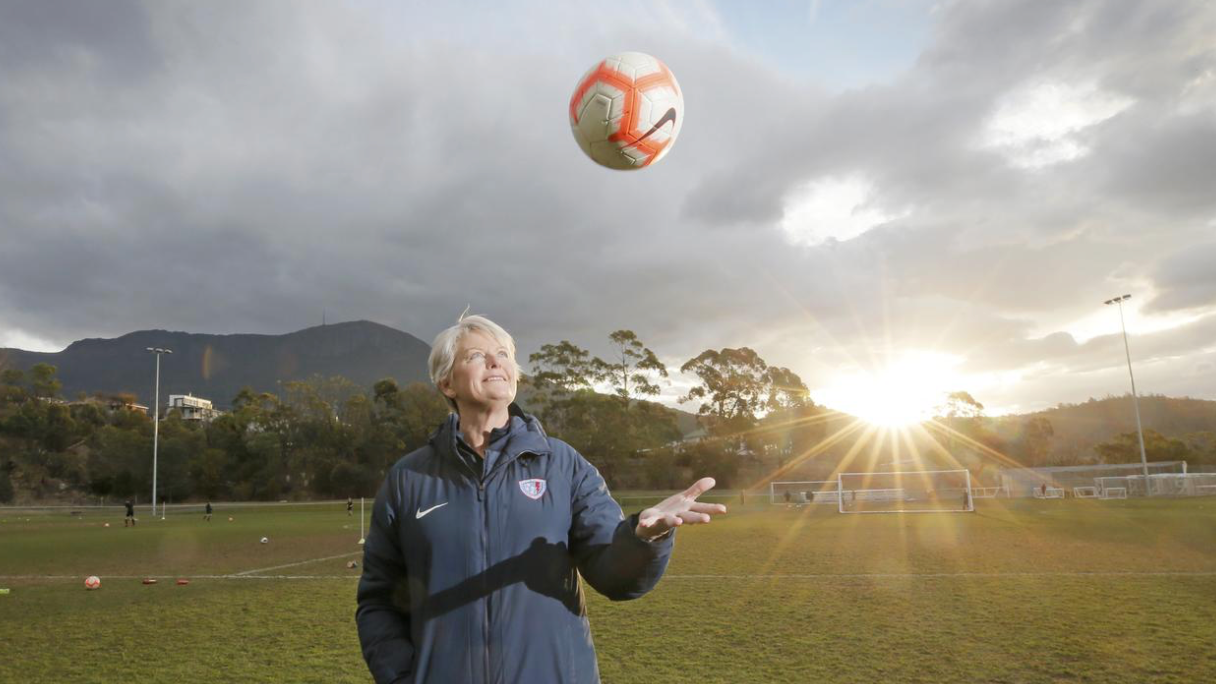
Apparently I Whinge
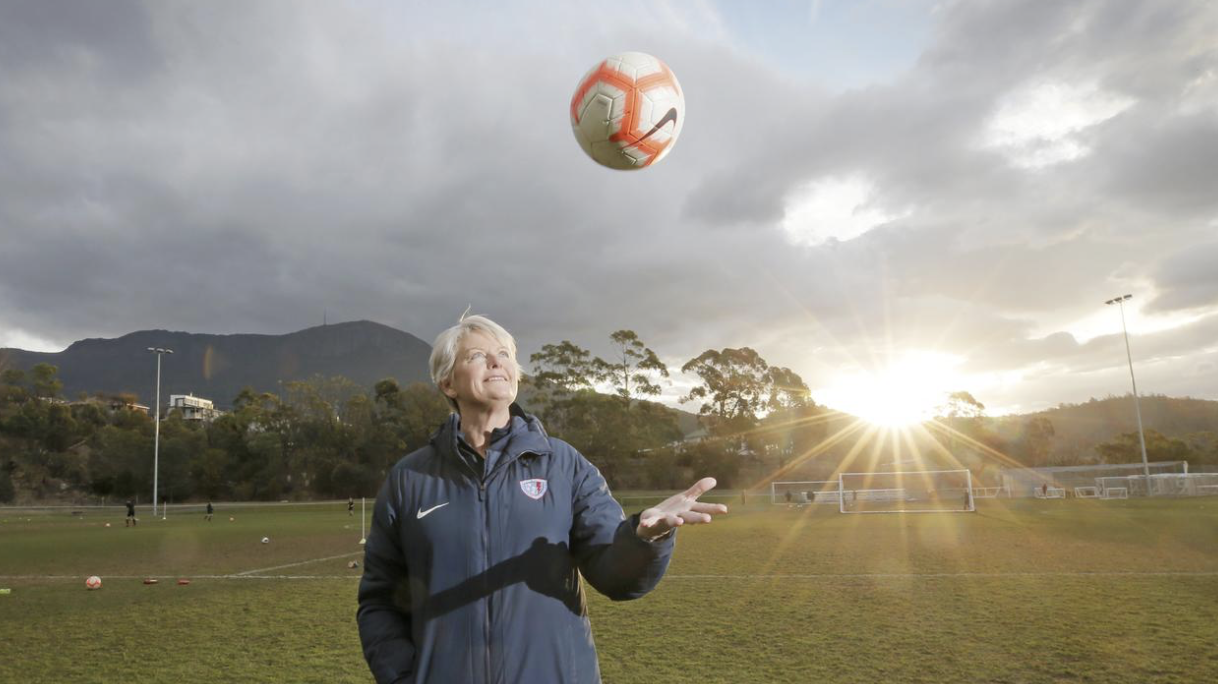
Photo courtesy of the Mercury
Apparently I whinge.
At least that's what I've been told from time to time.
Victoria is whinging again.
Victoria is stirring things up.
Victoria should stop complaining.
Perhaps.
But before we go too far, let's put something in context.
Sixteen years of keeping quiet
For sixteen years I was President of South Hobart Football Club.
Not for six months.
Not for a season.
Sixteen years.
During that time I attended more meetings than I can remember. I sat through governance discussions, strategic planning sessions, disciplinary matters, financial reviews, club licensing processes, facility developments and countless football debates.
I spent weekends at grounds.
Evenings answering emails.
Mornings solving problems.
Family dinners interrupted by phone calls.
Holidays spent checking messages.
Countless hours dealing with issues most people never saw.
Like thousands of volunteers across Australia, I simply got on with it.
I also followed an unwritten rule that many football administrators understand.
Don't publicly criticise the game.
Don't embarrass the game.
Don't bring football into disrepute.
So for a very long time, I kept many of my opinions to myself.
Not because I didn't have them.
Not because I wasn't paying attention.
Because I believed my role required restraint.
Being a woman in football
I also happened to be something of a novelty.
A woman leading a football club.
Thankfully that is becoming less unusual today than it was when I first became President, but there were not many of us around at the time.
There were plenty of meetings where I was the only woman in the room.
That wasn't unusual.
Whether people realise it or not, that comes with expectations.
Be diplomatic.
Be measured.
Be careful.
Represent the club.
Represent the game.
For many years I accepted those expectations because I understood the responsibility that came with the role.
But leadership and silence are not the same thing.
And neither are professionalism and agreement.
Stepping away doesn't mean stepping out
When I stepped away from the role, something occurred to me.
Stepping away from a position does not mean stepping away from football.
I still volunteer.
I still run football programs.
I still watch football.
I still spend most days thinking about football.
I still care deeply about where the game is going and how it can improve.
Since stepping away from formal club leadership, I have continued working in football, running football programs, leading the CRJFA and organising the Hobart Cup.
Writing simply became another way of staying involved in the conversation.
Not because I think I have all the answers.
But because football matters to me.
So when people suggest that because I work in football I should somehow be disqualified from expressing opinions about football, I find that a curious argument.
Surely the people who dedicate years of their lives to the game have earned the right to talk about it.
In fact, I would suggest they have a responsibility to.
Questions are not complaints
The irony is that most of what I write isn't complaining.
It's questioning.
Why do we do things this way?
Could we do them better?
What are other places doing?
What can we learn?
Where is the money going?
What outcomes are we achieving?
How do we grow participation?
How do we improve facilities?
How do we support volunteers?
Those are not attacks.
They are questions.
And football should be strong enough to handle questions.
Healthy organisations welcome discussion.
Healthy organisations welcome scrutiny.
Healthy organisations welcome different viewpoints.
You don't have to agree with me.
I'd be worried if everyone did.
But disagreement is not the same thing as disloyalty.
Service earns a voice
The criticism I struggle with most is the suggestion that people who have spent years serving football somehow lose the right to comment on it.
Those pointing the finger might pause for a moment and consider their own contribution.
How many years have they given?
How many weekends?
How many committee meetings?
How many volunteer hours?
How many difficult decisions?
How many problems have they quietly solved for the benefit of others?
It is easy to label someone a whinger from the sidelines.
It is much harder to spend sixteen years carrying responsibility and then be told you should remain silent.
One observation I have made is that much of the criticism directed at me appears to come from men.
Perhaps that's coincidence.
Perhaps women are criticising me too and simply doing it somewhere I don't see.
Or perhaps they have chosen not to read my articles in the first place.
I genuinely don't know.
What does interest me is the irony.
Some of the loudest complaints seem to come from people complaining about someone they believe complains too much.
There is a certain irony in that.
Before pointing the finger, it might be worth looking in the mirror.
Football belongs to all of us.
Not just those currently holding positions.
Not just those making decisions.
And certainly not just those who agree with each other.
Don't like it? Don't read it
The other thing that amuses me is that many people who claim not to enjoy my writing seem remarkably well informed about everything I write.
In fact, some appear more up to date than my supporters.
There is a very simple solution.
Don't read it.
Nobody is forced to click.
Nobody is required to agree.
Nobody has to come back tomorrow.
Life is too short to spend it reading things you don't enjoy.
Why I'll keep writing
Football has given me far more than I could ever give back.
Friendships.
Opportunities.
Experiences.
Memories.
A community.
I didn't spend sixteen years volunteering for football so that I could stop caring about it now.
I care about the game.
I care about the people in it.
I care about where it goes next.
So I'll keep asking questions.
I'll keep sharing opinions.
I'll keep celebrating what football gets right and challenging what I think it gets wrong.
The title is gone.
The passion isn't.
And I don't intend to apologise for caring.

The Football That Waited 31 Years To Reach Space

The Challenger Football with signatures still visible
In 1986, a soccer ball signed by a group of school students boarded the Space Shuttle Challenger.
It wasn't a special football.
It wasn't worth millions of dollars.
It wasn't used in a World Cup final.
It was simply a football signed by students at Clear Lake High School in Texas.
Among those signatures was that of Janelle Onizuka, daughter of astronaut Ellison Onizuka.
Onizuka carried the ball aboard Challenger as a way of taking a small piece of his community with him into space.
Nobody imagined the Challenger football would become part of one of the most emotional stories in the history of the game.
Seventy-Three Seconds
On 28 January 1986, Challenger launched from Florida.
Seventy-three seconds later it broke apart.
The disaster was broadcast live around the world.
All seven astronauts on board lost their lives.
Among them was Ellison Onizuka.
In the weeks and months that followed, recovery teams searched the Atlantic Ocean for debris and personal items.
Against all odds, the football was found.
Eventually it was returned to the school.
The football came home.
Ellison Onizuka did not.
For his daughter, it became one of the last physical connections to the father she had lost.
Every time she looked at it, she was looking at something that had made the journey with him.
Sometimes grief arrives in unexpected forms.
Sometimes it arrives in the shape of a football.
The Display Case

The Challenger football was placed in a display case at the school.
And there it stayed.
Year after year.
Students graduated.
New students arrived.
The signatures slowly faded.
Trophies came and went.
School teams changed.
The football became part of the scenery.
Many students walked past it without knowing its story.
Yet somehow it survived.
Waiting quietly for somebody to remember.
Thirty-One Years Later
Then something remarkable happened.
In 2017, NASA astronaut Shane Kimbrough learned about the football.
His son attended the same school.
He heard the story of the football that had travelled aboard Challenger but never completed its journey.
He decided perhaps the story deserved another chapter.
NASA arranged for the Challenger football to travel aboard a mission to the International Space Station.
Thirty-one years after its first attempt.
Thirty-one years after Challenger.
Thirty-one years after a daughter lost her father.
The football finally reached space.
The journey was completed.
Not by the people who started it.
By the people who remembered it.
Football Understands Waiting
Perhaps that is why this story resonates so strongly during a World Cup.
Football understands waiting.
Sometimes for years.
Sometimes for decades.
Sometimes for a moment you begin to wonder will ever arrive.
I was in Sydney in November 2005 with my boys when John Aloisi stepped forward and struck that penalty.
Thirty-two years after Australia's last World Cup appearance.
We had waited.
Australian football had waited.
Generations of players, coaches, volunteers and supporters had waited.
Then the ball hit the back of the net.
The noise that followed is something those of us who were there will never forget.
Football people understand unfinished journeys.
We understand setbacks.
We understand hope.
And we understand what it feels like when a dream survives long enough to finally arrive at its destination.
Why This Story Matters
The older I get, the more I realise that football clubs are full of stories like this.
Old photographs.
Honour boards.
Trophies.
Faded team sheets.
Objects that seem ordinary until somebody tells you the story behind them.
Every football club has people who started journeys they never got to finish.
Volunteers who built things for future generations.
Coaches who developed players they would never see reach their full potential.
Parents who spent years driving children to training without knowing where football might eventually take them.
Perhaps that is the real lesson of the Challenger football.
The football reached space.
But the people who began the journey never saw it happen.
Their contribution came first.
The reward came later.
Sometimes much later.
A daughter remembered her father.
A school remembered one of its own.
A generation carried forward a story it did not begin.
And a football finally completed a journey that had waited thirty-one years for its ending.
Sometimes that is enough.
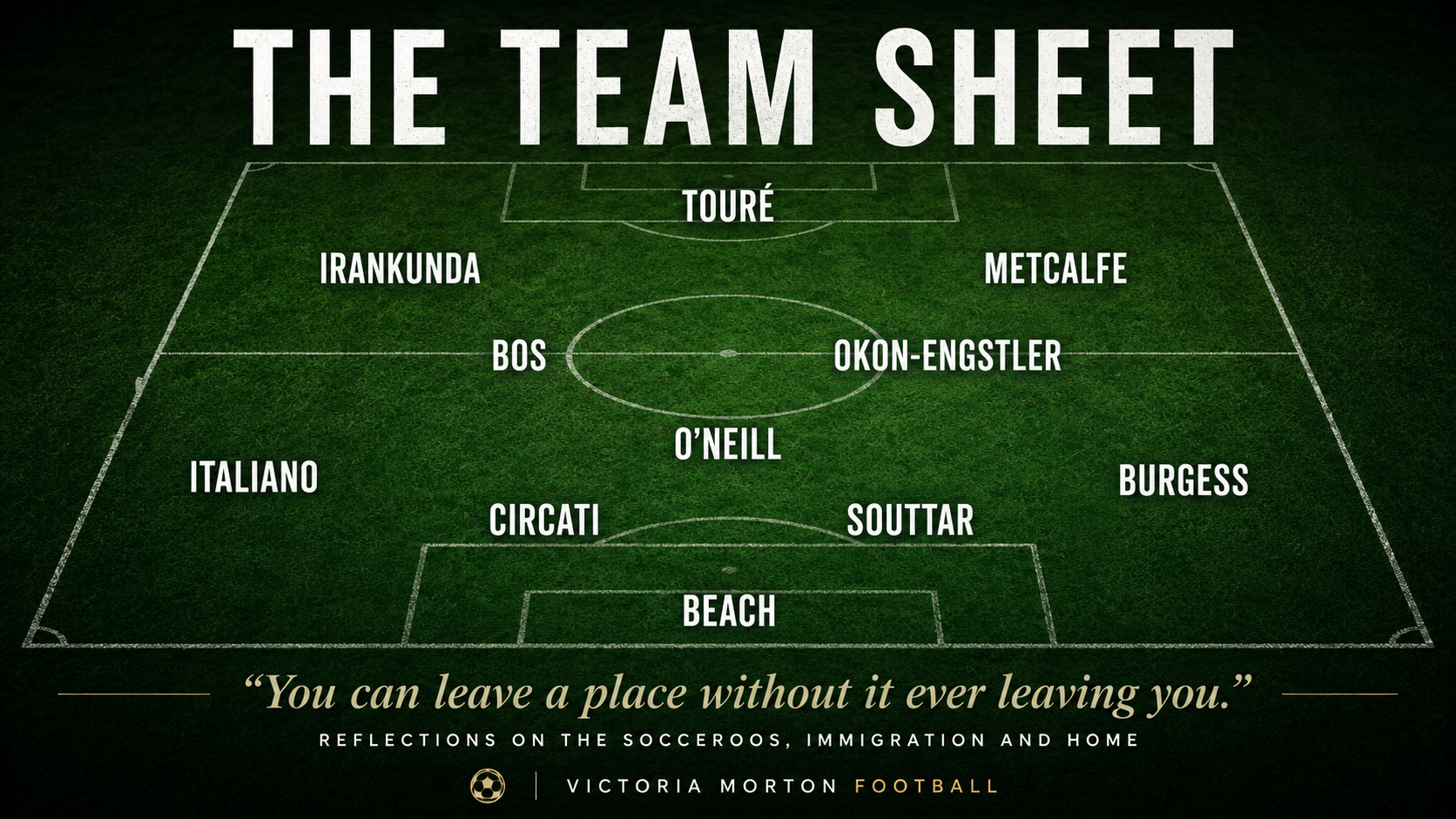
The Team Sheet. I Am, You Are, We Are Australian
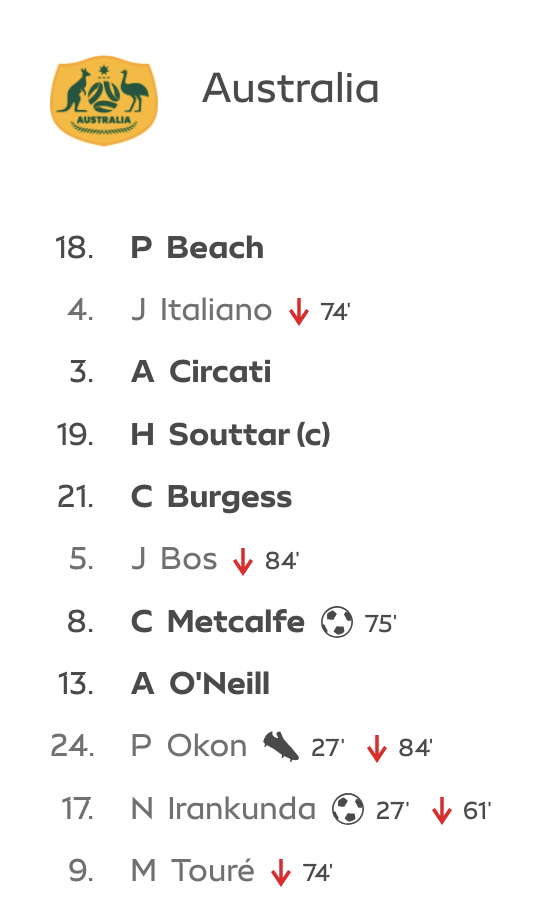
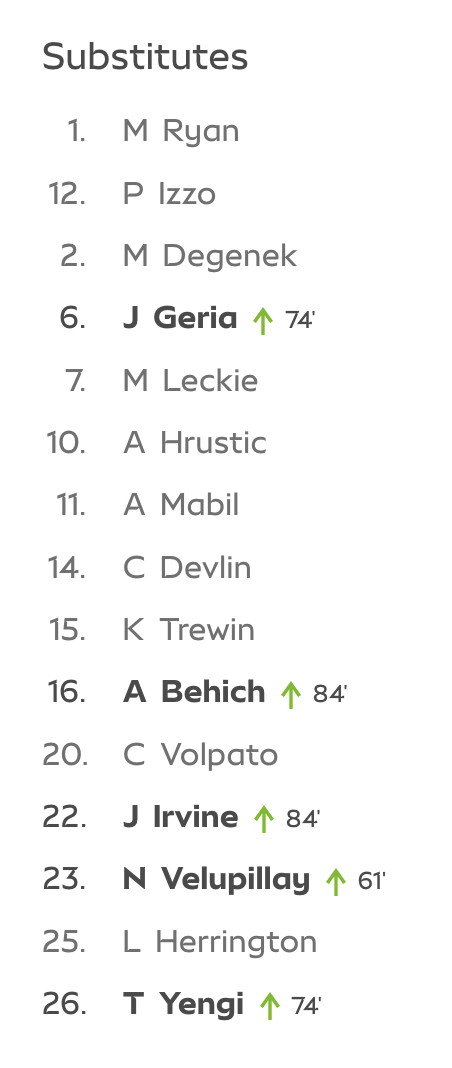
The Socceroos beat Turkey 2-0 on Sunday.
A good win.
A clean sheet.
Another step towards the knockout stages.
Like most people, I spent the match watching the football.
The goals.
The chances.
The result.
But afterwards I found myself looking at something else.
The team sheet.
Alessandro Circati.
Jacob Italiano.
Harry Souttar.
Paul Okon-Engstler.
Nestory Irankunda.
Mohamed Toure.
Nishan Velupillay.
Awer Mabil.
Miloš Degenek.
Names that tell stories.
Names that hint at journeys.
Names that come from all over the world.
And then I started wondering.
What exactly do we mean when we talk about Australians?
A Goal From A Refugee Camp
Nestory Irankunda scored against Turkey.
That sentence alone is remarkable.
Irankunda was born in a refugee camp in Tanzania after his family fled the civil war in Burundi.
Think about that for a moment.
A child born in a refugee camp.
Now scoring for Australia on the biggest stage in world football.
If that is not an Australian story, what is?
And he is not alone.
Mohamed Toure and Awer Mabil also spent time in refugee camps before eventually finding their way to Australia and the Socceroos.
Different journeys.
Different beginnings.
The same green and gold shirt.
Football Knew This Long Ago
Football has always been different in Australia.
Long before governments talked about multiculturalism.
Long before it became part of the national conversation.
Football clubs were already living it.
Italian clubs.
Greek clubs.
Croatian clubs.
Serbian clubs.
Macedonian clubs.
Dutch clubs.
Hungarian clubs.
Turkish clubs.
Clubs built by families looking for community, belonging and a place to call home.
For many migrants, the local football club was one of the first places they felt they belonged.
The Socceroos are, in many ways, the result of that history.
My Own Journey
Then I thought about myself.
I arrived in Australia from New Zealand in 1979.
I never left.
That makes me an immigrant.
Ken arrived from England.
Another immigrant.
Different countries.
Different childhoods.
Different journeys.
Yet somehow we both ended up here.
Building a life.
Raising a family.
Finding our place.
I still get shivers up my spine when I hear the haka.
I still remember Doubtless Bay.
Kari Kari Beach.
Matarangi.
The places of my childhood.
No snakes.
No shoes.
Learning to drive on the beach because Dad handed me the keys to a manual Holden and told me to teach myself.
Those memories are part of me.
They always will be.
You can leave a place without it ever leaving you.
Tasmania
Then there is Tasmania.
I have lived here for thirty-two years.
I love this island.
I care deeply about its football.
Its people.
Its future.
But Tasmanians have their own special category.
You can live here for decades and still be considered "from somewhere else".
There is a certain humour in that.
A uniquely Tasmanian badge that seems to require several generations of family history before full membership is granted.
Perhaps I will never quite qualify.
And that is okay.
Because belonging is not always about where you were born.
Sometimes it is about where you choose to invest your time, your energy and your heart.
What Happened After We Arrived
The older I get, the less interested I become in arguments about where people came from.
Most of us came from somewhere.
The question that interests me is what happened after we arrived.
Did we contribute?
Did we build something?
Did we raise families?
Did we become part of our communities?
Did we leave the place a little better than we found it?
Football has given me a front-row seat to that story.
For decades I have watched people from all over the world arrive in Australia and find a place in the game.
Not because they were Italian.
Or Scottish.
Or Croatian.
Or English.
Or New Zealanders.
But because they became part of something.
A club.
A team.
A community.
A shared purpose.
Perhaps that is what belonging really is.
Not where you started.
But what you chose to become part of.
Home
Australia is where I built my life.
It is where I met Ken.
It is where my children were born.
It is where I found my tribe through football.
And perhaps that is what struck me most about the Socceroos team sheet.
Nestory Irankunda was born in a refugee camp in Tanzania.
Alessandro Circati was born in Italy.
Harry Souttar was born in Scotland.
I was born in New Zealand.
Ken was born in England.
Different journeys.
Different beginnings.
Yet somehow we all ended up here.
Calling Australia home.
The Team Sheet
The Socceroos beat Turkey 2-0 on Sunday.
That was the result.
But the team sheet told a bigger story.
A story about journeys.
A story about belonging.
Long before any of our families arrived, others already called this place home.
A story about a country built by people who arrived from somewhere else.
Some arrived generations ago.
Some arrived recently.
Some came by choice.
Some came because they had no choice.
Yet somehow they all ended up wearing the same colours.
The same badge.
Representing the same country.
I still feel something when I hear the haka.
I know Ken still feels something when England plays.
Nestory Irankunda will always carry part of Burundi with him.
None of that makes us less Australian.
In fact, perhaps it is one of the things that makes Australia what it is.
A country built by people who brought pieces of other places with them.
So here's to all the immigrants.
Here's to all the refugees.
Here's to all the families who crossed oceans looking for opportunity, safety, adventure or simply a better life.
Here's to what Australia has given us.
And here's to what we have given Australia in return.
The Socceroos beat Turkey 2-0 on Sunday.
But the team sheet reminded me of something far more important.
Australia has never been one story.
It has always been millions.

So I Checked The Other Newspapers

After publishing this morning's blog, I started to wonder whether I was simply viewing the world through football-coloured glasses.
It's a fair question.
When you've spent much of your life around football, there is always the risk that everything starts to look like a football story.
Perhaps I was being unfair to the Mercury.
Perhaps Australia beating Turkey at the World Cup wasn't actually that big a deal.
Perhaps I had finally succumbed to football bias.
So I did what any responsible blogger would do.
I conducted a highly sophisticated media analysis.
By which I mean I looked at the front pages of other newspapers.

Sorry about the blurry screenshot - behind a paywall.
The Australian. See screenshot above.
The Sydney Morning Herald.
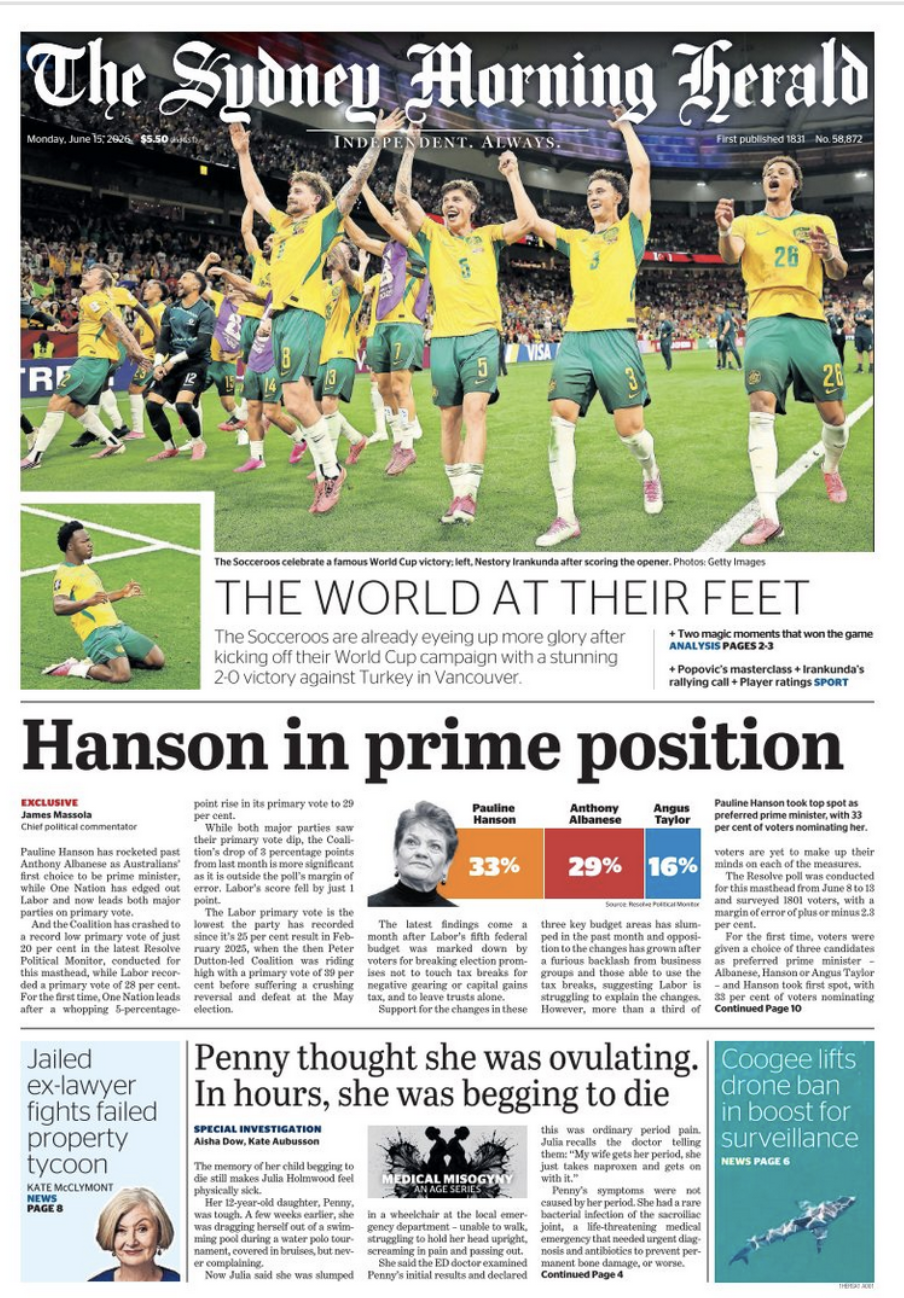
The Age.
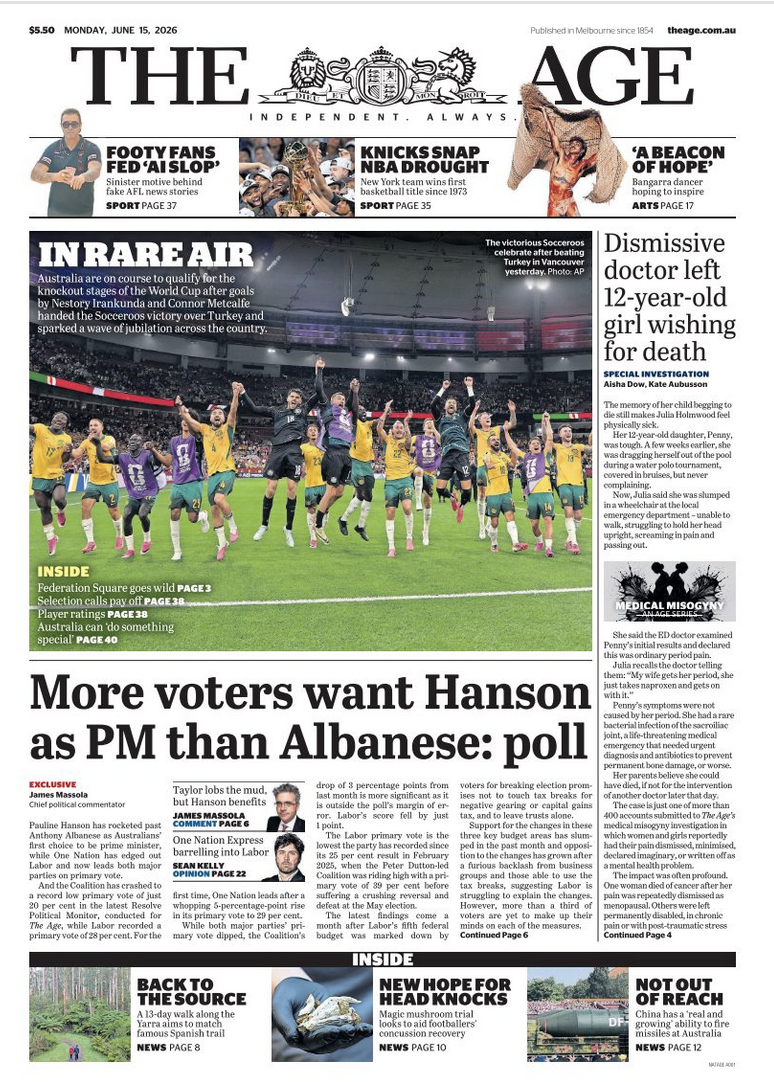
The Courier-Mail.

The Advertiser.

The West Australian. See screenshot above.
Even the Daily Telegraph.

Different cities.
Different editors.
Different audiences.
Different ownership groups.
Yet one after another they appeared to reach a remarkably similar conclusion.
Australia's World Cup victory was front-page news.
Some made it the dominant image.
Some made it the lead sporting story.
Some splashed it across half the page.
Some across almost all of it.
But they all seemed to agree on one thing.
The Socceroos had done something important.
Then there was Tasmania. By the way the Advocate and the Examiner weren’t interested either:
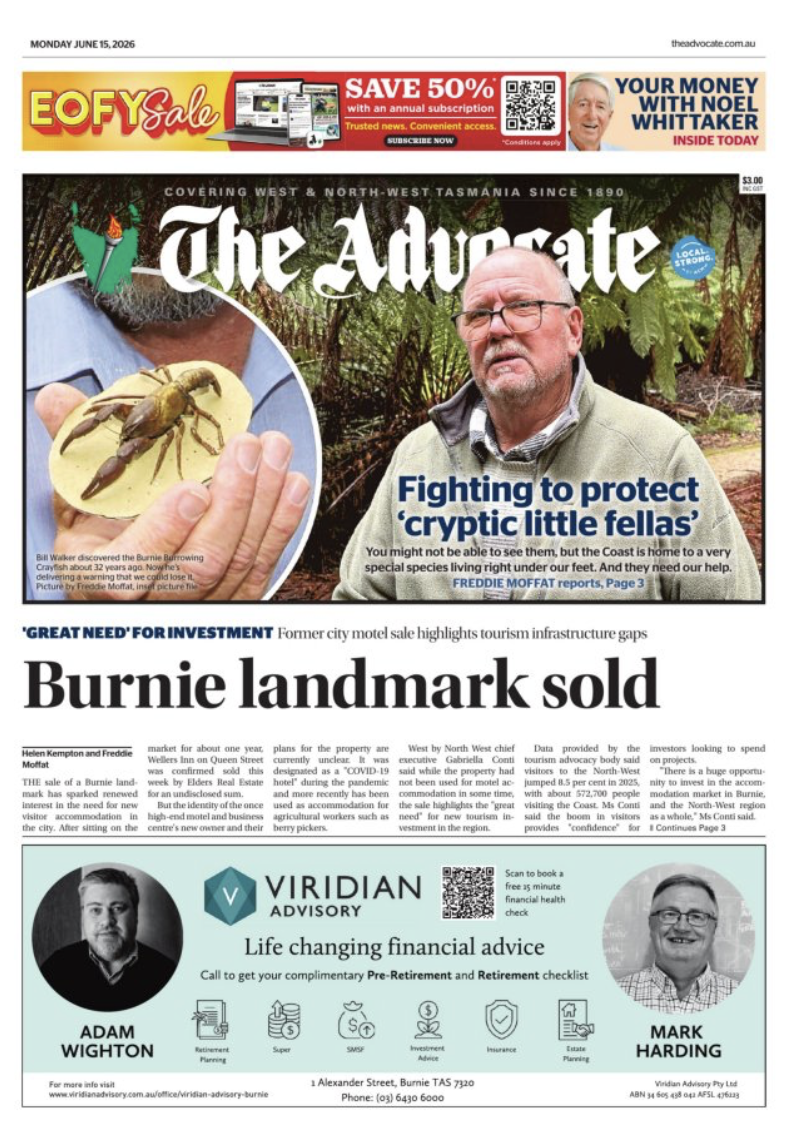

Now, before anyone accuses me of comparing apples with oranges, let's be clear.
Every newspaper makes different editorial decisions.
Not every paper will have the same front page.
Nor should they.
But when newspaper after newspaper independently arrives at the same conclusion and one paper arrives somewhere completely different, it is at least worth noticing.
The interesting thing isn't that The Australian put the Socceroos on the front page.
Or The Age.
Or The Sydney Morning Herald.
Or The Courier-Mail.
The interesting thing is that all of them did.
Without consulting each other.
Without a conspiracy.
Without a football summit.
Without a secret meeting in a dark room attended by Nestory Irankunda.
They simply looked at the same event and reached a similar conclusion.
Australia had won a World Cup match.
That mattered.
Perhaps that's why so many football people occasionally feel like they are living in a parallel universe.
We watch the biggest game in the world.
We see the biggest tournament in the world.
We see newspapers around the country treating it as a major national sporting moment.
Then we open our local paper and wonder if we're watching the same country.
Maybe I was wrong.
Maybe this isn't football bias.
Maybe it is simply perspective.
Or perhaps, as I suggested this morning, the Mercury really is waiting for me to make a cup of tea before handing me my next blog topic.
Honestly, sometimes this writing lark is just too easy.

Australia Wins A World Cup Match. Richmond Gets The Front Page
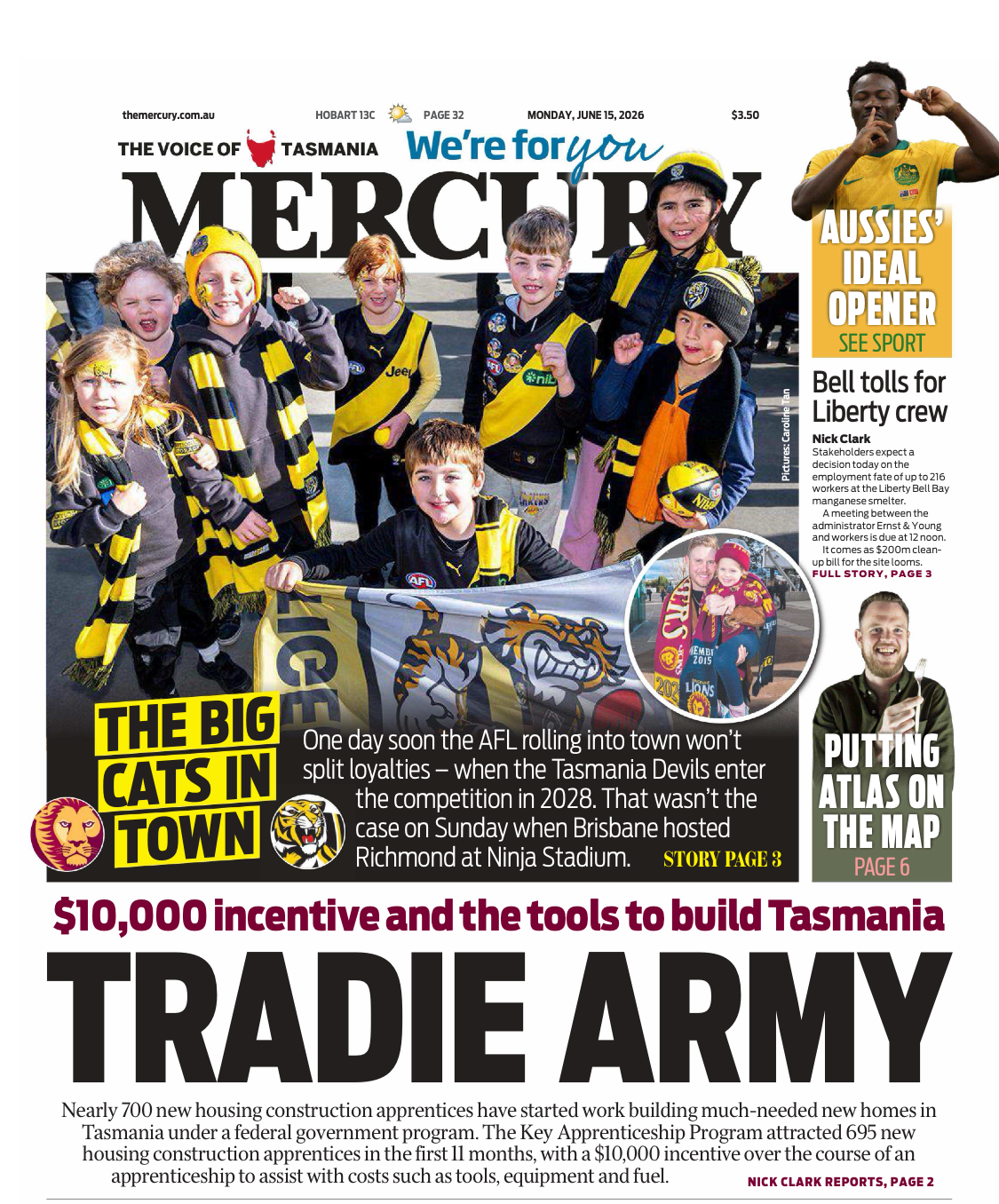
Photo: The Mercury 15 June 2026
It is almost as if the Mercury is waiting for me to wake up, make a cup of tea, and experience my first wave of indignation before I have even taken the first sip.
Every now and then the newspaper lands in my inbox and presents me with a gift.
This morning's gift was particularly thoughtful.
Australia had just won a FIFA World Cup match.
The biggest sporting tournament on the planet.
Billions of viewers.
A victory over Turkey, a nation of around 87 million people where football is not simply a sport but a national obsession.
And there on the front page sat a group of adorable AFL supporters.
Which, apparently, was the bigger sporting story.
Now before anyone starts sharpening their keyboards, let's be clear.
The kids on the front page look fantastic.
Good on them.
They look like they are having a wonderful day.
This is not a criticism of the children.
It is a criticism of the adults who looked at a World Cup victory and decided:
"Nah."
Editorial Priorities
To be fair, football wasn't completely absent.
Nestory Irankunda made the front page.
In a small teaser box tucked into the top corner.
Which is rather the point.
Australia wins a World Cup match.
Football gets a teaser.
Richmond gets the front page.
Editorial decisions are about priorities.
The Mercury showed us theirs.
The World Cup match kicked off at 1pm Australian time.
Nobody was caught by surprise.
There was no midnight deadline drama.
No unfortunate timing.
No excuses.
There was an entire afternoon and evening available to consider the sporting stories of the day.
Somewhere, presumably, a discussion took place.
Options were weighed.
Judgements were made.
And after careful consideration someone concluded:
"Yes, Australia winning a World Cup match is important."
"But have you seen these kids in Richmond scarves?"
What Exactly Does Football Need To Do?
Genuine question.
What exactly does football need to do to become the main story?
Win a World Cup?
Host a World Cup?
Colonise Mars?
Discover intelligent life?
Cure male pattern baldness?
Australia wins at the biggest sporting event on Earth and still finds itself playing support act to a discussion about AFL loyalties for a team that won't play a game until 2028.
If this was satire, people would say it was unrealistic.
Yet here we are.
The newspaper itself contains an article explaining that the FIFA World Cup is the most watched sporting event in the world.
The Mercury literally tells readers this.
Then places the match report on page 30.
Page 30.
At that point you almost have to admire the commitment.
The Question Nobody Wants To Ask
Nobody is suggesting the AFL story shouldn't exist.
Of course it should.
It's a perfectly reasonable story.
The question is why a World Cup victory was considered less important.
That's the bit I struggle with.
The Socceroos are representing Australia on the biggest sporting stage on the planet.
The World Cup attracts audiences measured in billions.
Football is played in every corner of Tasmania.
Thousands of Tasmanian kids pull on football boots every weekend.
Yet somehow the biggest football story in the world still feels like an afterthought.
The Tea Hadn't Even Cooled
By the time I had poured my tea, football had already been shuffled into the corner of the front page and onto page 30.
Which is impressive really.
Australia managed to win a World Cup match.
The Mercury somehow managed to make it feel like a supporting act.
Football supporters are often told we have a chip on our shoulder.
Perhaps.
But every now and then the evidence arrives wrapped neatly in newsprint.
The Mercury knows the World Cup matters.
It reported it.
It promoted it.
It even put Nestory on the front page.
Then it decided the main sporting image for Tasmania was AFL supporters attending a game.
And the newspaper landed in my inbox and seemed to say:
"Here you go Victoria."
"Have a whinge."
Honestly?
At that point the blog practically writes itself.
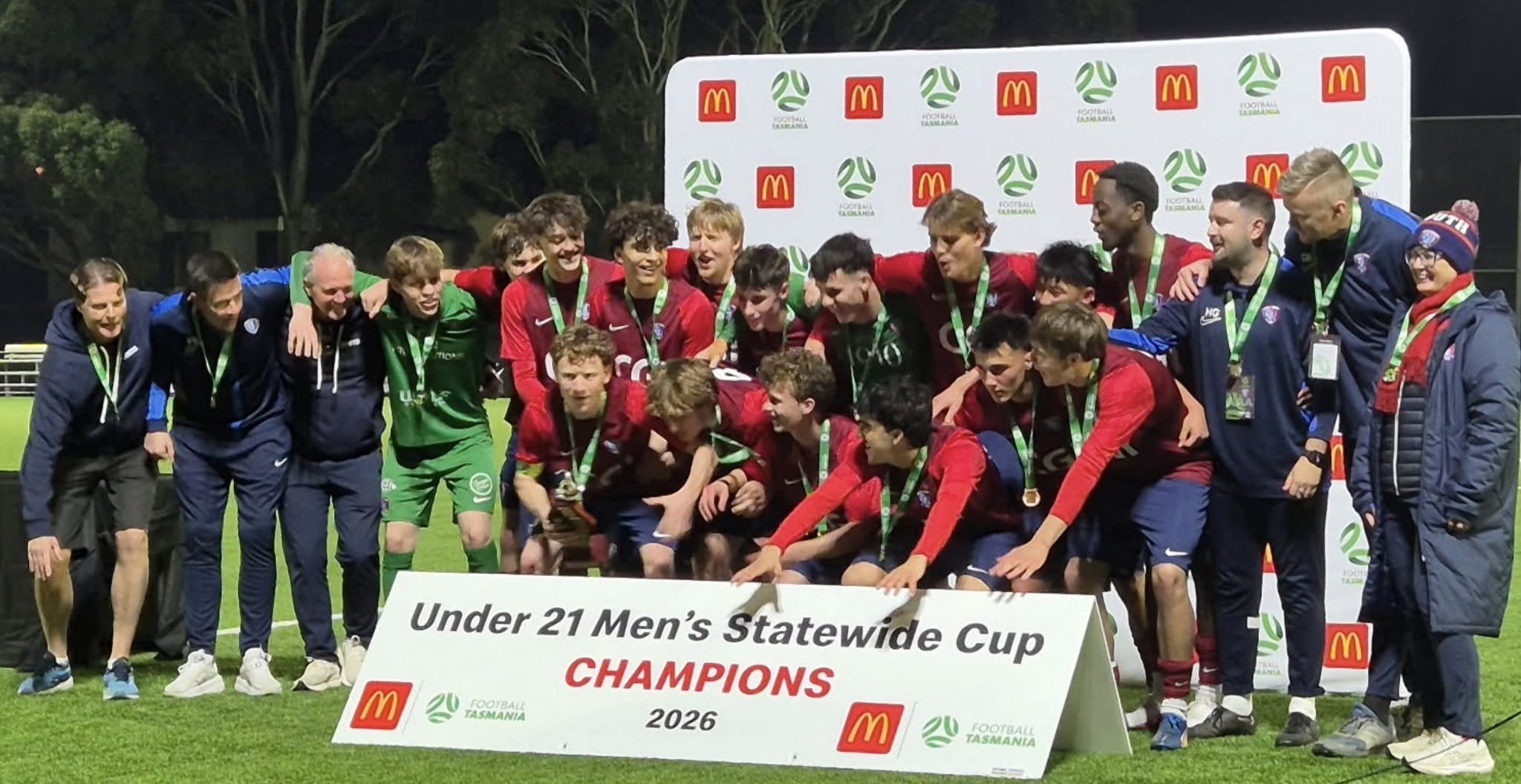
The Four Most Dangerous Words In Football
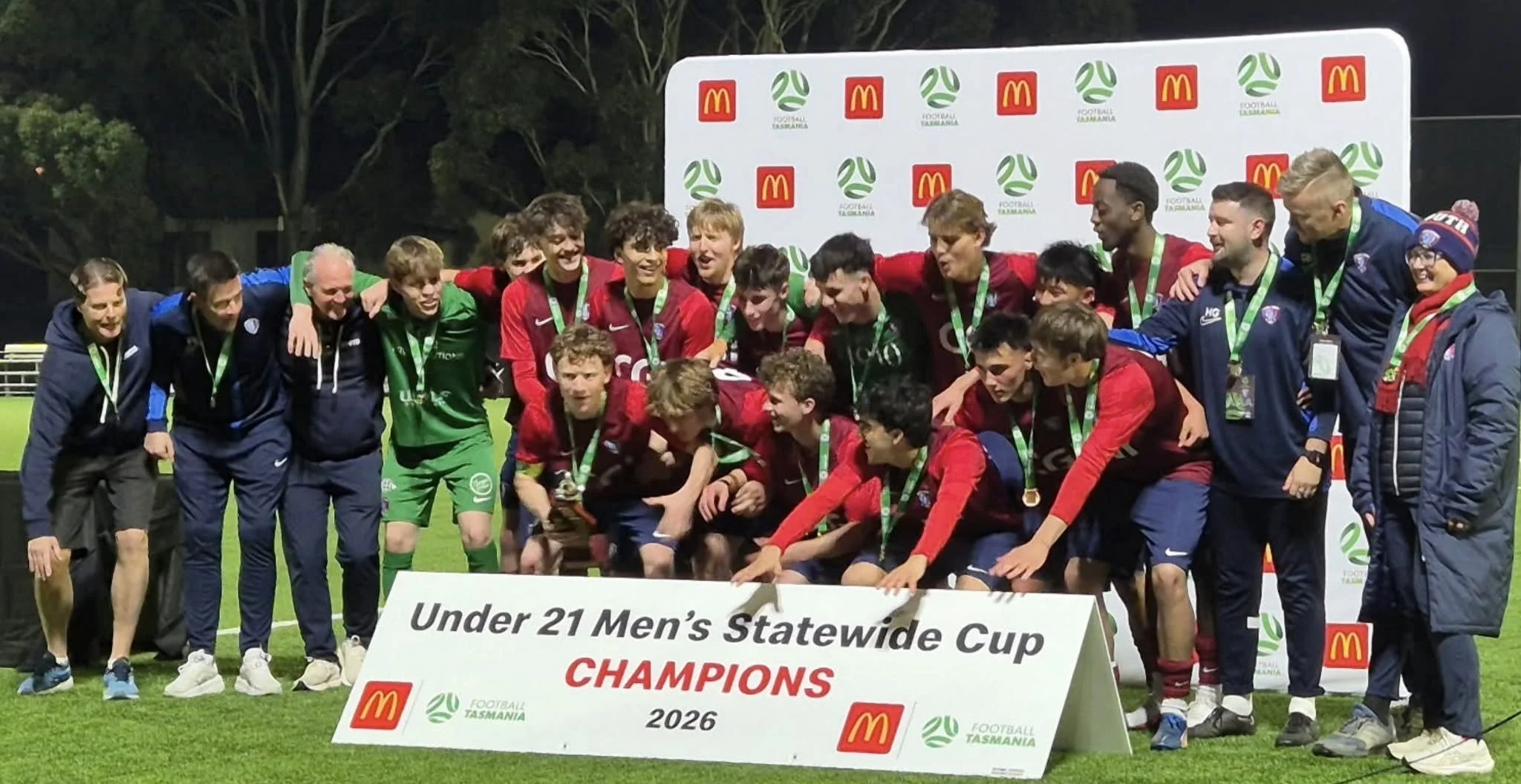
"They stacked their team”
I thought I was writing about a cup final.
Apparently I was writing about one of football's oldest sins.
Last week I did what I normally do.
A review of the latest NPL Under 21 results.
A preview of the weekend ahead.
It just happened to include South Hobart winning the Under 21 Statewide Cup Final against Kingborough.
Nothing unusual.
A cup final had been played.
A trophy had been won.
The competition was returning to league football.
Job done.
Or so I thought.
Within hours the comments section had exploded.
Questions were asked.
Accusations were made.
People demanded team sheets.
Others demanded explanations.
One person appeared ready to launch a judicial inquiry.
It was glorious.
I have written about governance.
I have written about Football Australia losing millions of dollars.
I have written about stadiums.
I have written about promotion and relegation.
I have written about board elections.
Yet somehow an Under 21 review generated more discussion than half of those topics combined.
Go figure.
Team Stacking: Football's Original Sin
There are few accusations in football more serious than:
"They stacked their team."
Football people are remarkably forgiving.
They will survive poor refereeing.
They will survive bad weather.
They will survive administrators.
They will survive VAR.
Somehow they even survive social media.
But accuse somebody of stacking a team and suddenly everybody becomes an expert witness.
Rules are quoted.
Eligibility regulations appear.
People who haven't watched an Under 21 game all season suddenly become specialists in player movement between squads.
Facebook comment sections become the modern equivalent of a Royal Commission.
Football people will forgive almost anything.
But they never forget team stacking.
The Predictable Part
Let's be honest.
South Hobart is my club.
South Hobart won the cup.
And yes, I probably should have known what was coming.
The comments quickly split into familiar camps.
One group was convinced South Hobart had committed football's equivalent of grand larceny.
Another pointed out every player selected was eligible under the competition rules.
A third group appeared determined to put the entire Under 21 competition itself on trial.
At one point I wasn't entirely sure whether we were discussing a cup final or rewriting the Football Tasmania competition regulations.
The Comments That Caught My Eye
Some comments questioned how many players regularly play Under 21 football.
Others argued the cup-winning side looked very different from some of the teams South Hobart had fielded during the league season.
Others responded that every player was age-eligible and selected entirely within the rules.
Some pointed out that clubs operate very different structures.
Kingborough, for example, do not have the same Championship and Championship One pathways available to them as some other NPL clubs.
Another argument was that if clubs develop players capable of playing senior football at 17, 18 or 19 years of age, surely that should be celebrated rather than criticised.
And somewhere in amongst all that, I realised something.
We weren't actually arguing about South Hobart.
We weren't even arguing about the cup final.
We were arguing about what the Under 21 competition is supposed to be.
What Exactly Is The Under 21 Competition?
Because I am not sure Tasmanian football has ever fully answered the question.
Is it a development competition?
Is it reserve grade football?
Is it a pathway competition?
Or is it all three at once?
Because depending on how you answer that question, you will probably land on a different side of the debate.
A development competition suggests a stable group of young players developing together over a season.
A reserve grade competition suggests movement between teams based on form, fitness, opportunity and pathway progression.
Those are not necessarily the same thing.
Yet we often talk about the Under 21 competition as though they are.
Perhaps that is why the same argument appears every season.
The Irony
The funny thing is that almost everybody in the comments was partly right.
Kingborough have been the benchmark league team this season.
The ladder says so.
South Hobart won the cup fairly.
The scoreline says so.
South Hobart's cup-winning side was different to some of the teams fielded during league matches.
That is also true.
Every player selected was eligible.
Also true.
All of those statements can exist at the same time.
Which is why people end up talking past each other.
Everyone thinks they are arguing about the same thing.
Often they are not.
The Working Group Question
What fascinated me most wasn't who was right.
It was how many people clearly have different views about the purpose of the competition.
Football Tasmania's Competitions Working Group is currently considering the future shape of competitions.
Promotion and relegation.
League structures.
Pathways.
Competition formats.
Perhaps the Under 21 competition should be part of that conversation.
Because if half the football community thinks it is a development competition and the other half thinks it is reserve grade football, then maybe we have uncovered something important.
Not a problem with clubs.
Not a problem with players.
But a lack of shared understanding about what the competition is actually trying to achieve.
The Real Story
In the end, South Hobart winning the Statewide Cup was not really the story.
The real story was what happened afterwards.
One cup final.
One Facebook post.
Lots of comments.
And suddenly Tasmanian football was debating youth development, player pathways, reserve grades, eligibility rules and the future of the Under 21 competition.
Which tells me one thing.
The real story wasn't who won the cup.
The real story is that nobody seems entirely sure what the Under 21 competition is supposed to be.
And perhaps that's a question worth answering.

The Chosen Ones? We Now Have The Terms Of Reference

A couple of weeks ago I wrote The Chosen Ones, examining Football Tasmania's newly announced Competitions Working Group and asking a fairly simple question:
How were the club representatives chosen?
If you missed that piece, you can read it here:
The Chosen Ones:
https://www.victoriamortonfootball.com.au/blog/the-chosen-ones
Since then, Football Tasmania CEO Tony Pignata has distributed the Working Group's Terms of Reference.
Most importantly, they provide far more detail than the original announcement.
And that detail changes the conversation.
New Information
One thing the Terms of Reference have clarified is that the distribution of information was broader than I originally understood.
I received the document directly through my CRJFA email address despite junior football sitting outside the scope of the Working Group.
That is worth noting because it suggests Football Tasmania recognises that associations and stakeholders beyond the NPL and WSL have an interest in where this process may eventually lead.
What Changed?
One of the more interesting aspects of this story is that the Terms of Reference appear significantly broader than the original announcement.
The initial email largely framed the Working Group around the NPL, WSL, senior football and youth football.
Many people would reasonably have assumed this was primarily an NPL and WSL discussion group.
The Terms of Reference tell a different story.
The Working Group may now consider:
NPL
WSL
Youth Competitions
Northern Championship and Northern League structures
Southern Championship and Southern League structures
Competition pathways and player development
Club sustainability and growth
Facilities and infrastructure
Governance and administration
Strategic planning
That is a much broader remit than many would have understood from the original announcement.
And that matters.
Because the broader the scope becomes, the more important representation becomes.
What Has Been Clarified?
The Terms of Reference answer several questions that were not addressed in the original communication.
Firstly, the Working Group is advisory.
It makes recommendations to Football Tasmania.
Football Tasmania makes the final decisions.
Secondly, the document outlines consultation processes, reporting arrangements, meeting procedures and review mechanisms.
That additional detail is welcome.
Thirdly, the Terms of Reference answer the question of how membership is determined.
The document states:
"Membership of the Working Group is determined by Football Tasmania and may be amended by Football Tasmania as required."
That is a significant clarification.
There was no election process outlined.
No nomination process.
No club vote.
Football Tasmania selected the membership.
That is entirely within Football Tasmania's rights.
But it is useful for everybody to understand how the group was formed.
Interestingly, the same clause also means the membership is not necessarily fixed.
If Football Tasmania determines additional perspectives are required, the Terms of Reference provide a mechanism for the group to be expanded or amended.
That may become important as discussions progress.
Why Representation Is Still Being Discussed
The release of the Terms of Reference answers some questions.
It also creates new ones.
If the Working Group was only discussing the NPL and WSL, the current composition might attract less attention.
But if it is considering the future direction of football competitions across Tasmania, questions around representation become more significant.
Among the four club representatives are four NPL clubs.
There are no female club representatives.
There are no representatives from standalone Championship clubs.
That does not mean the individuals selected are not capable contributors.
Far from it.
The question is not about the people.
The question is whether the structure captures enough different perspectives.
For a Working Group considering the future of both men's and women's football, the absence of a female club representative remains notable.
Football Tasmania has included female staff members within the Working Group and that should be acknowledged.
However, organisational representation and club representation are not necessarily the same thing.
The lived experience of building women's football inside clubs, retaining players, recruiting coaches and volunteers, fighting for facilities and creating pathways is a perspective that some may argue is missing from the club representation itself.
Similarly, if Southern Championship and Northern Championship structures are now within scope, it is understandable that some people have questioned why no standalone Championship club sits among the club representatives.
The challenges facing those clubs can be very different from those faced by NPL clubs.
These are legitimate governance questions rather than criticisms of any individual involved.
Junior Football Sits Outside The Scope
The Terms of Reference explicitly exclude junior football.
Football Tasmania's reasoning is straightforward.
Junior football is not administered directly by Football Tasmania.
It is administered by the regional associations.
As President of the CRJFA, I am comfortable with that position.
Junior football already has its own governance structures and representative mechanisms.
However, there is an interesting contradiction.
Whilst junior football sits outside the formal scope of the Working Group, Football Tasmania distributed the document directly to the regional associations.
I know that because I received it.
That suggests Football Tasmania recognises that associations have a legitimate interest in discussions around pathways, youth football and the broader football ecosystem.
And rightly so.
Because decisions made at senior and youth levels inevitably flow into junior football.
The Real Test
Ultimately, I am not convinced the success of this Working Group will be determined by who sits around the table.
It will be determined by what happens next.
The Terms of Reference repeatedly refer to consultation, engagement and feedback.
They specifically mention:
Club meetings
Surveys and questionnaires
Discussion papers
Information sessions
Direct stakeholder engagement
That creates an expectation.
Football people will reasonably expect opportunities to see proposals, provide feedback and influence outcomes before recommendations are finalised.
In my view, one simple step would help enormously.
Publish draft recommendations before they are finalised.
Let clubs discuss them.
Let stakeholders comment.
Let people identify unintended consequences before decisions are made.
If that happens, much of the current debate about representation may become less important.
Because clubs will know they still have a voice.
The first debate was about who got into the room.
The next debate may be whether the rest of football gets to see what comes out of it before the decisions are made.

Welcome To Football: A Survival Guide For Americans Attending The World Cup

The World Cup has arrived in North America.
The stadiums are ready.
The television networks are ready.
The sponsors are ready.
The fans are ready.
Unfortunately, many Americans are about to discover that football supporters speak a language entirely of their own.
Not English.
Not Spanish.
Not French.
Football.
And frankly, it makes very little sense.
As a public service to our American friends, I have prepared this survival guide before they accidentally find themselves standing next to a group of football supporters discussing false nines, nutmegs and squeaky bum time.
First Things First
A few important things to know.
Football is played with your feet.
The game lasts 90 minutes.
A score of 0-0 is perfectly acceptable.
There are no timeouts.
Except hydration breaks.
Which cynics might describe as football's version of a television timeout.
FIFA insists they are for player welfare.
The advertising breaks are simply there by accident.
And if your team finishes last, you don't receive the best young player in the country as a reward.
You get relegated.
Welcome to football.
Football Dictionary For Beginners
Mexican Wave
A Mexican Wave is not a Mexican person waving while being escorted across the border by immigration officials.
It is thousands of football supporters from different countries, cultures and backgrounds all doing exactly the same thing at exactly the same time.
Which, now that I think about it, may be one of the least American things you'll see at the World Cup.
Nutmeg
A nutmeg is not a spice.
It occurs when one player passes the ball through an opponent's legs.
The victim then spends the next several minutes pretending it didn't happen.
Recovery times vary.
Panenka
A Panenka is not a pastry.
It is named after Czech footballer Antonín Panenka, who decided the best way to take a penalty in a major international final was to gently chip it straight down the middle.
It worked.
Every footballer since has thought:
"I could do that."
Most cannot.
Worldie
A worldie is not a planet.
It is a spectacular goal.
The sort of goal that causes commentators to lose all professionalism and supporters to spill their drinks.
Top Bins
The top corner of the goal.
Why is it called a bin?
Nobody knows.
Football supporters simply accepted this one day and moved on.
Clean Sheet
A clean sheet has nothing to do with laundry.
It means your team hasn't conceded a goal.
Goalkeepers celebrate them.
Strikers ruin them.
Parents post about them on Facebook.
Tactical Terms That Sound Completely Made Up
False 9
Football's greatest practical joke.
A false nine is a striker who isn't really a striker.
Football spent more than a century assigning numbers to positions.
Then immediately started ignoring them.
Sweeper Keeper
A goalkeeper who has decided goalkeeping is beneath them and would rather play midfield.
Route One
Football's simplest tactic.
Kick the ball as far as possible.
Run after it.
See what happens.
Parking The Bus
A defensive tactic popularised by José Mourinho.
Eleven players behind the ball.
No attacking.
No fun.
No apologies.
The Channels
Every coach wants players to run into the channels.
Nobody can point to them on a map.
Football's equivalent of Atlantis.
Important Football Medical Terminology
Squeaky Bum Time
Possibly the greatest phrase ever invented in sport.
Coined by Sir Alex Ferguson.
It describes the final nervous minutes of an important match.
Symptoms include:
sweating
pacing
shouting at televisions
questioning life choices
believing referees are personally targeting your club
No known cure exists.
Animals Commonly Found In Football
Fox In The Box
A striker who somehow always appears exactly where the ball lands.
Usually standing two metres from goal.
Usually scoring.
Usually irritating everybody else.
Advanced Football Vocabulary
Bottle It
To lose your nerve under pressure.
Clanger
A bad mistake.
Howler
A truly spectacular mistake.
Football has developed a surprisingly sophisticated grading system for disasters.
Derby
A rivalry match between local clubs.
Not a horse race.
This point cannot be stressed enough.
Modern Football Vocabulary
VAR
Video Assistant Referee.
Introduced to remove controversy from football.
This has not been entirely successful.
Millions of supporters now spend several minutes staring at giant screens while somebody draws coloured lines on body parts previously unknown to science.
Football remains unconvinced.
Expected Goals (xG)
A statistical measurement designed to prove your team should have won.
Particularly useful after losing.
The Hardest Thing To Explain
Offside
Nobody fully understands it.
Players don't.
Parents don't.
Commentators don't.
Referees mostly do.
VAR definitely doesn't.
Yet somehow football has survived for more than 150 years.
Advanced Tasmanian Football Terminology
Americans should not attempt this section without adult supervision.
Pathway
A route discussed at conferences, forums and workshops.
Occasionally sighted in the wild.
Technical Director
The person responsible for explaining the pathway.
Strategic Plan
A document proving the pathway exists.
Working Group
The natural predator of immediate action.
Consultation
A process where football people explain why they disagree with the strategic plan.
Stakeholder
Anybody likely to disagree with you.
Content
A mysterious substance currently valued at approximately $130 million in Tasmania.
Football Family
People who voluntarily spend every weekend standing in the rain before claiming they had a wonderful time.
Football Translation Guide
One final lesson for our American visitors.
Football supporters rarely say exactly what they mean.
To help, here is a handy translation guide.
"We were unlucky."
Translation:
We were terrible.
"The referee had a shocker."
Translation:
We lost.
"The referee was excellent."
Translation:
We won.
"The club needs to consult."
Translation:
The decision wasn't what I wanted.
"It's about the players."
Translation:
This is definitely not about the players.
"We're rebuilding."
Translation:
This could take a while.
"It's a long-term project."
Translation:
This could take even longer.
"We're focusing on development."
Translation:
We're probably not winning anything this year.
"The process was robust."
Translation:
The decision has already been made.
"There was extensive stakeholder engagement."
Translation:
Several angry emails were received.
"The football department is aligned."
Translation:
Check back next week.
"It's not about the money."
Translation:
It's about the money.
"I'm not upset."
Translation:
Extremely upset.
"I'm not naming names."
Translation:
Names are about to be named.
"With respect..."
Translation:
Something disrespectful is coming.
Football's Most Dangerous Phrases
Football clubs have developed a language all of their own.
To the untrained observer, these statements sound reassuring.
Experienced football supporters know better.
"The coach has the full support of the board."
Translation:
Start checking the job vacancies.
Football's equivalent of receiving a text message that begins with:
"Can we have a chat?"
"There are no plans for change."
Translation:
There are plans for change.
"We won't comment on speculation."
Translation:
The speculation is probably correct.
"A decision will be made at the appropriate time."
Translation:
The decision has already been made.
"The club remains united."
Translation:
The club is currently anything but united.
"We are undertaking a review."
Translation:
Somebody is in trouble.
"We thank them for their contribution."
Translation:
They're definitely leaving.
"The transition has been mutually agreed."
Translation:
It was not mutually agreed.
"Following extensive consultation..."
Translation:
We listened carefully and then did what we were going to do anyway.
"The board is fully committed to transparency."
Translation:
Good luck obtaining any information.
Things Americans May Find Particularly Distressing
Promotion And Relegation
Let's say your team finishes last.
In American sport, you might receive the first draft pick.
In football, you get kicked out.
Your best players leave.
Your revenue disappears.
Your supporters spend six months staring sadly into the distance.
Football people call this character building.
Draws
A game can finish level.
Nobody needs to win.
Nobody receives a participation trophy.
Everybody simply accepts that neither side was better.
This can be deeply unsettling for first-time observers.
Final Advice
Before attending your first World Cup match, please remember:
A nutmeg is not a spice.
A Panenka is not a pastry.
A derby is not a horse race.
A fox in the box is not a wildlife incident.
A sweeper keeper is not a janitor.
Parking the bus is not a transport strategy.
Squeaky bum time is not a medical condition.
VAR is unlikely to improve your mood.
Nobody actually knows where the channels are.
And if a false nine nutmegs a centre back before scoring a worldie into the top bin during squeaky bum time, while the opposition park the bus to protect a clean sheet in a local derby after a controversial VAR decision...
Congratulations.
You now speak football.
And if somebody starts explaining the pathway...
Congratulations.
You've accidentally joined a football committee.
Seatgate Solved: Football Never Got The Email
Article from the Mercury
A few months ago I asked a simple question.
Why had more than 1,500 seats removed from UTAS Stadium been distributed to 15 clubs, yet not a single football club appeared on the list?
At the time, I genuinely did not know the answer.
The government's announcement said every club that applied received seats.
That sounded fair.
But it raised another question.
How did clubs know the seats were available?
That became Seatgate.
In my first article I asked whether football clubs knew.
In my second article, following correspondence from Josh Perry of Rosevears and Jo Palmer's office, we learned that clubs had applied through Stadiums Tasmania.
But one question remained.
How were clubs told?
I now have the answer. I wrote to Stadiums Tasmania.
And to Stadiums Tasmania's credit, they provided it promptly and openly when asked.
The response was simple.
Stadiums Tasmania contacted AFL Tasmania and asked it to seek expressions of interest from NTFA clubs.
Some bowls clubs also contacted UTAS Stadium directly.
And with that, the mystery was solved.
Football clubs did not fail to apply.
Football clubs were never part of the communication process used to distribute the seats.
The Outcome Was Predictable
Once Stadiums Tasmania chose AFL Tasmania as the communication pathway, the outcome was largely predetermined.
Of course AFL clubs applied.
They were the clubs that were told.
Of course football clubs didn't apply.
They weren't.
The question was never whether football clubs missed an opportunity.
The question was whether they were ever given one.
Now we know the answer.
Community Sport Or One Sporting Code?
What makes this particularly curious is the timing.
Over recent months we have heard repeated discussions about activating UTAS Stadium.
We have heard about NRL content.
We have heard about A-League content.
We have heard about attracting more events, more audiences and more activity to publicly funded sporting infrastructure.
The message has been clear.
Make better use of our sporting assets.
Engage the community.
Create opportunities.
Which makes the seating story all the more interesting.
Because when a simple opportunity arose to support grassroots sport, the distribution process was limited to a single sporting code.
Not community sport.
One sporting code.
That is what Stadiums Tasmania has now confirmed.
If the objective was helping community sport, there were football clubs, cricket clubs, rugby clubs, hockey clubs, netball clubs and many others across northern Tasmania who may have welcomed the opportunity to put their hand up.
Maybe every seat would still have gone to AFL clubs.
Maybe the outcome would have been exactly the same.
But at least every sporting organisation would have known the opportunity existed.
After all, community sport is full of spectators.
Parents.
Grandparents.
Volunteers.
Supporters.
And unless I have fundamentally misunderstood the purpose of stadium seating, we all have bums that sit on seats.
A Curious Decision
This is not criticism of AFL clubs.
Good luck to them.
They were told about an opportunity and responded.
Nor is it criticism of the clubs that received the seats.
Most community clubs would welcome infrastructure improvements.
But it does raise a legitimate question.
If the objective was helping community sport, why was the opportunity distributed through one sporting code rather than across the broader sporting community?
A simple email to sporting organisations.
A short expression of interest process.
A notice through councils.
Any of those approaches would have ensured clubs from all sports at least knew the seats existed.
Maybe the outcome would have been exactly the same.
Maybe every seat would still have gone to AFL clubs.
But at least every sporting organisation would have had the opportunity to put its hand up.
The Answer
For me, that is the real lesson from Seatgate.
Football did not miss out because it failed to act.
Football missed out because it was never part of the process.
And that distinction matters.
Because once only one sporting network receives the invitation, the outcome stops being surprising.
It becomes inevitable.
Seatgate started with a question.
It ends with an answer.
And the answer is surprisingly simple.
Football never got the email.
The Photograph, The Mask And The Microphone
My recent article about Tony Pignata's World Cup photograph generated plenty of discussion.
Judging by the readership numbers, plenty of you read it too.
Some agreed.
Some disagreed.
Which is exactly how it should be.
One person asked why Tony shouldn't go.
Another questioned Morton Soccer School.
Another appeared to do so from behind what looked very much like an anonymous profile.
And that got me thinking.
Not about Tony.
Not about MSS.
But about communication.
A Post-Menopausal Woman Who Doesn't Give A Shit
At this point in my life, I am probably the most dangerous thing in football.
A post-menopausal woman who doesn't give a shit.
I am no longer looking for a position.
I am no longer looking for approval.
I am no longer trying to climb any football ladder.
If people like what I write, wonderful.
If they don't, that's fine too.
Nobody is forcing anyone to read it.
There are plenty of other things on the internet.
But what fascinates me is not the disagreement.
It is how people choose to disagree.
The Old Days
There was a time when if you wanted to tell somebody they were wrong, you had to do it in person.
You walked up to them.
You looked them in the eye.
You had a conversation.
I often think about one of my first jobs at the Intercontinental Hotel in Auckland.
We had one of those old-fashioned telephone switchboards with plugs and cords connecting calls.
It took weeks of training to learn how to operate it properly.
Weeks.
Today, a person can create a social media profile in minutes and broadcast their opinion to hundreds or thousands of people with the touch of a button.
The world has changed.
Then came letters.
Then telegrams.
Then telephones.
Then email.
And now social media has handed everyone a microphone.
Every opinion.
Every frustration.
Every grievance.
Every thought.
Instantly published to the world.
In many ways, that is a wonderful thing.
Because football desperately needs more voices.
Speak Up
For years football has suffered from the opposite problem.
Too few people speaking.
Too few people being asked.
Too few people being heard.
Too many decisions made in small rooms by small groups.
Football needs more communication.
Football needs more transparency.
Football needs more people prepared to challenge ideas.
Football needs more people prepared to ask difficult questions.
Football needs more voices.
Not fewer.
Speak up.
Be heard.
And if nobody is listening, ask to be heard.
Because football belongs to all of us, not just those holding positions around boardroom tables.
The Mask
But there is a difference between having a voice and hiding behind a mask.
One comment on my article appeared to come from a profile that gave no indication of who was behind it.
Perhaps it was genuine.
Perhaps it wasn't.
I honestly don't know.
But it reminded me of something.
Social media has given everybody a microphone.
Some people have decided they would like a mask to go with it.
That is a relatively new phenomenon.
And I'm not entirely convinced it has improved the quality of the conversation.
A Quick Word On MSS
The anonymous commenter also mentioned Morton Soccer School.
That's their right.
But let's keep it simple.
Nobody is forced to attend Morton Soccer School.
Nobody is required to pay Morton Soccer School.
Families choose whether the programs, coaching and environment are right for their children.
Some stay.
Some leave.
Some never join.
That's how choice works.
And that's how it should work.
Accountability
One advantage of writing under your own name is accountability.
People know who I am.
People know where to find me.
People know my history.
People know my involvement in football.
If I write something people disagree with, they know exactly who wrote it.
If I get something wrong, I own it.
That seems a healthier model than anonymous drive-by criticism.
The Real Issue
The more I thought about the comments, the more I realised something.
The future of football probably depends on more people speaking up.
Not fewer.
More volunteers sharing ideas.
More parents asking questions.
More coaches contributing.
More players having a voice.
More transparency.
More communication.
More debate.
The challenge is doing it in a way that encourages accountability rather than anonymity.
Because football is ultimately a community.
And communities work best when people are prepared to stand behind their views.
Tony did.
I did.
The anonymous commenter did not.
And perhaps that tells us something.
Not about Tony.
Not about Morton Soccer School.
But about modern football itself.
Anyway, enough from me.
Mexico and South Africa are about to kick off and, unlike some people, I'll be watching this World Cup from Tasmania.
Which is exactly where I'm happy to be.
Enjoy the football everyone.
I’ll Help Tony
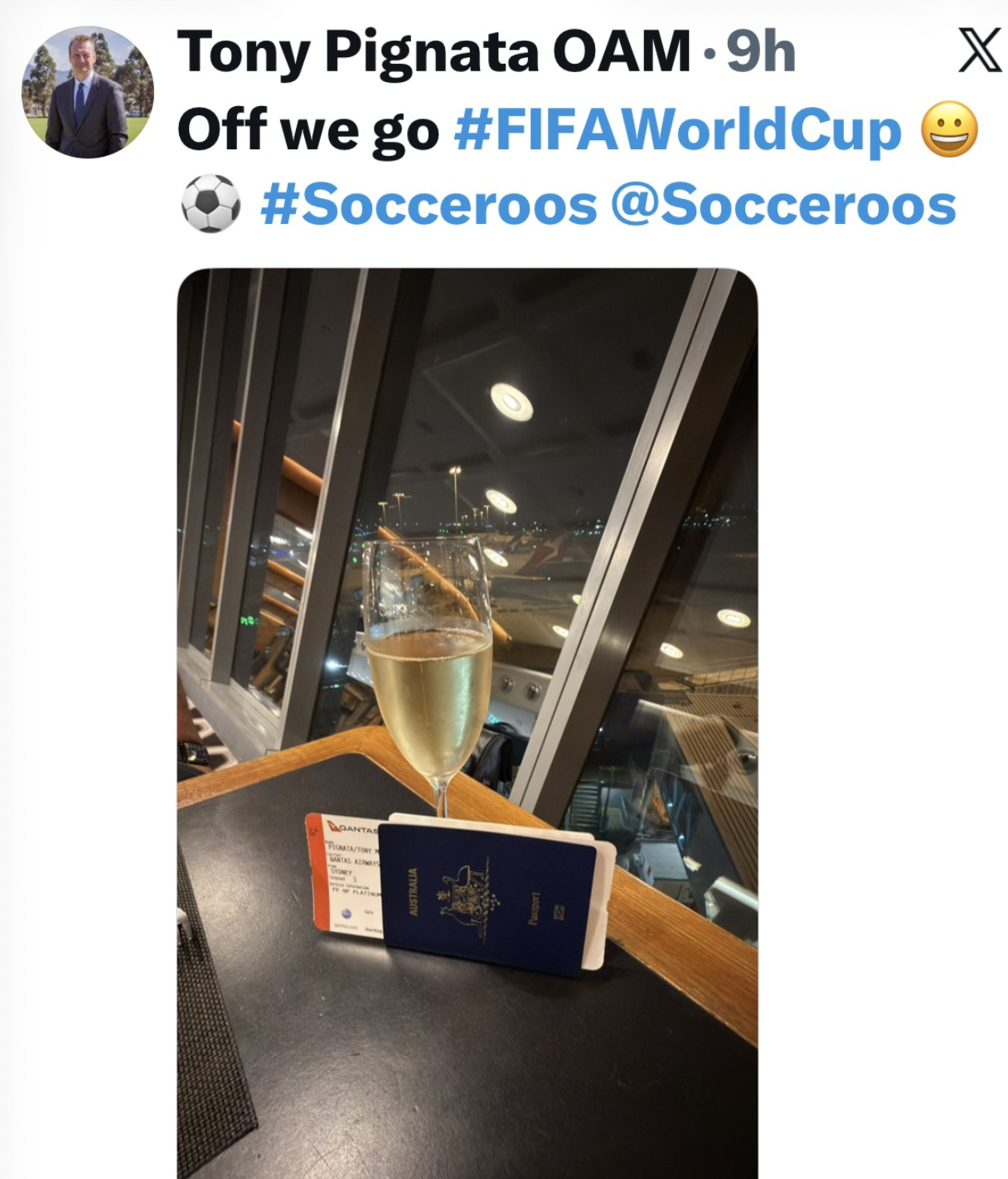
Photo courtesy of Tony Pignata OAM Twitter feed - yes I still call it Twitter
Somebody Had To Go
I want to help Tony Pignata.
Because football leadership can be a lonely burden.
While thousands of volunteers across Australia spend their weekends setting up grounds, running canteens, coaching children, refereeing games and sitting through committee meetings, somebody has to make the sacrifice of attending the FIFA World Cup.
Thankfully, Tony was prepared to put his hand up.
And, in a selfless act of public service, he was kind enough to share the moment with the rest of us.
Passport.
Boarding pass.
Glass of champagne.
Off we go.
The perfect football leadership starter pack.
Now before anyone reaches for the keyboard, let me be clear.
This is not about whether Tony should go.
For all I know, Tony is funding the trip himself.
He may be taking annual leave.
He may simply be a football fan heading to one of the great sporting events on the planet.
Good luck to him.
Most of us would go too.
The issue isn't the trip.
The issue is the photograph.
The View From The Lounge
What makes perfect sense in an airport lounge can look very different from the touchline of a suburban football ground.
Excitement.
Anticipation.
A once-in-four-years football pilgrimage.
Seen from one angle, it is completely understandable.
Seen from another, it says something else entirely.
Because photographs tell stories.
Often stories the person posting them never intended.
The View From The Touchline
I'll be honest.
The photograph probably made me a little envious.
This week, while Tony was looking forward to the World Cup, I was discussing which coaches would cover multiple venues, responding to emails, and speaking with the CRJFA ground contractor about whether the nets and corner flags had arrived for West Hobart Oval.
Not quite the same level of anticipation.
No boarding pass.
No airport lounge.
No champagne.
Just the glamorous reality of grassroots football administration.
I briefly considered posting a photograph of a box of pegs, a bundle of corner flags and a CRJFA fixture spreadsheet.
Sadly, I doubted it would receive the same engagement.
But perhaps that's why the photograph struck a nerve.
Because for every person heading to a World Cup, there are hundreds quietly doing the work that allows football to function every weekend.
The game needs both.
The challenge for football leaders is remembering which group they represent.
While one group is posting boarding passes, another group is posting volunteer rosters.
While one group is posting champagne glasses, another group is posting requests for referees.
While one group is heading to the World Cup, another group is trying to work out how to keep football affordable for families.
While one group is checking departure times, another group is checking whether enough parents have volunteered for the canteen.
And that is where the irony lives.
Must Be Nice
Football leaders often speak passionately about grassroots football.
They talk about volunteers being the lifeblood of the game.
They talk about listening.
They talk about understanding the challenges clubs face.
Then every now and then a photograph appears that makes ordinary football people stop scrolling and think:
"Must be nice."
Not because they begrudge someone a trip.
Not because they don't love football themselves.
But because the gap between the people making decisions and the people keeping the game alive suddenly feels a little more visible.
The irony, of course, is that nobody asked Tony to post the photograph.
Nobody demanded proof that he was attending the World Cup.
Nobody required a passport, boarding pass and champagne glass to be arranged neatly for social media.
That was a choice.
Which is why the photograph is so fascinating.
It tells us not just where Tony was going.
It tells us what he thought was worth sharing.
Not Wrong. Just Tone Deaf.
The photo wasn't offensive.
The photo wasn't scandalous.
The photo wasn't even wrong.
It was simply tone deaf.
Leadership is not just about what you do.
Leadership is understanding how things look.
The best leaders have an instinct for that.
They know when to celebrate.
They know when to stay quiet.
And they know that not every special football experience needs to be shared.
Particularly when so many of the people you represent are dealing with a very different reality.
Where Football Lives
Football is not found in airport lounges.
It is found on wet Saturday mornings.
It is found in canteens.
It is found in committee rooms.
It is found in volunteer working bees.
It is found in parents driving hundreds of kilometres so their children can play the game they love.
It is found in coaches setting alarms before sunrise.
It is found in volunteers locking the gates long after everyone else has gone home.
The game does not survive because a handful of people get to attend the World Cup.
It survives because thousands of people never do.
They are the volunteers opening the gates, putting up the nets, washing the strips, organising the fixtures, chasing referees and locking up long after everyone else has gone home.
That's where football lives.
And perhaps that's why the photograph felt so tone deaf.
Not because Tony is going to the World Cup.
Not because he posted a photograph.
But because at a time when so many people are doing the unglamorous work of keeping football alive, the image felt disconnected from the reality most football people experience.
The further football leaders travel from the touchline, the more important it becomes to remember where the game actually lives.
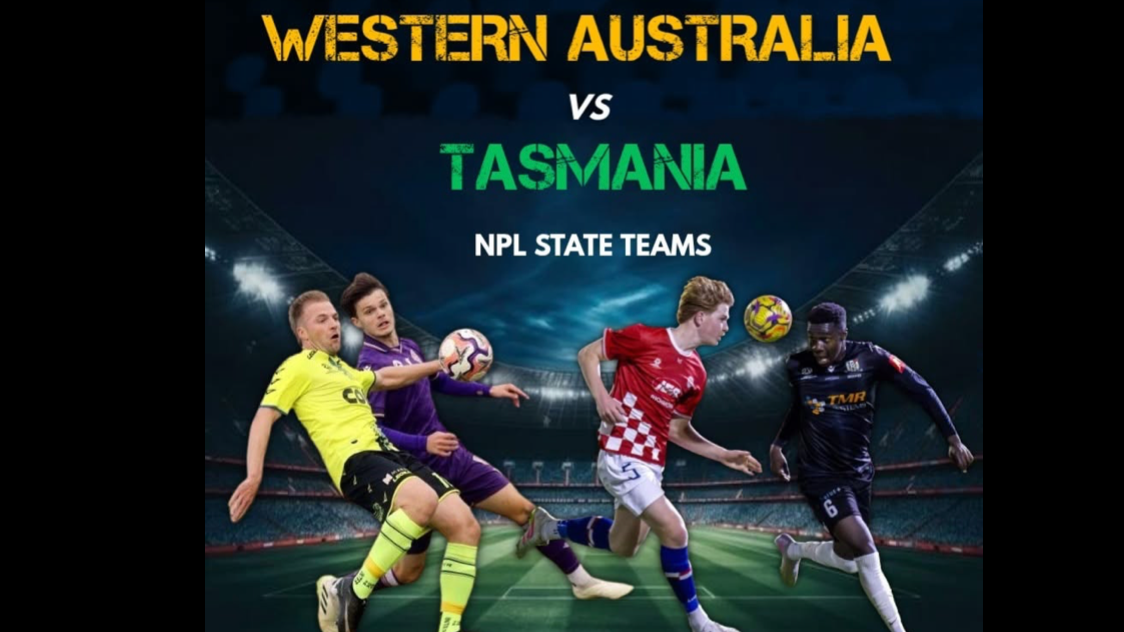
Representative Football Is Back. But Why?
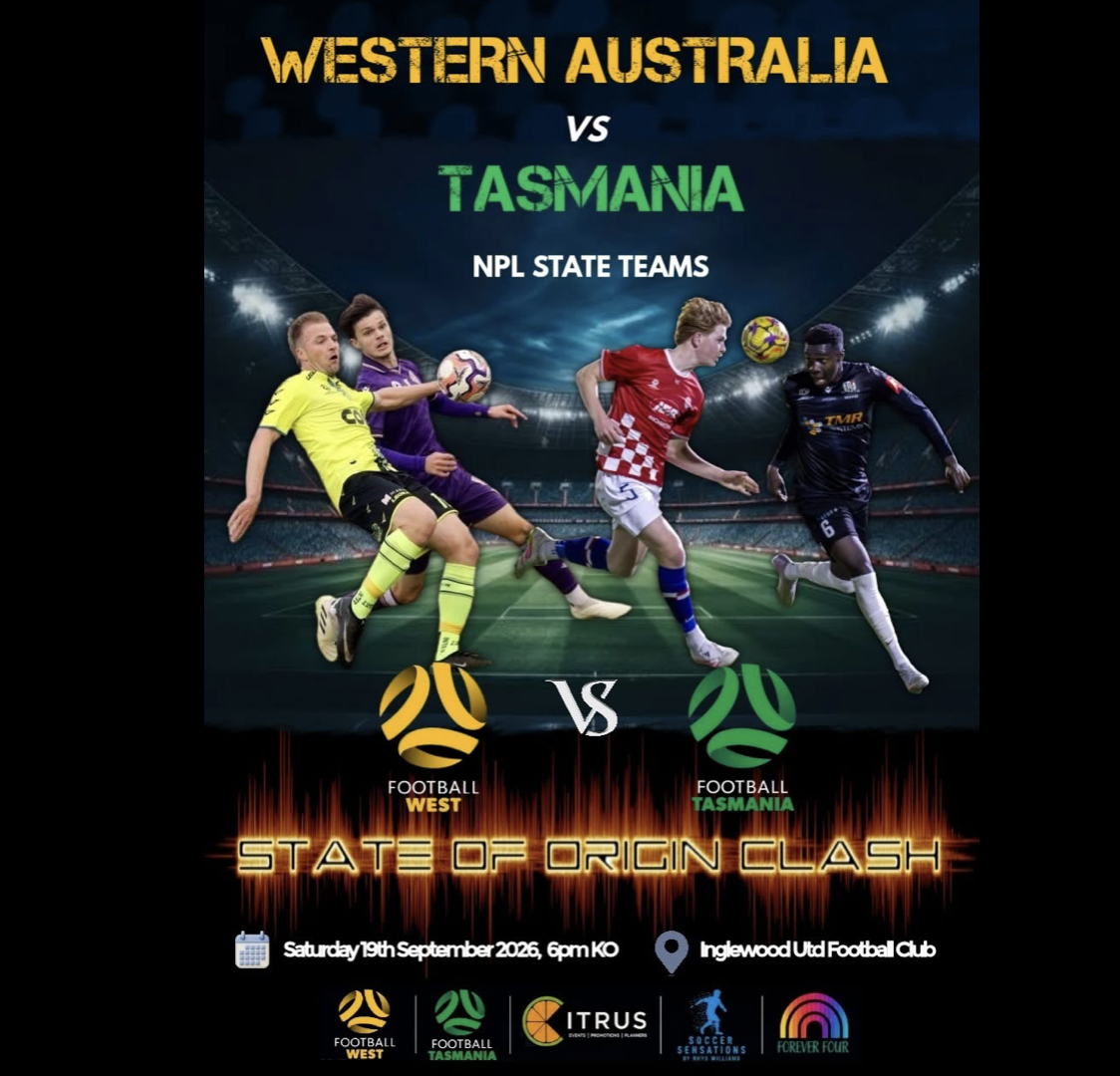
Photo credit: Football Tasmania
Football Tasmania has announced a representative match against Western Australia later this year.
The graphic looks impressive.
The branding is slick.
The concept sounds exciting.
State versus State.
Tasmania versus Western Australia.
Representative football.
But once the excitement of the announcement fades, I find myself asking a simple question.
Why?
Not because I am opposed to representative football.
Not because I don't want Tasmanian players to have opportunities.
But because football has a habit of launching initiatives before clearly explaining what problem they are actually trying to solve.
What exactly is the objective?
Every football initiative should be able to answer one question.
What does success look like?
Is this about player development?
Talent identification?
Marketing?
Commercial revenue?
State pride?
Pathways?
Because depending on the answer, there may be far better ways to achieve the same outcome.
And if nobody can clearly explain the objective, how do we know whether it has succeeded?
Football is not short of ideas. Football is short of money.
Let's assume this trip costs around $30,000.
Maybe less.
Maybe more.
I can already hear the response.
"Sponsorship will cover some of it."
Wonderful.
But sponsorship money is still football money.
The question remains exactly the same.
Why spend it on this rather than something else?
If somebody is prepared to invest tens of thousands of dollars into Tasmanian football, there are no shortage of areas where that money could make a genuine difference.
Coach education.
Goalkeeper development.
Regional football.
Volunteer support.
Travel assistance.
Facilities.
Participation programs.
Female football.
The list goes on.
Every football dollar has an opportunity cost.
The question is not whether the money comes from Football Tasmania, sponsors or grants.
The question is whether this is the best use of those resources.
Are we even playing the right state?
This is the part I find most interesting.
When talented Tasmanian footballers leave the state in search of bigger opportunities, where do they go?
Not Perth.
They go to Melbourne.
They go to Victoria.
Some head to New South Wales.
Why?
Because that is where the stronger competitions are.
That is where the professional opportunities are.
That is where the scouts are.
That is where the pathways are.
So if representative football is supposed to benchmark Tasmanian players against the best, why are we measuring ourselves against Western Australia?
Surely the more relevant comparison would be Victoria or New South Wales.
The states where our players actually aspire to play.
Are we even seeing Tasmania's best?
Representative football only works if the very best players are available and committed.
September is a difficult time.
Players are trialling.
Players are negotiating contracts.
Players are recovering from injuries.
Players are finishing long seasons.
Players are making decisions about their futures.
Will every top player be available?
Will every top player want to travel across the country for a representative fixture?
If the answer is no, what exactly are we measuring?
What happens if Tasmania wins?
Let's say Tasmania wins.
What have we learned?
That Tasmania beat Western Australia on a particular day.
That's about it.
It doesn't tell us whether Tasmanian football is improving.
It doesn't tell us whether our pathways are stronger.
It doesn't tell us whether more players are progressing into professional environments.
And if Tasmania loses?
The answer is much the same.
The question we need to ask
If representative football is valuable, why are the girls missing out again?
Football Tasmania quite rightly talks about the growth of women's football.
We hear about participation growth.
We hear about pathways.
We hear about inclusion.
We hear about opportunity.
And all of that is important.
Yet when a showcase representative opportunity appears, it is once again the men boarding the plane.
Again.
Perhaps there is a girls' representative fixture already being planned.
If so, Football Tasmania should be applauded.
But if not, the question remains.
Why not?
Because if representative football is valuable enough to justify the investment, surely Tasmania's best female players deserve exactly the same opportunity.
Not next year.
Not eventually.
Now.
Activity and progress are not the same thing
Football administrators love activity.
Launching things.
Announcing things.
Creating things.
Posting graphics.
Making noise.
Sometimes activity is mistaken for progress.
But they are not the same thing.
Progress requires outcomes.
Progress requires evidence.
Progress requires a clear answer to a simple question.
What problem are we solving?
At the moment, I am struggling to find that answer.
The players selected will be proud.
Their families will be proud.
And I genuinely hope they enjoy the experience.
But football should always be prepared to justify its decisions.
Particularly when resources, opportunities and priorities are involved.
Because if Tasmanian football suddenly found an extra $30,000 tomorrow, I suspect many clubs, coaches, volunteers, parents and players would have a very different list of priorities.
And perhaps that is the real debate.
Not whether Tasmania can beat Western Australia.
But whether representative football in 2026 is delivering something football genuinely needs.
Or whether it is another example of football confusing activity with progress.

The Underdog Game

Brian Wightman photographed by Nikki Long
When I first asked Brian Wightman for an interview, he didn't immediately say yes.
In fact, months passed before he agreed.
During that time, he thought carefully about whether he wanted to do it at all. Later he told me his family had encouraged him to say yes.
That hesitation wasn't surprising.
Brian Wightman has spent much of his life speaking for schools, communities, football clubs, union members and constituents.
Talking about himself was another matter.
When the answers eventually arrived, they came with a short note attached.
"Well, here is your scoop, what a tome..."
"There is a lot in there....a life lived pretty full so far."
Then came the sentence that explained his reluctance.
"I am reluctant because it is not about me; I exist to help/assist others, particularly my family. But I hope that this helps someone out there."
A little later he admitted something else.
"It was good for me to write it down."
"It was cathartic."
And then, in a later message, perhaps the most revealing comment of all.
"First time I've spoken about losing my seat and the impact. Hopefully it might help someone out there."
That surprised me.
Brian Wightman has spent decades in public life.
Yet it turned out the public part of the story was only half of it.
Most people know Brian Wightman the politician.
Former Attorney-General.
Former Education Minister.
Former Labor MP.
Some know Brian Wightman the school principal.
Others know Brian Wightman the football coach.
What follows is something different.
The story of a life shaped by family, migration, education, politics, community and football.
And perhaps most of all, the story of what happens after success, failure and finding your way forward again.
Long bus trips, Margaret Thatcher and Parliament
Parliament followed a career in education.
Wightman spent years working with students, families and staff before entering politics.
“Parliament followed a career in education and a conviction that decisions affecting schools, communities, and working people should be informed by lived experience,” he said.
“I had spent years working with students, families, and staff, and they shaped a strong commitment to opportunity for young Tasmanians and regional communities.”
Politics, however, had arrived much earlier.
“There was also a longstanding interest in Labor Party politics and politicians, fueled by dining table debates, Margaret Thatcher, and newspapers and books read on long bus trips during the first iteration of the state league.”
That sentence tells you quite a lot.
Politics at the dinner table.
Books on buses.
Football trips around Tasmania.
The foundations of several careers being built at the same time.
The first law officer
One of the more unusual aspects of Wightman's career was becoming Attorney-General despite coming from education rather than law.
“The Attorney-General is the first law officer, which was an interesting challenge given that my background is in education rather than law.”
“The role spans constitutional and legal responsibilities, from judicial appointments to decisions about state intervention in significant legal matters.”
Looking back now, he remains comfortable with the decisions he made.
“I approached the role with integrity and a strong belief in social justice.”
“The Attorney-General’s role carries significant responsibility, and decisions were always made carefully and conscientiously, even when politically difficult.”
“Like anyone in public life, reflection comes with time, but I remain comfortable with the decisions taken.”
His political career, he notes, was “bookended by particularly difficult decisions that ultimately withstood Federal Court challenge.”
Politics also taught him something about how government actually works.
“Politics taught me that decisions are rarely as simple as they appear from the outside.”
“Cabinet decision-making is grounded in process, informed by advice, and supported by evidence.”
“While ministers ultimately carry responsibility, the public service plays a critical role in providing context and expertise.”
“It also reinforced how important relationships, trust, and credibility are in achieving outcomes.”
The rise of social media
Asked what would feel most different if he stepped back into Parliament today, Wightman did not mention policy.
He mentioned social media.
“The rise of social media would be the biggest change.”
“When I entered Parliament, online political debate was only beginning.”
“Today, constant noise, vitriol, and abuse would require real discipline.”
There was also something else he would change.
“I would also place greater importance on maintaining balance and continuing passions like coaching, camping, and family life, rather than sacrificing them entirely to the job.”
Experience often changes what people value.
Hare-Clark, failure and courage
Tasmania's electoral system has a habit of keeping politicians humble.
“Hare-Clark is a beautiful thing.”
“Preferential voting can be your greatest friend or your worst enemy, and in 2014, it was the latter.”
“I finished fifth in the popular vote, which ordinarily would have secured another term, but the incoming members of the new government swamped me.”
“That’s politics, and long may the system last.”
But election mathematics only tells part of the story.
The personal impact came later.
“Politics was all-consuming, but public office is only one part of my story.”
“It also taught me bravery.”
“To rebuild my career after what I perceived as a fall from grace and a gigantic failure, including letting down my family, who had sacrificed so much, took courage.”
There is honesty in that answer.
And vulnerability.
Particularly from someone who spent much of his life in leadership roles.
The more I read his answers, the more football seemed to reappear at the moments it was needed most.
Before Parliament.
During Parliament.
And afterwards.
Especially afterwards.
When titles disappeared and a different kind of work began.
Then came the line that stayed with me long after I finished reading.
“I have always said that I needed this role far more than Riverside Olympic needed me.”
Not Parliament.
Not government.
A football club.
A community.
A place to belong.
Belfast, Best and a waterlogged football
Long before Parliament there was football.
And before football there was Belfast.
“My late father was from Belfast, Northern Ireland.”
“He loved the Busby Babes and George Best, and my brother and I grew up on a diet of Law, Best, and Charlton, alongside the melancholy surrounding the 1958 Munich Air Disaster and the loss of Duncan Edwards.”
Then came childhood football.
“One of my best mates, Richard Lawson, started playing for Trevallyn Junior Soccer Club, and my brother and I, along with another great mate, Mark Littlechild, decided to go to training after school on the Oval.”
“Richard’s dad, Charlie, was the coach.”
“Our first boots came from Coles Variety Store on the corner of Launceston Mall.”
“The former Tasmanian cricketer and quality footballer, Roger Brown, gave us our first ball, all leather and waterlogged; it was like Christmas!”
That sentence captures an era.
A waterlogged leather football.
Like Christmas.
Football people understand exactly what he means.
“As Richard often reminds us, we beat St Leonards Primary 5–4 in the final that year, with Richie scoring all five goals.”
There is something wonderfully human about the fact he still remembers it.
Not a ministerial decision.
Not an election result.
A childhood football final.
The game becomes unaffordable
One small detail in Wightman's football story feels surprisingly relevant today.
“After Trevallyn Primary School, I took a break from football when the game shifted into clubs, and I played Australian Rules instead.”
“My dad held deep concerns that the move would make the game unaffordable for families.”
Even decades ago, affordability was part of the conversation.
Some debates never entirely disappear.
Coaches who shape lives
Football people rarely forget certain coaches.
Wightman certainly hasn't.
“In those formative years, I would meet Ross Logan, who coached our U/10 Northern representative side.”
“He remains a great friend and supporter.”
Then came Peter Davidson.
“Peter Davidson later brought me back into the game when he coached the U/15 Northern Team in the highly competitive intrastate carnivals.”
“He would later coach us to back-to-back Northern League titles at Riverside Olympic.”
“Davo was ahead of his time as a coach.”
The admiration remains obvious.
Football as belonging
When asked what has kept him involved all these years, the answer wasn't trophies.
It wasn't winning.
It wasn't status.
“Initially, my kids and now, coaching.”
“Beyond that, football builds connection, belonging, and lifelong friendships.”
“I love clubs, clubrooms, and the camaraderie and safe spaces they create.”
Safe spaces.
For many people, football clubs are exactly that.
Places where friendships form.
Where communities gather.
Where people find connection.
Still learning
Football has also become another classroom.
“The accreditation process undertaken with David Smith has assisted me enormously as a coach and keeps me motivated to be the best I can be.”
Then came something unexpected.
“In the future, it will be my significant interest in the role of Artificial Intelligence in professional and semi-professional sports coaching, which I find fascinating.”
From George Best to Artificial Intelligence.
The common thread is curiosity.
The underdog game
At one point I asked what continues to hold him in football.
The answer was immediate.
“Football is an underdog in Tasmania, and I’ve always loved a cause.”
The more I read the interview, the more that sentence seemed to explain the rest of it.
Public education.
Community clubs.
Grassroots football.
Regional Tasmania.
Again and again, Wightman found himself drawn towards causes that needed advocates rather than applause.
Football also filled a gap after school leadership.
“Coaching also mirrors teaching, helping people grow and develop.”
“In my professional life post school leadership, I missed the positive interactions that teaching gave me.”
“Coaching is a close substitute.”
Again and again throughout this interview, teaching and coaching seem inseparable.
Helping people improve.
Helping people grow.
Helping people believe.
Sport is honest
When asked what he enjoys most on the sideline, Wightman again sounded more like a teacher than a tactician.
“Watching players grow in confidence and understanding.”
“Coaching is about helping people believe in themselves, solve problems collectively, and work for each other.”
“Building culture and relationships is probably my greatest strength as a coach.”
Then came perhaps the most memorable sporting quote of the interview.
“Sport is honest.”
“The feedback is immediate, emotions are genuine, and success depends on collective effort.”
“Coaching also allows me to switch off from the complexities of life and lock in for 90 minutes.”
“I remain ultra-competitive, although tempered in recent years, and football scratches that itch.”
Football's biggest challenge
Football's participation numbers continue to grow, yet many within the game believe investment and infrastructure have lagged behind.
Wightman sees history as part of the explanation.
“Football developed differently in Tasmania, particularly through post-war migration linked to projects like the Hydro and the manufacturing industry in George Town.”
“Participation has grown strongly, but infrastructure investment hasn’t kept pace, and the game hasn’t always spoken with a unified voice.”
That issue of unity kept returning.
“Perception matters in politics and sports, with a united and organised message generally achieving better outcomes.”
Then came an observation that football people should probably pay attention to.
“Football has enormous strengths in participation and diversity, but hasn’t always translated those into coordinated advocacy.”
“Too often, clubs compete individually for limited funding rather than uniting around the collective cause.”
This is not someone speculating from the outside.
This is someone who has sat inside government.
When asked whether a stronger collective voice would change outcomes, his answer was simple.
“Absolutely.”
“Unified advocacy matters enormously.”
Tasmania, migration and family
The conversation became deeply personal when discussing family.
“My parents came to Tasmania escaping ‘The Troubles’ in search of opportunity and a better life, and Tasmania provided that in an environment often described as being ‘just like back home’.”
“They came on their own, and none of our extended family followed.”
“That background gave me a deep appreciation for family, community, opportunity, and the importance of education.”
“My parents sacrificed everything for a new life.”
Then came a sentence that says more than most paragraphs ever could.
“My mother has never said goodbye because of the grief associated with leaving Northern Ireland.”
Migration leaves marks that last a lifetime.
Football sat at the centre of that family story too.
“Football was central to that story, with my father heavily involved in clubs including Launceston Rovers, Launceston Juventus, and Trevallyn Junior Soccer Club before my own involvement eventually found a home at Riverside Olympic.”
“I’m now part of an elite program at Devonport City Strikers.”
Football as inheritance.
Football as continuity.
Football as family.
A Tasmanian generation
Asked whether Tasmania's smallness is a strength or limitation, Wightman sees both.
“Smallness can create strong relationships and accessibility, but it can also encourage insularity.”
“The challenge is embracing the strengths without limiting ambition.”
Then he shared something many Tasmanians of a certain generation will recognise immediately.
“I can remember as a young lad feeling a bit ashamed on the mainland when people asked where you were from.”
Many readers will understand exactly what he means.
Those feelings changed.
“Those feelings have changed dramatically because Tasmania is now one of the most talked-about places on the planet!”
Schools, justice and community
The interview repeatedly returned to schools and community.
Asked which role shaped him most, the answer was immediate.
“School leadership, because it provides the clearest understanding of how policy lands in classrooms and communities.”
“Schools are intricate places where every decision affects students, families, and staff in real ways.”
Education remains the thread running through almost every part of Wightman's career.
Teacher.
Principal.
Minister.
Union leader.
Different roles, but ultimately the same objective: helping people learn, develop and find opportunity.
It is perhaps no coincidence that many of the things he values most in coaching are the same things he valued in schools.
He spoke about the realities facing educators.
“People often underestimate the complexity of modern schools and the demands placed on educators.”
“Schools now deal with wellbeing, mental health, trauma, disadvantage, and community expectations alongside learning.”
He was also direct about bureaucracy.
“The accountability measures placed upon schools and educators are overly complex, with no clear purpose, because they don’t measure improvement when they should.”
“Let teachers teach and inform parents/guardians/carers how their kids are tracking academically and socially.”
“The best data in schools is qualitative, and it remains difficult yet not impossible to collect and analyse.”
His views on justice reflected similar themes.
“Not every decision should be driven by politics or public pressure.”
“While the Attorney-General sits within Cabinet, the office also carries a responsibility to uphold the rule of law and proper legal process.”
“Maintaining that separation is essential.”
Then came advice from a former Chief Justice.
“If you don’t agree with the law, change it.”
“I did that, and although laws don’t stop people from committing crimes, they allow you to send a message to our community about what society is not willing to accept.”
Rebuilding at Riverside
Wightman describes the years after politics not as an ending, but as a rebuilding.
“I learned that skills are transferable.”
“Post politics, I became a trusted voice on mergers, club constitutions and bylaws, processes and procedures, and setting them up for success when funding eventually arrives.”
Football had helped shape his early life.
It was also there during the next chapter.
“Setting clubs up off the field is essential for success on the field.”
The redevelopment at Riverside Olympic remains a source of pride.
“The redevelopment at Riverside Olympic was legacy leadership, underpinned by a highly experienced and strategically recruited skills-based board of governance.”
Standing and kindness
Late in the interview, the conversation shifted towards values.
“Preparation, fairness, and relationships.”
“Listening carefully, understanding context, and treating people respectfully have always mattered to me.”
Then came perhaps the simplest advice in the entire interview.
“Your standing matters particularly in a small town; protect it, enhance it.”
“Kindness counts.”
Simple words.
Hard-earned ones.
What remains
I finished by asking what a good day looks like now.
“Time with family.”
“Talking with my wife Katie and the twins about school, ferociously advocating for public education, having meaningful conversations, helping people solve problems, coaching, analysing football, and getting outdoors.”
“Balance and connection matter more with age.”
Then one final detail.
“I still write with a good pen every day, and I could not live without music or bottomless cups of Irish Breakfast tea.”
And perhaps that is where this story should end.
Because despite the titles, the elections and the public life, what emerges from this interview is not simply a former politician.
A teacher.
A coach.
A son of Northern Irish migrants.
A husband and father.
A community builder.
A football person.
And someone who was willing, perhaps reluctantly, to tell his story in the hope that it might help somebody else.