If I Were CEO
This is a daydream, not an application.
I am not settling scores.
I am simply imagining what football leadership could look like if it were grounded in lived experience and genuine care for the game.
I would be present
I would go to games.
Not just finals or showcase events, but ordinary weekends. Junior grounds. Women’s matches. Regional football.
I would show my face.
Stand on the fence. Talk to parents, volunteers, coaches.
You cannot understand football from reports alone.
You understand it by being there.
I would change the relationship
The relationship between a governing body and its clubs should not feel like master and servant.
I would work in partnership with clubs and associations.
Listen first. Collaborate. Support.
Football Tasmania exists because clubs and associations exist, not the other way around.
I would give clubs and associations certainty
Junior football is the breeding ground for all football.
It always has been.
I would give associations the care they deserve. Not try to take them over, but work alongside them. Ask what they need. Understand their pressures. Discuss how Football Tasmania can assist.
Strong associations create strong clubs.
Strong clubs create strong competitions.
I would be decisive, even when it is uncomfortable
I would make decisions that strengthen competitions. Some would be unpopular. That is part of leadership.
What we cannot keep doing is endlessly changing structures. Constant review creates instability. Clubs plan in good faith, then have the ground shift beneath them again.
Certainty matters.
Stability matters.
I would stop outsourcing football knowledge
I would not hire consultants.
Tasmania is full of people with deep football knowledge. People who have coached, administered, volunteered and led clubs for decades. People who understand the terrain, the constraints and the culture.
We already have the brains.
We simply need to trust them.
I would strengthen clubs, not compete with them
Clubs do the work cheaply, on a volunteer basis, week after week, year after year.
Development should be supported at club level, not outsourced to competing programs. The role of Football Tasmania should be to enable clubs, not undermine them.
Help with workload.
Help with facilities.
Help with coach development.
Do not compete with the very organisations holding the game together.
I would return Football Tasmania to basics
Competitions.
Coach education.
Promoting the game.
That includes recognising that junior and youth football exists. I would include it visibly in Football Tasmania’s communications and social media. It is not peripheral. It is the foundation.
I would focus on practical support
Football does not function without the basics.
Goals.
Nets.
Equipment.
Providing the tools of the game should never be an afterthought.
Child safeguarding would be non-negotiable
If football is not fun and children are not safe, what is the point of anything else?
Child safeguarding would be the number one priority. Not just as a policy document but as a lived commitment, properly resourced, supported and enforced.
I would be a strong government liaison
I would advocate for football properly.
With councils. With government. With funding bodies.
I would understand the football landscape well enough to speak for it honestly and forcefully and to translate that reality clearly to decision makers.
I would be a genuine conduit between members and the Board
In most cases, the only way clubs and associations can speak to the Board is through the CEO.
That makes the role critical.
I would see it as my responsibility to ensure members are genuinely heard, not filtered, softened, or reshaped for convenience. The Board deserves to understand what is actually happening on the ground, even when that feedback is uncomfortable.
Being a conduit is not about protecting the organisation from its members.
It is about ensuring the organisation remains accountable to them.
I would advocate strongly for clubs and associations in Board discussions and just as strongly communicate Board realities back to the football community, honestly and clearly.
Trust is built when people believe their concerns travel intact.
I would lift the bar on governance
Transparency matters.
Clarity matters.
Trust matters.
Good governance is not a burden. It is what allows people to stay involved without burning out or becoming cynical.
I would be honest about conflicts of interest
Tasmania is a small football community.
Conflicts of interest cannot be eliminated and pretending otherwise is unhelpful.
People wear multiple hats. They always have.
The answer is not denial.
The answer is transparency.
Interests should be declared clearly and without embarrassment. Where necessary, people should absent themselves from decisions. Then the work continues.
What damages trust is not the existence of conflicts but the failure to acknowledge them.
Good governance in a small state means being realistic, not performative.
I would communicate early, not perfectly
I would talk to clubs early, even when all the answers were not yet clear.
Football people understand uncertainty. What they struggle with is silence. Waiting for perfectly polished announcements often does more damage than sharing honest, incomplete information and bringing people along.
I would actively protect volunteers from burnout
Every new requirement, every late change, every additional report costs someone time. Usually on a Sunday night.
I would design systems with unpaid people in mind. Reduce duplication. Avoid mid-season changes. Treat volunteer time as the precious resource it is.
I would slow the cycle of constant reform
Football in Tasmania lurches from review to review, restructure to restructure.
Sometimes the strongest leadership decision is to stop changing things and let the game breathe. Stability allows clubs, associations and volunteers to plan, recover, and build properly.
I would understand the difference between equality and equity
Treating everyone the same is not the same as treating everyone fairly.
Junior football, regional football, women’s football and senior competitions all need different forms of support. One-size-fits-all policy might look neat on paper but it rarely works on the ground.
I would measure success differently
I would not measure success by how many programs Football Tasmania runs, how many reviews are commissioned or how much activity is visible at head office.
I would measure success by whether clubs feel supported, volunteers stay involved, competitions are stable and children keep playing the game.
I would mentor, not just manage
Leadership is not only about administration. It is about stewardship.
I would actively mentor emerging administrators, support people stepping into difficult volunteer roles and pass on knowledge deliberately, rather than letting experience disappear when people burn out or walk away.
And yes, I would care
I care about football.
I love the game.
Caring is not a weakness in leadership. It is the reason people stay when things are hard.
The bigger picture
What I am describing is not innovation.
It is not radical reform.
It is leadership shaped by time spent inside the system, by mistakes made, by responsibility carried and by a deep affection for the game.
It is what football leadership looks like when the goal is not control, but care.
About the author
I’m Victoria Morton. I’ve spent 20 years in Tasmanian football as a volunteer, club leader and advocate.
I’m writing a personal record of what I’ve seen, what I’ve learned and what Tasmania’s football community lives every week.
👉 Read more about me here: About Victoria
Alex MacDonald - A Football Life
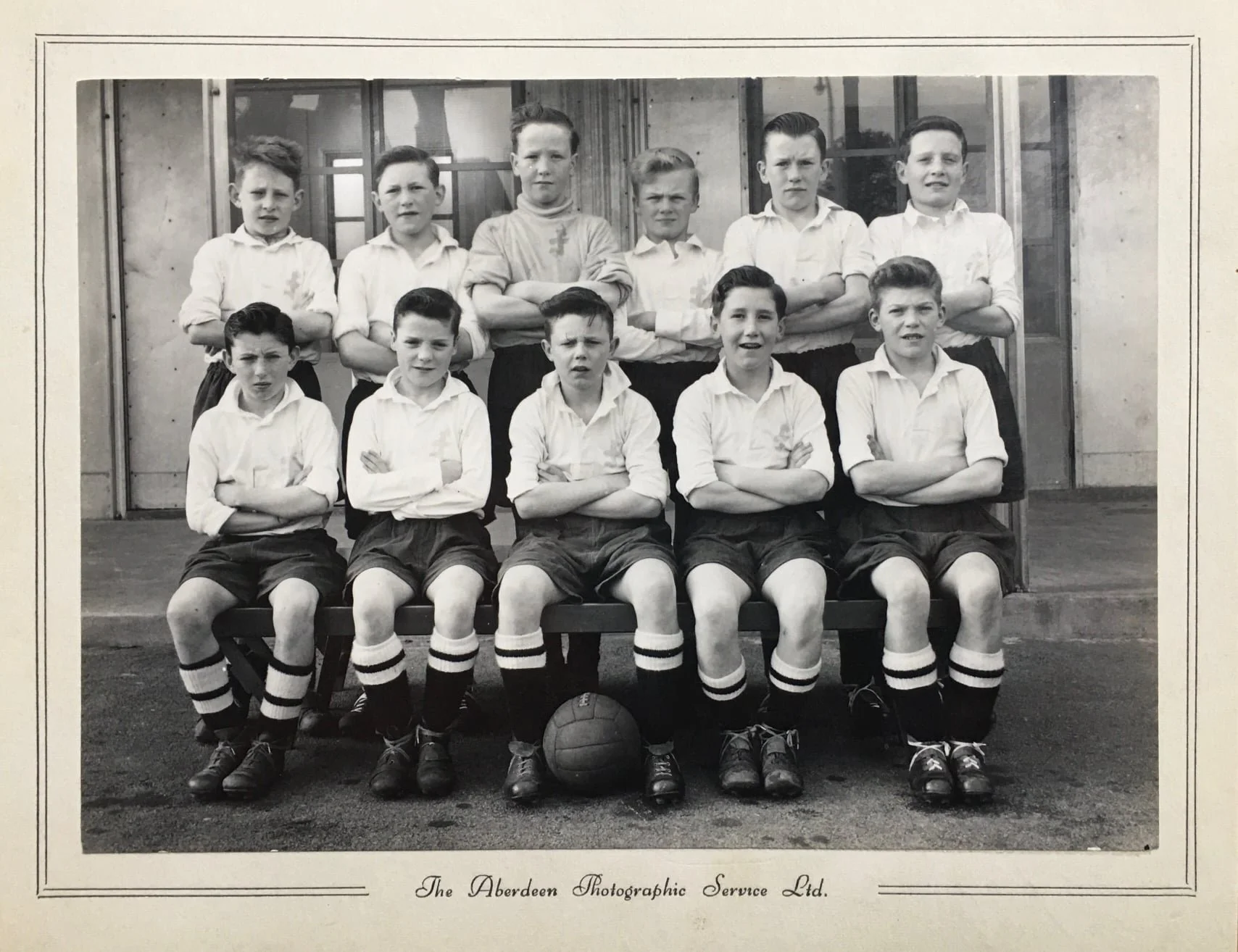
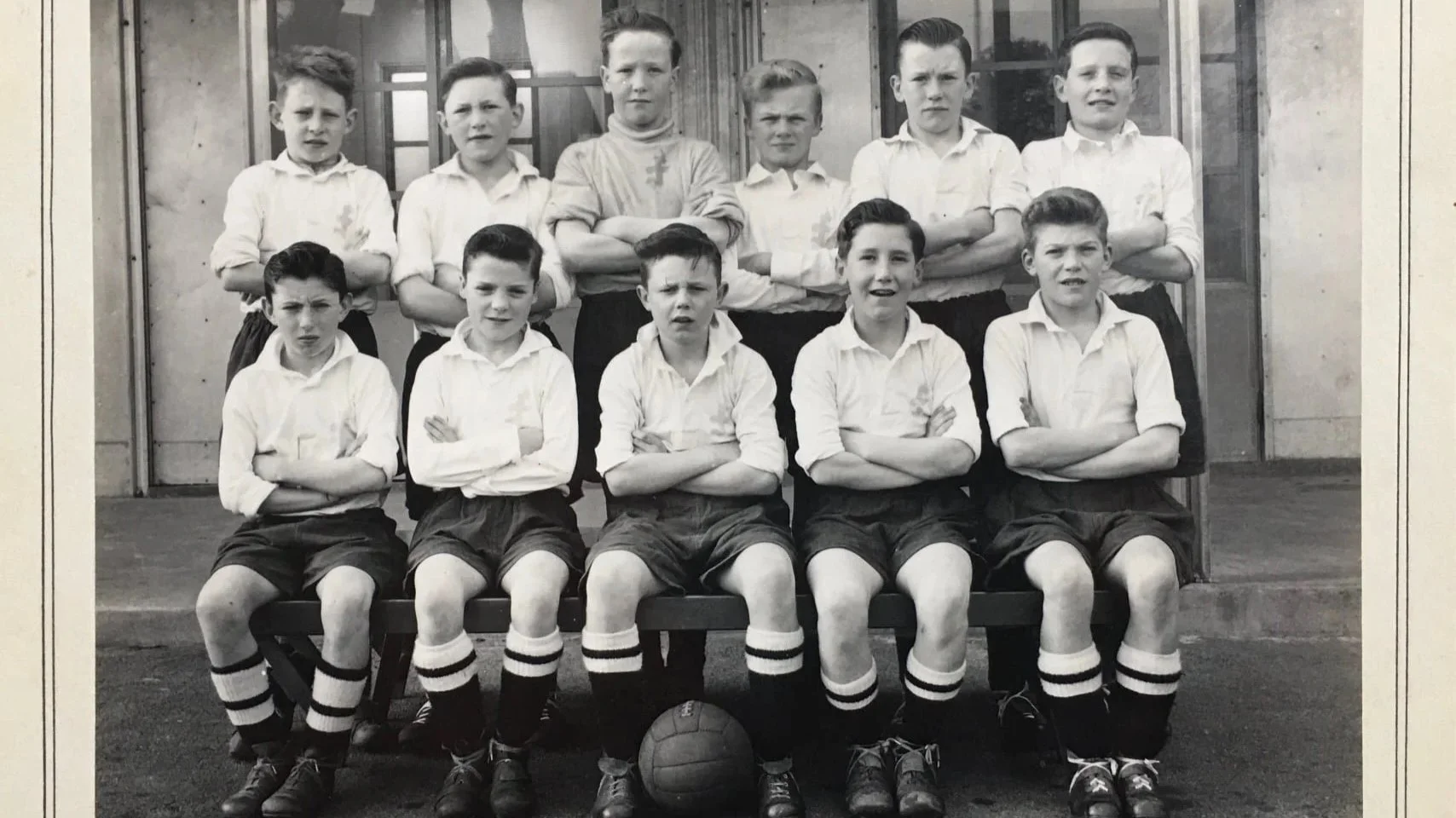
Alex, back row, 2nd from left - 1957 Edinburgh Primary School League Champions, School Board Cup Champions, Inspectors Cup Champions
Some football stories are about trophies, titles, and moments.
Others are about belonging.
Alex MacDonald’s story is the latter.
From a childhood shaped by displacement, to football as refuge and identity, to a life rebuilt through the game in Tasmania, Alex’s journey reminds us that football does not just develop players, it shapes lives.
This is his story, told in his own words.
Early Years: Football as Belonging
Football has shaped my life in ways I could never have imagined.
My earliest memories go back to 1951, as a six-year-old chasing a ball through the streets of Craigmillar in Edinburgh. Like every kid, I dreamed I was playing for Scotland. Life was cramped, three families living in a three-bedroom tenement, but to me it was full and alive. We slept four to a bed under army greatcoats and I thought nothing of it. Life felt good.
At seven, everything changed. My parents sent me to live with relatives in England while they waited to be allocated a new house. I felt abandoned, though I could not name it then. I still remember being put on a train at Waverley Station with a note pinned to my coat and a box of food.
I ended up in Anlaby, Yorkshire. Quiet, unfamiliar, and strange. School was hard. I sounded different. I was teased. Football became my way in.
When I scored a hat trick for the school team, everything shifted. Suddenly I belonged. That was the first time I understood what football could do.
Bill Sinclair and the Power of Coaching
When I returned to Scotland, I faced the same ridicule, my accent had changed again. Once more, football rescued me.
My teacher at Fernieside Primary, Bill Sinclair, changed my life. He ran football the right way, skills first, repetition, discipline, patience. We trained relentlessly, often without playing games. We learned to use both feet. He soaked leather balls overnight so we learned control under difficulty.
Over time, his methods worked. Our under-nine team became the “big team”. At twelve, I was named captain, the last name read out at assembly.
That season we went undefeated. Even the newspapers noticed. Scotland captain John Greig and Rangers player Ralph Brand presented our medals.
Looking back now, Bill Sinclair did far more than teach football. He gave a struggling child resilience, confidence, and belonging. I owe him more than I can ever say.
The Lost Years and a Chance Conversation
From fifteen to twenty-one, I think of my football as my lost years.
I was apprenticed in insulation and sheet metal, travelling constantly between power stations across Scotland and England. Football became fragmented. I trained wherever I landed, carrying a letter from my club asking permission to join sessions. Games were rare, but I trained with good players and coaches, and I enjoyed it more than I realised at the time.
As my apprenticeship ended, I played a friendly match back home. Afterwards, a man in the bar said a few young players were heading to Australia under the ten-pound immigration scheme.
“You’re good enough,” he said.
“Think of it as a two-year football holiday.”
Six weeks later, I was on a plane.
Australia, Tasmania, and Finding Home
I landed in Melbourne in 1967 and hated it. Football wasn’t even a thought. I just wanted to work, save, and go home.
Three months later, work took me to Hobart, and everything changed.
Hobart felt like home almost immediately. Football found me again through a chance pub conversation. One training session with Hobart Caledonian was all it took. I signed, and my Tasmanian football life began.
The Callies were a wonderful club, serious about football, strong socially, and welcoming. The standard surprised me. Hobart football was technically strong, driven by immigrant communities who valued skill and craft.
After two seasons, a representative match up north introduced me to Glenda, the love of my life.
Devonport City and Reinvention
Work took me to Devonport, where I trained with Devonport City during the week and travelled south on weekends. The club felt ambitious, energetic, and alive. Eventually, President Gordon Rimmer squared things off with Callies, and I signed.
That decision led to fifteen years with Devonport City.
The club had vision. Bingo funded facilities. Officials worked tirelessly. Trainers and physios were as good as any in the state. On the field, we were initially mid-table, but off it the club surged forward.
Personally, I found success, best and fairest awards, Sports Writers’ Awards, and rediscovered skills Bill Sinclair had instilled years earlier.
The turning point came with the arrival of Bob Oates, a professional from England. Hierarchies disappeared. I was moved from attack into central defence.
At first, I thought it was a demotion.
It wasn’t.
I thrived. I could read the game, organise, and lead. Devonport City arrived as a force, and I found my place.
The Final Years and What Football Gave Me
In the 1980s, statewide competition arrived. Devonport embraced it again, signing Steve Darby from Liverpool. His standards were high. We didn’t always have the quality to meet them, but I loved working under him and won another best and fairest.
By then, life was changing. We had a young family, land, and a house to build.
One day, walking off the pitch at Valley Road, I knew.
That was it.
I was 36.
Looking Back
I didn’t do too badly. Two state league best and fairests. Two Sports Writers’ Awards. Over thirty medals, including the very first ones I received at twelve years old.
But the greatest prize football gave me was Glenda.
Fifty years on, she’s still beside me.
Football shaped my life, in every sense.
— Interview edited and presented by Victoria Morton
Hostile Away Games
The folklore
Hostile away games are part of football folklore.
Across the world, they are spoken about with a mix of dread and affection. The noise. The edge. The feeling that you are very clearly not welcome here. Sometimes it tips over the line. Mostly, it sits right in that delicious space called banter.
Recently, we were at Wolverhampton Wanderers when the home crowd was in full voice until Brighton & Hove Albion scored. As the stadium fell quiet, the 5,000-odd travelling Brighton supporters immediately filled the silence with a chant that landed perfectly.
“Are we in a library?”
It was sharp, funny, and timed to perfection. Football theatre at its best.
English banter, experienced together
On our first football tour to England, we went to a Black Country derby between West Bromwich Albion and Wolves at The Hawthorns. Fierce rivals.
We were there with Tasmanian players and their families. Parents, siblings, coaches, all of us sharing something that felt far bigger than the ninety minutes.
Wolves went three nil down, much to the delight of the home supporters. As the scoreline settled, the Wolves away fans decided they had seen enough and began to leave in numbers.
That was when the stadium responded.
Thirty-five thousand Albion fans, in unison, began chanting,
“we see you sneaking out”.
It was brutal. It was funny. And it was unforgettable.
No steward intervention. No announcements. Just collective wit doing what football crowds do best.
Those moments stay with you, especially when you experience them together.
Sitting among the faithful
On another tour, we sat amongst Newcastle United supporters at an away match at Leicester City. Again, we were there with Tasmanian players and their families, not as tourists but as guests stepping into someone else’s football world.
The language was blue. Very blue.
Flares were let off under the stadium in the bar area. The singing rolled on, relentless and joyful. The accents were thick enough that at one point we genuinely had to ask for a translation.
The Newcastle fans loved it.
They thought it was wonderful that a group of Australians were sitting amongst them, joining in, learning the songs, and embracing, even if only for a few hours, their religion.
Newcastle United.
The young players we were escorting thought it was the greatest thing they had ever experienced. Not because it was safe or polished, but because it was alive.
They talked about it for days.
That is football culture. It teaches you resilience, perspective and how to sit in discomfort without fear.
Designed discomfort
That discomfort does not stop at the stands.
Overseas, the difference between home and away dressing rooms is deliberate. It is part of the psychological battle, and everyone understands it.
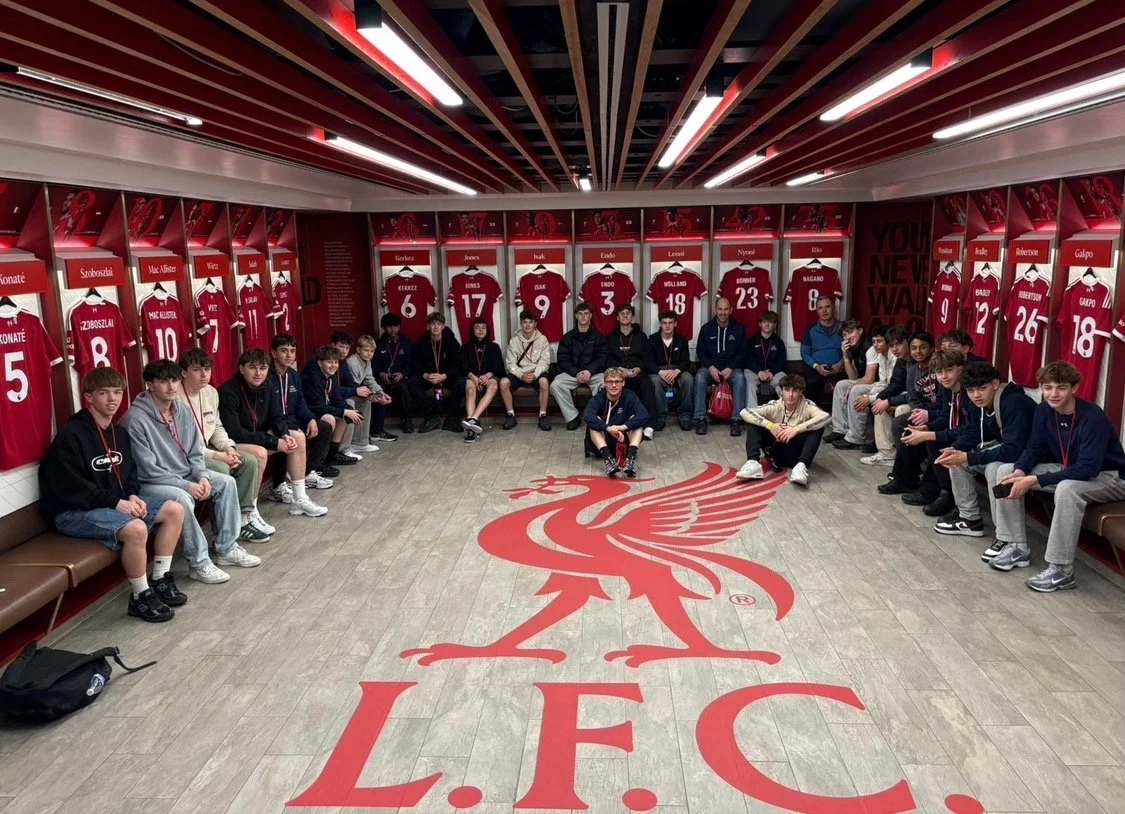
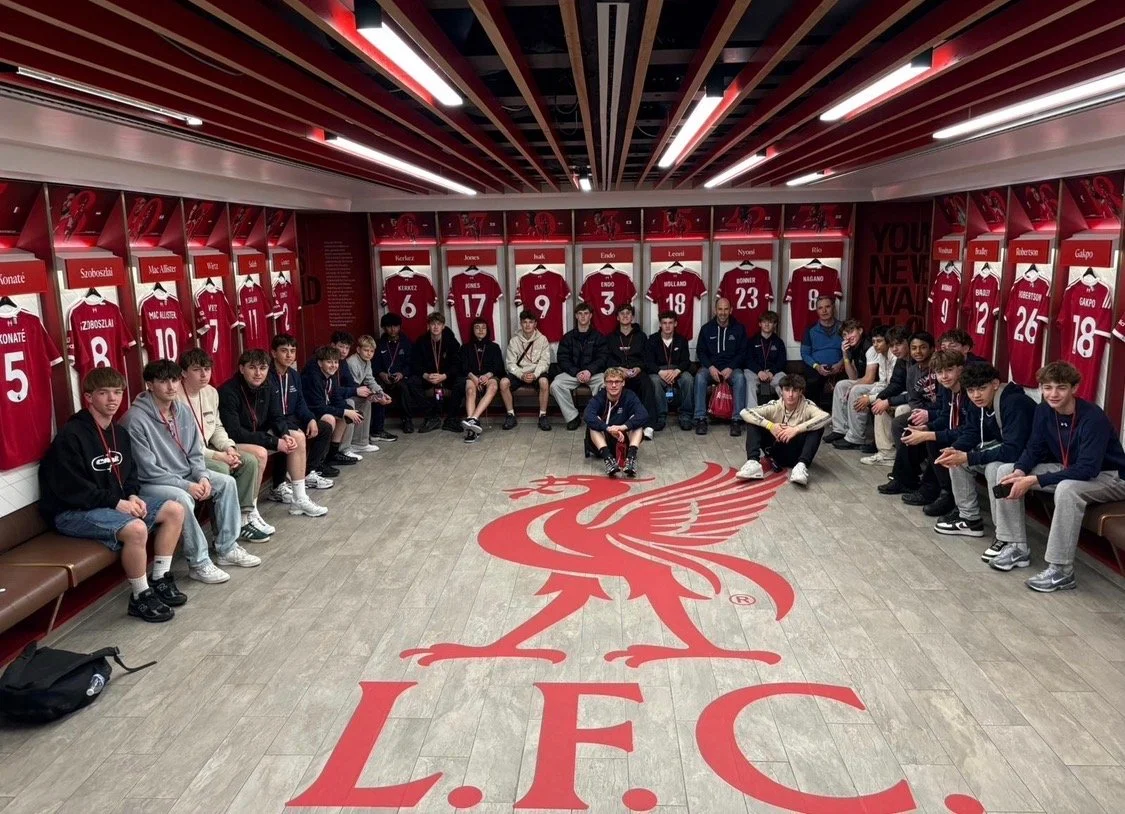
At Anfield, the away dressing room is smaller, tighter, less comfortable and noticeably less welcoming. It is not subtle. It is not apologetic. It is a clear signal that you are not at home.
We saw this first-hand on tour.
Yet when clubs host UEFA Champions League matches, the expectations change. Away teams must be accommodated properly. Facilities must meet minimum standards. Hostility still exists, but it is regulated and transparent.
We saw that contrast clearly at Tottenham Hotspur Stadium. Changerooms similar but different for home and away.
Even Manchester City are expanding seating at Etihad Stadium to meet Champions League hosting standards and with that comes the need to upgrade away facilities as well.
The message is consistent.
Discomfort is allowed. Obstruction is not.
Fan versus President
There is a distinct difference between being at a game as a fan and being at a game as a President, with a team involved.
When you are a fan, hostility feels impersonal. It washes over you. It belongs to the spectacle.
When you are there representing a club, knowing who you are, who you represent and who you are about to play, the intent feels different. Actions land differently. You are no longer anonymous. You are part of the contest before the whistle even blows.
That distinction matters when I reflect on my experiences in Tasmanian football.
Quiet hostility
The hostility I have encountered here has not come from chanting crowds.
It has come in quieter, more procedural ways.
Whiteboards in changerooms covered with advertising material so a coach cannot run a team talk.
Music deliberately blasted at full volume into changerooms to drown out instructions.
Being made to feel unwelcome at the gate before even stepping inside the venue.
And once, at KGV Football Park, being confronted by a very hostile dog and an even more hostile owner, who was clearly unhappy with the scoreline and chose intimidation over words.
These moments felt less like atmosphere and more like strategy.
None of them involved chanting.
None of them were spontaneous.
They were quiet assertions of power. Subtle reminders of who controlled the space and who did not.
Where the line sits
That is the part of hostile away games we rarely talk about.
The difference between noise and manipulation.
Between supporter-driven atmosphere and institutional pettiness.
Football thrives on emotion. It always has. Away days should feel uncomfortable. They should test you. They should remind you that this is not your home.
But there is a line.
When discomfort becomes deliberate obstruction, when hostility is designed not to motivate supporters but to undermine participation, the culture starts to rot.
The irony is that young players notice all of this.
They notice the chants and laugh.
They notice the tension and learn from it.
And they notice the petty stuff too, even when adults pretend they do not.
Hostile away games are not the problem.
How we choose to express power within them is.

Winning So You Can Say You Won

This post follows on from Hope Economics - Winning That Loses Money, where I explored why Australian men’s football clubs continue to spend heavily in competitions that offer little structural reward. Those pieces looked at hope, ambition and belief as drivers of behaviour.
Here, I want to contrast that system with a different model, using the Premier League as a reference point, to show how regulation can create a different but equally distorting, outcome.
Different rules. Different pressures.
The same question underneath. What actually changes when you win?
Financial Fair Play is often described as a mechanism to stop the richest club or owner from simply buying the league.
That is the neat version.
The reality is more uncomfortable.
What Financial Fair Play was meant to do
Financial Fair Play was introduced to stop clubs destroying themselves in pursuit of success. To prevent reckless spending, mounting debt and eventual collapse once a benefactor walked away.
It was designed as a safety rail.
At its core, it is about sustainability, not equality.
And on that narrow measure, it has largely worked.
What it actually does
Financial Fair Play does not cap wealth. It legitimises it.
Spending is tied to revenue. Revenue is tied to history, scale and global reach. If you already have those things, you are permitted to spend more. If you do not, your ambition is constrained by design.
Success becomes path dependent.
The clubs that were big remain big. The clubs trying to break in are told to grow organically, slowly, and within limits that rarely allow disruption.
The rich do not stop winning.
They simply win within a regulated framework built around their advantage.
Order without mobility
This creates a different distortion to the one we see in Australia.
In Australian men’s football, clubs often overspend chasing success that does not reliably change their position. While promotion and relegation exists in parts of the NPL system, its leverage is uneven. Movement is frequently mediated by licensing, infrastructure and financial criteria that can blunt consequence. Promotion often increases costs faster than it increases opportunity, while relegation is regularly softened by restructures, exemptions, or strategic intervention.
Movement exists. Consequence is diluted.
In Tasmania, that dilution is felt most acutely. Winning a league often delivers a trophy, a sense of pride and the right to say you were the best that year. What it rarely delivers is a materially different future. The cost base remains. The obligations remain. The pathway does not expand in proportion to the achievement.
Winning becomes an end in itself.
The shared failure
Both systems fail in the same place.
In Australia, winning does not consistently unlock opportunity.
In England, winning does not redistribute power.
In both cases, football people respond rationally to irrational structures. They spend emotionally, politically, or defensively because the system offers no clean, proportional reward for success.
Rules alone do not create fairness.
Structure does.
Until winning actually alters a club’s future, whether through promotion, relegation, or genuine economic leverage, football will keep producing distorted behaviour. Either clubs will spend chasing outcomes that do not exist, or they will be locked out of outcomes they can never reach.
Different leagues.
Different rules.
The same uncomfortable truth.
When the Australia Cup first arrived
August 2014
I was at this match.
It was the inaugural year of what was then the FFA Cup, now known as the Australia Cup. At the time, we were still working out what it meant. A national knockout competition. A genuine round of 32. A brief sense that Tasmania was no longer quite so far from the centre.
As Joe Gorman wrote in his piece for The Guardian at the time, “I’m here for the football… it’s at these local games where you find the most wonderful of football anoraks.”
That line has stayed with me, because it describes the people who carried nights like this long before anyone else was paying attention.
We were there because we had won the Lakoseljac Cup. That alone felt significant. It placed us into the round of 32 of a brand-new national competition, one that continues today and is now embedded in the Australian football calendar.
I remember being terribly nervous, mostly about the game itself. The occasion, the stage, the sense that this night mattered more than most. Mark being in goal added another layer to it, of course, but it wasn’t the source of the nerves. It was everything wrapped around the match that made it feel heavy.
Our regular goalkeeper, Kane Pierce, had been sent off the week before for bad language. We fought like mad to see if we could get him cleared. We argued the case. We appealed. But to no avail. Rules were rules, and Kane was out.
He was devastated. But we had no choice. The reserve goalkeeper stepped in and did a wonderful job, as people so often have to do in Tasmanian football.
One of the most memorable parts of that first Australia Cup experience had very little to do with what happened on the pitch.
The administrative and organisational workload was on another level. As a volunteer-run amateur club, we were suddenly required to operate at something approaching a professional standard. The volume of paperwork was daunting. Compliance, documentation, deadlines, processes we had never encountered before at that level.
Frances, our club secretary, carried the bulk of that work. She spent hours and hours making sure every box was ticked and every i dotted.
As Frances said to me at the time, “The workload was enormous and completely new for us, but we weren’t doing it in isolation. Mal was terrific to deal with, and John was very supportive. That made a big difference when you’re trying to meet standards you’ve never been held to before.”
In hindsight, it was formative. We built a strong working relationship with Mal Impiombato, who was our direct FFA contact throughout the process, and were well supported by the FFT CEO at the time, John Boulos. That first experience quietly set us up for our next two Australia Cup appearances and later for the yet-to-be-commenced Australian Championship, which brought similar levels of compliance and administrative load.
Those hours don’t make the highlights reel, but they are part of the story.
We couldn’t play at home either. We don’t have lights at our ground. We didn’t then, and we still don’t. The Australia Cup is played mid-week to fit within the national football calendar, so the match had to be moved. We played at KGV Park, a ground we knew well from league football, but one that felt different under lights, with that added sense of occasion.
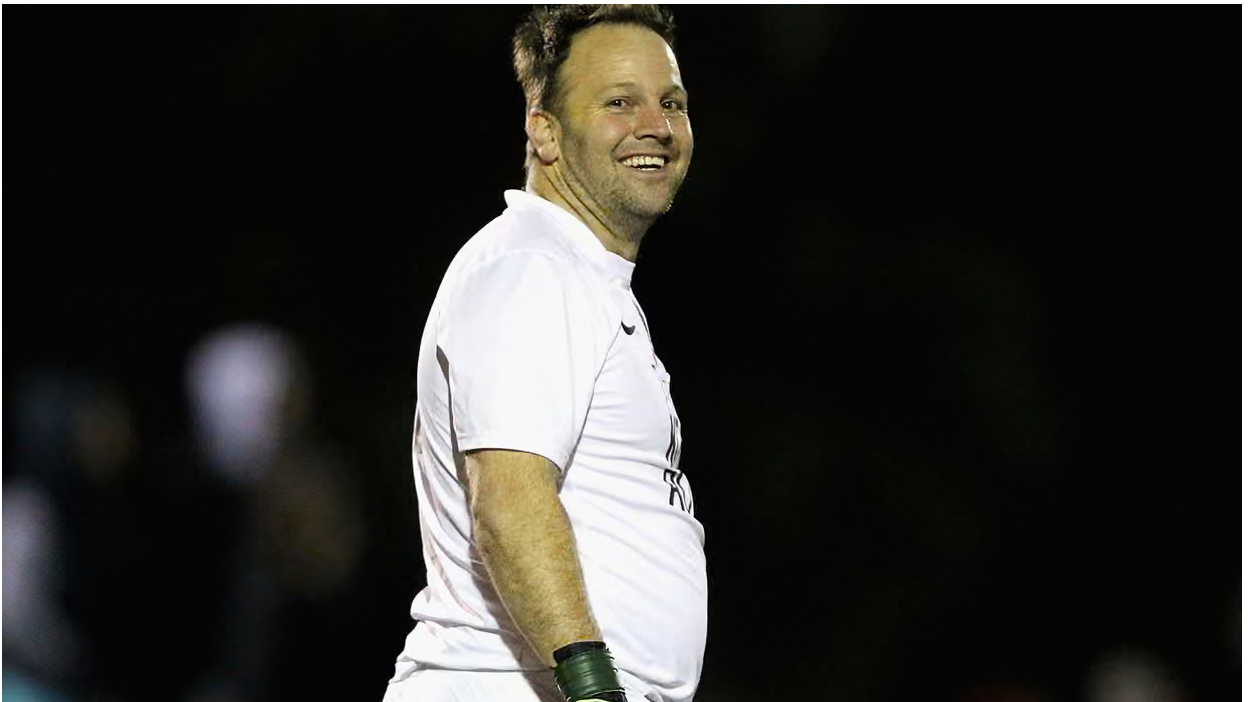
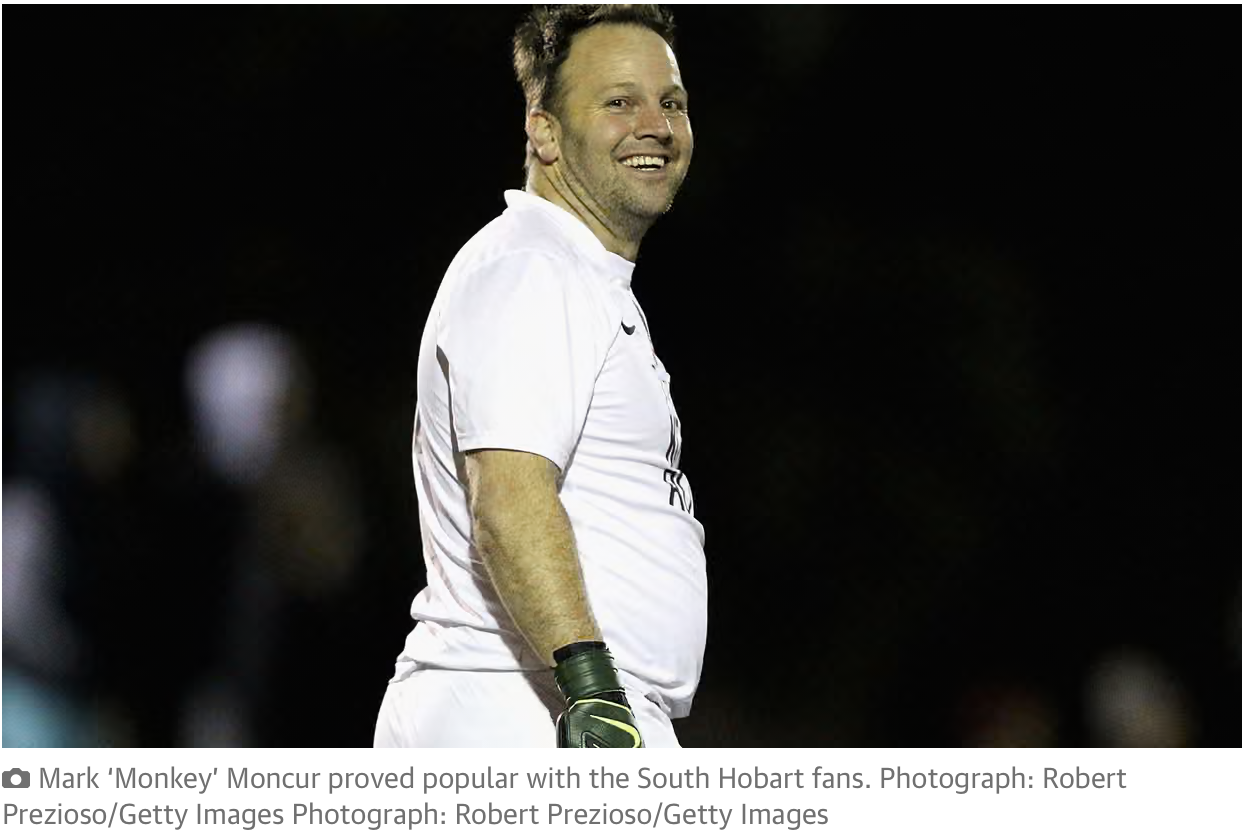
Mark Moncur went in goal that night. He is now a board member and life member of the club, but on that evening he was simply someone stepping up when needed. He wore Kane’s white goalkeeper kit, which was very much not what he would have chosen himself. That detail has stayed with me. You wear what is available. You do what needs to be done.
There was also a familiar dread. The curse of penalties seemed to hang over us in the Australia Cup, even if it hadn’t yet fully announced itself that night. It would surface again in later years, most memorably against Sydney United 58. Once penalties enter your club’s story, they never really leave it. God, I hate penalties.
What strikes me now is this. What Kane was sent off for in 2014 would not even be a bookable offence in 2026. The rules of the game have changed. The interpretations have changed. The moment, though, remains fixed in time.
Later in his article, Gorman wrote that “cold weather, hot food and passionate support make for a memorable evening.”
That line captures it perfectly. Even in defeat, those nights mattered. They still do.
You can read the full article here:
https://www.theguardian.com/football/blog/2014/aug/06/ffa-cup-shines-its-light-on-tasmanias-proud-football-tradition
Reading it now, years later, I feel the nerves again. I also feel how quickly the light moves on. The competition endures. The pride endures. The questions about infrastructure, compliance, and what follows the moment have endured too.

Hope Economics

Why clubs keep betting on seasons that don’t add up
There comes a point, after enough years in football, where you stop asking whether something is possible and start asking whether it is probable.
I find myself there more often now.
Not because I’ve lost belief in football, but because I’ve watched too many clubs, run by good people, make decisions that only make sense if you believe that this season will be the one that breaks the pattern.
This post is about men’s football.
I’ll write about the women’s game separately, because it deserves its own lens.
This is not about ambition.
It’s about hope.
And how hope, in men’s football, becomes an economic model.
A quick explainer
At the top level of men’s state football sits the NPL, the highest tier available in Tasmania. Clubs don’t simply enter it. They are licensed to participate.
That licence comes with financial cost, administrative workload and ongoing compliance obligations. It assumes organisational depth, volunteer capacity and the ability to absorb risk.
Entry itself is expensive.
Holding a licence, meeting compliance standards, staffing match days, maintaining facilities, and delivering what is expected at the top tier requires significant resources before a ball is kicked. Add player payments on top and clubs are committing large sums of money and time with no guarantee of return.
This is not incidental.
It is foundational.
Winning the league does not cover the cost of entry.
Prize money is shared, limited and symbolic.
Which leads to the obvious question.
Why do clubs still pour money into it?
What I’ve seen, up close
Over the years, I’ve watched men’s clubs move in and out of the top tier.
Some lost a benefactor and could not replace that support.
Some merged because the numbers no longer stacked up.
Some simply ran out of people willing to carry the load.
Others chose to stay where they were. Not because they lacked pride but because they understood their limits. They knew what they could staff, fund and sustain.
I’ve seen boards change and priorities shift.
I’ve seen ambitious seasons followed by quiet resets.
I’ve seen clubs chase one last push and clubs choose to step back before the push broke them.
None of it was simple. None of it was clean.
What struck me, over time, was how often the same logic appeared underneath very different decisions.
Hope that the next season would unlock something.
Hope that success would stabilise the club.
Hope that the strain would ease once a target was reached.
Sometimes it did.
Often, it didn’t.
Hope as a business case
Most clubs don’t enter a season expecting to lose money.
They tell themselves
a good Cup run might offset costs
success might attract a major sponsor
crowds might lift
visibility might unlock something bigger
next year will be different
This is not delusion.
It’s hope.
But when hope becomes the justification for repeated financial risk, it stops being optimism and starts becoming an economic strategy.
A fragile one.
Spending to stand still
One of the quiet truths of elite men’s football is that spending is often not about moving forward.
It’s about not slipping back.
Clubs pay players to
hold position
protect reputation
avoid being read as declining
stay serious in the eyes of others
This is not reckless. It’s defensive.
But defensive spending is still spending and it rarely builds anything durable underneath.
When finishing first or last changes very little
There is another question that sits underneath all of this and it’s one I keep coming back to.
In a system without promotion and relegation, what does it actually mean to finish first or last?
You don’t go up.
You don’t go down.
The licence remains.
The costs remain.
The obligations remain.
So the stakes become symbolic rather than structural.
I’ve long been an advocate for promotion and relegation, not because it’s dramatic, but because it gives meaning to position. It creates consequence. It rewards sustainability as much as ambition.
Without it, winning becomes a statement rather than a step.
And that’s where the economics become harder to justify.
If finishing first doesn’t materially change your future and finishing last doesn’t force a reset, then the question naturally follows.
Why are we spending so much?
Is it for progress, or is it for pride?
Is it for pathway, or is it for proof?
Is it to build something, or simply to say we won?
None of those answers are inherently wrong.
But when the cost of chasing that answer includes financial strain, volunteer exhaustion and long-term fragility, it’s fair to ask whether the reward matches the risk.
Hope thrives in systems where consequence is blurred.
Promotion and relegation doesn’t remove hope.
It sharpens it.
The short-term season problem
An eighteen-game season sharpens this dynamic.
With limited matches
pressure on results increases
patience decreases
rotation narrows
depth becomes harder to manage
Paying players feels like insurance against a short runway.
But insurance only works if the risk is occasional, not structural.
The invisible subsidy
Here’s the part that rarely gets named.
Most clubs are not gambling with spare cash.
They are gambling with unpaid labour.
Every dollar spent on player payments usually requires
more administration
more fundraising
more compliance work
more emotional load carried by fewer people
The financial loss is visible.
The human cost is quieter.
And it accumulates.
Why walking away feels impossible
For some clubs, stepping back is unthinkable.
Not because the numbers don’t make sense, but because identity is tied to status.
Being top tier becomes who the club is, rather than where it happens to play.
So the question becomes
How do we stay here?
Not
What does this cost us?
Hope fills the gap where strategy should sit.
Two doors that keep the hope alive
There are genuine prizes on offer in men’s football.
One is open to everyone.
The Lakoseljac Cup allows any club, at any level, to make a run, to test itself, to dream.
The other is narrower.
Win the league and you earn scheduled games against interstate opposition in the Australian Championship.
Benchmarking.
Visibility.
Proof.
Those opportunities are real. They matter.
But they are also rare.
And rare outcomes are a dangerous foundation for regular spending.
When hope crowds out honesty
Hope is not the problem.
Football needs hope.
The problem is when hope replaces honest conversations about
sustainability
volunteer capacity
financial exposure
long-term purpose
When clubs feel they must keep rolling the dice simply to be taken seriously, something has gone wrong in the system.
A quieter definition of ambition
After many years watching seasons come and go, I’ve come to believe this.
Ambition is not how much you spend.
It’s how long you last.
It’s whether the club still recognises itself after leadership changes, after a bad season, after the noise fades.
Hope belongs in football.
I’m less convinced it belongs in the balance sheet.
The question underneath it all
I often wonder whether the biggest gamble in football isn’t losing matches.
It’s continuing to bet on seasons that don’t add up, because we’re afraid to imagine a different way of being ambitious.
Hope is powerful.
But hope, on its own, is not a business model.
And perhaps the bravest decision a club can make is not chasing the next breakthrough, but choosing a future it can actually sustain.

He was our Kenneth
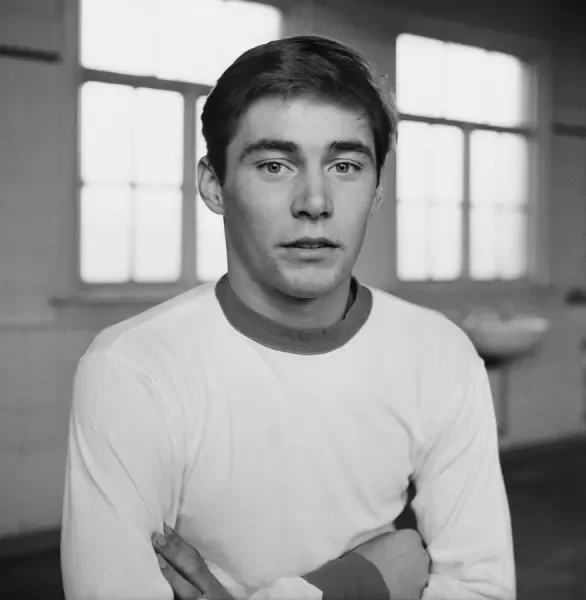
Ken at Aston Villa
Part One: Copley
Copley, 1947
He was born Kenneth Morton on 19 May 1947.
No middle name.
At home, Eddie and Edna called him Kenneth. Outside the house, particularly in the North East of England, he was Kenny.
He was our Kenneth.
Copley was small. One road through the village. Farmhouses set back off the lane. From the very top to the very bottom, barely a kilometre. Quiet enough that you noticed sound when it arrived.
When Ken talks about it now, he says it reminds him of All Creatures Great and Small. That same sense of countryside calm, of people knowing one another, of space to roam.
Sundays were special. Copley Sunday meant picnics, family together and football on any bit of grass that would allow it. Cousins were there. Neville and John Chapman. Neville would later play for Middlesbrough, but back then he was just older, fitter, someone to chase in the summer holidays.
Copley felt safe. Friendly. A farming community where people said hello, where they noticed if you didn’t have your ball with you. There were only one or two shops at first, a Co-op later. A handful of council houses. Not many children. Five-a-side or six-a-side at most. If the ball went over a wall, nobody complained.
Ken was an only child. Well looked after. Well cared for.
He was born in a terraced house, two or three in a row of five. There was a yard and across the driveway a patch of grass. Enough space to juggle, to practise, to wear the ground down. To have a kick without troubling anyone.
Eddie was a busy man. He ran a garage and helped the local farmers. Edna was kind and loving. Like most households of the time, it was disciplined and structured, but Ken never got into trouble. He was always playing football.
Their first house had a backyard. Over the lane was an allotment. That became another place to play. When they later moved to Copley Lane, there was a hot bath ready when he came home muddy and tired. Boots left at the back door. Football was never discouraged. It was simply part of life.
Ken remembers Auntie Effie and Auntie Gwenie, his aunties by marriage. Gwenie was a Sunderland supporter, so football talk and football history were always around. His dad was friendly with Gordon Coe, president of Evenwood Town Football Club. At the time, the club was bringing players in from the army barracks and Eddie spent a lot of time driving and picking them up. Football, again, was just there. Woven in.
One of Ken’s earliest football memories has never left him.
He would have been eight or younger, at a match between Evenwood and Bishop Auckland. The legendary Bob Hardisty was carrying the ball out of defence when Ken ran under the wooden barrier and took it cleanly off him.
He didn’t get into trouble. The Evenwood crowd applauded. Bishop Auckland supporters were less impressed, the tackle stopping the start of an attack. Hardisty looked shocked, then smiled. Ken remembers him coming over afterwards and shaking his hand.
He doesn’t think his dad was with him that day. He thinks he was on his own.
Football never arrived in Ken’s life. It was always there.
Other boys went to the beck, the stream that ran nearby, or into the woods. Ken went with the ball. Always with the ball. He can’t remember getting his first one, only that he always had one.
After school was his favourite time of day. Three o’clock. Dribbling in and out of the white lines painted on the road home, then straight up to the recreation ground. He walked to school every day, ball under his arm, even though there was a bus.
Breakfast was simple. Cornflakes. His favourite meal was beans on toast. Still is.
Winters could be harsh. Snow covered the roads. His dad would clear them with the plough, and Ken would jog behind it on the way to school. If the driveway was blocked, it was cleared so he could have a kick. Weather rarely stopped him.
He wore sandshoes most days, boots for football. They weren’t brilliant. Wet Saturdays were just Saturdays in the North of England. The sound of the ball on stone walls was a dull thud. His mother always knew where he was.
If he couldn’t get out, he read. Football annuals. Football cards. Licking his fingers to turn the pages while waiting for the chance to play again.
Television was black and white. Match of the Day on Saturday nights showed him new things. Different goals. Players running with the ball. Diving headers. The next day he would be out practising what he’d seen, alone if necessary, becoming Tom Finney or Stanley Matthews in his own mind.
He was good at other sports. Decent at cricket. A strong tennis player. A very good athlete. He won the 100, 200 and 400 yards at school. But none of it competed with football.
While other boys his age played in the woods, Ken, six or seven years old, played football with older boys at the rec. He was always challenged. Losing taught him resilience. When something went wrong, he worked harder. Got the ball out and battered it against the wall until it felt right again.
He didn’t talk much on the pitch. He let his football do the talking. He wasn’t a bragger. He was loved in the village. People noticed him without making a fuss.
He was never lonely. There was always a ball.
Looking back now, he says football was everything to him.
“If I look at it now,” he says, “it was like a marriage.”
When asked where home feels like now, he says it’s where we live today. But when we watch English television and he sees a village, a lane, a patch of countryside, he still says, smiling, just like Copley.
Copley gave him space.
Family gave him security.
Football gave him direction.
This is where the story begins.

Why Football Isn’t Covered

A media and ownership explainer
Remembering a different paper
I remember a time when football appeared more often in the local paper.
Not just finals.
Not just opening rounds.
Ordinary weekends, with local results and familiar names.
That memory isn’t nostalgia.
It reflects a different media structure.
When The Mercury was locally owned
For much of its history, The Mercury was owned and operated locally by Davies Brothers. Editorial decisions were made in Hobart, by people who lived in the community the paper served. Local sport mattered because local life mattered. Football sat naturally alongside cricket, bowls, racing and school sport as part of the weekly rhythm.
People like Walter Pless, a teacher by profession and a long-time football writer by passion, contributed regular football coverage over many years. His work reflected what actually happened across Tasmanian grounds each weekend and was widely respected within the football community.
The ownership shift
That structure began to change in the 1980s.
Ownership shifted first to the Herald and Weekly Times, and later into the News Corp Australia stable. This was not a moral turning point. It was a structural one.
National ownership brought economies of scale, syndicated content and different priorities. Editorial focus increasingly aligned with sports that carried national commercial value and broadcast relevance. Coverage flowed towards codes that delivered audience, advertising and subscription return across multiple platforms.
Newspapers and broadcast working together
This is where the link between newspapers and broadcasting matters.
For many years, News Corp newspapers and Foxtel sat within the same commercial ecosystem. Newspapers didn’t just report on sport. They promoted broadcasts, previewed matches, amplified commentary and reinforced which sports were worth watching on television. Coverage and promotion worked in the same direction.
This didn’t require instruction or pressure.
The incentives were already aligned.
Sports like the Australian Football League and elite cricket are not just games. They are media products. Regular coverage supports broadcast value, drives subscriptions and keeps audiences engaged between matches. It is efficient, repeatable content.
Why football sits outside that system
Football, particularly local and community football, sits outside that ecosystem.
It is fragmented.
It spans multiple competitions and age groups.
It is played across dozens of grounds at overlapping times.
It produces participation at scale, but little broadcast leverage.
From a production perspective, it is difficult and expensive content for a shrinking newsroom.
An OTT and broadcast rights perspective
I studied OTT platforms and broadcast rights as part of my AFC coursework. In football-first countries, domestic football anchors the entire media economy. Broadcast platforms exist because football drives subscriptions. Coverage follows naturally.
Australia is different.
We have multiple football codes competing for attention. Legacy media aligned early with some and not others. Those alignments hardened over time.
Legacy influence is the momentum of past decisions. Once a sport dominates coverage for long enough, it begins to feel normal, expected, and permanent. That dominance is reinforced by habit, advertising relationships and audience expectation.
Football arrived late to that system and never fully integrated into the commercial media model.
That does not make football small.
It makes it inconvenient.
But football does get coverage
It is worth saying that football does still receive coverage.
National competitions like the A-League are reported on. The Socceroos and Matildas receive attention, particularly during major tournaments. And football is never absent when there is a scandal, controversy or an opportunity to critique fan behaviour.
But this is not local coverage.
It is national, episodic and easily accessible online. It does little to reflect the weekly reality of football in Tasmania, where hundreds of games are played every weekend by juniors, women, men, referees, coaches and volunteers who rarely see themselves acknowledged.
Personally, I find myself less engaged with the A-League now than I once was. Too many years were spent hoping, pushing and waiting for Tasmania to be meaningfully included. The absence of consistent local coverage also means fewer eyeballs on screens, fewer subscriptions and less perceived value added to broadcast rights. In that context, it is hard to ignore the uncomfortable possibility that this very invisibility is part of the reason Tasmania may never be seen as commercially viable for inclusion.
That distance has changed how I consume the game, but it hasn’t changed how deeply football exists here.
A changing broadcast landscape
More recently, Foxtel moved into new ownership under DAZN, a global streaming platform focused on efficiency, scale and return on investment rather than tradition or cultural legacy. Expensive domestic rights are now assessed through a different commercial lens.
What that means long-term remains to be seen. Ownership changes do not guarantee change. But they do loosen assumptions that once felt fixed.
Not ideology, but structure
I am not a fan of Rupert Murdoch or the political influence his media has exerted over decades. But this is not an argument about ideology. It is an explanation of how ownership, commercial alignment and broadcast strategy shape what is visible and what quietly disappears.
Football did not stop happening.
It stopped being seen.
How football adapted
So football adapted.
At many clubs, media and communications have become near full-time roles. Content is produced to keep sponsors engaged, promote attendance, document participation and tell stories that would otherwise go untold. Websites, social media, newsletters, photography and video now sit alongside coaching and administration.
This is not self-promotion.
It is survival.
A small personal ritual
I still subscribe to The Mercury.
Partly out of habit.
Partly out of loyalty to local journalism.
And partly, if I am honest, just in case.
Most days I skim straight to the back. I flick through the last pages, not really reading, just checking. Looking for a scoreline. A name. A photograph that suggests football has slipped back in.
It rarely has.
That small ritual probably says more than any media analysis. Coverage doesn’t just inform. It trains expectation. And over time, even those of us deeply involved in the game stop expecting to be seen.
Why this matters
This is not a plea for more coverage.
It is a 101 explanation of why coverage looks the way it does.
And perhaps a reminder that what is not reported still matters, still exists and still deserves to be remembered.
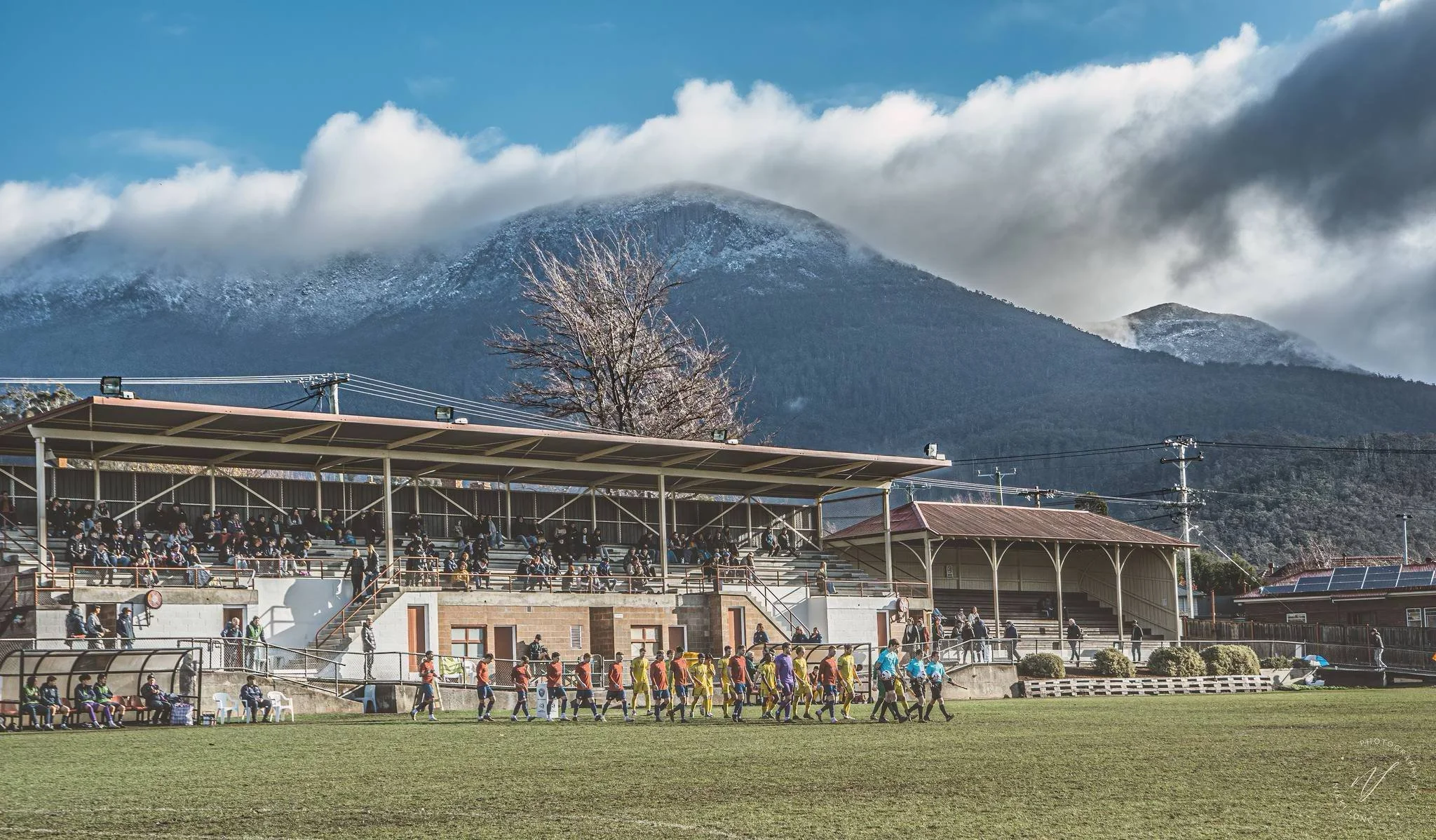
Goodbye 2025. Welcome 2026
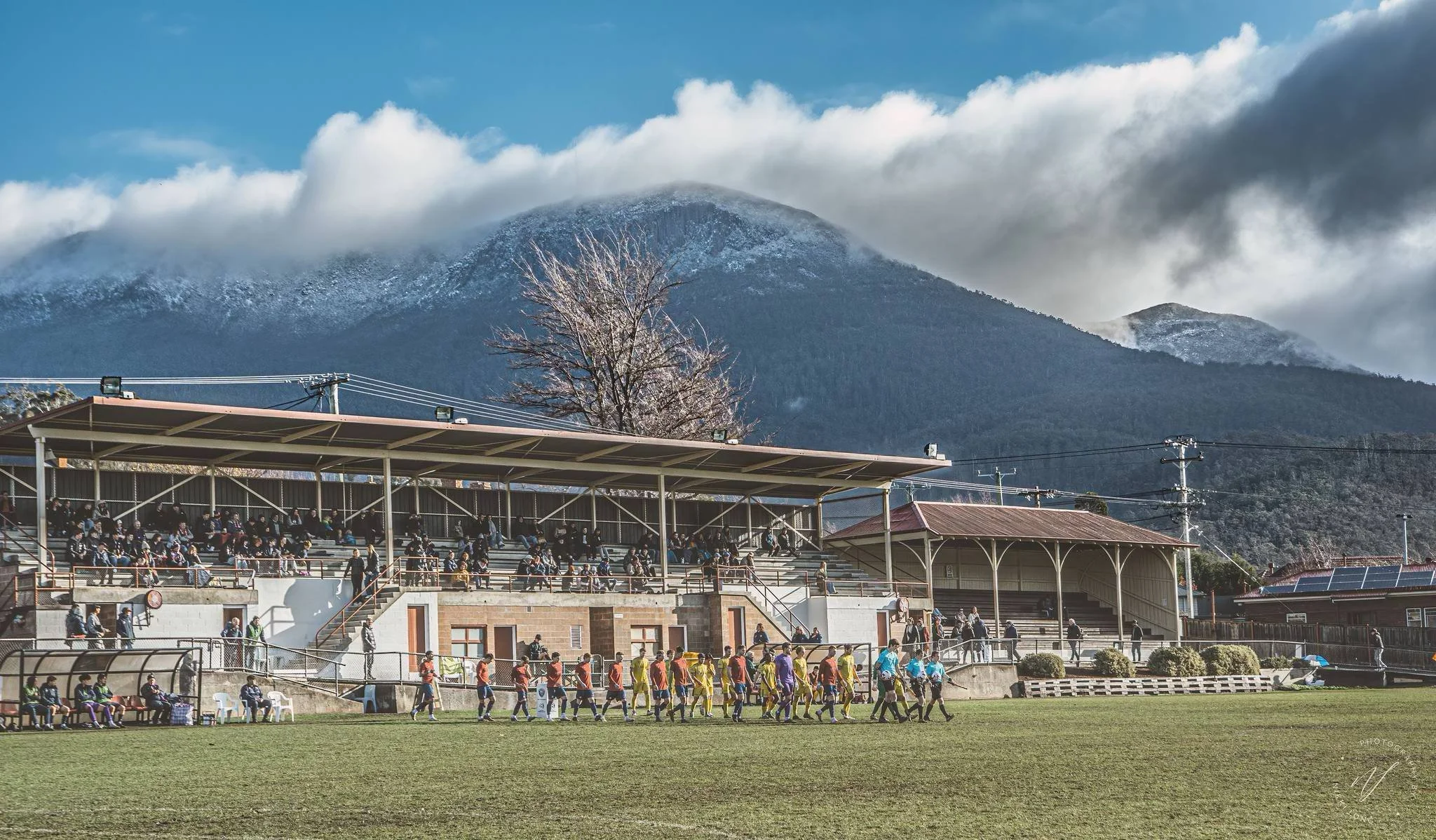
One of Nikki’s fab photos
I want to write this down in case I forget.
Not the events, they are easy enough to list but the texture of the year. How it felt to live inside it.
2025 was a big year for me.
Stepping away
I stepped away from the Presidency of South Hobart Football Club after seventeen years. That sentence still lands heavily. Not because I regret the decision but because it marked the end of a long season of responsibility. The kind that seeps into your thinking and stays there long after the meetings end.
I am still learning who I am in football without a badge or a title attached.
Ken stepped back too, giving up senior coaching roles after more than fifty years in football. Watching someone who has shaped his entire adult life around the game feel a little lost has been confronting. There is grief in that, even when the decision is right.
We are learning, together, what it means to still belong without being central.
Max left for Melbourne, chasing opportunity and growth in his coaching. That was a proud moment and a tender one. You don’t spend decades building something as a family without feeling the pull when one of you needs to step beyond it.
I am glad he went. I miss him too.
The joy alongside it
The trips away this year were genuinely fun. Nikki came with us and at one point Ken said he felt like he was travelling with two wives. He was constantly fussed over, checked on and looked after.
It became a running joke but there was something quietly lovely in it too.
Those trips were for Australian Championship games, Wollongong, Marconi and Heidelberg. It was fabulous to see other clubs competing in the NPL system and to experience the level they operate at.
The gap is not huge. The football certainly isn’t. The money, perhaps, is.
Those shared moments, away from home, reminded me how much joy still sits alongside responsibility.
Building and sustaining
Ned continued to do an outstanding job as Academy Director, providing consistency, structure and calm leadership. He has been trusted by players, parents and coaches alike and the Academy numbers this year reflect that.
Parents are choosing organisation, professionalism, certainty and child safety for their children and they are prepared to pay for it. That tells its own story about where community football is heading.
Pete Edwards joined South Hobart Football Club and Morton’s Soccer School later in the year, after what he described as the longest interview process he had ever experienced for a coaching role.
His arrival added depth and energy to the program and complemented the foundations already in place.
On the field, the club competed in the Australian Championships. We travelled to watch them play. We hosted powerhouse clubs at home. We welcomed South Melbourne to KGV in the Australia Cup after winning the Lakoseljac Cup.
There were moments when I stood back and simply took it in.
Not pride exactly. Something quieter. A sense of perspective.
Nick won a third Best Player award this year. Three in a row. Watching that level of consistency, professionalism and resilience never gets old. He goes about his football with standards that don’t waver.
He also fielded offers from clubs in Tasmania and interstate. Recognition like that doesn’t happen in isolation. It is earned over time, through work, behaviour and care for the game.
The work and the weight
I also want to acknowledge the Board of South Hobart Football Club. Working alongside them this year has been one of the quiet strengths of 2025.
They love the game as deeply as I do and they carry that love with resilience and care.
Over the past two years we worked relentlessly on our bid for inclusion in the Australian Championships as a foundation member. The volume of work was immense. There were knockbacks, moments of limited support and long stretches where it felt like we were carrying the weight alone.
We can pretend that being knocked back is fine.
We can rally, regroup and carry on.
But the truth is, it wears you down.
There was a familiar feeling too. The here we go again sense of coming close, of almost making it, of being asked to prove ourselves one more time. It exposed divisions in the game that are hard to ignore.
And yet, through all of it, the Board remained engaged, principled and committed. That kind of resilience doesn’t happen by accident. It is earned, collectively, over time.
There was, however, one issue this year that cut deeply. It wasn’t a football issue, but it affected everything. It gnawed away at me and triggered a constant sense of unfairness, of asking, over and over, why is this happening to my club?
It tested my mental resilience in ways I didn’t expect and at times it was genuinely damaging.
Ten years of criticism and blame will do that to a person. Ten years of having to justify your existence, to answer every complaint directed at you.
Continuing as I was became unsustainable.
I’m not ready to name it yet, but I carry it with me into 2026 with clearer boundaries than before.
Scale and momentum
Both South Hobart and CRJFA continue to face the daily challenge of fitting thousands of children onto too few grounds. It is a constant exercise in compromise, goodwill and logistics.
Football is thriving. Participation is strong. Demand keeps growing. The system around it strains to keep up.
I would be remiss not to mention the Hobart Cup. The biggest Junior and Youth tournament in Tasmania (of any sport) and one that still takes my breath away each year.
In 2025 we held our breath over the weather, as always, knowing how much rides on a few days in September. This year it held.
Record numbers entered.
Record numbers attended.
Grounds full from morning to night.
Kids everywhere.
Families everywhere.
It was a fabulous showcase of football and of what is possible when the game grows beyond what can realistically be run as a purely volunteer event.
There are signs of movement. A new building at D’Arcy Street. New lights at Wellesley. Projects that take years to materialise and even longer to advocate for.
They represent progress, even when it arrives slowly.
Looking ahead
Some of my favourite moments of the year are imagined ones, still forming. Sitting in the new clubhouse, hopefully in 2026, having a drink with Murray and looking out over a space shaped by decades of effort and belief.
I remain in awe of those who support the club financially and of those who turn up, quietly and consistently, to do the work that keeps football alive.
The people who make the whole thing function rarely ask to be noticed.
I have written a lot this year. To remember. To make sense of more than twenty years spent inside football, governance and community life.
Writing has become a way of choosing how I stay connected, without losing myself in the process.
As I move into 2026, I feel something I didn’t expect.
Optimism.
Not the glossy kind. Not optimism that ignores structural problems or hard truths. But a steadier sense that change is possible and that I can choose how close I stand to the fire.
So this is my goodbye to 2025.
A year of endings, shifts and recalibration.
And my welcome to 2026.
A year that feels open, lighter and full of possibility.
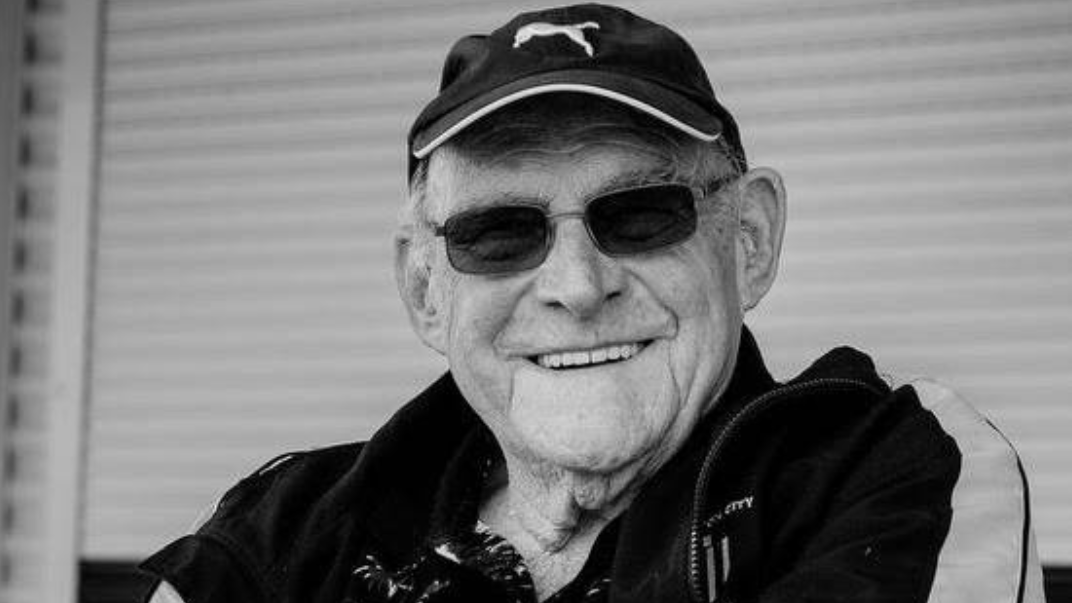
Football Faces Tasmania Peter Mies

Peter Mies at Launceston Juventus.
Photo: The Examiner.
I interviewed Peter Mies some time ago, never imagining I would one day be sharing his words after his passing.
Peter’s life in football spanned decades, continents, clubs, and generations. He played, coached, captained, administered, volunteered and supported the game in Tasmania for over sixty years. More than that, football was how he found belonging as a migrant, how he built lifelong friendships and how his family remained connected across three generations.
This interview is shared largely in Peter’s own words. I have resisted the urge to polish or rewrite them. What follows is not a tribute written about him but a record of how he spoke about the game he loved, the people who mattered most to him and the life football gave him.
What are your first football memories and did any particular person instil a love of football into you?
On the push bike early Saturday mornings in Holland, aged seven. Playing football in the snow. It did not matter what the weather, I just loved to play.
How long have you been involved in football and what roles have you played?
I have been involved for seventy-five years. I have been coach, captain, Tasmanian representative, president, life member. I am still Club Patron of Launceston Juventus, LCFC.
You name it. I have done it.
Tell us what football was like in Tasmania when you first got involved. Was it better, worse, different? How has it changed?
Many players were migrants that came from Europe. The standard was generally better, some teams were better for sure. The players are generally fitter now though.
Did you have role models or football heroes, or anti-heroes for that matter?
Didi, Garrincha, Pelé, Cruyff, Maradona, Messi.
How has football affected you and your family?
When I arrived in Tasmania as a migrant, it was great to have football here so that I could continue playing and continue my love of the game. It was a great way to meet new people and make new friends that also loved the beautiful game.
I have continued this love of the game in Tasmania for over sixty years in all capacities. I have been fortunate to be involved as a player and coach and to win every major trophy on offer in Tasmania.
Football has been a massive part of my family, going across three generations, starting with me and still going strong. I have been fortunate that my son Roger had a great career and I followed him very closely. I also have five grandchildren that have all played football and I have followed them all through their childhood.
Roger’s children, Noah and Ryan Mies, in Launceston, and my daughter Olga’s children, Sam, Zac and Olivia Leon, in Hobart.
I always went with Roger everywhere, including interstate to watch him play as a junior, and then through his senior career. I never missed a game.
I also went interstate to watch my grandsons Noah and Ryan play. I would be watching Noah and Ryan play every weekend in Launceston, and if I was not watching them, I would be in Hobart watching Sam, Zac and Olivia.
Noah, Newcastle Olympic, and Olivia, Clarence Zebras, are still playing. I watch Noah every week on TV on YouTube. I am still very black and white when I watch Launceston City play every week.
Football has given a lot back to me.
Which Tasmanians have affected your involvement in football, both on and off the field, and why?
The biggest influence on my football career has been my beautiful late wife, Christina. She stood by me in everything in life and supported me in every role I had in football.
Christina also became a very well-deserved life member of Launceston Juventus, LCFC, for the many years she ran the club canteen. I lost count.
She always made the hamburgers fresh by hand the night before, as well as organising everything for game day. She helped with any club activities and loved watching me, her son, and her grandchildren play.
She was a great supporter of Launceston Juventus, LCFC, and football in general. A true lady.
If you could make any changes to Tasmanian football, what would you do?
Some aspects of the administration of the game. With all the computers and the like these days, something that should be relatively simple, such as rostering, seems to throw up outcomes that do not make much sense.
The rostering seemed more straightforward when it was run by volunteers with a pen and paper.
Looking back on your football life, what do you think your legacy to the game in Tasmania might be?
I began an amazing family dynasty, where myself, my son Roger, and my grandson Noah are the only family in Tasmanian football history to have three consecutive generations play for Tasmania.
I have overseen the rise of Launceston Juventus as a football powerhouse in Tasmania and have been involved in winning every major trophy available in the state. We are the only club in the north of the state that have played in every year of the State League or NPL since the 1960s.
I have always been an advocate for improving the standard of football in Tasmania and was instrumental in bringing key import players to Tasmania, for example Peter Savill, Peter Sawdon and the Guest brothers. These players helped raise the standard of the game through their own playing quality, but also gave back to Tasmanian football and worked with local players and juniors so they could improve for the betterment of the game.
I am very proud to be the Club Patron at LCFC.
I always played the beautiful game with total passion and commitment, hard but fair. I have kept that philosophy in the way that I have lived my life.

In Football Nothing Has Happened Yet

Ken and I were watching football early one morning, coffee in hand, when the conversation drifted, as it often does, into goals.
When are they scored?
More in the first half or the second?
It is one of those simple questions that opens something bigger. Because almost immediately the familiar criticism surfaced, the one football always seems to carry.
“There aren’t enough goals.”
It is a comment most football people have heard countless times, usually from those more used to sports where the scoreboard is constantly ticking over.
Early mornings and plenty to watch
Perhaps it helps that we are watching a lot of football at the moment.
Early morning kick-offs suit us. The house is quiet. The day has not yet started. We can sit and watch properly.
Premier League.
AFCON.
The EFL Championship.
There have been plenty of goals, plenty of drama, and plenty of different game states to observe. And yet, even with all of that, it is not the number of goals that holds the attention. It is when they come and what they change.
The comparison problem
In Australia, football lives alongside sports like AFL, where a goal is worth six points and scores can climb quickly and dramatically.
There is movement on the scoreboard almost all the time.
Momentum is visible.
Reward feels constant.
Football does not work that way.
A typical match might finish 1–0, 1–1, or sometimes 0–0, and to some eyes that feels underwhelming. But that reaction often comes from measuring football against the wrong standard.
Football is not a high-scoring sport by design. It never has been.
Why low scores create tension, not boredom
In football, goals are rare. That is precisely why they matter.
A single goal can change everything.
A single mistake can decide a match.
A single moment can undo ninety minutes of discipline.
In a 0–0 game, nothing feels settled. Every attack carries possibility. Every defensive error feels dangerous. The longer the score stays level, the greater the tension becomes.
A 1–1 match can feel even tighter. Both teams know that one more goal may be decisive. Risk and restraint exist side by side, and every decision is weighed.
This is not emptiness.
It is suspense.
When goals are actually scored
When Ken and I went back to our original question, the answer was clear.
Across most leagues and competitions, more goals are scored in the second half than the first.
Just under half come before the break.
Just over half come after.
The final fifteen minutes of a match are consistently the most goal-heavy period of all.
This matters, because it explains why football often feels as though it is building rather than exploding early.
A quiet first half does not mean a dull match.
It often means the tension is still forming.
First half control, second half consequence
The first half in football is often cautious. Teams are organised, legs are fresh, mistakes are fewer. It is not unusual for a match to reach half-time scoreless. But this is not a failure of entertainment. It is the laying of foundations.
Most goals come later, when the game loosens and decisions become harder to execute perfectly.
Why the second half opens up
There are sensible reasons for this.
Fatigue begins to show.
Concentration slips.
Defensive structure becomes harder to maintain.
Game state matters too. Once a team is behind, they must take risks. Lines stretch. Spaces appear. Substitutions introduce fresh legs and new problems to solve.
Football rewards patience and punishes small errors. The longer the game goes, the harder perfection becomes.
Discipline still matters
How often have we seen it. A side that sits deep, absorbs pressure, defends for almost ninety minutes, and still finds a way to win.
Not by accident.
By discipline.
By holding shape when legs are heavy.
By saying no to the tempting pass forward.
By trusting teammates to do their job.
Those matches are often dismissed as negative or unattractive, but they are anything but. They are studies in concentration and restraint. They remind us that football is not just about attacking flair, but about collective resolve. Sometimes the most impressive thing a team does is refuse to break.
Where goals actually come from
Most goals are not scored from distance. They are not spectacular. They are not clean.
They come from inside the box.
From close range.
From cut-backs.
From second balls.
From moments when structure finally gives way.
Long-range goals live in the memory, but they are the exception. Football is designed around probability, not beauty. The closer you are to goal, the harder it is to defend perfectly.
This is why teams that sit deep can survive for so long. They are not just defending space. They are defending the most dangerous areas of the pitch. They are limiting probability.
When that discipline holds, the game remains tight. When it cracks, it often cracks suddenly.
Where VAR fits into all of this
This is where modern football complicates the conversation.
The introduction of VAR has led many to feel that football now has even fewer goals, particularly because of marginal offside decisions. Lines drawn so tightly that a shoulder, a knee, or yes, the nose of an attacker appears to cancel out the moment entirely.
Statistically, VAR has not reduced the total number of goals. In some competitions, goals have even increased slightly, largely because more penalties are awarded.
But numbers are not really what people are reacting to.
What VAR changed was how goals are experienced.
A goal used to be instinctive.
Now it is provisional.
The pause.
The wait.
The freeze-frame.
The lines.
When goals are already rare, taking one away, even correctly, feels enormous. Football is a low-scoring game built on flow and emotion. It was never designed to be judged frame by frame.
For a time, VAR chased absolute precision, and in doing so offended football’s sense of fairness. Most competitions have since softened that approach, quietly acknowledging that being technically right is not always the same as being true to the game.
Understanding football on its own terms
Football is often criticised for not offering constant reward, but that criticism misunderstands its nature.
The drama is not in accumulation.
It is in consequence.
Goals arrive less often, but when they do, they carry weight. They reshape the match, the crowd, and sometimes the season.
Perhaps that is why so many of us find ourselves leaning forward in the final stages of a game, even when the score is low. Especially when the score is low.
Because in football, nothing has happened yet.

Master and Servant - paying to be Governed

There is an uncomfortable dynamic at the heart of football governance that we rarely name.
Clubs fund the system.
Governing bodies are paid to run it.
Volunteers deliver it.
Somewhere in that arrangement, roles blur.
We pay to be governed yet often feel unheard. Governing bodies are tasked with serving the game yet must exercise authority. Volunteers carry the workload, yet resist being directed. Everyone feels the tension, even if we lack the language for it.
With some distance from formal roles, and more time to reflect, the patterns have become harder to ignore.
That tension sits uneasily between two ideas.
Master and servant.
Paying to be governed
Football clubs do not sit outside the governance system. They fund it.
Affiliation fees.
Levies.
Licensing costs.
Compliance charges.
Money flows upwards. Clubs pay to participate. They pay to be regulated. They pay to be governed.
It is not unreasonable that payment creates expectation. When clubs contribute financially, they expect to be listened to. They expect decisions to reflect lived reality. They expect the burden to be understood.
This is not entitlement. It is a natural consequence of funding a system from below.
Authority and responsibility
Governing bodies, in turn, carry responsibility for the whole game. They are required to make decisions that apply broadly and consistently. They must balance competing interests. They must say no. They must absorb dissatisfaction.
They cannot please everyone. They are paid because someone has to hold that line.
This is where the relationship becomes strained.
Clubs experience decisions as distant or imposed. Governing bodies experience feedback as constant pressure. Both feel misunderstood.
Neither position is entirely comfortable.
The volunteer shield
Over the years I have heard the phrase many times.
You can’t tell me what to do, I’m a volunteer.
It is often said with conviction, sometimes with frustration, and sometimes with pride. Volunteering is a badge of honour. It signals contribution, generosity and commitment. It carries moral weight.
In many ways, it deserves respect.
But football no longer operates in a space where that statement is entirely true.
Volunteers are subject to rules, standards and decisions made elsewhere. Safeguarding frameworks, licensing criteria, governance requirements and compliance obligations apply regardless of whether a role is paid or unpaid.
Governing bodies can, in fact, tell volunteers what to do.
That reality sits uncomfortably alongside the deeply held belief that volunteering should come with autonomy.
Where it breaks down
This contradiction sits at the centre of much of the frustration in football.
Clubs pay to be governed, and expect to be heard.
Governing bodies are paid to govern, and must exercise authority.
Volunteers deliver the system, and resist being directed.
Each position makes sense on its own. Together, they create friction.
Money changes expectations. Volunteering creates resistance to control. Authority exists without ownership. Responsibility exists without power.
No one feels fully served.
Voice and being heard
Much of the tension plays out around voice.
Who gets to speak.
How they speak.
And whether speaking results in change.
AGMs, emails, committees and formal consultation processes provide opportunities to speak. They do not always provide the experience of being heard.
Being allowed to contribute feedback is not the same as shaping outcomes. When decisions are made elsewhere, or when consultation feels procedural, frustration grows.
The role of the CEO
In practice, the CEO often becomes the central figure in this dynamic.
Over many years as a club President, I dealt with a number of CEOs. Some listened well. Some did not. The difference mattered.
When the relationship worked, the role was manageable, even when issues were complex or decisions were difficult. When it didn’t, the role became significantly harder.
That is not because a President expects agreement. Disagreement is part of governance. It is because, when issues arise, the CEO is often the first and sometimes the only point of contact for clubs trying to navigate the system.
When you are a club President and problems emerge, who do you speak to within the governing body? Who helps interpret decisions, provide context, or offer advice when written rules do not neatly fit lived reality?
Boards are removed by design. Committees meet periodically. Formal processes are slow. The CEO becomes the conduit, the interpreter, the sounding board and sometimes the shock absorber.
In a small football state, this role carries particular weight. There are fewer layers, fewer alternative pathways and fewer places to go. When that central relationship functions well, tension can be absorbed. When it does not, frustration escalates quickly.
This is not about personality or popularity. Most people in these roles are trying to do the right thing. But in a small system, leadership style amplifies existing tension rather than containing it.
The cost of ambiguity
Football sits in an awkward space.
It is funded from below.
Delivered by volunteers.
Governed by paid professionals.
Roles overlap. Expectations collide.
Clubs feel like customers and subjects at the same time. Governing bodies feel like servants and masters at the same time.
This ambiguity is not accidental. It is structural. And it carries a cost.
Frustration.
Burnout.
Disengagement.
Mistrust.
It also leaves people carrying tension that is not theirs to resolve, long after meetings end and emails are sent.
For me, that sense of helplessness and the accumulation of frustration over many years, eventually became a factor in stepping away from formal leadership roles. Not because I stopped caring, but because carrying unresolved tension for too long comes at a personal cost.
None of these are caused by bad intent. They arise when systems outgrow the assumptions they were built on.
An unresolved tension
This is not an argument for less governance, or for unpaid administrators to carry more authority. It is not a call for blame.
It is an attempt to name a paradox.
Football asks clubs to fund the system, governing bodies to control it and volunteers to deliver it. Each role carries expectation. Each carries pressure.
Perhaps the real difficulty is not deciding who is master and who is servant, but acknowledging that the system asks all three to live with that ambiguity, every day.
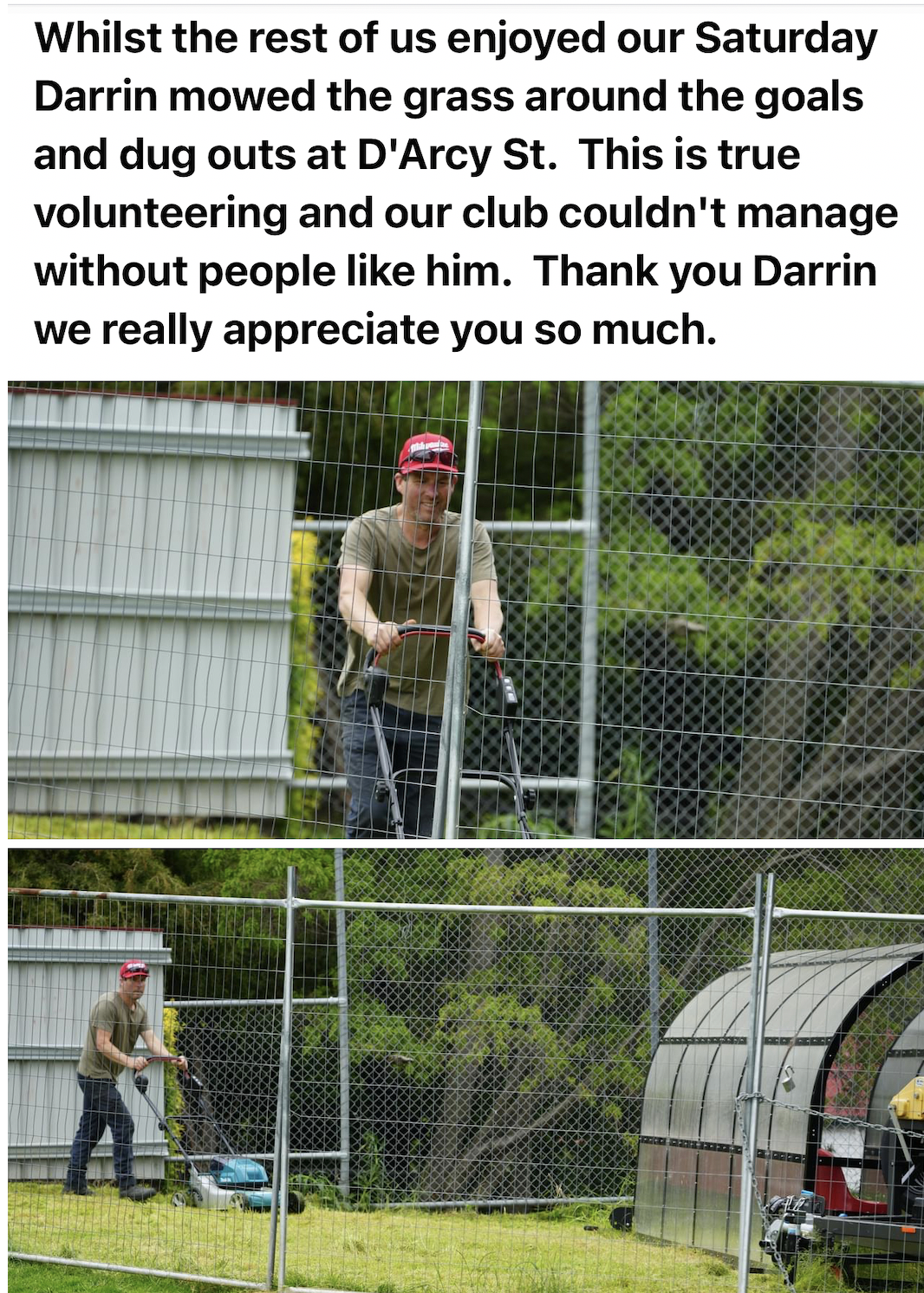
When Football Outgrew the Volunteer Model
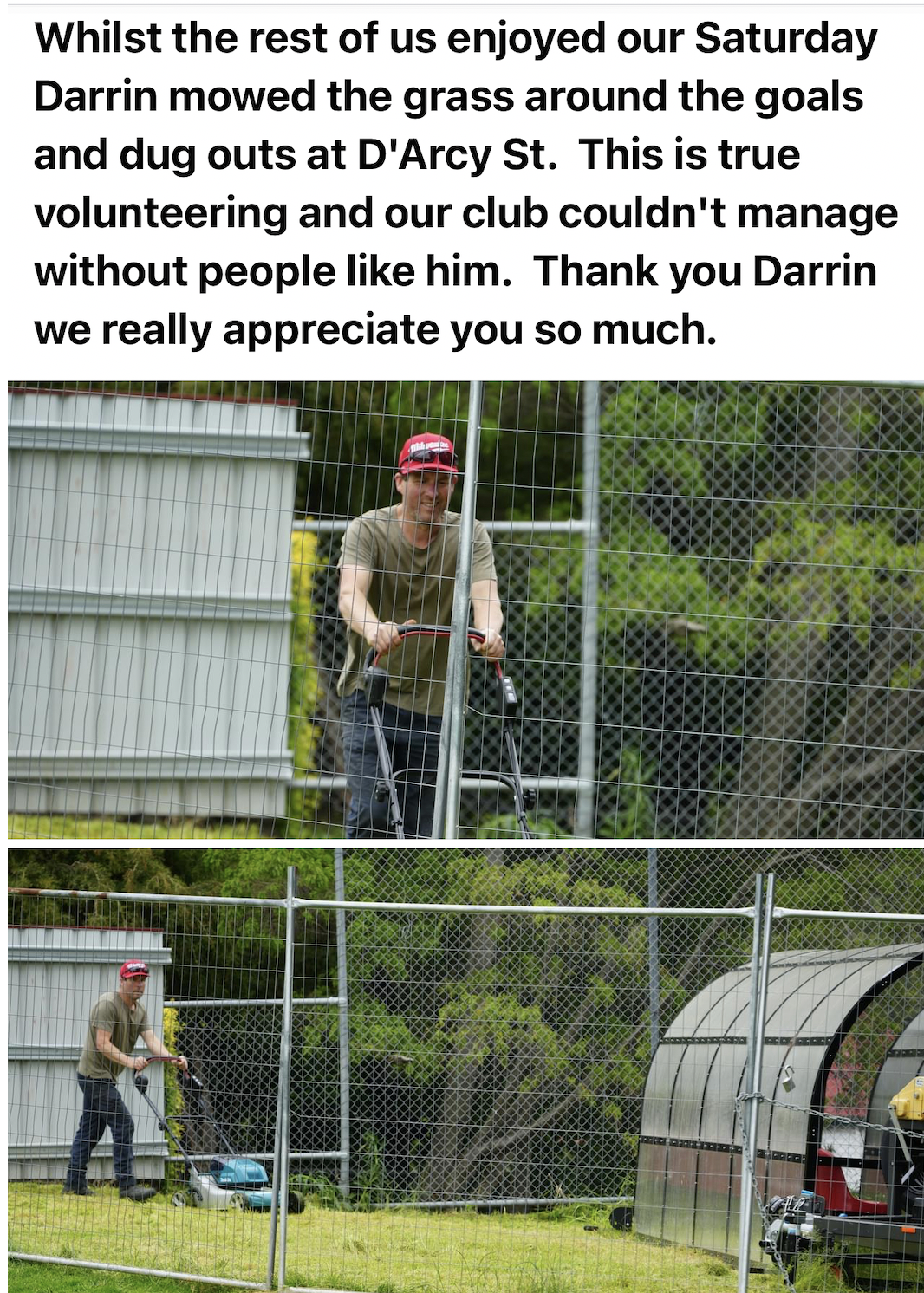
I was prompted to write this after sharing a recent Football Faces interview with Cathy James. She made a simple observation in passing, that football clubs now operate much like small businesses. It landed because it rang true.
It also explained a tension many of us feel but struggle to articulate.
For a long time, football clubs were spoken about as community organisations.
Run by volunteers.
Low cost.
Flexible.
That description once fitted.
It no longer does.
Modern football clubs now operate somewhere between amateur sport and professional enterprise. Expectations have shifted, quietly but decisively, while the structures beneath them have not.
Professional expectations, volunteer labour
Players expect to be paid.
Coaches expect to be paid.
Support staff expect allowances.
Families expect quality programs, safe environments, clear pathways and professional communication. Leagues expect compliance, reporting, licensing and consistency. Sponsors expect professionalism.
At the same time, boards remain unpaid. Canteens are staffed by volunteers. Administration is done after hours. The same six or eight people carry most of the load, year after year.
The tension is obvious.
It is also unsustainable.
Football clubs as small businesses
Whether we like the label or not, most football clubs now operate as small businesses.
They manage substantial budgets.
They pay wages and allowances.
They hire facilities.
They purchase equipment.
They insure people, assets and activities.
They manage risk.
They communicate, market and brand themselves.
Many clubs are registered for GST. They submit BAS statements to the ATO. They maintain financial records and manage cash flow. These are not optional tasks. They are legal obligations.
Clubs also apply for competitive grants, often to fund infrastructure, equipment or participation programs. Grant writing is skilled, time-consuming work. It involves compliance, reporting and acquittals and it carries real consequences if done poorly. This work is largely invisible and almost always unpaid.
Safeguarding and compliance
Child safeguarding alone has transformed how clubs operate, and rightly so.
Clubs are responsible for child safety frameworks, working with vulnerable people checks, education, reporting obligations and compliance. These are critical protections. They take time, care and administrative effort. They are not optional, and they are not light-touch responsibilities.
This work matters deeply. It also adds to the professional load carried by clubs that are still largely powered by volunteers.
Governance and responsibility
Boards are not symbolic. They carry legal and financial responsibility. Decisions have consequences. Compliance matters.
Many clubs are independently audited. Audits cost money but they provide assurance and transparency for boards, members and the wider community. They are part of operating responsibly.
This level of responsibility is one reason board positions are increasingly difficult to fill. It is not apathy. It is caution. People understand, instinctively, that being on a board carries weight, risk and expectation.
Trying to solve the volunteer problem
I remember many conversations over the years around a board table, asking the same question.
How do we tackle the lack of volunteers?
One suggestion was to ask families to staff the canteen once a season, shared across a team. On the surface, it seemed reasonable. Spread the load. Keep costs down. Maintain the volunteer model.
The response was mixed.
Some said they simply did not have the time.
Some said they would rather contribute financially instead.
Some felt it was unfair if everyone did not participate equally.
Some were willing. Some were not.
There was no solution that felt both fair and workable.
When consensus could not be reached, clubs returned to the only mechanism they reliably have.
Registration fees increased.
Bottom-up funding
Football is largely funded from the bottom up.
There are no major broadcast deals filtering down to community clubs. No television windfalls quietly underwriting participation. Football competes with AFL, NRL and cricket for broadcast money and commercial attention and it does so from a weaker position.
As a result, money flows upwards, not downwards.
Clubs pay affiliation fees.
They pay levies.
They pay licensing costs.
They pay to be governed.
Very little flows back.
NPL clubs, in particular, sit in an uncomfortable twilight zone. They are expected to operate like small businesses, with professional standards, paid staff and significant compliance obligations, yet because they are sporting clubs they are often ineligible for small business grants and support. They carry the costs of professionalism without access to the systems designed to support it.
This is not a complaint. It is a structural reality. But it matters when football is criticised for its cost without acknowledging how the game is actually funded.
The shrinking volunteer pool
The volunteer model has also collided with social change.
Two-income households are now the norm. Women work. Evenings are full. The cost of living is higher than ever. Time is scarce.
The old assumptions, mums in the canteen, dads on the committee, no longer reflect how families live. Yet clubs are still expected to function as though that labour will simply appear.
It doesn’t.
Football is expensive
Football is often accused of being expensive. That criticism is not always wrong, but it is rarely placed in context.
Benchmarks are higher than ever. Safety standards, coaching qualifications, facilities, insurance, compliance, communication and expectations have all risen. Clubs are expected to deliver professional experiences while charging community prices.
When volunteer labour cannot be guaranteed and funding does not flow down, costs do not disappear.
They shift.
How boards are really filled
When board vacancies arise, there is rarely a queue. Positions are filled through personal approaches. A tap on the shoulder. A familiar name.
This is often framed as exclusivity or power retention. More often, it is survival.
Clubs do not struggle to find people who care. They struggle to find people who can carry the responsibility, the workload and the time commitment without breaking.
The question we keep avoiding
If football clubs are already operating as small businesses, perhaps the real question is not why volunteers are disappearing, it is why we continue to design systems that rely on unpaid labour, while funding flows only one way?

How many games do top men’s teams actually play

And what Tasmania’s numbers quietly reveal
This post follows an earlier reflection on minutes, squad management and the lived reality inside short seasons. Together, they form part of an ongoing attempt to understand how the structures we build shape the football we end up with, not through blame or solutions but through observation.
After writing about minutes, squads, and the lived reality inside an eighteen-round season, I wanted to step back and look at something simpler.
How many league games senior men’s teams actually play.
Not best-case scenarios.
Not finals.
Not cup runs.
Just the base number of guaranteed competition matches a league provides.
When you line Tasmania up against the rest of Australia and then against the football world more broadly, the gap becomes hard to ignore.
Where Tasmania has been, and where 2026 sits
For many recent seasons, NPL Tasmania has been an eight-team competition playing a triple round robin.
That structure delivered 21 league matches per club and it became the accepted shape of a senior season in this state.
In 2026, that changes.
Football Tasmania has confirmed the men’s NPL will expand to ten teams but the regular season will reduce to eighteen rounds, followed by finals.
At the end of the season, the competition will contract back to eight teams, with the bottom two finishing clubs removed for 2027.
There has been no indication that promotion and relegation will operate beyond this one-off reset.
This matters, because what is being introduced is not long-term movement between tiers but a tightening of access combined with fewer guaranteed games.
How Tasmania compares to other small federations
It is often assumed that Tasmania’s shorter season simply reflects being a smaller federation.
The numbers do not support that.
In the 2025 season, senior men’s NPL competitions in other smaller or comparable federations played:
South Australia: 22 league rounds
Northern NSW: 22 league rounds
Western Australia: 22 league rounds
Tasmania itself played 21 rounds in 2024 and 2025.
Even the smallest NPL federations, such as the ACT, have historically delivered around 21 league matches per season. The Northern Territory operates outside the NPL structure and is not a like-for-like comparison.
So this is not a case of Tasmania always operating at the low end.
In 2026, Tasmania will deliberately reduce its top tier to 18 league matches, placing it below every other NPL competition in the country, including federations facing similar logistical challenges.
Eighteen games in a national context
Across Australia, senior men’s NPL competitions typically provide:
26 league games in Victoria
30 league games in New South Wales
Same country.
Same national competition framework.
Very different assumptions about what constitutes a senior season.
Eighteen league games does not sit at the lower edge of a wide range.
It sits below it.
What the world considers normal
Internationally, the contrast sharpens further.
In most established football countries, top-tier league seasons are built around:
38 league matches in England, Spain, and Italy
34 league matches in Germany and France
That is the league alone.
Domestic cup competitions sit on top of that foundation. They do not replace it.
Players live in rhythm.
Week after week.
Enough repetition to absorb mistakes and recover form.
Even Australia’s professional tier operates on a larger base.
The A-League Men provides 26 regular-season matches before finals.
So when we describe the NPL as the highest level of senior football in Tasmania, it is worth being honest about the comparison.
Our top state league offers fewer guaranteed league matches than almost every comparable competition, nationally and internationally.
What a credible benchmark actually looks like
This is not about pretending Tasmania should mirror Europe.
But there is a reasonable middle ground.
Nationally, 22 to 26 league matches is already considered normal for senior NPL competitions. Internationally, anything under thirty is viewed as light.
Against that context, eighteen is not just conservative.
It is structurally limiting.
Decisions about competition length are often framed as unavoidable. In reality, they reflect choices about what level of strain the system is prepared to absorb.
If we are serious about development, retention and performance, the benchmark should at least sit within the national NPL range, not below it.
Quality opposition changes standards
This is not theoretical.
Having recently played NPL clubs such as Marconi Stallions, Wollongong Wolves and Heidelberg United, the difference in tempo, pressure and decision-making was evident.
These are clubs coming out of much larger league programs.
In 2025:
Marconi and Wollongong Wolves each played 30 league matches in NPL NSW
Heidelberg United played 22 league matches in NPL Victoria
State cup competitions then sit on top of that base:
NSW clubs contest the Waratah Cup, typically adding several knockout matches depending on progression
Victorian clubs contest the Dockerty Cup, where Heidelberg’s run to the final added six additional high-quality games
Tasmanian clubs, by contrast, are operating in a system that delivered 21 league matches in recent seasons, dropping to 18 in 2026, with the Lakoseljac Cup layered on top.
The difference is not talent.
It is exposure.
More league games mean more repetition under pressure, more consequences and more opportunities for standards to harden.
When players are regularly tested, standards rise.
When they are not, progress is slower.
What this gap means for Tasmanian football
The consequences are not abstract.
They show up when Tasmanian teams step into national tournaments.
They show up when players trial interstate.
They show up when coaches try to bridge the gap between strong training environments and elite match demands.
Players are not underprepared because they lack effort.
They are underexposed.
The ceiling for Tasmanian football is shaped less by talent than by how often that talent is tested under genuine pressure.
Cup competitions add games, but not certainty
Cup competitions matter.
Tasmanian clubs contest the Lakoseljac Cup.
Interstate NPL clubs contest the Waratah Cup (NSW) and Dockerty Cup (Vic).
But these are knockout competitions.
For some clubs, a cup run may add several matches.
For others, it may add one game and then elimination.
Cup football is unpredictable by design.
It cannot be relied upon to provide consistent match volume across a squad, across a season, or across a league.
At best, cups supplement a strong league calendar.
They do not replace one.
A long-standing alternative that never quite landed
For many years, while I was president of SHFC and with the continuous encouragement of Ken Morton as senior NPL coach, we advocated for a four-round season with eight teams.
A true double home-and-away, played twice.
Equal.
Predictable.
More games.
Four rounds would have delivered 28 league matches, while maintaining competitive balance.
The pushback was familiar.
Volunteer burnout.
Travel.
Ground access.
Capacity.
Those concerns are real.
But they now sit alongside another reality.
Clubs at this level increasingly operate as small businesses, managing compliance, facilities, staff, academies and year-round programs. (Plenty of material for a standalone blog post here)
Adaptation is already happening, whether we acknowledge it or not.
Football’s place in the sporting ecosystem matters
There is another layer to this.
In many countries, football is the dominant sport.
It shapes calendars, ground access, and scheduling priorities.
Australia is different.
Football here is one of many sports competing for finite resources. Grounds, volunteers, council priorities, media attention and funding are shared with codes that are historically dominant and deeply entrenched.
Football is often fitted into available windows rather than planned as the organising framework.
The outcome is predictable.
Shorter competitions.
Compromised calendars.
Reliance on workarounds.
This is not about ambition or size.
It is about alignment between what we call elite football and how we structure it.
What this follow-up is really saying
The first post was about minutes and people.
This one is about scale, quality, and intent.
Tasmania’s top men’s competition now sits:
Below other small federations nationally
Below the broader NPL standard
Well below professional and international benchmarks
At the same time, access is being tightened and consequences increased.
Fewer guaranteed games.
Higher pressure.
Limited exposure to elite opposition.
If standards are to rise, the pathway is not mysterious.
More high-quality games produce better football.
The number of games a league schedules tells you exactly how serious it is about development, retention and performance.
And right now, eighteen does not say what we think it says.
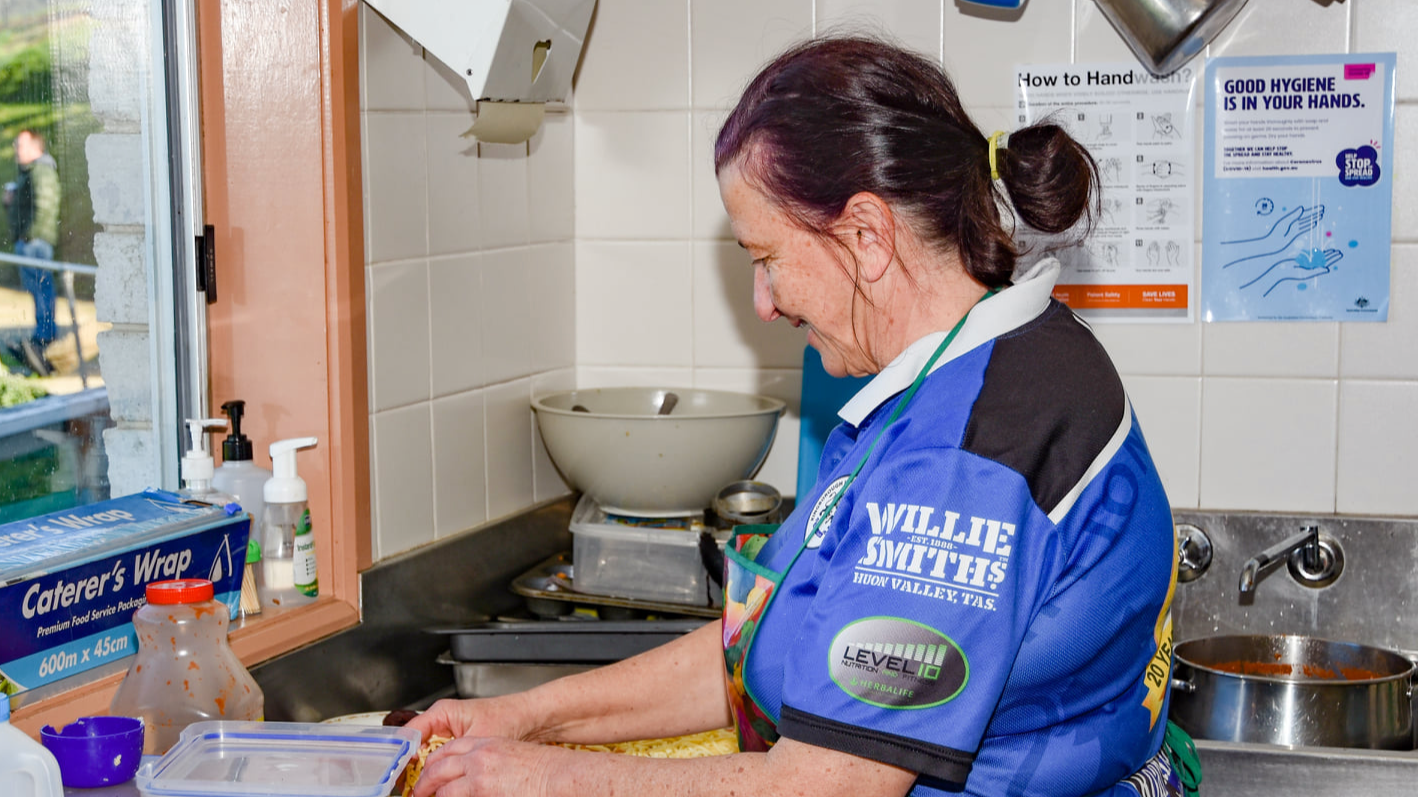
Football Faces Tasmania - Cathy James
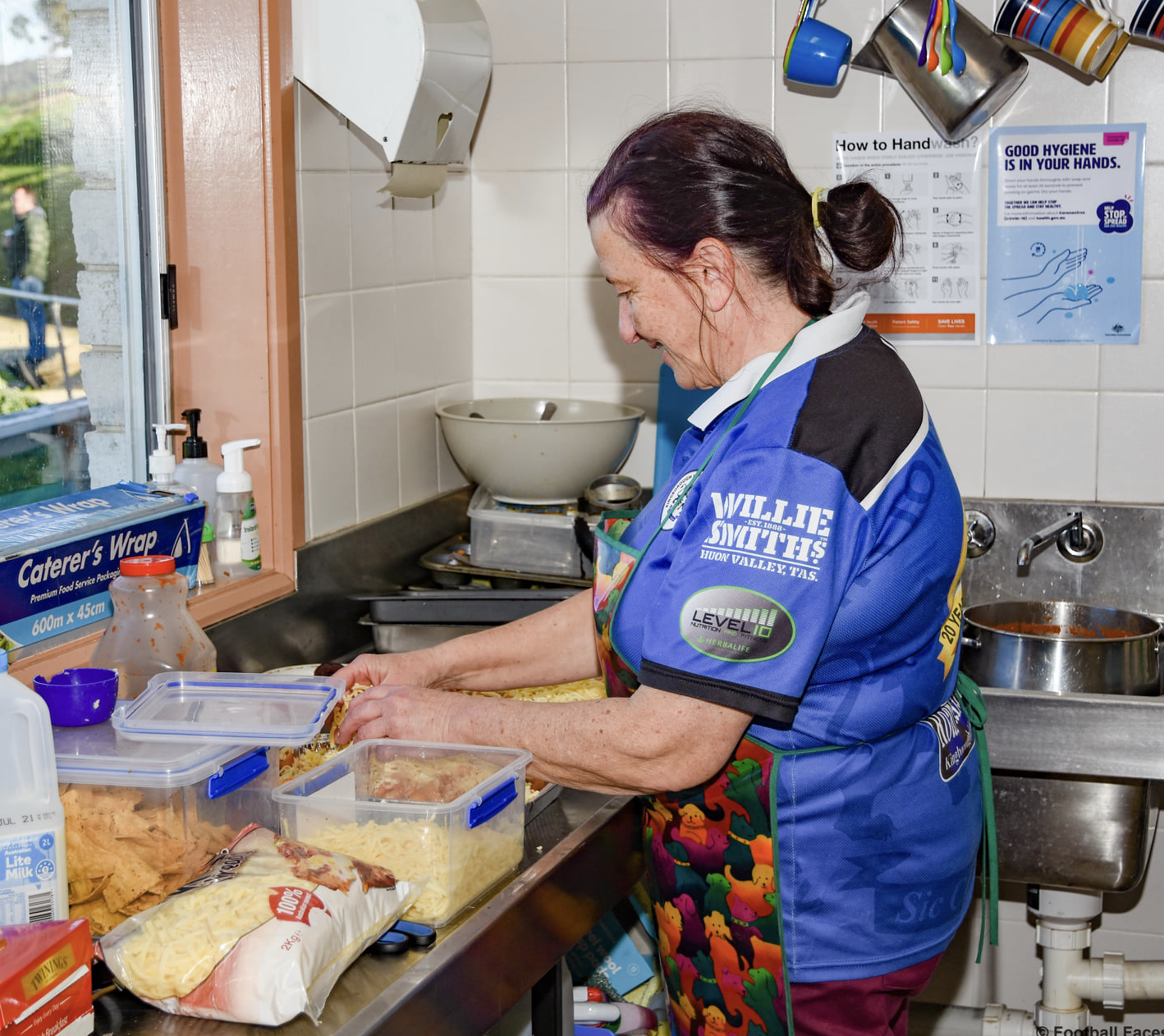
Cathy James
Cathy James has moved on from Kingborough Lions now, but she remains one of the truly inspirational volunteers we interviewed.
Hard-working, dedicated, and quietly effective, Cathy is the kind of person every club relies on and rarely celebrates. She did not see her contribution as anything special. She simply showed up, again and again, and did what needed to be done.
This interview captures Cathy’s story in her own words, and reflects the care, commitment, and generosity that underpin community football in Tasmania.
Tell us YOUR story about how you became involved in football and what you love about the game and the community:
My “Football Story” is not one of wanting to be a Matilda – there were no Matildas in the 1970s. It is not one of having a “football hero” and following their career. My involvement in Football is an accident.
Growing up in Oakville, a tiny town (it had a school and a fire station) on the outskirts of Sydney. The readily available team sport option for girls was Netball. And yet, funnily enough, Matilda, Courtney Nevin, went to the same Primary School and played for the Oakville Ravens – which just shows how rapidly things can change in the world of Football.
My first Football memory is: “thank goodness, a sport other than netball”. Arriving at High School I discovered there were other amazing sports – hockey, cricket, volleyball and soccer. Soccer as it was still know then, didn’t rate highly against the other football codes, Rugby Union and Rugby League, and it was only played by English and European immigrants. However, soccer could be played by girls. There was one InterSchool Tournament per year and while I wasn’t a shining star, I was committed.
My real involvement in football began when I wanted my kids to play team sport – I chose Football. It was a sport I had enjoyed and it is also a sport that anyone at any age can play – it’s running; there is limited throwing or catching. With 3 kids playing for Kenthurst Soccer Club I put the boots back on and that was 20 years ago. And, in the meantime, 2006 FIFA World Cup and all of Australia fell in love with Football and the Socceroos.
The thing about sport is it’s a bridge-builder. When you relocate, whether it’s across town or to a new state, you can join a sporting club and you’ve got something in common with people in the community. 15 years ago, the family moved to Tasmania, into the Kingborough region, joined Kingborough Lions United FC and never left – well that’s 4 of us. Even after all these years, I cannot convince my husband of the merits of the round ball game.
While the game of Football has many highs and lows being involved in a Club can support people through their highs and lows. While in my playing days, I have often been described as “uncoachable”, I have always given 100% effort, pretty much like now as a volunteer. And, dare I say it, my best game of Football was played a few days after my Dad died fully supported by my Football family.
Another thing about being involved in a Not-For-Profit Community Sporting Club is, that without volunteers and money they don’t thrive. I have a lot of a “can do” attitude and my daily mantra is “how can I make a difference today”. I have been a player, a team manager, the Club Secretary/Adminstrator/Registrar, Kiosk Manager. I have enjoyed all the benefits of being a player – coaching, equipment, playing strip, facilities, so for me it’s a natural progression to “give back”. Registration fees do not cover all the costs required if Clubs were to pay people to do all the activities it takes to get teams on the park and down here in Clubland there are plenty of inspirational people to keep you going.
At Kingborough I’ve been lucky to play with and work with some incredible people. There are families here that have had multiple generations come through and I’m sure there are other Clubs that have benefitted from the same thing. The list of people in Tasmanian Football that inspire me is endless. Bernie Siggins was an amazing “can do and will do” man and was a true inspiration to all players and volunteers at Kingborough Lions United FC. Brian & Jill Dale truly love and care for their Club and have put years of time and energy into it. I know each Club has role models like these and they don’t do it for the acknowledgement they “just do it”.
Football in Tasmania is rapidly changing. Community Clubs are having to comply with regulations – food business, RSA, workplace health & safety, and recently COVID-19.
Clubs are small businesses with massive interests in their communities. We currently have 2 Clubs vying for selection to be WWC 2023 Base Camps; we’re building towards having A-League and W-League teams. Football has massive participation across males & females. It is a great time to be involved in Football in Tasmania. And, it is a great time to be a Volunteer in Football in Tasmania.
Do you want to join the Board of Football Tasmania? Here is how
Governance is often dismissed as boring. Paperwork. Process. People in rooms talking in circles.
And sometimes, honestly, it is.
But governance is also where decisions are made, power is exercised and priorities are set. If you care about football, eventually you run into governance whether you want to or not. Understanding it is not about enjoying it. It is about knowing how the system you are part of actually works.
Who this is for
This post is for anyone who has ever said they are unhappy with the way football is governed in Tasmania and wondered what, realistically, they could do about it.
One option, often spoken about but rarely explained, is joining the Board.
So here is how that actually works.
Not in theory.
Not in whispers.
In practice.
Who actually elects the Board
The Board of Football Tasmania is not elected by the football public. There is no popular vote. Parents, players, coaches and volunteers do not vote directly for Board members.
The Board is elected by members.
A member is not an individual. A member is a recognised body, usually a club, a regional association or a formally recognised committee, acting through an authorised representative. That representative votes on behalf of their organisation.
Most individuals involved in football are not members in a governance sense. Their club or association is the member and it votes through a delegate.
This matters, because it means being well known or well liked is not enough. Support has to be built at an organisational level.
Getting nominated
If you want to be elected, you must first be nominated.
Nominations must be made formally. They require proposers and a seconder who are themselves members or directors. They must be submitted by a specified date and include statutory declarations about conflicts of interest and suitability.
This is not casual. It is designed to be deliberate.
How voting actually works, Borda Count explained
If more people nominate than there are positions available, an election is held at the AGM. Voting is done using a preferential system known as the Borda Count.
If that sounds abstract, it is actually quite familiar.
Most football clubs already use a version of this every week. After a match, coaches or designated club people award three votes, then two, then one, for best on ground. Those votes accumulate across the season and at the end, the player with the strongest overall contribution is recognised.
The Borda Count works the same way.
Members rank candidates in order of preference. First preference carries the most weight, then second, then third. Those preferences are converted into points and added up across all ballots. The candidate with the highest total is elected.
It rewards broad respect rather than narrow support. A candidate who is consistently rated second or third by many voters can outperform someone who is first for a few and last for many.
Who is eligible and who is not
Eligibility is where many people come unstuck.
The constitution excludes people who hold certain operational roles within football. This is not personal. It is structural. The intention is to separate governance from day-to-day administration.
In a small state, that exclusion matters. Many of the most experienced people in football hold multiple roles. To stand for the Board, choices have to be made. Some roles must be relinquished.
That is uncomfortable but it is also honest.
The narrow exception for the President
There is a narrow exception relating to the President role.
In simple terms, it allows someone who has already served on the Board but not yet as President, to extend their service for continuity. It does not override conflict rules or eligibility requirements.
It exists to avoid constant churn at the top, not to create a loophole.
Elected directors and appointed directors are not the same thing
It is important to understand that not all Board positions are elected.
The constitution allows the Board to appoint a limited number of directors. These are not community elections. They are internal appointments, usually justified on skills or experience grounds.
This pathway exists, but it is controlled by the Board and should not be confused with an election by members.
How many directors are elected, and how many are appointed
The constitution sets a clear limit on this and it is worth spelling out.
The Board of Football Tasmania can have a maximum of eight directors.
Of those, six must be elected by the members. That includes the President and five other directors.
Only two directors can be appointed by the Board.
This matters, because it means appointed directors can never form a majority. Appointment is designed to supplement the Board, not control it. Elections remain the primary source of authority and legitimacy.
In other words, on paper at least, the system prioritises member choice. If governance feels distant or unresponsive, that is not because the constitution removes power from members. It is because the member bodies who hold that power are not always engaged, informed, or active in using it.
A personal example, and why structure matters
I hold more than one role in Tasmanian football or at least I did.
At different times, I have been President of a club and President of a regional association. On paper, that can look like influence. In practice, governance does not work that way.
Votes at an AGM do not belong to people. They belong to organisations.
CRJFA has one vote.
South Hobart Football Club has one vote.
Each vote must be exercised by an authorised delegate. Even if one person holds multiple roles, they do not get multiple votes in the room. One person, one vote, even when wearing more than one hat.
That distinction matters.
It reinforces that governance power sits with structures, not personalities. It also explains why transparency around delegates, declarations and representation is important. The system is designed to prevent influence accumulating simply because someone is willing, or able, to hold multiple positions.
In a small football community, many of us do hold multiple roles. That makes clarity even more important, not less.
The responsibility of being on a Board
Before anyone puts their hand up, there is a harder question to ask.
Why do you want to join the Board?
Being on a Board is not just turning up to a two-hour meeting once a month. It carries legal, financial and ethical responsibility. Directors are responsible for the health of the organisation, not a single program, club or constituency.
It involves reading papers, understanding risk, making decisions with imperfect information and sometimes supporting outcomes you personally disagree with because they are in the organisation’s best interests.
Boards move slowly by design. Change through governance is incremental, procedural and often frustrating. It requires patience, judgement and the ability to see beyond immediate pressure.
Stepping into responsibility
There is a truth we rarely say out loud.
If you want change in football governance, responsibility does not sit with “them”. It sits with the member bodies who vote. If those bodies do not engage, do not ask questions or do not challenge constructively, the system simply reproduces itself.
I have written before about Football Tasmania Annual General Meetings that pass quietly. Reports are tabled. Motions are carried. No questions are asked. Everyone goes home.
Those moments matter more than we like to admit.
Silence at AGMs is not neutrality. It is consent. Governance does not drift by accident. It drifts because participation stops at attendance rather than engagement.
Understanding how to get elected is not about ambition.
It is about accountability.
If you are unhappy with governance in Tasmania, this is one of the legitimate ways to step into responsibility rather than stand outside it.
It is not easy.
It is not fast.
But it is how the system is designed to work.
Novice questions answered
Am I a member?
Usually no. In governance terms, your club or association is the member, not you as an individual.
Who actually votes?
Your club or association appoints a delegate. That delegate votes on its behalf.
When do elections happen?
Elections occur at the Annual General Meeting, when Board terms expire or vacancies arise.
What is the first step if I am interested?
Talk with your club or association about whether they understand and are prepared to engage in, governance.
Can I just nominate myself?
No. Nominations must be proposed and seconded and must meet eligibility and conflict requirements.
What is a Constitution, really, and why it matters that ours is hard to find
We use the word constitution a lot.
In football.
In governance.
In moments of frustration when people talk about boards, decisions, and power.
But we rarely stop to explain what a constitution actually is.
That matters more than most people realise.
Constitution 101
A constitution is the founding rulebook of an organisation.
It is the document that decides:
who holds authority
how decisions are made
who gets a vote
how leaders are chosen and removed
what members can and cannot do
Everything else sits underneath it.
Policies.
Regulations.
By-laws.
Codes of conduct.
If there is a conflict, the constitution wins.
That is not theory.
That is how incorporated organisations work.
This document exists for members, clubs, volunteers, and anyone who wants to understand how football power actually works.
What “incorporated” actually means
Football Tasmania is an incorporated entity.
That means it exists as a legal body in its own right, separate from the individuals involved in it.
Incorporation allows organisations to:
enter contracts
employ staff
hold insurance
protect volunteers from personal liability
But there is a trade-off.
An incorporated body must operate according to its constitution.
Not by custom.
Not by habit.
Not by who has always been there.
By the document.
Why constitutions exist at all
Constitutions exist because of power.
Whenever groups grow beyond a handful of people, the same questions emerge.
Who decides.
On what authority.
According to which rules.
A constitution is meant to answer those questions before conflict arises.
It replaces personality with structure.
It limits arbitrary decision-making.
It creates predictability and accountability.
In sport, this matters deeply, because passion often runs ahead of process.
What a constitution does not do
A constitution does not run competitions.
It does not select teams.
It does not schedule fixtures.
It does not deal with day-to-day operations.
Those things sit with staff, regulations, and policies.
What the constitution does is decide who has the authority to do those things.
That distinction is critical, and often misunderstood.
Good practice, not perfection
Constitutions are not meant to change every year.
Good governance practice is not constant rewriting.
It is:
periodic review
updates when laws or structures change
clarity about whether amendments have occurred
transparency for members
Many constitutions last decades.
That alone is not a problem.
Uncertainty is the problem.
Members should be able to tell, without effort:
which constitution is in force
when it was adopted
and where to find it
Why visibility is not a small thing
Because the constitution is foundational, it should be easy to locate.
Not buried.
Not obscured.
Not treated as insider knowledge.
This is not about website design.
It is about legitimacy.
You cannot engage meaningfully with a system you cannot see.
And you cannot hold a structure to account if you do not know how it is meant to work.
Whether intentional or not, difficulty of access has the same effect as opacity.
What a reasonable person would expect
A reasonable person, looking for the governing document of football in Tasmania, would expect to find it:
under Governance
under Official Documents
or clearly within About Us
They would expect it to be clearly labelled and easy to identify as current.
That is not demanding.
That is standard practice.
What actually happens
In practice, the constitution is difficult to find.
It is not listed alongside regulations or official documents.
To locate it on the Football Tasmania website, you must:
hover over Football Tasmania in the main menu
click About Us
scroll right down the page - almost to the bottom
locate a small text link labelled “View our Constitution”
open a PDF
When you do, you discover the document is dated October 2009.
It still refers to Football Federation Tasmania.
This is the document currently guiding football governance in Tasmania.
Why this should give us pause
This is not about blame.
It is about systems.
The constitution determines:
how the Board is elected
who gets a vote
who is excluded
how authority flows
where accountability sits
When that document is hard to find, governance becomes abstract.
Abstract governance favours insiders.
Even when no one intends it to.
A challenge, not a complaint
If we want better governance conversations in football, we need better governance literacy.
That starts with making the constitution:
visible
clearly identified
treated as the foundational document it is
Not hidden.
Not assumed.
Not reserved for those who already know where to look.
Clear systems invite engagement.
Opaque systems shut it down.
What comes next
Once you understand what a constitution is, the next question is unavoidable.
If you are unhappy with football governance, how do you actually influence it.
That requires understanding Board elections, voting rights, and eligibility.
That is a separate post.
And it is one we should probably be brave enough to read.
Governance only works when the rules are visible to the people governed by them.
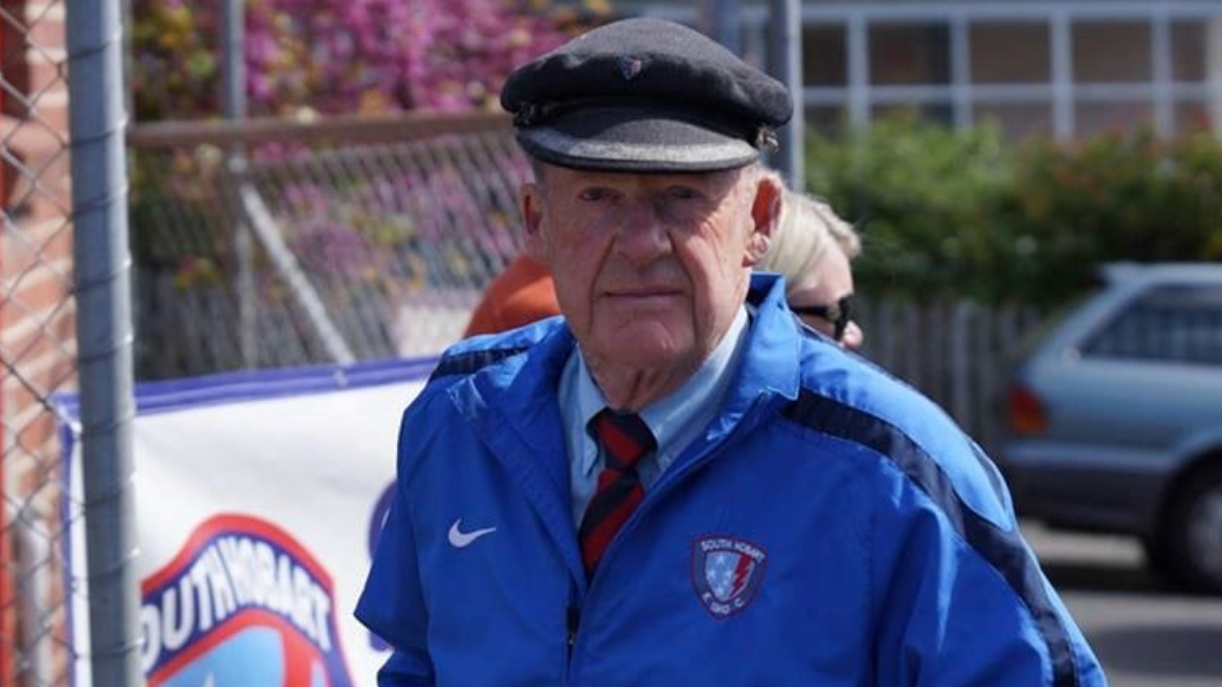
Football Faces Tasmania
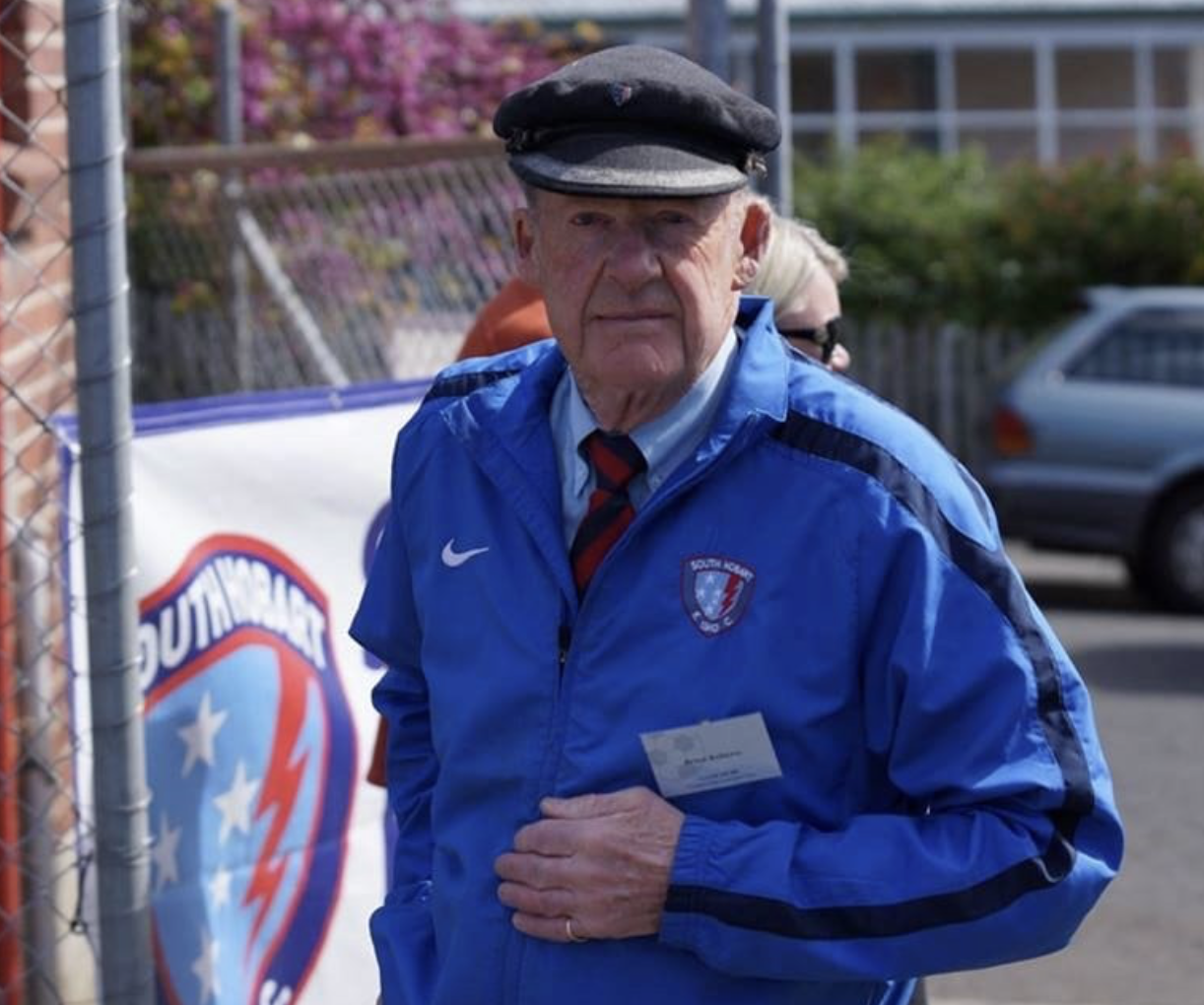
Brian Roberts - much missed by myself and those in football.
Sitting around my kitchen table with my friend, photographer Nikki Long, we talked about something that has bothered me for a long time.
So many people who are deeply loved, deeply committed, and deeply embedded in football in Tasmania are largely invisible. They are known within their clubs and communities but rarely beyond them. Their work is constant, often exhausting and almost always unpaid. And yet their stories are seldom told.
We wondered what might happen if we simply made them visible.
That conversation became a Facebook page called Football Faces Tasmania.
We started interviewing people from across the game. Coaches, volunteers, administrators, parents, quiet achievers. People who have given years, sometimes decades, to football here.
What struck me immediately was this: almost without exception, every person we interviewed said some version of the same thing.
“I’m not really worthy.”
“My story isn’t anything special.”
“There are plenty of others more important than me.”
That reflexive modesty is telling. It says a lot about the culture of football in Tasmania and about who feels seen and who does not.
I disagree with every one of those assessments.
These stories are special. They are worthy. They are the story of the game.
I conducted the interviews and transcribed them. Nikki took the photographs. Together, the words and images capture people as they actually are, thoughtful, generous, worn, proud, funny, uncertain, committed.
I will be publishing these interviews here, with their photographs, as a record and a recognition.
Not to elevate anyone above others.
Not to create heroes.
But to say, clearly and publicly: you matter, your contribution matters and this game does not exist without you.
This is Football Faces Tasmania.
BRIAN ROBERTS
What are your first football memories and did any person instill a love of football into you?
My first memories are during my childhood being taken to watch Wrexham F C and Rhyl Athletic play on Saturday afternoons. I also played for my preparatory school Oriel House where I obtained my colours. I subsequently attended Repton Public School where I played for my house The Mitre.
I do not think anyone instilled a love of the game it was a way of life. My father played for the family firm.
How long have you been involved in football and what roles have you played?
In 1951 we came to Tasmania settling at 7-mile beach where we ran the shop. I tried out with Caledonians but did not make it, to unfit and slow.
Football when we came to Tasmania was going through a transition. the influence of the migrant was being felt accordingly the style of the game was changing from that akin to Australian Football to that which we see today.
You held some influential roles in Tasmanian Football how has it changed from when you were in charge? Tell us what football was like in Tasmania when you first got involved, was it better, worse, different? How has it changed?
After moving to town, I was with the Southern Tasmanian Soccer Federation as their new club’s officer. I had to contact migrant groups to see if they could start a soccer team. I arranged a match between Italian and Greek migrants but their clubs didn’t come to life until later. I only succeeded once assisting in the foundation of Hollandia a Dutch team. I subsequently joined them and played in their reserve side most of the time after a while I moved to Hydro a team based in their drawing office. I played in their 1st team. We were not very successful. Hydro them changed their name to Rangers and started importing players from Scotland. I continued to play for them in the reserves.
I then took a break I cannot remember why. Later a typewriter mechanic Tom McLoughlin who had played with Rangers and used to service our office equipment persuaded me to join him as assistant Coach at Rapid. This was step up as they were one of the better teams. I also used to play in the reserve team.
One of my workmates Jurgen Webb was with South Hobart and he pestered me constantly to join him at South. I eventually did so as all my English-speaking friends had left Rapid, so I moved clubs. Rapid were not very happy.
On joining South, I was immediately recruited on to the committee where I served as Treasurer for 13 or 14 years. At the same time, I coached the underage sides the first and reserve sides and played in the reserves (we were a pretty awful side full of old men). I get tired thinking about those years. I was probably about 55 when I played my last game in Alps a side that had been absorbed into the South machine. One of my happiest recollections is when we won the league under Tony Skaro. It was a very good team. We went to the Cascade where all these old players or supporters kept putting money on the bar. More of that later.
During my time with South, I took a spell of leave and was elected as a director of Soccer Tas. I served for about 6 years rising to Chairman. Due to a difference of opinion, I resigned and returned to South in an advisory role.
Which Tasmanians have affected your involvement in football both on and off the field and why?
One of our chairmen who had a major impact on our club was Les Richardson. Through his influence we acquired the Clubrooms at Wellesley Park. They had originally been built by the South Hobart Cricket Club. They moved to Queenborough, so the rooms were not occupied full time. We purchased the key to the door for $10000 payable in 5 instalments. Through economy and struggle we met the payments though the last year we were late so had to pay an additional penalty. At the time we were the only football club to have permanent office and headquarters. The licensed bar that came with the purchase materially helped our financial management. I do not know how many hours I spent swinging a mattock digging the trenches for the floodlighting of Wellesley Park.
Soccer then went through what I would call the lunatic stage. The first state league was formed. South did not make it. However, that was just as well as professional football hit the state. Money flowed like water. This did work to our benefit as those senior players who were displaced by imports came to South, so we had a very good Div. 1 side. Then the bubble burst the league collapsed and we were all back to square one. Things were pretty tough as all the players we had signed left so the ranks were pretty thin. Nevertheless, we struggled through and survived.
Did you have a role model or football heroes or anti-heroes for that matter?
I do not have any heroes or otherwise however three persons who have had the most impact on South are Brett Anderton, Victoria and Ken Morton. When Brett arrived, we were just a club. He changed our routines and introduced a professional aspect to us on our on and off field standards. Ken took over a few years after Brett departed. He lifted our standards and expectations to a higher standard which continue to this day. Victoria Morton has also made a major contribution to our clubs standing in the football community. I cannot let this pass without mentioning Pam Clarke, her son played for South, so she graduated to the committee then chairperson. She was at the helm during some of our most trying times and worked extremely hard for the club. Another stalwart that comes to mind is Paul Roberts, no relation. How he came to join us I cannot recall probably through junior ranks. Paul was a tower of strength, he maintained the clubrooms, set up the field when we had home games at Wellesley. He used to set up for our home games as dawn broke. Eventually we persuaded him that such early starts were unnecessary. His constant topic of conversation was the drums. We eventually found out that he had a store full of 44 gallon drums in which he stored his collection of cans, cordial, and milk bottles.
Which recalls one of our fundraisers. One Sunday when we were not playing the committee, players and supporters canvased the South Hobart area for milk, cordial bottles, and cans. We would then deliver to the Cascade bottle department for money.
Hilarious happenings, in 1977 we won the Div. 1 league under our new coach Tony Skaro. It was the event of the decade as we had little success for a long time. We obtained a supply of port from an individual whose name is etched in my memory. “You will be OK as long as you only sell it to club members”. It was stored under my house. Well, it took off like a house on fire, perhaps it was the novelty but there was a stream of “supporters” calling for a bottle or two. We presented the licensee of the Cascade hotel with a bottle as sign of our appreciation of his support. His wife was delighted, he not so much. What we did not realize that there was a representative of the licensing board at the bar. Next thing there was a knock on the door and a port collector asked if he could buy a bottle for his collection. OK I said. Next thing cars appeared, and all these detectives spilled out and I was arrested for running a “sly” grog shop.
A friend of mine who was a solicitor in town heard of my situation and decided he would defend the case as a bit of a lark. We spent close to a day in court to the surprise of the prosecuting counsel. The guy who sold us the port gave evidence with an angelic expression on his face. I could have!!!!!!!!! him. The case was adjourned as the magistrate could not give decision. Eventually I had to return, and a conviction was recorded under the probationary offender’s act. The port which had been seized was returned on condition it was stored and consumed in the club house. I still have a bottle.
How has football affected you and your family?
Football must have affected my family though with the passage of time it has faded away. I must say that when things were thin on the ground for the club, I probably spent 4 or 5 nights working for the club. How I kept my domestic life up to scratch I do not know
If you could make any changes to Tasmanian football, what would you do?
Now what changes would I make? Well promotion and relegation for a start. I would examine the cost structures and try to make the game as inexpensive as possible. I would review the FFT staffing structure. Tasmania is too small for us to ape mainland structures. I would try to expand our game by encouraging the formation of Div. 5 or 6 clubs. Large oaks from small acorns grow.
Looking back on your football life what do you think your legacy to the game in Tasmania might be?
How will I be remembered, well for about a fortnight or so then perhaps at the occasional football reunion?

We do not play enough football
And the minutes tell the real story
Football Tasmania has released the fixtures for the 2026 National Premier Leagues Tasmania and the Women’s Super League along with the NPL Under 21s.
The detail that matters most is simple.
The men’s top competition will play eighteen rounds.
That single number explains far more about player development in Tasmania than any pathway document or strategic plan.
We do not play enough football.
And when you stop counting games and start counting minutes, the consequences become unavoidable.
The 2026 NPL season, as confirmed
The men’s National Premier League, Tasmania’s highest level of senior football, will feature ten teams in 2026.
The season begins on 6 March and runs for eighteen rounds, followed by a final’s series for the top five placed teams. The bottom two teams are relegated, with only eight clubs contesting the 2027 season.
Football Tasmania’s CEO has said that every match matters, with ten teams competing for eight places the following year.
That is true.
It is also precisely why this structure creates pressure rather than development.
Almost the same number of games as Under 9s
In the Central Region Junior Football Association, under 9s typically play a regular season that is not far short of the 2026 NPL calendar.
When participation in tournaments such as the Devonport Cup, Hobart Cup, and Launceston Cup is included, many Under 9 players add at least a dozen additional matches across the year. This means a potential 28 plus games per season for an 8 year old.
Under 9s play for fun, learning, and enjoyment.
NPL players are playing for performance, retention, results and often their next opportunity in the game.
The uncomfortable reality is that junior players can end up with more competitive match exposure across a year than players competing in the highest level of men’s football in the state.
This is not a criticism of junior football.
It is a question of proportionality.
Games are limited. Minutes are scarcer.
An NPL match gives a coach eleven players on the pitch for ninety minutes.
That is nine hundred and ninety player minutes per match.
Across an eighteen-round season, the total competitive minutes available are seventeen thousand eight hundred and twenty.
A player who plays every minute of the home and away season finishes with one thousand six hundred and twenty league minutes.
That is the ceiling.
There is no additional supply.
Spread across a real senior squad
Most NPL squads carry between eighteen and twenty-two players.
If a squad carries eighteen players and minutes were shared evenly, each player would finish the season with nine hundred and ninety minutes.
That is eleven full matches.
At twenty players, the average drops below nine hundred minutes.
At twenty two, it drops closer to eight hundred.
Minutes, however, are never shared evenly.
What actually happens inside squads
In practice, eleven to thirteen players carry the majority of minutes.
Five to seven players rotate irregularly.
Two to four players finish the season chronically underfed.
It is entirely normal for capable senior players to complete an NPL season with three hundred to six hundred total minutes.
Some start only once or twice.
Some are used late off the bench.
Some go weeks without meaningful football.
This is not about attitude or commitment.
It is arithmetic.
There are simply not enough minutes to go around.
What this means for clubs
This is where the issue becomes operational rather than theoretical.
Clubs recognised quickly that an eighteen round season cannot sustain a senior squad on its own.
Without a Championship or senior reserves team, fundamental problems emerge.
Where do non starting NPL players get a full ninety minutes.
Where do returning injured players rebuild match fitness.
Where do younger players learn to manage senior pressure.
Where do players stay engaged when results tighten and rotation shrinks.
Without a Championship side, the answer is blunt.
They do not play.
Championship teams did not emerge as optional extras. They became structural necessities.
They function as a minutes bank, a retention tool and a pressure release valve.
Even then, constraints remain.
Under current team stacking rules, any player named in the NPL starting eleven is ineligible to play in another match that weekend. Bench players may be permitted to play in Championship or Under 21s matches, depending on eligibility and scheduling.
If you start on Saturday, your weekend is finished.
If you are on the bench, you may go searching for minutes.
This is not a development model.
It is a workaround forced by the calendar.
Why the Under 21s do not solve the problem
The NPL Under 21s serve an important purpose.
They provide matches and responsibility for younger players.
They do not solve the shortage of senior minutes.
Under 21s football is not senior football.
The physical demands are different.
The tactical tempo is different.
The psychological pressure is different.
The consequences are different.
For a twenty two- to twenty-six-year-old NPL player, being redirected to Under 21s for game time is not development.
It is a holding pattern.
A note on the Women’s Super League
This is not a men only issue.
The Women’s Super League faces its own problems around game volume and continuity.
Byes, cup rounds and interrupted calendars have led to periods where teams have gone three weeks without a competitive match.
That is not a criticism of the women’s game.
It is recognition of the reality players and coaches are working within.
Engagement does not survive long gaps.
Rhythm disappears.
Training begins to feel disconnected from purpose.
The women’s calendar deserves its own proper examination and I will return to it separately.
For now, it is enough to acknowledge that insufficient and inconsistent game time affects more than one competition.
A deeper resistance sits underneath all of this
Beneath the calendar problem sits a cultural one.
Tasmania has long organised sport around traditional winter and summer seasons.
Football has been slotted into winter by habit as much as by design.
That no longer reflects reality.
Many clubs now operate almost year-round through academies, development programs, tournaments and representative commitments.
Players are training beyond winter.
Clubs are stretching across seasons.
Families are already adapting.
The competition calendar has not kept pace.
There remains a reluctance to challenge long standing structures, even as the game itself evolves.
That resistance to change shapes how little football is ultimately played.
What we still fail to measure
We are good at counting teams, programs and pathways.
We are far less willing to count minutes.
How many players finish a season under nine hundred minutes.
How many go weeks without meaningful football.
How many capable players drift away simply because they want to play.
Game time is development.
Minutes are development.
Until minutes are treated as a central measure of success, coaches and clubs will continue to be asked to do the impossible.
Develop players.
Win matches.
Avoid relegation.
Hold squads together.
All in eighteen rounds.
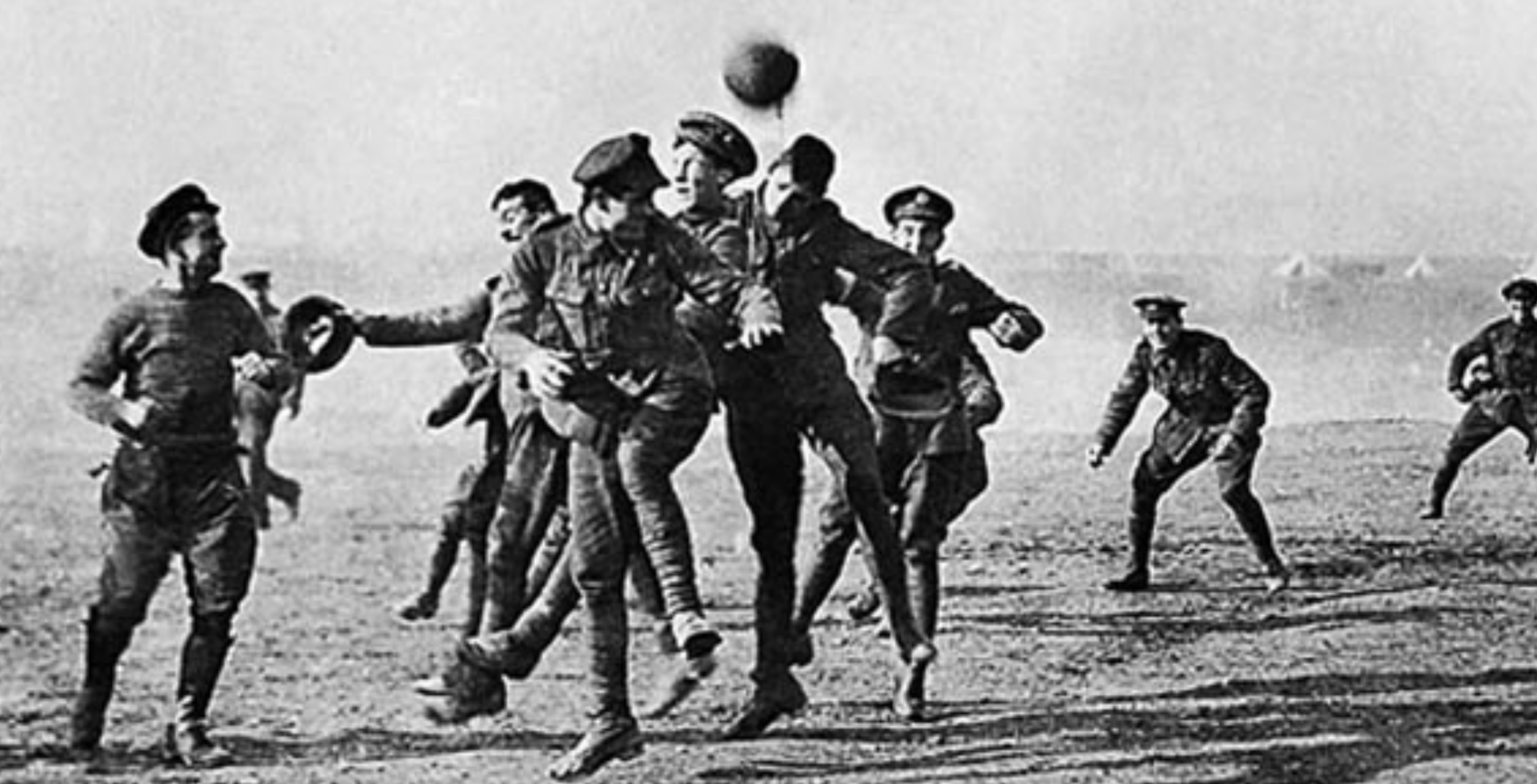
Christmas Day 1914 - When the War Paused and Football Was Played
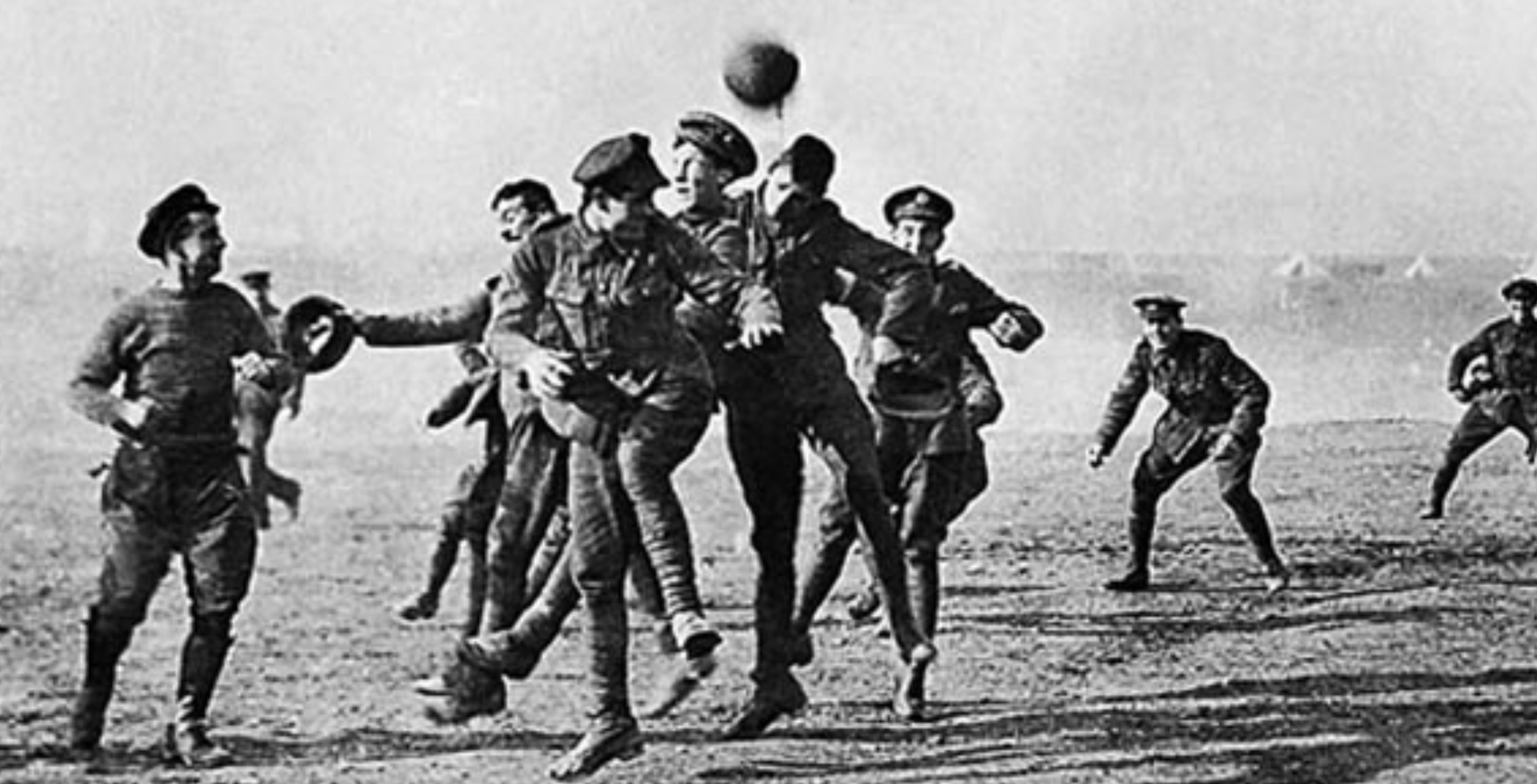
Christmas Day carries a strange weight.
It is meant to be about peace, family and generosity, yet history reminds us that it has often arrived in the middle of humanity’s darkest moments.
One of the most extraordinary Christmas stories comes not from celebration, but from war.
In late December 1914, during the first winter of World War One, fighting stopped in parts of the Western Front.
Not by command.
Not by treaty.
But because ordinary soldiers chose, briefly, to recognise each other’s humanity.
The Setting
By Christmas 1914, the belief that the war would be “over by Christmas” had long disappeared.
British and German troops had been entrenched for months. The ground between them, No Man’s Land, was a churned mess of mud, wire and fear.
Then, in some places, something unexpected happened.
German soldiers placed small Christmas trees and candles along their lines and sang carols, including Stille Nacht, Silent Night.
Across the lines, British troops listened. Then they replied.
The Guns Fell Silent
In places, the shooting stopped.
Men climbed cautiously out of their trenches and met in No Man’s Land. They shook hands. They exchanged cigarettes, food and small souvenirs.
In some sectors, the pause also allowed something deeply human and deeply sobering, the retrieval and burial of the dead who had been lying between the lines.
It didn’t happen everywhere.
But where it did, it remains one of the most striking moments of shared humanity in modern history.
And Then There Was Football
The image most people remember from the Christmas Truce is football.
Soldiers in uniform, boots muddy, kicking a ball where bullets had flown the day before.
And yes, football did happen.
Not neat matches. Not scoreboards or referees. Just informal kick-abouts, described in letters and diaries as impromptu games with whatever ball was available.
The football is real. The myth is the tidiness of it.
Why Football Matters Here
Football mattered because it was familiar.
It needed no shared language, no explanation, no orders.
Just a ball and a little space.
In a landscape defined by division, it created connection.
For men trained to see those opposite them as enemies, it offered a reminder that they were very much the same.
Young men. Far from home. Missing Christmas.
The Aftermath
The truce did not last.
Fighting resumed, and senior commanders were uneasy about what had happened. In the years that followed, any repeat was discouraged.
But the memory remained.
Many soldiers carried that Christmas with them for the rest of their lives.
Why This Story Endures
The Christmas Truce of 1914 matters not because it ended the war.
It matters because it shows what people are capable of despite war.
That peace does not always come from leaders or agreements, but sometimes from individuals choosing empathy over hatred.
And that football, so often dismissed as “just a game”, can be a human language, capable of cutting through fear and division.
A Christmas Wish
So this Christmas, I wish everyone who loves football the chance to have a simple kick-about.
No scores.
No pressure.
No expectations.
Just people together, sharing space, laughter and a ball at their feet.
For a moment, forgetting the noise, the worries and the divisions of everyday life, and remembering the quiet joy of being together.
That, perhaps, is the real gift of football.