
The Volunteer Reflex - Jill Gill
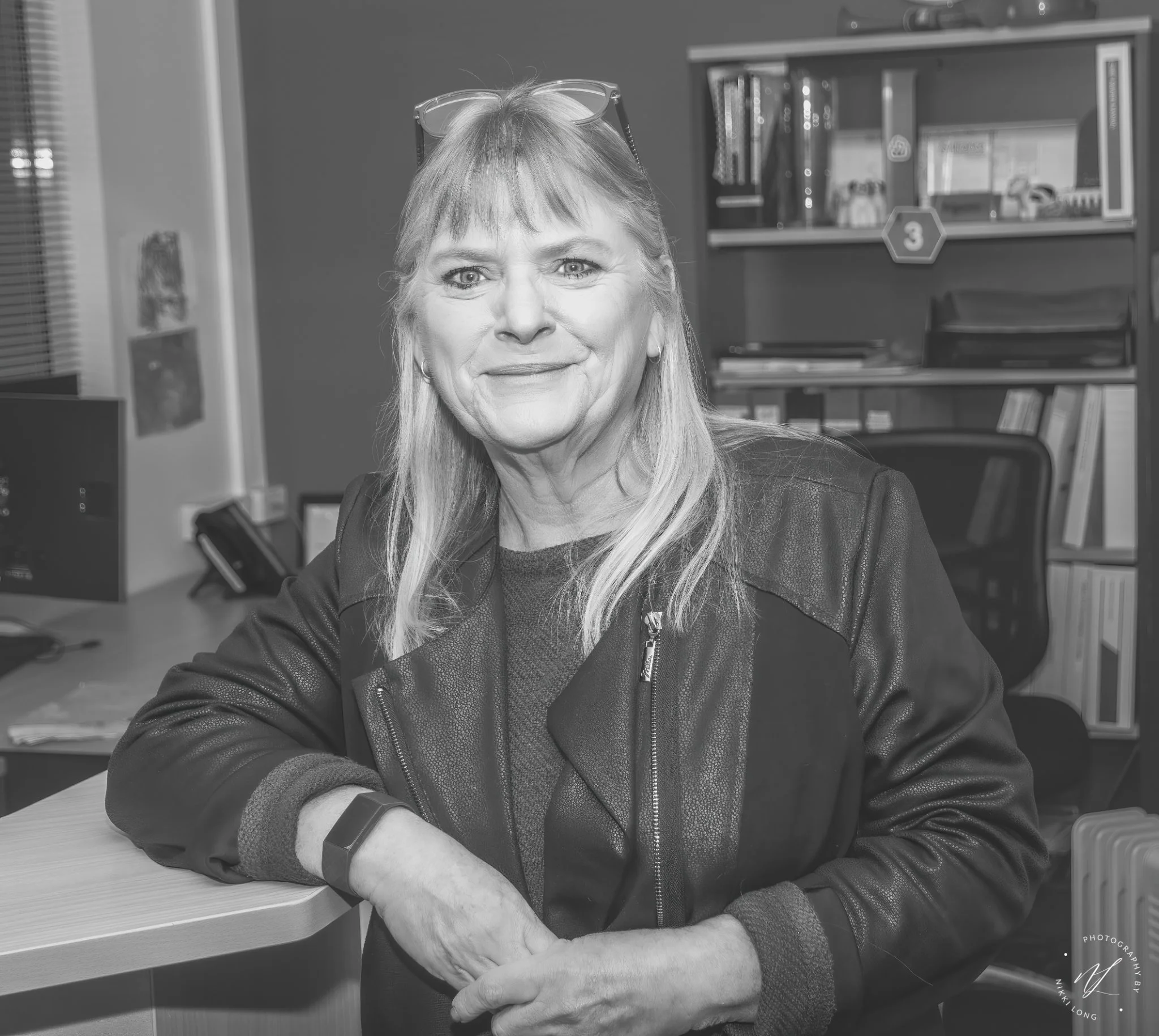
Jill Gill photographed by Nikki Long in 2022
Celebrating Women in Football
This interview was first conducted in 2022.
Roles shift. Titles change. Clubs evolve.
Influence does not.
And Jill Gill’s influence at Clarence Zebras has never really been about titles.
Finding football later in life
Football was not part of Jill’s childhood.
Growing up, the round ball barely featured. If it did, it was seen as a boys’ game. Girls, in those days, were steered toward dancing. That was simply how it was. If a girl played football, it was frowned upon. Not lady like.
No one instilled a love of the game in her.
Even now she laughs that she still has a limited understanding of the rules.
And yet, football found her anyway.
Leaning in
Jill became involved later in life, what she describes as her “maturing years”, which she insists are still very much a work in progress.
Her partner, Frank Perri, who she jokingly refers to as “the infamous Frank Perri”, was already deeply embedded in the club. Jill had a choice. Join in, or spend weekends and at least three nights a week twiddling her thumbs.
She joined in.
Sometimes she jokes that twiddling might have been the wiser option.
Not really.
By 2022 she was in her seventh year of involvement.
Committee member.
Registrar for six years.
Policy helper.
MPIO.
Canteen worker.
Apparently a great coffee maker and a pretty mean hot chocolate specialist.
Home game supper provider for her boys and the opposition.
Whatever needs doing, her hand goes up.
She calls it a bad twitch in her arm. A sucker for punishment.
Every club knows that twitch. It is the volunteer reflex.
The real work happens at home
But Jill’s greatest contribution is not listed on a committee report.
It is her home.
Over the years she has opened her doors to imports from interstate and overseas. Players from America, Canada, England, the West Indies, Hong Kong, Brazil, just to name a few.
Young men far from their own families.
She provides a family environment. A home cooked meal. A hug when needed. A place to land.
At the end of each season, when they return to their own homes, she says a little piece of her heart goes with them.
“Just lucky I have a huge heart.”
You can hear the smile in that sentence.
But you can also hear the truth.
Watching the game grow
As someone who came to football later, Jill does not position herself as an authority on whether Tasmanian football is better or worse than it once was.
What she does notice is growth.
The women’s program expanding each year.
The ratio of boys to girls becoming more comparable.
Junior numbers climbing.
In 2022 she noted their junior registrations had grown from 103 the previous year to 140.
That is not politics.
That is participation you can count.
Football and family
When I asked whether life exists without football, her answer was simple.
Not in their world.
They love the season. They love the build up. They also love the end of the season and the downtime that follows.
Football has enriched her family. Her children and grandchildren are exposed to different cultures, different lifestyles. Anyone who enters their home is accepted as their own.
She laughs that she may have created a monster. One of her daughters is now an avid Clarence supporter, sometimes so vocal on the sidelines that Jill has to walk away.
When she says her family takes these players on as theirs, she means it.
The quiet achievers
When asked which Tasmanians have most influenced her involvement, she did not name one individual.
Instead, she spoke about the quiet achievers.
The people who give up their time week after week, often with little or no recognition. The ones who do not seek applause.
Without them, most clubs would not function, let alone thrive.
Her hat goes off to each and every one of them.
Mine too.
Knowing her lane
Jill was clear about one thing.
She is not interested in politics or club power.
She tried committee politics once. It was not her cup of tea.
“I am not involved in politics or the running of the club. Nor do I wish to be.”
She knows where she is most useful.
And it is not in the boardroom.
Legacy
Jill does not claim a grand legacy.
She sees herself as one of thousands of volunteers who have played an integral part in running the game. In some small way, helping to make it better, more enjoyable, more accessible.
“Volunteers do not necessarily have the time, they just have the heart. The unselfish effort to bring cheer to others will be the beginning of a happier life for ourselves.”
Legacy in community football is rarely about trophies.
It is about who felt welcomed.
Who felt cared for.
Who had somewhere to land.
Jill may not claim a legacy.
But clubs are built on people exactly like her.
And that influence does not change, even when the roles do.
Time in the Grandstand
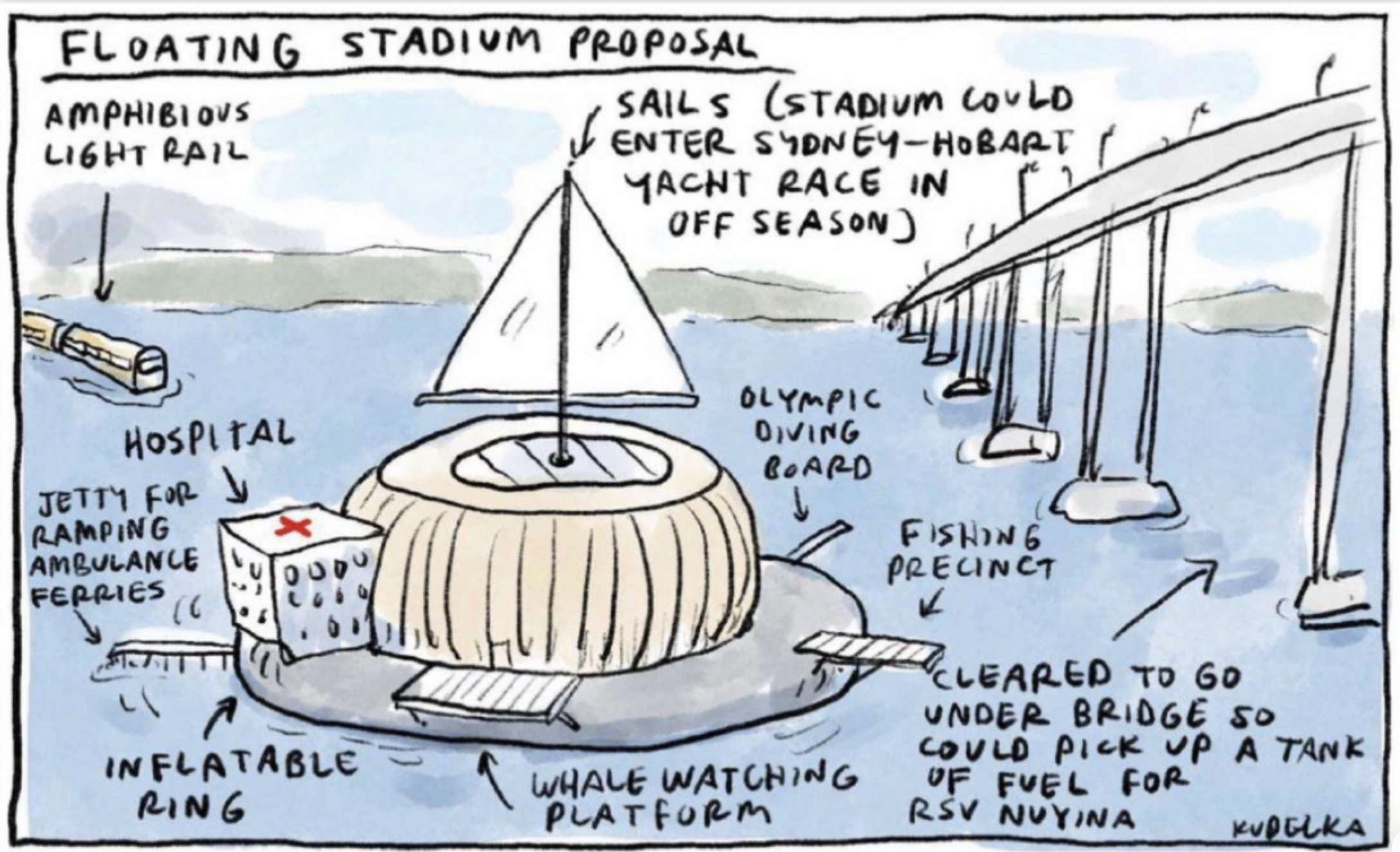
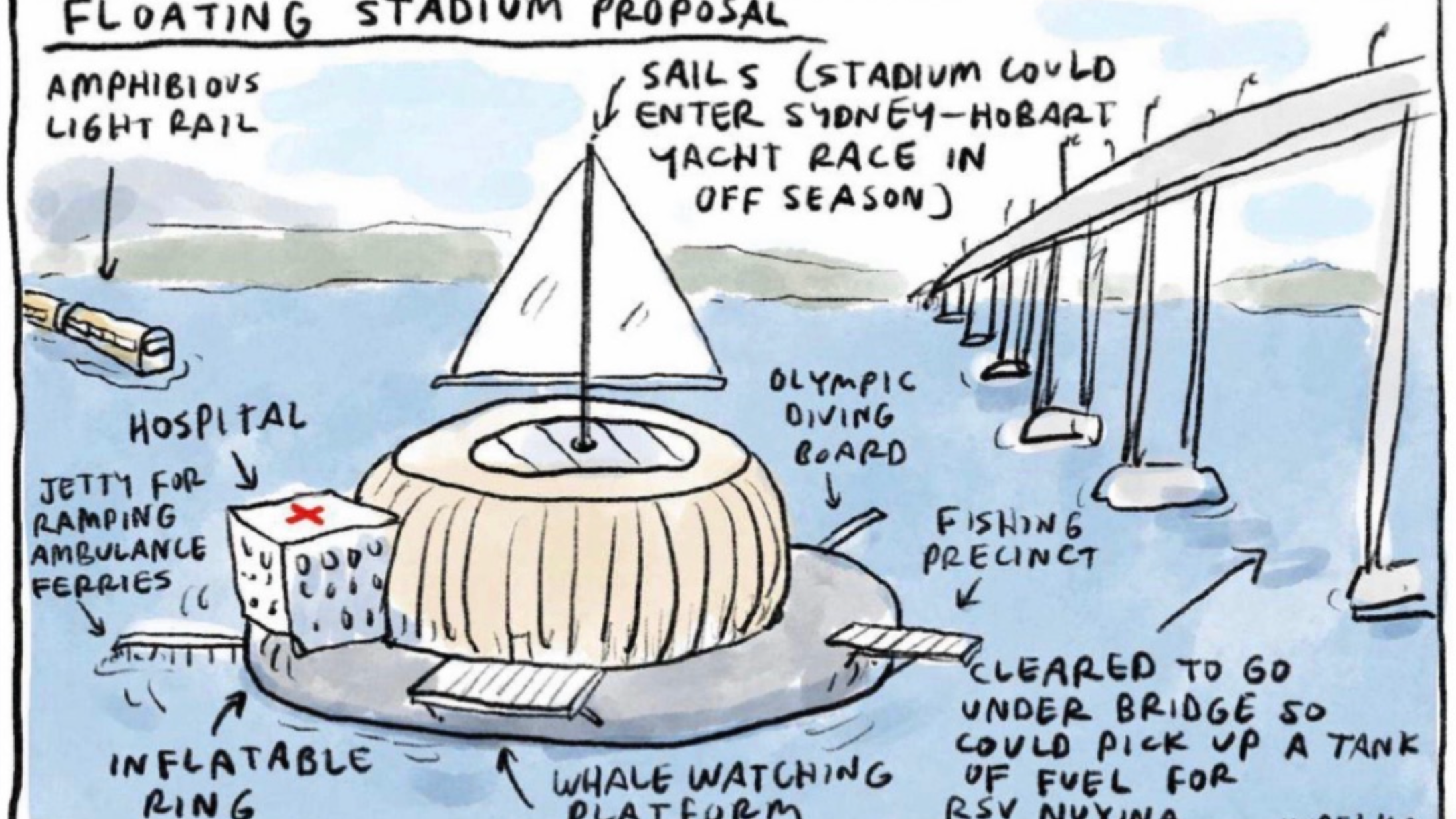
One very brilliant drawing from Jon Kudelka
There is a particular kind of time spent in grandstands and on sidelines.
It is not dramatic time.
It is repetitive, often cold, sometimes boring, occasionally joyful.
It is time spent watching children grow, recognising familiar faces before you know names, swapping half conversations, learning routines. You come to know people sideways, through presence rather than introduction.
These are not remarkable places.
But they are where community quietly forms.
Ordinary spaces, real connection
Community is often spoken about as something abstract, something to be built, funded, planned or announced.
In reality, it happens in ordinary places. On plastic seats. Along fence lines. Standing with a coffee on a winter morning, watching children play, noticing who keeps turning up.
These spaces don’t ask much of us. Just time. Just presence.
And over years, that time accumulates into something that matters.
Jon, in that space
Jon Kudelka was part of that world.
He was a South Hobart FC dad. His son Oskar has grown up around our club and around Morton’s Soccer School, over many years. Jon was not there as a public figure. He was there as a parent, a presence, one of many people who share these small, repeated moments of community life.
Like so many families, our connection was built not through ceremony, but through proximity.
How Jon saw the world
Jon’s public work was anything but ordinary. He was a brilliant artist and political cartoonist, widely admired for his clarity, restraint and dry wit. He had an extraordinary ability to call out nonsense, power and imbalance without shouting and without cruelty.
His humour never needed embellishment. It trusted the reader to notice what mattered.
When Jon shared news of his diagnosis, I messaged to ask if there was anything we could do.
He replied simply:
“Bit of a crummy night.”
Then, with perfect timing:
“A cure for brain tumours would be ideal.”
There was no performance in that exchange. Just honesty, humour and dignity.
Noticing imbalance
Jon often turned his attention to the way priorities are framed and to the gap between spectacle and everyday life.
In one cartoon, he imagined a floating stadium proposal bristling with grand ideas and annotated ambitions. Light rail. Whale watching platforms. Olympic diving boards. Prestige layered upon prestige.
It was funny, ridiculous and uncomfortably accurate.
What lingered was not what was drawn, but what was absent. The ordinary spaces. The everyday places where people actually gather, week after week, season after season.
Jon didn’t need to explain the point. He trusted us to see it.
Why these places matter
Most people don’t measure their lives by landmarks or major projects.
They measure them by who was there.
By who sat nearby. Who shared the cold mornings. Who drifted in and out of view as years passed.
These places teach us to notice presence, and absence. They carry memory forward not through ceremony, but through repetition.
They don’t just hold sport.
They hold people, and time.
What remains
Jon is remembered by many through his work, which continues to hang on walls, challenge thinking and make people laugh in uncomfortable recognition.
We will remember Jon every day through Oskar, and through his artwork that adorns our home.
But also through these shared spaces. Through time spent together without ceremony. Through the quiet accumulation of presence.
Community is not built in grand gestures.
It is built in showing up.
Jon understood that.
And that is how he remains with us.
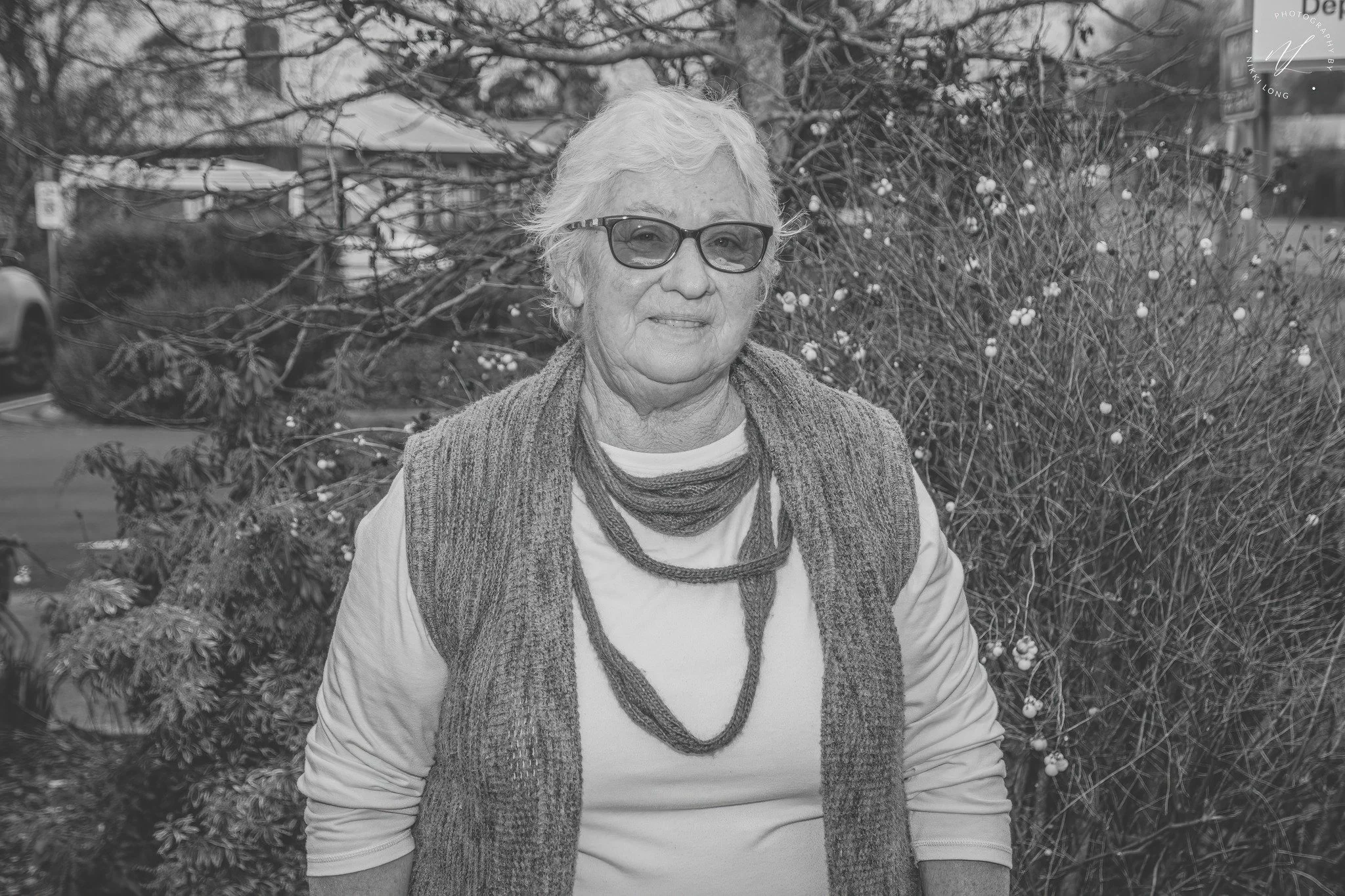
Jillian Cunningham - Football Faces Tasmania
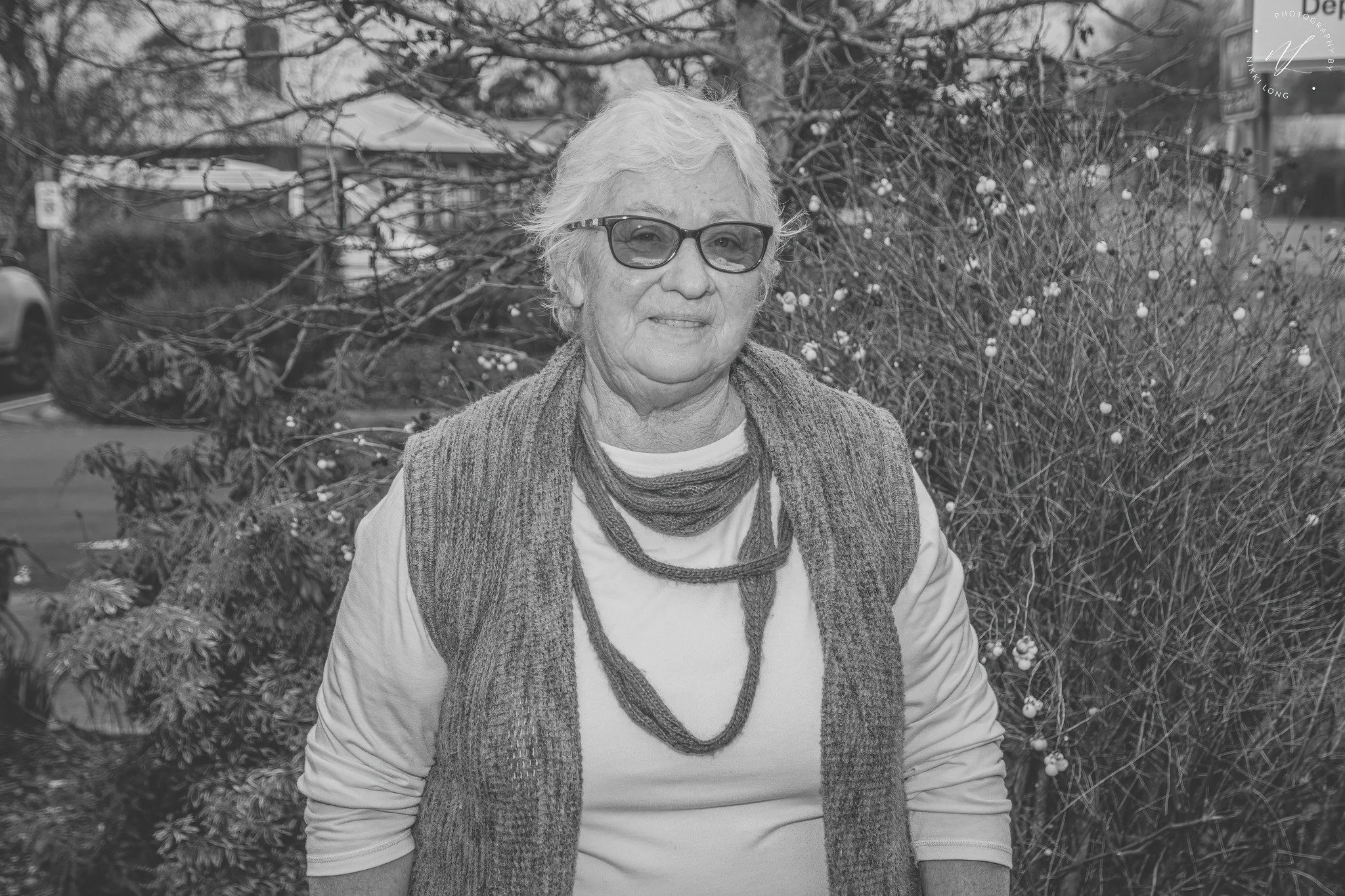
Photo credit: Nikki Long
A life in Tasmanian football
This interview was originally conducted in July 2022 as part of the Football Faces Tasmania series. It remains a powerful record of the kind of long, quiet contribution that has shaped Tasmanian football across generations.
Where it began
Jillian Cunningham’s football story begins in 1979, when her eldest son, Justin Dyer, started playing at Glen Dhu School in Grade 3.
His younger brothers, Stephen and Jonathon, followed soon after. Their sister, Melissa, joined in Grade 6. Like many families, football arrived through children. Unlike many, it stayed for life.
Jillian quickly became involved in the setup of the football committee at Glen Dhu, alongside Frank Buck, Jack Johnston and Geoff Smith. This was the beginning of a pattern that would repeat for decades, stepping in, helping out, and quietly holding things together.
Early club football and northern associations
When Justin was 12, he was recruited by Oscar Dominquez to play with the White Eagles. A year later, St Leonards Rovers Soccer Club began recruiting from Kings Meadows High School, and Jillian’s involvement deepened again.
Football in Tasmania during the 1980s was not streamlined. There were two associations, one in the south and one in the north, run by Enid and Paddy Baker. Jillian recalls personally delivering information to their home office in Mulgrave Street, a reminder of how hands-on and personal administration once was.
In 1985, Stephen was part of the NTJSA Under 12 team coached by Jock Glass that travelled to Coffs Harbour for a tournament. By 1988, Justin had made the state team under David Smith and Peter Davidson, while Jonathon was also representing NTJSA Under 12s under Tom Strickland. Easter tournaments in Sydney meant long trips and family commitment that was simply accepted as part of football life.
Western Suburbs and Juventus
Around this time, Jillian’s daughters Fiona and Melissa were playing hockey, although Fiona played some football with St Leonards. Jillian herself held several roles at St Leonards Rovers during these years.
By 1989, the boys moved to Western Suburbs Soccer Club, and Jillian once again became heavily involved at committee level. In 1992, Stephen was recruited by Peter Davidson to play reserve state league football with Juventus. Justin also played for Juventus in the summer roster.
Melissa switched from hockey to football at Western Suburbs at age 18, playing there until around 1998.
By the mid-1990s, all three boys were playing for Launceston City Juventus, and Jillian’s long association with the club truly began. She joined the committee around 1997 and took on the role of assistant referee, continuing in that capacity for several years.
During this time, she also drove the 12-seater bus transporting the Juventus Reserves team south for matches, another unseen but essential contribution.
Canteens, committees, and continuity
When the club canteen became vacant after Chris Mies stepped away, Jillian took it on, running it until she broke an ankle in 2004.
By then, Melissa had started playing for Juventus, and Jillian’s grandchildren were beginning their own football journeys.
Fiona’s sons, Joseph Thowe and Solomon, both played juniors. Solomon later played three seasons for Riverside and a season with the Rangers before stopping due to work commitments. Fiona herself played a season with the Juventus women’s team while her children were young.
Justin’s children, Charlie and Bella, played juniors, with Charlie progressing through NTJSA representative football and the State Under 15 team. Stephen’s son William also played NTJSA representative football until age 15. Jillian’s youngest grandson, Barney Wilcox, currently plays Under 16s, while his older brother Mac has completed juniors and now plays Under 18s.
Health, family, and returning again
While her grandchildren were playing, Jillian served on the junior committee and helped run the NTJSA canteen in 2015.
In 2018, she was diagnosed with acute myeloid leukaemia and spent six months in and out of hospital. The following year was quieter, focused on recovery.
Football, however, remained part of her life.
Today, her daughter Melissa Wilcox is the Registrar at Launceston City Juventus. Together, they manage the canteen, opening on Tuesday and Thursday nights to provide food and drinks, and welcoming new junior families into the club. They organise Thursday night players’ teas and NPL match meals for home games, supported by parents.
Justin continues to coach, having worked across junior football, NTJSA representative teams, and now as Championship Coach.
A football family
Jillian reflects that all of her involvement in football was as a single parent, following the breakdown of her marriage in 1981. Football became her social world. Coaches and parents became role models for her children. Lifelong friendships grew from sidelines, canteens, and shared responsibility.
For nearly 30 years, she has been involved with Launceston City Juventus in one role or another.
She has no intention of stopping.
Whether it is washing team strips, working in the canteen, or helping wherever she is needed, Jillian says she will continue until her health or physical ability no longer allows it.
Many in the football community remember her as Jillian Dyer.
Her contribution endures as Jillian Cunningham, written quietly across generations of Tasmanian football.
Some people leave their mark on football through moments.
Others leave it through decades.
Jillian Cunningham belongs firmly in the second group.
Football Tasmania, It’s Time to Fund Junior Associations
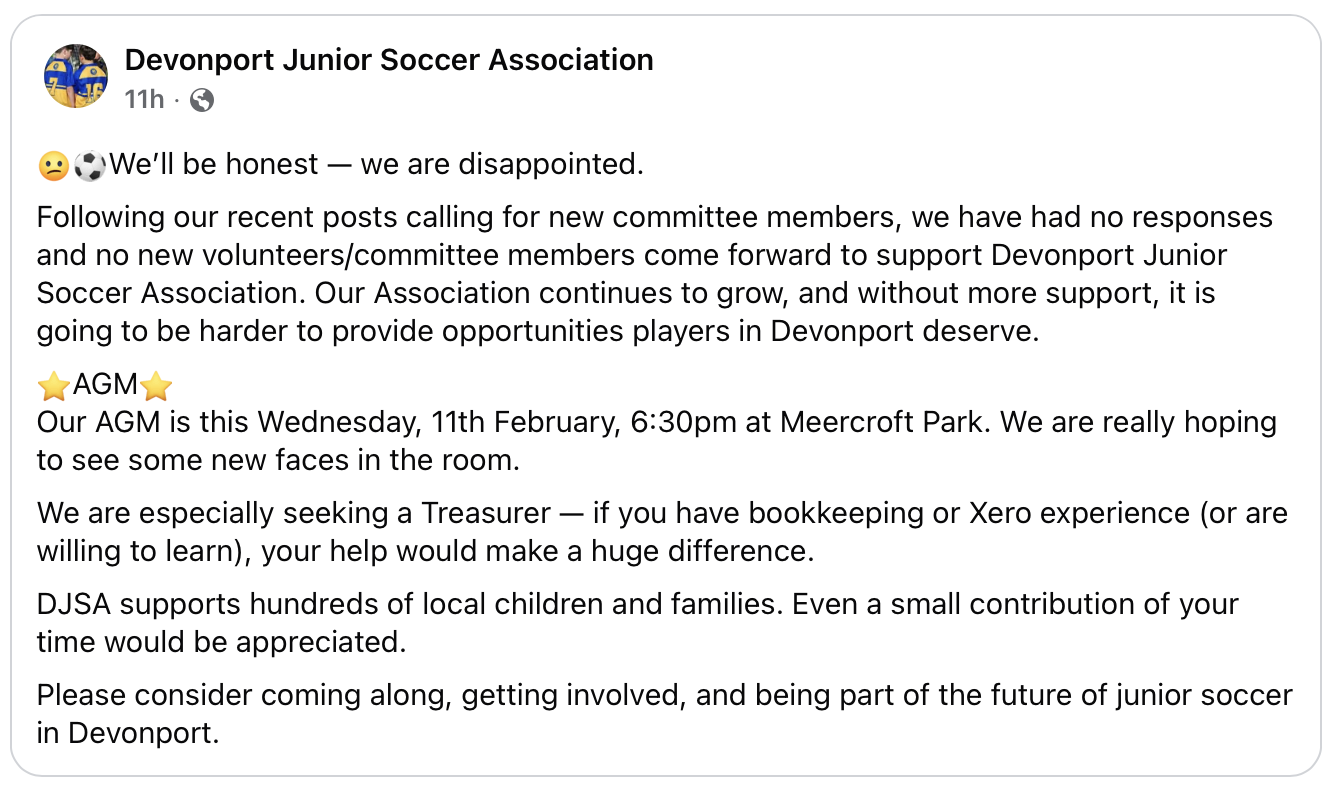
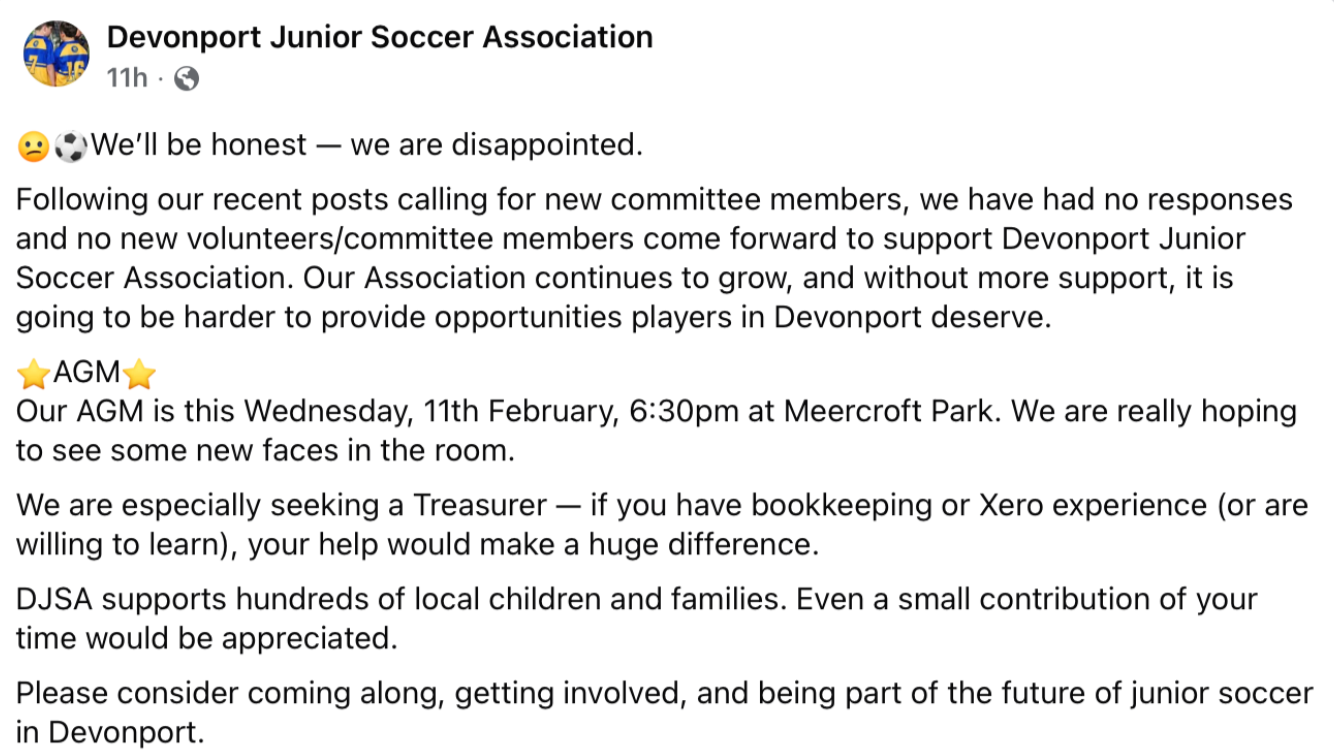
I saw a post yesterday from Devonport Junior Soccer Association (DJSA).
No new committee members.
No volunteers stepping forward.
An AGM approaching with hope, and a quiet sense of dread.
I felt it immediately, because the same thing is happening at the Central Region Junior Football Association (CRJFA).
No new nominations for 2026.
No new hands up.
I want to acknowledge DJSA for making this public. I understand exactly why that post was written. Putting your hand up to say “we need help” takes courage, especially in volunteer sport, and it reflects responsibility, not failure.
If I didn’t literally tap people on the shoulder, there would be no one to run these associations. That is not a criticism of our community. It is a statement of reality.
This is not about people not caring.
People care deeply.
They are just tired.
The myth of the “volunteer role”
Volunteer sport still trades on an old idea, that committee roles are light-touch, well-meaning, a few meetings a year and a sausage sizzle.
That hasn’t been true for a long time.
Modern volunteer roles now carry responsibility for governance, child safeguarding, compliance, risk management, finance, dispute resolution, insurance, equipment provision, ground bookings, policies, codes of conduct and increasingly complex reporting.
It is not casual help.
It is not ad hoc.
It is often the equivalent of a second job.
And unlike a job, it comes with no pay, little protection and, at times, very public criticism.
“They register themselves” is not an answer
It will be argued that junior associations are not essential because players “register themselves”.
That argument misses the point entirely.
Players may click the button, but associations do everything that makes that click meaningful.
They structure competitions.
They allocate teams and grades.
They manage eligibility, transfers, refunds and exceptions.
They handle disputes, safeguarding issues and risk matters that no automated system can resolve.
They liaise with clubs, councils, referees, schools and families week after week.
Registration without administration is just a database.
Football without junior associations is not self-organising. It is unmanaged.
The quiet shift no one talks about
What I’m seeing, across football and beyond it, is not a lack of goodwill. It is a shift in how people manage their time and energy.
People are busy.
People are stretched.
People are already juggling work, family, cost of living and their own mental load.
Many people would rather pay for someone else to do the role than absorb it themselves. That is not selfishness. It is realism.
But community sport has not adjusted to that reality.
We still rely on goodwill as if it were infinite.
It isn’t.
This does not require a large solution
This is important to say clearly.
Supporting junior associations does not require a large or complex funding model.
In many cases, one properly funded administration role would make a material difference.
Someone to manage registrations, communications, scheduling, compliance and day-to-day administration, freeing volunteers to govern rather than firefight.
At CRJFA, we registered 3,750 junior players in 2026. That scale of participation does not run itself, yet it is currently supported almost entirely by unpaid labour.
The false economy at the heart of the system
If junior associations begin to fail, the work does not disappear.
It simply moves.
And when it moves, it becomes paid.
Competition management.
Dispute resolution.
Safeguarding oversight.
Communication with families.
Operational problem-solving every weekend.
If those functions are no longer carried by volunteers, they will need to be carried by employees.
That will cost far more than supporting the volunteer model that already exists.
The current system survives not because it is efficient, but because it is subsidised by unpaid labour.
That is not a strategy.
It is a debt.
What happens when the engine room stops
Junior associations are the engine room of football.
They register the bulk of players.
They run the largest number of games.
They manage the greatest volunteer base.
They carry the heaviest compliance and safeguarding burden.
Yet there is no meaningful, structural funding that recognises the governance and administrative load they now carry.
At CRJFA we are already planning for fee increases in 2027, not to expand or improve services, but simply to survive.
To begin paying executive roles fairly for the work actually undertaken.
Because the alternative is clear.
Volunteer organisations will not gently fade away.
They will collapse.
Or they will be reprieved at the last minute by the same small group of people who always step in, again.
That is not governance.
That is crisis management.
Time for a shift in thinking
The old model assumed endless goodwill, spare time and low risk.
The game has changed.
The risks have changed.
The workload has changed.
If the structures beneath the game do not change as well, participation numbers alone will not save us.
Time to fund junior associations, Football Tasmania, before the volunteer model collapses and you are forced to replace it at far greater cost.
When Sporting Choice Comes With a Penalty
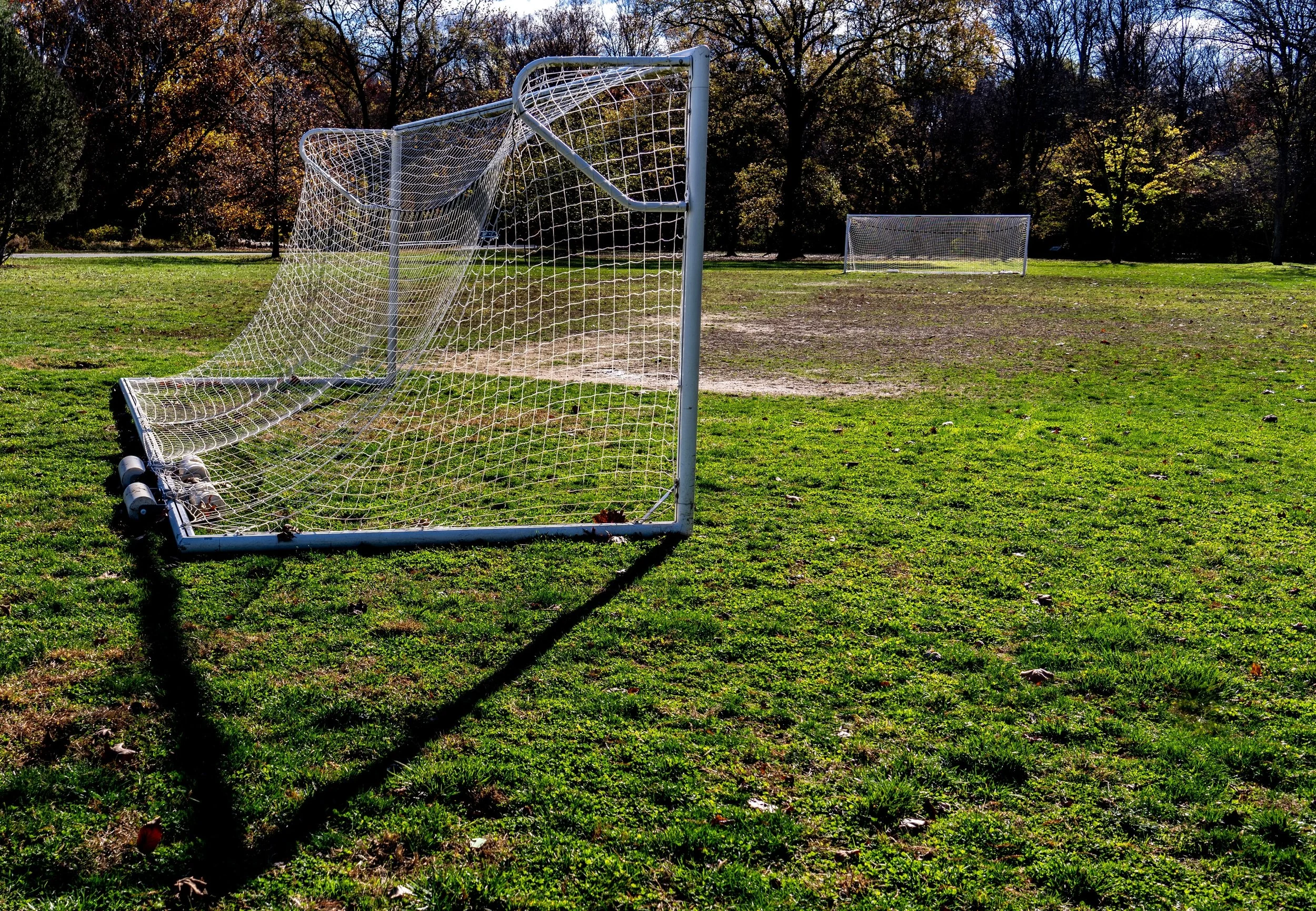
This is a story about children, sport, and the quiet choices we make about what and who we build for.
Ella is nine.
She pulls on her boots by the front door, shin pads already crooked, hair tied back badly because she did it herself. She runs out to the car with a ball tucked under her arm and asks the same question she always asks.
“Are we early?”
Ella plays football.
Not because of pathways or policy or funding models.
Because she loves it.
She loves the space, the noise, the feeling that the field belongs to her for an hour on a Saturday morning. She loves her teammates, the rituals, the way the game makes sense to her body.
She doesn’t know that football is the most participated team sport in the country.
She doesn’t know about reports, strategies or participation data.
She just knows this is her sport.
Sunday morning across town, her cousin Jack is getting ready.
Jack is nine too.
He’s pulling on a guernsey, tugging at socks that never quite sit right. He’s excited. His parents are too. Jack plays Aussie Rules. He loves it for many of the same reasons Ella loves football.
Their lives are not in competition.
Their sports should not be either.
But the systems around them already are.
The choice no one explains
At nine, sport feels equal.
The fields look similar.
The teams line up.
Parents clap.
Volunteers run around with clipboards and oranges.
Ella and Jack feel the same sense of belonging.
But equality at nine is an illusion.
Because behind the scenes, decisions are being made that will shape their experiences long after the novelty wears off.
Which sports get priority access to facilities.
Which sports get purpose-built infrastructure.
Which sports are planned for and which are expected to adapt.
No one explains this to Ella.
No one says, this choice may shape how easy or hard your sporting life becomes.
The question she asks
One weekend, Ella goes to watch her cousin Jack play.
The ground is bigger.
The rooms are newer.
The fence is solid.
There are signs, flags, a sense that this place was built to last.
On the way home, she asks her parents a question they weren’t expecting.
“Why does Jack’s sport get all that?”
They try to explain.
They talk about history.
About tradition.
About how things have always been done.
About how money works.
About how decisions are made somewhere else.
Ella listens for a bit, then frowns.
“But more kids play my sport,” she says.
“So why don’t they build for us too?”
There is no good answer to that question.
Not one that makes sense to a nine-year-old.
And not one that holds up much better for adults.
By fifteen, the difference shows
By the time Ella is fifteen, she is still playing football.
She still loves it.
But now her team trains later.
Matches are squeezed into tight windows.
Fields are tired.
Facilities are stretched.
None of this is because football failed.
It is because football grew and the system did not keep up.
Participation increased.
Investment did not follow.
Jack’s experience looks different.
His sport is visible.
Planned for.
Built around.
Not because Jack deserves more than Ella.
But because his sport has long been treated as structurally important.
That difference is not about effort or commitment or community value.
It is about policy.
When inequity becomes normal
Over time, this difference becomes normalised.
Football families learn to plan around scarcity.
Volunteers learn to absorb shortfalls.
Girls learn to be flexible.
None of this is written down as policy.
But it is how policy is experienced.
What looks like resilience from the outside is often quiet accommodation on the inside.
And accommodation has a cost.
This isn’t about preference
Ella did not choose the “wrong” sport.
She chose the most popular one.
She chose the sport that carries children, women, migrants, volunteers and families at scale.
She chose the sport governments celebrate when participation numbers are released.
But celebration without alignment is hollow.
Because when funding, facilities and planning do not follow participation, they create a two-tier future.
Some children grow up in systems designed for them.
Others learn to accept less.
Ella’s future is not limited by her sport.
It is limited by the decisions made about it.
Inequity doesn’t announce itself
It doesn’t look dramatic.
It looks like late training slots.
Worn-out pitches.
Shared change rooms.
Volunteers doing more with less.
It looks like being told, quietly, to be grateful.
Grateful for access.
Grateful for permission.
Grateful for whatever is available.
Gratitude becomes the substitute for policy.
The question we should be asking
This is not a complaint.
It is a question.
If Ella chooses football at nine, why does she face a poorer sporting future at fifteen?
Why does the sport with the highest participation still struggle for proportional support?
Why do we say participation matters, but fail to invest where it actually occurs?
These are not accidents.
They are choices.
And those choices shape Ella’s future, whether she ever knows it or not.
Ella shouldn’t have to choose again
She should not reach fifteen and wonder why her sport feels harder.
She should not have to switch codes to access better facilities.
She should not have to accept less because her sport grew faster than policy.
Choosing football at nine should not mean settling for less at fifteen.
That is not fairness.
That is inequity.
This future is not inevitable.
It is chosen.
And it can be chosen differently.

Are we stuck in ACL hell?

I saw a headline recently that stopped me.
“Are we stuck in ACL hell?”
It was written about the A-Leagues.
It was written about another player.
It was written about another knee.
But it also felt like it was written about something much bigger.
Because knee injuries are not new.
What is new is the frequency.
The relentlessness.
The sense that women’s football is getting faster, stronger and more demanding, while the systems around it are still catching up.
Before going any further, it’s worth saying this clearly.
There is a glossary at the end of this piece explaining ACL injuries, meniscus damage and return-to-play timelines in plain English. The terminology matters, and it’s often misunderstood.
And then I started thinking locally.
Lucy Roberts, our women’s captain, missed an entire season with an ACL injury.
Pishon Choi was a big miss for us as well, sidelined with the same injury.
Those are just two names I can think of immediately.
There are many more, at our club and certainly across others.
At some point, this stops feeling like bad luck.
What an ACL injury actually is
The ACL is the anterior cruciate ligament.
It is one of the major stabilising ligaments inside the knee joint. Its role is to control:
forward movement of the shin bone under the thigh bone
rotation of the knee
stability during sudden changes of direction
In football terms, the ACL is under the most stress when a player is:
decelerating
cutting or pivoting
landing from a jump
changing direction at speed
Most ACL injuries in football are non-contact.
No tackle. No collision. Just a movement the knee cannot tolerate at that moment.
Once torn, the ACL does not heal on its own.
For players who want to return to competitive football, surgery is usually required.
ACL is rarely the only injury
An ACL injury is often spoken about as if it is a single, neat event.
Scan. Surgery. Rehab. Comeback.
In reality, it is often more complicated.
When the ACL ruptures, the knee becomes unstable. That instability frequently leads to damage to other structures, particularly the meniscus.
This is why many players are told they have:
an ACL injury and a meniscus tear
or require additional surgery later
Two players can both be described as having “ACL injuries” and yet have very different recoveries, timelines and long-term outcomes.
The strength it takes to come back
This is the part that often gets lost.
Many women do not just rehab once.
They rehab for months.
They return.
They manage ongoing symptoms.
They have another setback.
Sometimes another surgery.
And they do it all again.
Not because it is easy.
Not because it is paid well.
But because they love playing.
Because football is part of their identity.
Because walking away is often harder than doing the rehab again.
The strength required to come back from an ACL injury, especially more than once, is enormous. Physically. Mentally. Emotionally.
Women’s football is full of players who keep choosing the hard road, even when the system around them makes it harder than it needs to be.
That matters.
The lazy explanation
The lazy explanation goes something like this.
Women tear ACLs because women’s bodies are different.
Hips. Angles. Hormones. Anatomy.
Some of that is relevant.
None of it is sufficient on its own.
Because if biology were the whole answer, we wouldn’t be seeing injury rates climb as the women’s game becomes more professional, more intense and more demanding.
The timing matters.
My uncomfortable theory
My theory is simple.
Women’s football has grown faster than the protections around it.
The game is quicker now.
Players are stronger.
The intensity is higher.
But the systems supporting those demands have not grown at the same pace.
So we have load without protection.
And the knee pays the bill.
Load without protection
Across women’s football, including semi-professional and community levels, we often see:
Small squads, meaning key players carry heavy minutes.
High training and match loads with limited rotation options.
Inconsistent access to strength and conditioning support.
Variable medical resourcing.
Uneven recovery environments.
Surfaces that change week to week.
This is not a criticism of clubs.
It is a structural reality of a game that professionalised unevenly.
Even in Australia, with short seasons
A common assumption is that ACL injuries should be less common in Australia because our women’s seasons are relatively short.
But short does not mean low risk.
ACL injury risk is driven less by season length and more by:
how quickly load increases
how well players are prepared
how much fatigue is involved
what surfaces players move across
In Australia, women’s football often involves:
compressed pre-seasons
rapid jumps from off-season to match intensity
limited year-round strength and conditioning
players balancing football with work or study
The football itself is still fast and demanding.
Knees do not respond to calendars.
They respond to movement, fatigue and control.
Which is why ACL injuries occur here too, even with shorter seasons.
Artificial surfaces and injury risk
Artificial surfaces are often blamed in ACL discussions and the truth is more nuanced than headlines suggest.
Early generations of artificial turf were problematic. Modern third-generation surfaces are much improved.
Current research suggests that modern artificial turf does not automatically cause higher ACL injury rates compared to well-maintained natural grass.
However, surface is not irrelevant.
Risk appears to increase when artificial surfaces are combined with:
fatigue
heavy training and match load
inconsistent surface quality
poor footwear–surface interaction
frequent switching between different surfaces
Surface alone may not cause the injury.
But it can contribute to the overall load environment.
Again, this points to systems, not a single villain.
Football is a high-risk sport for ACL injuries
Another uncomfortable truth is that football itself carries inherent ACL risk.
Women who play football are at higher risk of ACL injury than women in many other sports, particularly those without cutting, pivoting and deceleration demands.
Men do suffer ACL injuries too, but women experience them more frequently in football, particularly non-contact injuries and that difference is too consistent to ignore.Football combines:
frequent changes of direction
rapid deceleration
jumping and landing
fatigue over long passages of play
unpredictable movement
As the women’s game becomes faster and more intense, that risk increases unless the environment around players evolves at the same pace.
Sam Kerr, and why money doesn’t shorten the calendar
There is a temptation to assume that better funding solves ACL injuries.
It helps.
But it does not bend biology.
Sam Kerr, Matildas captain and global star, ruptured her ACL in January 2024 while playing for Chelsea.
She had access to:
world-class surgeons
elite sports medicine teams
unlimited rehabilitation resources
time and security
And she was still out of competitive football for well over a year, closer to 20 months, before returning to match play.
That is not a failure of care.
ACL grafts need time to mature.
Neuromuscular control needs time to rebuild.
Confidence and trust in the knee take time to return.
Money improves support and certainty.
It does not safely compress healing.
Lucy, Pishon, and the part we don’t talk about
When a player misses a season, the injury is not just physical.
It is watching football happen without you.
It is the mental grind of rehab.
It is uncertainty.
Women’s football has always relied on resilience.
But resilience should not be confused with acceptability.
Just because women cope does not mean the system is fine.
So are we stuck in ACL hell?
Only if we keep treating ACL injuries as bad luck and biology.
This is not an ACL crisis.
It is a systems lag problem.
We professionalised the product quickly.
We increased speed, intensity and expectation.
But we did not professionalise:
preparation environments
strength and conditioning access
surface consistency
squad depth
minimum medical standards
at the same pace.
Until that gap is addressed, the question will keep being asked.
And the injuries will keep coming.
Women will keep rehabbing, returning and, in some cases, doing it all again because they love this game.
The question is whether the game will finally meet them halfway.
ACL and knee injury glossary
ACL (Anterior Cruciate Ligament)
A major stabilising ligament inside the knee that controls forward movement and rotation. Once torn, it does not heal on its own.
ACL rupture
A partial or complete tear of the ACL. Often causes instability and usually requires surgery for a return to competitive football.
ACL reconstruction
Surgery where the torn ACL is replaced with a graft, commonly from the hamstring, patellar or quadriceps tendon.
Meniscus (plural: menisci)
Two crescent-shaped cartilage pads in the knee that absorb shock and protect the joint surface.
Meniscus tear
Damage to the cartilage, often occurring alongside ACL injuries. Can prolong recovery and increase long-term knee problems.
Medial vs lateral
Medial refers to the inside of the knee, lateral to the outside.
The medial meniscus is cartilage.
The medial collateral ligament (MCL) is a ligament.
They are different structures.
Non-contact injury
An injury that occurs without a collision. Most ACL injuries in women’s football fall into this category.
Return-to-play
The gradual process of returning to competition after injury. For ACL injuries, this is commonly 9–12 months or longer.
Secondary surgery
Additional procedures required after initial ACL reconstruction, often due to meniscus or cartilage damage.
Women will keep rehabbing, returning and, in some cases, doing it all again because they love this game.
The question is whether the game will finally meet them halfway.
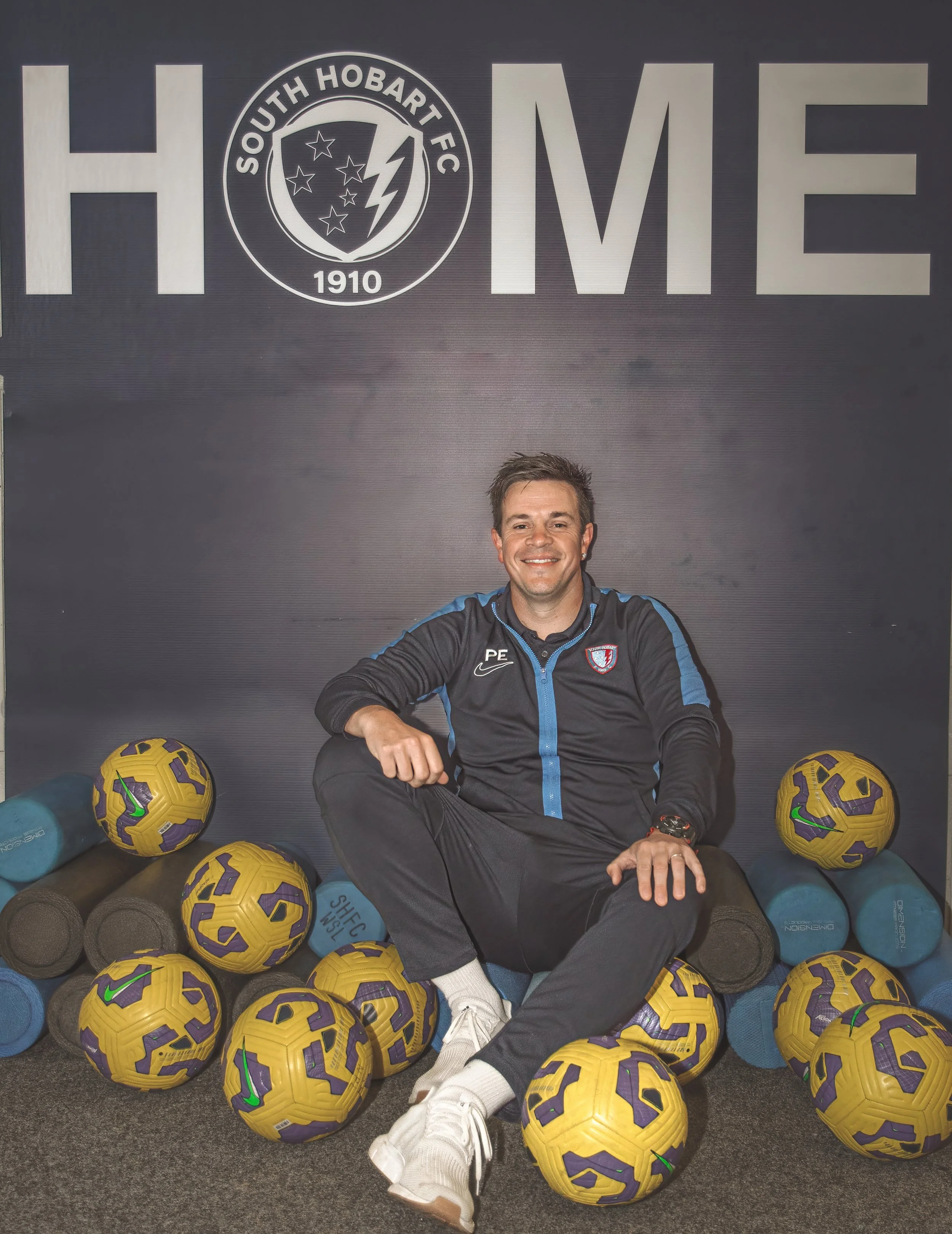
Pete Edwards: Alignment, Standards and Building Something That Lasts
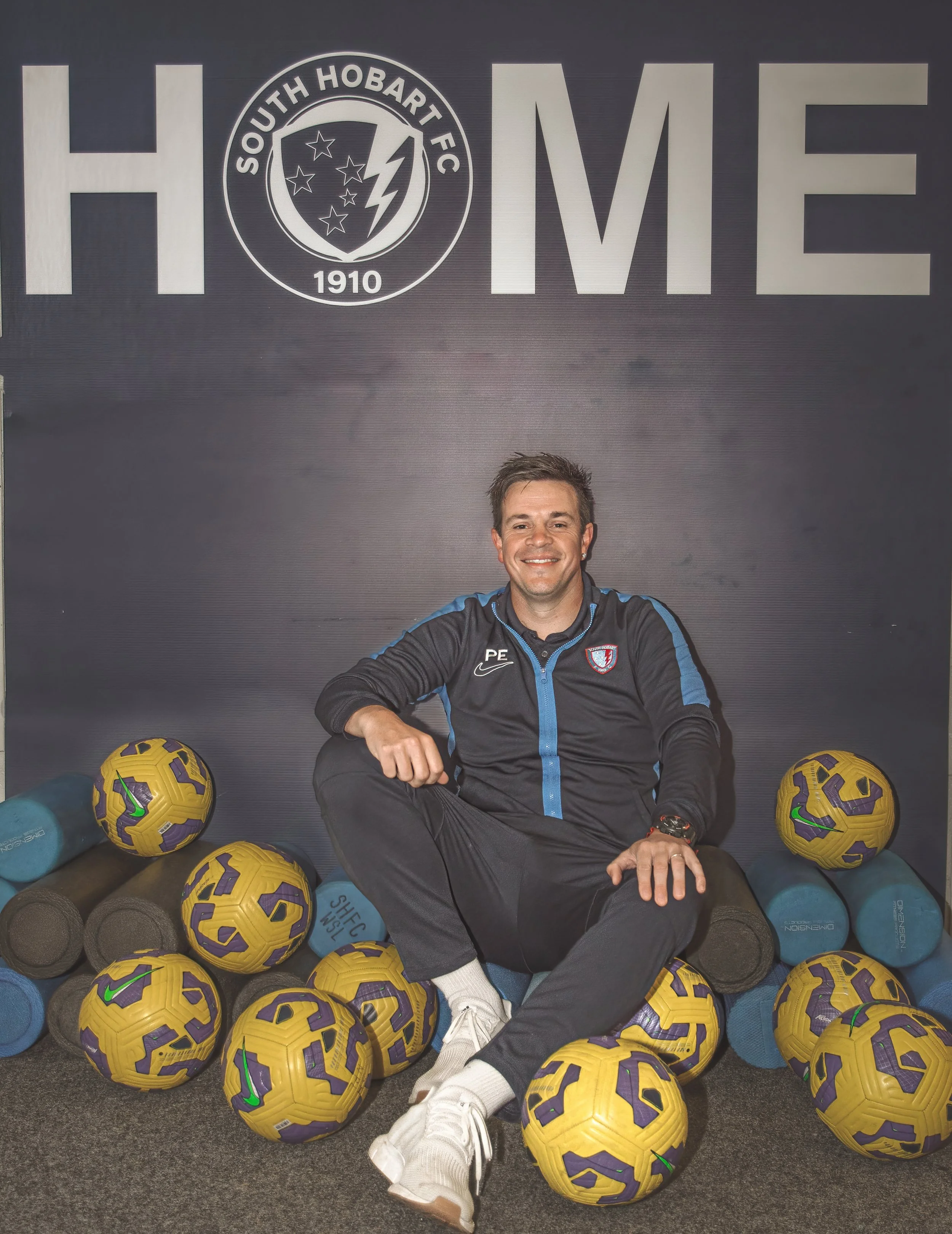
Another amazing photo from Nikki Long - Pete Edwards in the home dressing room
Pete Edwards did not walk into a neutral football environment.
He stepped into a club with history and strong identity, and for 17 years a head coach who didn’t have my surname or that of my son. He also stepped into my family’s football world and, within weeks, was interviewed within an inch of his life. He handled it with calm, clarity and professionalism. That, in itself, tells you a lot.
He talks often about alignment. Between people, values, development and environment. In a football state that is small, passionate and still working out how its systems fit together, that word matters.
Why Tasmania, Why South Hobart
Pete and Sophie did not come to Tasmania by chance.
“I valued my previous environment and the opportunity to work with elite talent and mentors. However, I reached a point where I was seeking a different challenge, one that allowed greater expression of my own philosophies, knowledge and lived experience. Tasmania presented the opportunity to contribute at a deeper level, where I could have a meaningful influence on both player development and the broader direction of a club.
On a personal level, Sophie and I have always been drawn to Tasmania. Its natural environment and sense of time and space create an exceptional quality of life, and after many visits, the move felt both deliberate and inevitable.”
South Hobart, for him, was not “a job”. It was fit.
“South Hobart felt aligned rather than opportunistic. The club has a clear identity and strong values and a genuine commitment to development rather than short-term outcomes. The work that Ken and Vicki have done over many years in the academy space has helped shape South Hobart FC into a truly outstanding football club.
What stood out was the willingness to think long term, about players, people and culture, and to trust the process required to do that well. At the same time there is a clear ambition to continue growing, to compete consistently with mainland clubs and to be recognised as a top-level football environment. It’s an environment where ideas can be challenged, refined and implemented with purpose. That sense of alignment made it feel less like a role to fill and more like a place to contribute meaningfully.”
That word again. Aligned.
In football, many roles are taken for pathway or status. He is talking about culture, people and direction first.
Before committing, he was looking for clarity.
“I needed clarity of intent. A shared understanding of where the club is and where it wants to go. I wanted to see that development was genuinely valued and that there was patience for long-term work. I also needed to see and feel the people within the club, to understand who they are and what they value most. Because people make football clubs, not the badge or the name.
It was important that ideas could be discussed openly and challenged constructively and that there was alignment between ambition and the daily behaviours required to achieve it. Once that was clear, the decision felt inevitable.”
That sentence, “people make football clubs”, is one I could have written myself.
How Football Shaped Him
Pete’s love of the game began where so many do. At home.
“My love of the game started at home, watching football with my dad, brothers and family. Going to games at Newcastle United in the UK showed me what football really means to people and communities, how a club can be part of a city’s identity and lift the mood of entire neighbourhoods. Characters like Shearer, Ginola, Beckham and Kevin Keegan were covered all over my bedroom wall. To dream big as young players do, that one day you could be standing alongside them.
Early on, football gave me structure, challenge and a sense of connection. It taught me discipline, creativity, the value of effort and how to lose with pride and respect, holding my head up high. It shaped my identity as a person and gave me a community I felt valued and safe in above all else. Those experiences shaped not just how I see the game, but how I see people and development.”
There is something consistent in coaches who stay in the game long term. Football was not just competition. It was belonging.
Lessons From Playing and the Coaches Who Changed Him
As a player, he is honest.
“Looking back, I was a player lucky enough to have some natural talent, but I lacked the cutting edge to reach the very top level. Success in this game takes far more than talent. It requires resilience, discipline, mental toughness and the ability to handle pressure and knock backs.
I remember friends and teammates who went on to have successful careers. Some had that X factor everyone talks about, but the truly successful ones had so much more underneath it all. They always found a way to win, even in the simplest drills. They stayed back to do extras, yet were always the first at training. They made mistakes in games, but never really had a bad performance. They learned quickly, moved onto the next action and it was as if nothing could stop them.
Those experiences have shaped the coach I am today. I focus on helping players maximise their potential, developing not just skills but character and creating an environment where effort, learning and self-belief are just as important as talent.”
That is the difference between talent development and person development.
He also saw the harder side of football.
“I won’t mention names, but there were moments early in my journey where the pressure placed on me by certain coaches and environments was overwhelming. The constant expectation to perform, the trial processes and the cut-throat nature of decisions in football can be incredibly difficult to navigate at a young age. There were times I wished for a different coach or club and moments where I could have walked away from the game altogether.
What fundamentally changed how I see the game, however, were the coaches who helped me believe in myself. The ones who encouraged creativity, allowed me to express myself, and helped me play with passion and joy.”
That line about joy is not soft. It is structural. Lose joy and you lose players.
He also speaks about the influence of coaches and leaders such as Kelly Cross, Nick Montgomery, Jimmy Van Weeren, Shannon Cole, Mike Conway and Phil Crenigan, whose leadership and values helped shape his approach to culture, growth mindset and environment.
Coaching Identity
“When people watch a Pete Edwards team, I want them to see intent, intelligence and character on the pitch…”
You can hear the academy background here. Structure and freedom, together.
His non-negotiables are grounded in effort, accountability and respect.
One belief he has shifted is telling.
“Earlier in my career, I believed that coaches win games… Over time, I’ve realised… their primary role is to empower and guide players.”
That is a maturity shift. From control to environment.
That coaching lens - environment over control - also shapes how he looks at football systems more broadly.
Tasmania and the Bigger Picture
Pete is careful not to claim he knows everything yet, but his lens is clear.
“…the most significant difference I see in Tasmanian football is scale and opportunity… the number of games players participate in each year is limited. It all starts with games played. Greater exposure to football leads to better development, more engagement and naturally attracts increased investment and funding.”
This is a conversation Tasmania keeps circling. Not talent. Structure. Games. Opportunity.
Where does he see Tasmania’s strength?
“Tasmania’s real advantage lies in its size…”
Small enough to align. If we choose to.
The biggest barrier?
“The perception that they need to leave the state to reach higher levels.”
He is also clear Tasmania should not copy mainland models blindly. Our context is different. Our solutions need to be too.
Development, Pathways and Standards
For Pete, the academy and first team cannot operate as separate worlds.
“I want the academy and first team to be closely connected in a way that’s visible…”
Visible pathways matter.
By 16, he wants players with professional habits, intelligence in play and strong values.
On winning versus development:
“Winning becomes a natural outcome of consistent development…”
That order matters.
Culture and Leadership
“For me, standards are the behaviours we live every day…”
Prepared, honest, consistent. Coaches included.
When talent and standards clash, culture comes first.
What Success Looks Like
For his first season, he looks beyond the ladder.
“Success… is about building strong foundations…”
Players developing. Pathways visible. Identity clear.
In five years, he hopes to have helped build:
“…a clear and visible pathway from youth to senior football… and a Tasmanian environment where players can stay, grow and reach their potential.”
Why This Matters
What stood out most to me was not tactics or ambition. It was that he talks about people, standards and environment before he talks about winning.
In youth development, that order matters.
He walked into a club with history, expectation and a very loud football family orbiting around it. He has handled that with professionalism and steadiness.
A good coach. A true professional. And, just as importantly, a really decent human being.
Now the work is the everyday bit.

If I were President

This is also a daydream.
Not a campaign.
Not a pitch.
Just an exploration of what leadership at the top of the game could look like if it were grounded in football, not status.
The President does not run football day to day.
But they shape what the organisation stands for, what behaviour is normal and what is quietly tolerated.
That matters more than most people realise.
The role is not ceremonial
The President is not there simply to attend functions and smile for photos.
The President sets the moral and cultural tone of the organisation. What they say yes to, what they stay silent on and what they challenge tells everyone else what is acceptable.
I would see the role as stewardship, not prestige.
This game was here before me. It will be here after me. My job would be to leave it healthier, calmer and more stable than I found it.
The governing body exists because its members exist
A football governing body can sometimes begin to feel like the centre of the game.
It is not.
It exists because clubs and associations exist.
It exists because volunteers give their time.
It exists because children play, parents drive, coaches coach and communities care.
Without that, there is no organisation to govern.
Authority in football is not ownership. It is stewardship on behalf of members.
That means listening matters.
Respect matters.
Partnership matters.
Clubs and associations are not there to serve the governing body. The governing body exists to serve the game they are already delivering.
Associations and clubs are the engine room
Junior associations and community clubs are not peripheral parts of football.
They are the engine room of the game.
They are where players begin, where families connect, where volunteers learn leadership and where the next generation of football people is formed.
Every senior player, coach, referee and administrator starts somewhere. Almost always, it is in an association or a community club.
If those structures weaken, the whole system weakens. Not immediately, but inevitably.
Support does not only mean funding. It means clarity. Stability. Realistic expectations. Systems that recognise most of the work is done by volunteers.
What happens there today determines what football looks like in ten and twenty years.
Children’s safety and joy come first
At its heart, football is a children’s activity.
If children are not safe, if they are not having fun, if they are not treated with respect, then nothing else we build matters.
Safeguarding is not a compliance box. It is culture.
I would speak about child safety openly and often.
I would expect safeguarding to be properly resourced.
I would support strong, clear processes when issues arise, even when they are uncomfortable.
Safeguarding must have authority, independence and proper resourcing, not just policy documents.
But safety is only half the picture.
Football must also be joyful.
If the environment becomes too adult, too political or too pressured, we forget who the game is for. Children stay in sport when it is fun, when they feel they belong and when adults behave like role models.
Participation is not sustained by structures alone.
It is sustained by experience.
Protecting the game from ego
Football politics attracts strong personalities. Ambition. Territory. History. Grievances.
The President cannot add to that noise.
I would work to lower the temperature, not raise it. To defuse, not inflame. To bring conversations back to what is best for football when they drift toward who wins.
Not every disagreement needs to become a battle.
Not every slight needs to be remembered forever.
Backing the CEO and challenging in private
The President and CEO relationship sets the tone for the whole organisation.
Public undermining weakens the organisation. Blind loyalty weakens it too.
I would support the CEO in public, but behind closed doors I would ask hard questions. Are we listening. Are we overloading volunteers. Are we solving problems or just managing optics.
The President’s job is not to run operations.
It is to ensure the person who does is supported and properly challenged.
Keeping the Board grounded
Boards can drift upward into governance language, risk registers and strategy documents.
All important. None of it the game itself.
I would constantly bring the focus back down.
Clubs.
Associations.
Volunteers.
Children playing on cold mornings.
If a decision makes life harder for the people actually delivering football, we should know that before we vote, not after.
The President also has a practical role here, ensuring Board meetings are disciplined, agendas are clear and decisions are followed through. Good governance is not just what is discussed, but how the Board functions.
Making culture a governance issue
Culture is not soft. It is structural.
If volunteers feel disrespected, if clubs feel unheard, if junior football feels invisible, that is not a communications issue. That is a governance failure.
I would ask regularly
Do clubs trust us
Do associations feel supported
Do volunteers feel the load getting lighter or heavier
Those answers matter as much as financial reports.
Culture is also about behaviour standards. Respect for referees, volunteers and each other cannot be optional. The President can help set the expectation that how we behave is as important as what we achieve.
Normalising transparency about conflicts
In a small football state, everyone has connections.
Pretending conflicts do not exist is theatre.
I would set the expectation that interests are declared calmly and routinely. No embarrassment. No drama. Just honest governance.
Trust grows when reality is acknowledged.
Stability over constant reinvention
Boards often want to leave a mark.
Sometimes the bravest decision is not to change things.
Football people can handle hard seasons. What they struggle with is endless structural churn.
Stability allows clubs and volunteers to plan, recover and build properly.
Volunteer impact matters
Before approving new requirements, systems or reporting, I would ask
Who is doing this work
And when
Usually the answer is a volunteer, late at night.
If we are not reducing load somewhere else, we are quietly burning people out.
Being a visible advocate for football
The President should not be silent outside boardrooms.
Football needs a public voice.
I would speak up when football is overlooked.
When it is misunderstood.
When it is unfairly diminished.
Not combatively. But clearly and consistently.
Advocacy is also about steady relationships. The President helps maintain constructive, ongoing dialogue with councils and government so football is represented early, not only when issues arise.
Promoting the game, not just the organisation
I would be visible at grounds.
Visible in conversations about facilities.
Visible when football needs representation.
If football people only see their President at formal events, the role feels distant. If they see them occasionally on the fence at ordinary matches, the role feels connected to reality.
Defending football without apology
Football sometimes carries an unnecessary defensive tone.
I would speak about football as a major sport, a community builder and a global game that belongs here.
Pride in the game is not arrogance. It is leadership.
Keeping the long view
CEOs think in seasons and budgets. Boards think in terms.
The President has to think in decades.
How does this affect football in ten years.
Will this leave the system stronger or just quieter for now.
Being a bridge in times of tension
Football always has fault lines. Metro and regional. Junior and senior. Elite and community.
The President cannot remove these tensions. But they can prevent them becoming fractures.
Leadership sometimes means helping different parts of the game understand each other, not just argue past each other.
Protecting fairness and process
Trust in football depends on people believing processes are fair and independent.
The President helps ensure that complaints, disciplinary matters and decision-making pathways are clear, consistent and free from influence. Fair process protects people and it protects the game.
Remembering leadership is temporary
Power in sport can become sticky.
No one is indispensable.
Part of the role is preparing others, encouraging new leaders and ensuring the organisation is not dependent on one personality. That includes actively mentoring future leaders and ensuring governance knowledge is passed on, not lost when individuals step away.
Healthy systems outlast individuals.
And yes, I would care
Not about status.
Not about titles.
About the game.
About the people who give their time to it.
About the kids who just want to play.
Care is what stops decisions being made purely for optics or politics.
The bigger picture
The President cannot fix everything.
But they shape the environment in which everything happens.
They help decide whether football feels political and heavy, or stable and supported.
That influence is quiet, but it is enormous.

All This, So We Can Play 90 Minutes on a Saturday - NPL Transfer Window

What You Don’t See on a Team Sheet
Every week people see names.
Who is in.
Who is out.
Who signed.
Who didn’t.
What they don’t see is the regulatory machinery sitting behind those names.
And during a transfer window, that machinery is running at full speed.
Our NPL transfer window closes at 5pm on Tuesday 10 February. To most people, that sounds like a football date. To clubs, it is a compliance deadline.
Football loves an acronym, and there are plenty in this space. I’ve included a simple glossary at the bottom if any of the terms are unfamiliar.
The Forest, Not Just the Trees
At NPL level in Tasmania, a club is not just picking players.
It is operating inside a layered governance system.
At the top sits FIFA. That’s where international transfer rules and player status definitions live. If a player has previously been registered overseas, international clearance is required. No clearance, no registration.
Below that is Football Australia. They apply FIFA regulations here and add national ones. That includes the National Registration, Status and Transfer Regulations, prescribed professional contracts, and the Domestic Transfer Matching System (DTMS). Even a domestic move involving a professional player can sit inside a FIFA-based transfer platform.
Then comes Football Tasmania. Here is where squad construction rules apply. Player Roster Principles (PRPs). Squad size limits. Visa limits. Goalkeeper nationality restrictions. Age eligibility rules. These are not suggestions. They are compliance requirements.
And then there are the competition rules. Match sheets. Registration categories. Technical area identification. Match day requirements. Media and signage obligations. A player can be legally registered but still ineligible if these layers are not met.
All of this must line up before kickoff.
A System That Evolved - The Player Points System
For many years, NPL clubs operated under the Player Points System (PPS).
Instead of just saying “name 23 players,” the PPS gave each player a points value based on experience, background and playing history. Clubs had to build a squad that stayed under a total points cap.
It was designed to prevent wealthy clubs stacking experienced players, protect competitive balance and encourage youth development. In practice, it meant constant calculations, classifications, and discussions about how players were categorised.
I can remember sitting around the table trying to work out when a player first played for us. What counted. What didn’t. What it meant if they had left for a year, like Nick my step son did when he signed for Melbourne City. Did that change their category? Their points? Their status? Their loyalty? There was a lot of memory involved in that system.
That system has now moved to Player Roster Principles (PRPs). Instead of a numerical points cap, PRPs focus on roster structure — squad size, visa limits, youth eligibility and similar controls. The aim is still competitive balance and development, but the mechanism has changed.
Different system. Same compliance layer.
The Transfer Window Is When It Compresses
A transfer window is not just a period to sign players.
It is a deadline for contracts to be completed, statuses to be correctly classified, documents to be lodged, systems to match information between clubs, registrations to be approved and clearances to be received.
If a player is classified as professional, that triggers a different set of obligations. Prescribed contracts. Additional documentation. DTMS processes. It is not just ticking a different box.
If a player has played overseas, there may be an international clearance in another time zone, in another federation, on another schedule. (ITC)
And all of this is happening while coaches are training, players are asking questions, and matches are approaching.
This Isn’t Just “Typing Names In”
At this level, football admin sits inside global rules, national regulations, state roster controls and competition operations.
Each player is a small compliance project.
One contract.
One status decision.
One registration.
Possibly one DTMS process.
Possibly one international clearance.
One roster inclusion.
Multiply that by a squad.
Thank goodness this isn’t my area of expertise. We are incredibly lucky to have Rick, our Registrar, who actually understands this world. Every club has someone like Rick - the quiet expert making sure the paperwork matches the rules so players can actually play.
Why It Exists
There are good reasons for this structure.
Fair competition.
Player protection.
Youth development pathways.
International order in a global game.
But the work required to satisfy that structure lands at club level. Often on volunteers or people already wearing several hats.
When a Name Appears - or Doesn’t
Sometimes a player isn’t missing because a coach changed their mind.
Sometimes they are waiting on a clearance.
Or a system step.
Or a document.
Or an approval.
That part isn’t visible from the sideline.
But it is very real.
All of this governance, paperwork, systems and approvals - across FIFA, national rules, state regulations and competition requirements - sits there quietly in the background.
All so a group of people can legally play 90 minutes of football on a Saturday.
That’s the bit most people see.
The rest is the invisible work that makes it happen.
Glossary — Football’s Favourite Acronyms
FIFA – World governing body of football.
FA (Football Australia) – National governing body for football in Australia.
TMS – Transfer Matching System used for international transfers.
DTMS – Domestic Transfer Matching System for professional player movements within Australia.
NRSTR – National Registration, Status and Transfer Regulations.
PRP – Player Roster Principles governing squad construction.
PPS – Player Points System, the previous NPL squad control model using a points cap.
NPL – National Premier Leagues competition tier.
ITC – International Transfer Certificate for international clearance.
DTC – Domestic Transfer Certificate generated in DTMS.
DRIBL – Match day team sheet and match data system.
Play Football – National online player registration platform.
AFC / OFC – Asian and Oceania Football Confederations (visa player category).
This Little Blog Has Turned Into Something Much Bigger Than Me
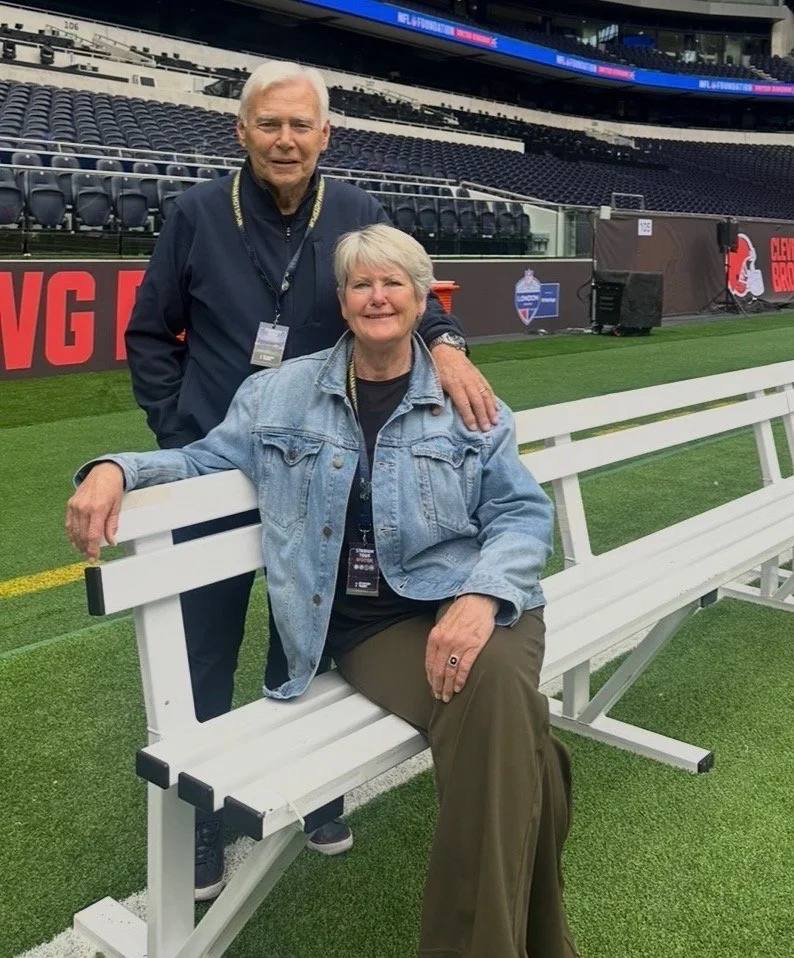
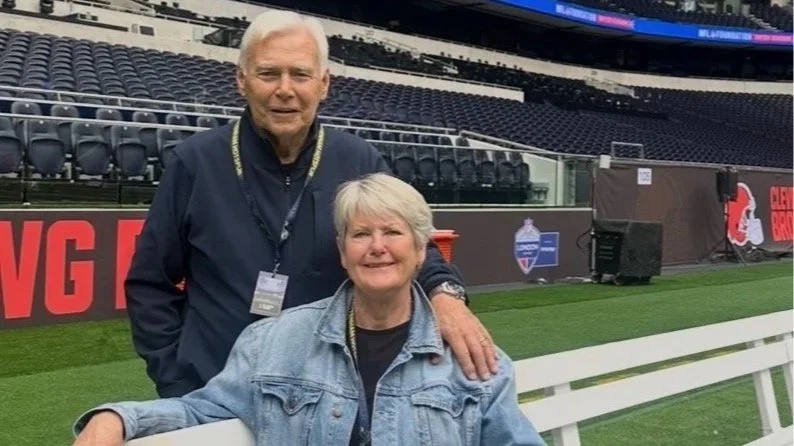
Ken and I at Spurs stadium in October. Yes, they were playing NFL there.
When I stepped down from the presidency at South Hobart, I felt a shift.
For years I had carried responsibility. Every word mattered. Every opinion had weight. There were things I thought but could not say. Things I saw but had to hold back on. That is part of leadership.
Stepping aside did not mean I stopped caring.
It meant I finally had space to think out loud.
And to say some of the things that had lived quietly in my head for years.
This blog started in that space.
It was not a strategy. It was not a plan. It was simply a place to put the football thoughts that had nowhere to go anymore.
It has become something much bigger.
A new chapter I didn’t see coming
My first post went up on 8 December.
Since then, 2.9K people have visited the website, with more than 5.1K post views.
That honestly blows me away.
I did not start this to build numbers. I started it because my head was still full of football. Stories. Ideas. Frustrations. Memories. Questions.
Writing gave all of that somewhere to go.
What I did not expect was how much I would love the process.
Why I knew people were interested
I had a hint that people cared about football stories long before this blog took off.
For years I had a little hobby of taking photos at games. Training. Sidelines. Celebrations. Moments that might seem small but mean everything to the people involved.
I uploaded them to Flickr simply to store and share them.
Over two years those photos have had 4.2 million views.
That was not one viral moment. That was steady interest from people who care. Parents. Players. Coaches. Friends. Local football people looking for faces, memories and moments.
It told me something important. People want to see and remember this game in all its detail.
And yes, I am quite sure at least 100K of those views were Ken.
Learning something completely new
I built the website myself on Squarespace.
That sentence still makes me laugh.
A few months ago I would not have known where to even start. There were moments I felt slow, frustrated and completely out of my depth.
But I stuck at it.
I learned about structure. Headings. Flow. How to shape a piece so it actually says what I mean, not just what falls out first. I draft, then amend, then rethink, then craft again.
And yes, I had help.
ChatGPT has been like a patient tutor sitting beside me. It helped me understand writing structure, think through ideas, check my flow, and sometimes do research that sent my brain off in new directions. I regularly remind it that NZ grammar and spelling matter to me. Yes, I was born in New Zealand.
But the stories, the opinions and the experiences are mine. The words come from my life in football. This tool helped me learn how to shape them.
It stimulates my thinking. It keeps me energised. It gives my football brain a place to work.
The people who said yes
A special thank you to the football people who have said yes to being interviewed.
That generosity matters more than you might realise.
When someone shares their story, their pathway, their doubts, their memories, it changes how we see them. The coach on the sideline is no longer just the coach. The referee is not just a whistle. The volunteer is not just a name on a committee list.
They are people with history, setbacks, turning points, family influences and moments that shaped them.
I have about ten interviews from all around the state on the go right now, so keep an eye out for more football people and their lives on and off the field.
The people behind the scenes
A big thank you to Nikki, who so generously arranges the photos with each interviewee and then travels around to take their portrait.
Her care and patience add another layer to these stories. A face, a moment, a presence that brings each piece to life.
She often sends the photo through with a little note like, “What a nice bloke,” or, “I took so many photos and they were all great, he takes a great photo.” Those small comments say a lot. They remind me that these are not just interviews. They are people, and good ones.
A thank you as well to Matthew Rhodes for allowing me to share the interviews on Tassie Football Central. That helps these stories reach further than my own little corner of the internet, and gives Tasmanian football people the visibility they deserve.
What people are actually reading
It has been interesting to see what has resonated most so far.
The Stop Telling Football People to Be Grateful series, especially Part 3, OMG the Money, has been widely read as has “If I were the CEO”.
And the interviews.
Hundreds of people are reading those conversations with football people from all parts of the game. That tells me something important. People do not just want scores and ladders. They want context. They want to understand the people inside the game.
I am also learning that Facebook likes do not necessarily translate into blog posts being read. The quieter numbers, the people who actually click through and spend time reading, tell a much more meaningful story. For example 700 people have read James Sherman’s interview so far.
A small apology
If you have struggled to find posts by category lately, that is a Squarespace issue, not me.
They have said they are working on it. Hopefully it is fixed soon.
Keep the ideas coming
If there is a person, story or topic you think should be covered, please use the contact page and let me know.
This space is growing because football people keep giving me things to think about.
This blog might have started as something for me.
But it is very clearly becoming something for the football community too.
And that is the best outcome I could have hoped for.
Thank you for reading.
From Preston Streets to Tasmanian Touchlines
Jon Fenech photographed by Nikki Long
An interview with Jon Fenech, Sporting Director and NPL Men’s Head Coach, Kingborough Lions United
Some football journeys are planned.
Some just never really stop.
When you speak with Jon Fenech, you get the sense his path into coaching in Tasmania is simply the latest chapter in a life where football has always been present, shaping decisions long before they looked like decisions.
Growing up in football
Jon grew up in Preston in the north-west of England, with a Maltese father and British mother. Football was everyday life. Streets, parks, local pitches on weekends, usually with his dad and brother.
At 13 he was scouted by Blackpool Football Club and joined their academy, later becoming a young professional. At 17 he represented the Malta national football team at youth international level.
His journey then took him through Malta and southern Europe before returning to the UK to complete a Business and Economics degree at Durham University, playing semi-professionally alongside study.
One memory still sits high. Watching Roberto Baggio at the 1994 FIFA World Cup, sitting with family and watching his father ride every emotion as an Italy supporter. That moment cemented his love for the game, not just the football itself, but what it means inside families and across generations.
He later moved to Brisbane to help grow a property recruitment business with a university friend, while staying involved in football through playing and coaching in the lower leagues in Queensland. Football never really left. It simply shifted shape.
From player to coach
Jon began his coaching badges while still playing. As injuries and life commitments increased, he realised he could no longer give playing what it demanded.
Friends working at the highest levels of the professional game encouraged him back into football through coaching. That shift allowed him to combine leadership and management skills from business with his first love, football. He has always enjoyed analysing the game and helping players improve. Coaching felt like a natural evolution rather than a replacement.
Life beyond the pitch
There is, by his own admission, not much time outside football.
Alongside his role at Kingborough Lions United Football Club, Jon is completing a postgraduate degree in football management and sporting directorship through the Professional Footballers' Association, and has recently started his A Licence with the Asian Football Confederation.
Any spare time is spent with his daughter, and thanks to her, he has developed a surprising passion for jigsaw puzzles.
Coaching philosophy
Forward. Outwork. Together.
That is how Jon sums it up. Attack with intent, outwork the opposition and compete as one team. For him, progressing and creating matters more than playing safe. It is a mindset as much as a tactic.
His three non-negotiables sit clearly underneath that.
Courage to play forward, because growth requires risk and a willingness to take the game on.
Honest work rate, meaning effort, reactions and discipline in every moment, not just when things are going well.
Team-first behaviour, where decisions and standards must serve the group, not individuals.
At their best, his teams are high-energy and proactive. They press aggressively when appropriate, attack with speed and intent, and fight for each other in every moment of the game. What he describes is not only a style of play, but a behavioural standard that runs through the group.
Why Tasmania, why now
Jon describes his move as the right leap at the right time. He had built a corporate career he genuinely enjoyed and was proud of and left a great company in capable hands, but it felt like the moment to try something new.
When the opportunity arose at Kingborough Lions United Football Club, it immediately felt right. From his first conversations and time spent around the facilities, he saw a club committed to building something sustainable. Not just chasing short-term success, but creating a long-term future for players and the community. He also notes he is fortunate to have excellent facilities at Kingborough, even while recognising the broader challenges across the state.
Tasmania itself stood out. He talks about a strong football community, passionate people, and real potential. On any given weekend you see people from different clubs turning up to watch other games, catching up in clubrooms and supporting the game beyond their own team. That sense of connection is something he believes is not always present in bigger football markets.
What surprised him
One of the most pleasant surprises since arriving has been that connectedness. Junior nights at the club. Match days where familiar faces keep turning up across different grounds.
He was also struck by the scale and speed of change. Tasmanian football is moving quickly from community participation models towards demands for performance pathways, which are still very limited. Clubs are growing. Facilities are improving. Operational demands are increasing. Yet much of the work is still carried by volunteers and overstretched staff. The ambition is strong. The infrastructure and systems are still catching up.
And still, cold winter nights, lights on, a handful of people in jackets along the fence and great football moments. Environment is not just facilities, it is people.
Where Tasmania falls behind
Infrastructure depth is the biggest gap. Facilities, pitch availability and training environments are under pressure as demand at junior and youth level rises rapidly.
Operational systems are another challenge. Many clubs are still transitioning from volunteer-run models to more professional operations, which are far more established in Queensland and the UK.
There is also inconsistency in development environments. Not every player trains within a structured pathway. For Jon, this is not about talent. It is about systems, volume, and environment quality.
How Tas teams compare nationally
When asked how Tasmanian teams would translate into other competitions, Jon does not focus first on talent. He focuses on environment.
He believes a mid-table Tasmanian NPL side would likely compete in FQPL 1 in Queensland, while the top Tasmanian teams would compete in NPL Queensland. The difference, in his view, is not simply ability. It is squad depth, professionalism and the ability to maintain standards across a long, demanding season.
For Jon, it is not about the best eleven players. It is about the environment that supports them week after week.
The biggest myth
Jon believes the biggest myth Tasmanian football tells itself is that it is further behind than it actually is. That belief, he says, limits ambition before the work even begins.
In his view, Tasmania has the quality to aim higher, but it needs to start building with national relevance in mind rather than constantly comparing itself from a position of deficit. For Jon, mindset is part of the system, not separate from it.
Coaching in Tasmania
There are some very strong coaches operating at senior NPL and WSL level. The biggest opportunity lies in youth and women’s football, where coaching is often volunteer-led and knowledge does not always filter consistently down from senior environments.
Coaching is strongest where clubs have clear structures and alignment between youth and senior football. It is weakest where coaching is disconnected from club-wide planning and environments remain purely participation-driven without development frameworks.
Better support for grassroots coaches, male and female, is a key step. Jon adds that he would love to appoint more female coaches at Kingborough, but finding them is the hardest point.
Coach education, Jon says, should be about standards, not labels. He speaks positively about the work of David Smith and Football Tasmania, but believes real development happens beyond certificates, through workshops, mentoring, collaboration and shared learning environments. The best coaches never stop learning.
What governing bodies should focus on
Jon believes Football Tasmania should increasingly shift from administration toward enabling growth.
Advocating for statewide infrastructure, particularly more artificial surfaces, supporting clubs with increasing operational demands, strengthening long-term player pathways and leading statewide conversations about football’s future are all central.
What should be avoided are short-term decisions that undermine long-term development, leaving clubs to manage rapid growth without adequate support, duplicating efforts, or alienating clubs. Strong clubs, he believes, ultimately drive strong football outcomes statewide.
Three changes to lift standards
If he could lift standards in three years, Jon’s answers are straightforward but closely connected.
Facility upgrades across the state for year-round access, because consistent environments underpin consistent development.
Stronger alignment between youth and senior football, so players move through connected pathways rather than isolated teams and programs.
Improved operational and administrative support at clubs, because as expectations grow, clubs need systems that can carry the load rather than relying on overstretched volunteers.
For Jon, standards do not rise through words alone. They rise when the environment makes higher standards normal day to day.
His message to players and coaches
Jon’s message to players and coaches who want to improve is simple. Seek environments that demand more.
From his own journey, leaving England, transitioning out of playing and later stepping away from the corporate world, Jon says his biggest growth moments came when he chose environments that challenged him.
Improvement comes from training consistently in structured, competitive environments, being accountable for your own development, understanding that higher standards require sacrifice, particularly in semi-professional settings and adopting a growth mindset that recognises progress is often gradual.
The hinge point
Tasmanian football sits at a hinge point.
Ambition is rising. Expectations are rising. The standards players want to reach are rising. But systems, infrastructure, and support are still trying to catch up. It is not a talent problem. It is an environment problem. That is where he believes the real gap sits.
Those who lean into higher standards now will not just improve themselves. They will help shape what the game here becomes next.
And that is the real work.
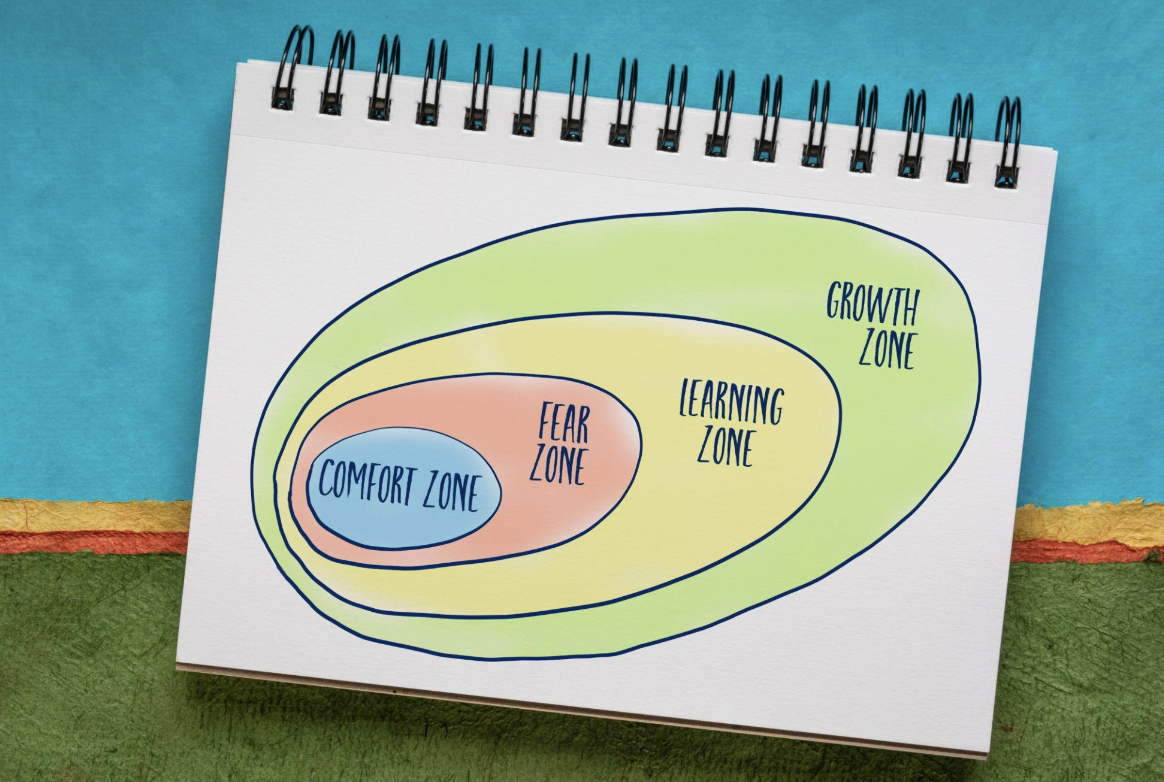
Playing Up in Football: Development or Status?
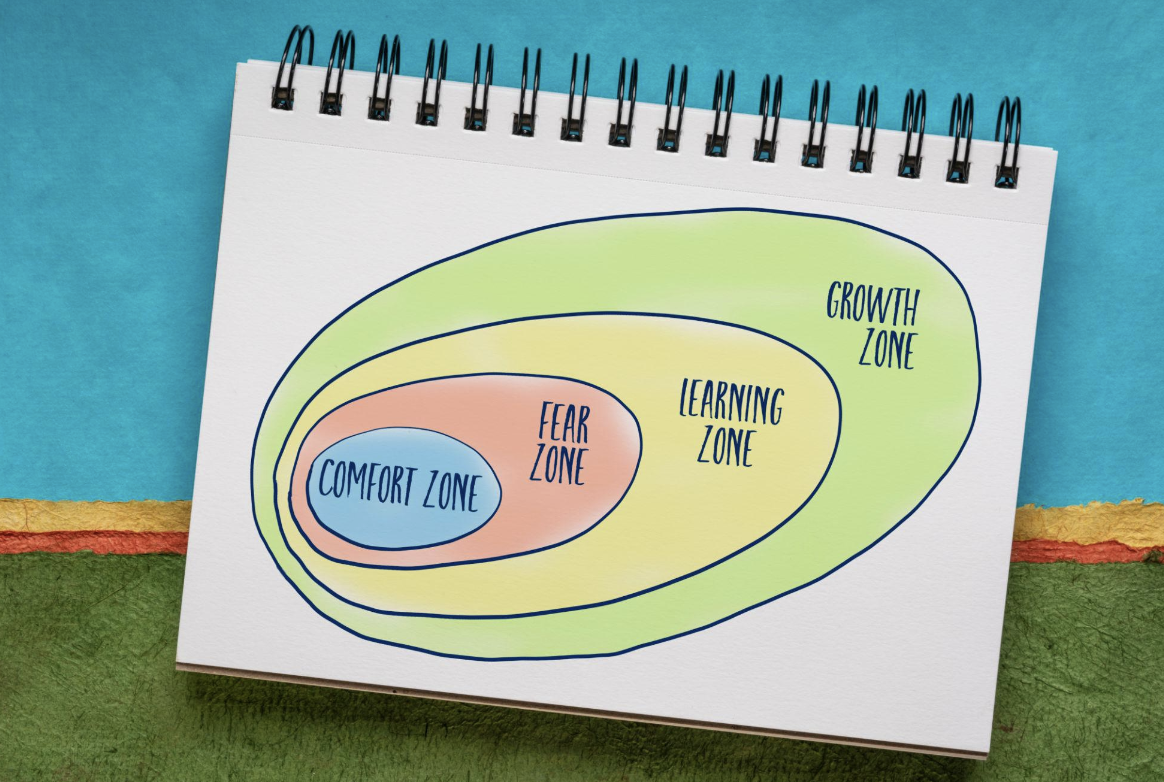
It’s a Saturday morning.
Parents line the fence. Coffee cups. Folding chairs. A game that looks like every other junior game.
Then someone says it, loud enough for a few people to hear.
“She should be playing up.”
It’s said with pride. Sometimes with frustration. Often with pressure.
Playing up has become a badge. A signal. A marker that a child is ahead.
But in football development, things are rarely that simple.
Because the question isn’t just can a child play up.
The real question is:
Is it helping them grow, or just helping adults feel reassured?
What does “playing up” actually mean?
Playing up simply means a child trains or plays in an older age group.
A 10-year-old in Under-11s.
A 13-year-old in Under-14s.
It is an age decision, not a talent certificate.
Playing up is a tool, not a trophy.
A personal example
My son Max was always tall for his age. He was born in March.
At one junior tournament we were asked to show his birth certificate because officials assumed he must be older. He simply looked more physically mature than the other boys.
It felt amusing at the time, but it was also a reminder of something important.
In junior sport, we often mistake early physical development for advanced ability.
Some children grow earlier. They are taller, stronger, faster sooner. Others catch up later. That timing difference shapes how kids are selected, coached and perceived.
The Relative Age Effect
There is another layer to this that many parents don’t realise.
In youth sport, children are grouped by calendar year. That means in one team, there can be nearly twelve months difference between the oldest and youngest players.
At age 10 or 11, twelve months is huge.
The child born in January can be almost a full year older than the child born in December. They are often bigger, stronger and more coordinated simply because they have had more time to grow.
Research calls this the Relative Age Effect.
It shows that players born earlier in the selection year are over-represented in junior teams and representative programs. They look more “advanced” when, in reality, they are simply older within their age group.
This doesn’t mean they aren’t talented.
But it does mean that what looks like ability can sometimes just be timing.
And later, as puberty evens things out, those early physical advantages often disappear.
Early advantage is often just early growth.
Why age groups don’t tell the full story
Within one age group, some children are nearly a year older, some hit puberty early, some much later.
Those differences can look like talent when they are really just timing of growth.
When playing up can help
Playing up can be useful when it stretches a player without overwhelming them.
Older games usually mean faster decisions, less time on the ball, more tactical demands and greater physical pressure.
That can accelerate learning if the player is ready.
In strong development environments, playing up is usually used part-time, not permanently.
A player might train with older players sometimes, play some matches up and still play in their own age group where they can lead, express themselves and build confidence.
That balance is where development tends to thrive.
But harder does not automatically mean better
If the challenge gap is too big, ball touches drop. Creativity disappears. Confidence shrinks. Enjoyment fades.
A child surviving is not the same as a child developing.
Development happens when challenge is balanced with confidence.
The child’s experience
A child playing up doesn’t think, “This is a good development stimulus.”
They think,
“I hope I don’t mess up.”
“I hope I’m good enough.”
“I don’t want to let people down.”
When challenge turns into fear of failure, learning slows.
Research consistently shows that loss of confidence and enjoyment, not lack of ability, is one of the biggest reasons young athletes leave sport.
Ball touches matter more than status
A child who touches the ball often, makes decisions and learns from mistakes may develop faster than a child who rarely sees the ball while trying to survive in an older game.
Exposure is not the same as development.
Football age is not just physical age
Some players can make a mistake and move on. Not be the best player on the field. Take feedback calmly. Stay confident when challenged.
Others are still learning those skills.
Emotional readiness is often the real divider.
Is it for the child or for the parent?
Let’s be honest. Sometimes it’s one, sometimes it’s the other.
When it’s for the child, you see freedom in their play. They still demand the ball. They try things. They leave the field talking about moments in the game.
When it’s about status, the focus becomes the label. Comparisons start. The child becomes quieter, safer, more cautious. The personality in their football shrinks.
Kids care about involvement.
Adults care about advancement.
Those are not the same.
What coaches see over time
After years in youth football, patterns appear.
Early playing up kids are not always the ones still playing at 17. Late developers often surge when puberty evens things out. Confidence and love of the game predict longevity more than early physical dominance.
Football development is a marathon. Playing up can’t be the trophy at the first checkpoint.
The goal is not to raise the best 11-year-old.
The goal is to raise the best 18-year-old.
Fast forward six years
Puberty has levelled the field. The early physical gap has closed.
What’s left?
Decision making.
Confidence.
Resilience.
Love of the game.
Those are the things that last.
Why coaches sometimes say “not yet”
When a coach says no, it may be about protecting the player, physically, emotionally and socially and keeping development steady rather than rushed.
It is not always a lack of belief.
At MSS and SHFC, our starting point is always a player’s true age group. That gives us a stable base for confidence, involvement and leadership opportunities. From there, we watch closely. We assess how a player copes with challenge, how they respond to mistakes, how they handle physical pressure and how they behave emotionally in games. If a player consistently shows they are ready for more, we may introduce opportunities to train or play up. But it comes after observation, not assumption.
Playing up is something earned through readiness, not awarded as a status symbol. coaches sometimes say “not yet”
Every parent feels this
The quiet worry that your child might fall behind. The urge to see them recognised. Progressing. Challenged.
That instinct comes from love.
The key is recognising when pride and comparison start driving decisions more than development.
Final thought
One day your child won’t remember what age group they played in.
They will remember whether they felt confident. Whether they felt capable. Whether football still felt fun.
Playing up is a tool, not a trophy.
Because we are not trying to win childhood.
We are trying to grow footballers who stay in the game.
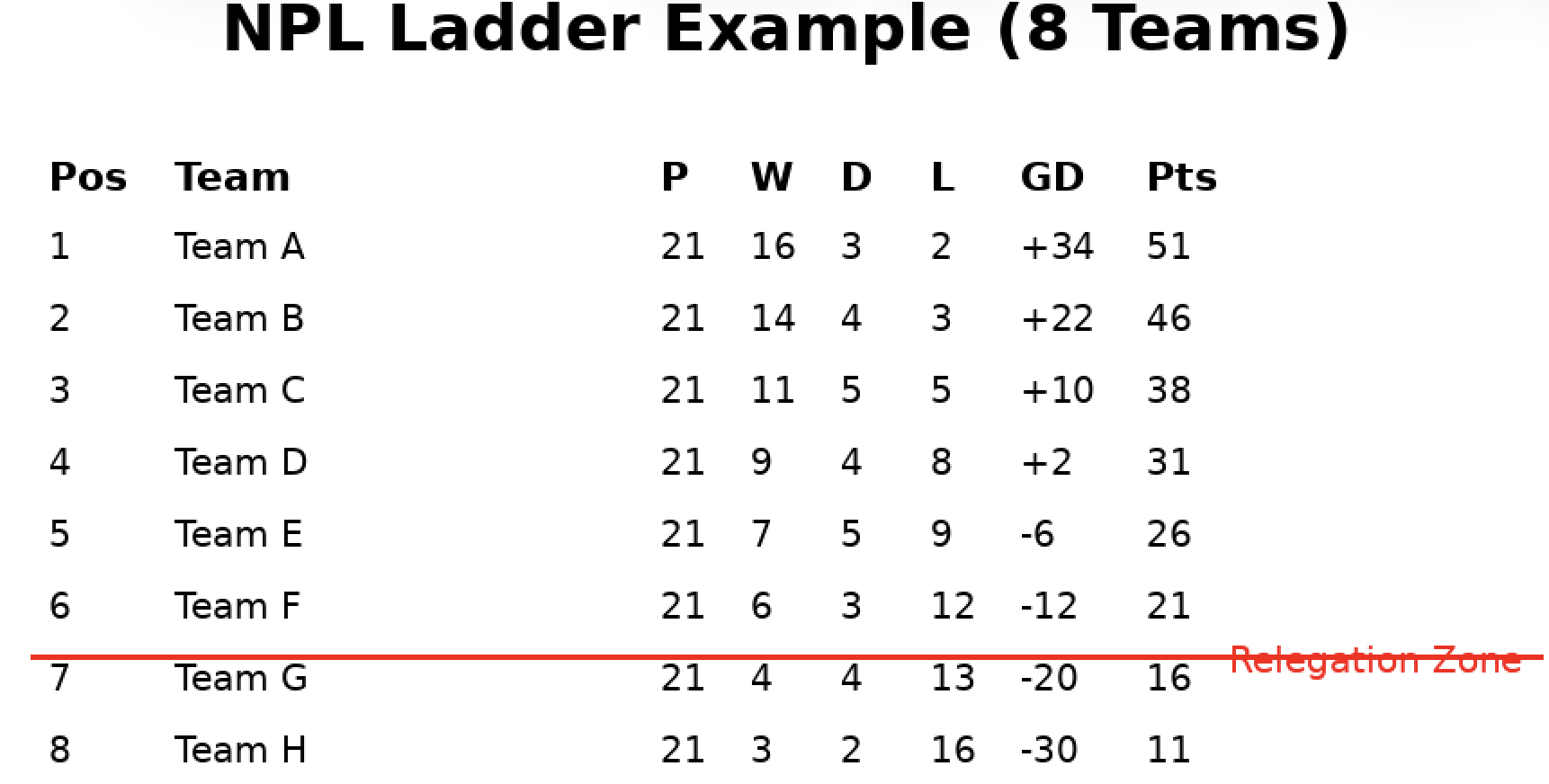
If the NPL Shrinks to Six Teams, How the Pyramid Actually Works - Part 2
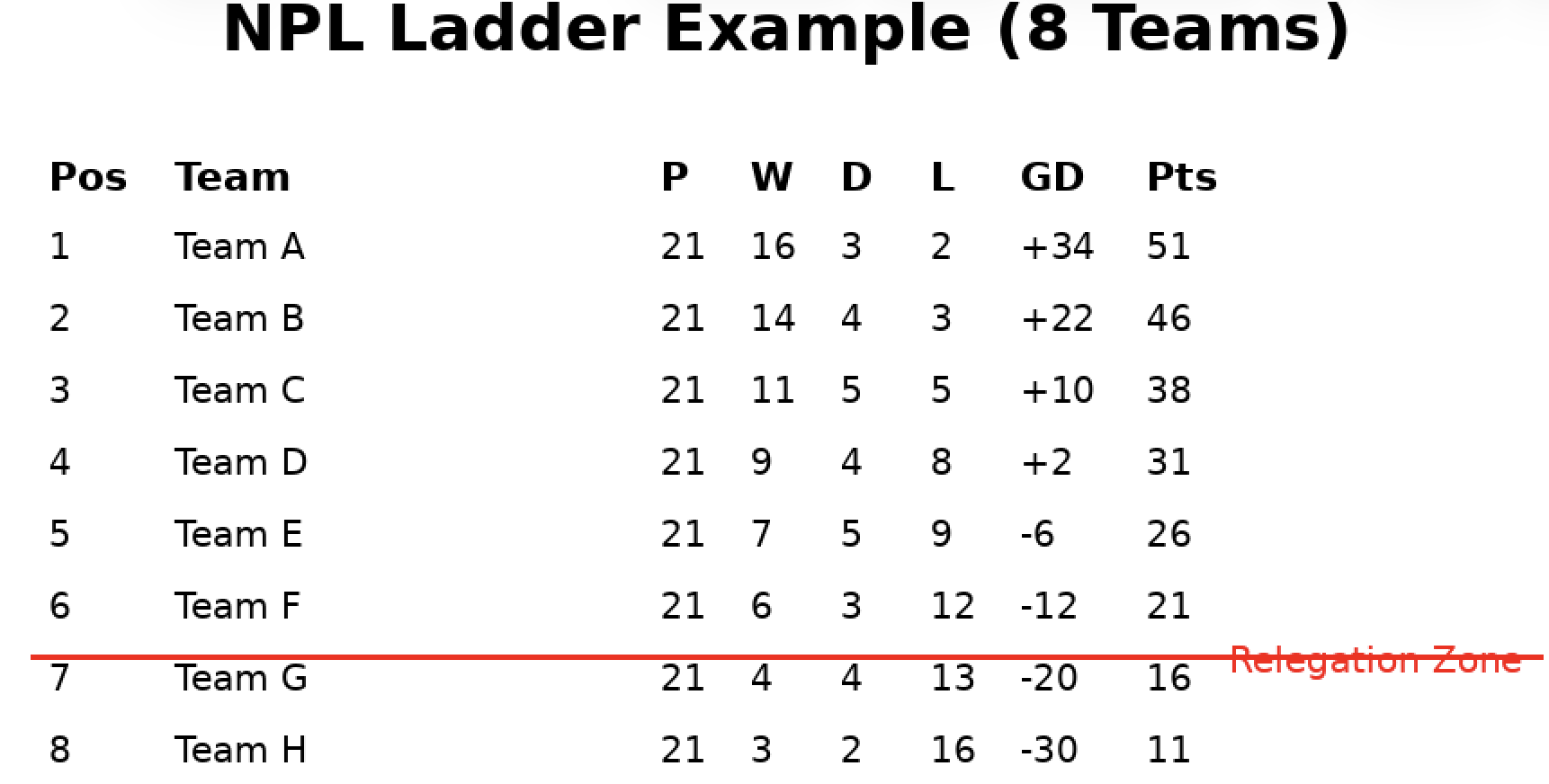
I do not claim to be a competition design expert, but I have spent enough time inside football to see how structures affect players, clubs and volunteers. I hear football people talking and, often, complaining. This is an attempt to start a practical conversation about what might actually work better.
I have sat in workshops where football has paid professionals to spend entire days, at considerable cost, discussing competition structure.
On one of those occasions, the outcome was the idea that all games should be played at the same kick-off time.
That was not something clubs had been asking for.
Yet it was presented as what the game supposedly wanted.
The result was a season of smaller crowds, fewer shared matchday experiences and an inability for people within football to support other clubs once their own game finished.
It was a reminder of something important.
Structure decisions shape the lived experience of the game. When those decisions miss the mark, the consequences are not theoretical. They show up in empty sidelines and disconnected competitions.
That experience has stayed with me.
Because it highlights why conversations about league design cannot just be abstract exercises or consultant reports. They need to reflect the reality of how football actually functions here.
Bigger Does Not Automatically Mean Stronger
Before getting into structure, there is a deeper assumption that needs to be addressed.
In Tasmania we often equate a bigger top tier with a stronger competition. More teams at the top can be presented as growth. It sounds positive. It signals inclusion. It is easier to explain to government and stakeholders.
But bigger does not automatically mean better.
League strength is not measured by how many teams are included. It is measured by how competitive the matches are, how intense the environment is week to week, how well players are developed and how strong the overall standard becomes.
When the player pool is spread too thinly, expanding the top division can actually lower the average level. Gaps widen. Uneven games increase. Survival football replaces performance football. The league looks larger, but the competition inside it becomes flatter.
Growth in numbers and growth in standard are not the same thing.
Sometimes concentrating quality lifts the whole system faster than spreading it.
That is not shrinking the game. It is strengthening it.
So if we are serious about the idea raised in Part One - a six-team NPL - the mechanics have to be clear.
This is what that system would look like.
Step One - The NPL
The top tier becomes six teams playing four rounds for a 20-match season.
This concentrates quality, increases weekly intensity and provides more meaningful football.
The bottom-placed NPL club does not go down automatically. They enter a promotion and relegation playoff.
A 20-game league season combined with structured cup competitions remains a moderate player load compared to many football environments. It spreads intensity across competitions rather than compressing it into a short league window.
Opportunity is not defined by how many teams sit in the top division but by how many meaningful competitive minutes players actually get.
Step Two - The Second Tier
The second tier remains regionalised with a Northern Championship and Southern Championship.
This respects travel realities and volunteer capacity. The top tier is where the strongest clubs already travel. Regionalisation below protects sustainability where it matters most.
Each competition runs its season to determine a Champion.
NPL clubs may field teams in these leagues but those sides are development teams and are not eligible for promotion. If such a team finishes first, eligibility passes to the highest-placed independent club.
Step Three - North vs South Playoff
The Champion of the North and the Champion of the South play a home-and-away playoff.
The winner becomes the Challenger.
This connects the regions at the point where performance matters and avoids assumptions about relative strength.
If the Challenger is not competitive over two legs, the gap between levels is exposed. That is valuable information for the system.
Step Four - Promotion and Relegation Playoff
The Challenger plays a home-and-away playoff against the bottom-placed NPL club.
The winner earns the NPL place for the following season.
Some will ask why the bottom NPL club gets a second chance. This model recognises the gap between tiers and makes the final movement a sporting contest at the interface of levels. It ensures the promoted club can compete immediately and that the NPL standard is protected.
If the playoff becomes one-sided, that is still information. It shows whether the gap between tiers is closing or not.
Step Five - Promotion Is Earned Through Performance and Confirmed Through Readiness
Winning is necessary. It is not sufficient.
Clubs must meet agreed NPL standards in areas such as ground suitability, lighting, medical provision, governance, financial sustainability and squad readiness.
Standards are not about exclusion. They are about clarity of level.
If the Challenger does not meet standards, promotion does not occur that season. The sporting result of the playoff cannot be bypassed by promoting a club that did not win the pathway.
Step Six - Promotion Intent Must Be Declared in Advance
Championship clubs must declare before the season begins whether they are eligible and willing to compete for promotion.
Only clubs that have declared intent and meet baseline readiness criteria can enter the promotion pathway.
Clubs that do not declare can still compete in the Championship competition but are not eligible for the playoff. If such a club finishes in a qualifying position, eligibility passes to the next highest-placed eligible club.
This prevents a situation where a club plays through the pathway and then declines promotion, which would stall the pyramid.
Adding Football the Right Way
A six-team NPL does not mean less football.
It means a different balance between league and cup football.
A structured summer cup in the South.
A formal Hudson Cup in the North.
The Lakoseljac Cup statewide.
The League title.
That creates four meaningful trophies across the season.
Cup football adds variation, knockout pressure and different tactical demands.
Cup competitions also do something league formats cannot.
They create unpredictability.
They give lower-league or less fancied clubs the chance to make a run, create moments and capture attention. That variety is part of football’s character. It brings different winners into the story and keeps more clubs feeling connected to meaningful outcomes across the season.
True cup football is compelling for spectators, valuable for media coverage and memorable for players. It produces stories that a league table rarely does on its own.
Crowds have been good for summer cups. The Hudson Cup provided strong football. Clubs have entered both.
League plus cups is not less football. It is more meaningful football.
Cups only add value when scheduled properly and treated as formal competitions, not friendlies in disguise.
This Is Simpler Than It Sounds
The structure sounds detailed, but the logic is simple.
Win your level.
Prove you are ready.
Compete for the place.
Playoffs add only a small number of additional match weekends and are manageable within a calendar freed by a 20-game league season.
A Transitional Step
Right now, standards checks are necessary because the ecosystem is uneven.
But the aim is that over time Championship-level clubs operate at a similar baseline. As that happens, the standards check becomes less of a gate and more of a formality.
The focus shifts back to performance on the field.
This model is not about keeping clubs out.
It is about creating a system that encourages clubs to grow into the level.
How the Transition From Eight to Six Teams Works
If the current NPL has eight teams, the move to six must be handled in a way that is clear, fair and based on football, not administration.
The simplest and most defensible transition is performance-based.
In the transition season, the NPL remains at eight teams.
At the end of that season, the bottom two teams on the ladder are relegated.
There is no automatic promotion that year.
The league naturally reduces from eight to six based on results on the field.
The new structure, including the Championship playoff pathway, begins the following season.
This avoids political decisions, historical arguments or subjective assessments. Every club starts the season knowing exactly what is at stake. Ladder position decides.
It is not about removing clubs. It is about resetting the scale of the top tier to match current depth.
Championship clubs are given advance notice that the promotion pathway begins the following year, providing time to prepare for standards and readiness requirements.
This keeps the transition sporting, transparent and fair.
Commit to It
The final piece is cultural.
Whatever model is chosen, it cannot change every season.
Clubs need certainty.
They need time to adjust, plan and grow.
If a new structure is altered at the first sign of discomfort, the system never settles.
Year one will feel different. Year two will still be bedding in. That does not mean it is wrong. It means the game is adapting.
Competition structures only work when they are formal, stable and treated as important.
This model is not about tinkering.
It is about committing.
Set the structure. Make it clear. Let clubs work within it.
Standards rise over time, not overnight.
When I Said “Women Aren’t Loud Enough”
At yesterday’s club strategic planning meeting we were discussing a familiar issue.
Why don’t more women coach?
I made a comment that came out easily. Almost casually.
Women often aren’t loud or commanding enough to control a group of boisterous 11-year-olds. In junior football you have to dominate the space.
Heads nodded. It sounded practical. Experience-based. Sensible.
Then Mark Moncur, who is heavily involved in gymnastics and sits on our board, said something that stopped me.
Most of his coaches are women.
They manage large groups of energetic kids.
They cope very well.
And just like that, my confident explanation didn’t feel so solid.
Because if women can do it there, why not here?
So I’ve been sitting with what I said.
Was I describing reality?
Or was I describing football culture?
It’s uncomfortable to realise I may have repeated the same assumptions that have limited women in the game for years.
Was I wrong?
The honest answer is uncomfortable.
I wasn’t completely wrong about the environment. Junior football, especially boys in that 8 to 12 age, can be loud, chaotic, physical and full of boundary testing. You do need presence. You do need authority.
But I may have been wrong about who is capable of that.
And more importantly, I may have described the style of authority football is used to, not the only kind that works.
1. The environment women are stepping into
Coaching this age group is not just teaching skills.
It is behaviour management.
Noise management.
Parent management.
Open parks. Parents three metres away. Every instruction audible. Every decision visible.
And football is still culturally coded as male territory.
So for many women, stepping in is not just taking a role. It is stepping into a space where authority is more likely to be questioned.
A man raising his voice is often seen as strong.
A woman raising her voice can be judged very differently.
That double standard is tiring before the whistle even blows.
2. Authority is socially taught, not naturally owned
When we say junior coaching requires someone to be loud and commanding, we are really talking about comfort with visible authority.
Boys are more often encouraged to be loud, to take up space, to lead physically and verbally.
Girls are more often corrected for the same behaviour, told not to be bossy, pushed toward harmony.
So by adulthood, when someone stands in front of a group of energetic boys, they are not just coaching.
They are pushing against years of social conditioning about how much space they are “allowed” to take up.
That is not about ability. It is about confidence under social pressure.
3. Many women don’t see themselves in the role
In sports like gymnastics, netball or dance, most coaches women saw growing up were women. The authority figure looked like them.
In football, most coaches they saw were men.
So women don’t just think, Can I do this?
They think, Do I belong here?
Belonging is powerful. Without it, people hesitate.
4. Fear of judgement hits harder in football
A new male coach can be rough around the edges and it is seen as part of learning.
A new female coach often feels like she represents all female coaches.
Mistakes feel public. Visible. Attributed to gender, not experience.
Add dads on the sideline, boys testing boundaries and existing male coaches nearby and it can feel like a performance, not a learning space.
That emotional load adds up.
5. The pathway into coaching is different
Many male coaches come through a simple pathway.
I played, so I will coach.
Women’s playing pathways have historically been shorter, less competitive and less resourced.
So many women feel they did not play at a high enough level to coach, even though junior coaching is largely about communication, organisation, care and structure.
Skills many women already have, but do not recognise as coaching credentials.
6. It’s not that women can’t handle boys
It’s that the system doesn’t support them doing it
Women who do coach juniors successfully often have
A co-coach
A club that backs them publicly
Clear behaviour standards
Visible authority from leadership
When that backing is not obvious, they feel exposed.
And exposed people leave.
7. Why gymnastics looks different
Gymnastics is not quiet or passive. Kids run, fall and push limits.
But the authority style often looks different. Structured. Precise. Expectation-driven. Consistent rather than loud.
The coach doesn’t “dominate the space”. The structure does.
Football, on the other hand, has a louder behavioural environment, more public criticism culture and a higher tolerance for chaos.
So women are not avoiding coaching children.
They may be avoiding environments where authority is contested, support feels thin and mistakes feel amplified.
The shift in my thinking
Maybe the issue isn’t volume.
Maybe it is
Do we introduce female coaches with visible authority?
Do we shut down sideline interference?
Do we set behaviour standards that back them?
Do we pair them, support them, protect their space?
Or do we hand them cones, wish them luck and then judge whether they were “strong enough”?
That’s a system issue.
So was I wrong?
I was right that junior football is a demanding environment.
But I was wrong to imply the limitation sits with women.
The limitation may sit with how football defines authority and how little we have adapted that definition.
Maybe the question isn’t whether women are ready for football coaching.
Maybe it’s whether football is ready to make room for different kinds of authority.
That’s a humbling thing to admit.
But maybe that is exactly where change starts.
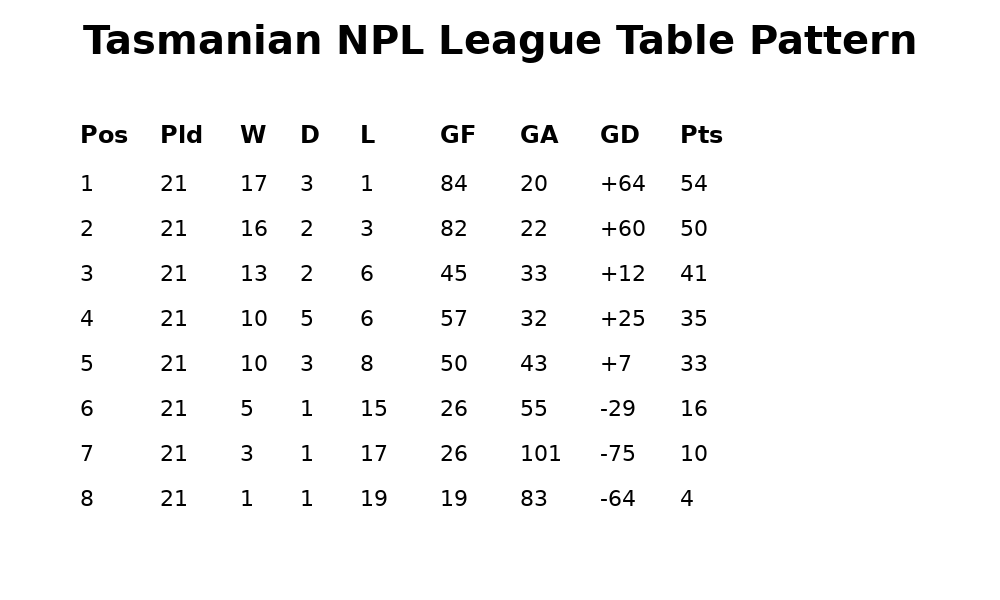
Why a Six-Team NPL Makes Competitive Sense - Part 1.
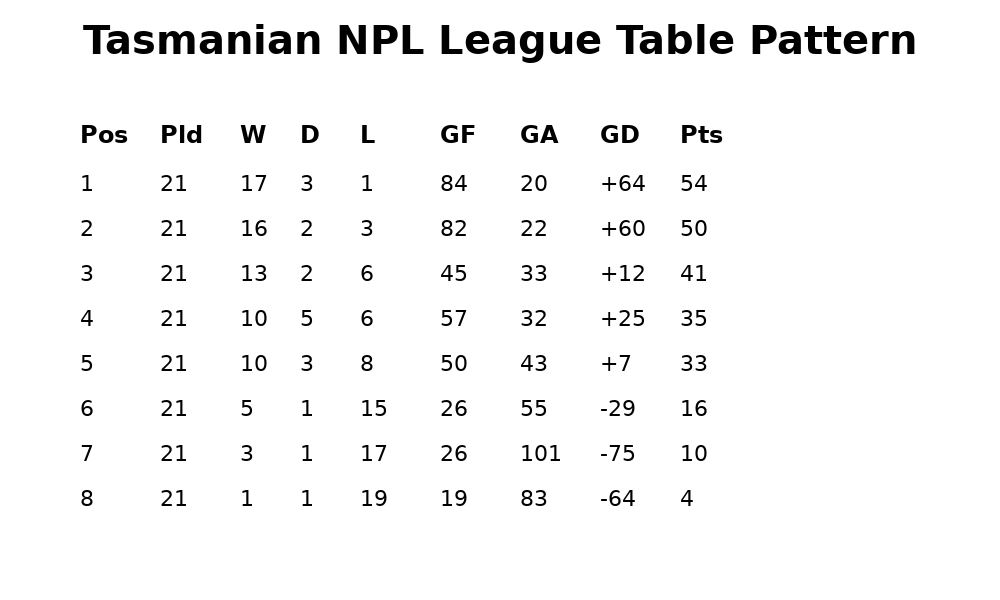
2025 Tasmanian NPL League Table
Yesterday our club held a Board strategic planning session.
Across a wide range of topics, one issue surfaced more than once.
Eighteen games.
Not enough football.
Not enough minutes.
Not enough exposure.
Not enough sustained pressure for players trying to develop at senior level.
It is easy to criticise structures from the outside. It is harder and more useful, to think through what the alternatives might actually look like.
That conversation made me stop and shift perspective.
Instead of pointing out what is not working, what are the practical options. What are the trade-offs. What are the uncomfortable decisions that come with designing a competition that genuinely lifts standards.
Because this is not a simple problem.
Tasmania has geography.
Volunteer-run clubs.
Travel realities.
A small player pool.
A desire to be competitive nationally.
Any structure has to live inside all of those constraints.
But constraints do not remove the central question.
If we accept that eighteen games is not enough meaningful football for the top level, what league design makes the most sense.
This is not about who belongs where.
It is about competitive design.
Reading the Ladder as a Diagnostic Tool
League tables tell stories beyond who finished first.
When recent NPL results are viewed as patterns rather than names, the competition does not look like one tight race. It looks like three distinct performance bands.
A top group separates strongly. High points totals. Large goal difference. High scoring. Few conceded. These teams are tested occasionally, not consistently.
A middle group competes tightly with each other. Balanced results. Moderate goal difference. This is where the most developmentally valuable football tends to occur.
A survival group concedes heavily and carries large negative goal difference. These teams are not simply losing. They are operating at a different depth level. In these environments teams often move into survival mode. Risk reduces. Young players are protected. Confidence erodes. Development slows.
This is not a criticism of any club.
It is a structural signal.
When a league clusters into performance bands, it suggests the distribution of talent across the number of teams may not align with the size of the player pool.
The Scale of the Gap Matters
When we look at the numbers more closely, the goal difference spread across the league was not small.
It was significant.
The teams at the top of the table were operating with very strong positive goal difference, scoring freely and conceding very little. At the other end, some teams carried heavy negative goal difference and high goals conceded totals.
That is not just variance.
That level of separation tells us the competition was not functioning as one consistent performance environment. It suggests a gap in depth, experience and squad capacity across the number of teams at the level.
When the difference between top and bottom becomes that large, several things happen.
Top teams are not stretched often enough.
Bottom teams operate in survival mode rather than development mode.
The middle of the table carries most of the genuinely competitive load.
That is not a criticism of individuals or clubs.
It is a signal that league structure and player distribution may not be aligned.
Why Blow-Outs Matter
Heavy scorelines are not moral failures.
They are indicators.
When the gap between strongest and weakest becomes too wide, top players are not stretched in certain fixtures. Coaches cannot replicate national-level intensity. Spectators disengage from predictable outcomes. The overall standard plateaus rather than rises.
Close games build atmosphere. Rivalries gain meaning. Late-season matches matter. Supporters stay engaged.
Competitive balance is not just about entertainment.
It is about whether the weekly environment resembles the level we say we are developing players for.
Two Structural Levers
There are only two ways to change this.
The number of rounds.
The number of teams.
Both influence player minutes, squad depth pressure, weekly intensity and national competitiveness.
Option One — Eight Teams, Four Rounds
Seven opponents multiplied by four equals twenty eight matches.
This increases exposure. Rotation becomes possible. Injuries do not derail development. The table reflects consistency.
This is the volume model.
But it only works if squad depth across eight clubs keeps matches competitive week after week. More games do not automatically mean more high-level games.
Option Two — Six Teams at the Top Level
Five opponents multiplied by four equals twenty matches.
Fewer total games, but higher intensity.
Stronger squads.
More top-v-top football.
Fewer survival line-ups.
More games where outcomes are genuinely in doubt.
This is the concentration model.
It assumes development comes through sustained pressure rather than pure volume.
Movement Matters
Structure alone does not lift standards.
Movement does.
Promotion and relegation introduce consequence.
Performance determines position.
Complacency has risk.
Ambition has a pathway.
A smaller top league only works if it is open.
If a Championship club wins but chooses not to go up, that is a choice about competitive level. The next eligible club progresses. If none meet standards, the NPL remains unchanged. The structure cannot bend around reluctance.
Top-tier football is a performance environment, not a participation badge.
Geography Is Real
Tasmania is not a compact metro region.
Travel matters. Costs matter. Volunteer capacity matters.
The Championship tiers are already regionalised North and South. That should remain. Geography shapes the second tier.
But geography cannot be the sole determinant of top-tier structure. That leads to fragmentation, not progression.
The challenge is to design a system that manages geography while still demanding competitive standards.
Will Players Tire of Repeated Opponents
Some will ask.
That depends on what the league is for.
Variety is a participation value.
Repeated high-level opposition is a performance value.
Repeated fixtures build tactical depth, adjustment, rivalry and psychological resilience. That mirrors higher-level football.
Retention Matters
When capable players spend seasons underfed for minutes, they drift away.
Not because they do not love football.
Because they want to play.
Structure quietly shapes retention.
A Considered View
This is not complaint. These ideas come from long involvement in the game and recent discussions with Ken, whose experience spans generations and levels.
This is not a club position.
It is a competitive one.
Where This Leads
If a call must be made based on competitive reality rather than comfort, the model most likely to lift weekly standards is clear.
A smaller, open top division.
Six teams. Four rounds. Promotion and relegation.
Not to exclude.
To concentrate quality, increase intensity, create consequence and mirror the environments players face beyond the state system.
Expansion can follow when depth supports it.
Standards rise when structure demands more.
Identifying the structural problem is only the first step.
The next questions are harder.
How promotion and relegation would operate across North and South.
What happens when clubs decline to move up.
And how standards can be protected while geography is respected.
Those mechanics matter just as much as league size, and I will look at them next.

Jan Stewart, Kingborough Lions Football Club

Jan Stewart photographed by Nikki Long
Football Faces Tasmania, recorded 2022
Why Jan matters
I used to see Jan most weekends at football.
She is one of those people who just makes you feel good. Always friendly. Always caring. The kind of person you naturally drift toward because her energy is calm, warm and genuine.
Football clubs run on people like that.
I do not think Jan is coaching at the moment, which honestly makes me a little sad. Because she is one of the kindest people I think I have known in football and that kindness is not softness, it is strength. The girls who come through coaches like Jan learn more than football, they learn belief.
Jan Stewart is one of those people who makes football feel safe.
Not safe in a soft way. Safe in the way that makes you try again. Safe enough to be new. Safe enough to be awkward. Safe enough to learn in public. Safe enough to be brave.
Football is damn lucky to have her and so are the girls coming through who do not yet know what they are capable of.
This is a Football Faces Tasmania story from 2022. Jan wrote it herself, straight from the heart. I am publishing it now so it has a permanent home.
Jan’s story, in her words
Some years ago now, I came into the game as a football mum.
My son was 7 at the time. My 10 year old daughter was watching his training session from the sidelines and said, “Mum, can I play?”
I laughed warmly.
“Girls do not play football,” I responded.
Two weeks later she was registered in a mixed team, and now at 24 she is still playing, when it stops raining in Northern NSW.
When our youngest daughters decided at 6 to play, I became a coach, and a learner player.
I was not ever very skilled in my football playing journey.
However, I did learn enough to grow my skill as a coach, and also a great love for the game.
Fifteen years later, and many, many hours on the football park coaching and playing, I finally feel like I am beginning to understand. Growing also is my confidence.
For me, this is what I want to be able to instill and grow in our youth girls.
With confidence comes strength, which empowers the players with the belief that they can achieve anything they set their mind to. It helps them find their way for their confidence and strength to shine.
It begins with them mastering the simplest of skills, such as passing.
Accurately.
Not every player knows their ability.
Not every player has a support base behind them.
Not every player knows what a football pathway is.
Not every player has good mental health.
To be someone in their lives that offers positivity and belief, and shows them what they can achieve through playing football, is so rewarding, and a great privilege.
Be brave.
Be confident.
Be strong.
This is what I wish for our youth players, and I believe that you can be powerful young female footballers.
These skills will carry you through life.
Jan Stewart
Football Faces Tasmania
Football Faces Tasmania was created to celebrate the people who shape Tasmanian football.
You know most of them. You see them at games, in the canteen, at the gate, organising the club, buying the equipment, coaching the team, managing the team, keeping the lights on, literally and figuratively.
Whatever their role, they volunteer for the benefit of many and their contribution should not be forgotten.
The questions are asked by Victoria Morton. Photos are by Nikki Long.
If you know someone whose football story should be remembered and celebrated, please tell me.

Why the Matildas Feel Safe - And Men’s Football Still Doesn’t

Photo Vogue Australia
Why Sam Kerr Is Celebrated and a Socceroo Would Still Be a Shock
We all saw the joy around Sam Kerr’s wedding.
Celebration. Pride. Love. Visibility.
She is openly gay. It was not framed as bravery. It was simply life.
Sam Kerr’s wedding showed what acceptance can look like in football. It also quietly showed us where the men’s game has not yet arrived.
Now ask yourself this.
If a current Socceroo, in his prime, came out tomorrow, would the reaction feel the same?
We know the answer.
That difference is not really about sexuality.
It is about gender, power, masculinity, and the culture men’s football still carries.
The history men’s football still carries
Ken often talks about earlier decades in football. The 60s and 70s. He says there were players “everyone knew” about. Nothing was said openly. Just whispers, sniggering, coded comments behind hands.
That silence was not acceptance. It was containment.
Then in 1990, Justin Fashanu came out in England. The first male professional footballer to do so publicly. The reaction was brutal. Media frenzy. Isolation. Stigma. His story ended in tragedy.
That moment mattered.
Men’s football absorbed a lesson, not about inclusion, but about risk. The message that travelled through the game was simple, this is dangerous.
Women’s players have faced their own battles for respect, funding and legitimacy. But the cultural fight around sexuality unfolded differently in their game. Women’s football did not carry that same public trauma point. That difference still echoes.
Cultures remember, even when they don’t speak about it.
Where I sit in this story
Andy Brennan has been part of our football life since he was four years old. My son’s best mate. In and out of our home. One of “our boys”.
He is also a very good footballer. He came through South Hobart, earned a move to South Melbourne and later played in the A-League with Newcastle Jets. He has lived inside elite men’s football environments.
When he told me he was gay and that he was going to come out publicly, my first instinct was not judgement. It was fear.
Fear of crowds. Fear of headlines. Fear of what football environments can be like and what they would do to him.
That protective, mother reaction says as much about men’s football culture as any analysis does.
Andy went on to be more resilient than I imagined. Happier. More confident. More himself. But my first response was shaped by the history this game carries.
Women’s football grew differently
Women playing football were already stepping outside traditional gender expectations. The sport developed fighting for recognition, not protecting a long-established identity.
LGBTQ+ visibility became part of the culture early. Not as a campaign, but because players existed and did not hide.
So now:
Matildas share partners on social media
Sponsorship campaigns include same-sex relationships
Fans celebrate it as normal
The Matildas have been allowed to be whole people in public. Male players are still expected to be only footballers.
That visibility does not destabilise the identity of women’s football. It fits the story the game tells about itself.
The commercial contradiction
Women’s football is marketed around authenticity, diversity, community and relatability.
Men’s football has long been marketed around power, toughness, tradition and the “alpha” image.
LGBTQ+ visibility sits comfortably in the brand story of the Matildas.
It disrupts the traditional brand story of men’s football as it has been packaged for decades.
So you see visibility in the women’s game.
And near invisibility in the men’s.
Not because gay male players do not exist. But because openness is still treated as commercial and cultural risk.
Why men’s football reacts differently
Homophobia in men’s football is rarely just about sexuality. It is about policing masculinity.
Being gay has wrongly been treated as being “less of a man.” That idea lingers in dressing rooms, terraces and commentary culture.
A gay female player does not threaten a straight man’s identity.
A gay male player challenges the narrow definition of masculinity that sport has carried.
That discomfort sits underneath a lot of reactions, even when no one says it aloud.
The role model burden in men’s football
In the men’s game, coming out rarely stays a private act.
A player does not just remain a winger, a defender, a teammate.
He becomes “the gay footballer,” a spokesperson, a symbol, a headline.
His identity becomes part of his public job, whether he wants it to or not.
That is exhausting.
Women’s football has reached a point where sexuality is increasingly just part of who someone is, not the defining narrative. In men’s football, the story still attaches itself to the person.
That added pressure, media attention and expectation to represent a whole community is another reason some players stay silent.
Silence in men’s football has often been less about shame and more about survival.
Crowd culture matters but not in the way people think
Go to a Matildas game and you will see just as many men as women. Dads. Brothers. Young boys. Older men. Hardcore football fans.
Men who support the Matildas. Men who take their daughters. Men who cheer openly for gay players without hesitation.
So the issue is not that men cannot accept gay athletes.
It is that men’s professional football has historically built a performance culture in its terraces where aggression, banter and intimidation are part of the ritual. That culture developed over decades in men’s leagues.
Women’s football crowds grew in a different way. Not softer, but less tied to proving masculinity through confrontation. That difference shapes what behaviour feels normal in the stands.
It is culture of environment, not gender of spectators.
Progress, but slow
Things are changing. Younger players grew up in a different world. Many dressing rooms today are more open than they were even ten years ago.
Clubs talk more about inclusion. Teammates often privately support each other more than people realise.
But football is tradition-heavy. Culture change often arrives with a generation, not a policy.
So progress exists. But for the individual player considering coming out, “things are better now” still does not feel like certainty. It still feels like stepping into the unknown.
That gap between progress on paper and safety in practice is where hesitation lives.
Why this matters
Somewhere there is a young girl watching the Matildas and seeing herself reflected.
Somewhere there is a young boy in football who still feels he must hide.
The difference is not talent.
It is culture.
And culture can change.
Before we hear personal stories, we need to understand the environment those stories sit inside.
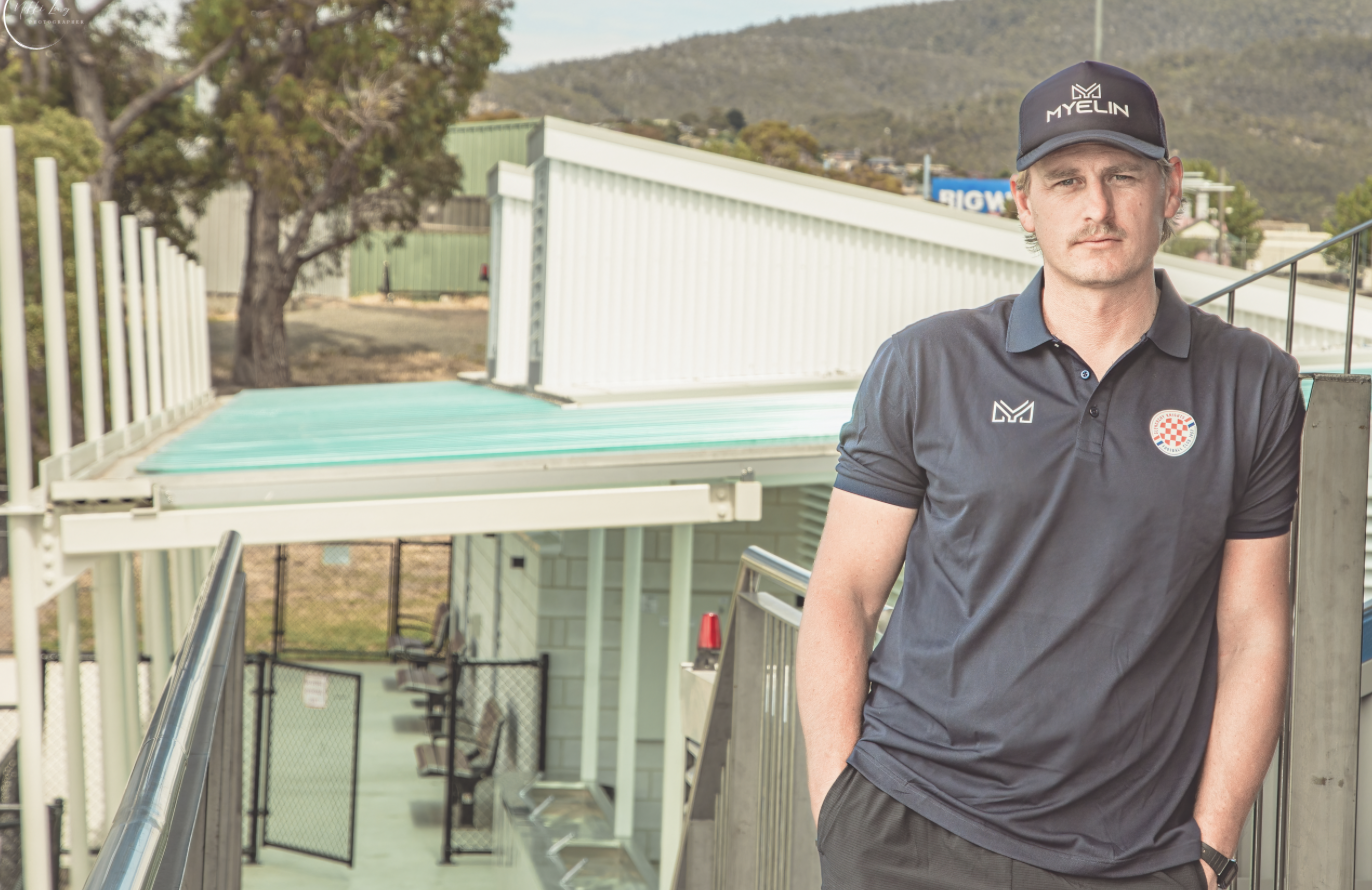
James Sherman: Coming Home With New Eyes
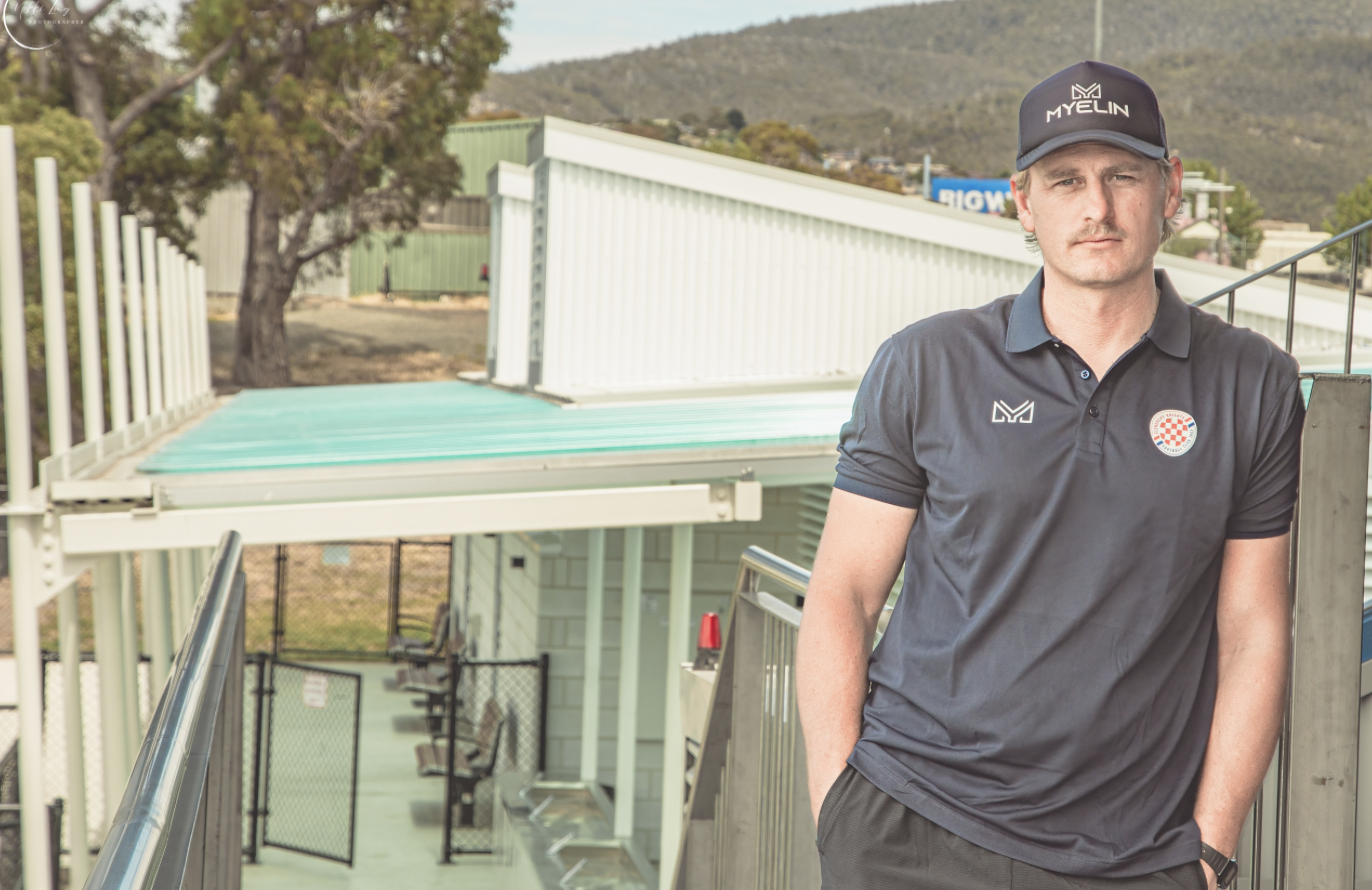
James Sherman - Another terrific photo by Nikki Long
Season 2026, Glenorchy Knights FC
James Sherman is one of those coaches who makes you feel optimistic about football.
Not because he talks loudly, or sells himself well, but because he is thoughtful, grounded, and serious about the work. James loves football, and you can tell quickly that the game still excites him, not just for what happens on a Saturday, but for what can be built over years.
James coached Glenorchy Knights from 2019 to 2024, then stepped away to work in Singapore in a player development role. Now he returns for the 2026 season as NPL Head Coach and in a broader technical leadership position across the club.
As part of my own written record of Tasmanian football, it felt important to capture James’s thinking in his own time, because coaches like this shape far more than just one team.
What follows is James Sherman’s reflection on football, coaching, Singapore, and what Tasmania needs to do if it wants to genuinely improve.
A football beginning
James’s earliest football memory is simple.
Kicking the ball with his mum in the backyard at home.
He says most sports were interesting as a child, but football just clicked, and it was easily accessible. There was always a ball nearby, always a game to be found. Once the love of it landed, it never really left.
When playing ends and coaching begins
Like many players, James expected to play for as long as he could.
But football has a way of forcing decisions on you. In pre-season 2016, he began having serious Achilles issues. It became apparent things weren’t going to improve much, and that got him thinking about what happens after playing.
That same year, he completed his C Licence.
Things progressed from there.
The people who shape you
When James talks about influence, he does not begin with elite programs or famous coaches.
He starts with family.
His mum and brother shaped him more than anyone. He also speaks with deep appreciation about the Armstrong family, who took him in as a sixteen-year-old straight out of Tasmania.
He was fortunate to have what he describes as stellar teammates, men who might be considered old school today, but who valued standards, care, and looking after each other.
That experience carries into the way he leads.
There are things that just matter, he says, and people caring about the small things makes a difference.
Small things add up.
Flexibility is not weakness
James is open about early coaching mistakes.
In 2019, Glenorchy Knights went through the middle of the season with six losses in a row. He reflects that they were trying too hard to match teams that were stronger.
In the final round of fixtures, they made a change.
They played deeper, stayed organised, and played on the counter.
They finished fifth.
The lesson stayed with him.
Flexibility isn’t weakness.
That is as much a leadership philosophy as a tactical one.
Building Glenorchy Knights beyond the first team
James’s years at Glenorchy were not only about the NPL side.
At the end of 2018, the club set up the Academy. He credits Dale Itchins with growing it strongly, and later James returned to the Academy Director role himself.
At the time he stepped in, the club had one state representative player across all youth teams.
Now, he says, that is drastically different. Glenorchy Knights consistently have female and male players in representative squads.
He highlights one example with pride.
Ebony Pitt, an Academy graduate and current WSL player, selected in a Junior Matildas training camp after a recent National ID tournament.
That is real development, not just talk.
Every year is a big year
James is clear that 2024 was a big year, but he also says every year is a big year, with or without silverware.
It is always demanding, and he says he would not change a thing.
The fun, for him, is in the small details. Keeping people engaged, fresh, always looking for a bit more.
How can we be better.
After six years as NPL coach and two years before that as an assistant, he needed a reset, not from football, but from the intensity of first team management.
Singapore and the value of procedure
James chose Singapore because he needed something new.
Staying in Tasmania would not have allowed him to do that. The chance to work abroad and experience new environments was refreshing, and working specifically in player development gave him time to improve his coaching.
He describes Singapore as an amazing country.
Education is paramount. Military service has a significant influence on society. Procedure is valued and prioritised, often.
He found the players and parents extremely open to development and supportive. He believes Singapore has real potential for rapid football improvement, given its geographical location, dense population, and strong resources.
We are guessing
In Singapore, James worked in a development environment and was struck by the importance of collaboration across all levels of football.
Discovering and monitoring players, communicating with clubs and coaches consistently, and using clear evaluation metrics, while also being willing to question those metrics.
He worked alongside talented colleagues and saw huge progress made in a short time with players aged between eight and eleven.
That reinforced something important.
We are guessing.
Every estimate or evaluation can never be claimed as a guarantee. That is simply the truth.
Success leaves clues
James does not say Singapore transformed him as a coach.
He says it reinforced what he already believed.
If things can be done simply, then that is good.
He enjoys being part of teams that are great on and off the pitch, and he enjoys creating challenging and dynamic environments that lead to good things.
Success leaves clues.
That phrase says a lot about his approach. Watch, learn, observe, build.
Returning to Glenorchy Knights in 2026
James does not describe this as a return.
He describes it as a new job.
That, he says, is good for him, good for the players, and good for the club.
He sees the challenge and believes the opportunity is there to improve quickly.
His role will support not only the NPL side, but also WSL, Under 21, Championship, and Under 18 coaches across men’s and women’s football.
For him, there is more to football than the outcome of a Saturday or Sunday afternoon.
How can staff challenge, stretch, and support players at every opportunity.
How can coaches deliver great sessions.
How do people learn best.
What do we need to do to deliver well across the board.
A playing model and coaching framework
The club’s aim is to create a clear playing model and coaching framework that everyone can see and work towards.
James’s role is to facilitate that, then work with senior staff to implement it.
A major focus is pedagogy.
Not just running sessions, but thinking critically about how sessions are designed, how players learn, and how coaches improve every year.
His day to day will involve team analysis, session review, and sharing content with coaches.
He also says the retention and recruitment of senior coaches this year is the best the club has had.
It is an exciting time.
Transparency, consistency, clarity
James’s non-negotiables as a coach are simple.
Transparency. Consistency. Clarity.
Stick at it, and good things will happen.
Guidelines, not rules
When asked about leadership, he says something that stands out.
Don’t make rules. Use guidelines instead.
Stick to process. Focus on what is within your control. Prioritise what is beneficial for the group.
Remain positive.
And play to win.
Coach education is the gap Tasmania cannot ignore
If Tasmania could change one thing to produce better players and coaches, James goes straight to coach education.
He means conferences and presentations, not just licence courses.
Bringing in presenters, and having local coaches share knowledge.
He believes Tasmania is miles off providing that for the people trusted with developing the game.
There are very good coaches locally, he says, and that knowledge should be tapped into for the benefit of all.
There is no excuse not to close the gap with other states. Tasmania should be able to box above its weight in professionalism and innovation in player development.
So why hasn’t it changed.
Because knowledge sharing hasn’t been consistent. It can’t be a token event to tick a box.
It needs to be purposeful and interesting.
Build it, and the progress will be obvious.
Final reflections
There is a freshness to James Sherman.
Not because he is new, but because he genuinely enjoys football, believes in learning, and cares about building environments that help players and coaches improve.
He talks about football as work worth doing.
In Tasmanian football, that matters.
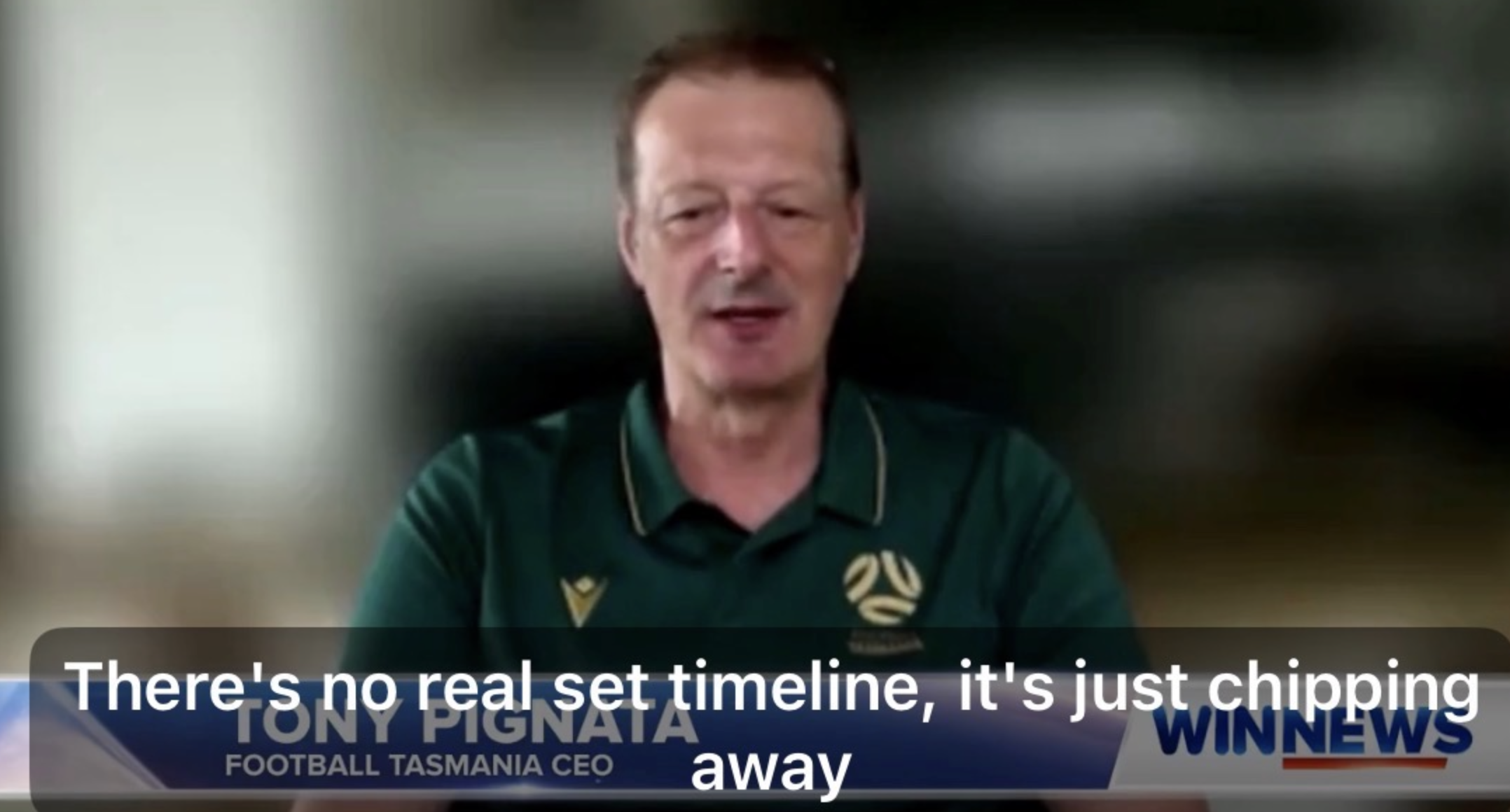
When Diagrams Start Driving the Story
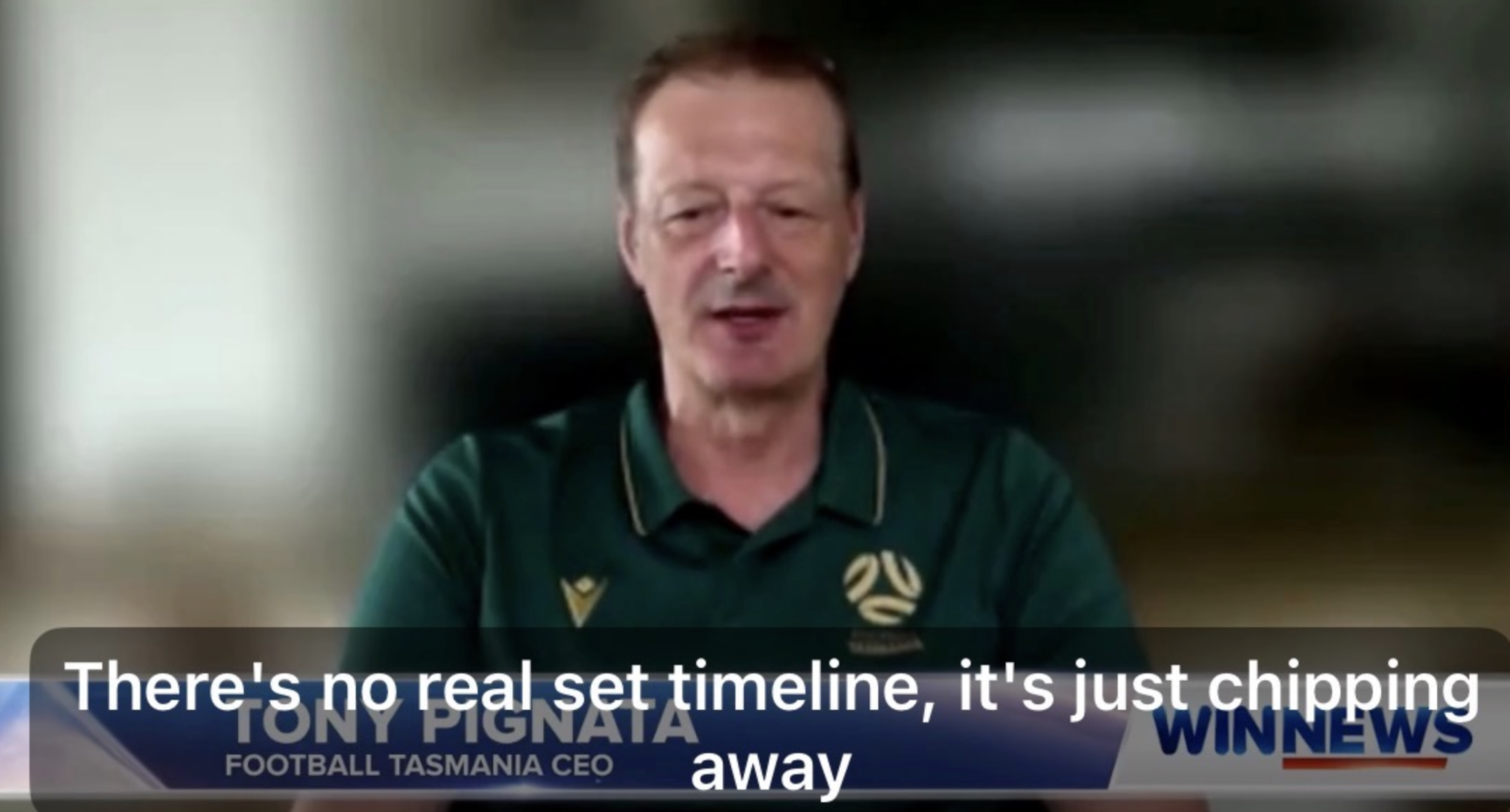
Screenshot Win News interview
I watched the Football Tasmania CEO on WIN News this morning.
Thank you to Brent Costelloe and WIN News for covering football in Tasmania. It matters that our game is part of the public conversation.
What struck me, though, was not what was dramatic.
It was what had shifted.
Because the tone was confident.
Optimistic.
Forward-looking.
But underneath that, the negotiating position of football felt… different.
“I’ve seen the plans and it’s not as big as other stadiums.”
That was the explanation for why Macquarie Point now feels workable for football.
Not participation data.
Not football venue design principles.
Not surface or sightline analysis.
The key reassurance was size.
The stadium is smaller than expected, so football can “fit”.
That is a very specific kind of argument.
It is about accommodation, not design.
A football pitch fitting between boundary lines is not the same thing as a football venue.
Football venues are built around proximity to the touchline, sightlines, acoustics, technical areas, warm-up space and the way the game is experienced. That is the difference between being designed for and being made to work.
Those are not minor details. They shape how the sport lives in a space.
Rectangular Became “Later”
For a long time the language around football infrastructure has been clear.
Football needs a rectangular stadium.
Football deserves infrastructure designed for the sport.
Now the position sounds like this.
Macquarie Point could be a win-win.
The stadium needs content.
Football wants an A-League team.
We can play there.
And eventually we can still work toward a purpose-built rectangular ground.
Eventually is doing a lot of work in that sentence.
Tasmanian football has heard “eventually” before.
On the Agenda Is Not a Plan
Expansion was described as “on the agenda”.
There is no set timeline.
No stage markers.
No stated benchmarks.
In governance language, that is not a project. It is a direction of travel.
Tasmanian football has travelled in hopeful directions before. Often with energy, goodwill and belief, but without the structural anchors that turn hope into delivery.
Optimism is important.
Structure is what turns it into reality.
Content Versus Code
One framing stood out.
The stadium needs content.
Football can help provide it.
That is different from saying football needs a home designed for football.
One positions the sport as a solution to someone else’s infrastructure equation.
The other positions football as a code with its own structural requirements.
When a sport signals it can adapt to infrastructure not designed for it, the urgency to build infrastructure designed for it usually drops.
That is not emotion. That is how policy environments work.
The Summer Calendar
Confidence was expressed that there is space in the summer calendar for an A-League side.
That is probably true.
But calendars do not build teams.
Facilities do.
Training environments.
Change rooms.
Medical spaces.
Admin areas.
Match-ready surfaces.
Those things come from infrastructure planning, not gaps in scheduling.
Home of Football
The most concrete part of the interview was the Home of Football.
Design funding secured.
Early-stage work underway.
A larger build cost flagged.
That sounds like a structured project.
But it also highlights the scale of the journey ahead.
Drawing plans is one stage.
Delivering major infrastructure is another.
In that context, Macquarie Point becomes the near-term solution, while football-specific infrastructure sits further down the road.
Tasmanian sport has seen temporary arrangements become permanent before.
That is why sequencing matters.
“Scrounging” for Fields
The comment was made that during the Hobart Cup, organisers “scrounge around” for enough grounds.
Large tournaments stretching field availability is not evidence of poor organisation. It is evidence of demand outgrowing infrastructure.
Southern Tasmania does not have a pitch quality problem.
It has a pitch quantity problem.
Upgrading a single site improves quality at that location. It does not create more rectangular surfaces. It does not expand capacity. It does not solve scheduling pressure across the system.
That distinction matters when we talk about football infrastructure.
Infrastructure Is Lived, Not Abstract
Infrastructure decisions here are not theoretical.
They shape travel times, volunteer load, access to training spaces and the weekly rhythms of clubs. They affect how families move, how programs run and how sustainable participation really is.
On paper, diagrams can look persuasive.
On the ground, systems are held together by people navigating those realities every week.
When Language Shifts, Pay Attention
This interview was not confrontational.
It was careful.
Measured.
Pragmatic.
That is exactly why it matters.
Because the story may be shifting in small, reasonable-sounding steps.
Rectangular became later.
Purpose-built became eventual.
Football-first became win-win.
Need became fit.
None of those words sound unreasonable.
But together, they tell a story about compromise arriving before foundations are secured.
Tasmanian football has always been good at being reasonable.
History suggests we should also be careful.
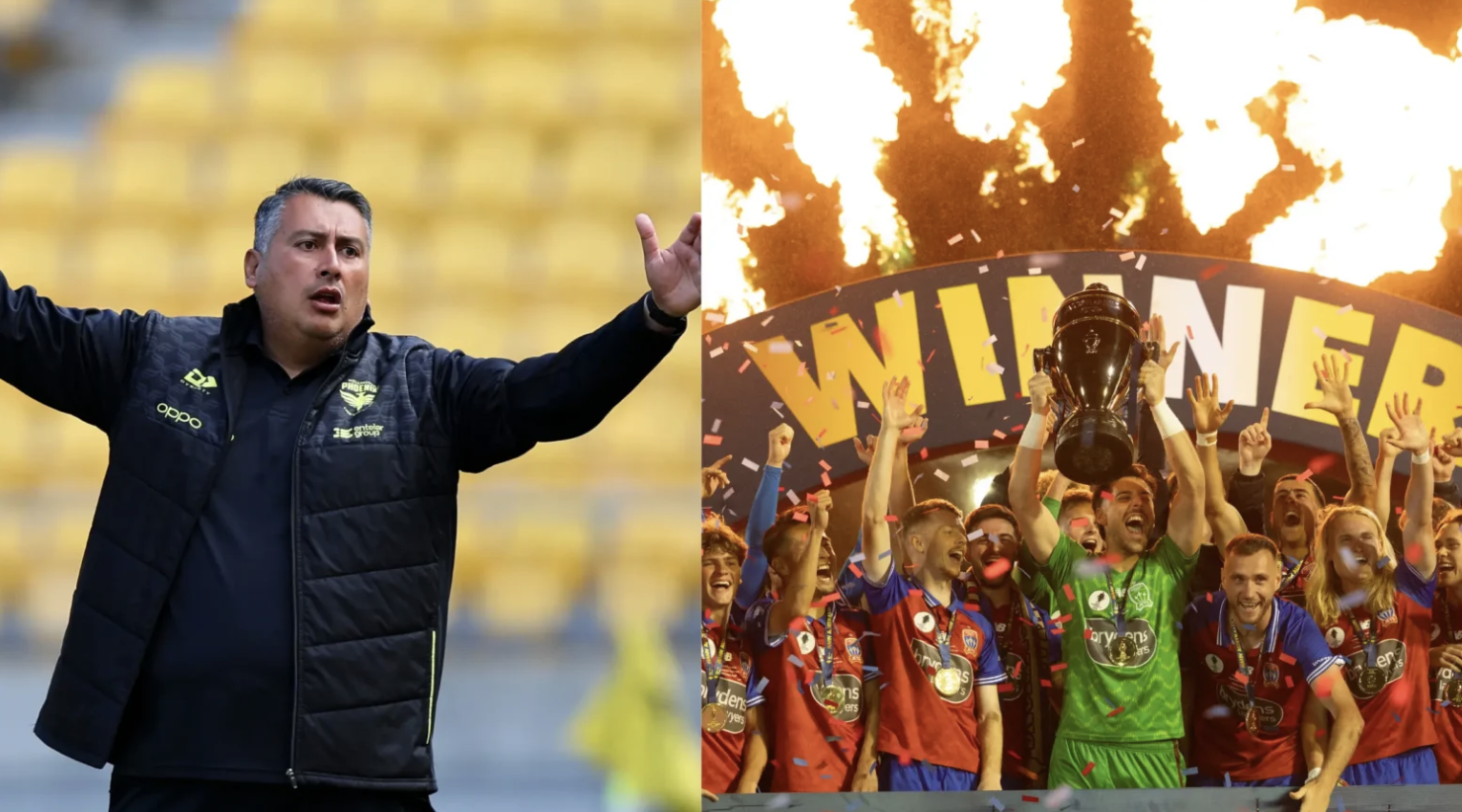
The Australia Cup Just Got More Australian, and More Dangerous for the A-League
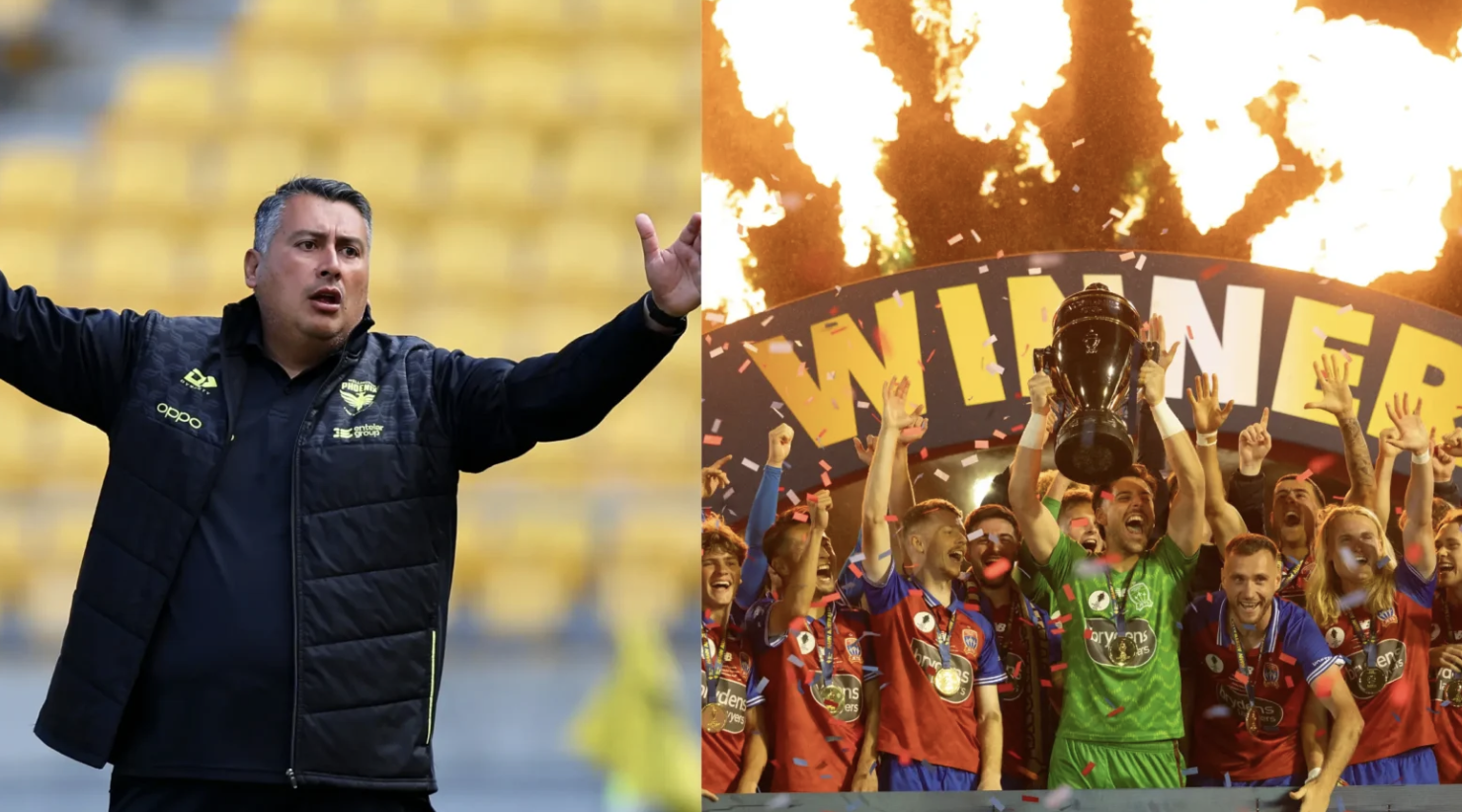
Something important just happened.
It looks like an administrative tweak.
It isn’t.
From 2026, the Australia Cup will no longer include Wellington Phoenix or Auckland FC. The competition becomes fully Australian, aligned with AFC requirements, and the Darwin playoff system is gone.
On the surface that is tidy governance.
Underneath, it shifts the competitive balance of the Cup in a way that matters deeply for NPL clubs.
Less “extra”, more pathway
Two New Zealand professional clubs are out.
In their place, more spots flow back through the state federations. There are now 21 qualification places distributed across Member Federations.
That is not just a numbers shuffle.
That is a structural shift back toward:
• state league champions
• historic clubs
• proper qualification pathways
• the grassroots to national pyramid link
This is the Cup remembering what it was created for.
Bridging the gap.
What it means in the draw
Previously the Round of 32 mix leaned like this:
• 12 A-League clubs, including NZ sides
• NPL and state qualifiers
Now it becomes:
• 10 Australian A-League clubs
• more NPL and state entrants
• no NZ professional buffer
So the draw pool tilts further toward state league clubs.
Which means a higher proportion of ties now fall into:
• A-League vs NPL
• NPL vs NPL
That matters more than it sounds.
Because timing is everything
Here is the part people outside the system often miss.
The Cup sits in the A-League pre-season window.
For most NPL clubs, it lands in the middle of their competitive season.
That means A-League clubs are:
• building fitness
• rotating squads
• trialling combinations
• managing loads
NPL clubs are:
• match sharp
• tactically settled
• physically hardened
• in rhythm
This is not always top tier pace overwhelming part-timers.
It is often a pre-season professional side facing a fully competitive team in form.
That gap narrows fast.
This is where Cup chaos lives
Add the structural shift.
More federation entrants.
More NPL clubs.
Fewer professional sides sitting in the middle of the mix.
The format leans harder into the most dangerous scenario for A-League teams:
Away games.
Unfamiliar grounds.
In-season opponents.
Clubs treating the night as the biggest game of their year.
That is not a comfortable equation.
Why this matters to NPL clubs
For clubs outside the A-League, these ties are not just romantic stories. They are strategic moments.
They bring:
• broadcast exposure
• big home gates
• sponsor leverage
• relevance beyond your postcode
A night under lights against an A-League club can do more for a community club’s profile than ten routine league games.
The pathway to those nights just widened slightly, while the competitive conditions are slightly more favourable.
That is built into the Cup.
The competition moves closer to its purpose
When the FFA Cup launched, the idea was simple.
One competition where:
the local club
the historic club
the volunteer-run club
could share the same draw as the professional tier.
Over time, formats get layered and systems drift.
This change feels like a correction.
Less cross-border complication.
More national identity.
More direct connection between state football and the top.
And from the A-League side
This is not easier.
It is more dangerous.
More NPL entrants.
More in-season opponents.
More grounds that do not feel like controlled stadium environments.
The Australia Cup has not become smaller.
It has become sharper.
And that is exactly what a knockout cup should be.
Uncomfortable.
Unpredictable.
Alive.